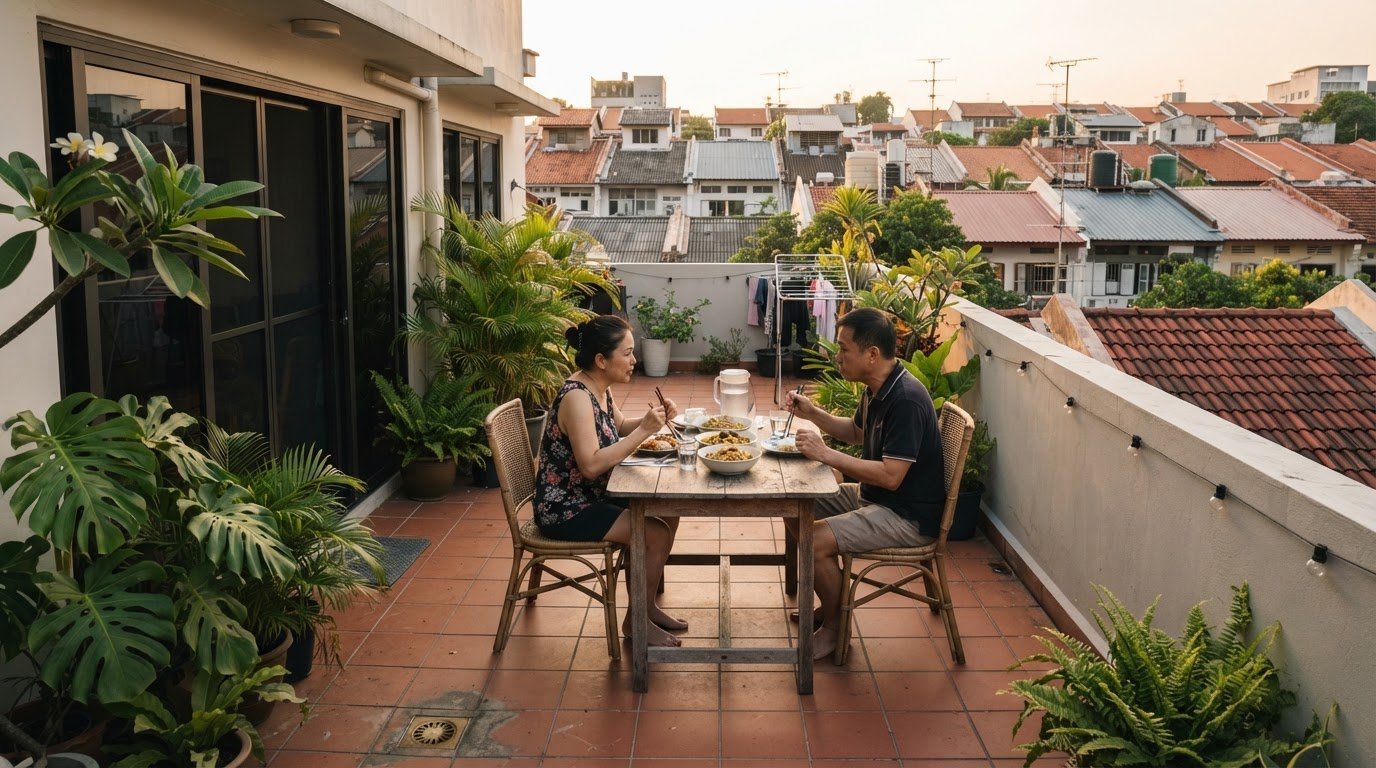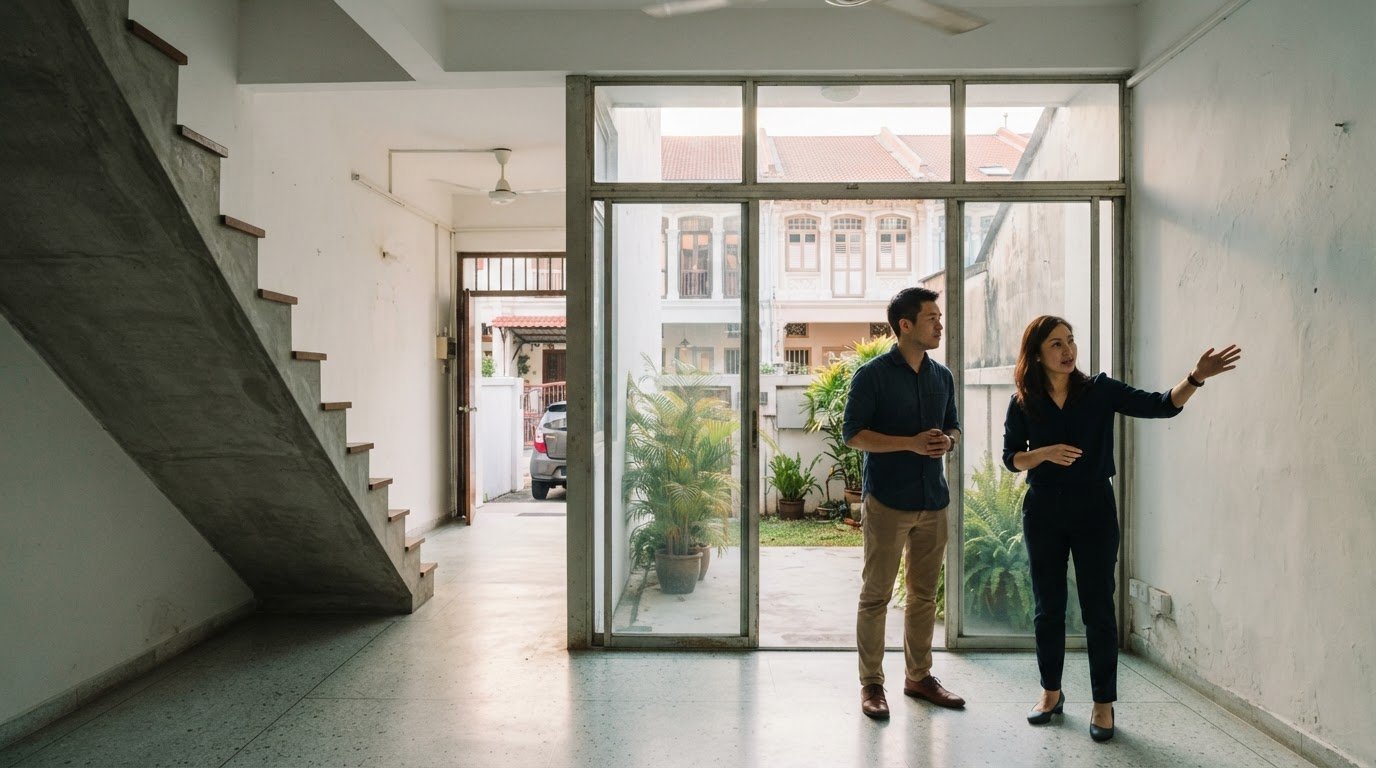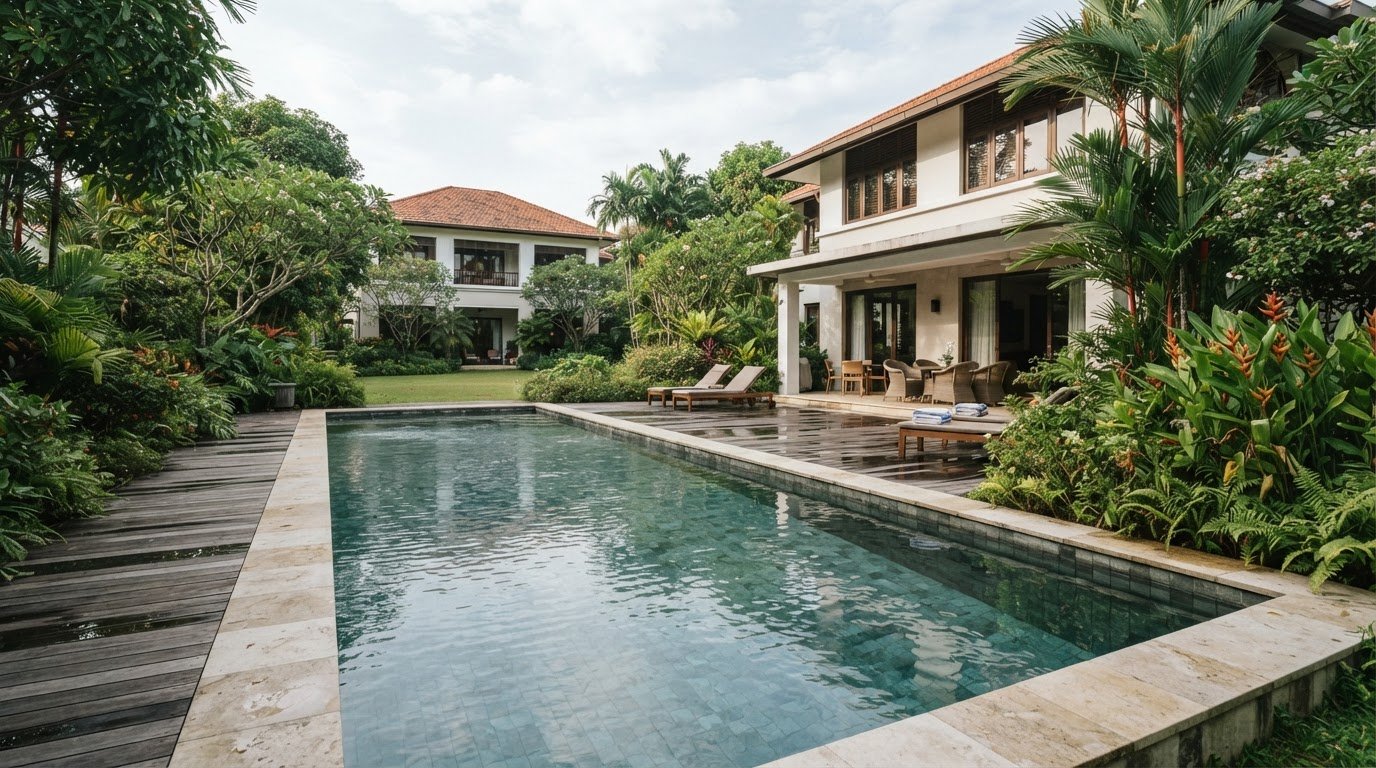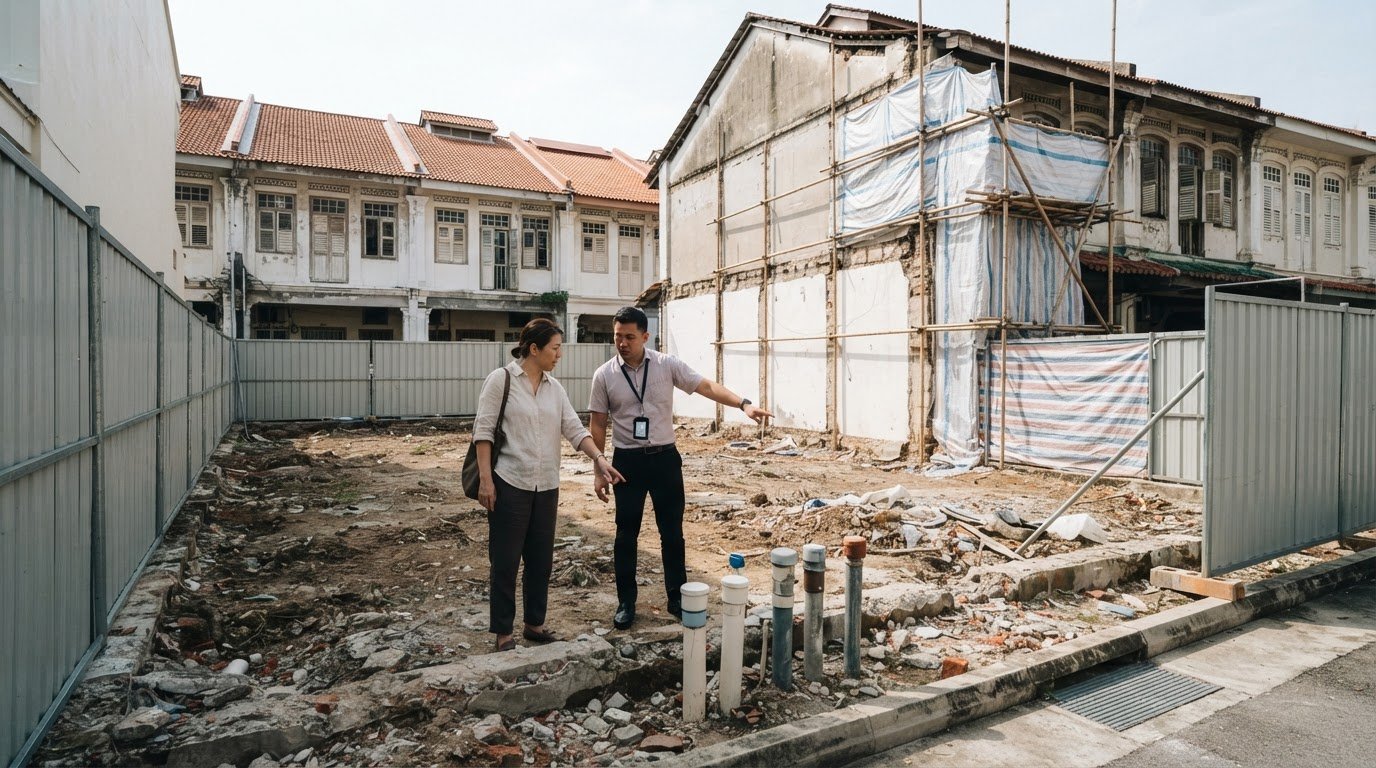
A detached house and a bungalow aren’t always useful labels on their own: the planning category, title and remaining lease matter when you assess what the property can support. A Good Class Bungalow has a minimum plot size of 1,400 sqm. A landed property buying checklist in Singapore should also cover zoning, building limits and redevelopment options before you commit.
It’s understandable to focus first on the house type and appearance. But legal and planning constraints on the land can shape whether a property suits your long-term plans. This landed property buying checklist for Singapore explains how to assess property type, lease tenure, title, zoning and planning controls, then consider what changes or redevelopment may be possible. Use it to compare homes and identify the key questions before making a high-value purchase.
Key Takeaways
- Build a purchase budget that accounts for stamp duties, legal fees and the possible cost of renovation or rebuilding, not just the asking price.
- Compare the remaining lease with your ownership horizon and intended use of the property.
- Review zoning, setbacks and building-envelope controls before assuming a home can be extended or redeveloped as planned.
- Use title and planning due diligence to identify restrictions that could affect ownership or future changes to the property.
What Is Landed Property in Singapore?
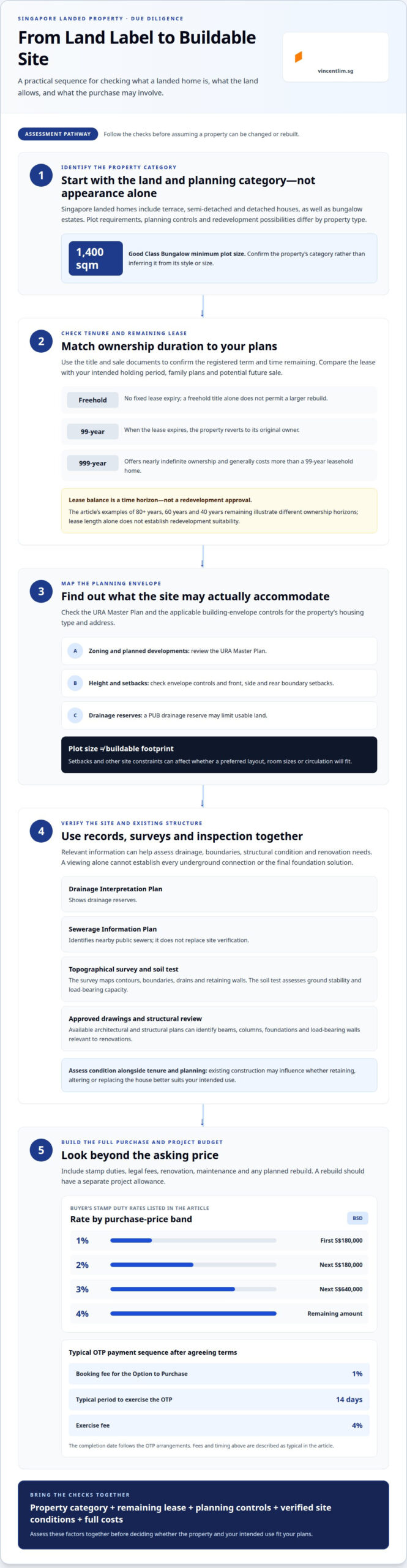
Singapore landed homes include terrace, semi-detached and detached houses, alongside luxury bungalow estates. The property type matters because plot requirements, planning controls and redevelopment possibilities differ. A premier detached dwelling often features a minimum land area of 1,400 sqm. A landed property buying checklist in Singapore should begin by distinguishing the home’s category from its appearance.
After agreeing terms, a buyer typically pays a 1% booking fee for the Option to Purchase (OTP). The buyer typically has 14 days to exercise it, then pays a 4% exercise fee; the completion date follows the OTP arrangements.
- Set an all-in budget before viewing. Include the purchase, stamp duties, legal fees, renovation, maintenance and any planned rebuild, so the asking price doesn’t become the entire budget.
- Estimate Buyer’s Stamp Duty (BSD) against the purchase price. The listed rates are 1% on the first S$180,000, 2% on the next S$180,000, 3% on the next S$640,000 and 4% on the remaining amount.
- Allow for legal fees as a separate purchase cost.
- Match the house type and features to your priorities. A terrace, semi-detached or detached home offers a different site and layout to assess; consider the space and configuration that suit your household.
- Assess the building’s condition before setting a renovation budget. Extensive repairs or modifications can add costs beyond the purchase, while a rebuild requires a separate project allowance.
- Include rebuild costs and related project expenses.
Include professional services, authority charges, applicable taxes, owner purchases and accommodation in your overall project budget. Use this landed property buying checklist in Singapore to assess whether the property and your intended use fit your financial plan.
Lease duration and redevelopment options
Tenure defines how long ownership lasts and shapes your long-term plans. Freehold ownership has no fixed lease expiry, while leasehold ownership runs for a stated term. In Singapore, a 99-year leasehold property reverts to its original owner when the lease expires. A 999-year leasehold property offers nearly indefinite ownership and generally costs more than a 99-year leasehold home.
Compare the remaining lease with your intended holding period, family plans and potential future sale. A property with 80+ years remaining presents a different time horizon from one with 60 years or 40 years. These examples help frame the comparison; the lease balance alone doesn’t establish whether redevelopment is suitable.
- Confirm the tenure and remaining lease. Use the title and sale documents to establish the registered term and calculate the time left before expiry.
- Compare tenure with your ownership horizon. A long-term home purchase calls for a different lease assessment than a property intended for a shorter hold.
- Separate lease length from redevelopment potential. A freehold title doesn’t by itself permit a larger rebuild; planning controls and site constraints still shape what can be built.
- Assess structural condition alongside tenure. Existing construction may influence whether retaining, altering or replacing the house better suits your intended use.
Review financing in light of the property’s tenure. Lenders assess the property and loan application, so the remaining lease is relevant to the purchase decision. Consider the lease balance, intended ownership period and planned construction scope together. This gives you a clearer basis for comparing a leasehold home with a freehold alternative, rather than treating tenure as a label alone.
For a considered comparison of landed options, explore landed property purchase guidance alongside your tenure and redevelopment priorities.
Planning controls, setbacks and building envelopes
Before assuming a landed home can be extended, check its zoning and building envelope. The URA Master Plan indicates zoning and planned developments, while envelope controls affect height and setbacks. Requirements depend on the property’s housing type and address.
Setbacks from the front, side and rear boundaries can reduce the buildable footprint. A PUB drainage reserve may also limit usable land. Plot size alone does not show whether your preferred layout, room sizes or circulation will fit.
- Review the URA Master Plan and applicable envelope controls. This helps establish the site’s zoning, height limits and setback constraints before designing a rebuild.
- Check drainage and sewer information. A Drainage Interpretation Plan shows drainage reserves, while a Sewerage Information Plan identifies nearby public sewers; neither replaces site verification.
- Arrange structural and site due diligence. A topographical survey maps contours, boundaries, drains and retaining walls; a soil test assesses ground stability and load-bearing capacity.
- Review approved drawings where available. Architectural and structural plans can identify beams, columns, foundations and load-bearing walls relevant to renovations.
To assess structural condition, defects, drainage and renovation needs, combine a careful inspection with relevant drawings, drainage information, a topographical survey and soil testing. A viewing alone cannot establish the final foundation solution or identify every underground connection.
A pre-handover visit can help you assess renovation scope, but it requires the seller’s agreement. Use the visit with your architect or building professional to review the existing layout and visible condition. Allow time to assess planning constraints before finalising design decisions.
Mortgage planning should reflect the purchase arrangement. For a building-under-construction home, the guide lists a 5% cash booking fee and a 15% down payment payable by CPF or cash. Confirm the payment schedule and financing needs against the contract, rather than assuming construction payments follow a resale purchase sequence. This keeps planning controls, access and funding aligned before completion.
Title, tenure, zoning, and redevelopment due diligence
Foreign buyers, including permanent residents, must obtain approval from the Singapore Land Authority to buy landed property. The assessment considers a minimum residency period of five years and substantial economic contributions to Singapore. Foreigners also pay 60% Additional Buyer’s Stamp Duty on residential property purchases, according to the Inland Revenue Authority of Singapore, under rates applying since April 2023.
To assess conservation status, zoning, plot ratio and redevelopment rules, review the URA Master Plan and applicable conservation guidelines. Confirm the site’s housing classification, building envelope, height limits and setbacks. Plot ratio alone does not establish what a landed home can accommodate.
- Review the title and tenure documents. Confirm the registered owner, lease details and any restrictions affecting use or transfer.
- Identify easements, covenants and caveats. These records may affect access, use or a buyer’s interest; have the solicitor assess their implications before proceeding.
- Compare boundaries with survey information. A visible fence doesn’t establish the legal boundary; a survey can identify encroachments or discrepancies.
- Check additions against approved plans. Compare the existing house with approved architectural and structural drawings to identify unauthorised alterations before planning renovation.
- Assess redevelopment assumptions carefully. En bloc potential isn’t assured, and a lease’s remaining term and planning controls affect the site’s future options.
Boundary disputes, unresolved lease matters and unauthorised additions can complicate a purchase or future works. Review the title search, survey, lease documents and approved plans together, then ask your solicitor how unresolved feasibility issues may affect the purchase decision and timing. For a bungalow in the Good Class Bungalow category, confirm the applicable planning controls and property eligibility before assuming redevelopment is possible.
If you’re assessing a Good Class Bungalow purchase, discuss Good Class Bungalow options as part of your property review.
Vincent Lim (OrangeTee & Tie)
Vincent Lim (OrangeTee & Tie) can help you assess landed-home options against your priorities for tenure, location and future use. If you’re weighing a terrace, semi-detached or detached house, a structured comparison can clarify which properties merit closer consideration. For a Good Class Bungalow, the property’s category and planning context are also central to the decision.
Turn to Vincent when you’re ready to move from general research to considering specific landed properties for sale. A focused discussion can help you refine your priorities before you proceed. Legal and technical due diligence remains an essential part of the purchase process with the relevant professionals.
Contact Vincent Lim (OrangeTee & Tie) to discuss your landed-property search.
Turn Your Priorities Into a Clear Next Step
Before pursuing a specific home, define your non-negotiables and the trade-offs you’re willing to consider. A landed property buying checklist for Singapore can serve as a practical decision brief: note which property types fit, what future use matters, and which issues need resolution before you proceed. This keeps viewings and discussions focused on your plans, rather than features that may not serve them.
Vincent Lim (OrangeTee & Tie) offers sales support for terrace houses, semi-detached houses and detached houses. If you’re ready to discuss your search, contact Vincent Lim (OrangeTee & Tie) to take the next step at a pace that suits your decision.
With a clear brief and a suitable property in view, you can move forward with greater purpose.
Frequently Asked Questions
Detached vs Bungalow: Is There a Difference?
Yes. “Detached” describes a house that stands independently, while “bungalow” identifies a house form or planning category. A Good Class Bungalow is a specific category, not simply any detached home: it has a minimum plot area of 1,400 sqm and must be within one of Singapore’s 39 gazetted GCB areas. A detached house isn’t automatically a bungalow or a GCB.
What types of landed homes are available in Singapore, and how do they differ?
Common options include terrace, semi-detached and detached houses, as well as bungalow categories such as Good Class Bungalows. Terrace houses form a row and share side walls; semi-detached homes are paired and share one side. Detached houses stand independently. A GCB is defined by its planning category and location in a gazetted GCB area, not by appearance alone.
What are the current Additional Buyer’s Stamp Duty rates for landed property in Singapore?
ABSD rates depend on the buyer’s status and residential-property count. Under rates applying since April 2023, foreigners pay 60% on residential property purchases, according to the Inland Revenue Authority of Singapore. Singapore citizens pay 20% on a second residential property, while permanent residents pay 5% on their first. Establish the buyer’s category and property holdings before estimating purchase funds.
How are Buyer’s Stamp Duty and Additional Buyer’s Stamp Duty calculated for a Singapore landed home?
BSD is calculated progressively: 1% on the first S$180,000, 2% on the next S$180,000, 3% on the next S$640,000 and 4% on the remaining amount. ABSD is a separate duty; its applicable rate depends on the buyer’s status and residential-property count.
What down payment, loan-to-value limits, and mortgage rules apply to landed property purchases?
For a first property, bank loans are capped at 75% of the price, implying a 25% down payment. At least 5% is payable in cash; the remaining 20% may be paid in cash or CPF. The Total Debt Servicing Ratio limits allowable debt to 55% of gross monthly income. Borrowing capacity also depends on income, existing debt and loan terms.
What checks should buyers make on title, easements, caveats, and outstanding charges before buying landed property?
Have your solicitor review the title search for the registered owner, tenure, easements, caveats, covenants and registered charges. Compare the title plan with survey information, since visible fences do not establish legal boundaries. Ask how any encumbrance affects access, use, transfer or financing, and how outstanding secured charges will be handled at completion. Resolve discrepancies before relying on renovation or redevelopment assumptions.