What if the most impressive bungalow on your shortlist is the wrong one to buy? When buying a good class bungalow in singapore, prestige and presentation are only part of the decision. Eligibility rules, planning parameters, title conditions and long-term suitability matter too.
It is understandable to want clarity before making an offer. A GCB acquisition is a high-stakes process, and uncertainty about approvals, land potential or renovation constraints can make even a compelling property difficult to assess. A disciplined sequence helps identify key questions early and coordinate the right reviews.
This 2026 guide explains how to assess eligibility, refine your search and compare bungalows beyond their appearance. It also covers due diligence across legal, planning and property condition, along with transaction steps to manage before proceeding. Vincent Lim, an OrangeTee & Tie real estate professional specialising in GCB transactions, provides brokerage support to help structure your search and coordinate your purchase.
Key Takeaways
- Set your household priorities, ownership plans and decision-making roles before beginning the search.
- When buying a good class bungalow in singapore, assess formal GCB status separately from a property’s prestige or appearance.
- Compare shortlisted properties using consistent criteria for land, structure, condition, constraints and intended use.
- Sequence eligibility, title, planning, condition and document reviews so property-specific risks are considered before commitment.
- Weigh each property’s character and future flexibility against your maintenance capacity and intended length of ownership.
Buying a Good Class Bungalow: What to Establish Before You Search
Before arranging viewings, agree on what the purchase needs to achieve for your household. A GCB may be a family home, a long-term holding or both. Those goals can lead to different choices about layout, outdoor space, renovation and ownership structure. Decide who will assess options, who has authority to make decisions and how the household will resolve trade-offs. Clear roles help keep a high-stakes search focused.
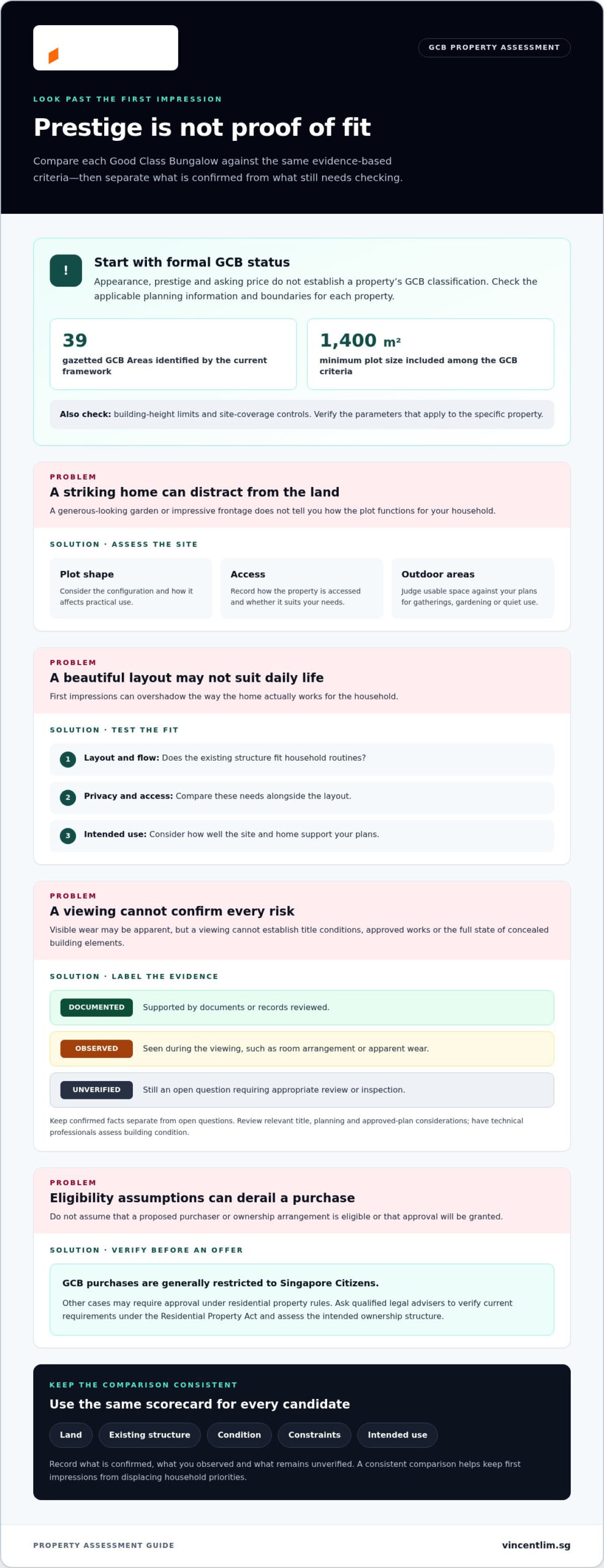
Formal GCB status is tied to planning criteria, not simply a property’s prestige, appearance or asking price. The current framework identifies 39 gazetted GCB Areas, with criteria that include a minimum plot size of 1,400 square metres, building height limits and site coverage controls. Verify the applicable parameters and boundaries against current planning information for each property. For context, the general term Bungalow covers a broad building form; Singapore’s GCB classification is more specific. This Good Class Bungalow definition guide explains the distinction.
Separate essential requirements from preferences before comparing homes. A minimum number of bedrooms or a particular household layout may be non-negotiable; a preferred architectural style may be flexible. Consider whether outdoor areas need to support family gatherings, gardening or quiet use, and how much privacy matters in daily life. Assess accessibility, your appetite for renovation and whether the property could accommodate foreseeable changes in family needs.
Clarify buyer eligibility and ownership structure early
Eligibility can depend on citizenship, the proposed ownership structure and applicable approval requirements. GCB purchases are generally restricted to Singapore Citizens. Other cases may require approval under residential property rules, and approval should not be assumed. Before making an offer, have qualified legal advisers verify the current requirements under the Residential Property Act and explain how the intended purchaser or ownership arrangement affects the transaction.
Turn lifestyle priorities into a search brief
Create a ranked list of household requirements, separating essential conditions from preferences. Rank needs such as layout, privacy, outdoor-space use, accessibility and tolerance for renovation, then note which compromises remain acceptable. Applying the same brief to each property helps prevent an attractive first impression from displacing the priorities that matter over time.
Settle these decisions before viewing:
- Purpose: Define the household’s intended use and ownership horizon.
- Eligibility: Confirm the purchaser, ownership structure and any applicable approval pathway with qualified advisers.
- Land and use: Specify how outdoor space should function and which planning questions require review.
- House condition: Decide whether an existing home, renovation project or scope for future changes best suits the household.
- Privacy and access: Rank these needs alongside layout and future household requirements.
Use this brief to organise the search, not to prejudge a property. Vincent Lim provides GCB brokerage representation to help structure the search and coordinate the purchase process, while legal and planning questions are reviewed by the appropriate professionals. A disciplined starting point makes each viewing more purposeful.
How to Assess a Good Class Bungalow Beyond Its Prestige
A consistent comparison helps distinguish a property that looks impressive from one that fits your plans. GCB classification alone does not establish whether a bungalow is suitable for a particular buyer. Assess each candidate against the same criteria, and record what is supported by documents or inspection and what remains an assumption.
Use a scorecard during viewings. These prompts keep attention on the land, the existing home and your intended use rather than first impressions.
| Assessment area | Candidate A | Candidate B |
|---|---|---|
| Land | Plot shape, access, usable outdoor areas | Plot shape, access, usable outdoor areas |
| Existing structure | Layout, natural flow and fit with household needs | Layout, natural flow and fit with household needs |
| Condition | Visible concerns; items requiring inspection | Visible concerns; items requiring inspection |
| Constraints | Known title, planning or approved-plan considerations | Known title, planning or approved-plan considerations |
| Intended use | How well the site and home support your plans | How well the site and home support your plans |
Keep two records for each property: confirmed facts and open questions. A viewing can reveal the room arrangement or apparent wear, but it cannot establish title conditions, whether works were approved or the full state of concealed building elements. Mark each point as documented, observed or unverified. This distinction helps prevent an attractive feature or verbal description from being treated as proof.
Compare land characteristics, layout and existing improvements
Look beyond total land area. A narrow or irregular plot may function differently from a more straightforward configuration, while landscaping and access affect how much outdoor space is practical for your household. Consider whether the built form supports daily routines and privacy. Have relevant technical professionals assess the building’s condition and likely maintenance or renovation implications. Treat redevelopment potential as a question for site-specific review, not an assumption based on appearance.
Check planning status, title and permitted works
Title conditions, planning controls and approved plans may shape how a property can be used or altered. The Urban Redevelopment Authority is a key planning authority. Review current requirements and property-specific records with the appropriate legal and planning professionals. The Urban Redevelopment Authority (URA) Singapore provides planning information, but a general rule is not confirmation about an individual site.
Buying a good class bungalow in singapore calls for a comparison that pairs what you can see with what documents and professional inspections can establish. If you are refining a shortlist, Vincent Lim’s GCB property guidance can help structure the brokerage search around your priorities.
GCB Due Diligence: Resolve the Main Risks Before Committing
Due diligence is most effective when it follows a clear sequence. Start by confirming the proposed purchaser’s identity, eligibility and ownership structure. Then review title, planning records, physical condition and transaction documents. This order brings foundational questions to light before attention turns to detailed renovation ideas or other future plans. The checks required vary by property, and some findings need specialist interpretation rather than a simple document review.
Separate what records can establish from what requires professional judgment. A title search may identify registered interests, for example, while a conveyancing professional must explain their implications for the proposed transaction. An inspection may reveal visible deterioration, but further investigation could be needed to assess concealed or technical issues. Record outstanding questions and assign responsibility for resolving them.
- Identity and eligibility: Confirm the purchaser and proposed ownership arrangement, then have qualified advisers assess applicable approval requirements. The Residential Property Act 1976 is a relevant starting point, but verify current requirements for the specific buyer and transaction.
- Title: Have conveyancing professionals review ownership details, title conditions and any encumbrances, and explain their significance.
- Planning: Check applicable controls and current approved plans through appropriate professional and official channels.
- Physical condition: Arrange technical inspections suited to the property and investigate concerns that call for further assessment.
- Transaction documents: Review the relevant documents and conditions with conveyancing advisers before proceeding.
Review title, planning records and transaction documents
Ask the conveyancing team to relate the title review to the proposed purchase rather than treating each document in isolation. Ownership details, registered interests and transaction terms can raise questions that require legal interpretation. Planning records and approved plans also need to be compared with the property as it exists. If records appear inconsistent or incomplete, establish what needs clarification before relying on an assumption.
Inspect condition and clarify future plans
Technical professionals can assess visible condition and identify areas for further investigation. Share your intended renovation or rebuilding plans early so they can be considered alongside current planning controls and approvals. A preferred design is not evidence that the work will be permitted. This helps distinguish a viable plan from an aspiration that still needs review.
Test intended alterations against current approvals and planning controls before relying on them.
For buyers buying a good class bungalow in singapore, thorough checks support a considered decision, but they cannot eliminate every uncertainty or guarantee a particular outcome. The practical objective is to understand material findings, clarify unresolved issues with the right professionals and decide whether the remaining uncertainty is acceptable before committing.
From Offer to Completion: A Disciplined GCB Buying Process
Once a property stands out, the next step is not simply to move quickly. Coordinate the offer, legal review, financing and any applicable approvals so each decision is made with a clear view of its consequences. When buying a good class bungalow in singapore, timing and conditions can depend on the property, the parties involved and the requirements that apply to the transaction. Do not assume every purchase follows the same timetable.
Structure an offer around verified information
Use relevant comparable property evidence alongside what you have learned about the specific site, its condition and any unresolved questions. Prestige alone is not a sound basis for deciding what terms to propose. Before committing to terms, discuss the offer structure and its legal effect with your conveyancing professional. They can review proposed conditions and documentation, while your financial adviser helps clarify funding arrangements and relevant financial considerations. Address these matters before key commitments, not after.
An offer should reflect your priorities and the information available, while allowing appropriate professional review. Do not assume a particular condition will be accepted or that an initial proposal guarantees a specific negotiation outcome. Keep a record of the terms discussed, documents received and questions that remain open. If new information changes your understanding of the property, pause and seek advice before proceeding.
Coordinate approvals, documentation and completion
Establish who is responsible for each workstream. Your conveyancing professional addresses legal documentation and transaction requirements; your financial adviser supports funding decisions; and relevant planning or technical professionals clarify matters within their scope. Brokerage representation can help coordinate communication about the property and transaction, while legal and financial advice remains with the appropriate advisers.
Use one transaction checklist as the shared reference point. Record each required document, approval or condition, the person responsible, its status and any outstanding question. This reduces the risk of relying on scattered messages or assuming another party has completed a task. Have the conveyancing professional identify which milestones depend on specific documents or approvals, and confirm deadlines with the responsible parties.
- Before offering: Align your proposed terms with the available property evidence and outstanding diligence.
- Before commitment: Have conveyancing and financial advisers review the proposed terms and funding arrangements.
- After agreement: Track legal documents, required approvals and conditions in one place.
- Before completion: Confirm with the responsible professionals that applicable requirements and transaction steps have been addressed.
There is no universal timeline to rely on. The sequence can shift with the property, the parties’ readiness, the agreed terms and applicable requirements. Careful coordination cannot remove every uncertainty, but it can make responsibilities visible and decisions more deliberate. For brokerage support coordinating a GCB acquisition, discuss your GCB purchase with Vincent Lim.
Choose Your GCB with a Long-Term Ownership Plan
A shortlisted bungalow should make sense not only on viewing day, but throughout the period you expect to own it. Revisit each option against your household’s likely needs, your capacity to maintain the property and the role it will play in your wider property plans. A home that suits your current routine may need adjustments as family needs change. A property with more flexibility may also involve upkeep or alterations you do not intend to undertake.
Be candid about the trade-offs. An existing home may offer architectural character and established landscaping, yet its condition, layout or maintenance demands may call for careful consideration. A property that appears easier to adapt may still be subject to planning controls and site-specific constraints. Neither character nor apparent flexibility is a guaranteed advantage. Consider how each property aligns with your plans and what its confirmed condition and constraints mean for ownership.
Balance immediate fit against future flexibility
Imagine how the home and grounds would serve your household over time. Consider whether rooms can support changing needs, outdoor areas suit their intended use and the property’s upkeep is compatible with the attention you can give it. If you anticipate alterations, weigh them against current approvals and planning controls rather than assuming they will be possible. For buyers considering how a landed purchase fits into broader property decisions, the asset progression to landed property guide offers relevant portfolio context without predicting investment performance.
Duration matters, too. A buyer intending to hold a property for an extended period may place greater weight on household suitability and ongoing maintenance, while a different ownership horizon can change which compromises feel acceptable. This is not a forecast of appreciation or resale performance. It is a way to test whether a specific bungalow’s responsibilities and characteristics match your intended use and broader plans.
Proceed with a tailored acquisition strategy
Bring the decision into one view before progressing: your ranked priorities, material findings from property diligence, unresolved questions and advice from your conveyancing, planning, technical and financial advisers. Note which trade-offs you accept and which findings would change your decision. This creates a clear basis for discussing next steps and helps keep the acquisition strategy aligned with your objectives.
Vincent Lim is an OrangeTee & Tie real estate professional specialising in GCB transactions and landed property, with experience in Singapore real estate dating to approximately 2004. His brokerage experience is relevant to structuring a search and coordinating a high-stakes purchase, but does not promise a particular outcome. The right approach remains specific to the buyer, the property and its verified circumstances.
Consolidate your priorities, diligence findings and adviser input before proceeding. For brokerage support with your purchase, discuss your GCB acquisition with Vincent Lim.
Make Your Next Decision with Clarity
Before taking the next step, put your decision in writing. Record what must be true for the property to fit your household, which unresolved matters could change your view and what advice you still need before committing. This gives everyone involved a shared reference point and helps prevent urgency or attachment to a particular home from displacing sound judgment.
That discipline is especially valuable when buying a good class bungalow in singapore. A considered choice should reflect both present priorities and the responsibilities you are prepared to take on. There is no need to force a decision before the relevant questions have been addressed. Progress when the property, available information and ownership plan align.
For brokerage support as you shape your next steps, explore a GCB acquisition strategy with Vincent Lim. A clear plan can help you move forward with purpose and confidence.
Frequently Asked Questions
Who is eligible to buy a Good Class Bungalow in Singapore?
Singapore Citizens are generally eligible to purchase a GCB, subject to applicable requirements. Permanent Residents and other non-citizens are generally restricted, though a PR may apply to the Singapore Land Authority’s Land Dealings Approval Unit for approval in exceptional circumstances. Before structuring an offer, establish who will own the property, including any co-buyers or proposed entity, and have a qualified conveyancing adviser assess the current rules for that arrangement.
How do I confirm that a property is a Good Class Bungalow?
Confirm its classification against current official planning information, rather than relying on a listing description or the property’s appearance. Check whether the site lies within a gazetted GCB Area and whether the relevant planning criteria apply to that plot. A planning professional can help interpret official records and identify questions that need verification. Keep the result with your transaction documents so the classification is not confused with a marketing label.
What should I check before buying a Good Class Bungalow?
Before committing, verify the purchaser’s eligibility and ownership arrangement, then have the property’s title, planning records and transaction documents reviewed. Arrange a suitable technical inspection and clarify any findings that need further investigation. For example, compare the building’s observed condition with available approved plans, and ask the relevant professionals to resolve discrepancies. When buying a good class bungalow in singapore, keep written records of open questions and who is responsible for addressing them.
Can a foreigner buy a Good Class Bungalow in Singapore?
Foreigners who are not Singapore Citizens are generally restricted from buying GCBs. Permanent Residents may seek approval from the Land Dealings Approval Unit, but such approval is rarely granted and is typically associated with exceptional economic contributions to Singapore. The approval position and rules can depend on the buyer’s circumstances and ownership structure. Obtain advice on the current requirements before treating a proposed purchase as feasible or making a commitment.
Does every Good Class Bungalow have redevelopment potential?
No. GCB classification does not establish that a site can be rebuilt or altered in the way a buyer may prefer. Potential works depend on the property’s planning controls, approved plans, title conditions and other site-specific factors. A neighbouring property’s renovation or redevelopment is not proof that the same work would be permitted on another plot. Have proposed changes assessed against current requirements before including them in your purchase rationale.
What professionals should be involved in a GCB purchase?
A conveyancing professional can advise on title, legal documents and transaction terms. A planning professional can interpret applicable controls, while a qualified building or technical inspector can assess the property’s condition. A financial adviser can help the buyer review funding considerations. A real estate professional can support the property search and coordinate brokerage communication. Define each adviser’s role early so legal, technical and financial questions reach the appropriate specialist.
How should I compare two Good Class Bungalows?
Compare both properties using the same criteria, then give greater weight to the factors that matter most to your household. For example, one home may offer a layout that suits current needs, while another may have grounds you prefer but require more upkeep. Record the evidence behind each assessment, distinguish verified details from unanswered questions, and discuss material trade-offs with your advisers before deciding which property better fits your ownership plans.