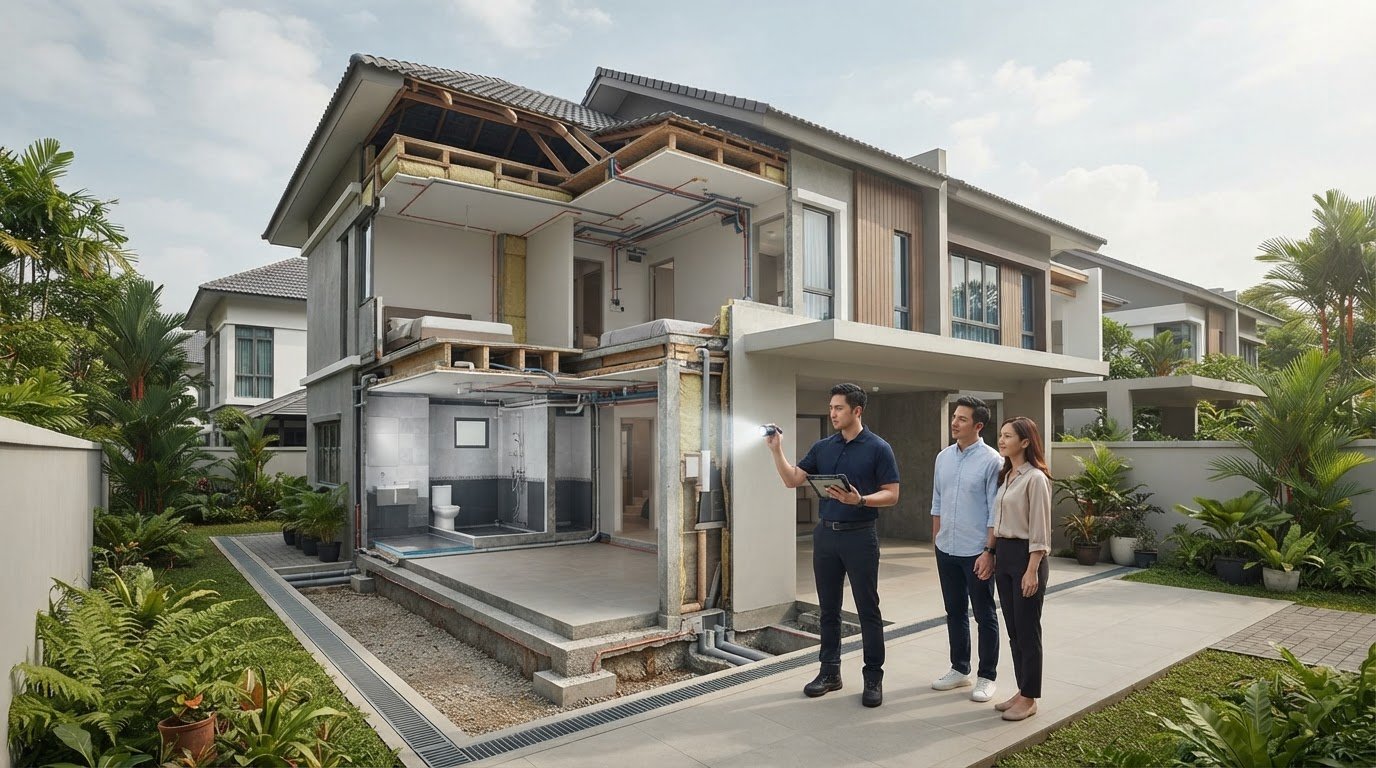
Fewer than 2,800 properties in Singapore carry the official distinction of a Good Class Bungalow, making them rarer than many of the world’s most exclusive luxury assets. If you’ve ever wondered exactly what is a good class bungalow, you aren’t alone. Many seasoned investors often mistake a large detached house for a GCB, but the difference lies in a set of non-negotiable planning parameters that protect the long-term value of these estates.
It’s understandable to feel overwhelmed by the strict Urban Redevelopment Authority (URA) constraints and the specific eligibility requirements for acquisition. We’ve developed this guide to provide the clarity you need to evaluate these prestigious properties with confidence. You’ll discover the technical specifications, such as the 1,400 square meter minimum plot size, and gain a strategic framework for viewing these 39 gazetted areas as a secure legacy for your family.
Key Takeaways
- Identify the 39 gazetted enclaves where GCBs are permitted to ensure your investment is protected by the Urban Redevelopment Authority’s strict zoning.
- Master technical planning constraints, including the 40% maximum site coverage rule, that preserve the privacy and greenery of these premier estates.
- Review the specific URA criteria for what is a good class bungalow to understand why these properties represent the pinnacle of Singapore’s residential hierarchy.
- Understand the rigorous eligibility requirements under the Residential Property Act and the strategic considerations for acquiring these restricted assets.
- Gain a competitive advantage by learning how to navigate the 2026 market through discretion and access to off-market listing opportunities.
Defining the Good Class Bungalow: The Apex of Singapore Real Estate
Good Class Bungalows (GCBs) represent the absolute zenith of Singapore’s residential hierarchy. These estates are often referred to as the “Crown Jewels” of the local property market, not simply because of their scale, but due to their extreme scarcity and the rigid regulatory framework that governs them. While many luxury residences exist across the island, only approximately 2,800 plots carry the official GCB status. This limited supply ensures that these assets remain highly resilient against market volatility, serving as a secure store of wealth for generations.
Understanding what is a good class bungalow requires moving beyond the aesthetics of a large home. A standard detached house might offer significant square footage, yet it lacks the specific legal and planning protections afforded to a GCB. The Urban Redevelopment Authority (URA) maintains these standards to preserve the low-density, high-privacy character of Singapore’s most historic residential enclaves. Ownership is a statement of both financial success and strategic foresight.
The Three Pillars of GCB Classification
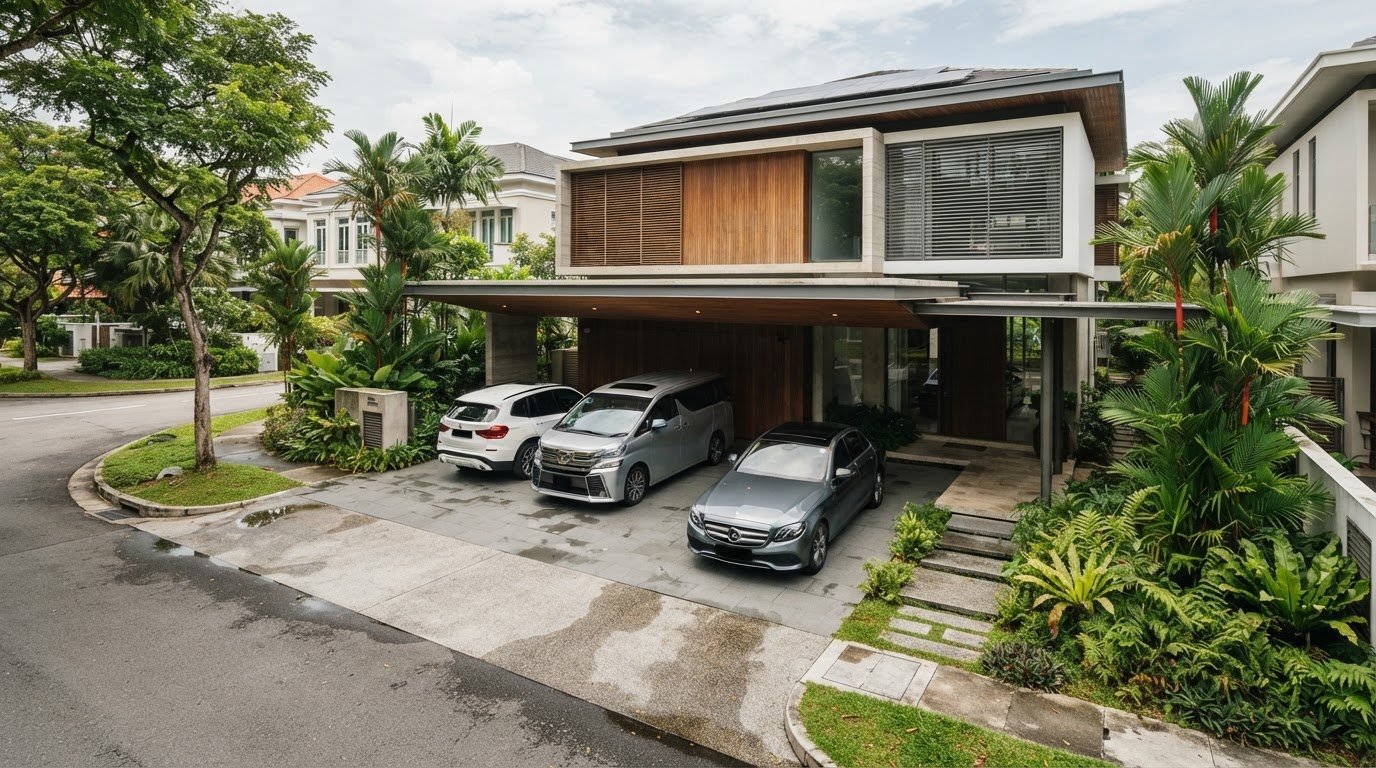
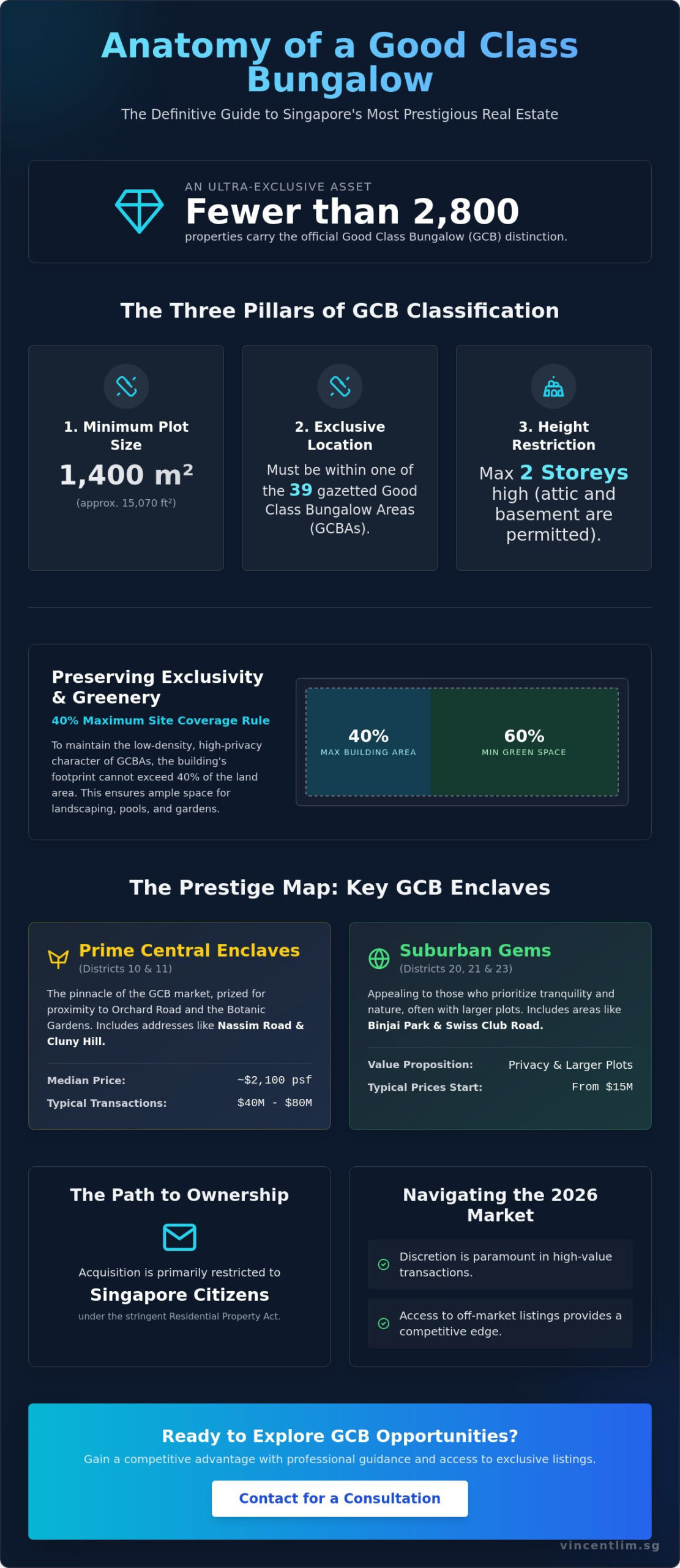
Strict criteria define this asset class. First, a GCB must have a minimum land plot size of 1,400 square metres, which is approximately 15,070 square feet. This requirement is non-negotiable. Even a magnificent home on 1,300 square metres cannot be classified as a GCB. Second, the property must be located within one of the 39 designated Good Class Bungalow Areas (GCBA). If a large home sits outside these gazetted zones, it is technically a detached house, regardless of its opulence. Finally, building height is strictly capped at two storeys, although an attic and basement are permitted to maximize utility without compromising the estate’s profile.
The Historical Evolution of the GCB Term
The term “Good Class Bungalow” was introduced in the 1980s as a formal planning instrument. The URA sought to protect the unique character of these areas from urban intensification. These estates often draw from the architectural heritage of Singaporean bungalows, evolving from colonial-era black-and-white houses into contemporary masterpieces. This transition reflects a blend of historical prestige and modern innovation. By enforcing these rules, the government ensures that these enclaves remain lush, green, and secluded, providing a sanctuary that is increasingly rare in a densely populated city-state.
The 39 Designated Good Class Bungalow Areas (GCBA)
Location is the final arbiter of what is a good class bungalow. While a property may meet every architectural and land size requirement, it cannot claim GCB status unless it sits within one of the 39 specific enclaves gazetted by the Urban Redevelopment Authority (URA). These designated areas are concentrated primarily in the prime central districts 10 and 11, extending into the exclusive corridors of districts 20, 21, and 23. This geographic restriction creates a “Prestige Map” that defines Singapore’s most elite residential hierarchy.
The 39 GCBAs include legendary addresses such as Nassim Road, Cluny Hill, Dalvey Estate, and Chatsworth Park. Each enclave possesses a distinct character, from the colonial heritage of the Ridout Park area to the modern, lush seclusion of Binjai Park. If you’re evaluating a specific plot within these enclaves, it’s vital to consult an expert in Good Class Bungalow sales to ensure the site meets all regulatory standards before proceeding with an acquisition.
Prime Central Enclaves: Districts 10 and 11
Districts 10 and 11 represent the historical heart of the GCB market. Nassim Road and Cluny Hill are widely regarded as the pinnacle of this asset class, often commanding the highest price-per-square-foot benchmarks. In 2025, the median price for GCBs reached approximately $2,100 psf, with prime District 10 plots often transacting between $40 million and $80 million. These areas are prized for their proximity to the Orchard Road shopping belt and the Singapore Botanic Gardens, a UNESCO World Heritage site. The scarcity of available plots in these core regions ensures they remain the most sought-after legacy assets for ultra-high-net-worth individuals.
The Suburban Gems: Districts 20, 21, and 23
Moving toward the western and central-northern regions, enclaves like Binjai Park, Swiss Club Road, and Chestnut Avenue offer a different value proposition. These areas often feature larger plot sizes and a higher degree of privacy, appealing to families who prioritize tranquility and a closer connection to nature. While still commanding significant premiums, prices in Bukit Timah (Districts 11 and 21) typically ranged from $15 million to $40 million in 2026. These “suburban gems” provide a sanctuary from the city’s bustle without sacrificing accessibility, making them an essential component of the 39 protected zones that define Singapore’s landed excellence.
Planning Constraints and the Strategic Impact on GCB Valuation
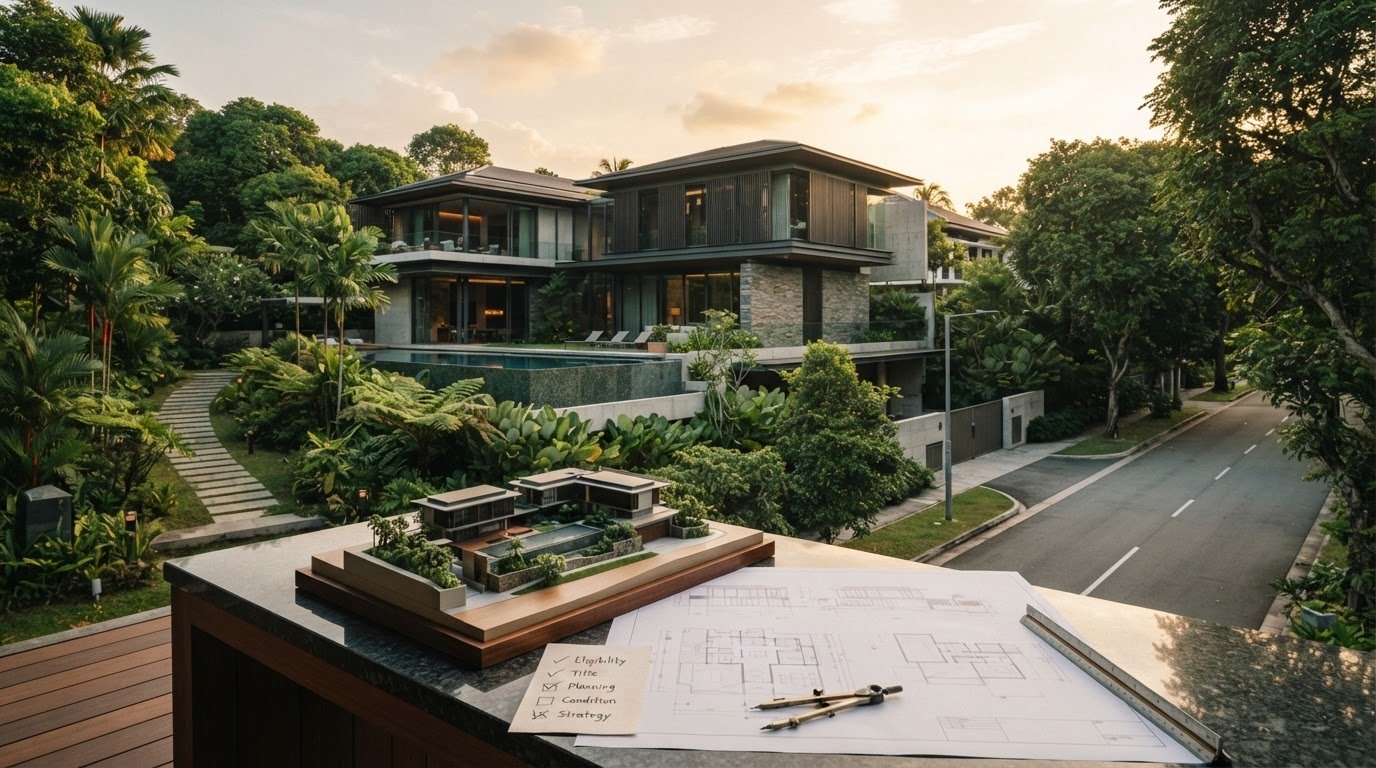
The valuation of these trophy assets is inextricably linked to the rigid planning parameters that govern their development. While the previous sections established the definition and location of these estates, a strategic investor must understand how regulatory constraints dictate the actual utility of the land. Determining what is a good class bungalow involves a deep dive into the Urban Redevelopment Authority’s (URA) specific planning parameters, which prioritize low-density living and lush greenery over intensive land use.
One of the most critical rules is the maximum site coverage limit. The building footprint of a GCB cannot exceed 40% of the total land area. This ensures that at least 60% of the plot remains dedicated to open space, landscaping, and setbacks. These setbacks are essential for maintaining the high degree of privacy expected between neighboring estates. Unlike standard detached houses where structures might feel crowded, GCB regulations mandate significant distances from the boundary lines. These rules aren’t merely restrictive; they’re the primary reason these neighborhoods retain their serene, park-like atmosphere that justifies a premium price point.
The specific GCB land size dictates the potential for future redevelopment and the overall scale of the residence. Larger plots offer more flexibility for expansive floor plates while staying within the 40% footprint limit. Additionally, many GCB areas fall under tree conservation zones. Removing mature trees often requires specific approval, and a failure to account for these environmental regulations can lead to significant delays in construction or renovation. Strategic planning must account for these natural features early in the acquisition process.
Architectural Possibilities Within Constraints
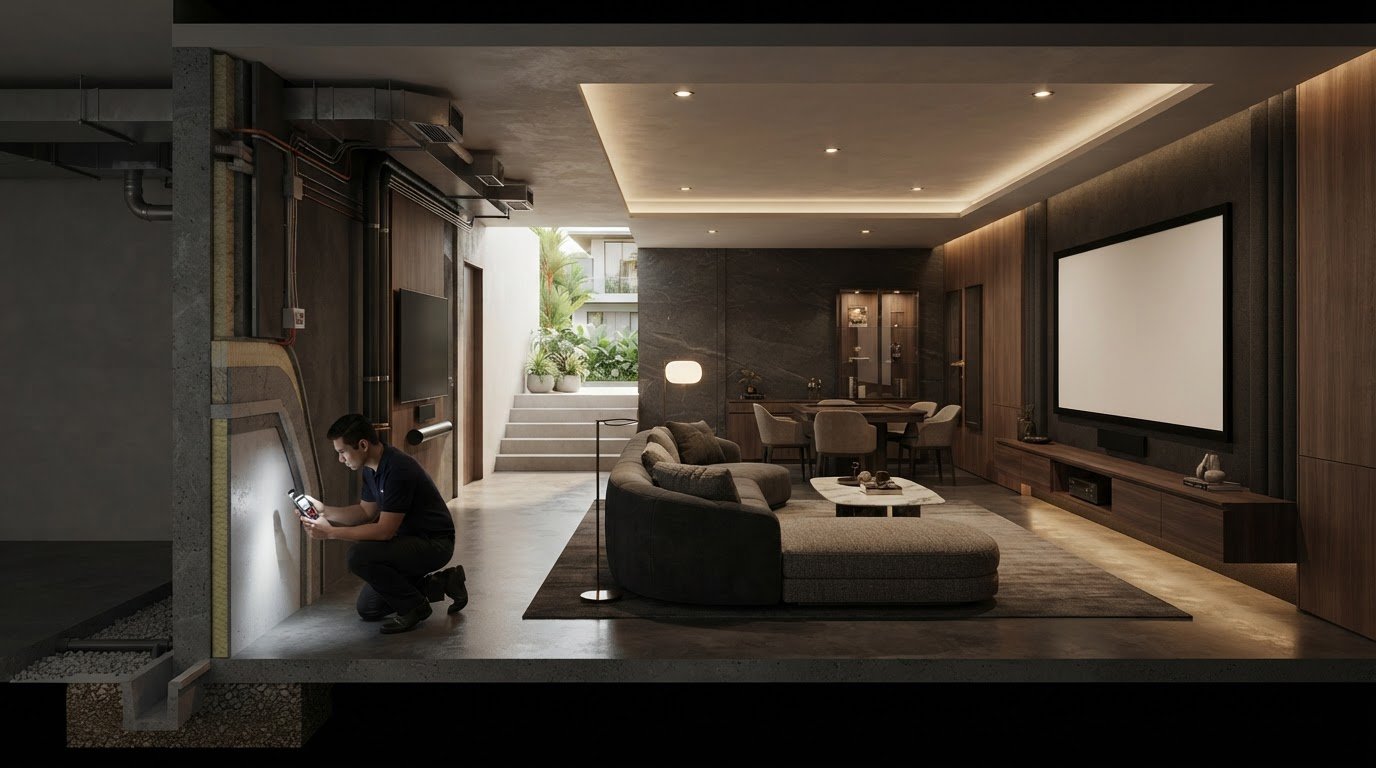
Savvy architects utilize innovative strategies to maximize usable space without breaching the two-storey height limit. The integration of basement levels and attic storeys has become a standard practice in modern GCB design. Basements often house private galleries, wine cellars, or expansive entertainment suites, while attics provide additional bedrooms with panoramic views. These additions allow owners to incorporate olympic-sized pools and vast entertainment wings while respecting the URA’s focus on a low-rise profile. This careful coordination of space ensures the home remains functional for multi-generational living.
Reconstruction vs. New Build: Financial Implications
Deciding between “Additions and Alterations” (A&A) and a total rebuild is a complex financial calculation that impacts the estate’s long-term worth. An A&A approach may be faster and more cost-effective if the existing structure is sound and matches the owner’s aesthetic. However, a total rebuild allows for the integration of modern smart-home technology and superior sustainable materials from the ground up. These planning constraints protect the long-term resale value of the estate by preventing over-development. It ensures that every GCB remains a rare, high-quality asset that isn’t easily replicated in the open market.
Acquisition Strategy: Eligibility and Ownership Rules
The legal framework surrounding ownership is as rigorous as the architectural standards. Under the Residential Property Act, these estates are classified as restricted property. This means that when asking what is a good class bungalow from an acquisition standpoint, the answer is primarily a “Singapore Citizen-only” asset. This restriction serves to keep the most prestigious land in the hands of the nation’s citizens, ensuring that these “Crown Jewels” remain a local legacy. It’s a deliberate policy that maintains the exclusivity and cultural significance of the 39 gazetted areas.
Permanent Residents (PRs) aren’t entirely excluded, but the path is significantly more complex. A PR must make a formal application to the Land Dealings Approval Unit (LDAU). Approval is typically contingent on the individual having made an exceptional economic contribution to Singapore. This isn’t a mere administrative formality; it’s a deep dive into the applicant’s professional and financial background. Most PRs find that the criteria are stringent, with the government prioritizing those who have demonstrated long-term commitment to the country’s growth.
From a strategic perspective, many ultra-high-net-worth individuals compare GCBs to luxury condos for sale Singapore. While luxury condominiums offer liquidity and global appeal, GCBs provide unparalleled wealth preservation. Land is the ultimate finite resource in this city-state. A condo is a unit in the sky, but a GCB is a stake in the soil itself. This fundamental difference makes the bungalow a superior hedge against inflation and market volatility. If you’re considering entering this exclusive market, we invite you to view our current portfolio of Good Class Bungalow sales to find an asset that aligns with your legacy goals.
The Exemption Clause: Can Foreigners Own GCBs?
Historically, rare exemptions were granted to foreigners who demonstrated exceptional economic value. This vetting process by the LDAU is exhaustive and considers factors like investment scale and job creation. In recent years, these approvals have become increasingly scarce. The government has tightened the criteria to ensure that landed property remains accessible primarily to citizens. For most foreign investors, the path to GCB ownership effectively begins with the journey toward citizenship, as the bar for “exceptional contribution” remains incredibly high.
GCBs as a Legacy Asset for Generations
Singaporean families often view these properties through a “Land-as-Gold” lens. In a nation where space is the most valuable commodity, owning one of the 2,800 GCB plots is the ultimate defensive investment. Estate planning often revolves around these homes, as they serve as a multi-generational anchor for the family’s wealth. Even during global financial downturns, the price resilience of the GCB market remains remarkable. The lack of supply creates a permanent floor for valuations, making them a cornerstone of any sophisticated wealth management strategy. For owners who have stewarded these assets over the years, understanding how to sell my landed property Singapore at maximum value requires navigating the updated Seller’s Stamp Duty window and the limited buyer pool created by LDAU restrictions.
Navigating the 2026 GCB Market with Professional Guidance
Acquiring an asset of this magnitude requires more than just capital; it demands a sophisticated understanding of the current market climate. In 2026, the supply-demand imbalance remains the defining characteristic of the luxury segment. With fewer than 2,800 plots available, the competition for prime estates has intensified. Simply understanding what is a good class bungalow won’t secure the keys to one. Success in this tier depends on discretion and access to off-market opportunities that never reach public portals.
A seasoned landed property specialist provides the strategic oversight necessary to identify undervalued opportunities within the 39 gazetted areas. This involves analyzing recent transaction data, such as the 2025 median price of $2,100 psf, while forecasting future capital appreciation. The GCB acquisition process is a meticulous journey that starts with eligibility verification and ends with a seamless transfer of a legacy asset. Every step must be executed with precision to ensure the buyer’s interests are protected.
Discretion is the currency of the GCB market. Many of the most significant transactions occur privately to protect the anonymity of both parties. By the time a property is listed on a mainstream website, the most savvy investors have likely already passed on it. Working with a partner who has deep roots in these exclusive enclaves is the only way to gain a true competitive advantage in 2026.
Valuation Nuances: Beyond the Per-Square-Foot Price
Determining what is a good class bungalow worth involves assessing factors that go beyond simple land size. A plot’s shape, terrain, and frontage serve as significant value multipliers. A rectangular plot with a wide frontage often commands a higher premium than an irregular, landlocked site. Orientation and “Feng Shui” factors also play a massive role in high-end transactions, often influencing a buyer’s decision as much as the architectural design. Historical significance can also add a layer of prestige, as estates with a storied past are frequently viewed as more desirable legacy assets.
The Vincent Lim Advantage: Strategic Brokerage
We provide more than just brokerage; we offer a bespoke advisory service designed for the ultra-high-net-worth investor. Our approach leverages a deep network to provide exclusive access to off-market GCB listings that are otherwise inaccessible. We’re committed to transparency and integrity, ensuring that every recommendation is rooted in data and strategic foresight. Our goal is to act as your trusted guide, helping you diversify your portfolio through the most elite real estate Singapore has to offer while maintaining the highest standards of professional service.
Securing Your Legacy in Singapore’s Most Exclusive Enclaves
Owning a Good Class Bungalow is the ultimate realization of a long-term wealth preservation strategy. By understanding the rigorous URA planning parameters and the geographic exclusivity of the 39 gazetted areas, you can approach this market with the confidence of a seasoned investor. These estates aren’t merely residences; they’re finite assets that offer unparalleled privacy and capital resilience in a land-scarce nation.
Discovering what is a good class bungalow from a technical and strategic perspective is only the beginning of the journey. To navigate the complexities of high-stakes transactions and off-market opportunities, you need a partner with a master’s level of industry discipline. Vincent Lim, Executive Associate Director at OrangeTee & Tie, has specialized in GCB and high-end landed transactions since 2004. With a proven track record in luxury legacy planning, he provides the refined, white-glove service necessary to secure your family’s future.
Consult Vincent Lim for a Bespoke GCB Acquisition Strategy and take the first step toward acquiring a trophy asset that will stand the test of time. Your journey toward Singapore’s most prestigious asset class deserves nothing less than excellence.
Frequently Asked Questions
What is the absolute minimum land size for a Good Class Bungalow?
The absolute minimum land size for a Good Class Bungalow is 1,400 square metres, which is approximately 15,070 square feet. This non-negotiable planning parameter is set by the Urban Redevelopment Authority to ensure every estate maintains a low-density profile. If a plot falls even slightly below this threshold, it cannot carry the official GCB title regardless of its location or design.
Can a Permanent Resident (PR) buy a GCB in Singapore?
A Permanent Resident can purchase a GCB only after obtaining formal approval from the Land Dealings Approval Unit (LDAU). The vetting process is rigorous; applicants must typically demonstrate an exceptional economic contribution to Singapore. In recent years, these approvals have become increasingly rare as the government prioritizes local citizens for the ownership of restricted landed property.
How many Good Class Bungalows are there in Singapore as of 2026?
There are approximately 2,700 to 2,800 Good Class Bungalows in Singapore as of 2026. This fixed supply is a primary driver of the asset’s prestige and long-term value resilience. Because the government rarely gazettes new areas, the extreme scarcity of these plots ensures they remain the most sought-after residential assets in the nation’s property hierarchy.
What are the 39 designated Good Class Bungalow Areas?
The 39 designated areas include elite enclaves such as Nassim Road, Cluny Hill, Chatsworth Park, Dalvey Estate, and Binjai Park. These gazetted zones are concentrated in prime residential districts 10 and 11, along with specific pockets in districts 20, 21, and 23. Each area is protected by strict zoning laws to preserve the unique character and privacy of the neighborhood.
Is it possible to subdivide a GCB plot into smaller units?
Subdividing a GCB plot is only permitted if each resulting parcel meets the minimum 1,400 square metre requirement. Because most GCB plots are between 1,400 and 2,000 square metres, subdivision is rare and technically difficult. This regulation prevents the densification of these enclaves and protects the long-term integrity of the asset class for future generations.
Why are GCBs considered a better investment than luxury condominiums?
GCBs are considered superior investments because they offer direct land ownership and extreme scarcity. While luxury condominiums are subject to higher supply fluctuations, the fixed number of GCB plots creates a permanent floor for valuations. This “land-as-gold” philosophy makes them an essential tool for multi-generational wealth preservation and a reliable hedge against market volatility.
What is the site coverage limit for building a GCB?
The building footprint of a GCB cannot exceed 40% of the total land area. This site coverage limit ensures that 60% of the estate remains dedicated to open spaces, landscaping, and setbacks. These rules are vital for maintaining the high degree of privacy and lush environment that defines what is a good class bungalow in the eyes of the URA.
What happens if a house meets the land size criteria but is not in a designated GCBA?
If a house meets the 1,400 square metre size requirement but sits outside the 39 gazetted areas, it is classified as a detached house. It does not carry the “Good Class Bungalow” title or the same level of regulatory protection from the URA. Understanding what is a good class bungalow requires recognizing that the GCBA designation is just as important as the physical dimensions of the land.