What if the most costly concern in a landed home is one you can’t see during a viewing? A careful walk-through can reveal visible warning signs, but it can’t confirm the condition of concealed structures, wiring or plumbing. This landed property inspection checklist singapore buyers can use helps you assess what’s observable, document it clearly and identify where professional checks may be needed.
Look beyond the finishes. In an older property, past alterations, water ingress, drainage and ageing building systems can raise questions that deserve closer attention. A visual inspection is a useful first step, not a technical assessment or certification.
This practical guide takes you through the exterior, roof, rooms, wet areas, visible services and site drainage. It also explains how to record observations, review available property documents and distinguish routine maintenance from concerns that may warrant specialist follow-up. A systematic viewing helps you ask informed questions and weigh the findings as part of your purchase decision.
Key Takeaways
- Use the landed property inspection checklist singapore to follow a consistent route and record visible concerns without treating them as a technical diagnosis.
- Look beyond interior finishes: the site perimeter, roof, outbuildings and drainage can reveal issues a room-by-room viewing may miss.
- Separate what you can observe from what requires performance testing, and avoid unsafe or unfamiliar equipment during your viewing.
- Turn inspection notes into focused questions by identifying gaps and reviewing relevant property, approved-plan and renovation records.
- Use documented concerns to guide follow-up and assess how they may affect safety, everyday use or future plans before deciding.
Why a Landed Property Inspection Checklist Matters Before Buying in Singapore
A pre-purchase inspection is a systematic review of a home’s observable condition before you decide whether to buy. It helps you spot concerns, record where they appear and identify questions for follow-up. It can’t guarantee that every defect will be found: finishes may conceal underlying conditions, and a viewing can’t verify inaccessible structures or systems.
A landed home calls for a wider review than an interior-only viewing. The building envelope, site boundaries, external areas, drainage and property-specific services all contribute to the overall picture. A landed property inspection checklist singapore buyers can use should guide attention across the whole property while separating visible warning signs from matters that need specialist assessment.
What can a buyer assess during a viewing?
Look for observable clues, not definitive diagnoses. These may include ceiling or wall stains, cracks, persistent musty or unusual odours, water pooling near drains, deteriorated finishes and signs of patch repairs. Note each location and whether similar signs recur elsewhere. A repeated pattern is worth clarifying, but appearance alone can’t establish its cause or severity.
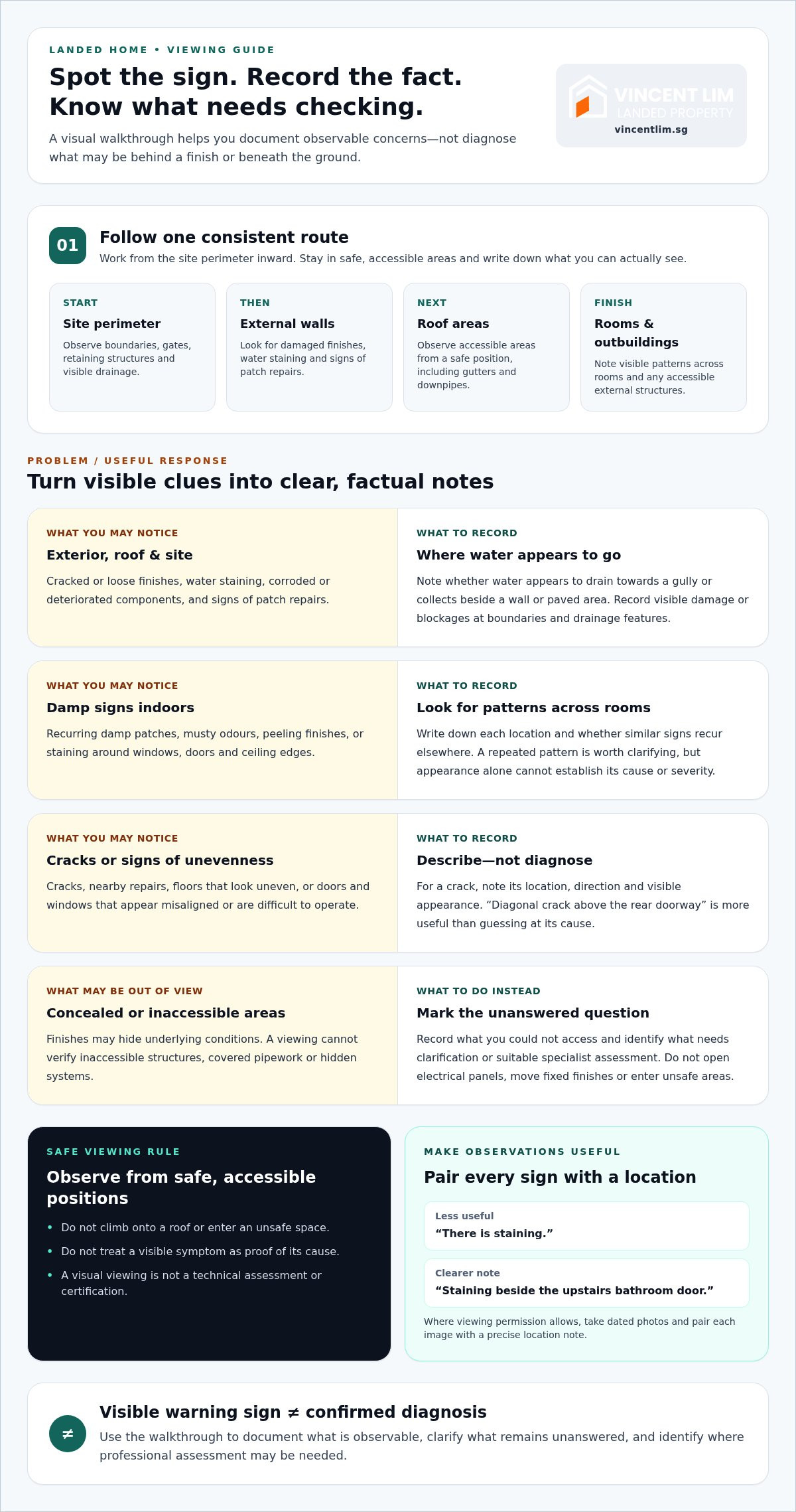
You can’t verify concealed structures, covered pipework or inaccessible systems by sight. Don’t open electrical panels, move fixed finishes or enter unsafe areas. Where viewing permission allows, take dated photographs and pair each image with a precise location note, such as “staining beside the upstairs bathroom door”. A clear record makes later questions and appropriate technical follow-up more focused.
How is a landed home different from a condominium?
With a landed property, consider the roof and external walls, site boundaries, outdoor areas, drainage and services specific to the home. Access also varies by layout. A terrace house may share a party wall, a semi-detached home has an adjoining side, and a detached house has its own perimeter on all sides. These differences affect what you can see during a viewing and what may need further clarification.
A visual walkthrough records what can be seen; a technical building assessment investigates condition beyond appearance. Keep that distinction clear. Professional inspection services like Lin Inspects highlight how technical precision brings essential peace of mind to buyers evaluating major real estate assets. Use your notes to identify what is observable, what remains unanswered and what could affect safety, use or future plans. The checklist is a decision-making aid, not a substitute for specialist judgement.
Inspection takeaway
- Observe: Note visible signs and their locations.
- Document: Keep dated photos and concise notes, where permitted.
- Clarify: List unanswered questions and areas you couldn’t access.
- Assess: Consider how unresolved concerns may affect the purchase decision.
Inspect the Landed Home’s Structure, Roof, Boundaries and Drainage
Follow the same route at each viewing to reduce the chance of overlooking an area: begin at the site perimeter, continue along the external walls, observe accessible roof areas from a safe position, then move through the interior rooms and any outbuildings. Record what you can see, not what you assume is happening behind a finish or beneath the ground. A landed property inspection checklist singapore buyers can follow helps organise observations and identify where technical assessment may be needed.
What to check on the exterior, roof and site
Look for cracked or loose finishes, water staining, corroded or deteriorated components and signs of patch repairs. From safe, accessible positions, observe the roof, gutters, downpipes, balconies and external structures. Note whether water appears to drain towards a gully or collects beside a wall or paved area. Don’t climb onto a roof, enter an unsafe space or treat a visible symptom as proof of its cause.
Check boundary walls, gates, retaining structures and visible drainage features for damage, movement, blockages or deterioration. A viewing can record their visible condition, but it can’t confirm a legal boundary or determine the structural condition of a retaining wall. Roof spaces, concealed areas and other inaccessible parts may require suitable access and specialist assessment.
Which interior signs may point to further investigation?
Inside, note recurring damp patches, musty odours, peeling finishes and staining around windows, doors or ceiling edges. Look across several rooms for patterns rather than treating each mark in isolation. Observe whether doors and windows appear misaligned or are difficult to operate, and whether floors look uneven. These are observations to document, not diagnoses of structural movement or water entry.
For each crack, record its location, direction and visible appearance, then photograph it if viewing permission allows. Note whether similar cracks or repairs appear nearby. A qualified technical assessment can help determine what a visual viewing cannot. Keep the record factual: “diagonal crack above the rear doorway” is more useful than a guess about its cause.
Visible boundary features shouldn’t be confused with ownership or land-related records. For separate policy context, the Ministry of Law’s discussion of the Singapore Land Betterment Charge Act is distinct from a condition assessment. Once you’ve recorded site concerns, transaction guidance can help you consider how unanswered questions fit into your purchase decision. Explore Singapore landed-home purchase guidance.
Check Electrical, Plumbing, Drainage and Other Home Systems
Review each system separately, distinguishing visible condition from actual performance. A viewing may reveal a leak or damaged fitting, but it can’t establish the safety of concealed wiring, confirm system capacity or verify compliance. The landed property inspection checklist singapore buyers use should capture what’s observable and flag where records, testing or specialist assessment may be needed.
What can you observe about electrical and plumbing systems?
Look for visible damage, corrosion, water leaks, unusual odours and signs of past repairs around accessible fittings and service areas. With permission, and only where it’s safe, you may operate ordinary light switches and taps. Don’t open electrical panels, handle wiring or operate unfamiliar equipment. A switch or tap that appears to work during a brief viewing doesn’t verify electrical safety, the condition of concealed wiring or system capacity.
How should you assess drainage, air-conditioning and installed equipment?
Note visible leaks, pooling water, blocked outlets, unusual vibration or operating sounds. If equipment is demonstrated, record what was operated and what could not be tested. Don’t treat a brief demonstration as a performance assessment. Landed homes may also have property-specific equipment such as pools, lifts, pumps or water features. Record each item’s type, apparent condition and any operating limitations disclosed during the viewing.
Use the table to turn observations into clear follow-up questions without diagnosing the cause:
| Observation | Possible significance | Appropriate follow-up |
|---|---|---|
| Staining, corrosion or a visible leak near a pipe or fitting | May indicate a current or past plumbing issue | Record the location and ask what repair or maintenance information is available |
| Damaged fittings, exposed wiring or discoloured areas near electrical points | Could warrant an electrical safety check | Don’t touch or open equipment; arrange appropriate technical verification |
| Water pooling, a slow-draining outlet or a blocked-looking gully | May require closer review of drainage function | Note when and where it was observed, then seek suitable follow-up |
| Unusual noise, vibration or visible leakage from installed equipment | May point to a maintenance or operating concern | Record the equipment and any limits to its demonstration; review available service records |
Keep the notes factual and specific. “Water beneath the pump during viewing” is more useful than “pump faulty”. Conclusions about performance, safety and compliance require appropriate inspection records or specialist testing, not appearance alone.
Review Singapore Property Records and Turn Inspection Notes into Questions
Viewing notes become more useful when compared with relevant property records. A plan or repair document may help frame a question, but it doesn’t establish the home’s current condition or confirm that every alteration was approved. Use a consistent process to separate what you observed from what still needs clarification.
- Organise observations: Group notes by location and system, keeping photographs or viewing comments with each item.
- Identify unanswered issues: Flag matters such as an inaccessible roof area, visible patch repairs or an alteration whose history is unclear.
- Review relevant records: Consider available plans and documents related to each specific observation.
- Assess implications: Decide whether the issue calls for technical follow-up and how it may affect your intended use, future plans or purchase decision.
Which records may help explain the property’s condition?
Depending on the property and the issue, relevant documents may include title information, available architectural or structural drawings, renovation plans or approvals, warranties, maintenance records and documents relating to past repairs. For landed homes, approved drawings may help you understand the original design and compare it with visible alterations. BCA is the relevant agency for approved building plans. Access and document availability can vary, and the existence of a record doesn’t establish that the present condition matches it.
Keep enquiries specific. If an extension or internal alteration appears different from the available drawings, record its location and ask what supporting renovation documentation exists. The relevant records and approval status depend on the work and property, so avoid drawing conclusions from an incomplete file. For broader context on evaluating a terrace home purchase, see this terrace house acquisition guide.
How should buyers prioritise inspection findings?
Classify each item as a possible safety concern, potential major work, routine maintenance or cosmetic issue. These categories help organise follow-up; they aren’t technical conclusions. For every item, record its location, the evidence you observed, the question that remains and the follow-up needed. For example, note “water stain below the upstairs bathroom” rather than assuming the source is a leak.
Prioritise unresolved matters according to their possible effect on safety, everyday use and future plans. If a finding affects the next transaction step, this landed transaction process guide offers related transaction-stage context. For measured guidance on how inspection observations fit into a landed-home purchase, discuss your landed-home acquisition decision.
Use Your Inspection Checklist to Make a Confident Landed-Home Decision
A checklist is most valuable when it helps you decide what needs attention before you commit. Separate manageable maintenance, such as worn finishes, from unresolved concerns that could affect safety, daily use or future plans. A cosmetic mark alone doesn’t prove a structural problem, just as a freshly repaired surface doesn’t confirm that an underlying issue has been resolved.
When should inspection concerns change your next step?
Prioritise questions about possible safety risks, structural condition, water ingress and major systems. Where a viewing raises concerns, seek appropriate technical follow-up and review relevant records before relying on an assumption. Note what remains unknown and whether it could affect your intended use of the home.
Routine upkeep may be manageable within your plans. Unresolved concerns are different. If important questions remain unanswered before commitment, consider whether you need further information or assessment, or whether the property still suits your needs. Your notes can also support informed discussions about the transaction, including whether timing or negotiation warrants further consideration. They can’t guarantee a particular outcome.
How can property guidance support the wider decision?
Technical findings are one part of an acquisition decision. Weigh the home against your ownership goals, intended use, future plans and transaction context as well. An experienced landed-property agent can help you consider how those purchase factors fit together and which questions to resolve as the transaction progresses. Sales guidance doesn’t replace a technical inspection or professional assessment; each serves a different purpose.
Use your landed property inspection checklist singapore observations as a clear record, not a verdict on the property. The aim is to understand what you’ve seen, identify what still needs investigation and make a considered decision with that information in view. For broader landed-property acquisition considerations, explore landed-property guidance with Vincent Lim (OrangeTee & Tie).
Make Your Next Landed-Home Decision with Clarity
A thorough viewing isn’t about diagnosing every mark. It’s about recording what you observe, identifying what needs technical follow-up and weighing unresolved concerns against your ownership plans. The landed property inspection checklist singapore buyers use can bring structure to that process, from reviewing the home’s exterior and systems to organising records and prioritising questions.
Consider manageable upkeep separately from concerns that could affect safety, everyday use or future plans. Where important questions remain, seek appropriate technical assessment rather than relying on assumptions. Then weigh the findings alongside the wider purchase and transaction context.
Vincent Lim works in Singapore real estate, with sales experience across terrace, semi-detached, detached and Good Class Bungalow properties. For guidance on the acquisition considerations around a landed home, explore landed-property guidance with Vincent Lim. Speak with Vincent Lim about your landed-property purchase and the questions to consider as you move through the transaction.
Frequently Asked Questions
What should I check when viewing a landed property in Singapore?
Check the whole property, not only its interior finishes. Follow a consistent route around the site perimeter, external walls, accessible roof areas, interior rooms and outbuildings. Look for visible staining, cracks, deterioration, signs of repair, drainage concerns, leaks and unusual odours. Note each location and take dated photographs if permitted. A landed property inspection checklist singapore buyers can use helps organise findings, but it can’t verify concealed conditions.
Is a professional inspection necessary before buying a landed house in Singapore?
A professional inspection is a prudent step when visible concerns, inaccessible areas or unanswered questions could affect safety, use or future plans. A viewing can help you record observable condition, but it can’t test every system or establish the cause of a defect. For resale private property, the research guidance describes the sale as “as is, where is” and notes there is no statutory Defects Liability Period. Consider appropriate technical follow-up before committing.
Can I inspect a landed property myself before making an offer?
Yes. You can conduct a visual walkthrough and document what you observe before making an offer. Check the exterior, drainage, rooms, accessible service areas and visible equipment, but don’t open electrical panels, operate unfamiliar systems or enter unsafe areas. Record locations, dates and questions for follow-up. Your own review is a useful first step, not a technical assessment: concealed wiring, structural condition and system performance may require specialist access or testing.
What are common warning signs to look for in an older landed property?
Look for recurring damp patches, musty odours, peeling finishes, water staining, cracks, uneven-looking surfaces, corrosion and signs of patch repairs. Check around windows, ceilings, plumbing fittings and drainage features for visible deterioration or pooling water. Note whether concerns appear in several locations, but don’t assume their cause from appearance alone. Photograph cracks and record their location, direction and visible form so a qualified professional can assess them if needed.
Should I check renovation approvals and building plans before buying?
Review available architectural or structural drawings, renovation documents, approvals and records of past repairs where relevant to the property. Comparing visible alterations with available plans can help identify questions for follow-up, but an incomplete file doesn’t prove whether work was approved. Record availability and access vary by property and alteration. For building-plan information, BCA is the relevant agency; seek suitable professional advice if structural changes or unclear documentation raise concerns.
What happens if the inspection reveals defects after a viewing?
Document the issue promptly with its location, photographs and relevant viewing notes, then arrange appropriate technical assessment if its cause or significance is unclear. Review the sale documents and discuss the finding through the relevant transaction channels before deciding how to proceed. The implications depend on the defect, available evidence and transaction terms, so don’t assume that a seller must repair it or that a particular negotiation outcome is assured.
Does a landed property inspection guarantee that there are no hidden defects?
No. A visual walkthrough or professional inspection has limits, especially where finishes conceal structures, systems are inaccessible or testing is outside the agreed scope. An inspection can identify observable concerns and indicate where further investigation may be appropriate, but it can’t guarantee that every hidden defect will be found. Keep a clear record of what was inspected, what could not be accessed and which questions remain before weighing the findings in your purchase decision.