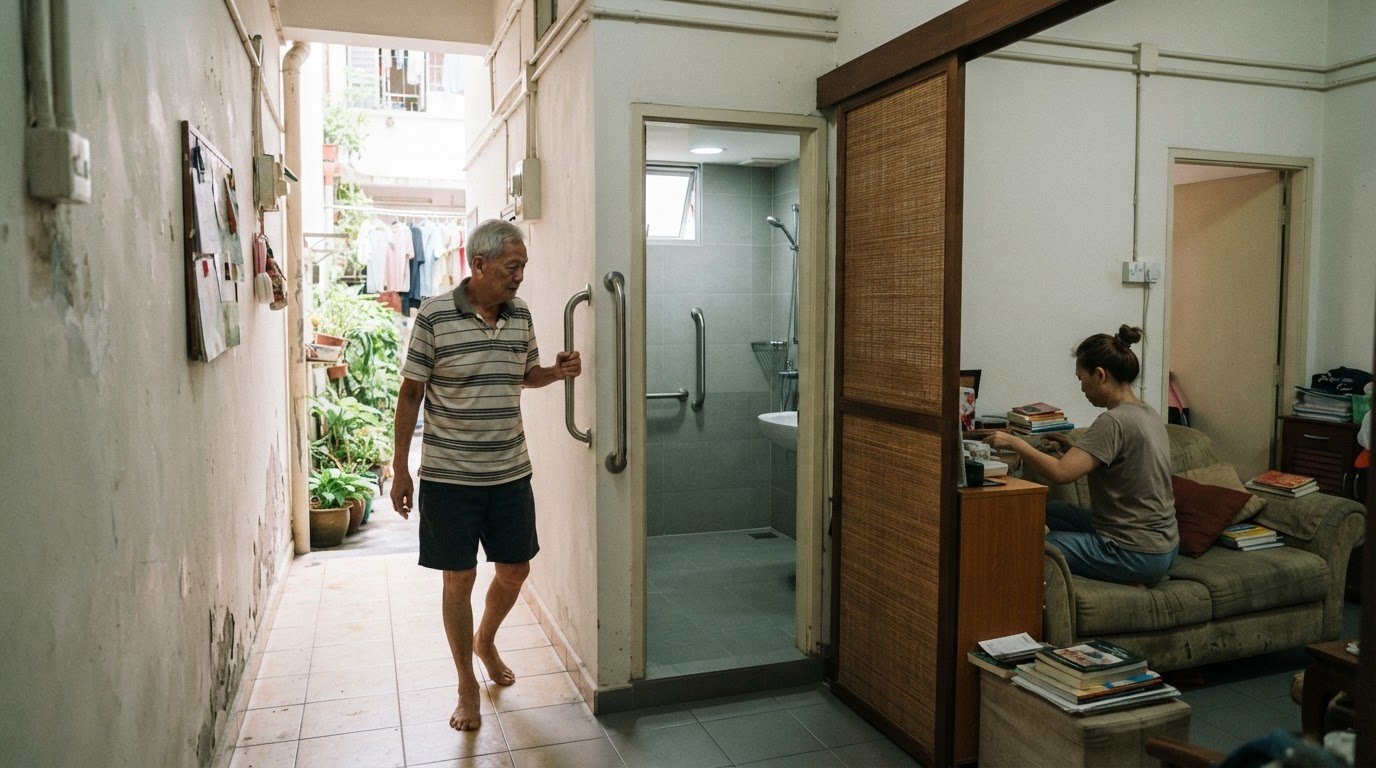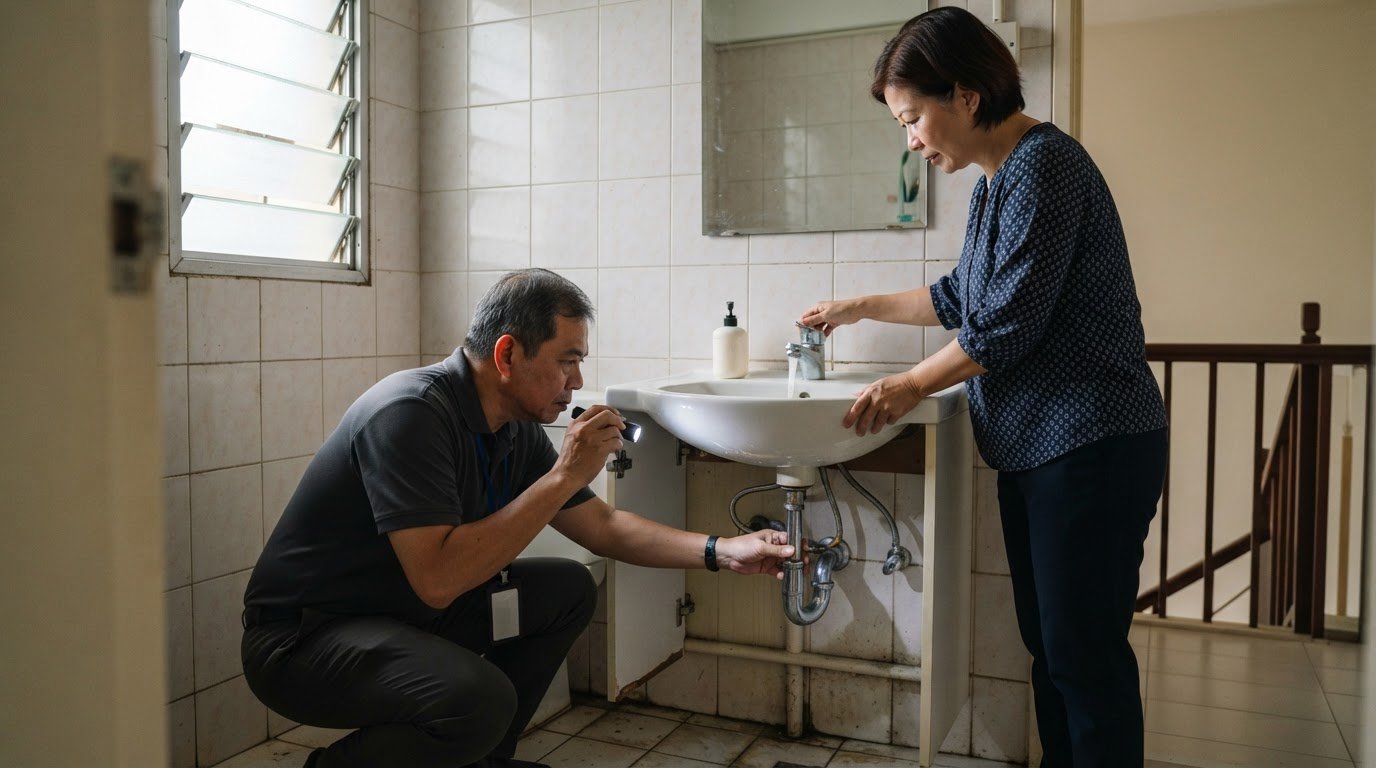
A seller-ordered inspection can help surface property issues before a home is listed, giving the seller time to understand the findings and plan next steps. A pre-sale home inspection for sellers is arranged before the sale process begins and reviews the home’s condition, but it doesn’t replace a buyer’s own inspection.
It’s understandable to want a clearer picture of your home before inviting prospective buyers to view it. A pre-listing inspection can identify areas that may need attention and provide a report to help you decide whether to repair or disclose concerns. It’s optional, and its value is helping you prepare with fewer surprises, not guaranteeing a particular sale outcome.
This guide explains what inspectors typically assess, how seller-ordered inspections work, and what add-on tests may be available. It also explains how property size, age, and inspection scope can affect costs, so you know what to consider when planning a sale in Singapore.
Key Takeaways
- A seller-arranged inspection can reveal property concerns before listing, while a buyer may still arrange an independent assessment later.
- Understand which appliances, major systems and structural features a standard inspection typically examines.
- Inspection scope, property characteristics and optional specialist tests influence the overall cost.
- Knowing how the inspection is arranged and how findings are reported can help you plan your sale with greater clarity.
What is a pre-listing inspection?
A seller arranges a pre-listing inspection before the home is marketed. It can reveal condition issues early, while leaving prospective buyers free to arrange their own inspection.
Pre-listing and buyer inspections
The main difference is who orders the inspection and when it takes place. A seller arranges and pays for a pre-listing inspection before marketing; a buyer’s inspection usually follows an accepted offer. Both assess the home’s condition, but the buyer chooses their inspector independently.
A seller-ordered report can identify issues before marketing begins. You can then consider repairs, prepare accurate property descriptions, or decide how to address findings during negotiations—a strategy residential brokerages like Ray Lyon Realty often recommend to help sellers avoid surprises once buyers submit offers. You may also share the report with prospective buyers. Even when a seller provides a clean report, buyers may still choose an independent inspection. A pre-sale home inspection for sellers can help you prepare, but it doesn’t replace a buyer’s assessment or guarantee a smooth transaction.
Honesty, Confidence, and Serious Buyers
Present inspection findings clearly rather than letting a buyer discover an issue unexpectedly. Sharing relevant information helps serious buyers assess the property with a clearer understanding of its condition.
For example, if a report identifies a repair concern, you can decide whether to address it before viewings or explain the finding during discussions. This may reduce the impact of an unexpected issue in negotiations, although buyers can still request changes after their own inspection. Real estate advisory firms such as DeFeo Luxury Properties note that upfront transparency often protects seller leverage and builds confidence among serious buyers. A transparent report can also help distinguish informed interest from assumptions about the home.
Defect Disclosure and Report Risks
A pre-listing inspection is not legally required for sellers. However, an inspection report does not answer every disclosure question in a Singapore sale. Keep property descriptions and statements about known conditions accurate.
Inspection findings can also create negotiation risks: buyers who see a defect may seek repairs, revisit their offer, or decide not to proceed. Sharing the report may help buyers understand its findings, but can also draw attention to unresolved issues. Review each finding, decide what action to take, and don’t present the inspection as proof that no other defects exist.
What do home inspectors check?
A typical inspection assesses accessible parts of a home, from the roof and structure to electrical and plumbing systems. The report records observed concerns and helps you organise follow-up decisions.
Systems and Components Inspectors Assess
Inspectors review major systems and structural features for visible concerns and assess their general condition. This matters because a roof issue, plumbing concern, or electrical fault may call for different follow-up decisions.
Assessments commonly cover heating and cooling, electrical, plumbing, gas, the roof, and structural elements. Inspectors may also examine the garage, attic, siding, windows, doors, and other interior or exterior components. For example, a report might note a visible roof concern alongside a window or door that needs attention. The inspection considers the home’s overall condition, rather than focusing on a single feature.
Testing Home Features and Systems
Inspectors assess accessible features and systems to understand how they appear to function at the time of the inspection. This gives you a clearer record of observed conditions and helps you prepare for questions about specific items.
Appliances that will remain with the home may be checked for general working order. Inspectors also assess major systems, including electrical, gas, heating, cooling, and plumbing. The report can distinguish an observed concern, such as an appliance that doesn’t operate as expected, from a visible issue with a structural feature. That distinction helps you identify which findings may need further attention.
Inspection findings describe conditions observed at the time; they don’t establish that every concealed area or component is free of problems. A roof, for instance, may receive a visual assessment, while an appliance staying with the property may be checked for basic operation. Read each report entry in context, noting the component and the concern recorded. This makes it easier to prioritise follow-up and respond clearly to buyer enquiries.
Inspection costs and add-on testing
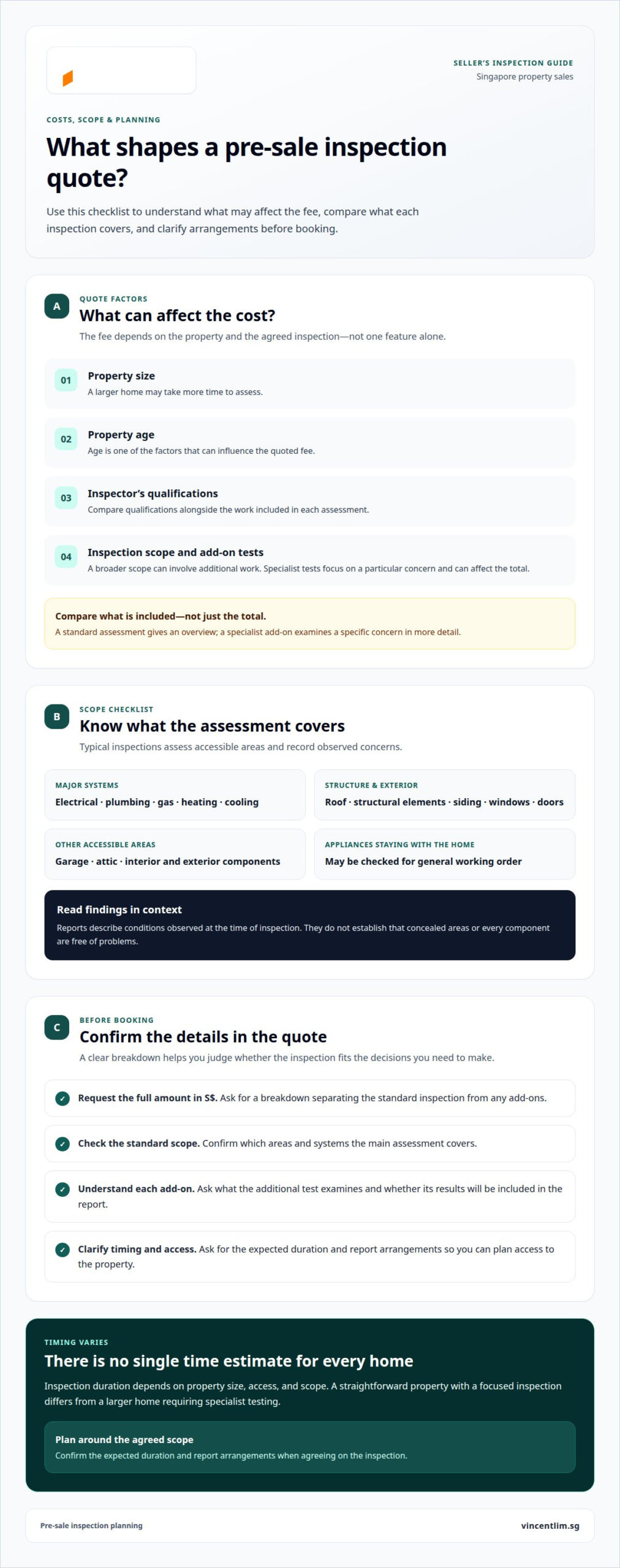
In Singapore, inspection costs depend on the property’s size and age, the inspector’s qualifications, and the agreed scope. Add-on tests can affect the total, so ask for the full amount in S$ before booking.
For a seller, compare the inspection scope with the decisions it will inform. A standard assessment gives an overview; a specialist add-on focuses on a particular concern. For example, if the property’s condition raises a specific question, targeted testing may provide more detail than a general inspection alone.
The cost of a pre-sale inspection isn’t determined by a single feature. A larger home may take more time to assess, while a broader scope can involve additional work. The property’s age and the inspector’s qualifications also affect the quoted fee. Compare what each assessment includes instead of assuming the lowest total covers as much as a broader inspection.
Ask for a breakdown that separates the standard inspection from any add-ons. Confirm which areas and systems the main assessment covers, what each additional test examines, and whether the report includes the results. This helps you decide whether an extra assessment addresses a concern relevant to the sale, rather than paying for a test without a clear purpose.
Inspection duration also varies with property size, access, and scope. There isn’t a reliable time estimate that applies to every Singapore home. A straightforward property and focused inspection differ from a larger home requiring specialist testing. Clarify the expected duration and report arrangements when agreeing on the scope, then plan access accordingly.
Use the findings to prioritise next steps: distinguish issues that need prompt attention from observations that simply need context. An add-on is most useful when it answers a specific question about the property. A clear scope, itemised S$ quote, and documented findings make the inspection easier to incorporate into your sale plan.
There is no single fixed cost for a pre-sale home inspection in Singapore. The fee depends on the home’s size and age, the inspector’s qualifications, the agreed scope, and any add-on tests.
How seller-ordered inspections work
A seller arranges the inspection before marketing, agrees on its scope, and pays for the assessment. In Singapore, it’s optional, so you decide whether early findings would help with sale planning.
Choosing a Qualified Inspector
Choose an inspector whose experience and proposed scope match the property and the questions you need answered. A clear scope shows which components will be assessed and what the report will cover.
Before proceeding, review how the inspector documents findings and explains observed concerns. For example, a report that identifies an electrical issue separately from a roof observation makes follow-up easier to plan. Focus on relevant property experience, transparent methods, and a report you can understand. Don’t assume every inspection covers the same areas.
Inspection Timing
Arrange the inspection before marketing, leaving time to review the findings. Early timing matters because it lets you consider repairs or prepare clear responses to buyer questions before marketing begins.
If you wait until viewings are underway, a newly identified concern may require decisions while potential buyers are already assessing the property. Scheduling before marketing starts also gives you time to decide whether specialist testing is relevant. The right timing depends on your readiness to act on the report, not simply the date of a planned viewing.
Preparing for the Inspection
Prepare by arranging access to the areas and systems included in the agreed scope. Clear access helps the inspector assess visible components and appliances that will remain with the home.
Before the appointment, make relevant rooms and access points available, and note known concerns for discussion. Sellers are advised to leave the home an hour before the inspection, giving the inspector space to work without the seller present. Once the report arrives, review each finding and decide which items need attention before marketing.
Inspection Requirements When Selling
A pre-sale inspection is not legally required for sellers in Singapore. Since it’s optional, decide whether early information would help you prepare the home and manage sale discussions.
Choosing not to commission an inspection doesn’t reduce the importance of accurate property descriptions or clear communication about known conditions. If you order one, treat its findings as information for planning, not as a guarantee that every issue has been identified. A seller-ordered inspection gives you an early view of observed concerns, while buyers remain free to arrange their own assessment.
For support planning a property sale, discuss your sale with Vincent Lim.
Vincent Lim (OrangeTee & Tie)
Vincent Lim (OrangeTee & Tie) can help sellers consider inspection findings alongside the wider decisions involved in a property sale. The report may inform how you prepare the home, communicate its condition, and approach buyer discussions, but it doesn’t replace an inspector’s assessment.
For owners selling landed property, the next step is to align inspection findings with the sale strategy. Vincent Lim’s services include terrace house, semi-detached house, detached house, and Good Class Bungalow sales. Whether you have a report or are considering an inspection before marketing, a considered sale plan can help keep decisions about property presentation and buyer discussions clear.
For guidance on selling your property, contact Vincent Lim (OrangeTee & Tie).
Make Your Next Sale Decision With Clarity
A pre-sale home inspection for sellers is most useful when its findings inform a deliberate sale plan, rather than becoming a report filed away. Consider what the information means for your property’s presentation, the questions prospective buyers may raise, and the decisions you want to make before discussions begin. This keeps the inspection connected to the practical work of selling, without treating every observation as a reason for extensive repairs.
The next step is to shape a clear approach to your sale. Weigh the property’s condition alongside your priorities, timeline, and intended buyer audience. A considered plan can help you communicate consistently and respond to enquiries with confidence, while leaving room to make decisions as the sale progresses.
For guidance on positioning your property and planning the sale, contact Vincent Lim (OrangeTee & Tie). Take the next step at a pace that suits your plans.
Frequently Asked Questions
What is a pre-sale home inspection, and how does it benefit sellers?
A pre-sale home inspection is an assessment commissioned by the seller before marketing the property. Its practical value is helping you make informed choices before buyer discussions begin. For example, organise the report’s findings alongside receipts or records for completed work, making it easier to explain which concerns were addressed and which remain open. It supports preparation, but doesn’t assure a particular sale result.
What does a pre-sale home inspection cover, and what is excluded?
A typical inspection reviews accessible components such as the roof, structure, electrical and plumbing systems, heating and cooling, and appliances staying with the home. Its report records observed conditions rather than certifying every concealed area or future performance. Specialist assessments may require a separate scope. If a finding raises a question beyond the general inspection, treat it as a distinct issue for further assessment.
Should sellers fix defects before listing or disclose them to buyers?
Decide based on the finding, its practical impact, and whether repair before marketing is feasible. Documented repairs may make it easier to explain the work, while unresolved concerns call for accurate, clear communication. Don’t assume that commissioning an inspection or sharing its report settles every disclosure question. For a specific defect, consider the applicable requirements and obtain appropriate professional advice before making representations to buyers.
How does a seller-commissioned inspection compare with a buyer’s inspection?
A seller commissions an inspection to understand the property before marketing; a buyer commissions one to assess the home independently during the purchase process. The reports may differ because each inspection takes place at a different stage and serves a different party’s decisions. You may share your report, but buyers can still arrange their own assessment and form their own view of the findings.
Are there Singapore-specific rules on disclosing defects when selling a property?
A pre-listing inspection is not legally required in Singapore, but property descriptions and statements about known conditions should remain accurate. An inspection report does not settle every disclosure question.