A landed home’s maintenance costs rarely arrive as one neat annual bill. Creating a landed property maintenance schedule means planning around different cycles: a home lift is typically serviced once every three months, while a pool may need cleaning once or twice a week.
Plan for recurring upkeep as well as repairs that may arise between scheduled visits. This guide covers exterior, household and garden tasks, and explains how to organise them into a practical budget. It also shows why your schedule should reflect the property’s features, including its roof, drainage, pests, pool and lift. A clear routine, with room for larger projects, makes landed-home maintenance easier to manage in Singapore.
Key Takeaways
- Plan periodic checks of exterior walls, roof, waterproofing and sealants to catch wear before it develops into a larger repair.
- Keep garden maintenance on a regular cycle: mow grass, prune shrubs, clear outdoor drains and prevent standing water where mosquitoes can breed.
- Budget for recurring upkeep as well as larger projects, and leave flexibility for hidden issues, particularly in older homes.
- Build household checks into the schedule, including plumbing, HVAC filters, gutters and pest activity, so small concerns are less likely to be overlooked.
1. Façade, external-wall and sealant maintenance
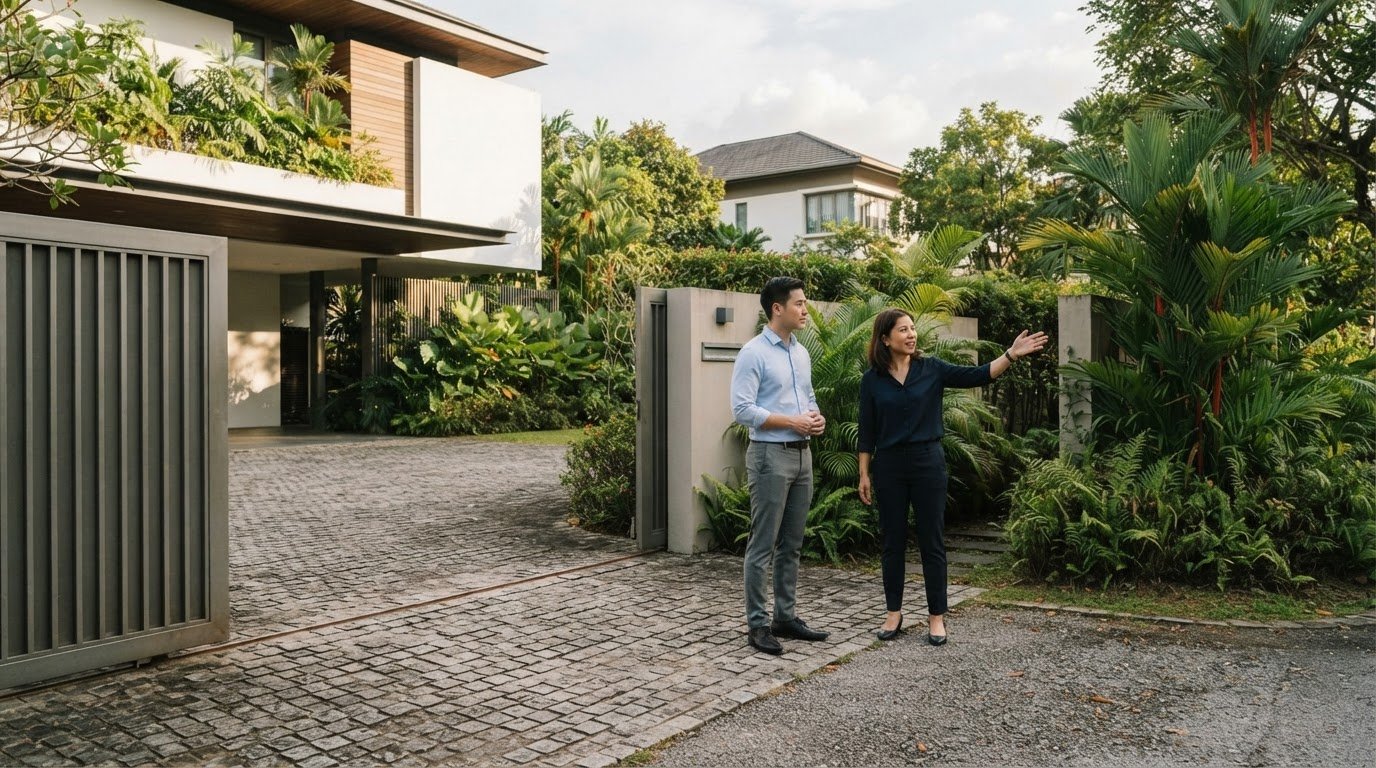
In Singapore, schedule inspections of the roof, external walls, paintwork and sealants. Look for cracked finishes, chipped paint, gaps around joints and signs of water entry. Addressing these early can limit moisture damage and make repairs easier to plan.
Exterior repainting may be needed once every five to seven years. Before painting, pressure washing can remove accumulated dirt and algae. Check the surface first: cracks and failing sealants need attention before fresh paint is applied. Inspect roof tiles and waterproofing periodically, too. Clay roof tiles are more fragile than concrete tiles and may need replacing more often.
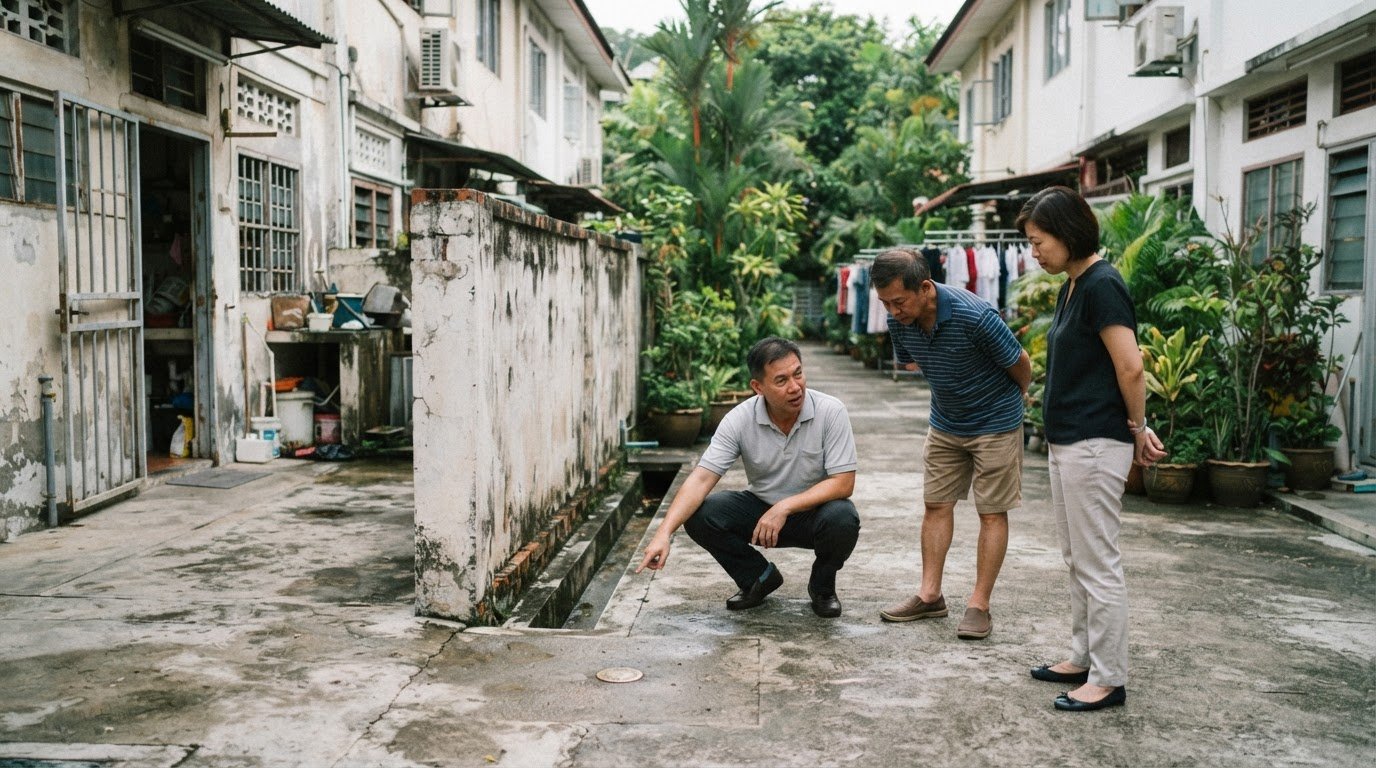
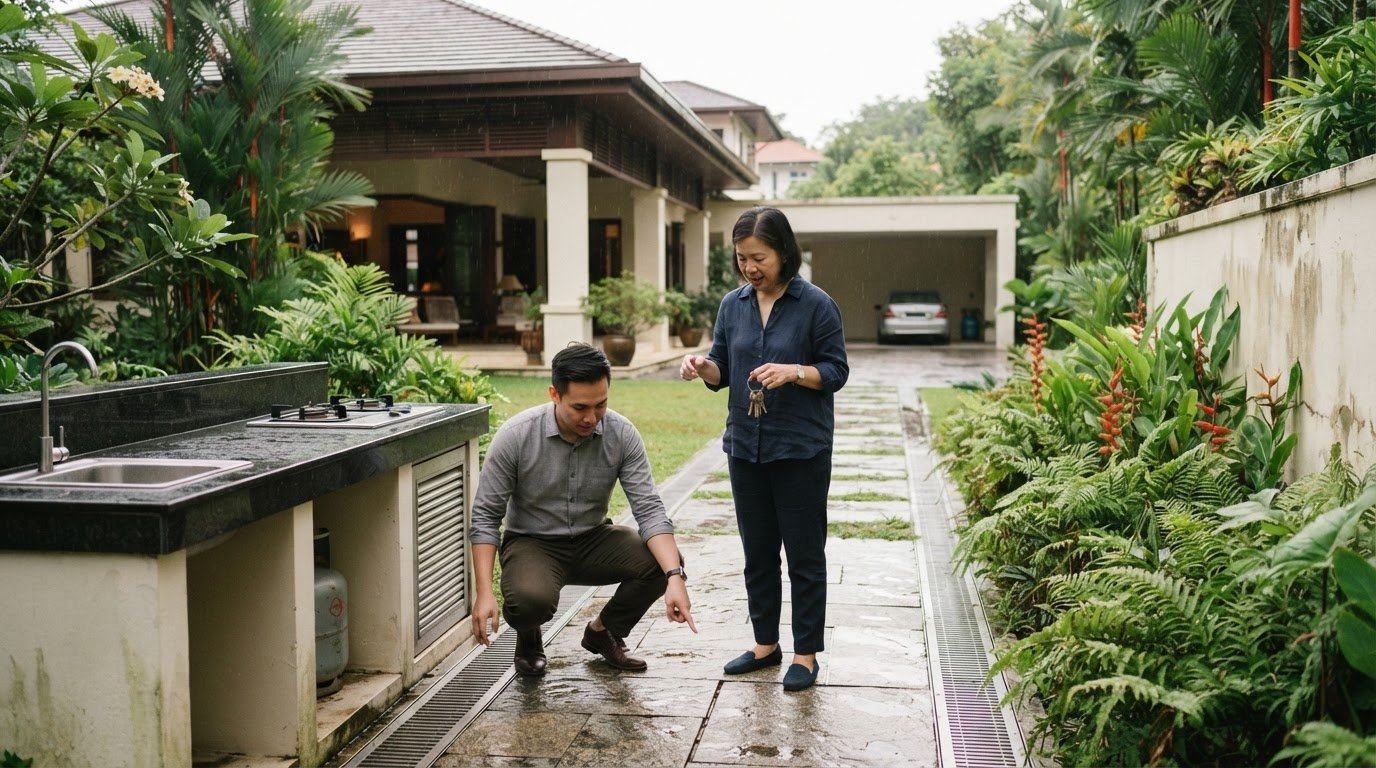
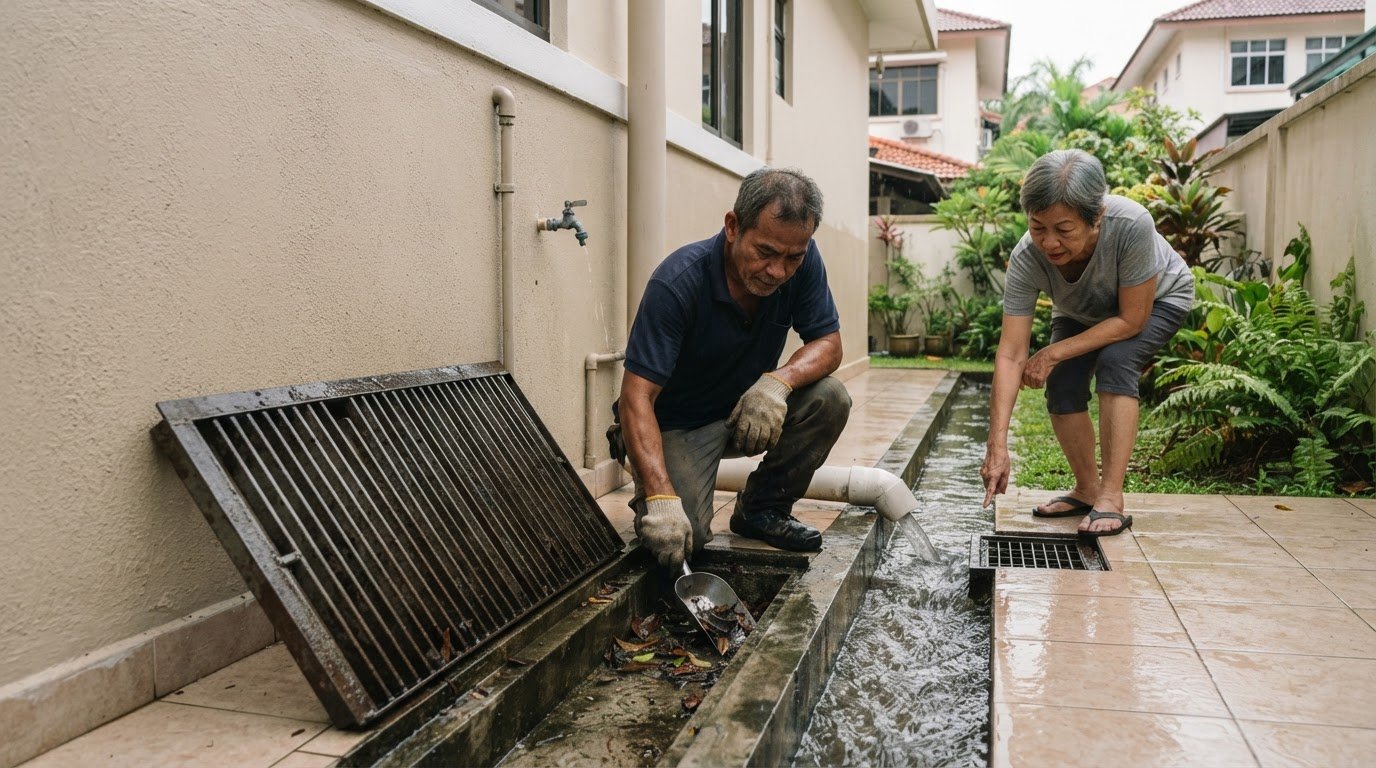
Drainage deserves attention alongside façade work. Clear gutters and downpipes, then check that water can flow away from the house. Look for blockages, leaks and pooling near external plumbing or the building’s perimeter. During construction or repair planning, note any recurring damp patches and trace them to the roof, wall, sealant or drainage point rather than masking the mark with paint.
For landed-property renovations in Singapore, extensions need URA written permission, and structural works require a Qualified Person (architect) and a Professional Engineer. Tree care and routine drainage upkeep are maintenance tasks. If related work forms part of a renovation, consider it within that project’s approval scope.
Before monsoon periods, clear gutters, downpipes and drains, then inspect the roof and waterproofing for visible wear. After heavy rainfall, check for fresh leaks, standing water and damp external walls. Keep the ground graded so water flows away from the house. Record inspection and repair dates to spot recurring defects and plan the next exterior review.
2. Household cleaning and garden chores
Singapore gardens need a regular rhythm of mowing, pruning and debris removal. Backyard grass can grow past ankle height in one month, so set mowing frequency according to its growth. Trim shrubs and trees regularly, and clear fallen leaves from paths before they become slippery or conceal damage.
Include patios, decks and paved walkways in routine garden checks. Look for cracks, loose surfaces and discolouration, then arrange repairs or refinishing where needed. Cracked paving can create a trip hazard, while an uneven deck may collect water after rain. Note damage locations so you can track recurring problems.
Check outdoor spaces for standing water and containers that collect rain. Empty or cover them, and keep drains and water features clear to reduce mosquito breeding. Pruning dense plants improves access for cleaning and makes it easier to spot pest activity around the house.
Include ponds, roof gardens and other planted areas in the chore plan. Remove leaves from pond surfaces and keep planting areas tidy so debris does not obstruct water flow. During routine upkeep, check visible roof-garden surfaces and drainage points. Address leaks or pooling before they affect rooms below.
A roof reconstruction may be carried out without planning permission if the roof retains its existing form and its height is not increased. A roof garden or other alteration may involve different considerations, so distinguish routine upkeep from proposed building work. Keep records of the roof’s condition and any changes made.
Divide chores by task rather than waiting for a single major clean: mow and prune as growth requires, clear leaves after windy weather, and inspect hardscape during each garden tidy. If upkeep informs a landed-home purchase, explore Vincent Lim’s terrace house sales as one consideration in weighing ownership needs.
3. Budgeting for recurring landed-property maintenance
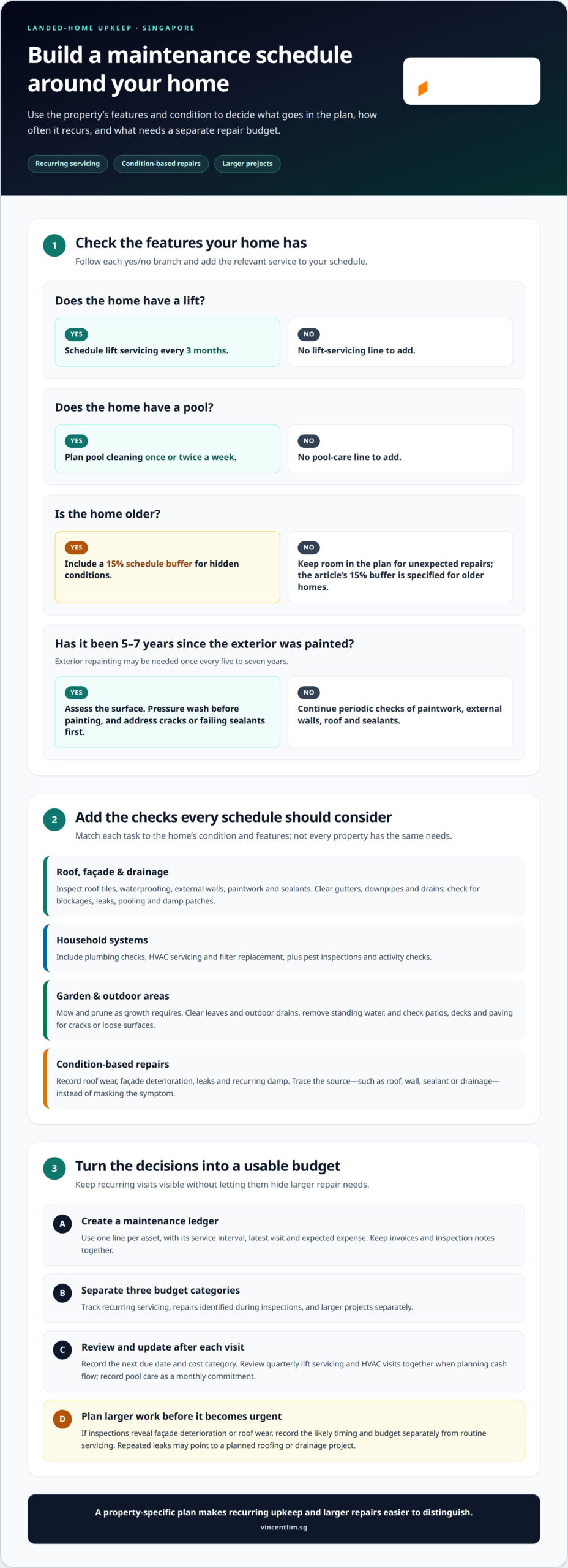
To create a useful landed property maintenance schedule, pair each task with its timing and budget category. Include roof and façade inspections, plumbing checks, HVAC servicing, garden care, pest control, and upkeep for any pool or home lift. Separate recurring visits from repairs identified during inspections.
These examples show why the property’s equipment and service frequency should shape the budget, rather than relying on one flat allowance.
Keep a maintenance ledger with a line for each asset, service interval, latest visit and expected expense. Review quarterly lift servicing and HVAC visits together when planning cash flow, and record pool care as a monthly commitment. Track roofing, drainage and pest-control costs separately so routine upkeep does not obscure larger repair needs.
What tasks belong in a Singapore landed-property schedule? Include inspections of the roof, foundations, walls, plumbing and drainage, as well as HVAC filter replacement, pest inspections, gutter cleaning, and garden and pool care where relevant. If the home has a lift, include servicing every three months; if it has a pool, include cleaning once or twice a week.
Plan major work before it becomes urgent. If an inspection identifies façade deterioration or roof wear, record the required work, likely timing, and budget separately from routine servicing. Older landed homes should carry a 15% schedule buffer for hidden conditions. This gives the plan room to absorb concealed issues without treating them as ordinary recurring expenses.
After each service visit, update the ledger with the next due date and cost category. Keep invoices and inspection notes together to identify repeat repairs. A recurring leak, for example, may call for a planned roofing or drainage project instead of repeated short-term fixes. This makes future budgets more specific to the property.
4. Landed property maintenance schedules and costs
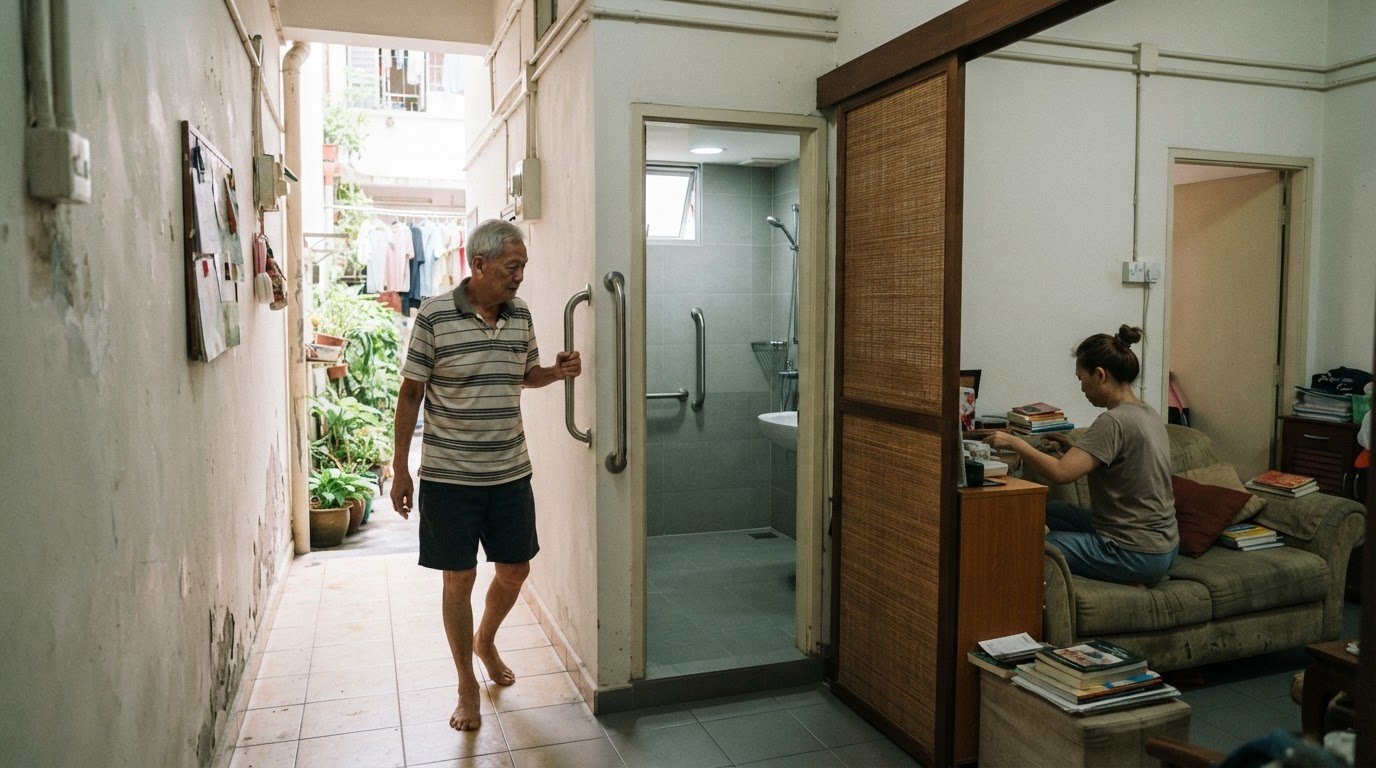
Homeowners bear their landed property’s long-term maintenance costs, so a schedule should reflect the home’s actual features. Separate routine servicing, condition-based repairs and larger projects in the budget. This makes it easier to see which expenses recur and which follow an inspection finding, such as damaged roofing or a leaking pipe.
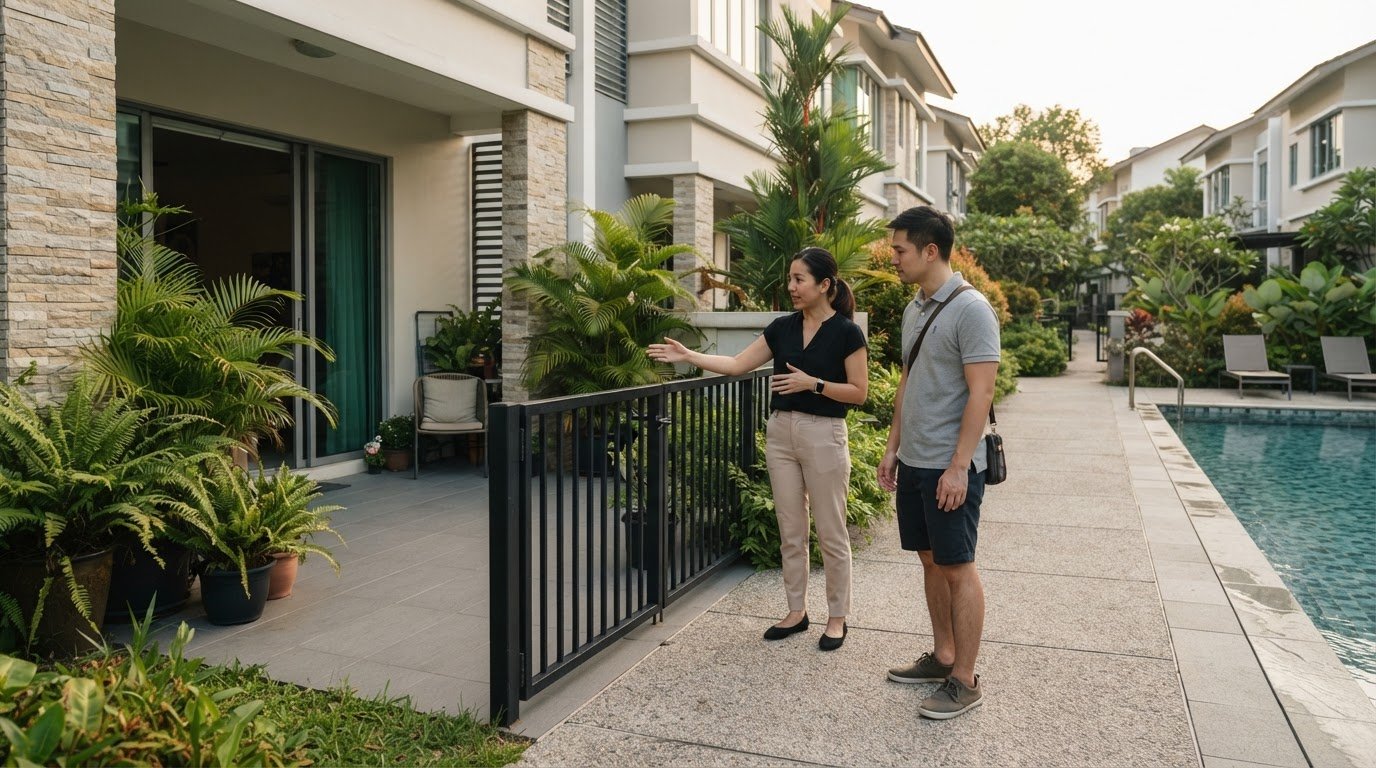
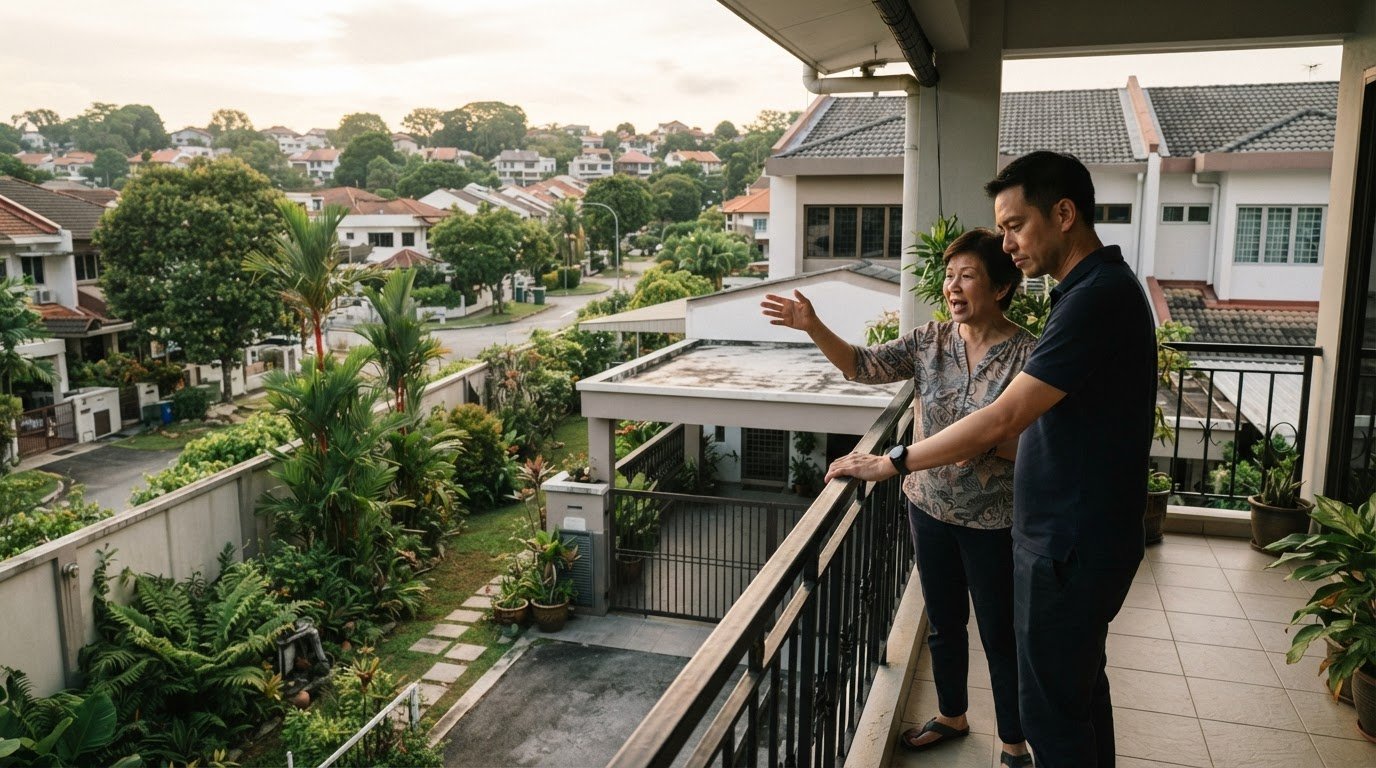
Terrace, semi-detached and detached houses need different schedules because their outdoor areas, gardens and installed systems vary. Tailor inspection coverage to the roof, façade, drainage, outdoor space and equipment. Include a pool or lift if the home has one; omit those tasks if it does not.
For a clearer cost picture, keep a record for each asset: the task, service interval, previous work, invoice and next action. Compare completed work with the planned budget after each visit. Record inspection-related repairs separately from recurring care. This prevents a one-off project from distorting the expected cost of regular upkeep.
Include pest control as a planned expense, with annual treatment and inspections for signs of termites, ants or rodents. Note the affected area and treatment date, then use the record to track whether the problem returns.
Leave room in the plan for issues that need prompt attention. A blocked drain, plumbing leak or roof defect may require action outside the planned cycle. Prioritise work according to the risk of further damage, and update the budget if the findings change the scope. For older homes, account for hidden conditions when setting project allowances.
If maintenance considerations are shaping a property decision, review landed-home options alongside the schedule and its anticipated upkeep.
Vincent Lim (OrangeTee & Tie)
Vincent Lim (OrangeTee & Tie) helps buyers and sellers navigate landed-home transactions, where planned upkeep can inform a property decision. A maintenance schedule clarifies which systems and outdoor areas need attention, and which recurring tasks to consider when assessing ownership responsibilities.
If you are weighing a terrace, semi-detached or detached house, these considerations can help frame questions about its condition and ongoing care. Vincent Lim handles sales of these various landed property types. His role is to facilitate the transaction, not provide property maintenance services.
Considering a landed-property sale or purchase? Contact Vincent Lim (OrangeTee & Tie) to discuss your next step.
Make your next property decision with a clearer plan
Treat your maintenance schedule as a working document, not a one-time checklist. Update it when the home’s condition changes, equipment is added or a repair reveals a wider issue. This keeps future decisions grounded in the property’s actual upkeep needs rather than assumptions made at the outset.
A maintenance plan can also inform a purchase or sale. Before committing, consider how the home’s layout, outdoor areas and installed features fit your capacity for ongoing care. Creating a landed property maintenance schedule gives you a practical framework for weighing those responsibilities and planning ownership with greater clarity.
For guidance on a landed-property transaction, contact Vincent Lim (OrangeTee & Tie). A considered next step can help you move forward with confidence.
Frequently Asked Questions
How often should a landed home’s roof, gutters and drains be inspected and cleaned in Singapore?
Inspect the roof periodically and clear gutters and downpipes regularly, especially before rainy periods. After heavy rainfall, look for standing water, new damp patches or indoor water marks. Check drains if water flow slows or pooling appears. These checks complement routine upkeep and help identify blockages or leaks before they affect other parts of the property.
What is the recommended maintenance schedule for air-conditioning systems in Singapore landed homes?
Set servicing frequency according to the system and its use, and replace filters regularly. Professional seasonal servicing can help keep the system performing well. Keep service records, note recurring issues such as weak airflow, and use those observations to plan future attention.
How often should electrical wiring, plumbing and water heaters be inspected or serviced?
Include electrical systems and plumbing in regular property inspections, but base further checks on equipment condition and warning signs. Look for water leaks, low pressure, and slow or blocked drains. For a water heater, note leaks, unusual operation or visible deterioration, and arrange an assessment if these appear. Record the date, finding and follow-up action to distinguish recurring faults from isolated problems.
What are typical annual maintenance costs for a landed property in Singapore?
There is no single annual figure that applies to every landed home; costs depend on its systems, garden and facilities. Build estimates asset by asset. These examples are not a whole-property total. Keep separate allowances for routine services and repairs identified during inspections.
How can homeowners create a monthly, quarterly and annual maintenance checklist for a landed property?
Use a calendar that records each task, due date, responsible person and completion. Add recurring garden and pool care to the monthly view, where applicable. Set aside quarterly slots for scheduled servicing, such as an air-conditioning visit, and reserve an annual review for invoices, inspection notes and upcoming major work. Bring tasks forward if weather or a new defect calls for earlier attention.
What are the risks and signs of neglected roof, façade, pest and drainage maintenance?
Neglected maintenance can let minor defects develop into leaks, water damage, blocked drainage or wider repairs. Watch for damp marks beneath the roof, peeling or cracked exterior finishes, pooling water, and signs of termites, ants or rodents. A musty smell or recurring indoor dampness may also warrant closer inspection. Record where and when signs appear, especially after heavy rain.