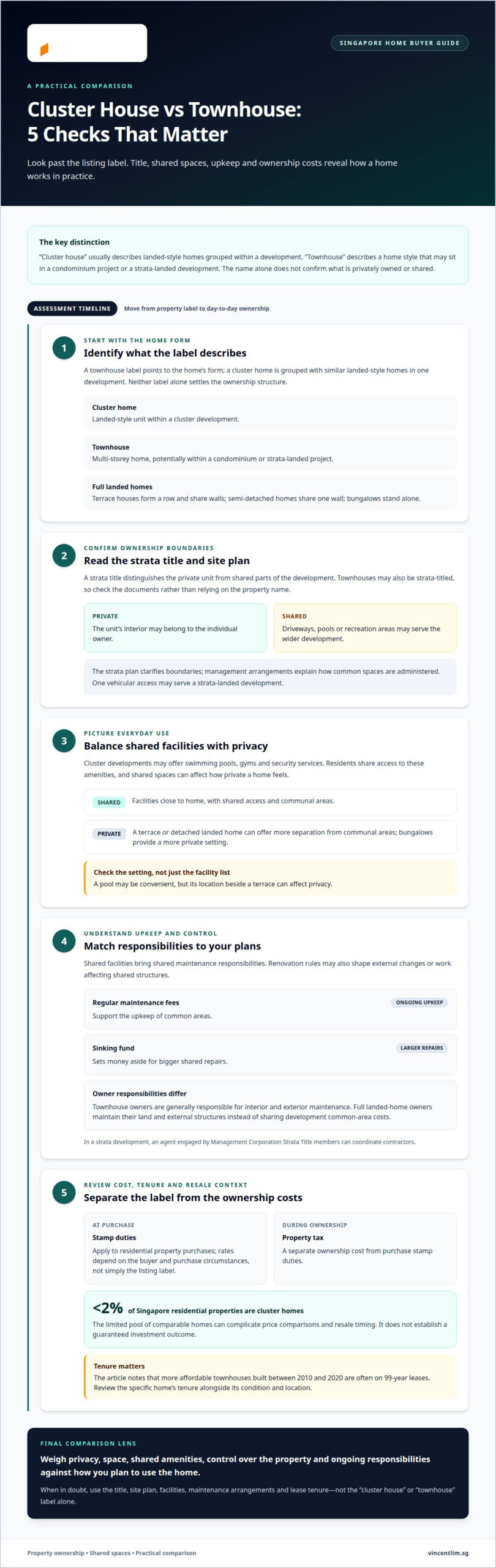
In a cluster house vs townhouse comparison in Singapore, the decisive difference isn’t always the building’s appearance: both may be multi-storey homes with shared facilities and strata titles. Cluster housing typically refers to landed-style homes within a development with communal areas, while “townhouse” describes a style of home that may be part of a condominium development or a strata-landed project. The title and development structure matter more than the label alone.
It’s understandable to associate a townhouse with a private landed home and a cluster house with condominium-style living. In practice, ownership, control of shared spaces and renovation limits can overlap, so the name alone may not tell you what you’re buying. This guide explains how each property type relates to condominiums and full landed homes, and what strata ownership and shared areas mean for daily life. The comparison table and decision guide focus on the distinctions that matter when assessing a home in Singapore.
Key Takeaways
- Look beyond the “townhouse” or “cluster house” label: the development’s title and layout clarify what is privately owned and what is shared.
- Factor communal facilities and their upkeep into your assessment, as shared amenities also mean shared maintenance responsibilities.
- Consider how strata rules may shape renovation plans, particularly for external changes or work affecting shared structures.
- Use your priorities for privacy, space, shared amenities and control over the property to decide whether a strata-landed home or full landed property is a closer fit.
What’s the difference between cluster housing and full landed properties?
Choosing between a cluster house and townhouse in Singapore calls for more than comparing names. A home’s physical form, development context and potential resale audience can all affect its suitability.
Cluster Homes Versus Condos and Landed Homes
Full landed homes include terrace houses, semi-detached houses and bungalows, each with a distinct layout. A semi-detached house shares one wall with a neighbouring home; terrace houses form a row and share walls with adjoining units. Bungalows stand alone. Cluster housing, by contrast, groups landed-style homes within one development. This distinction helps buyers match the property type to their preferred setting.
Cluster-Home Prices Versus Landed-Home Prices
Resale demand depends partly on how many comparable homes are available and which buyers each property type attracts. Cluster homes make up less than 2% of Singapore residential properties, so the pool of directly comparable homes is limited. That scarcity can complicate price comparisons and resale timing; it doesn’t establish a guaranteed investment outcome. Buyers should weigh the specific home’s condition, tenure and location.
| Option | Physical arrangement | Development context | Useful distinction |
|---|---|---|---|
| Cluster home | Landed-style unit | Cluster development | Grouped with similar homes |
| Townhouse | Multi-storey, may share walls | May be within a condominium project | Label describes home form |
| Terrace house | Part of a row | Full landed housing | Shares walls with adjoining units |
| Bungalow | Standalone house | Full landed housing | Detached from neighbouring homes |
Strata Titles Versus Landed-Property Distinctions
A Good Class Bungalow has a defined planning context: it must sit within a designated Good Class Bungalow Area and have a plot of at least 1,400 sq m. That threshold distinguishes this category from ordinary detached homes. In practice, the development’s legal classification and the property’s site arrangement clarify which landed-home category applies.
Cluster House Versus Townhouse Taxes and Stamp Duties
Stamp duties apply to residential property purchases, while property tax is a separate ownership cost. The rates discussed above depend on the buyer and purchase circumstances, not simply whether a listing uses “cluster house” or “townhouse.” When comparing a cluster house with a townhouse in Singapore, keep purchase duties separate from ongoing property expenses as you plan affordability.
Choose a home type by weighing its layout, likely buyer audience and ownership costs against how you intend to use it.
Cluster Homes: Straddling The Line Between Condo And Landed?
Cluster homes combine landed-style living with facilities and shared upkeep. This arrangement affects privacy, recurring costs and homeowners’ responsibilities.
Shared Facilities Versus Private Spaces
Cluster developments may include swimming pools, gyms and security services. These facilities can appeal to homeowners who value recreation close to home, but neighbours share access. Compared with a terrace or detached landed home, a cluster unit offers less separation from communal areas. Bungalows provide a more private setting, while condominium living also involves shared facilities.
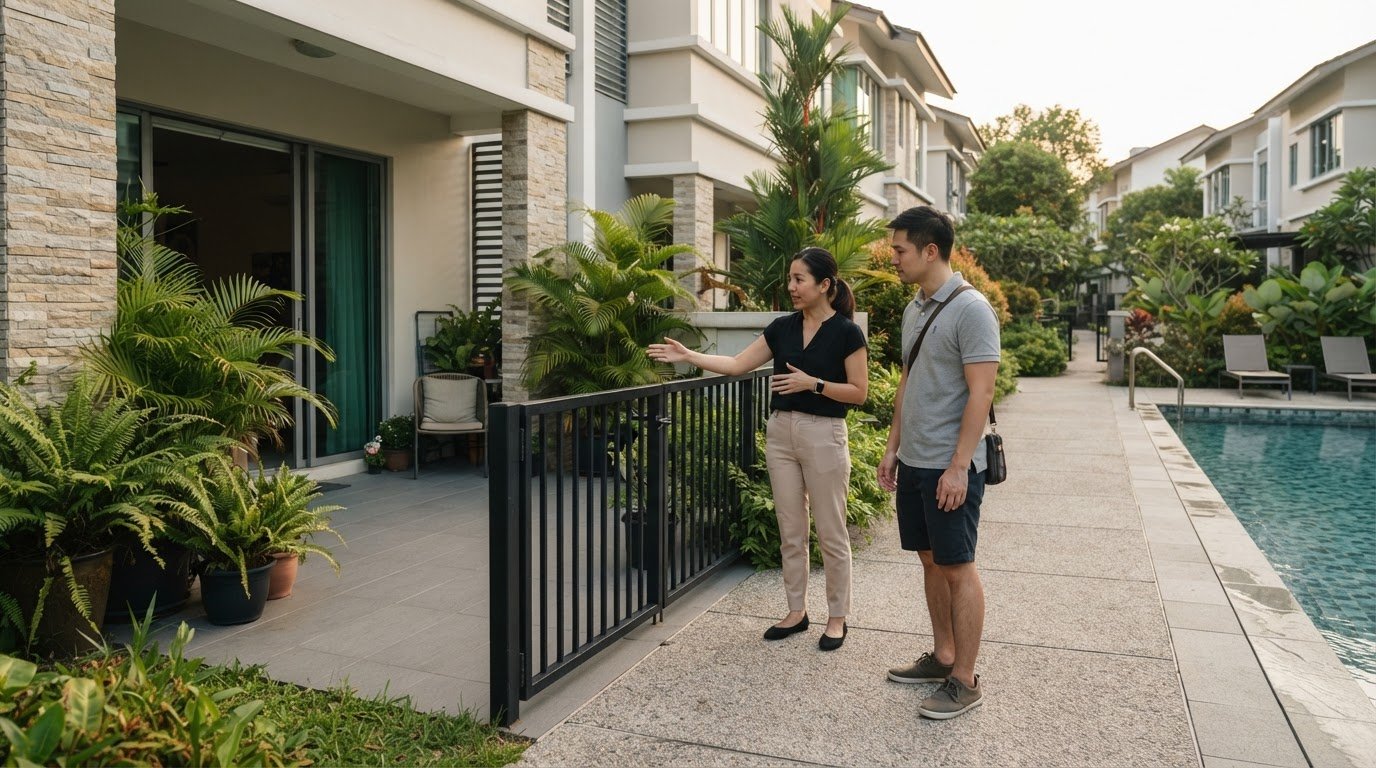
Before purchasing a cluster house or townhouse, identify which spaces belong to the unit and which are communal. Review the facilities, the privacy around the home and the rules for shared areas. For example, a pool may be convenient, but its location beside a terrace can affect privacy.
Maintenance Fees Versus Upkeep Responsibilities
Owners share the cost of maintaining common areas. An agent engaged by the Management Corporation Strata Title members can coordinate contractors. A sinking fund sets money aside for larger shared repairs, while regular fees support ongoing upkeep.
Townhouse owners are generally responsible for maintaining both the interior and exterior of their property. Full landed-home owners also maintain their land and external structures, rather than sharing a development’s common-area costs. Before committing, review the lease tenure, maintenance fee, sinking-fund arrangements, facilities and the responsibilities assigned to owners. More affordable townhouses built between 2010 and 2020 are often on 99-year leases, so tenure can shape the longer-term ownership decision.
For a broader view of Singapore’s landed market, explore landed-home options alongside the shared upkeep of cluster living.
Land ownership and shared communal areas
In Singapore, a strata title distinguishes a home from the shared parts of its development. That distinction shapes what buyers own, maintain and use.
Private Land Ownership Versus Shared Communal Areas
A cluster-home owner holds a strata-titled unit within a common development site. The title distinguishes private space from communal areas, which may include a pool, gym or playground. Unlike a full landed home, a cluster unit is part of a development where residents share facilities and access. A townhouse may also be strata-titled, so its title and site plan clarify ownership boundaries.
For example, a unit’s interior may be private, while its driveway or recreation area serves the wider development. The strata plan identifies these boundaries, and the management arrangements explain how shared spaces are administered. In strata-landed housing, one vehicular access may serve the development. These details affect daily use and the owner’s role in decisions about common areas.
Shared Amenities Versus Community Living
Shared facilities can make a cluster development feel more communal than a private terrace or detached home. Residents may use a pool, gym or playground, while the Management Corporation Strata Title structure supports decisions about common property. Monthly contributions fund shared upkeep, and by-laws govern use of communal spaces. This arrangement suits buyers who value amenities, but requires coordination with neighbours.
Before purchase, review the strata plan, by-laws and management responsibilities together. Check which facilities are shared, how common areas are maintained, and what approval applies to proposed changes. A significant structural alteration to a strata-landed home can require a resolution supported by 90% of all owners. That threshold matters if a future renovation affects the development, rather than only the private unit.
Community living can support a more connected lifestyle, but shared areas require residents to follow common rules. Pool access and playground use, for instance, affect neighbours as well as the household. When comparing a townhouse with cluster housing, assess the actual title, facilities and by-laws rather than assuming either label guarantees private land or a particular level of shared access.
Definitions and characteristics of townhouses and cluster houses
In Singapore, “townhouse” and “cluster house” describe different features, but the terms can overlap. The development layout, title and shared facilities clarify what residents own and how they live.
Townhouses are commonly described as multi-storey homes that may share walls with neighbouring units. Townhouses are generally strata-titled and may sit alongside high-rise apartments in condominium developments. Their layouts often follow uniform street blocks. The townhouse label alone does not establish whether the land or amenities are privately owned.
A cluster home is a landed-style unit in a development of landed houses. Cluster developments may have varied layouts and configurations, with shared facilities across the estate. A typical cluster home may offer 2,500-3,000 square feet of built-up area. A townhouse averages more than 3,000 square feet, and typically has 3 to 5 bedrooms and bathrooms.
For buyers, compare the actual development rather than relying on its name. Review the strata title, site plan and by-laws to understand ownership, communal areas and responsibilities. The key distinction is often the development structure: townhouse describes a home style, while cluster housing describes a development of strata-landed homes with shared facilities. Monthly maintenance obligations also depend on the development’s shared areas and management arrangements.
Foreign buyers should check the applicable ownership requirements before buying cluster housing in Singapore. The Additional Buyer’s Stamp Duty also applies: according to the Inland Revenue Authority of Singapore, foreign buyers pay 60% on residential property since April 2023. The applicable requirements depend on the property’s legal classification.
For either home type, consider how monthly loan repayments fit your income and other financial commitments. Compare your borrowing commitments with the property’s tenure and recurring obligations when assessing financing.
To assess how a landed home fits your ownership priorities, explore landed-home options.
Vincent Lim (OrangeTee & Tie)
Vincent Lim (OrangeTee & Tie) can help you assess how a home’s title, shared areas and landed-property characteristics align with your priorities. After clarifying the differences between cluster housing and townhouses, you can consider whether a full landed home better suits your plans.
For buyers considering terrace, semi-detached or detached homes, or a Good Class Bungalow, Vincent Lim’s sales services offer a relevant next step. This comparison can help you focus on the property type that suits your preferred ownership structure and lifestyle.
Contact Vincent Lim (OrangeTee & Tie) to discuss your landed-property plans.
Make Your Next Property Decision With Clarity
Use your preferred balance of privacy, shared amenities and control over the home to guide your next step. In a cluster house versus townhouse decision in Singapore, the property’s legal structure and your intended use deserve as much attention as its layout. Clear priorities can help you focus on homes that suit your ownership goals.
Vincent Lim (OrangeTee & Tie) assists buyers considering landed-property sales, including terrace houses, semi-detached houses and detached houses. If your comparison has led you to explore full landed homes, his professional guidance through the sale process is a practical next step.
Contact Vincent Lim (OrangeTee & Tie) to discuss your property plans and identify a suitable direction. With a considered approach, you can move forward with confidence in the home you choose.
Frequently Asked Questions
What is a townhouse?
A townhouse is a multi-storey home that shares one or more walls with neighbouring homes. The term describes the building’s form, not necessarily its legal ownership or development type. Townhouses, for example, may be part of a larger residential project with shared amenities. To understand what comes with a specific home, distinguish its architectural style from its title and the development’s management arrangements.
What is a cluster house in Singapore?
A cluster house in Singapore is a landed-style home within a development that combines individual units with communal facilities. Residents may have private living areas alongside shared spaces such as a pool or gym. The cluster format brings some features of landed homes into a managed residential estate. The title and development documents explain ownership boundaries and how common facilities are administered.
What is a townhouse in Singapore?
In Singapore, a townhouse is typically a multi-storey home sharing at least one wall with a neighbouring unit. Townhouses are commonly strata-titled and can be found in condominium developments or strata-landed projects. Two homes both marketed as townhouses, for instance, may sit in developments with different shared amenities and management arrangements. The title and project layout, rather than the label, clarify the ownership structure.
How do cluster houses and townhouses differ in ownership and land title?
Both property types can be strata-titled, so their names alone don’t determine land ownership. A cluster house is generally a landed-style unit in a shared development, while townhouse describes a home form that can occur in different project types. For a specific purchase, the strata plan and title identify the private unit and common property. These documents also help explain which areas residents share.
How do cluster houses and townhouses compare in price per square foot in Singapore?
These figures refer to different reporting periods, so they don’t establish a direct price gap. For a meaningful comparison, consider location, tenure, built-up area and transaction timing.
What are the typical maintenance fees for cluster houses versus townhouses in Singapore?
Townhouse costs depend on whether the home is in a development with shared facilities and how management arrangements allocate upkeep. In addition to any common charges, townhouse owners generally maintain their own home. Compare the shared facilities and owner responsibilities, not just the fee.