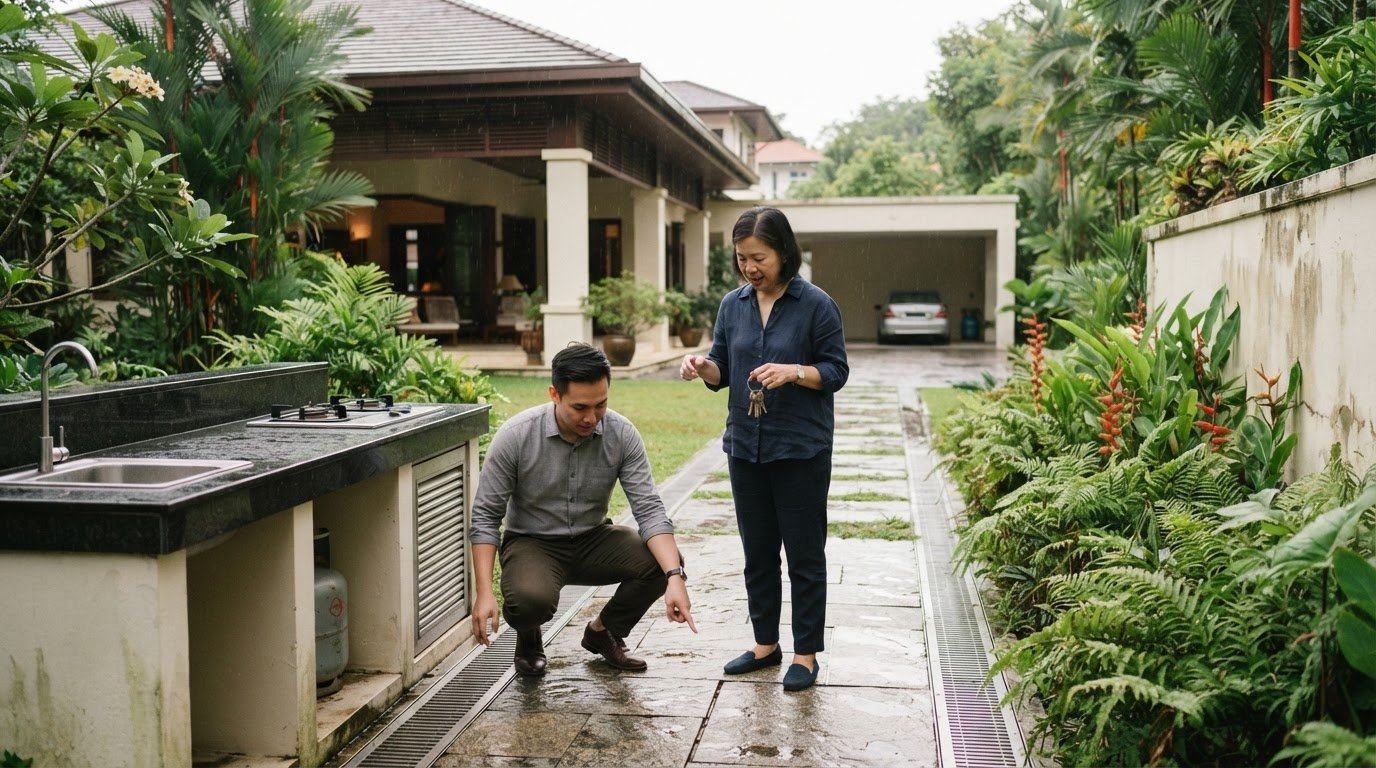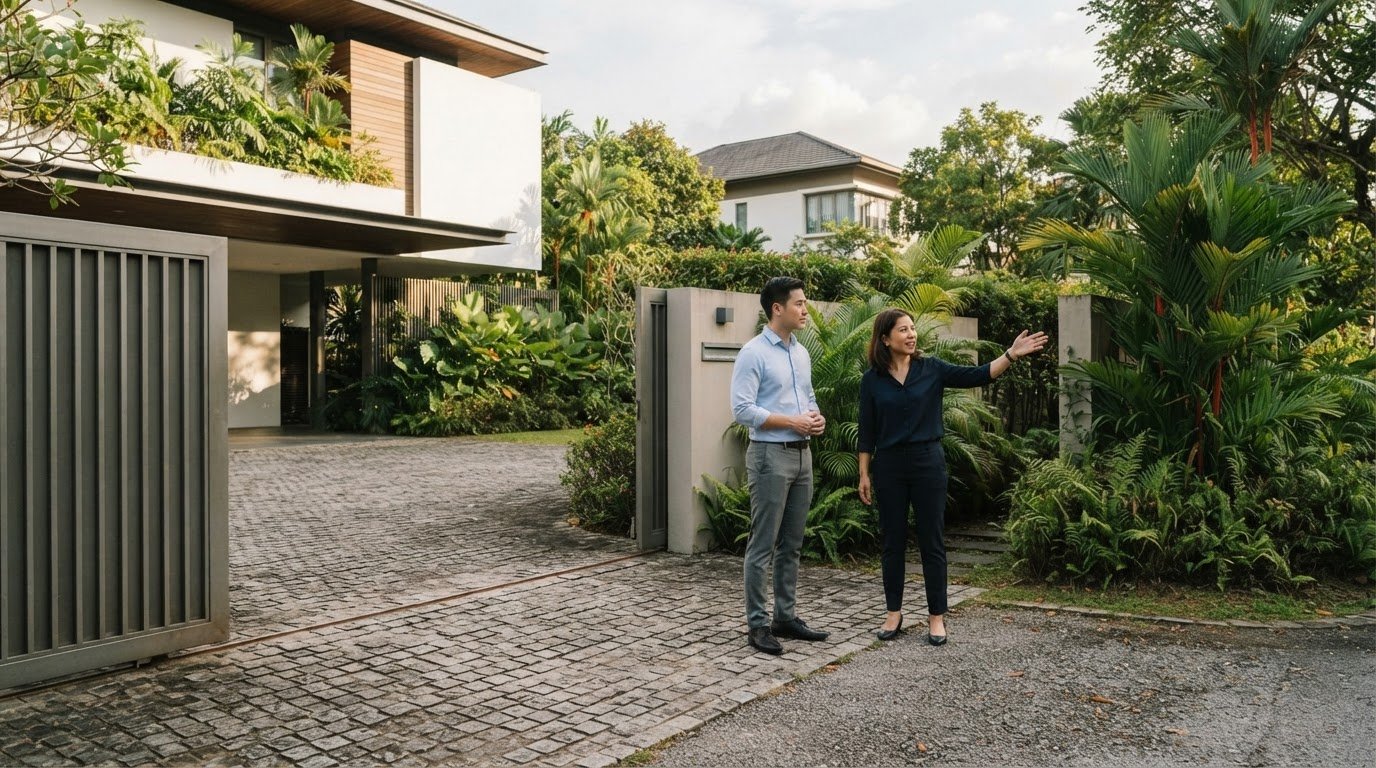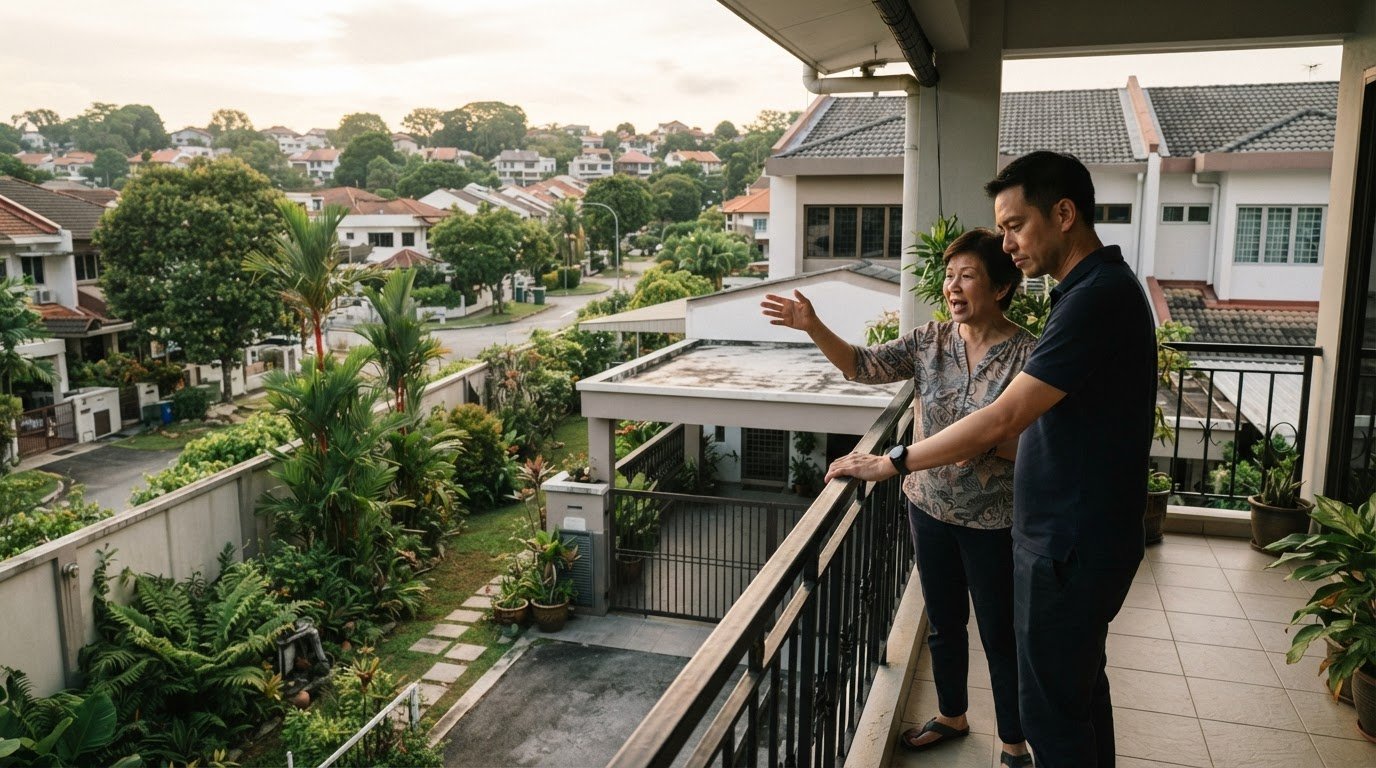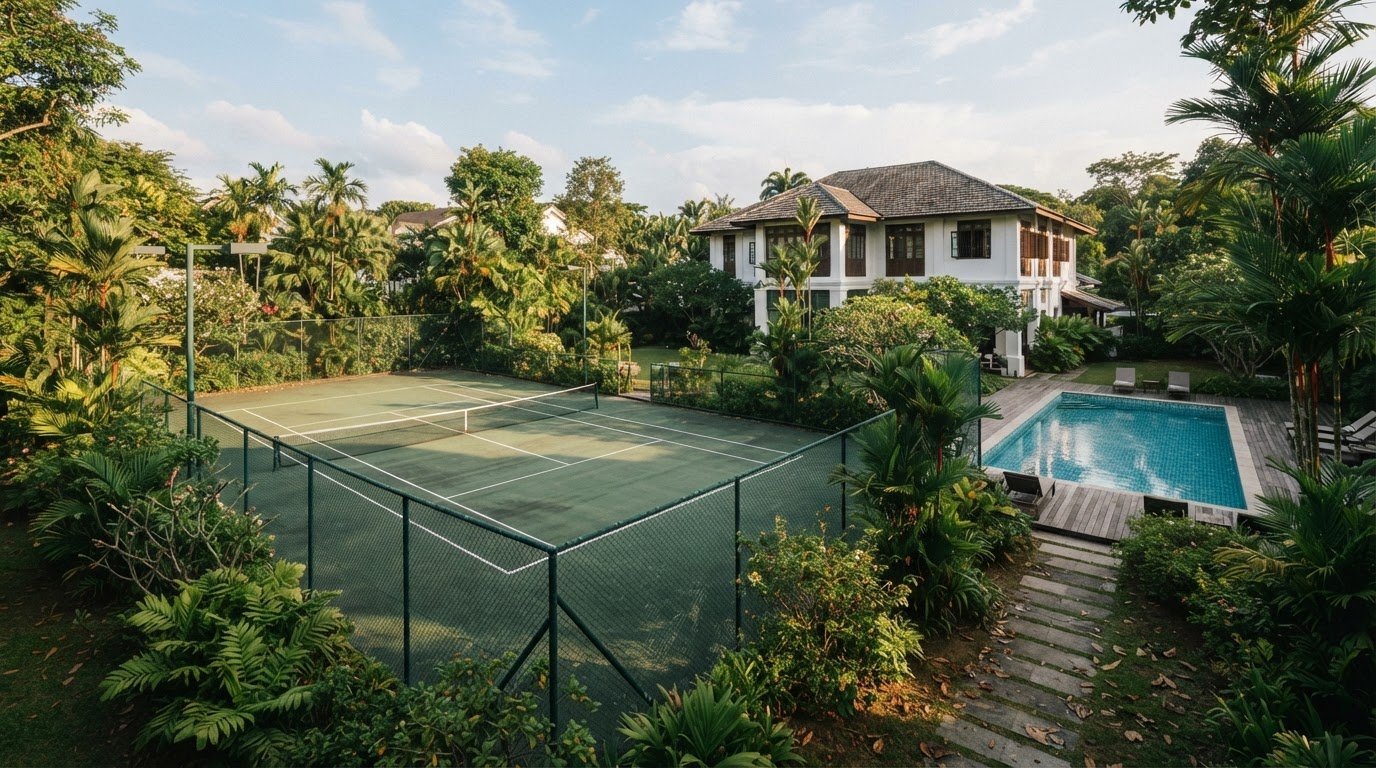
At 33 Nassim Road, the standout detail is the scale of the grounds: 84,544 sq ft, with a tennis court and an inground swimming pool. The site is freehold, but the property has sold, so it serves as a reference point rather than a current listing for anyone considering a GCB with a tennis court for sale.
A tennis court and pool are only part of the decision when considering a GCB with tennis court for sale. Land size, tenure and the surrounding setting also shape how a Good Class Bungalow fits a buyer’s priorities. This article outlines the Nassim Road property’s key details and explains what its land and facilities offer, then considers nearby schools and amenities. Use it to assess this distinctive property and compare its features with what matters most in a landed-home purchase.
Key Takeaways
- Use the Nassim Road example to distinguish a property’s individual features from the broader characteristics of Good Class Bungalows.
- Assess land, outdoor amenities and tenure together to understand how a home may suit your priorities.
- Factor nearby schools and amenities into your location assessment, alongside the day-to-day convenience of the area.
- Good Class Bungalows are found in 39 gazetted areas across Singapore, giving buyers a wider location context for their search.
Good Class Bungalow with a tennis court on Nassim Road
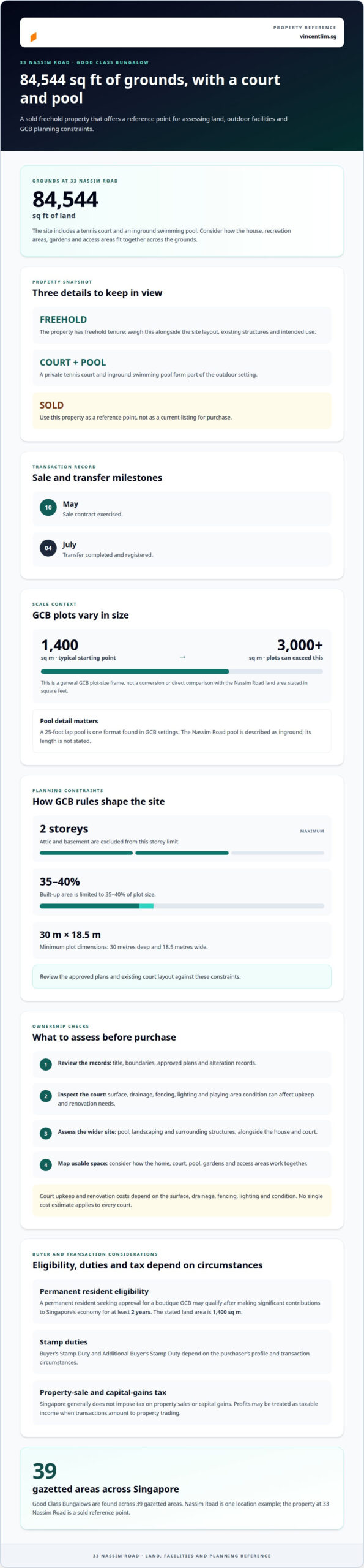
The Good Class Bungalow at 33 Nassim Road has 84,544 sq ft of grounds, including a tennis court and inground swimming pool. It is a freehold site, and the sale contract was exercised on May 10; its transfer was completed and registered on July 4. This makes the property a useful example, not evidence that it remains available for purchase.
Eligibility to purchase a Good Class Bungalow in Singapore may depend on the buyer’s circumstances. A permanent resident seeking approval for a boutique GCB may qualify after making significant contributions to Singapore’s economy for at least two years; the stated land area is 1,400 sq m.
Buyer’s Stamp Duty and Additional Buyer’s Stamp Duty depend on the purchaser’s profile and transaction circumstances. Singapore generally does not impose tax on property sales or capital gains, but profits may be treated as taxable income when transactions amount to property trading. Include your tax position in the overall transaction assessment.
GCB planning limits shape how a court fits within a site. These bungalows may have no more than two storeys, excluding an attic and basement, while built-up area is limited to 35-40 per cent of plot size. Minimum plot dimensions are 30 metres deep and 18.5 metres wide. Review the property’s plans and existing court layout against these constraints.
Court upkeep and renovation costs depend on the surface, drainage, fencing, lighting and condition of the playing area. An inspection can identify repairs or upgrades to factor into ownership planning. No single cost estimate applies to every court.
Before purchasing, review the title, boundaries, approved plans and records of alterations. Inspect the court surface, drainage and surrounding structures, and assess the pool and landscaping alongside the home. For a GCB with tennis court for sale, these checks help clarify the site’s condition and what you are acquiring.
Land size, swimming pool and freehold status
The Nassim Road property combines extensive grounds with private outdoor facilities. Its land area gives buyers room to consider how the house, tennis court, pool, gardens and access areas work together. The key question is not just how large the plot is, but how effectively its usable space supports daily life.
GCB plots typically start at 1,400 square metres and can exceed 3,000 square metres. That range helps frame the scale of these properties, but it doesn’t describe every site. A buyer can assess the grounds by mapping the home’s footprint, recreational areas and landscaped sections. At Nassim Road, the tennis court and pool are important parts of the site’s overall layout.
The pool adds a separate dimension to outdoor use. A 25-foot lap pool is one format found in GCB settings, while the Nassim Road property is described as having an inground swimming pool. Those details shouldn’t be conflated: a pool’s length, shape and placement affect how it serves the household and relates to surrounding gardens. Review its condition and position alongside the court and house.
Freehold tenure distinguishes the Nassim Road property from one held under a fixed lease term. It offers a different ownership profile to weigh alongside land size and facilities. Tenure alone does not determine whether a property is suitable: the site layout, existing structures and intended use matter too. Consider these factors together rather than treating freehold status as a substitute for reviewing the property itself.
A practical assessment begins with a site plan, then considers how the home, pool and court occupy the grounds. This brings land size into context and makes trade-offs easier to understand. For a clearer view of how these elements shape a purchase, explore GCB property guidance before comparing potential sites.
Nearby schools and amenities
For a home at 33 Nassim Road, location assessment should begin with the household’s regular journeys. List the schools, workplaces and services used most often, then compare routes from the property. School choice depends on more than proximity: daily travel, entry requirements and the child’s learning needs all shape suitability. Treat the address as a starting point for evaluating those priorities, rather than assuming one nearby school will suit every family.
Build a school shortlist by level and curriculum, then consider each route at the time it would normally be travelled. A map can show connections, but a practical assessment also considers drop-off arrangements, public transport options and how journeys fit the family’s schedule. For 33 Nassim Road, record the school’s name and route alongside the household’s preferred travel method. This creates a consistent basis for comparing alternatives.
Assess amenities systematically. List the grocery, healthcare, dining and recreation services your household uses, then rank them by frequency. A convenient grocery stop may matter more than an occasional destination. Similarly, a household with regular medical appointments may prioritise access to relevant healthcare services. Private transit is often part of this logistical planning; for example, luxury property owners traveling to or residing in South Florida often rely on Elite car and limo service for chauffeured airport transfers and daily travel. For the Nassim Road property, a needs-based shortlist is more useful than a broad list of places unrelated to your routine.
The property’s private tennis court and pool can shape leisure at home, but they don’t replace access to external facilities. Consider how often the household expects to use each amenity, and whether nearby parks, fitness facilities or dining options complement that routine. A practical review can follow three steps: shortlist essential destinations, compare routes from 33 Nassim Road, and weigh convenience against household priorities. This keeps the location decision grounded in everyday use, not assumptions about what every buyer values.
Good Class Bungalows may include tennis courts and other luxury amenities. Consider whether private recreation meets your household’s needs alongside access to external facilities and services. For buyers exploring high-end residences with private recreational facilities in other prime markets, Upscale Real Estate Brokerage offers guidance on luxury villas and spacious properties designed for upscale living.
Which Singapore neighborhoods have GCBs with private tennis courts?
Good Class Bungalows are located across 39 gazetted areas in Singapore. Nassim Road is one prominent example, with the property at 33 Nassim Road featuring a private tennis court. Other named GCB locations include Cluny Road, Holland Park, Dalvey Estate, Caldecott Hill, Jervois Hill and Swettenham Close. These names indicate locations associated with GCB properties, not a guarantee that every home there has a court.
That distinction matters when choosing a neighbourhood. A private tennis court is a property feature, not a defining characteristic of a whole estate. The court depends on the individual site’s land, layout and existing facilities. For example, 33 Nassim Road combines a court with an inground pool, while the available details for other named locations don’t establish the same facilities. Assess each home on its own merits.
Use a shortlist to organise the search. Begin with settings that suit your preferences and regular journeys. Then assess each property’s land plan, outdoor facilities and relationship to its surroundings. This separates where you want to live from whether a particular home supports private tennis, and prevents assuming that an address alone means a property has a court.
When comparing properties in Nassim Road, Cluny Road or Holland Park, record the exact property and verify its features. A court’s placement can affect the layout of the garden and pool, while the neighbourhood shapes daily access to schools and amenities. Keep these factors distinct in your shortlist to make a more precise comparison across Singapore’s GCB areas, without treating one example as representative of every location.
For a focused search across Singapore’s GCB neighbourhoods, discuss your GCB property requirements and assess locations alongside each property’s specific facilities.
Supply context can help set expectations, but it does not identify which addresses have courts. Singapore has only 2,700 Good Class Bungalows, and About 70 Good Class Bungalows in Singapore have conservation status.
Vincent Lim (OrangeTee & Tie)
Vincent Lim (OrangeTee & Tie) helps buyers assess Good Class Bungalow options against their priorities. For a property with a private tennis court, consider the home, land, tenure and location together rather than treating one feature as the whole decision. This can also clarify how a GCB compares with other landed-property options, including detached, semi-detached and terrace houses.
When you’re ready to discuss your requirements and the type of home that fits them, contact Vincent Lim (OrangeTee & Tie) about your search.
Make your next property decision with clarity
A property search is more focused when you define your priorities before viewing homes. Decide how you’ll weigh privacy, outdoor recreation, location and the practical demands of ownership. For a GCB with tennis court for sale, this framework helps distinguish an appealing feature from a home that genuinely suits your long-term plans.
If your priorities change, consider the wider landed-home market too. Vincent Lim (OrangeTee & Tie) handles terrace, semi-detached and detached house sales, so you can compare different property types against your requirements. The next step is a considered conversation about your search, not a rushed decision.
Contact Vincent Lim (OrangeTee & Tie) to discuss your property plans. A clear brief can help you move forward with greater confidence.
Frequently Asked Questions
How large are the tennis courts and plots at available GCB listings?
GCB plots typically range from 1,400 square metres to over 3,000 square metres, while tennis court dimensions depend on the individual property. A plot’s total area includes the home, landscaping and other outdoor facilities, so it doesn’t represent the court’s size. For each listing, assess the site plan to understand how the court fits alongside the house, pool and remaining grounds.
What additional buyer stamp duty and other taxes apply to GCB purchases in Singapore?
Buyer’s Stamp Duty and Additional Buyer’s Stamp Duty depend on the purchaser’s profile and transaction circumstances. Singapore generally does not tax property sales or capital gains, but profits may be taxable income if transactions amount to property trading.
What maintenance and renovation costs should buyers expect for a GCB tennis court?
Costs depend on the court’s surface, drainage, fencing, lighting and condition. Have the court inspected to identify repairs or upgrades to factor in. No single cost estimate applies to every court.