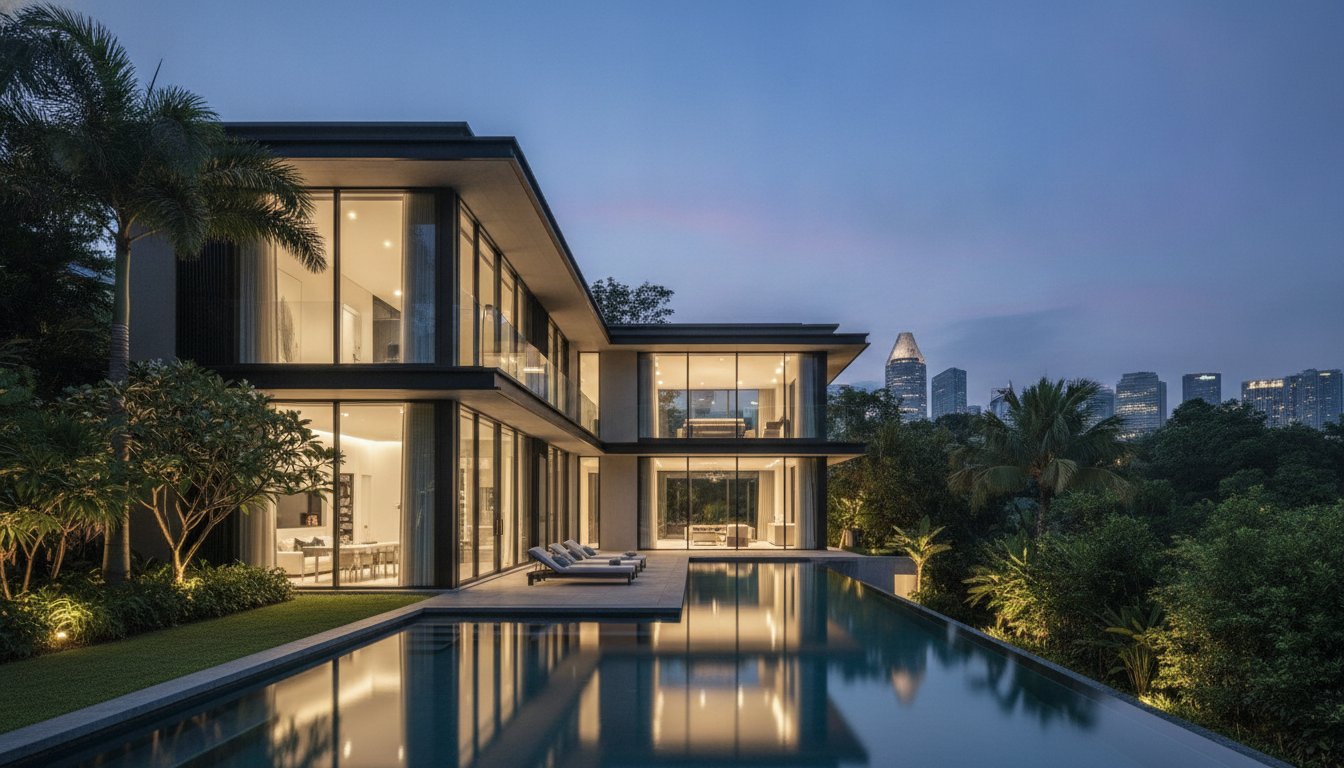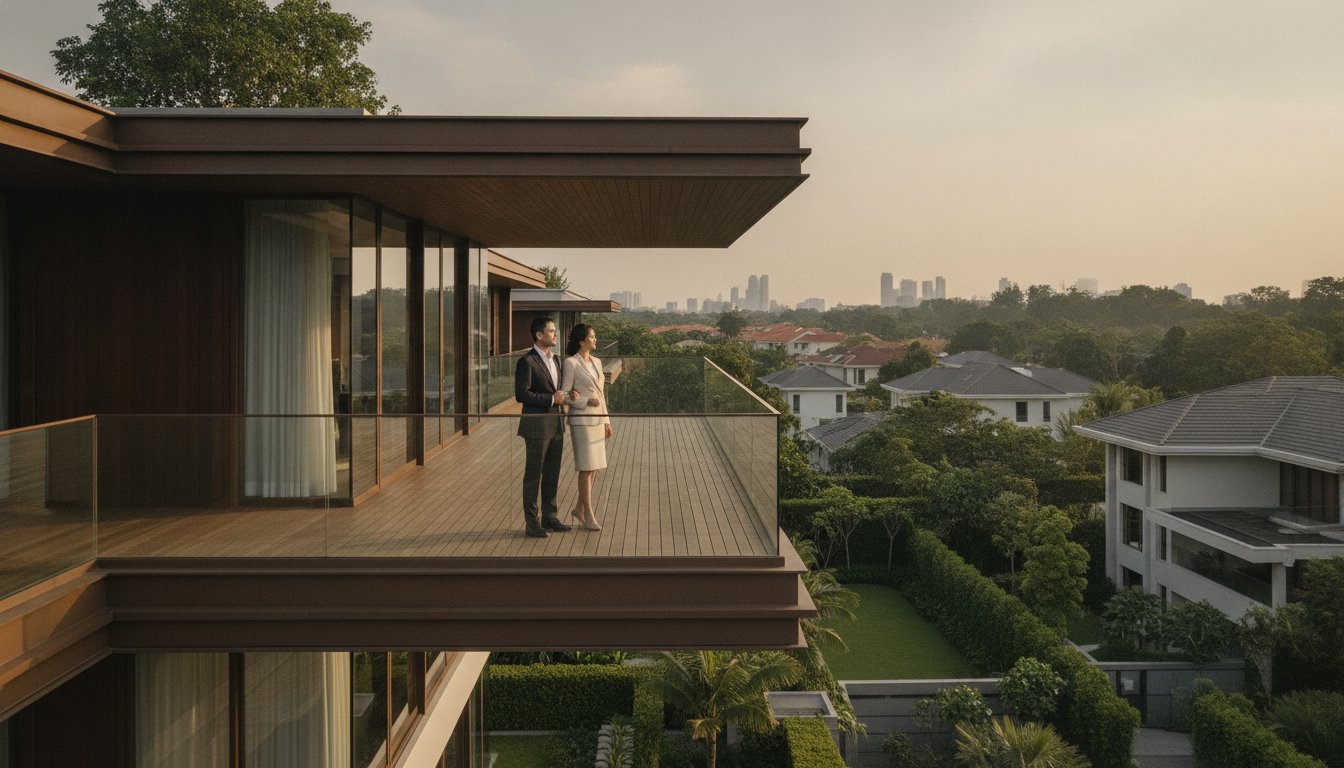
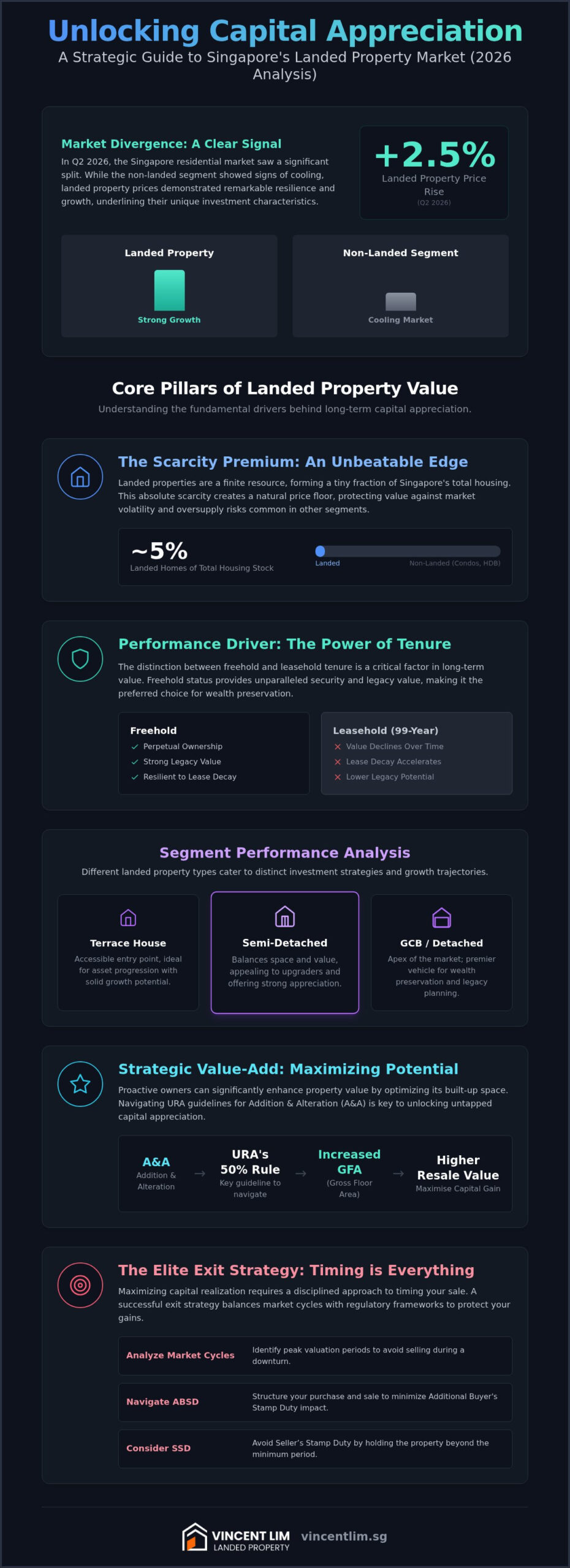
While the broader residential market shows signs of cooling, landed property prices in Singapore rose by 2.5% in the second quarter of 2026, effectively decoupling from the non-landed segment. This divergence isn’t a mere market fluctuation; it’s a testament to the enduring scarcity of freehold land and the resilience of high-quantum assets. Achieving consistent landed property capital appreciation singapore requires more than a passive buy-and-hold mindset. It demands a calculated understanding of how regulatory shifts and architectural optimization intersect with limited supply.
You’re likely weighing the impact of the 2026 URA regulatory shifts against the current interest rate environment and its effect on high-quantum loans. It’s a complex environment where the fear of lease decay or misplaced timing can stall even the most seasoned investor. This analysis provides a clear roadmap for your asset progression by identifying undervalued segments and demystifying the fundamental drivers of long-term value. We’ll examine the strategic frameworks that turn property ownership into a disciplined exercise in wealth preservation, ensuring you move forward with absolute confidence in your legacy planning.
Key Takeaways
- Understand how the finite supply of landed plots creates a natural price floor, providing a resilient foundation for long-term wealth preservation.
- Identify the critical factors driving landed property capital appreciation singapore in 2026, including the widening price gap between freehold and leasehold tenures.
- Evaluate the performance of terrace, semi-detached, and Good Class Bungalow segments to determine which asset class best fits your liquidity and growth requirements.
- Learn strategic asset optimization techniques, such as navigating URA’s 50% rule for Addition & Alteration (A&A), to increase your property’s Gross Floor Area and resale value.
- Master the timing of your exit strategy by analyzing market cycles alongside the latest ABSD and Seller’s Stamp Duty (SSD) frameworks for maximum capital realization.
The Scarcity Premium: Why Singapore Landed Property Remains a Premier Capital Appreciation Vehicle
Landed property in Singapore represents the apex of real estate ownership, not just for its prestige, but for its fundamental supply-demand imbalance. While the luxury condominium market sees periodic inventory expansions through new launches, the footprint of landed estates is effectively frozen. This absolute scarcity creates a resilient price floor. Owners aren’t just buying a home; they’re acquiring a portion of a fixed asset class that cannot be replicated. Consequently, landed property capital appreciation singapore remains a primary objective for local families who view these assets as the ultimate symbol of success and stability.
The Quantitative Impact of Finite Land Supply
The scarcity premium is the additional value attributed to an asset when its supply is strictly limited and cannot be increased by market demand. In 2026, landed homes constitute roughly 5% of Singapore’s total housing stock, a ratio that continues to dwindle as high-density developments dominate the skyline. This limited supply protects owners from several market risks:
- Inventory Oversupply: Unlike condominiums, where thousands of units can be launched simultaneously, landed inventory is static.
- Price Dilution: The lack of new landed land parcels prevents the “newer is better” price erosion seen in aging non-landed projects.
- Zoning Stability: Once an area is designated for landed housing, it rarely undergoes intensification that would compromise its low-density appeal.
This structural constraint ensures that even during periods of cooling measures, the lack of alternatives keeps valuations robust and insulates the segment from the supply glut risks seen in other property types.
Landed Property as a Wealth Preservation Hedge
Historical data confirms that landed assets exhibit lower volatility than other residential segments during economic contractions. Ultra-high-net-worth individuals prioritize these properties for legacy planning because they represent a tangible claim on land in a nation with world-class Singapore’s economic fundamentals. The resilience of these assets makes them the cornerstone of a sophisticated asset progression to landed property singapore strategy. By moving from high-yield condominiums into these capital-stable landed homes, investors effectively lock in their gains. This strategic shift protects wealth against inflation and ensures that the asset remains a valuable inheritance for future generations. The market’s confidence in landed property capital appreciation singapore isn’t based on speculation; it’s built on the mathematical certainty that you can’t manufacture more land.
Decoding the Drivers: Key Factors Influencing Landed Capital Gains in 2026
Understanding why some plots outperform others requires a deep dive into tenure and regulatory shifts. In 2026, the Private Property Price Index shows a distinct resilience in the landed segment compared to non-landed assets. This performance isn’t accidental. It’s the result of specific market drivers that favor land ownership over high-density living. To maximize your returns, you must identify which factors are currently shifting the valuation landscape for terrace and detached homes.
Freehold vs. Leasehold: The 2026 Performance Gap
Freehold properties remain the primary engine for landed property capital appreciation singapore. In 2026, freehold terrace houses maintain value even as 99-year leasehold counterparts feel the pressure of lease decay after the 40-year mark. While leasehold properties often offer higher rental yields, they lack the legacy value freehold land provides. Strategic investors prioritize freehold status to ensure their asset remains a viable hedge against inflation across generations.
Zoning and Regulatory Influence
The URA Master Plan 2026 introduces transport corridors that unlock value in previously inaccessible estates. These zoning shifts are the silent architects of landed property capital appreciation singapore, as they dictate the future utility of the land. Beyond transport, the plot ratio advantage is critical. If a plot allows for a third storey or an attic, its resale value significantly exceeds that of a property with limited buildable potential.
Foreigner eligibility remains restricted for landed homes, which keeps the market predominantly local and less prone to external shocks. This is particularly true for the Good Class Bungalow (GCB) segment, where only Singapore Citizens can participate. This exclusivity ensures that demand remains high among the nation’s elite. Navigating these complex regulatory frameworks is essential for any serious investor. If you’re looking to refine your portfolio, analyzing your asset progression options can help you identify which specific drivers will most benefit your next acquisition.
When assessing a potential purchase, consider these regulatory factors:
- Proximity to upcoming MRT interchanges highlighted in the 2026 Master Plan.
- Specific envelope control guidelines that govern your estate’s height limits.
- Historical price resilience of the surrounding detached houses in that specific zone.
The goal is to move beyond simple ownership toward strategic land management that yields tangible results. By focusing on these core drivers, you ensure your investment isn’t just a home, but a high-performing financial vehicle that stands the test of time.
Segment Performance: Analyzing Growth Rates for Terrace, Semi-Detached, and GCBs
While the structural scarcity of land sets a resilient floor for all owners, capital growth rates aren’t uniform across the asset class. Data from the Singapore Residential Price Index reveals that different landed segments serve distinct strategic roles within a portfolio. In the first half of 2026, terrace houses remained the market’s backbone, accounting for 58.2% of all transactions. With a median price of S$4.44 million in the Outside Central Region (OCR) during Q1 2026, these properties offer the highest liquidity for those prioritizing exit flexibility. They’re the entry-level vehicle that provides consistent landed property capital appreciation singapore without the extreme entry costs of larger plots.
Semi-detached houses offer a middle ground, balancing larger land footprints with price accessibility. They represented 30.1% of transactions in 1H 2026, with median OCR prices reaching S$5.75 million. For families, these assets provide the “sweet spot” of space and value. However, for those seeking the highest absolute gains, detached houses and Good Class Bungalows (GCBs) remain the “Blue Chip” choices. These segments often see higher capital appreciation ceilings because their buyer profile is less sensitive to interest rate fluctuations and more focused on long-term wealth preservation.
The Good Class Bungalow (GCB) Phenomenon
Understanding what is a good class bungalow is essential for any elite strategist. These assets operate in a vacuum, largely decoupled from general market sentiment. In Q2 2026, average land rates for GCBs rose to approximately S$2,341 per square foot, a significant increase from previous quarters. This “Prestige Value” isn’t just about luxury; it’s about owning a piece of the most restricted land in the country. GCBs are the ultimate safe haven for domestic capital, offering a level of security that other residential segments simply can’t match.
Liquidity vs. Capital Growth
Your investment horizon should dictate your choice of segment. Inter-terraces typically sell faster due to their wider buyer pool, but detached houses yield higher absolute landed property capital appreciation singapore over a ten-year holding period. If you’re currently searching for a terrace house for sale singapore in 2026, focus on properties with high reconstruction potential. The ability to add floor area is often the difference between a standard return and an exceptional gain. By matching your asset choice to your specific liquidity needs, you ensure your property remains a flexible and high-performing component of your overall estate.
Strategic Value-Add: Maximizing Appreciation Potential Through Asset Optimization
Capital growth in the landed segment isn’t solely dependent on market tides. It’s often the result of deliberate, strategic interventions that unlock a plot’s latent value. While many owners wait for the market to move, the elite strategist actively manages the property’s footprint to stay ahead of the curve. In 2026, landed property capital appreciation singapore is increasingly driven by a property’s “buildable” potential. Identifying an older terrace or detached house with underutilized Gross Floor Area (GFA) is the first step toward significant capital realization.
Due diligence during the acquisition phase is paramount. You must look beyond the existing structure to identify “hidden” redevelopment potential. This involves analyzing the site’s topography, sewage paths, and specific URA envelope control guidelines. A house that appears dated might actually be a prime candidate for a third-storey extension or an attic addition. By maximizing the internal square footage within the existing land boundary, you directly improve the property’s utility and its eventual resale price floor.
A&A as a Catalyst for Capital Gains
Navigating the “50% Rule” is a critical skill for any landed property owner. URA defines Addition & Alteration (A&A) as works that do not exceed 50% of the existing gross floor area or structural elements. Choosing A&A over a full reconstruction allows you to manage capital outlay while still achieving a modernized living space. A compliant extension or a well-planned internal reconfiguration can increase a property’s valuation by an estimated 15% to 20%, depending on the quality of the execution. It’s a precise way to accelerate landed property capital appreciation singapore without the extended timelines and higher costs associated with building from scratch. Engaging a Qualified Professional (QP) early ensures that every square foot added is legal, functional, and value-accretive.
Future-Proofing Your Landed Asset
In 2026, buyer preferences have shifted toward sustainable features and integrated smart home technology. High-net-worth individuals now prioritize energy-efficient cooling systems and electric vehicle charging infrastructure as standard requirements. While a “classical” design may have historical appeal, a “modern” architectural facade generally commands a higher premium in the current resale market. Aesthetics must be paired with functional longevity to attract the right caliber of buyer. If you’re preparing to exit your investment, reviewing a strategic guide to selling your landed property in singapore can provide the necessary insights to refine your home staging and architectural presentation. By aligning your asset with contemporary standards, you ensure it remains a highly sought-after prize in a competitive landscape.
Ready to evaluate the redevelopment potential of your current holdings? Consult with a veteran strategist to determine the most cost-effective path toward maximizing your property’s market value.
The Elite Exit Strategy: Timing Your Sale for Maximum Capital Realization
Maximizing your returns requires a transition from property owner to strategic asset manager. In the high-stakes environment of 2026, the timing of your exit is just as critical as the initial acquisition. A disciplined approach to market cycles ensures that you don’t just realize gains, but optimize them against the prevailing tax and regulatory frameworks. For many, the ultimate goal of landed property capital appreciation singapore is to provide the liquidity needed for the next phase of a family’s financial journey, whether that involves upgrading within the segment or diversifying into other luxury asset classes.
The Seller’s Stamp Duty (SSD) remains a primary consideration for the optimal holding period. For properties purchased on or after 4 July 2025, the SSD rates are tiered at 16%, 12%, 8%, and 4% for the first four years respectively. Selling after the four-year mark eliminates this tax liability entirely, allowing for a cleaner realization of capital gains. Simultaneously, you must account for the Additional Buyer’s Stamp Duty (ABSD) environment. With Singapore Citizens facing a 20% rate on their second residential property and 30% on their third, your exit strategy must be coordinated with your next purchase to avoid unnecessary capital lock-up. A specialized landed property agent acts as a strategic partner in this process, providing the market intelligence needed to navigate these high-quantum transactions with precision.
Asset Progression and Portfolio Rebalancing
Successful investors often treat a terrace house as a high-liquidity stepping stone. Once sufficient equity is built, transitioning to a detached house for sale singapore can unlock higher absolute growth due to the larger land footprint and greater redevelopment potential. Alternatively, some owners choose to harvest their landed property capital appreciation singapore to fund multiple luxury condominium investments, creating a stream of passive rental income. Legacy planning is the final piece of this puzzle. By structuring the transfer of landed wealth to the next generation early, you can mitigate future tax burdens and ensure that the asset remains a cornerstone of family stability for decades.
Securing the Best Resale Value
Achieving a record-breaking price requires more than a simple listing; it demands the creation of a “scarcity narrative.” High-net-worth buyers in 2026 are looking for properties that offer unique architectural value or exceptional plot characteristics. To prepare for an elite exit, consider this final checklist:
- Audit Structural Integrity: Ensure all A&A works are fully compliant with URA guidelines to avoid deal-breaking hurdles during due diligence.
- Refine the Presentation: Invest in high-end staging that emphasizes the lifestyle benefits of landed living, from private gardens to multi-generational spaces.
- Target the Right Persona: Tailor your marketing to reach owner-occupiers who value emotional resonance, or investors who prioritize land shape and plot ratio.
By treating the sale as a calculated business maneuver, you protect the value you’ve spent years building. The goal is a seamless transition that preserves your capital while positioning you for your next strategic move.
Securing Your Legacy in a Finite Market
The trajectory of landed property capital appreciation singapore is fundamentally tied to limited supply and disciplined land management. Success in 2026 requires you to look beyond simple ownership and embrace the role of an asset strategist. By prioritizing freehold tenure and identifying plots with significant redevelopment potential, you transform a residential home into a high-performing financial vehicle. Whether you’re navigating the complexities of URA envelope controls or timing an exit to maximize capital realization, professional guidance is indispensable for high-stakes decisions.
Vincent Lim brings over two decades of industry experience since 2004 as an Executive Associate Director at OrangeTee & Tie. Specializing in Good Class Bungalows and high-end landed transactions, he provides the white-glove service necessary to refine your real estate portfolio with absolute precision. His expertise ensures that every transaction is handled with the meticulous planning and integrity your legacy deserves.
Take the next step in your asset progression journey today. Schedule a Strategic Consultation with Vincent Lim to unlock the full potential of your landed holdings. The future of your property portfolio starts with a calculated plan.
Frequently Asked Questions
Is landed property still a good investment in Singapore for 2026?
Landed property remains a premier investment vehicle in 2026 because of its absolute scarcity and status as a wealth preservation hedge. While other segments may fluctuate, landed homes saw a 2.2% cumulative price increase in the first half of 2026. This resilience is driven by a fixed supply of land and consistent demand from affluent local buyers. It’s an asset class that typically decouples from the broader market during volatility.
Which landed segment has shown the highest capital appreciation historically?
Historically, the Good Class Bungalow (GCB) segment has demonstrated the highest capital appreciation ceilings due to its extreme rarity. While terrace houses provide the highest liquidity and transaction volume, GCBs often set the price ceiling for the entire market. In Q2 2026, GCB land rates rose to approximately S$2,341 per square foot. This exponential growth makes detached houses and GCBs the preferred choice for long-term capital realization.
Can foreigners purchase landed property to benefit from capital gains?
Foreigners are generally restricted from purchasing landed property in mainland Singapore. They must obtain approval from the Land Dealings Approval Unit (LDAU), which is typically granted only to Permanent Residents who’ve made significant economic contributions. The high ABSD rate of 60% for foreigners also serves as a significant barrier. Consequently, the landed property capital appreciation singapore market is predominantly driven by local demand, ensuring price stability.
How does the ‘50% rule’ for A&A impact my property’s resale value?
The 50% rule allows owners to increase their floor area through Addition & Alteration without the expense of a full reconstruction. By maximizing a plot’s Gross Floor Area within these limits, you can increase a property’s market valuation by an estimated 15% to 20%. Buyers often pay a premium for properties that are move-in ready or have optimized internal layouts that adhere strictly to URA envelope control guidelines.
What is the average holding period for landed property to see significant gains?
Most strategic investors target a holding period of at least four years to avoid the Seller’s Stamp Duty (SSD) entirely. However, significant capital gains are typically realized over a 10-year horizon, allowing the asset to move through a full market cycle. This long-term approach accounts for the lower liquidity of landed homes and leverages the compounding effect of landed property capital appreciation singapore over time to build substantial equity.
Should I buy a 99-year leasehold landed property for capital appreciation?
Freehold properties are the gold standard for capital growth, but leasehold landed homes can be strategic entry points for those prioritizing location or rental yield. Leasehold assets often face price stagnation as the remaining tenure drops below 60 years. If your primary goal is capital appreciation, freehold status is essential to avoid the effects of lease decay, which can significantly erode resale value during market downturns or as the lease shortens.
How do cooling measures in 2026 affect landed property prices?
Cooling measures like the current ABSD rates primarily curtail speculative activity and foreign demand. In 2026, Singapore Citizens pay 20% on their second property, which encourages a quality over quantity mindset. These regulations have created a more stable, owner-occupier-driven market. Instead of causing a price crash, these measures have reinforced the resilience of landed homes as buyers view them as safe, long-term wealth containers that aren’t prone to sudden volatility.
Why is a Good Class Bungalow (GCB) considered the best asset for wealth preservation?
GCBs are considered the ultimate wealth preservation asset because there are only approximately 2,800 such plots in Singapore. Their value is protected by strict URA guidelines and an exclusive buyer pool of Singapore Citizens. This extreme scarcity ensures that even when the broader economy slows, GCB valuations remain robust. They represent the final stage of asset progression and serve as a prestigious, capital-stable legacy for elite families across generations.