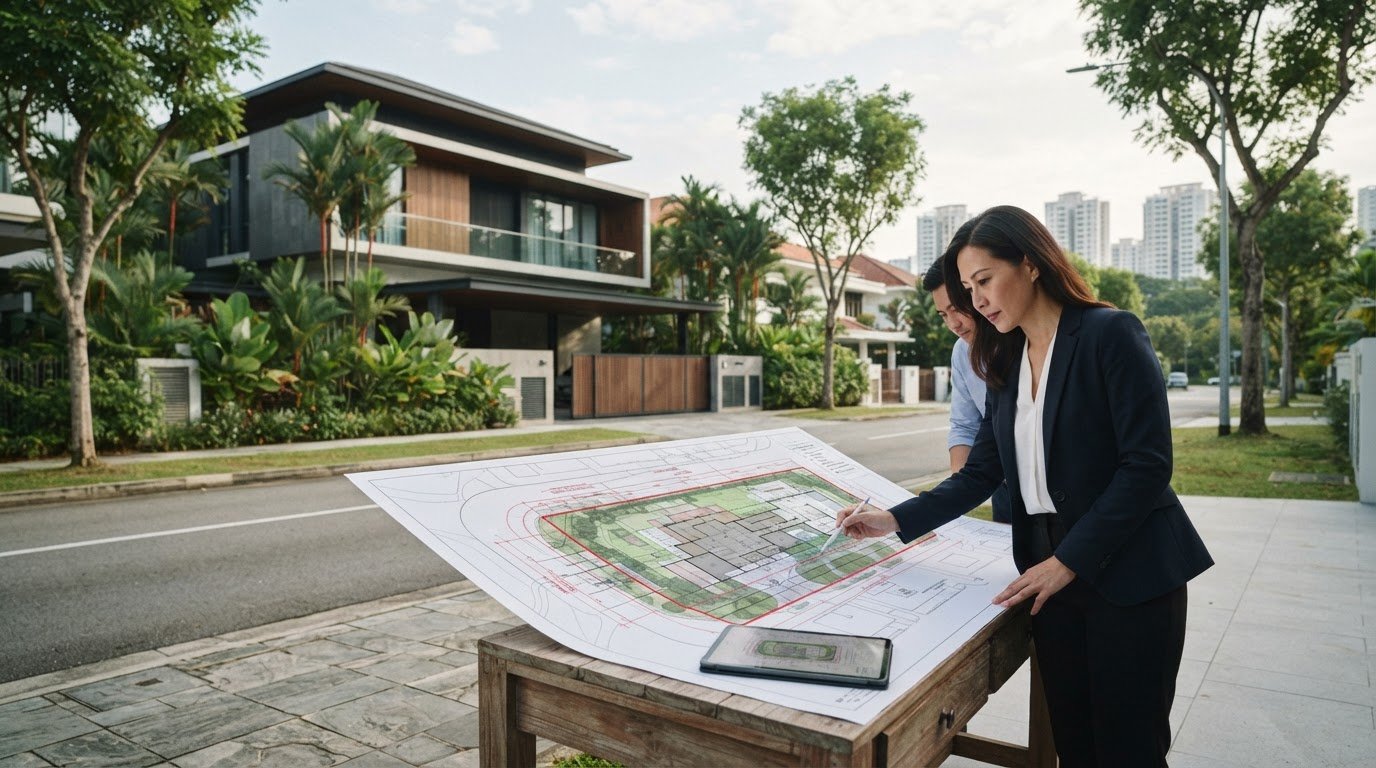
A luxury condo with concierge service in Singapore is defined not only by its address or polished shared spaces, but also by the support available to residents. Newer luxury developments commonly feature concierge services, while older luxury condos generally do not. That difference can shape everyday living as much as a building’s amenities or design.
A premium home should offer more than an impressive entrance. Buyers also need to understand what concierge service covers, whether shared spaces suit their lifestyle, and how privacy and convenience compare across developments.
This guide explains what sets Singapore’s luxury condos apart, from their locations and hotel-like facilities to practical considerations during a viewing. It also looks at how concierge services can differ between newer and older residences, helping you assess what matters most before choosing a home.
Key Takeaways
- Compare a development’s district and setting with the lifestyle you want, from city access to a beachfront environment.
- Assess concierge service as part of the full residential experience, including how it complements shared facilities and daily needs.
- Look beyond premium finishes to practical buyer priorities such as privacy, lift access, and integrated home technology.
- Notice how common-area design shapes the atmosphere, and whether the spaces feel more residential or hotel-inspired.
- Distinguish newer and older luxury condos by the services and systems they provide, rather than relying on age or prestige alone.
Residential development locations and districts
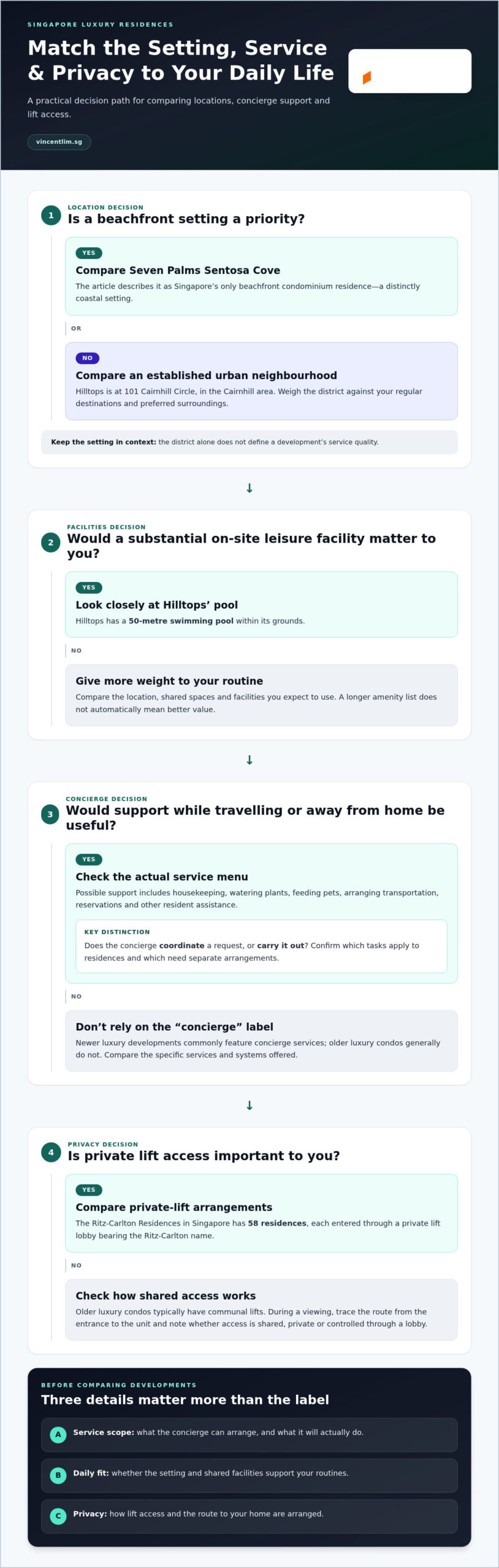
Location shapes the daily experience of a luxury estate, but the district alone does not define service quality. Seven Palms Sentosa Cove is described as Singapore’s only beachfront condominium residence, offering a distinctly coastal setting. Hilltops sits at 101 Cairnhill Circle, Singapore 229809, placing its residences in the Cairnhill area. These examples show how buyers can compare an island setting with a central residential district.
Compare each location against your regular destinations, preferred surroundings, and routines. Sentosa Cove suits buyers drawn to waterfront living, while Cairnhill places daily life within an established urban neighbourhood. Then consider how the estate’s shared amenities support that location. Hilltops, for example, has a 50-metre swimming pool, adding a substantial leisure facility within its grounds. A location decision is stronger when it accounts for both the surrounding district and the facilities residents use at home.
Concierge services can be useful when residents travel or spend extended periods abroad. They may include housekeeping, watering plants, feeding pets, and arranging transportation, as well as reservations or other resident assistance. A key distinction is whether the service coordinates a request or carries it out. Review each development’s service scope, including which tasks apply to residences and which require separate arrangements.
Privacy also depends on how residents enter their homes. Older luxury condos typically have communal lifts rather than private elevators, which can mean sharing access with other residents. By contrast, The Ritz-Carlton Residences in Singapore has 58 residences, each entered through a private lift lobby bearing the Ritz-Carlton name. During a viewing, trace the route from the entrance to the unit. Note whether lift access is shared, private, or controlled through a lobby.
International residents may value assistance that makes unfamiliar routines easier. Concierge services can include reservations, event planning, and global travel arrangements, while some developments offer private dining through exclusive partnerships. These amenities serve different needs, from hosting guests to coordinating travel. When comparing a luxury condo with concierge service in Singapore, focus on the specific service menu, not the label alone.
Are concierge services included in condo maintenance fees or charged separately? Fee arrangements depend on the development and its service terms. Compare the stated maintenance charges with the concierge service schedule, and look for separate charges for specific requests.
How can I verify a condo’s concierge services before buying or renting? Request the written service schedule and compare its listed tasks with the assistance you expect. Review the development’s resident materials for the request process and service hours, and observe the concierge desk during a viewing. This helps distinguish available services from claims made in marketing materials.
What makes a “luxury condo” different?
A luxury residence is defined by the combined experience of its facilities, service, privacy, and design. Concierge support may coordinate reservations, event planning, private chefs, art acquisitions, or global travel. These services complement shared amenities, but do not replace the facilities residents use every day. Compare the actual service menu with the spaces and features you value, rather than relying on the word “luxury” alone.
Gramercy Park illustrates how architecture contributes to a development’s identity. It has 174 residences across two 24-storey residential blocks and has received more than five awards for architectural excellence. Those details indicate scale and design recognition, but buyers should also consider how the facilities support their routines. Look at the shared spaces, circulation, and landscaping, including how gardens and communal areas are integrated into the estate.
Thomson Impressions offers another point of comparison. The development has 288 residential units and was recognised as the best high-end condo development at the 2016 Southeast Asia Property Awards. An award provides context, not a complete picture of daily living. Consider how facilities are arranged and maintained, and whether their design supports the way you expect to use the residences. The architects’ choices matter most when they translate into functional spaces.
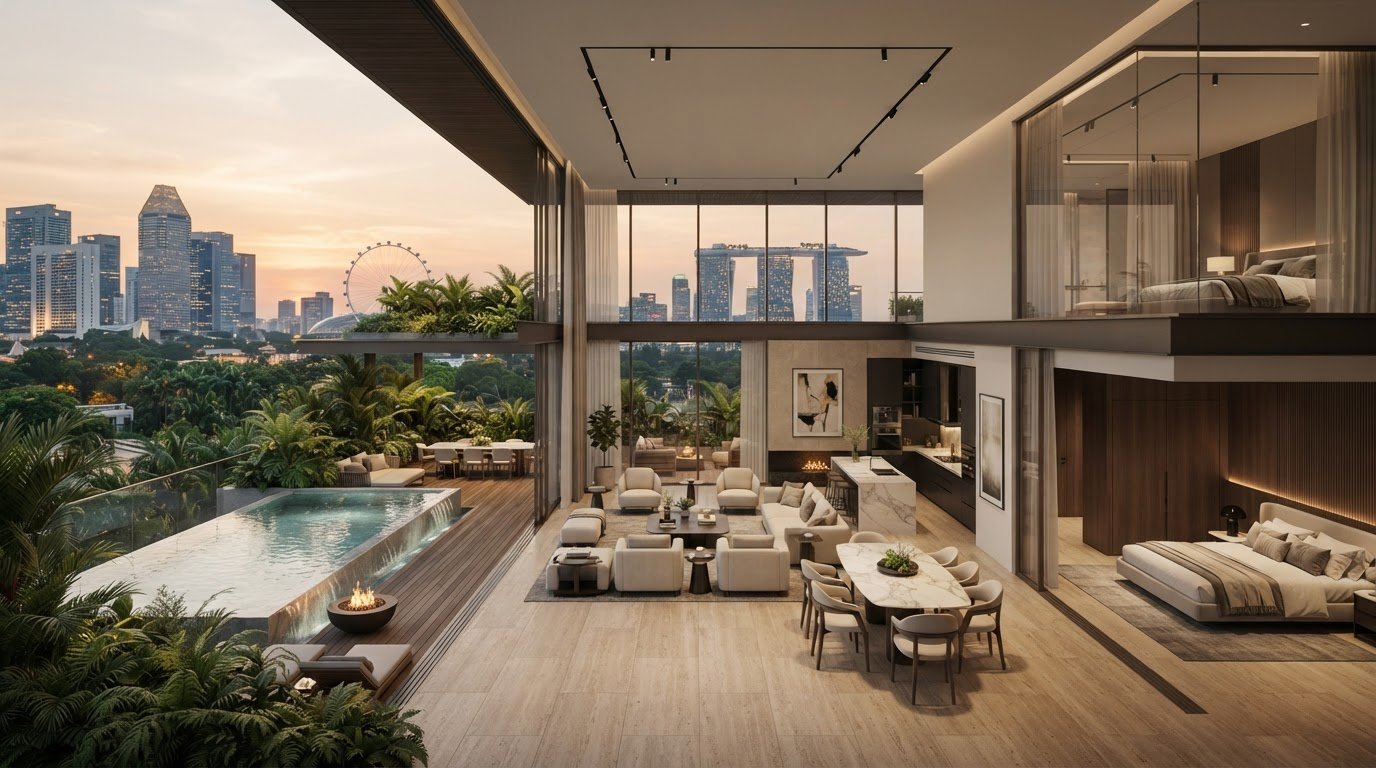
Luxury facilities can extend beyond conventional pools and lounges. Wallich Residences has four floors of amenities, while Hilltops offers more than 25,000 square feet of sky terraces for entertaining and lounging. Some elite developments also provide salt therapy rooms, onsen-inspired spas, cryotherapy chambers, and oxygenated yoga studios. These examples show the range available, but more facilities don’t automatically mean better value. Prioritise amenities you’ll use, and consider how shared spaces affect privacy and upkeep.
What eligibility rules apply to foreigners buying luxury condominiums in Singapore? Eligibility depends on the buyer’s status and the property’s classification. Condominium rules differ from those for landed homes, so establish the property category before assessing eligibility.
What are the risks or drawbacks of buying a Singapore condo with concierge service? The service scope may be narrower than the label suggests, and some requests may involve separate charges. Extensive shared facilities also require ongoing management, while amenities you rarely use may add little practical value. Compare written service descriptions, facilities, and the development’s design before deciding what merits a premium in your purchase.
For buyers weighing facilities against service and design, a focused comparison can clarify which features matter most. Explore luxury condominium sales as part of your Singapore property search.
Buyer expectations for premium developments
Premium buyers often assess privacy, technology, space, and service as one residential experience. In Singapore, private elevators are described as an expected feature in condos priced at more than $5 million. That expectation makes the route from lift to home a practical viewing point. Observe whether the lift opens into a private lobby or a shared corridor, and consider how that arrangement suits your household.
Home automation is another feature buyers may encounter in premium residences. Some Singapore developments offer systems for lighting, temperature, entertainment, and security, controlled by touch or voice. South Beach Residences and Reflections at Keppel Bay are examples associated with integrated home technology, including biometric security, climate-controlled wine cellars, and personalised ambient lighting. These examples show that automation can go beyond switching lights on or off.
Assess each system by how it supports everyday routines. At South Beach Residences, biometric security illustrates an access function, while ambient lighting can shape a room’s atmosphere. A climate-controlled wine cellar serves a more specialised purpose. During a viewing, identify which features matter to your lifestyle and which may go unused. Consider how the controls work together across the home, rather than judging each device in isolation.
Review space just as carefully. Expansive rooms may look impressive, but a usable layout matters more than visual scale alone. Consider furniture placement, storage, and how naturally entertaining areas connect. For example, a buyer who regularly hosts guests may value a dining area suited to gatherings. Someone working from home may prefer a quiet room for focused work.
Concierge service can shape expectations, particularly when residents want practical assistance alongside private amenities. Compare the stated scope with your routine: reservations, event planning, and travel coordination serve different needs. Consider how residents submit requests and whether the service complements facilities within the development. The label “concierge” does not explain every detail, so review the written scope alongside the residential features.
Use the same comparison method for each development. Record the lift arrangement, automation functions, usable room layouts, and concierge responsibilities, then rank them by importance to your household. This helps separate an impressive presentation from a home that fits your priorities. In a premium purchase, look for a practical balance of privacy, technology, and space.
Common-area decor and hotel-like design
In Singapore, older condominiums built in the 2000s or earlier generally used benches, landscaped areas, and ponds to decorate common spaces. These features can create a quiet garden atmosphere, but they offer a different impression from a hotel-inspired arrival. Compare how each property moves residents from the entrance to the lobby, lounge, lifts, and shared facilities. That sequence reveals whether the design feels formal, relaxed, or primarily functional.
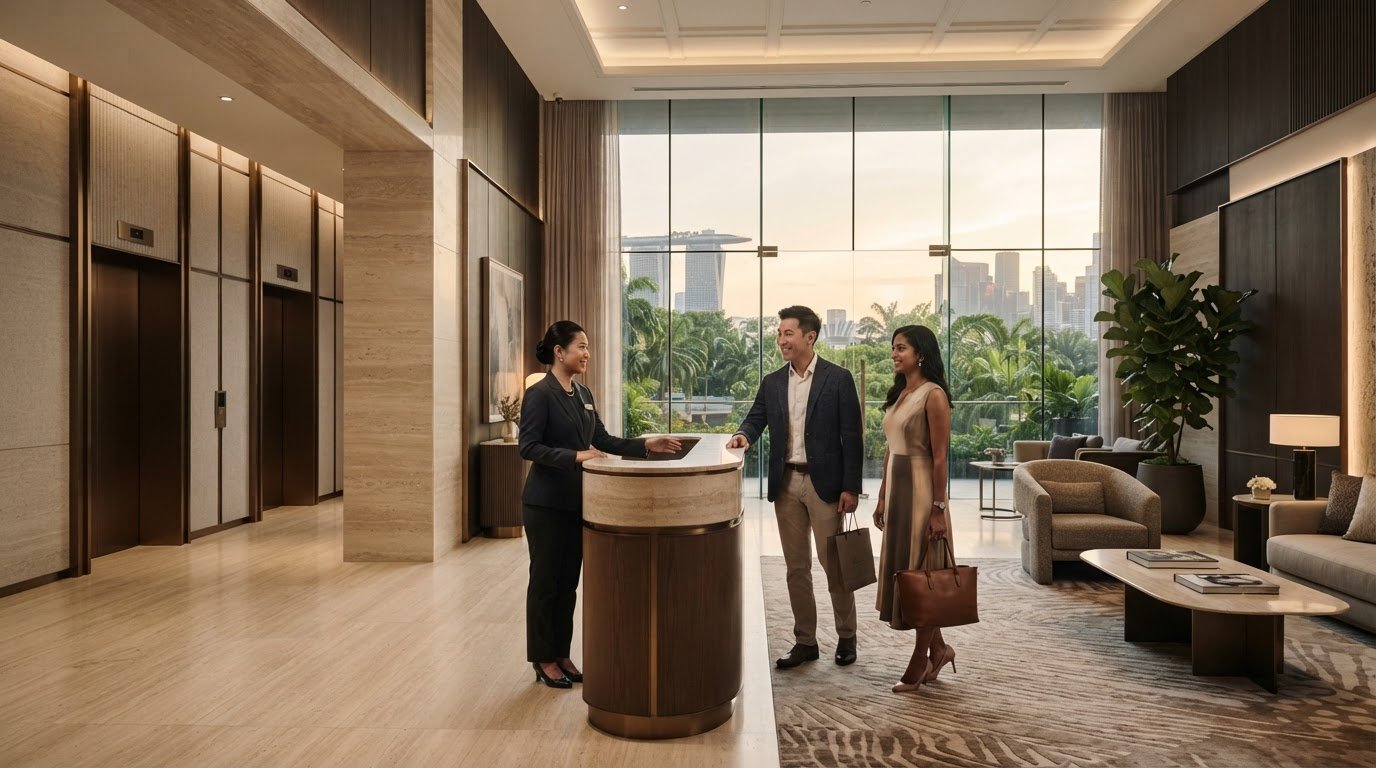
A hotel-like lobby involves more than an elaborate reception desk. Look at seating, lighting, circulation, and the transition between public and resident areas. A lounge near the entrance, for example, can provide a place to meet visitors without taking them directly into private residential corridors. During a viewing, consider whether seating supports conversation and the route to the lifts remains clear.
Materials and maintenance shape the experience over time. Stone, timber, glass, and planted features each create a distinct visual effect, but placement matters as much as finish. Check how surfaces meet at corners, whether seating shows visible wear, and whether landscaped areas appear maintained. A pond, for instance, should feel integrated with the grounds rather than interrupting a main walking route.
Shared dining spaces can extend the hotel-inspired feel beyond the lobby. Consider how a dining room or private event area connects with kitchens, outdoor terraces, and guest access. During a viewing, imagine hosting a small gathering: where would guests arrive, sit, and move between spaces? This practical test helps distinguish usable facilities from decorative rooms with little everyday value.
Design also affects privacy. Clear sightlines in a lobby may help residents orient themselves, while exposed seating near lift doors can make waiting feel less private. Walk from the entrance to a sample residence, noting where visitors can pause and where residents pass through. Compare the whole route and common areas rather than judging the lobby from a single photograph.
Use a consistent method when viewing properties. First, assess the entrance and reception area. Next, inspect the lounge, dining facilities, landscaping, and paths between them. Finally, consider whether the decor supports how residents use each space. Singapore developments vary widely, from benches and ponds to hotel-like interiors. The strongest design balances visual character with comfort, circulation, and practical use.
The concierge tradition offers a useful reference for hotel-inspired design. Hotel concierges became all-purpose multilingual personal attendants as leisure tourism became more common by the late 19th century. Les Clefs d’Or was formed in Paris on 26 October 1929 by Pierre Quentin and 10 other hotel concierges. In a residential setting, the comparison is not about reproducing hotel service, but about whether the shared spaces feel welcoming and easy to navigate.
Older Singapore luxury condos commonly have bay windows and planters that can make floor plans less efficient. Consider whether these features reduce usable space, just as you would assess whether common-area decor supports residents’ movement and everyday use.
Concierge services in newer and older luxury condos
In Singapore, concierge availability often marks a practical difference between newer and older luxury condos. Newer developments commonly feature concierge services, including DUO Residences, 8 St Thomas, and South Beach Residences. Older luxury condos generally do not have concierge services. This distinction affects more than the lobby experience. It can determine whether residents have a central point for arranging requests, or rely on traditional building facilities without dedicated concierge support.
Some newer residences describe concierge support as personal assistance on call. The Wallich Residence and Marina One Residences are examples. For buyers, the useful question is how the service fits daily life: does it coordinate reservations, travel, or event arrangements? A concierge may help organise requests, but residents should understand which tasks are included and how the service operates in each development.
Hotel-linked residences offer another service model. The St Regis Residences in Singapore has 173 residences and service from the adjoining St Regis hotel. That connection can shape the residential experience differently from a standalone condo concierge desk. Buyers should distinguish hotel-provided assistance from building facilities, then consider how each arrangement fits their routines. A familiar hotel name alone does not describe the specific assistance residents can request.
Compare the service offer with the development’s physical systems. Concierge service, private elevators, a Pneumatic Waste Conveyance System, and common-area decor are four key differences identified between older and newer luxury condos. Each affects a different aspect of daily life: resident assistance, access privacy, waste handling, and the atmosphere of shared spaces. During a viewing, examine both the service arrangement and practical building features rather than treating age as a complete measure of quality.
Older properties may have appealing locations or established surroundings, yet their traditional setup can mean fewer hotel-like services. Newer developments may offer concierge support, but the label alone does not establish its scope. Compare written service details, the request process, and building facilities. Then weigh them against your routines, such as hosting guests, arranging transport, or managing a home while travelling.
For a clear comparison, shortlist residences by service model first, then review privacy, waste systems, and common areas. DUO Residences, Marina One Residences, and The St Regis Residences illustrate different ways concierge support can appear in Singapore’s real estate market. Use these examples as reference points, not substitutes for assessing each property. To review options through a focused Singapore luxury condominium search, compare the service experience alongside the residence itself.
Vincent Lim (OrangeTee & Tie): Terrace House Sales
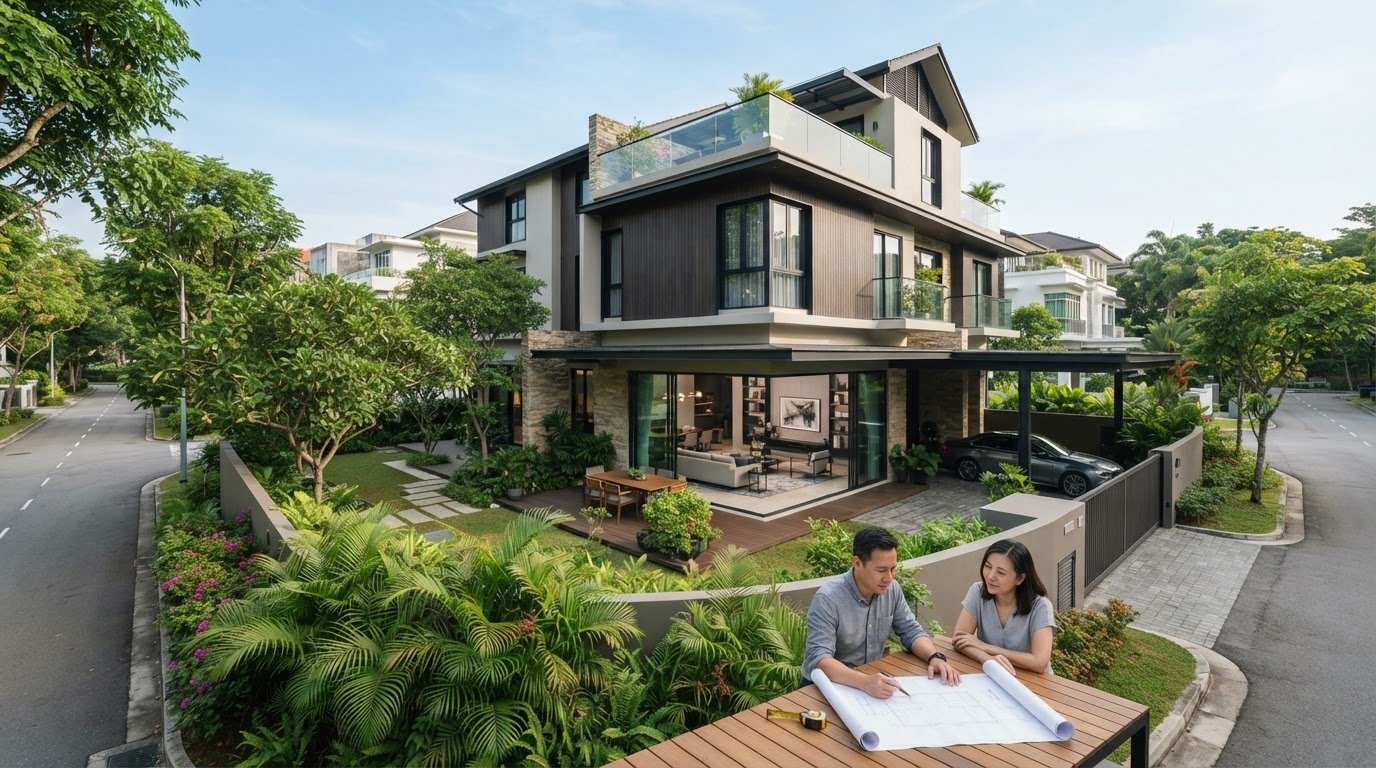
Vincent Lim (OrangeTee & Tie) can assist if your property search extends beyond condominiums to Singapore landed homes. His sales work covers terrace houses, semi-detached houses, detached houses, and Good Class Bungalows. These options may suit buyers who prioritise private outdoor space or a landed-home format over shared condominium facilities.
After comparing concierge arrangements and shared amenities, you may find that a different property type better matches your household’s needs. Vincent Lim’s role is relevant when you are considering a sale or purchase within these landed-home categories. A clear brief on location, property type, and lifestyle priorities can help focus the next discussion.
To discuss your property plans, contact Vincent Lim (OrangeTee & Tie) or visit vincentlim.sg.
Make your next property decision with clarity
Turn your preferences into a focused property brief. Decide which aspects of daily living matter most, then use them to guide viewings and compare suitable homes. When looking for a luxury condo with concierge service in Singapore, weigh the resident experience against your priorities rather than choosing by presentation alone.
Your search may also lead beyond condominium living. Vincent Lim (OrangeTee & Tie) handles sales of luxury condominiums, terrace houses, semi-detached houses, and detached houses. If you are considering a change in property type, discuss your objectives to help frame a search or sale around what suits you.
Contact Vincent Lim (OrangeTee & Tie) to discuss your property plans and take your next step with a considered brief.
Frequently Asked Questions
What concierge services do luxury condos in Singapore provide?
Concierge services may coordinate reservations, transport, housekeeping, event arrangements, and travel. For example, a resident hosting visitors might ask the concierge to organise a dining reservation and guest arrival. The service scope varies by development, so distinguish between arranging a task and carrying it out. When comparing a luxury condo with concierge service in Singapore, match the written service menu to the tasks you would use.
Which Singapore districts have the most luxury condos with concierge services?
No district ranking follows from the named examples alone. The examples include Seven Palms Sentosa Cove and Hilltops at 101 Cairnhill Circle, representing different residential settings. Use these as starting points, then shortlist by the places you visit regularly and the environment you prefer. A district may suit your routine, but the concierge offer still needs to be assessed development by development.
How do concierge services and amenities compare across Singapore luxury condos?
Compare concierge services by the requests they handle and how clearly their limits are described. Assess amenities separately by their purpose, access arrangements, and suitability for your household. A resident who entertains often, for instance, may prioritise bookable gathering spaces, while someone who travels frequently may value help coordinating practical arrangements. A side-by-side comparison shows which features support your routine rather than simply add to a brochure.
Which luxury Singapore condos with concierge service are near MRT stations, schools, and business districts?
Hilltops at 101 Cairnhill Circle is one named residence to assess, but proximity to an MRT station, school, or business district depends on the specific destination and route. For each candidate, map walking and driving routes to your regular destinations, then consider whether the building’s entrance and transport options suit your schedule. Concierge availability alone doesn’t establish convenient access to those places.
Are concierge services included in condo maintenance fees or charged separately?
Fee arrangements depend on the development and its service terms. Compare the stated maintenance charges with the concierge service schedule, and check whether specific requests incur separate charges.