
What if the simple act of signing a document could either secure your legacy or lead to a forfeited S$50,000 deposit due to a single administrative oversight? In the high-stakes world of Singapore real estate, an option to purchase agreement for private property is far more than a standard template; it’s a tactical legal instrument that requires bespoke calibration before the first dollar is paid. You rightfully expect a seamless transition from your initial offer to the final handover, yet the technical interaction between contract clauses and the Law Society Conditions of Sale often creates unnecessary anxiety for even the most seasoned investors.
This guide provides the clarity you need to master the legal nuances, financial timelines, and strategic negotiations required to secure your luxury investment with total confidence. We’ll demystify the precise timing of Stamp Duty payments and provide a structured framework to protect your 1% option fee from avoidable risks. By the end of this article, you’ll understand how to align your completion timelines for effective asset progression, ensuring every step of your property journey is handled with the precision and excellence your portfolio deserves.
Key Takeaways
- Understand why the option to purchase agreement for private property acts as a tactical safeguard for your 1% option fee and exclusive purchase rights.
- Learn to precisely calculate the standard 14-day option period and when it’s appropriate to negotiate for extended timelines in complex GCB acquisitions.
- Identify the legal nuances between a Letter of Offer and a formal OTP to avoid administrative oversights that could lead to a forfeited deposit.
- Master the critical steps of the exercise process, from securing bank financing to coordinating with elite legal counsel for a seamless property conveyance.
- Discover how a dedicated strategist coordinates between surveyors and bankers to ensure every technical clause aligns with your wealth preservation goals.
Understanding the Option to Purchase (OTP) Agreement for Private Property
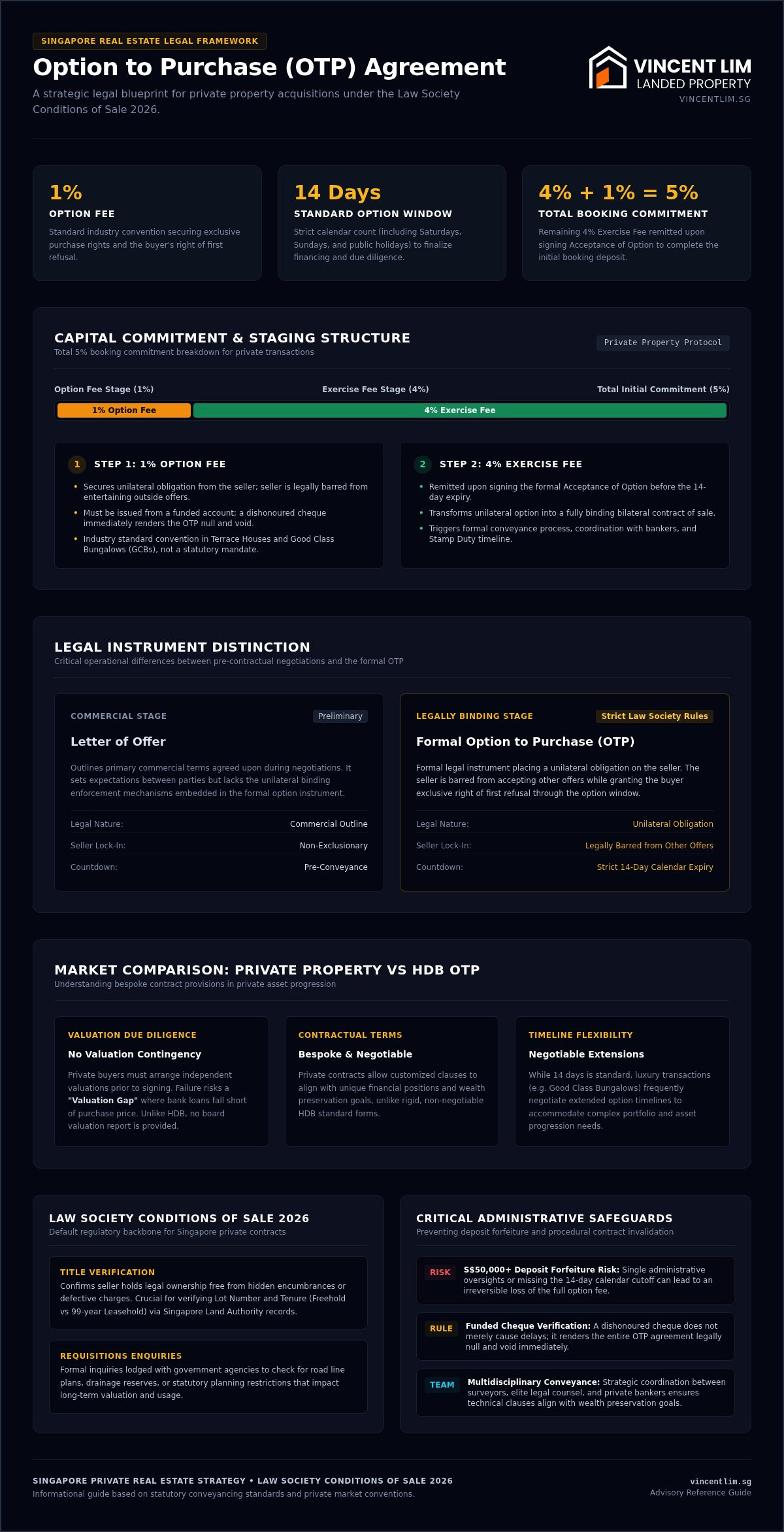
An option contract in the context of Singapore real estate serves as a sophisticated legal barrier, protecting the buyer’s interests during the critical due diligence phase. At its core, the option to purchase agreement for private property is a legally binding document that grants a potential buyer the exclusive right to acquire a specific asset at a predetermined price within a fixed timeframe. Unlike a standard purchase agreement where both parties are immediately committed, the OTP places a unilateral obligation on the seller. Once the seller issues the document and accepts the option fee, they’re legally barred from entertaining other offers or withdrawing from the deal. This provides the buyer with the “right of first refusal” while they finalise their financing and legal checks.
While many buyers conflate the “Letter of Offer” with the formal OTP, they serve distinct strategic purposes. A Letter of Offer typically outlines the primary commercial terms agreed upon during negotiations. In contrast, the OTP is the formal legal instrument that triggers the countdown to completion. In the luxury segment, including Terrace Houses and Good Class Bungalows (GCBs), the industry standard option fee is 1% of the purchase price. It’s vital to recognize that this 1% is a matter of convention rather than a statutory mandate. However, it represents a significant financial commitment that demands precision in administrative execution to avoid forfeiture.
The Legal Framework: Law Society Conditions of Sale
The Law Society Conditions of Sale 2026 provide the default regulatory backbone for private property contracts in Singapore. These conditions govern complex aspects of the transaction, such as “Title” and “Requisitions.” Verifying the “Title” ensures the seller possesses the legal right to transfer ownership without hidden encumbrances. “Requisitions” involve formal enquiries to government agencies to check for road line plans, drainage reserves, or other planning restrictions that might affect the property’s future value. If the title is found to be defective or if there are outstanding legal charges, these conditions dictate how the parties must proceed to rectify the issues before the final handover.
Private Property vs. HDB OTP: Crucial Differences
Private transactions offer a level of flexibility that HDB standard forms don’t provide. In the private market, terms are negotiable, allowing an expert strategist to insert bespoke clauses that protect a buyer’s unique financial position. One critical distinction is the absence of a “Valuation” contingency. Unlike HDB buyers who receive a valuation report from the board, private buyers must conduct their own valuation before signing the option to purchase agreement for private property. Failing to do so can lead to a “valuation gap,” where the bank loan falls short of the agreed price. Additionally, while the 14-day option period is standard, luxury transactions often involve extended timelines to accommodate complex wealth planning or asset progression requirements.
Anatomy of a Private Property OTP: Fees, Timelines, and Legal Clauses
Precision is paramount when drafting the option to purchase agreement for private property. Every clause serves as a financial tripwire or a protective shield. The process begins with the 1% Option Fee, which acts as the consideration to keep the offer exclusive. You must ensure the cheque is issued from a funded account; a dishonoured cheque due to administrative oversight doesn’t just delay the process. It renders the entire agreement null and void. In the high-stakes luxury market, where 1% can represent a significant six-figure sum, this level of technical accuracy is the baseline for a secure transaction.
The Option Period typically spans 14 calendar days. This is a strict deadline. You must count every Saturday, Sunday, and public holiday when calculating your expiry date. To complete the initial 5% booking commitment, you’ll pay the remaining 4% Exercise Fee upon signing the Acceptance of Option. Beyond the financials, the document must accurately reflect the specific Lot Number and Tenure. Whether the property is Freehold or a 99-year Leasehold dictates its long-term valuation and your subsequent financing options. Verifying these details against the Singapore Land Authority records is a non-negotiable step in the buying private property in Singapore journey.
Financial Milestones and Deadlines
Missing the exercise deadline results in the immediate forfeiture of your 1% fee. Once you exercise the option, a new countdown begins. You have exactly 14 days to settle the Buyer’s Stamp Duty (BSD) and any applicable Additional Buyer’s Stamp Duty (ABSD). Calculating these costs early is essential for maintaining liquidity, particularly when navigating the complexities of ABSD for landed property and strategic asset progression. A structured timeline ensures that your capital is deployed efficiently without incurring late payment penalties from IRAS.
Essential Clauses for Luxury Landed Property
Landed assets like Terrace houses or GCBs require bespoke contractual protections. The “as-is-where-is” clause is standard, meaning you accept the property in its current physical state. This makes a pre-signing inspection for unauthorized alterations or structural defects critical. You must also define the handover state: Vacant Possession ensures the property is empty, while “Sale with Tenancy” means you inherit existing rental agreements. If you are managing a complex transition between properties, you might want to consult with a seasoned strategist to ensure these clauses align with your move-in schedule and investment goals.
Strategic Negotiation: Protecting Your Interests Before Signing
Strategic success in real estate isn’t found in the signing of the document, but in the meticulous calibration of terms before the ink ever touches the paper. For the elite investor, the negotiation of an option to purchase agreement for private property extends far beyond the final sale price. It involves defining the legal boundaries that will govern the next several months of your financial life. One often overlooked area is the detailed schedule of fixtures and fittings. In luxury condominiums and landed properties, high-value assets like bespoke chandeliers, integrated wine cellars, or professional-grade kitchen appliances must be explicitly listed to avoid disputes during the final handover.
While the standard 14-day window is common, it’s frequently insufficient for complex asset progression. In Good Class Bungalow (GCB) transactions or large-scale detached house sales, we often negotiate for an option period of three weeks to three months. This extended timeframe allows for a comprehensive structural survey or a detailed architectural feasibility study. Using this period to identify potential liabilities ensures that your investment remains sound. It’s a proactive measure that aligns with the Urban Redevelopment Authority guidelines on buying private property, ensuring all regulatory and physical due diligence is completed with total precision.
The Extension of Option Clause
There are instances where a buyer may require additional time due to delays in bank loan processing or the sale of an existing property. In these cases, we structure an “Extension of Option.” It’s vital to distinguish between an “Extension Fee,” which is typically a non-refundable payment for more time, and a “Top-up Fee,” which adds to the eventual purchase price. An extension is a fresh agreement and requires mutual consent. Without a pre-negotiated framework for extensions, you risk the seller rejecting the request and forfeiting your initial deposit if you can’t exercise on time.
Contingency Clauses: “Subject to” Conditions
For cautious buyers, we may introduce contingency clauses such as “Subject to In-Principle Approval (IPA).” This protects you if your financing unexpectedly falls through. Another critical clause for recently renovated Terrace or Semi-Detached houses is “Subject to Certificate of Statutory Completion (CSC).” This ensures all historical renovations were legally cleared by the authorities before you take ownership. Sellers often resist these conditions to maintain a clean transaction, but a seasoned strategist knows how to bridge this gap by presenting these clauses as a means of ensuring a transparent and error-free transition for both parties.
The Step-by-Step Process of Exercising Your Option to Purchase
Exercising the option is the definitive transition from a potential buyer to a legal owner. This phase requires meticulous coordination between your financial institution and your legal representatives. Once you’ve secured your bank loan and received the formal Letter of Offer, you must appoint a law firm to handle the conveyance process. This firm acts as your guardian, ensuring that the title is clear and the transaction adheres to every regulatory requirement in Singapore.
The physical act of exercising the option to purchase agreement for private property usually takes place at your chosen law firm. You’ll sign the “Sale and Purchase Agreement,” which is often printed on the reverse side of the original OTP document. Simultaneously, you must provide the 4% Exercise Fee, typically via a cashier’s order, to bring your total deposit to 5%. Your lawyer then delivers these signed documents and the fee to the seller’s solicitor, officially binding the contract and setting the stage for the final handover.
The Legal Completion Timeline
The standard completion period in Singapore typically ranges from 8 to 12 weeks after you exercise the option. During this window, your lawyer coordinates the final title searches and ensures all property taxes and maintenance fees are settled by the seller. “Completion” itself is the moment of final settlement where the remaining 95% of the purchase price is transferred in exchange for the keys. For those looking at the other side of the transaction, understanding The Step-by-Step Landed Transaction Process can provide valuable context on how sellers prepare for this handover.
Stamp Duty and Financial Obligations
Your financial responsibilities intensify immediately after exercising the OTP. You have a strict 14-day deadline to pay the Buyer’s Stamp Duty (BSD) and any applicable Additional Buyer’s Stamp Duty (ABSD) to IRAS. If you’re using CPF funds, understand the difference between the “direct payment” model, where funds are drawn directly for stamp duties, and the “reimbursement” model for the initial 5% deposit. Missing these deadlines isn’t just a matter of fines; late payments incur heavy penalties and can even risk the transaction being voided by the seller. To ensure your financial timelines are perfectly aligned with your asset progression goals, you can engage an elite strategist to oversee every technical milestone.
Navigating High-Stakes Transactions with Professional Brokerage
High-stakes transactions involving Good Class Bungalows or luxury penthouses demand a level of sophistication that exceeds the capabilities of a standard brokerage. When millions are at stake, the margin for error is non-existent. Managing an option to purchase agreement for private property requires a methodical conductor who can synchronize the efforts of legal experts, financial institutions, and technical surveyors. Vincent Lim operates as this central strategist, identifying potential legal gaps before they evolve into costly liabilities. By maintaining a grounded, client-focused perspective, he alleviates the inherent stress of these complex acquisitions, ensuring every administrative detail is executed with calculated competence.
A “Trusted Guide” does more than facilitate a sale; they provide the foresight necessary to navigate the emotional and financial pressures of asset progression. This proactive management prevents the common pitfalls that plague less-disciplined transactions, such as missed payment windows for stamp duties or the inclusion of vague clauses in the option to purchase agreement for private property that lead to post-completion disputes. By establishing a foundation of transparency and precision from the outset, the transition from offer to exercise becomes a seamless progression rather than a source of anxiety. It’s about protecting your interests through every phase of the journey.
Bespoke Representation for Landed Property
Landed assets require a specialized lens, particularly when evaluating redevelopment potential or historical structural changes. Before drafting the OTP, it’s essential to verify that the “Tenure” and “Land Size” perfectly align with Singapore Land Authority (SLA) records. Discrepancies here can derail bank financing or affect the long-term valuation of your legacy. For those exploring a detached house for sale in Singapore, understanding how plot ratios and building setbacks influence the contract terms is vital for future-proofing your investment. Identifying these redevelopment opportunities early ensures your OTP terms are calibrated for maximum upside.
Secure Your Legacy with Vincent Lim
With over 20 years of experience in the Singapore real estate industry since 2004, Vincent Lim brings a wealth of seasoned authority to every transaction. His “white-glove” service level ensures that you’re supported from the initial viewing through to the final key collection. This isn’t merely a service; it’s a high-level partnership dedicated to your success and wealth preservation. To refine your property acquisition strategy and ensure your next move is handled with the gold standard of professional discipline, consult with Vincent Lim today.
Securing Your Real Estate Legacy with Precision
Securing a luxury asset in Singapore requires more than just capital; it demands a meticulous adherence to legal and financial timelines. Mastering the technical nuances of the option to purchase agreement for private property protects your 1% option fee and ensures a seamless transition from offer to exercise. Strategic negotiations of the option period provide the necessary safeguards for your growing portfolio. Precision in every clause is non-negotiable. You deserve a transition that is both error-free and strategically aligned with your long-term wealth goals.
As an Independent Executive Associate Director at OrangeTee & Tie with over 20 years of experience, Vincent Lim provides the elite brokerage services required for high-stakes transactions. He acts as your strategic advisor, coordinating between lawyers and bankers to identify legal gaps before they become liabilities. To ensure your next investment is handled with the gold standard of professional discipline, partner with Vincent Lim for your next luxury property acquisition. Your journey toward a refined property portfolio deserves a partner who values excellence above all else.
Frequently Asked Questions
Can I back out of a private property purchase after signing the OTP?
You can choose not to exercise the option to purchase agreement for private property, but this results in the immediate forfeiture of your 1% option fee. Once you sign the acceptance and formally exercise the option, you’re legally committed to the transaction. Backing out after that stage constitutes a breach of contract, which may allow the seller to sue for specific performance or damages far exceeding the initial deposit.
What happens to the 1% option fee if I do not exercise the option?
The 1% option fee is forfeited to the seller if you fail to exercise the option by the specified expiry date and time. This fee serves as the legal consideration for the seller to keep the property off the market exclusively for you. Since this represents a significant sum in luxury transactions, ensuring your bank financing is fully secured before the deadline is vital to avoid an expensive oversight.
Is the 14-day option period negotiable in Singapore?
The 14-day option period is entirely negotiable between the buyer and the seller in private transactions. While two weeks is the standard for condominiums, luxury landed property deals often involve extended periods of three weeks or even three months. These extensions allow for comprehensive structural surveys or complex wealth planning. A seasoned strategist can help you negotiate these terms before the agreement is even drafted.
Can a foreigner sign an Option to Purchase for a landed property?
A foreigner can sign an option to purchase agreement for private property for a landed home, but they must obtain approval from the Land Dealings Approval Unit (LDAU) before exercising it. Completing the purchase without this legal clearance is prohibited under the Residential Property Act. If the LDAU rejects the application, the buyer typically forfeits their option fee unless a “subject to approval” clause was pre-negotiated.
What is the difference between an Option Fee and an Exercise Fee?
The Option Fee is the initial 1% payment made to secure the exclusive right to purchase the property. The Exercise Fee is the additional 4% paid when you formally accept the offer, bringing your total deposit to 5%. These funds are usually held in an escrow account by the seller’s lawyer. This structure ensures both parties are financially committed before the final 8 to 12-week completion countdown begins.
Do I need a lawyer to draft the Option to Purchase for a private property?
While many agents use standard templates, engaging a lawyer to vet or draft your OTP is highly recommended for luxury residences. High-value transactions often require bespoke clauses regarding unauthorized alterations, tenancy handovers, or redevelopment potential. A legal professional ensures that the document aligns with the latest Law Society Conditions of Sale, protecting you from vague qualifiers that could lead to future disputes or significant financial liabilities.
How is the Option to Purchase exercised for a luxury condominium?
Exercising the option for a luxury condominium involves signing the acceptance form on the back of the OTP and delivering it to the seller’s solicitor. You must also include a cashier’s order for the 4% exercise fee. This process is typically coordinated by your appointed law firm to ensure all documents are served within the strict calendar day deadline. Precision here is critical to prevent the option from lapsing.
Can the seller cancel the OTP once they have granted it to the buyer?
A seller cannot unilaterally cancel the OTP once they’ve granted it and accepted the option fee. The document creates a binding unilateral obligation where the seller is legally committed to sell if the buyer chooses to exercise the right. The only way the seller is released from this obligation is if the buyer fails to exercise the option by the expiry date or if both parties mutually agree to rescind.