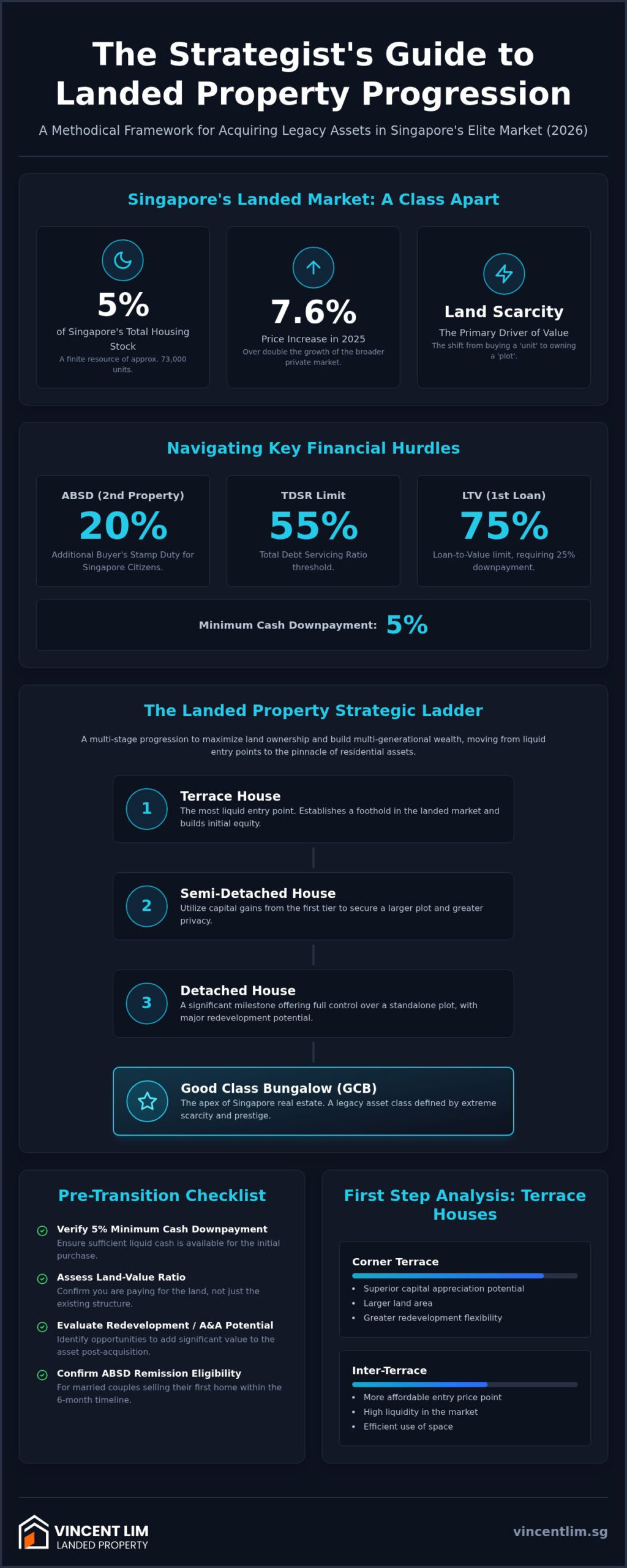
Landed properties comprise only 5% of Singapore’s total housing stock, yet this exclusive segment saw a 7.6% price increase in 2025, more than doubling the growth of the broader private residential market. Many high-net-worth individuals recognize that while luxury condominiums offer lifestyle, true wealth preservation remains rooted in the scarcity of land titles. You likely understand that moving into this space requires more than just capital; it demands a sophisticated landed property asset progression strategy to navigate the high-stakes environment of 2026.
This guide provides the methodical framework you need to transition from high-end strata units to prestigious landed assets while managing 20% ABSD rates and 55% TDSR limits. I will detail how to identify legacy assets with high land-value ratios and maximize redevelopment potential for future generations. We’ll examine the specific metrics that separate stagnant leaseholds from appreciating freehold plots, ensuring your next acquisition is a tactical victory for your family’s portfolio. By focusing on plot ratios and land scarcity, you can secure a multi-generational asset that withstands market volatility.
Key Takeaways
- Understand why the inherent scarcity of Singapore’s landed housing stock continues to drive superior capital appreciation over traditional luxury condominiums.
- Master a methodical landed property asset progression strategy designed to transition equity through terrace and semi-detached tiers toward prestigious legacy assets.
- Evaluate the distinct capital growth profiles of different landed classes to align your acquisition with long-term wealth preservation and multi-generational goals.
- Identify high-potential plots by analyzing land-value ratios and the strategic advantages of redevelopment versus Additions & Alterations.
- Learn how to navigate the complexities of 2026 regulations and ABSD costs through a disciplined, strategist-led approach to property acquisition.
The Fundamentals of Landed Property Asset Progression in 2026
Landed asset progression is the methodical transition through property tiers to maximize physical land ownership. In Singapore’s land-scarce environment, this isn’t merely a lifestyle choice; it’s a high-level capital preservation tactic. While many investors view real estate through the lens of the property ladder, the elite strategist recognizes that landed homes represent the pinnacle of this journey. A successful landed property asset progression strategy moves beyond the consumption mindset of luxury condominiums, where value often depreciates as the building ages. Instead, it adopts an asset mindset that focuses on the underlying land title. This title remains the most resilient component of a portfolio. Entry-level assets, such as terrace houses, serve as the foundation of this strategy, providing a vital foothold in a market defined by limited supply.
Why Land Scarcity Dictates Your Strategy
Landed homes are a finite resource. They account for only about 5% of Singapore’s total housing stock, with supply capped at approximately 73,000 units. URA land use data confirms that additional land for such enclaves is virtually non-existent. This creates a Scarcity Principle that drives 2026 valuations. When you pivot to landed assets, your valuation metrics shift. You no longer prioritize strata area; you prioritize land area. Freehold titles command a significant premium because they offer perpetual control over the plot. This allows for multi-generational wealth transfer that leasehold assets cannot match. The psychological shift from buying a “unit” to owning a “plot” is the first step in mastering this asset class.
Financial Readiness for the Landed Leap
Transitioning from a luxury condominium to a terrace house requires precise financial coordination within your landed property asset progression strategy. You must navigate the 55% TDSR threshold and the 75% LTV limit for your first home loan. The impact of ABSD for landed property is a critical factor. With Singapore Citizens paying 20% on a second residential property, many choose to sell their existing assets first to maintain liquidity. This sell-first, buy-later approach is often necessary to avoid a significant cash outlay and ensures you have the capital ready for the required 5% minimum cash downpayment.
Consider this checklist for your transition:
- Verify your 5% minimum cash downpayment requirement for the landed acquisition.
- Assess the land-value ratio of the target terrace house to ensure you aren’t overpaying for built-up area.
- Evaluate the potential for future redevelopment or Additions and Alterations (A&A) to increase the asset’s value.
- Confirm your eligibility for ABSD remission if you’re a married couple selling your first residential property within six months of the new purchase.
The Strategic Ladder: From Terrace to Good Class Bungalow
Moving through the landed segment requires a disciplined, multi-stage approach. This journey typically begins with a terrace house, allowing you to build initial equity while familiarizing yourself with the nuances of land ownership. As market cycles shift, investors pivot to semi-detached properties, utilizing capital gains to secure larger plots. The progression continues to the detached house milestone before reaching the Good Class Bungalow (GCB) pinnacle. Success in this landed property asset progression strategy depends on timing these transitions to capitalize on price disparities between tiers. By understanding when to exit a smaller plot and entry a larger one, you ensure your capital is always working in the most efficient asset class.
Maximizing Gains in the Terrace Segment
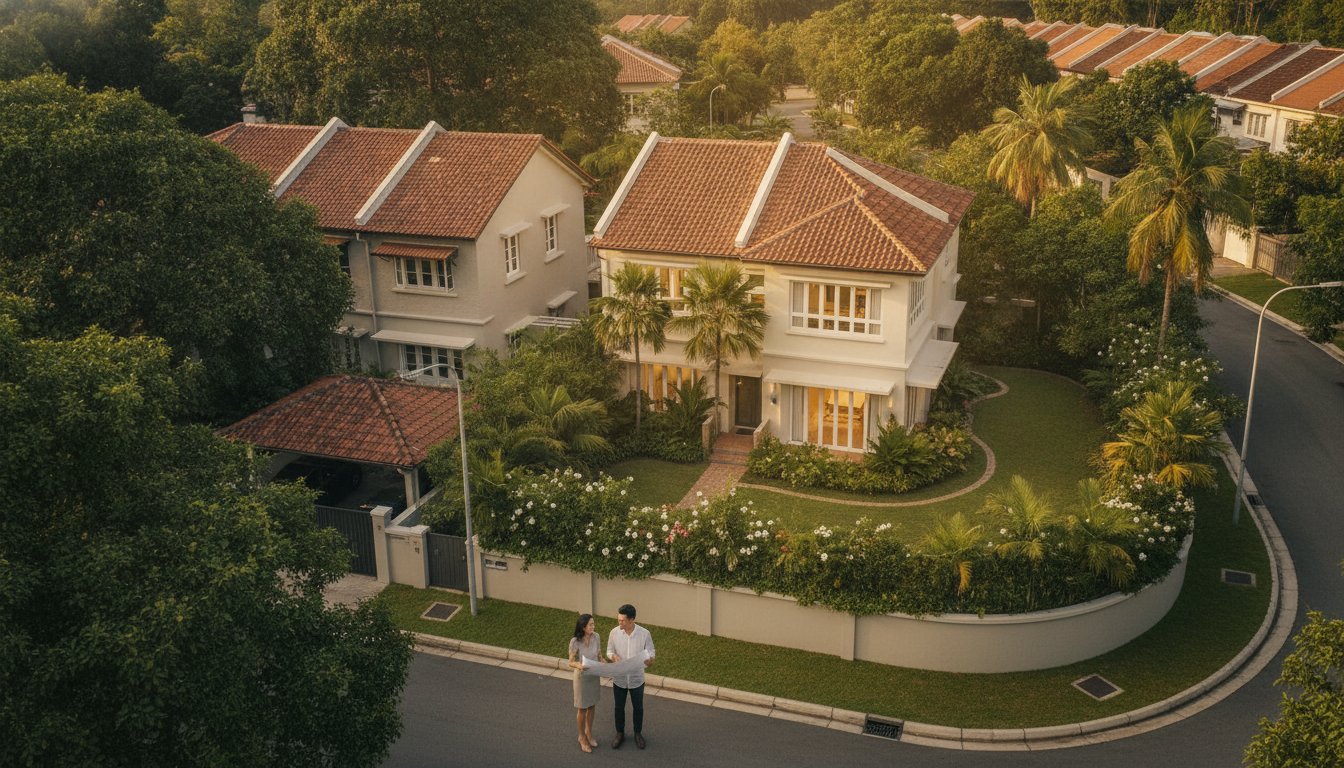
Terrace houses represent the most liquid entry point into the landed market. While inter-terrace units are often more affordable, corner-terrace properties usually offer superior capital appreciation due to their larger land area and redevelopment flexibility. Identifying undervalued plots with high efficiency is essential for the first “hop” on the ladder. You can find detailed analysis in the ultimate guide to buying a terrace house. By securing a plot with favorable dimensions, you position yourself to capture the growth needed for the next tier. These assets serve as the engine for your portfolio, generating the equity required for larger acquisitions.
Scaling into Semi-Detached and Detached Assets
The transition from a semi-detached to a detached house for sale singapore marks a significant upgrade in both status and land value. Semi-detached houses offer a strategic middle ground, but detached titles provide the ultimate autonomy of a standalone plot. When evaluating these assets, the “sweet spot” for land size often falls between 3,000 to 5,000 square feet. This range balances substantial land ownership with high resale liquidity. Sophisticated investors often study broader real estate investment strategies to understand how land cycles correlate with equity markets. Choosing freehold over leasehold is non-negotiable for multi-decade holds, as it prevents the lease decay that affects older strata developments.
The final acquisition in a successful landed property asset progression strategy is often a Good Class Bungalow. With a minimum plot size of 1,400 square meters, GCBs are the ultimate legacy asset for wealth preservation. Reaching this level requires a partner who understands the nuances of high-stakes negotiations and private treaty sales. If you’re ready to plan your next move, you might benefit from consulting with a veteran landed specialist to refine your roadmap and identify off-market opportunities.
Analyzing Investment Vehicles: Terrace vs. Semi-D vs. GCB
Comparing these assets requires a deep look at historical performance. Over the last decade, landed homes have consistently outpaced strata-titled properties in capital growth. While rental yields for landed homes typically hover between 1.5% and 2.2%, the primary objective is land value appreciation. Terrace houses offer the highest liquidity because their entry price point appeals to the widest pool of buyers. Semi-detached houses, however, often provide a superior balance between prestige and marketability. Your landed property asset progression strategy must account for these liquidity profiles to ensure you don’t find yourself in a stagnant position when you’re ready to upgrade.
The Performance of Terrace and Semi-Detached Homes
Families transitioning from a 3-bedroom luxury condominium often find the terrace house to be the most accessible entry point. It provides the initial experience of land ownership without the high maintenance costs of larger plots. However, the semi-detached segment is where many investors find the most consistent growth. Understanding the average price of semi detached house in singapore helps set realistic expectations for your next move. These homes offer more privacy and land area than terraces while remaining significantly more liquid than detached titles. They represent a high-velocity segment where well-positioned properties often attract multiple offers within a short period.
The GCB Market: Capital Preservation for the Elite
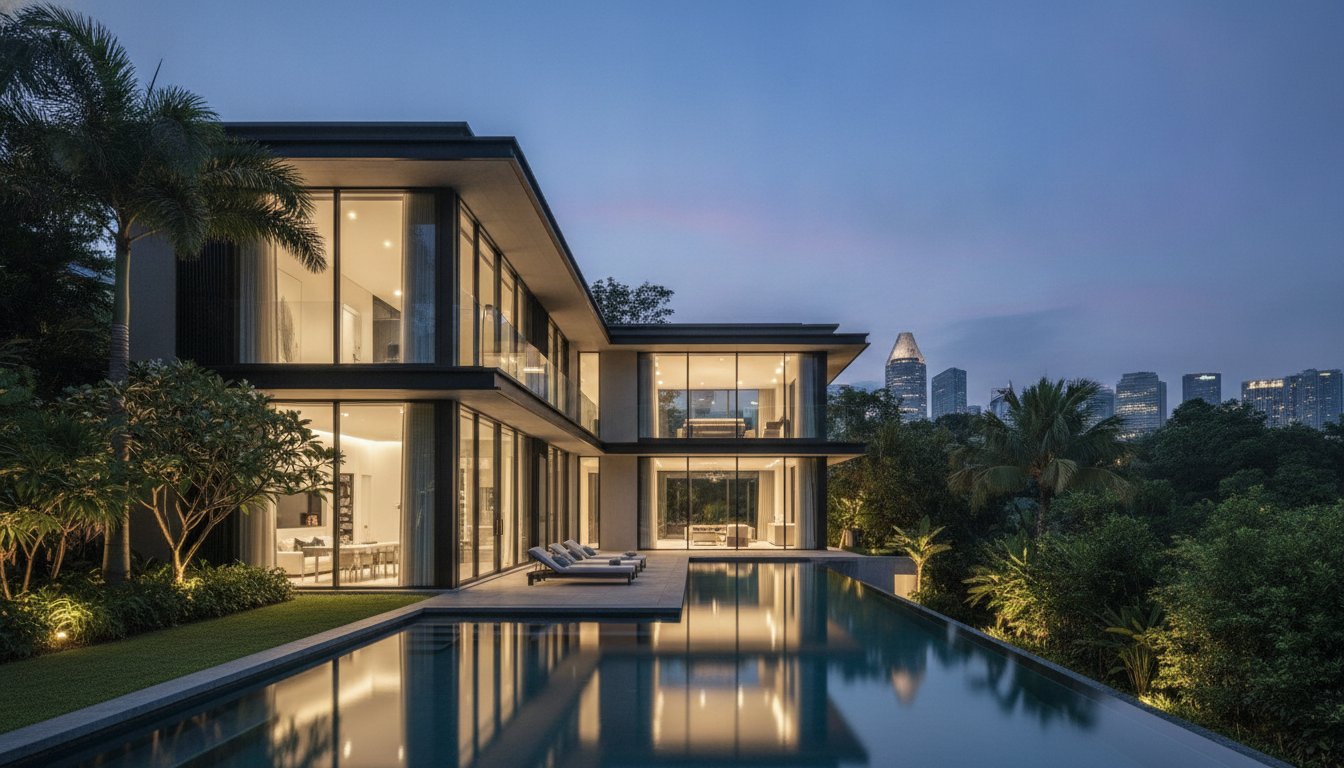
At the peak of the pyramid sits the Good Class Bungalow. Based on the Good Class Bungalow definition, these assets must have a minimum plot size of 1,400 square meters and are located within 39 designated areas. This extreme scarcity makes them virtually recession-proof. While the broader market might fluctuate, GCB land values are protected by strict planning constraints that prevent further subdivision or high-density development. Owning a GCB is not just about a residence; it’s a sophisticated legacy planning tool. These assets serve as the ultimate destination in a landed property asset progression strategy, offering unmatched security for family wealth across generations. The capital preservation profile of a GCB remains the gold standard in the Singapore market.
Value-Add Strategies: Redevelopment and Plot Potential
The true power of a landed property asset progression strategy lies in the ability to identify value where others see decay. Sophisticated investors understand that “buying for land” consistently outperforms “buying for the house.” While a modern facade might appeal to the senses, it is the underlying plot that dictates long-term capital growth. Redevelopment potential is the hidden equity in older landed titles. To unlock this value, you must analyze the URA Master Plan and envelope control guidelines to calculate the maximum permissible built-up area. Factors such as frontage width, plot depth, and the natural terrain are the primary drivers of a property’s ultimate valuation. A plot with a wide frontage allows for greater architectural flexibility and a more commanding street presence, which directly translates to a higher resale premium.
Spotting Redevelopment Upside
Properties in original condition often present the most compelling opportunities for equity growth. These “time capsules” allow you to acquire a prime location at land value, effectively stripping away the premium usually charged for a renovated interior. Land shape and orientation are critical components of this analysis. A rectangular plot is generally more efficient for construction than an irregular one. Conversely, an elevated plot may offer better views and privacy, though it might involve higher foundation costs. Before committing to an acquisition, it’s prudent to engage a landed property specialist to conduct a thorough feasibility study. This ensures the plot can support your specific lifestyle requirements or resale objectives without unforeseen technical constraints.
The Financials of Building vs. Buying
Choosing between managing your own rebuild or purchasing a brand-new home from a developer involves a careful cost-benefit analysis. While buying a completed house offers immediate gratification, managing your own project allows for “forced appreciation.” By coordinating the construction yourself, you capture the developer’s profit margin as immediate equity in your portfolio. You must weigh the construction costs, which in 2026 reflect current material and labor rates, against the projected end-value of a new build in that specific enclave. A well-executed Additions and Alterations (A&A) project can also yield significant returns if the existing structure’s foundation is sound and allows for an increase in floor area. If you are uncertain which path maximizes your portfolio’s growth, request a bespoke plot analysis to clarify your options and financial projections.
Executing Your Progression Plan with Vincent Lim
Moving from the theoretical frameworks of land-value ratios to real-world execution requires more than just capital; it demands a partner who can navigate the legal and financial friction of the 2026 market. As an Elite Strategist, Vincent Lim bridges this gap by refining complex data into actionable steps for your portfolio. His approach ensures that your transition from a luxury condominium to a terrace, semi-detached, or detached house is handled with the precision of a veteran professional. This level of coordination is essential when managing high-stakes transactions where timing, liquidity, and confidentiality are paramount. A well-timed move within a landed property asset progression strategy can save hundreds of thousands in potential missed gains or avoidable tax liabilities.
The Advantage of a Landed Property Veteran
Vincent’s active presence in the Singapore market since 2004 provides a foundation of seasoned authority that few can match. With 70% of his transactions concentrated in the landed segment, he possesses an intimate understanding of the technical requirements for GCBs and luxury residences. His recognition as an EdgeProp Excellence Award winner for the Landed category in both 2022 and 2023 underscores a commitment to maintaining a gold standard in every deal. Transparent communication protects your interests during every negotiation, ensuring you remain fully informed of market shifts that could impact your acquisition or exit. Having a realtor who understands the nuances of URA plot ratios and envelope control is vital when evaluating the long-term potential of a legacy asset.
Your Personalized Asset Roadmap
A successful landed property asset progression strategy isn’t found in generic listings; it’s built through a bespoke roadmap tailored to your family’s unique requirements. For sellers looking to maximize their property value, Vincent employs a confidential marketing strategy that targets qualified high-net-worth individuals. This approach minimizes market noise and ensures your asset is positioned correctly from day one. Whether you’re identifying your first terrace house or securing a multi-generational legacy home, the process begins with a steady, intentional analysis of your current portfolio and long-term goals. This methodical planning ensures that every “hop” on the property ladder is both secure and profitable.
Contact Vincent Lim at OrangeTee & Tie for a bespoke asset progression consultation to begin your journey with a trusted guide who prioritizes integrity and calculated results. By securing professional advocacy, you ensure that your transition into Singapore’s most prestigious asset class is seamless, transparent, and strategically sound.
Securing Your Multi-Generational Legacy in 2026
Transitioning into Singapore’s landed market requires a disciplined approach that prioritizes land scarcity and redevelopment potential over temporary trends. By focusing on the underlying plot and understanding how to navigate 2026 regulations, you can transform a single acquisition into a resilient pillar of family wealth. A successful landed property asset progression strategy is not just about the immediate home; it’s about the strategic movement of capital into assets that offer long-term preservation. This methodical journey ensures your portfolio remains robust against market shifts while providing a prestigious residence for your family.
Partnering with a specialist who understands the nuances of high-stakes transactions ensures your interests remain protected throughout the journey. Vincent Lim, an Executive Associate Director at OrangeTee & Tie and a two-time EdgeProp Excellence Award winner, brings over 20 years of bespoke real estate service to your portfolio management. Partner with Vincent Lim for a Strategic Landed Property Consultation to begin refining your legacy with a professional who values integrity and calculated results. Your path to a prestigious landed home is within reach when guided by calculated expertise and seasoned authority.
Frequently Asked Questions
What is the typical price gap between a luxury condo and a terrace house in 2026?
The price gap between a luxury condominium and an entry-level terrace house in 2026 remains a significant consideration for most investors. While luxury strata units often command a high price per square foot, the total quantum for a terrace house is usually higher due to the land area. This transition typically requires a substantial capital increase, often representing a 30% to 50% jump in total price. Navigating this gap is the first hurdle in a landed property asset progression strategy.
Can I use my CPF to fund the acquisition of a Good Class Bungalow?
You can use your CPF Ordinary Account funds to fund the acquisition of a Good Class Bungalow, subject to the standard Valuation Limit and Withdrawal Limit. However, given the high price point of GCBs, CPF funds usually cover only a small fraction of the total cost. Most elite buyers utilize their CPF for monthly mortgage installments rather than the initial downpayment. You should also account for the 5% minimum cash downpayment required by MAS regulations for all residential purchases.
How does the 2026 ABSD rate affect my asset progression strategy as a Singapore Citizen?
For Singapore Citizens in 2026, the ABSD rate is 0% for the first residential property and 20% for the second. This significant 20% tax on second homes often necessitates a “sell-first” approach to maintain liquidity and avoid a heavy cash outlay. By selling your existing condo before purchasing a landed home, you avoid the upfront ABSD cost. This ensures more capital is available to fund the land acquisition and any potential redevelopment costs.
Is it better to buy a brand-new semi-detached house or an old plot for redevelopment?
Buying an old plot for redevelopment often provides superior capital gains compared to purchasing a brand-new developer-built home. While a new build offers immediate move-in convenience, an older plot allows you to capture the developer’s profit margin as immediate equity. This “forced appreciation” is a cornerstone of a sophisticated landed property asset progression strategy. You gain full control over the architectural design and materials, ensuring the asset meets your specific family requirements and legacy goals.
What are the key URA restrictions I should know before buying a landed property?
The Urban Redevelopment Authority enforces strict envelope control guidelines that dictate the height, setback, and site coverage of all landed homes. You must comply with the designated storey height for the enclave, which is typically two or three storeys. Specific setback requirements from the road and neighboring plots ensure privacy and fire safety for the community. Understanding these technicalities is essential before committing to a plot, as they directly impact the maximum permissible built-up area.
How long does the typical landed property transaction process take in Singapore?
A typical landed property transaction in Singapore takes approximately three to four months from the granting of the Option to Purchase to legal completion. This timeline includes the standard 14-day option period and an eight to twelve-week completion period. If the buyer is a Permanent Resident, additional time is required to obtain approval from the Land Dealings Approval Unit. This specific process can extend the overall timeline by another four to six weeks.
Why is freehold landed property preferred for multi-generational legacy planning?
Freehold titles are preferred for multi-generational legacy planning because they don’t suffer from the lease decay that affects 99-year leasehold assets. As a leasehold property ages, its value typically depreciates as the remaining tenure shortens, making it harder for future generations to secure financing. A freehold title ensures perpetual ownership, providing peace of mind that the land remains a permanent family asset. This stability makes it the ultimate vehicle for long-term wealth preservation.