With less than 5% of Singaporeans residing in landed homes, your property represents one of the most exclusive asset classes in the city-state. Despite this prestige, many owners find that securing an accurate property valuation for landed house is a complex challenge. You likely feel the tension between a bank’s conservative estimate and the actual market momentum that saw transacted values rise by 19.3% in 2025. It’s a gap that can leave you questioning the true worth of your investment.
It’s common to feel uncertain about how much your plot’s redevelopment potential adds to the bottom line or how leasehold decay impacts your long term strategy. We understand these high stakes and the need for precision. This guide provides the specific methodologies and hidden variables that determine the true market value of your landed asset in 2026. You’ll gain a structured framework to navigate bank discrepancies, understand professional replacement cost benchmarks, and establish a strategic asking price with absolute confidence.
Key Takeaways
- Master the three core professional methodologies to move beyond basic price-per-square-foot comparisons and uncover your land’s true replacement cost.
- Learn how to effectively bridge the gap between conservative bank appraisals and market reality to secure a precise property valuation for landed house assets.
- Identify the specific physical attributes, such as frontage width and URA setbacks, that significantly influence buyer premiums in the 2026 landscape.
- Understand the strategic impact of Add-and-Alter (A&A) works and how they can be leveraged to maximize your property’s immediate market appeal.
- Evaluate how tenure-related price decay and land scarcity physics dictate the long-term appreciation of your freehold or leasehold investment.
The Fundamentals of Property Valuation for Landed House Assets
A property valuation for landed house assets is a specialized discipline that requires a departure from standard residential appraisals. It is defined as the precise assessment of fee-simple or leasehold land, combined with a meticulous evaluation of the improvements made upon that land. While luxury condominiums are typically valued using a top-down method based on recent strata-title transactions, landed assets demand a bottom-up approach. This methodology establishes the intrinsic value of the land first, then adds the depreciated replacement cost of the physical building. This distinction is vital because the land itself often carries the majority of the asset’s long-term worth.
The Singapore Land Authority (SLA) and the Urban Redevelopment Authority (URA) act as the primary architects of your property’s valuation boundaries. The SLA defines the cadastral limits and title specifics, while the URA dictates the redevelopment potential through zoning and plot ratios. Understanding The Fundamentals of Property Valuation allows owners to appreciate why technical appraisals sometimes lag behind market sentiment. This discrepancy often creates a valuation gap, where the price a buyer is willing to pay for the prestige of a specific address exceeds the conservative figures produced by a bank’s technical model.
Why Landed Assets Defy Standard Algorithmic Pricing
Automated valuation models often struggle with the unique characteristics of terrace, semi-detached, and detached houses. Unlike standardized apartments, no two landed homes are identical. Factors such as a bespoke interior design or a specific orientation toward the morning sun are nuances that AI cannot yet quantify. Furthermore, the extreme scarcity of land in Singapore acts as a permanent floor for asset values. With only about 5% of the population residing in these homes, the supply is structurally limited. Algorithmic tools also fail to account for fluctuating reconstruction costs, which according to 2026 BCA benchmarks, can range from S$700 to S$900 per square foot for high-end bungalows.
Key Stakeholders in the Valuation Ecosystem
Navigating a property valuation for landed house requires an understanding of the different experts involved. A licensed appraiser provides a formal legal document, while a bank valuer focuses on risk mitigation for lending purposes. In contrast, a real estate strategist looks at the property through the lens of market timing and buyer psychology. The Inland Revenue Authority of Singapore (IRAS) also plays a role by determining the Annual Value (AV), which impacts your property tax obligations. Before you begin the landed property transaction process, obtaining an independent perspective is essential to ensure your asking price reflects both the technical data and the current market momentum.
The Three Professional Methodologies for Landed Appraisals
Professional appraisers utilize three distinct methodologies to triangulate a property valuation for landed house assets with precision. These include the Direct Comparison Method, the Cost Method, and the Residual Land Value Method. The Cost Method is particularly effective for newer builds, as it combines the current land value with the replacement cost of the structure, adjusted for depreciation. Valuers reconcile these figures by weighting each method based on the property’s age and condition. They also scrutinize recent en bloc benchmarks or nearby plot-size transactions to ensure the final figure reflects current demand. While these technical checks are rigorous, they often interact with Singapore’s Annual Value metric, which IRAS uses to assess the property’s potential rental income and tax obligations.
If you’re unsure which method applies to your specific plot, consulting a seasoned real estate strategist can clarify your asset’s true market position. This ensures you don’t rely on a single, potentially skewed data point when preparing for a sale.
The Direct Comparison Method: Beyond PSF
This approach remains a staple for any property valuation for landed house, but it requires sophisticated adjustments to be accurate. In the current 2026 market, “Time of Sale” is a critical variable. A transaction from twelve months ago doesn’t reflect the 7.7% price index growth recorded in 2025. Appraisers must also normalize data between different property types. For instance, a corner terrace often commands a premium over an inter-terrace due to increased land area and natural light. It’s vital to remember that a higher price-per-square-foot (PSF) doesn’t always equate to a superior valuation. A smaller plot might have a high PSF but lower overall utility compared to a larger, more efficient layout that offers better long term value.
The Residual Land Value Method for Redevelopment
For older detached houses or Good Class Bungalows (GCBs), the house itself may hold little value compared to the land it sits on. Here, the Residual Land Value Method becomes the gold standard. It begins by calculating the Gross Development Value (GDV), which is the projected sale price of a brand-new home on that site. By subtracting construction costs (currently S$700 to S$900 PSF for GCBs) and a developer’s profit margin, the remaining “residual” amount represents the raw land worth. This method ensures owners don’t leave money on the table when selling a property with significant tear-down potential. It’s a strategic way to value the “opportunity” the land provides rather than just the aging bricks and mortar. For GCB transactions specifically, working with a qualified GCB specialist Singapore ensures that this residual land value is accurately communicated to prospective buyers and their advisors.
Intangible Value Drivers: Frontage, Depth, and Plot Ratio
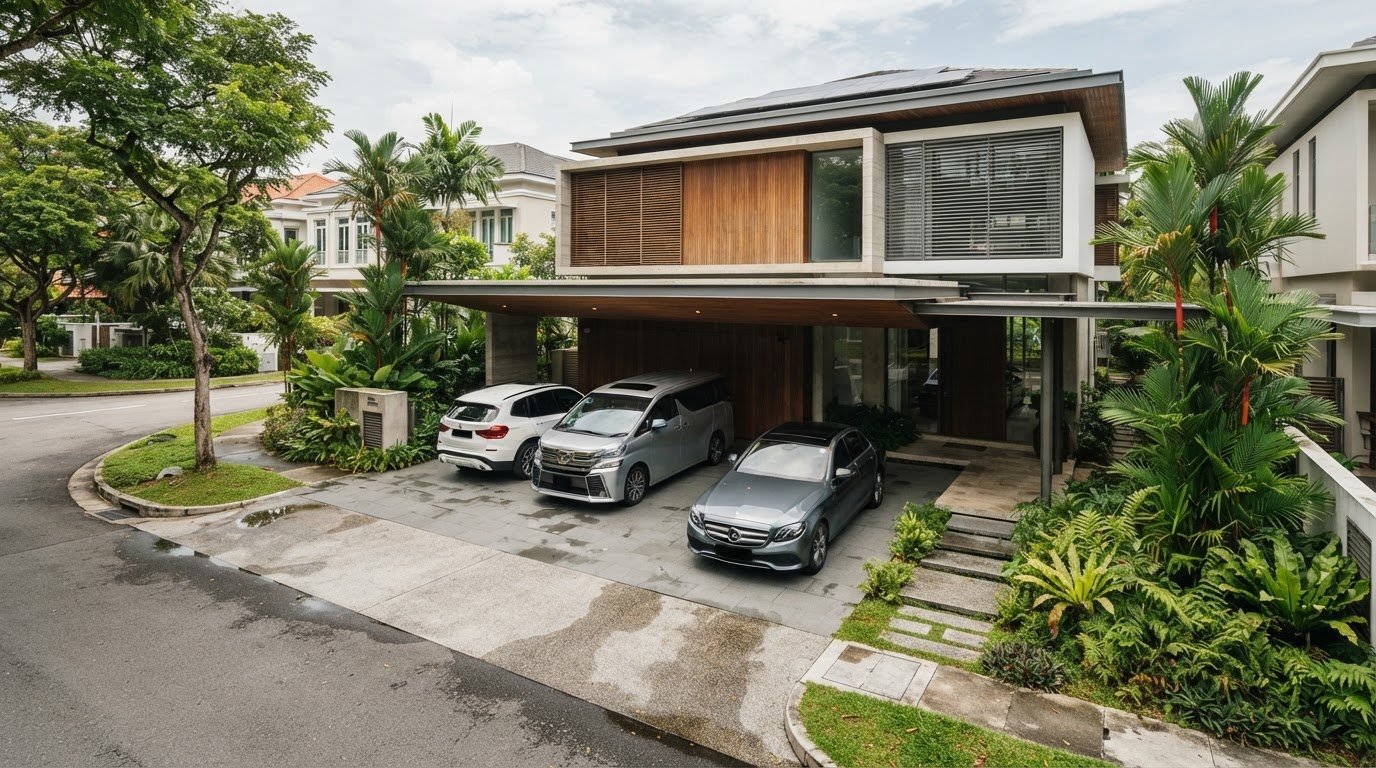
While square footage provides a baseline, the true market premium of a landed asset is often found in its physical dimensions and orientation. A sophisticated property valuation for landed house considers the “functional utility” of the plot rather than just the raw land area. For example, a 10-meter frontage represents a significant psychological and functional threshold for Singaporean buyers. This width allows for a grander architectural presence and, more importantly, facilitates side-by-side parking for at least two large vehicles. A generous frontage width directly correlates to the number of cars parked on-site, serving as a key metric of luxury and convenience in high-end residential segments.
Plot depth also plays a pivotal role in determining buildable area due to the Urban Redevelopment Authority’s (URA) stringent setback requirements. A shallow plot might lose a disproportionate amount of its “buildable” footprint to mandatory front and rear green buffers. Professional appraisers, adhering to the professional valuation methodologies set by the Singapore Institute of Surveyors and Valuers, will adjust the value based on how these setbacks impact the potential Gross Floor Area (GFA). Topography adds another layer of complexity; “high ground” properties typically command a premium for their natural drainage, improved ventilation, and the prestige associated with an elevated position.
Land Geometry and Its Economic Impact
The efficiency of a land plot is dictated by its shape. A rectangular plot is the gold standard, allowing for maximum construction efficiency and minimal wasted space. In contrast, a trapezium or fan-shaped plot often suffers from utility loss, as irregular corners are difficult to incorporate into functional room layouts. Cul-de-sac positioning is another nuanced driver. These plots often enjoy enhanced privacy and reduced traffic noise, which can result in a valuation swing of 5% to 10% compared to properties on a main thoroughfare. Owners should recognize that a smaller, perfectly rectangular plot may actually hold more development value than a larger, highly irregular piece of land.
URA Master Plan and Zoning Nuances
Height remains one of the most potent value multipliers in the landed market. A property located in a 3-storey designated zone carries a structural price advantage over a 2-storey neighbor, simply due to the additional volume of living space that can be created. The current “Envelope Control” guidelines have further refined this, allowing owners to optimize internal volumes within a predefined three-dimensional space. As the 2026 Master Plan unfolds, new infrastructure developments and shifts in regional zoning will continue to redefine value floors. Staying ahead of these regulatory shifts is essential for any owner looking to protect their asset’s long-term worth.
Navigating Bank Valuations vs. Indicative Market Values
One of the most significant hurdles for owners is the discrepancy between a bank’s conservative appraisal and the actual market asking price. Banks typically prioritize risk mitigation, often resulting in a property valuation for landed house that reflects a “forced sale” scenario rather than peak market momentum. This gap directly impacts a buyer’s Loan-to-Value (LTV) ratio. Under MAS regulations, the 75% LTV limit for a first residential loan is applied to the lower of the purchase price or the bank’s valuation. Consequently, any shortfall must be bridged in cash. For sellers, obtaining indicative valuations early is a strategic necessity to set a realistic baseline for a terrace house for sale Singapore, ensuring that the transaction doesn’t collapse during the financing stage.
While a conservative valuation can deter some, it isn’t always a deal-breaker for cash-rich High-Net-Worth Individuals (HNWIs). These buyers often prioritize the “irreplaceability” of a specific plot or its long-term legacy value over immediate financing constraints. If you’re preparing for a high-stakes exit, it’s vital to have a trusted real estate partner who can effectively communicate this intrinsic value to prospective buyers and their lenders.
Factors That Trigger a ‘Down-Valuation’
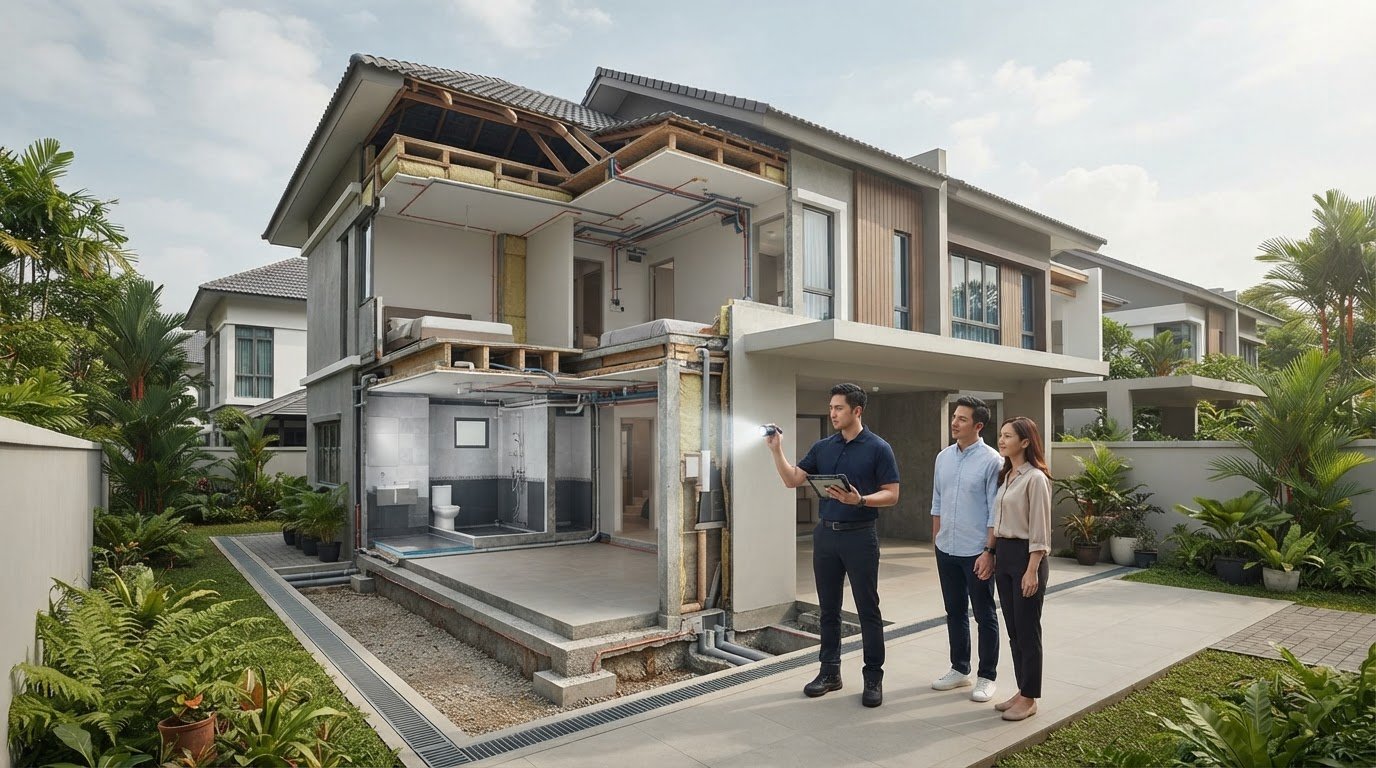
Several variables can cause a valuer to deviate from the expected market price. Poor maintenance or visible structural defects are obvious red flags, but illegal extensions are often the primary culprit. If a built-up area doesn’t match the approved URA floor plans, banks may exclude that space from the valuation entirely. Proximity to undesirable infrastructure, such as electrical substations or heavy-traffic thoroughfares, also exerts downward pressure. Additionally, a lack of recent comparable transactions within a 500-meter radius forces valuers to use older or more distant data, which often results in a more cautious figure that fails to capture current growth trends.
Strategic Steps to Support a Higher Valuation
Owners can take proactive measures to influence the valuer’s qualitative assessment. Preparing a comprehensive ‘Valuation Dossier’ is an excellent starting point. This should include documented receipts for recent high-end renovations, structural certificates, and URA-approved permits for any additions. Presentation also plays a critical role. Utilizing luxury home staging services doesn’t just attract buyers; it helps the valuer visualize the property’s maximum utility and lifestyle appeal. If a bank’s estimate remains stubbornly low, engaging an independent private valuer can provide a robust counter-assessment to support your target asking price.
Maximizing Your Landed Asset Value for 2026 and Beyond
Enhancing your property valuation for landed house requires a dual focus on strategic physical upgrades and a clear understanding of your asset’s tenure lifecycle. The Add-and-Alter (A&A) strategy remains one of the most effective ways to realize immediate gains. Unlike a full reconstruction, A&A allows for significant internal reconfigurations or the addition of an attic level without the prohibitive costs of a complete rebuild. These targeted improvements can bridge the gap between an aging structure and the expectations of modern buyers, effectively resetting the property’s perceived age and utility. When these works are executed with precision, the resulting valuation jump often far exceeds the capital outlay.
Legacy planning is equally vital, particularly when navigating the 30-year value curve of leasehold versus freehold assets. While freehold properties are the gold standard for multi-generational wealth, leasehold landed homes require a more tactical approach as they approach the mid-point of their tenure. Strategic positioning becomes paramount. Understanding your property’s unique value proposition, such as its proximity to future 2026 Master Plan infrastructure or its rare plot dimensions, is often more critical than trying to time a specific 5% to 7% market swing. An elite strategist doesn’t just look at the current price; they identify the “highest and best use” for your land to attract the right buyer segment. If you are considering an exit, reviewing the strategic steps to sell my landed property Singapore in 2026 can help you navigate ABSD implications and position your asset for a record-breaking outcome.
Renovation vs. Reconstruction: The Valuation ROI
Determining whether to renovate or rebuild depends entirely on the projected return on investment. Improvements that enhance the “Modern Luxury” aesthetic, such as high-spec kitchen islands, smart home integration, and timeless natural stone finishes, generally offer the highest dollar-for-dollar return. These features protect value better than fleeting design trends. However, it’s essential that all works remain strictly BCA-compliant. Unauthorised extensions are a primary cause of down-valuations during bank appraisals. Ensuring that every square foot of your built-up area is reflected in the URA-approved plans protects your asset from future valuation penalties and financing hurdles for potential buyers.
The Vincent Lim (OrangeTee & Tie) Advantage in Landed Valuation
Securing an accurate property valuation for landed house assets requires more than just a spreadsheet; it demands deep market insights that standard algorithms and bank models often overlook. Vincent Lim (OrangeTee & Tie) specializes in uncovering the hidden value drivers of high-stakes assets, from the redevelopment potential of detached houses to the prestige premiums of GCB plots. For owners of Good Class Bungalows, engaging a dedicated GCB specialist Singapore ensures that the full complexity of these ultra-prime assets is properly represented in every valuation and negotiation. Their bespoke marketing strategies ensure your home is presented as a strategic acquisition rather than just another listing. For those seeking clarity in a complex market, Vincent Lim (OrangeTee & Tie) provides the discipline and expertise needed to achieve a gold-standard result. Contact Vincent Lim (OrangeTee & Tie) for a professional strategic valuation of your landed home.
Positioning Your Asset for Maximum Market Potential
Singapore’s landed market has transitioned into a structurally higher pricing band where value is driven by scarcity and redevelopment potential. Success in this elite segment requires more than following general price trends; it demands a deep understanding of how land geometry, URA zoning, and strategic improvements converge. By mastering these variables, you transition from a passive owner to an active architect of your property’s financial future.
Achieving a precise property valuation for landed house assets is the essential foundation for any high-stakes transaction. It requires a partner who understands the nuances of luxury asset progression and the specific expectations of high-net-worth buyers. As an Executive Associate Director at OrangeTee & Tie and a specialist in GCB and high-end landed sales since 2004, I provide the seasoned authority needed to navigate these complexities. My proven track record in luxury asset management ensures your property is positioned with absolute precision.
Secure a Strategic Valuation for Your Landed Property with Vincent Lim and gain the clarity required to protect your investment legacy. Your home deserves a bespoke strategy that reflects its true worth.
Frequently Asked Questions
How often should I update the property valuation for my landed house?
You should update your valuation every 12 to 18 months to stay aligned with market shifts. A property valuation for landed house becomes obsolete quickly in a moving market, especially following the 7.7% price index growth recorded in 2025. Regular assessments ensure your financial planning or exit strategy reflects the most current transaction benchmarks in your specific district.
Does a swimming pool significantly increase the valuation of a semi-detached house?
A swimming pool generally increases the property’s qualitative appeal, but its impact on the final valuation is often limited to its depreciated construction cost. For a semi-detached house, the value added must be weighed against the loss of functional garden space. If the pool occupies a disproportionate area of the plot, it may actually narrow the buyer pool to a specific niche.
Why is my bank valuation lower than the price my neighbor just sold for?
Banks prioritize risk mitigation and rely on historical, settled transactions rather than current market optimism. Your neighbor’s sale price might reflect a premium for a specific interior design or a buyer’s emotional connection that a valuer cannot justify in a technical report. This discrepancy creates the common valuation gap that buyers must often cover with additional cash.
How much does a ‘corner’ position add to a terrace house valuation?
A corner position typically adds a premium of 10% to 15% compared to an inter-terrace unit. This uplift is driven by the additional land area and the luxury of side-facing windows that provide superior natural light. Valuers also reward the wider frontage, which often accommodates side-by-side parking, a feature that significantly enhances the property’s marketability and functional utility.
Can I challenge a bank’s property valuation if it seems too low?
You can challenge a conservative estimate by submitting a comprehensive valuation dossier to the lender. Include receipts for recent high-end structural works and copies of URA-approved permits to prove the property’s enhanced condition. If the bank’s panel valuer remains firm, engaging an independent private valuer to provide a secondary professional opinion is a strategic way to support your target price.
What is the impact of a short remaining lease on landed property valuation?
A short remaining lease triggers a steeper value decay once the tenure falls below the 60-year mark. Banks often reduce the loan-to-value ratio or shorten the loan repayment period for such properties, which limits the number of eligible buyers. Valuers use specialized tables to calculate the discount relative to a freehold equivalent, reflecting the diminishing interest as the lease nears its end.
Does the URA Master Plan 2026 affect my current property value?
The 2026 Master Plan serves as a critical indicator of future land value and redevelopment potential. If the plan introduces new transportation hubs or upgrades the zoning from two storeys to three, your property’s residual land value will likely see an immediate uplift. Professional strategists analyze these government blueprints to identify value-buy opportunities before the market fully prices in the new infrastructure.
How do valuers account for a house with an irregular ‘pie-shaped’ plot?
Valuers account for irregular plots by calculating the functional utility loss compared to a standard rectangular site. A pie-shaped plot, for instance, may have a narrow frontage that restricts the number of cars you can park on-site. The appraiser will adjust the land value downward to reflect the increased construction complexity and the potential wasted space that cannot be efficiently utilized under URA setback guidelines.