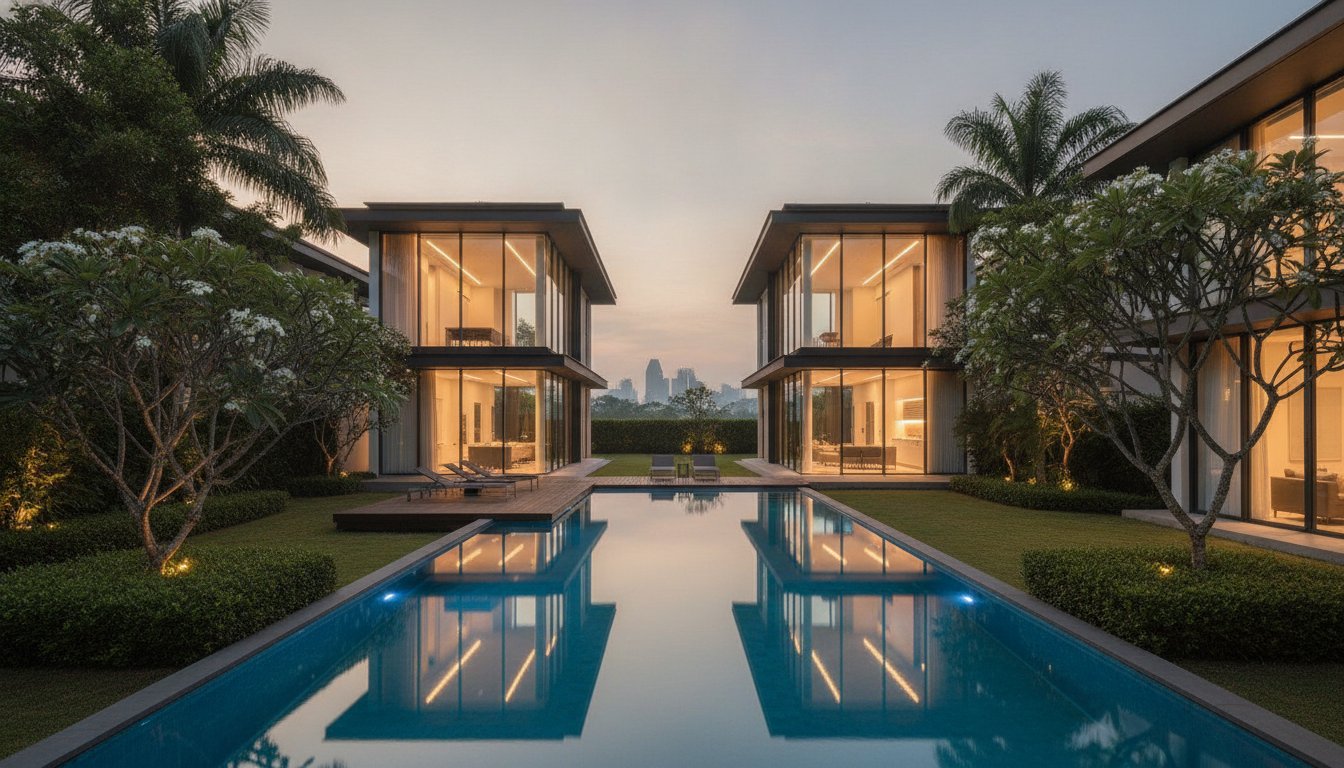
In the competitive 2026 Singapore property market, a semi detached house with pool is no longer just a leisure preference; it has evolved into a calculated financial hedge that distinguishes a standard residence from an elite lifestyle asset. Many homeowners recognize the allure of a private oasis, yet they often feel overwhelmed by the complexities of URA setback regulations and the long term maintenance costs involved. It’s natural to feel cautious about whether the initial capital outlay will truly translate into a superior resale premium when it’s time to exit the market.
This guide provides the clarity you need to transform these concerns into a strategic advantage, ensuring your investment aligns with both regulatory standards and market demand. You’ll gain a precise understanding of the 1.5 meter setback requirements and the implications of the latest 2026 property tax rebates. We also provide a rigorous framework to evaluate pool equipped properties with the discipline of a seasoned investor. This approach gives you the confidence to secure a high yield asset that serves both your family’s immediate comfort and your long term portfolio goals.
Key Takeaways
- Understand how aquatic features elevate a property from a standard residence to a private sanctuary, driving superior resale performance in the 2026 market.
- Navigate complex URA setback requirements, including the 2.0-meter side boundary rule and the 7.5-meter road reserve constraint for front-yard placement.
- Identify the optimal layout for your specific plot, whether it is a sleek lap pool for fitness or a space-efficient plunge pool for a semi detached house with pool.
- Establish a clear framework for managing operational costs and implementing essential safety systems to protect both your family and your investment’s integrity.
- Leverage specialized networks to access off-market listings and conduct thorough due diligence on structural compliance before finalizing your acquisition.
The Strategic Value of a Semi-Detached House with a Pool
A private aquatic feature fundamentally alters the character of a landed property. It transitions the residence from a standard dwelling into a curated private sanctuary. While a typical Semi-detached house provides ample space, the addition of a pool introduces a layer of exclusivity that resonates with high-net-worth buyers in 2026. This isn’t just about aesthetics; it’s about creating a controlled environment where leisure and privacy intersect. In a market where standardized luxury is common, a bespoke water feature serves as a powerful differentiator that justifies a higher entry price and a stronger exit strategy.
The scarcity factor remains a primary driver of value in the Singaporean context. While many plots meet the minimum 200 sqm requirement, only a fraction possess the dimensions necessary to accommodate a functional pool while adhering to strict URA setback guidelines. Investors recognize this limitation. Consequently, a semi detached house with pool often commands a prestige premium. We’ve observed that these units tend to move faster in the secondary market because they cater to a specific, affluent demographic that prioritizes lifestyle readiness. These buyers don’t want the stress of a two-year renovation; they want a turnkey retreat that reflects their status.
Lifestyle vs. Asset Appreciation
The emotional return on investment for active families is substantial. A pool provides a central hub for social engagement and wellness, which are increasingly vital in a high-density urban setting. Beyond the lifestyle benefits, the asset appreciation for such properties remains robust. By 2026, the demand for a semi detached house with pool has shifted from being a “nice-to-have” luxury to a “must-have” requirement for the upper-tier landed segment. This consistent demand ensures that capital remains protected even during market fluctuations, as the pool acts as a defensive feature that maintains the home’s desirability against newer developments.
The Semi-Detached Advantage over Terrace Homes
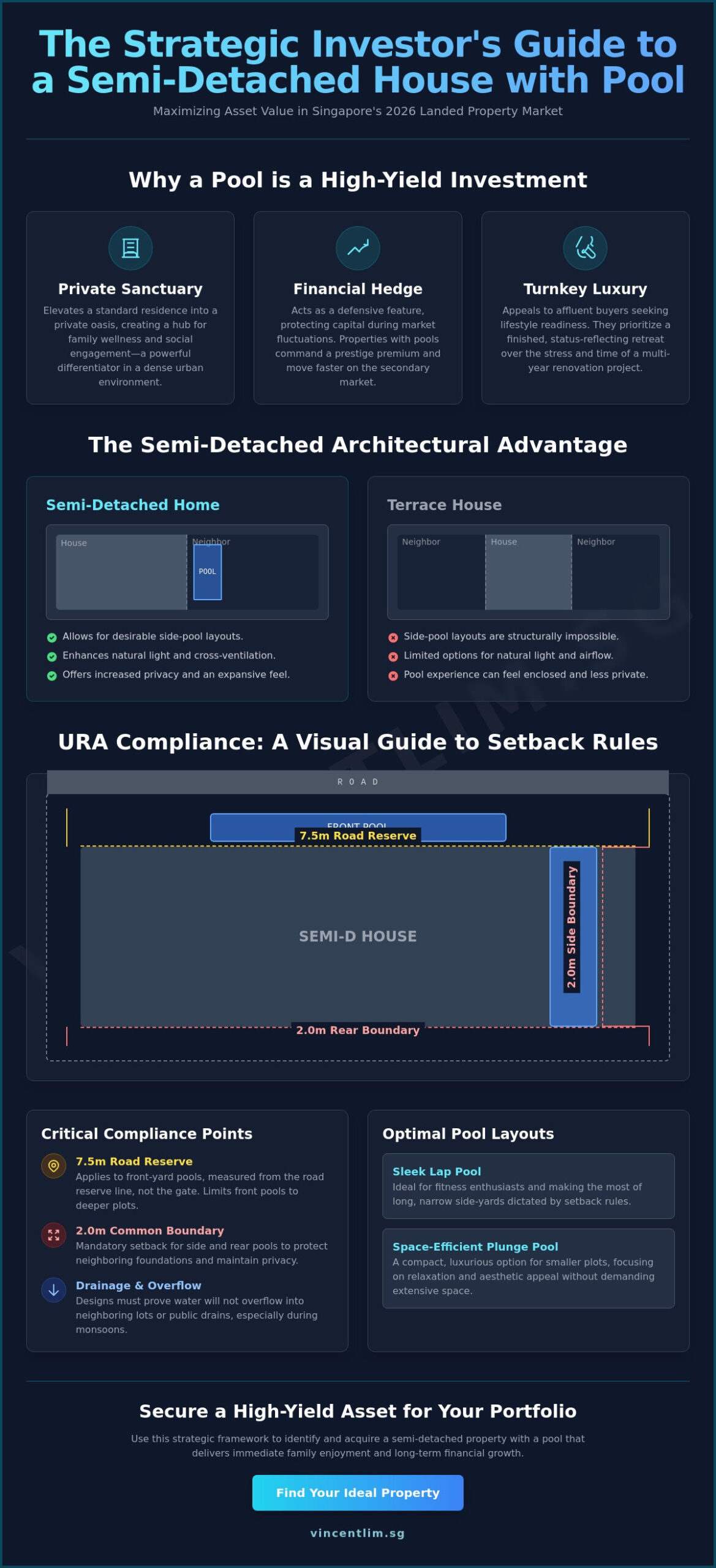
Choosing a semi-detached unit offers distinct structural benefits over a terrace house for sale singapore. The presence of only one shared wall allows for side-pool layouts that are impossible in mid-terrace configurations. This architectural freedom enhances natural light and cross-ventilation, making the poolside experience feel expansive rather than enclosed. The increased privacy and improved airflow are exactly why savvy investors view the semi-detached class as the superior vehicle for aquatic luxury. It’s a strategic middle ground that offers bungalow-style amenities at a more accessible price point.
Navigating URA Guidelines for Private Swimming Pools
Compliance with the Urban Redevelopment Authority (URA) is the cornerstone of a secure property acquisition. When evaluating a semi detached house with pool, understanding the technical constraints is essential to avoid costly rectification orders later. The URA guidelines for private swimming pools dictate exactly where and how a water feature can be situated on your land. These regulations serve to protect the structural integrity of neighboring properties and maintain the aesthetic harmony of the streetscape.
For most semi-detached plots, the most critical constraint is the 2.0 meter common boundary setback for side and rear pool placement. This rule ensures that the pool does not encroach too closely on the shared boundary or the neighbor’s foundation. If you’re considering a front-yard installation, the 7.5 meter road reserve rule applies. This often limits front pools to only the deepest plots, as the distance is measured from the line of the road reserve rather than the physical gate. Additionally, you must account for drainage and splashing prevention. Regulatory approval hinges on demonstrating that pool water won’t overflow into neighboring lots or public drains during heavy monsoon seasons.
Setbacks and Boundary Rules Explained
The 2.0m setback requirement significantly impacts the design of a semi detached house with pool, especially on standard 200sqm plots. If your land width is limited, this setback can restrict the pool to a narrow lap configuration. Raised swimming pools on landed property require a minimum setback of 7.5 meters from the road reserve and 2.0 meters from any common boundary to comply with URA planning standards. To maximize the utility of these mandated zones, many owners integrate vertical greenery or porous landscaping that meets URA greening requirements while enhancing the visual privacy of the aquatic area.
Technical Feasibility for Older Semi-D Plots
Older properties often present unique challenges for pool integration. Before committing to a purchase, it’s vital to evaluate the structural stability of the shared party wall. Excavation near these walls requires meticulous planning and often involves professional soil testing to prevent subsidence. Given the average price of semi-detached house in singapore, ensuring the plot is technically capable of supporting a new pool is a prerequisite for protecting your capital. If you’re unsure about the redevelopment potential of a specific listing, consulting a seasoned strategist can provide the technical clarity needed before you sign the Option to Purchase.
Evaluating Pool Layouts and Design for Semi-Detached Homes
Selecting the right layout for a semi detached house with pool requires a careful balance between land geometry and specific lifestyle objectives. It’s not just a matter of digging a hole; it’s about achieving architectural synergy. For properties with elongated side-strips, the lap pool is often the superior choice. These sleek, narrow configurations allow homeowners to maintain a fitness regimen without sacrificing the entire garden area. Conversely, a plunge pool offers a compact solution for smaller footprints. It prioritizes the “soak and relax” experience, maintaining a high-end feel while leaving room for alfresco dining or essential landscaping.
Sun orientation is a technical detail that many buyers overlook during the initial viewing. Positioning the pool in a spot that receives excessive direct sunlight can lead to rapid algae growth and uncomfortably high water temperatures by mid-afternoon. Conversely, a pool permanently in the shade might feel too cold for a morning swim. A seasoned strategist evaluates the solar path to ensure the water remains inviting throughout the day. While focusing on design, you must also consider the official safety requirements for private pools to ensure the layout remains compliant with local standards and licensing expectations.
Lap Pools vs. Lifestyle Zones
The choice between a functional swimming lane and a social “beach entry” design often dictates the home’s entire atmosphere. A beach entry, where the floor slopes gently into the water, creates a resort-like vibe that’s perfect for families with young children—a design aesthetic frequently showcased in the premier global destinations curated by TOM BENZON. Material selection is equally critical to the property’s long term value. Timber decking offers warmth and a natural feel, though it requires more frequent oiling to prevent rot in our tropical climate. Stone tiles, such as granite or volcanic sukabumi, provide a timeless, low-maintenance alternative that keeps the deck surface cooler. Modern semi-detached architecture often utilizes glass-walled pools to create a striking visual statement. These transparent boundaries allow light to penetrate into basement levels, transforming what could be a dark space into a luminous lower-ground living area.
Indoor-Outdoor Integration Strategies
Effective design blurs the line between the interior and the exterior. Using bi-fold or large sliding doors allows the dining room to flow directly into the pool deck, creating a cohesive entertainment space that feels much larger than its actual square footage. This “visual cooling” effect is a psychological benefit; seeing water from the main living areas lowers the perceived temperature of the home during the hottest months. Privacy remains the final piece of the puzzle. Since semi-detached homes share boundaries, vertical gardens or timber screens are essential. These elements shield the pool from neighbors without making the space feel claustrophobic, ensuring your private sanctuary remains truly private.
Maintenance, Safety, and Operational Considerations
Owning a semi detached house with pool requires a disciplined approach to asset management. While the lifestyle benefits are immediate, the long term financial performance of the property depends on meticulous operational oversight. In 2026, the standard for pool maintenance has evolved beyond simple skimming and chlorine tablets. High end homeowners now prioritize automated systems that ensure water chemistry remains perfect while minimizing energy consumption. Neglecting these operational details can lead to structural degradation, such as compromised waterproofing or calcified filtration systems, which eventually erode the property’s resale premium.
Regular maintenance schedules are essential to preserve the structural integrity of the aquatic feature. Tiling and grouting require periodic inspection to prevent leaks that could affect the home’s foundation or the shared party wall. By adhering to a strict schedule, you ensure the pool remains a high yield asset rather than a liability. Professional waterproofing checks every few years are a small price to pay for the long term security of your investment.
The Real Cost of Pool Ownership
Operational expenses for a pool in Singapore typically include electricity for the pump, chemical treatments, and professional labor. Electricity consumption is often the largest variable, though modern variable speed pumps have significantly reduced the draw on the grid. While some owners attempt a DIY approach, professional servicing contracts offer the peace of mind that comes with expert water testing and equipment calibration. The average monthly maintenance commitment for a standard lap pool typically involves twice-weekly cleaning and chemical balancing to ensure the water remains crystal clear and safe for use.
Safety Compliance and Smart Technology
Safety remains a non negotiable priority, particularly for households with young children or elderly residents. Singaporean regulatory standards for pool barriers are stringent, often requiring specific fencing heights and self latching gates to prevent unauthorized access. Smart technology has revolutionized this space in 2026. Integrated pool alarms and motion sensors now provide real time alerts to your smartphone if the water surface is disturbed, adding a layer of digital security to physical barriers.
Smart pool covers have also become a standard feature for the modern semi detached house with pool. These automated systems do more than just improve safety; they drastically reduce water evaporation and heat loss, which in turn lowers chemical consumption and utility costs. For a healthier swimming environment, many owners are retrofitting older pools with saltwater chlorination systems. These systems utilize electrolysis to produce chlorine, resulting in softer water that is gentler on the skin and eyes. If you’re looking to acquire a property that already meets these high operational standards, browsing our curated semi-detached listings can save you months of technical due diligence.
Strategic Acquisition: Finding Your Ideal Semi-D with a Pool
Acquiring a semi detached house with pool demands a level of precision that standard residential transactions rarely require. In the 2026 market, the most desirable properties often bypass public portals entirely. These “off-market” opportunities are reserved for buyers connected to specialized networks where discretion and speed are prioritized. Relying solely on public listings often means competing for properties that have already been picked over or carry unrealistic price expectations. Accessing a curated pipeline of private listings ensures you’re evaluating assets that meet strict criteria for both luxury and investment potential.
Rigorous due diligence serves as your primary risk management tool during the acquisition phase. Beyond the aesthetic appeal, you must verify that the pool and any adjacent structures have received full URA and BCA clearance. Unauthorized extensions are a significant liability; they can lead to mandatory demolition orders or complicate future resale efforts. A structural audit is equally vital. You need to ensure that the pool’s placement hasn’t compromised the shared boundary or caused soil movement that could affect the main building’s integrity. These technical checks provide the peace of mind necessary for a high-stakes purchase.
Negotiation in the landed segment is an art that balances land value with the “lifestyle premium” of existing amenities. When valuing a semi detached house with pool, don’t simply look at the construction cost of the aquatic feature. Instead, evaluate the land use efficiency and the time saved by avoiding a two-year design and construction cycle. A well-integrated pool that adheres to all setback rules is a rare find. Recognizing this scarcity allows you to negotiate from a position of strength, ensuring the final price reflects the property’s true status as a strategic, turn-key asset.
Why a specialized strategist matters
Landed transactions involve complexities that high-end condominiums do not, from land title nuances to redevelopment potential. A standard agent might focus on the facade, but a seasoned strategist analyzes the plot’s long-term utility. Can the house be expanded further? Is the pool positioned to allow for future architectural changes? Vincent Lim utilizes deep market data and historical price trends to identify undervalued landed assets that others might overlook. This analytical approach ensures your capital is deployed into a property with a clear path for appreciation.
Legacy Planning and Asset Progression
A semi-detached home is more than a residence; it’s a cornerstone for multi-generational wealth. These properties offer the space and privacy required for a growing family while maintaining a high level of liquidity in the Singaporean market. Understanding how this purchase fits into your broader asset progression to landed property singapore is essential for long-term financial success. By selecting the right asset today, you’re securing a legacy for the future. To begin your journey with a partner who understands the intricacies of the elite market, partner with Vincent Lim to secure your luxury landed home and experience a bespoke level of service.
Securing Your Legacy in Singapore’s Landed Market
Mastering the intricacies of a semi detached house with pool requires more than just an appreciation for luxury; it demands a technical understanding of URA setbacks and a clear-eyed view of long-term maintenance costs. You’ve discovered how a well-positioned pool acts as a strategic differentiator that elevates your property’s value in a competitive 2026 landscape. By prioritizing structural integrity and regulatory compliance, you ensure that your home remains a high-yield asset for years to come. It’s about blending lifestyle aspirations with rigorous financial discipline.
Navigating these high-stakes transactions is best achieved with a partner who possesses the technical depth and market access required for success. As an Executive Associate Director at OrangeTee & Tie with over 20 years of Singapore real estate expertise, I specialize in Good Class Bungalows and luxury landed estates. I invite you to Consult Vincent Lim for a Strategic Landed Property Acquisition to refine your search and secure an elite residence that aligns with your legacy planning goals. Your journey toward a sophisticated landed lifestyle begins with a calculated and confident first step.
Frequently Asked Questions
What is the minimum land size required for a semi-detached house with a pool?
The minimum land size for a semi-detached house in Singapore is 200 square meters. While this is the regulatory baseline, successfully integrating a functional pool usually requires a plot that exceeds these dimensions or possesses a favorable width. This extra space is necessary to accommodate the pool while strictly adhering to URA setback requirements and maintaining essential outdoor circulation paths around the residence.
Does adding a swimming pool significantly increase the resale value of a semi-detached house?
Adding a pool can substantially enhance both the desirability and the final transaction price of a property. In the 2026 market, a semi detached house with pool is classified as a lifestyle-ready asset that appeals to a specific tier of affluent buyers. These individuals often pay a premium for move-in readiness, viewing a well-designed aquatic feature as a critical differentiator that justifies a higher capital outlay.
What are the URA setback requirements for a private pool in a landed property?
URA generally mandates a minimum setback of 1.5 meters to 2.0 meters from common boundary walls for swimming pools. For semi-detached homes, the 2.0-meter side setback for the main building often dictates the available corridor for a lap pool. These regulations ensure that the excavation and weight of the water do not compromise the structural integrity of neighboring plots or shared boundary walls.
Can I build a pool on a freehold semi-detached plot with an existing structure?
You can build a pool on an existing freehold plot provided you secure planning permission from the URA and BCA. The process requires a professional structural assessment to ensure that excavation won’t impact the current house foundation or the shared party wall. Freehold status provides the ideal long-term horizon to justify the investment in such a significant and permanent luxury amenity.
How much does it cost to maintain a private swimming pool in Singapore per month?
Monthly maintenance costs typically include professional cleaning services, chemical balancing, and electricity for filtration pumps. While the exact figure depends on the pool’s volume and the efficiency of the equipment, it’s standard to schedule twice-weekly servicing to maintain water hygiene. Utilizing modern variable-speed pumps and automated PH balancing systems can help homeowners manage these operational expenses more predictably over time.
What is the difference between a raised pool and a sunken pool in terms of URA rules?
The primary difference lies in the technical classification and the resulting setback distances. A sunken pool is flush with the ground and follows standard 2.0-meter boundary setbacks. A raised pool is treated as a building structure; it must adhere to a 7.5-meter setback from the road reserve. This ensures that elevated water features don’t overwhelm the streetscape or infringe upon the visual privacy of neighbors.
Are there specific safety regulations for pools in houses with young children?
Singaporean building guidelines emphasize the importance of barriers and controlled access for private pools. While individual requirements can vary based on the property’s specific layout, the BCA recommends the installation of self-latching gates and perimeter fencing. Many modern homeowners also integrate smart motion sensors and automated covers to provide an additional layer of digital security for their families and guests.
How does a pool affect the Gross Floor Area (GFA) of my landed property?
An uncovered swimming pool is generally not included in the Gross Floor Area (GFA) of a landed property. Since GFA measures enclosed habitable spaces, the pool area remains exempt, allowing you to maximize the built-up area of your main residence. However, any permanent roof structures or enclosed pavilions built alongside the pool will be counted toward your total allowable GFA and must be planned accordingly.