With only approximately 73,000 plots available across the entire island, acquiring a landed property in Singapore is less about buying a home and more about securing a finite slice of the nation’s limited land bank. As you evaluate the current options for landed properties for sale in Singapore, you’re entering a market where the average price surged to S$6.5 million in the first quarter of 2026. It’s a landscape defined by scarcity, where every square foot carries the weight of a multi-generational legacy.
You’ve likely realized that the prestige of landed living comes with a unique set of complexities, from the 60% ABSD faced by foreigners to the intricate balance of land value versus built-up area. This guide provides the seasoned authority you need to navigate these challenges with absolute confidence. You’ll learn how to identify undervalued plots, manage the long-term costs of renovation, and execute a seamless transaction that protects your capital. We’ll break down the latest 2026 tax rebates and eligibility requirements, giving you a clear, strategic roadmap to one of the world’s most resilient asset classes.
Key Takeaways
- Identify the fundamental scarcity factors that maintain the premium status of landed assets within Singapore’s residential hierarchy.
- Learn to distinguish between various landed categories to maximize redevelopment potential and long-term capital appreciation.
- Master the nuances of land-based valuation, focusing on tenure and plot size rather than just built-up area.
- Secure a clear understanding of the eligibility criteria for landed property for sale singapore, including the LDAU application process for Permanent Residents.
- Discover how strategic partnerships provide access to “silent” GCB sales and off-market listings that aren’t available to the general public.
The Landscape of Landed Property for Sale in Singapore
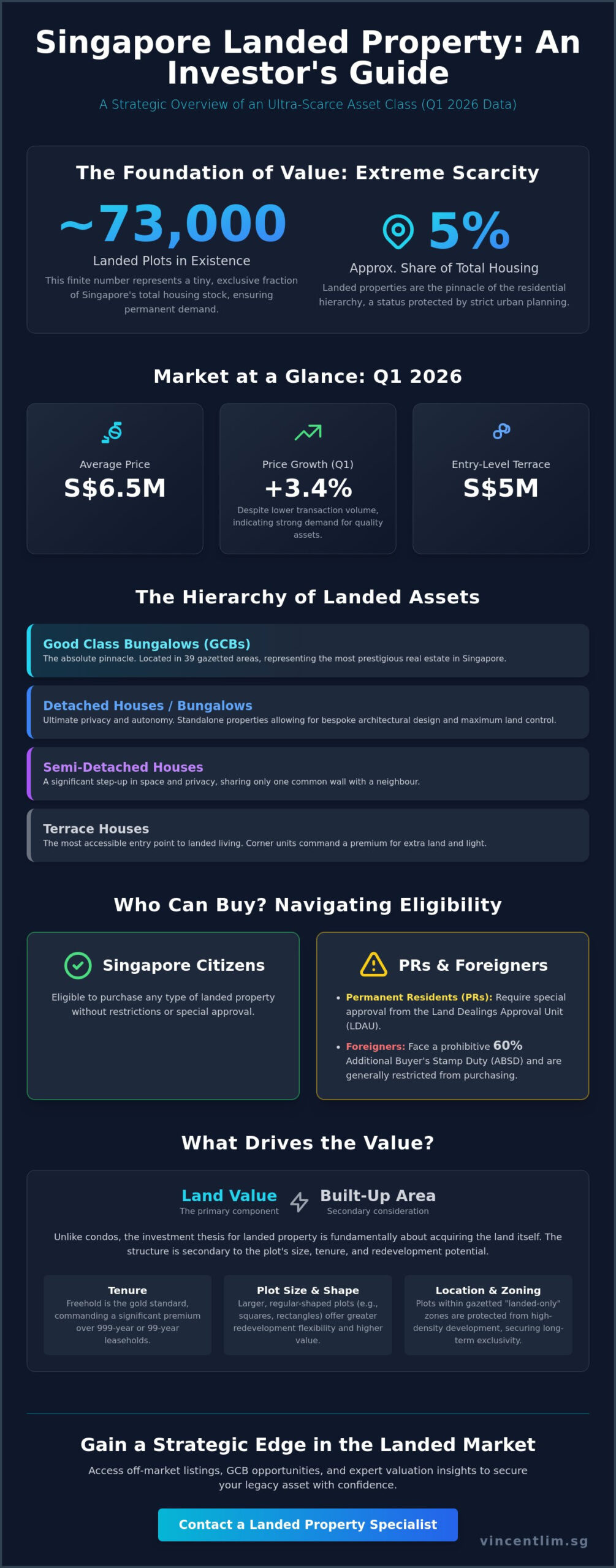
In a city-state with a total land area of just over 700 square kilometers, land is the most precious resource. While the majority of the population resides in public housing in Singapore, the landed segment represents an elite tier of ownership. There are only about 73,000 landed plots across the island. This extreme scarcity ensures that any available landed property for sale singapore is treated as a high-value asset rather than a mere dwelling. It’s the pinnacle of the residential hierarchy, offering a level of permanence that high-rise developments simply cannot match.
Landed assets consistently demonstrate superior price resilience compared to other segments. For example, while luxury condos for sale Singapore offer lifestyle perks, they don’t share the same land-scarcity premium. In the first quarter of 2026, landed prices rose by 3.4% despite a decrease in transaction volume. This reflects a “flight to quality” where high-net-worth individuals prioritize tangible land ownership. The average price of a landed home reached S$6.5 million during this period, signaling that the market remains robust even as buyers become more selective in the post-pandemic era.
The ‘Landed Dream’ vs. Investment Reality
Owning a landed home is often the ultimate lifestyle goal. It provides a level of privacy and autonomy that’s impossible to find in communal living. Beyond the emotional appeal, these properties serve as a robust hedge against inflation. With the entry-level price point for an inter-terrace reaching the S$5 million mark in 2026, the barrier to entry is high. However, the capital growth potential remains significant because the supply is fixed. You’re not just buying a house; you’re acquiring a legacy asset that typically outperforms the broader market over a ten-year horizon.
Supply Constraints and the URA Master Plan
The 2026 URA Master Plan continues to emphasize land-use efficiency, which inadvertently protects the value of existing landed estates. Zoning regulations strictly limit the creation of new landed housing. This means that “landed-only” zones maintain a level of exclusivity that cannot be diluted by future high-density developments. Identifying these zones is crucial for maximum long-term value. When you evaluate a landed property for sale singapore, you must consider how these urban planning constraints will impact the plot’s future redevelopment potential. A plot in a gazetted landed area offers much higher peace of mind than one adjacent to land zoned for future residential skyscrapers.
Navigating Categories: From Terrace Houses to GCBs
Understanding the specific hierarchy of landed property for sale singapore is essential for any disciplined investor. Classification dictates more than just the physical structure; it determines your future redevelopment flexibility, land-to-built ratio, and long-term capital appreciation potential. While the market offers various entry points, each category requires a unique strategic approach to ensure the asset remains a resilient store of value.
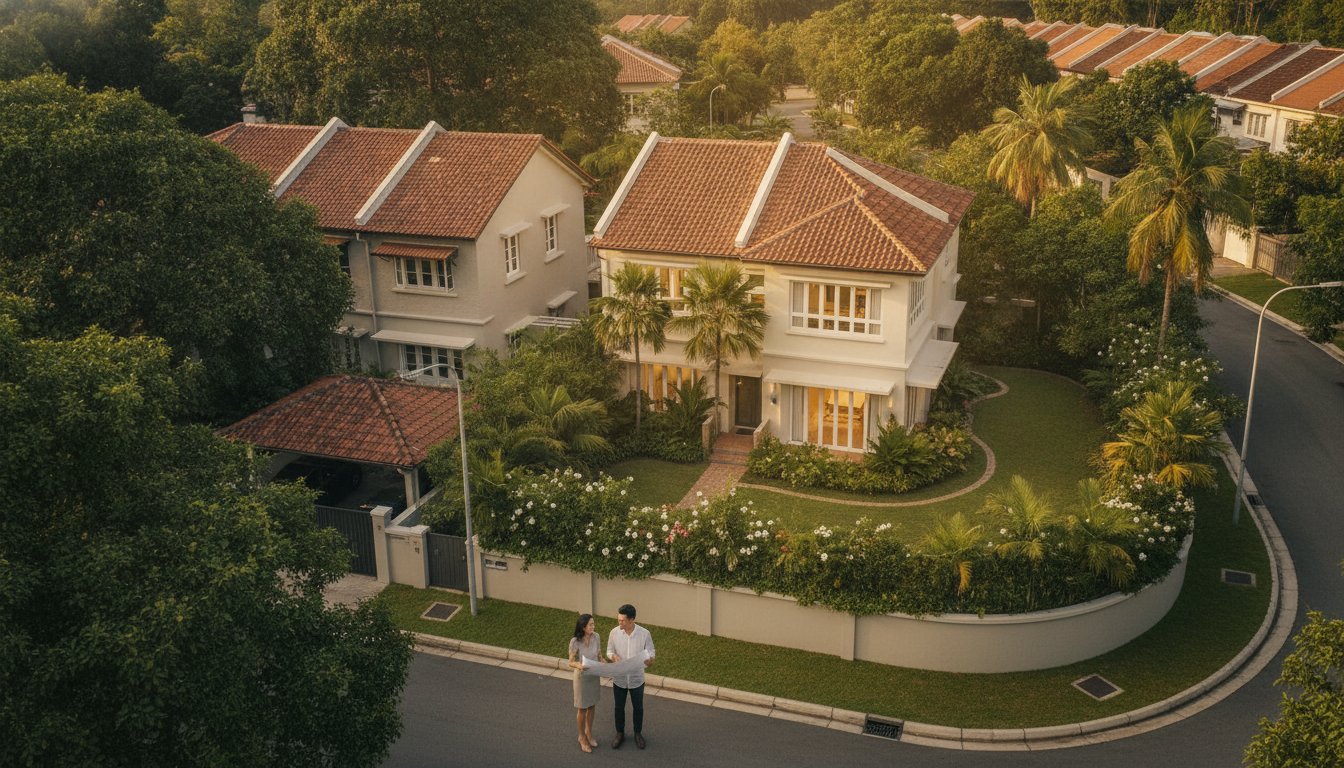
Terrace houses serve as the traditional entry point into landed ownership. These properties are classified into three types: Type I (Intermediate), Type II (Intermediate), and Corner Terraces. Semi-detached houses offer a significant step up in privacy, sharing only one party wall with a neighbor. For those seeking absolute autonomy, detached houses or bungalows provide independent land ownership, allowing for bespoke architectural expressions that aren’t constrained by shared structures. At the summit of this hierarchy sit Good Class Bungalows (GCBs), which are restricted to 39 designated conservation areas and represent the most prestigious real estate in the nation. Understanding how to buy a GCB in Singapore is a discipline unto itself, requiring mastery of stringent SLA regulations and access to elusive off-market data.
Strategic Analysis of Terrace House for Sale Singapore
When evaluating terrace houses, the distinction between an inter-terrace and a corner terrace is critical for resale liquidity. Corner units typically command a premium because they offer more land, better natural light, and superior ventilation. However, savvy investors often look closely at the frontage width. A wider frontage, even on an inter-terrace, significantly improves the property’s “curb appeal” and allows for more flexible internal layouts during redevelopment. These assets are often the most liquid segment of the landed market, making them excellent foundational pieces for a diversified property portfolio.
The Prestige and Scale of Detached Homes
Detached homes represent true independent living. Under the Singapore Land Authority and URA Master Plan guidelines, a semi-detached house generally requires a minimum plot size of 200 square meters, whereas a detached house requires at least 400 square meters. In GCB areas, this requirement jumps significantly to a minimum of 1,400 square meters. This scale is why detached homes command such a disproportionate premium; they offer a rare combination of privacy and architectural freedom. Identifying a plot that meets these minimum requirements while offering a favorable land shape is a task best handled by consulting with a seasoned luxury specialist who understands the nuances of land-use planning.
Valuation Drivers: Tenure, Land Size, and Built-up Area
Professional valuation in the landed segment requires a shift in perspective. While most buyers focus on price per square foot (PSF) of the floor area, strategic investors prioritize the Land PSF. The building itself is a wasting asset that depreciates over time; the land is the appreciating component. When you analyze landed property for sale singapore, you must distinguish between these two metrics to understand the true entry price. A property with a large, old house might seem expensive on a floor-area basis, but it could be a significant bargain if the land-to-price ratio is favorable.
The tenure of the land serves as the primary filter for long-term capital preservation. Freehold and 999-year leasehold properties remain the gold standard for legacy planning, as they don’t face the “lease decay” issues that affect older 99-year leasehold estates. In the 2026 market, we’ve observed that freehold assets command a 20% to 30% premium over their leasehold counterparts in similar districts. This gap reflects the buyer’s desire for an indefinite store of value. For the absolute pinnacle of this asset class, GCB land size remains the ultimate arbiter of value, where the sheer scale of the plot dictates an elite tier of pricing that operates independently of broader market fluctuations.
The Tenure Debate in 2026
Legacy planning is the driving force behind the continued preference for freehold land. While 99-year leasehold properties can offer attractive rental yields or a more accessible entry point into prestigious districts, they aren’t ideal for those looking to secure a multi-generational asset. It’s also vital to consider the Singapore Land Authority guidelines on foreign ownership, as tenure and eligibility often intersect when Permanent Residents seek approval for landed acquisitions. For most high-net-worth individuals, the peace of mind offered by freehold ownership justifies the higher capital outlay.
Understanding Plot Ratio and Envelope Control
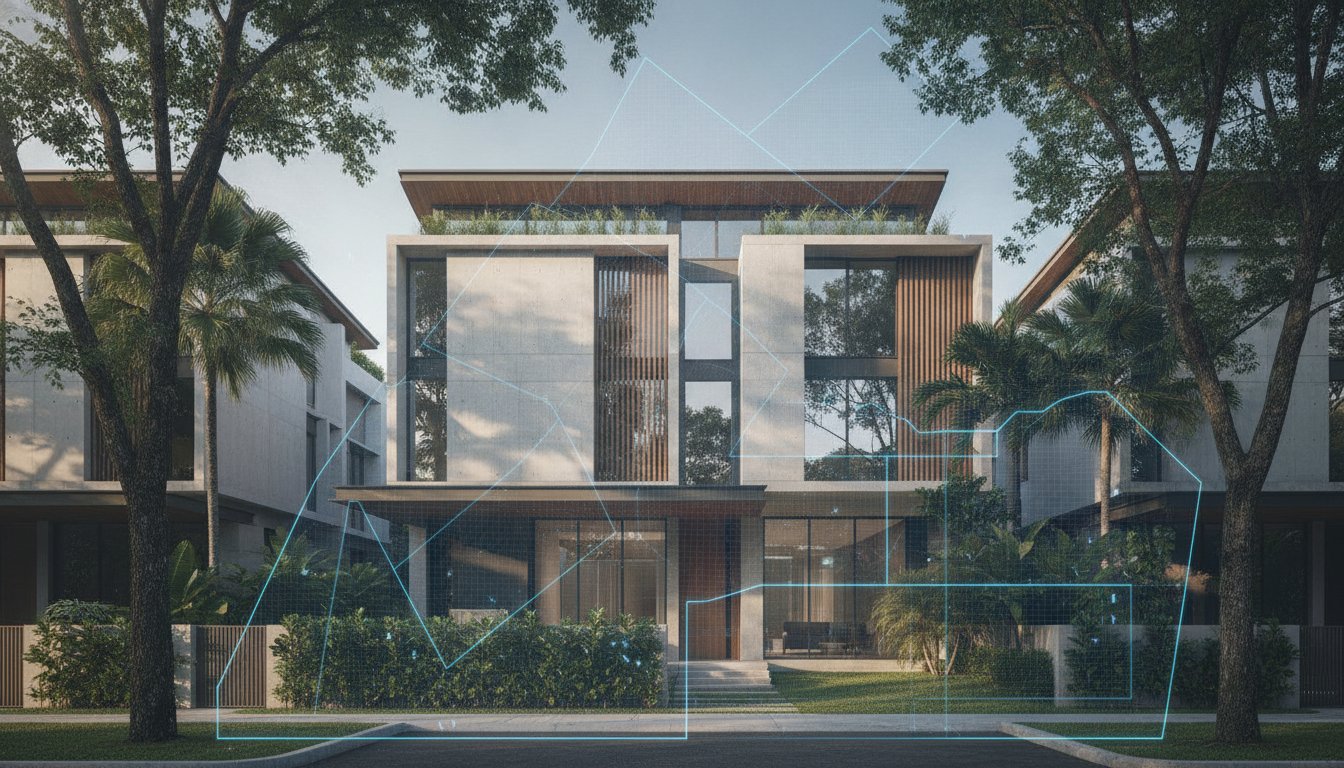
Valuation isn’t just about the current structure; it’s about what you’re allowed to build. URA’s envelope control guidelines now focus on the overall volume and height of the building rather than just the number of floors. This allows for more creative architectural expressions but requires a deep understanding of how to maximize Gross Floor Area (GFA). You should also account for the land’s topography. A sloping plot might offer unique basement potential, effectively increasing your usable space without breaching height limits. However, it’s important to remember that such features also introduce higher construction and maintenance costs that must be factored into your initial acquisition strategy for landed property for sale singapore.
Eligibility and Financial Framework for Landed Acquisitions
Securing a landed property for sale singapore involves more than just capital; it requires navigating a strict legal framework designed to preserve land ownership for citizens. The Residential Property Act remains the primary legislation governing this sector, effectively restricting the purchase of landed homes to Singapore Citizens. While the condominium market is relatively open, the landed segment is a protected asset class. This regulatory barrier is a key reason why these properties maintain such high levels of exclusivity and long-term value stability.
Financial planning for these acquisitions must be meticulous. As of May 2026, Singapore Citizens enjoy a 0% Additional Buyer’s Stamp Duty (ABSD) on their first residential property. However, the rates climb to 20% for a second property and 30% for a third. Permanent Residents (PRs) face a different scale, starting with a 5% ABSD for their first home. For those looking at the luxury end, such as detached houses or GCBs, the capital outlay is significant. Most buyers rely on bank mortgages, where the Loan-to-Value (LTV) limit is typically capped at 75% for the first housing loan, provided the buyer has no other outstanding mortgages.
PR Eligibility and the Land Dealings Approval Unit
Singapore Permanent Residents aren’t automatically eligible to purchase landed homes. You must first obtain approval from the Land Dealings Approval Unit (LDAU) of the Singapore Land Authority. The unit evaluates applications based on your economic contribution to Singapore and whether you’ve been a PR for at least five years. Approval is usually restricted to a single landed dwelling for owner-occupation. You should also be aware of the restrictive covenants, such as the two-year “no-sale” condition, which prevents you from flipping the property shortly after acquisition. Mitigating the risk of a rejected application requires a well-prepared submission that highlights your long-term commitment to the nation.
ABSD and Tax Planning Strategies
Calculating the total acquisition cost requires a clear understanding of the 2026 tax landscape. Beyond the initial stamp duties, owner-occupiers of landed homes benefit from progressive property tax rates ranging from 0% to 32%. For 2026, the government has provided a 10% property tax rebate for owner-occupied private properties, capped at S$500. If you’re purchasing the property as an investment, be prepared for higher non-owner-occupier tax rates, which currently range from 12% to 36%. Given these complexities, it’s essential to consult with a strategic property advisor to ensure your financial structure is optimized for both tax efficiency and regulatory compliance.
The Specialist Edge: Why Partner with Vincent Lim
The acquisition of a landed property for sale singapore is a pursuit defined by complexity and high capital requirements. Navigating this landscape effectively requires more than basic market data; it demands the strategic oversight of a seasoned professional. Vincent Lim (OrangeTee & Tie) offers over two decades of industry experience, providing a level of seasoned authority that ensures your interests are protected at every stage. He operates as an elite strategist, refining your search to identify properties that don’t just meet lifestyle needs but also serve as robust stores of value.
Accessing the most exclusive tiers of the market, particularly Good Class Bungalows, often requires looking beyond public listings. Many premier assets are moved through “silent” sales where discretion is paramount. By partnering with Vincent Lim (OrangeTee & Tie), you gain access to this confidential network of off-market opportunities. His expertise allows for a bespoke approach, tailoring the selection process to the specific requirements of high-net-worth individuals and family offices seeking to secure a generational legacy.
Beyond the Transaction: A Partnership Approach
Professional advisory extends far beyond the point of sale. Vincent Lim (OrangeTee & Tie) coordinates with an elite network of legal and tax professionals to ensure that every acquisition is structured for maximum efficiency, particularly regarding the ABSD and LDAU frameworks discussed previously. This partnership approach ensures that the transition from luxury condominiums into landed estates is seamless. Post-purchase, he provides strategic guidance on rebuilding and renovation, helping you coordinate with architects to maximize the potential of your new land bank while adhering to URA’s envelope control guidelines.
Securing Your Legacy in 2026
Identifying undervalued gems in a market characterized by extreme scarcity requires a disciplined, data-driven perspective. Vincent Lim (OrangeTee & Tie) leverages his deep understanding of historical price trends and the 2026 URA Master Plan to provide a competitive edge in negotiations. In multi-million dollar deals, professional representation is the difference between a simple purchase and a strategic acquisition. If you’re ready to explore the current inventory of landed property for sale singapore with a trusted guide, contact Vincent Lim (OrangeTee & Tie) for a confidential consultation focused on your unique investment objectives.
Securing Your Generational Legacy in Singapore
The 2026 market has confirmed that land ownership remains the most resilient store of value in the nation. Success in this exclusive segment requires a disciplined understanding of land-to-price ratios and a clear strategy for asset progression. Whether you’re targeting an entry-level terrace house or a prestigious Good Class Bungalow, your focus should remain on the intrinsic value of the land bank. Identifying a prime landed property for sale singapore is the critical first step toward building a legacy that withstands inflationary pressures and urban shifts.
Navigating these high-stakes transactions requires the guidance of a veteran who has mastered the complexities of the luxury market. Vincent Lim (OrangeTee & Tie) brings over 20 years of industry experience specializing in GCB and luxury landed sales. He provides the “white-glove” service and strategic advisory necessary to secure off-market opportunities and ensure a seamless acquisition process. It’s about moving from a mere transaction to a high-level partnership rooted in trust and calculated competence.
Schedule a Strategic Landed Property Consultation with Vincent Lim (OrangeTee & Tie) today to begin your journey with an elite strategist. Your future in Singapore’s most exclusive residential tier starts with a single, well-calculated decision.
Frequently Asked Questions
Can a foreigner buy landed property in Singapore?
Foreigners are generally restricted from purchasing mainland landed homes under the Residential Property Act. Approval from the Singapore Land Authority’s Land Dealings Approval Unit (LDAU) is mandatory and is usually reserved for Permanent Residents who’ve made significant economic contributions. This process ensures that the limited supply of landed property for sale singapore remains primarily in the hands of those with long-term ties to the nation.
What is the minimum land size for a Good Class Bungalow (GCB)?
A Good Class Bungalow must occupy a minimum land area of 1,400 square meters. These elite assets are strictly confined to 39 designated conservation areas gazetted by the URA. Beyond the land size, GCBs are subject to stringent building height and site coverage restrictions to maintain the low-density, lush character of these prestigious estates.
How much is the ABSD for a Singapore PR buying their first landed property?
As of May 2026, a Singapore Permanent Resident is required to pay a 5% Additional Buyer’s Stamp Duty (ABSD) on their first residential property purchase. If the PR is acquiring a second property, the rate increases significantly to 30%. These tax considerations are vital for financial planning, especially when dealing with the high capital outlays associated with the landed market.
Is it better to buy a brand new landed home or a resale plot for rebuilding?
Choosing between a new build and a resale plot depends on your timeline and architectural requirements. A resale plot offers the opportunity to rebuild a bespoke home that perfectly utilizes the land’s unique topography. However, a brand new landed property for sale singapore provides immediate move-in readiness and modern features, avoiding the complexities and rising costs of a two-to-three-year construction project.
What is the difference between a Terrace House and a Semi-Detached House?
The primary distinction lies in the shared boundaries and minimum land requirements. A terrace house is part of a row of three or more units sharing side walls, whereas a semi-detached house shares only one party wall with a neighbor. Under URA guidelines, a semi-detached house must have a minimum plot size of 200 square meters, offering greater privacy than a standard terrace.
How long does the LDAU approval process typically take for PR buyers?
The LDAU application process generally concludes within 30 days. However, the timeline can vary based on the complexity of the applicant’s profile and the thoroughness of the submitted documentation. It’s essential to present a clear case of your economic contribution and long-term commitment to Singapore to facilitate a smooth approval process for your acquisition.
Are there any landed properties that foreigners can buy without LDAU approval?
Foreigners can purchase landed properties on Sentosa Cove without the need for LDAU approval. This enclave is the only area in Singapore where the Residential Property Act’s restrictions on foreign land ownership are waived. It remains a popular choice for international investors seeking the prestige of landed living combined with a resort-style waterfront environment.
What are the maintenance costs associated with owning a detached house?
Owning a detached house involves recurring costs for landscaping, swimming pool filtration, and pest management. Owners should also account for periodic structural maintenance, such as roof waterproofing and facade repainting, which are necessary every five to seven years. Budgeting for these expenses ensures the property remains a high-value asset and continues to provide a premium living experience.