The most expensive mistake you can make when evaluating a detached house for sale Singapore isn’t overpaying for the architecture; it’s failing to value the ground beneath it. While a beautifully designed bungalow captures the eye, the true legacy of a landed asset lies in its land-first potential and its ability to withstand shifting market cycles. You likely understand that these rare freehold plots are the ultimate hedge against inflation, yet the path to acquisition is increasingly narrow due to strict URA setbacks and a 55% TDSR threshold that demands absolute financial precision.
This guide provides a strategic framework to help you master the nuances of Singapore’s most prestigious asset class. You’ll learn how to identify resilient properties that serve as a pillar of family wealth, even as 2026 property tax rates for owner-occupiers reach up to 32%. We will examine the current landscape of off-market transactions, the implications of the latest ABSD rates, and the specific redevelopment strategies required to maximize every square meter of a 400 square meter minimum plot. By the end of this article, you’ll have the clarity needed to secure a permanent legacy asset with calculated competence and peace of mind.
Key Takeaways
- Identify the core criteria of elite landed assets, including the 400sqm minimum plot requirement, to distinguish between standard bungalows and high-potential legacy properties.
- Master a land-first evaluation framework for any detached house for sale Singapore to ensure your investment serves as a resilient hedge against inflation and currency volatility.
- Uncover the “Original Condition” advantage to maximize your ROI through strategic redevelopment and bespoke wealth planning.
- Navigate the 2026 regulatory landscape with precision, from managing the latest ABSD rates to optimizing your liquidity for high-quantum acquisitions.
- Leverage an elite off-market network to access exclusive “silent” listings and secure a competitive advantage in Singapore’s opaque luxury market.
Defining the Pinnacle: What Constitutes a Detached House in Singapore?
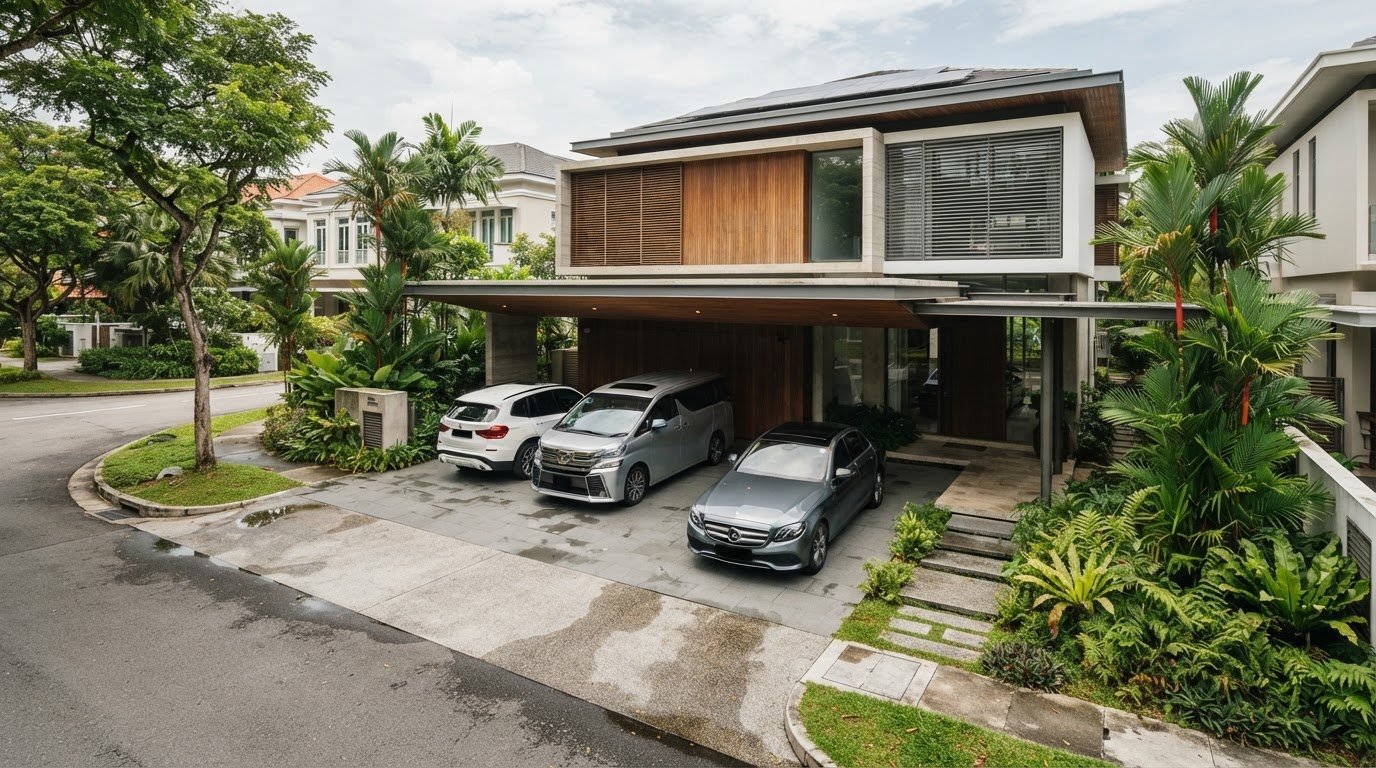
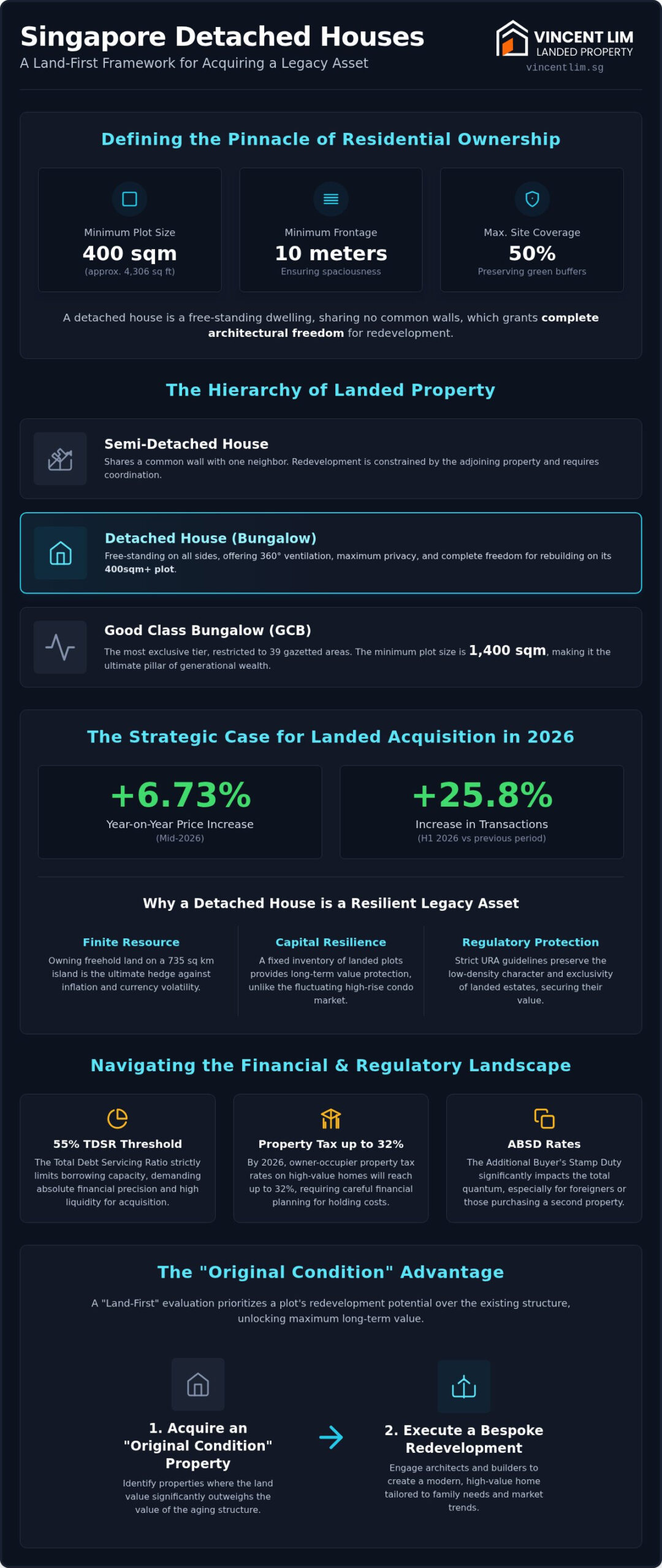
In Singapore’s real estate hierarchy, a detached house represents the zenith of residential ownership. Commonly referred to as a bungalow, this asset class is defined by its total independence. To qualify under Urban Redevelopment Authority (URA) guidelines, the property must be a free-standing dwelling that shares no common walls or roofing with any neighboring structure. The technical threshold for this classification is rigorous. A detached house for sale Singapore must sit on a minimum plot size of 400 square meters (approximately 4,306 square feet) and possess a minimum frontage of 10 meters. These requirements ensure that the property maintains a sense of spaciousness and exclusivity that higher-density housing simply cannot match.
Strategic acquisition requires a sophisticated understanding of URA site coverage and setback regulations. These rules dictate how much of the land can be built upon, typically capped at 50% for standard bungalows. These constraints are designed to preserve the “landed” character of the neighborhood by ensuring significant green buffers between properties. For those with an appreciation for heritage, some of these assets include iconic Black and White bungalows. These colonial-era structures serve as timeless reminders of Singapore’s architectural history while commanding substantial market premiums due to their rarity and historical significance.
Detached vs. Semi-Detached: The Value of Independence
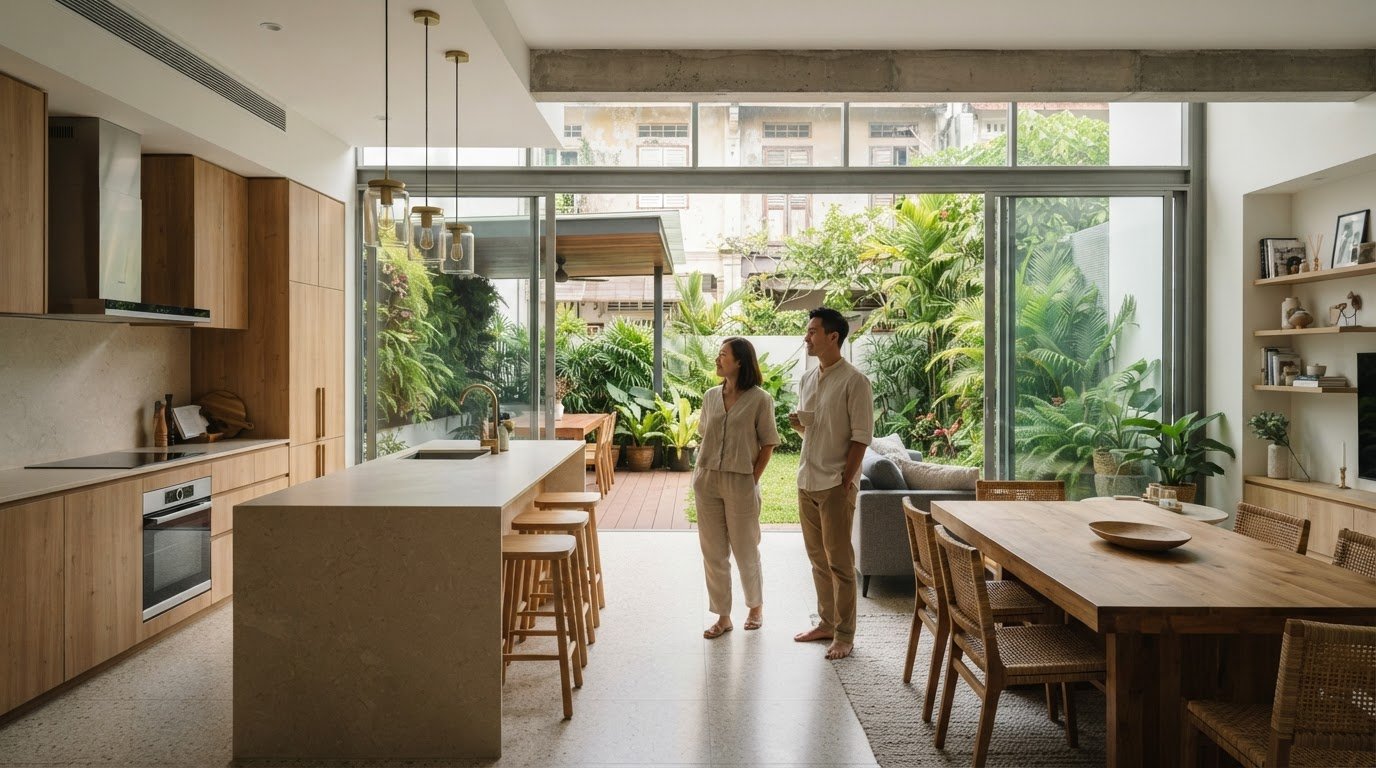
The primary differentiator between these two asset classes is the concept of 360-degree ventilation. While a semi-detached house is physically tethered to a neighbor, a detached home offers unrestricted airflow and garden space on all four sides. This independence isn’t just an aesthetic luxury; it’s a functional advantage for future redevelopment. Owners of detached houses don’t need to coordinate with or be limited by a neighbor’s existing structure when planning a complete rebuild. This architectural freedom significantly increases the land’s utility and justifies the higher price point compared to semi-detached assets.
The Good Class Bungalow (GCB) Distinction
Within the category of detached homes, there’s an even more exclusive tier known as the Good Class Bungalow. These properties are restricted to 39 designated GCB areas, such as Nassim Road, Tanglin, and Cluny Park. To be classified as a GCB, the plot must meet a minimum land size of 1,400 square meters. This is more than triple the requirement for a standard detached house. For a detailed breakdown of this elite segment, you can explore our guide on What is a Good Class Bungalow? to understand why these properties remain the most resilient pillars of family wealth in Singapore.
The Strategic Case for Landed Acquisition in 2026
In a city-state with a total land area of approximately 735 square kilometers, the ownership of a freehold detached house for sale Singapore represents the acquisition of a strictly finite resource. Unlike luxury condominiums, where value is often tied to “air space” and communal amenities, a detached home derives its primary worth from the earth beneath it. This land ownership provides a unique buffer against market volatility. While high-end residential prices can fluctuate based on supply gluts in the condo market, the fixed inventory of landed plots ensures long-term capital resilience. As of mid-2026, landed property prices have shown a year-on-year increase of 6.73%, outperforming many other residential asset classes despite broader economic cooling measures.
Sophisticated investors view these properties as a critical hedge against inflation and currency instability. In 2026, as global markets grapple with shifting interest rates, the tangible nature of a freehold bungalow provides a level of security that paper assets cannot match. The Urban Redevelopment Authority (URA) guidelines strictly maintain the density of these areas, preventing the dilution of value that occurs when high-rise developments are introduced into low-density zones. This regulatory protection, combined with the 25.8% increase in detached house transactions recorded in the first half of 2026, underscores a clear flight to quality among Singapore’s wealthiest families.
Asset Progression and Wealth Preservation
A detached house functions as an enduring store of value that facilitates multi-generational wealth planning. Many owners begin their journey in premium condominiums, leveraging capital gains to transition into the landed segment. This strategic move, often referred to as asset progression, allows families to secure larger footprints in prime districts before prices escalate further. For a comprehensive look at this transition, you may consult our guide on Asset Progression to Landed Property Singapore. If you’re currently evaluating your portfolio’s potential for such a move, consulting an elite strategist can help clarify your path to acquisition.
2026 Market Dynamics: Timing Your Entry
The 2026 market presents a unique window for entry, characterized by a stable interest rate environment where two-year fixed mortgage rates sit around 1.40% per annum. While some buyers wait for a significant market correction, historical data suggests that landed prices in Singapore rarely experience deep crashes due to the high percentage of owner-occupiers with strong holding power. Instead, the market often enters periods of price moderation. The current resilience of the luxury segment, with sales values for properties above S$10 million increasing by 19.3% year-on-year, indicates that demand remains robust. Waiting for a downturn in this category often results in missing out on prime plots that may not return to the market for another generation.
Evaluating a Detached House for Sale: A Professional Framework
Identifying a high-potential detached house for sale Singapore requires a perspective shift from aesthetics to asset fundamentals. Professional investors prioritize the land value over the existing built-up area. A building is a depreciating asset, whereas the land is a finite resource that captures capital appreciation over time. According to the Private Property Price Index, landed homes have demonstrated remarkable price resilience, particularly those situated on well-proportioned plots in prime districts. When you evaluate a property, you should calculate the price per square foot (PSF) based on the land area to determine if the asking price aligns with the intrinsic value of the ground itself.
The most lucrative acquisitions are often those in “original condition.” While an older, unrenovated house may lack immediate curb appeal, it offers the highest return on investment. You aren’t paying a premium for a seller’s personal design choices, which you might eventually replace anyway. Instead, you’re acquiring the land at a competitive rate, providing a clean canvas for a bespoke redevelopment that matches your family’s specific needs. Plot geometry is equally vital. A wide frontage, ideally exceeding 12 meters, is far more valuable than a deep, narrow plot. Wide plots allow for more grand architectural designs and better internal light distribution, which significantly enhances future resale value.
Orientation plays a practical role in the Singapore climate. The gold standard is a North-South facing property. This orientation avoids the harsh, direct heat of the morning and afternoon sun, keeping the interior cooler and reducing long-term energy costs. While Feng Shui considerations are subjective, they often align with these practical environmental factors, ensuring the home remains a comfortable and harmonious environment for decades.
Redevelopment and A&A Potential
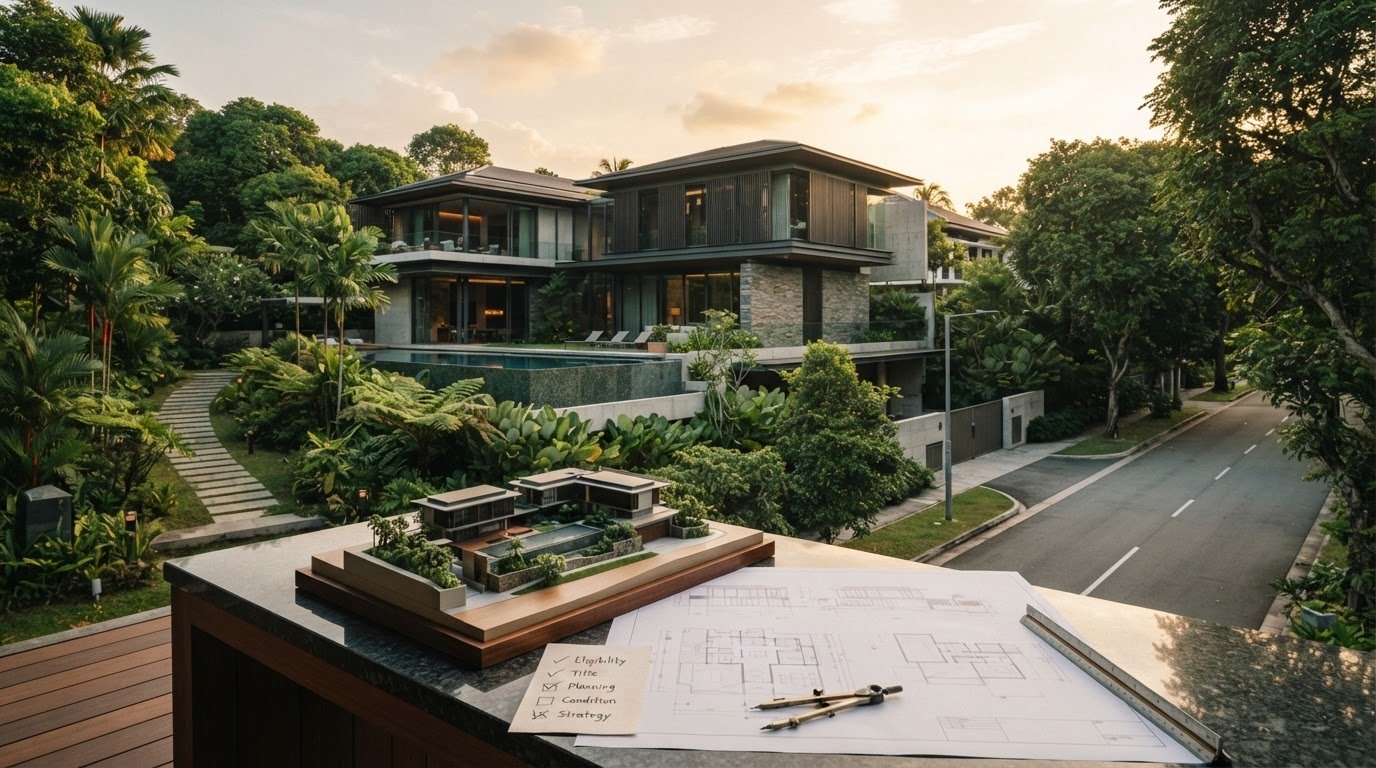
Before committing to a purchase, you must consult the URA Master Plan to understand the allowable building envelope and height limits for the specific plot. Some areas are restricted to two-story builds, while others allow for three stories plus an attic. Understanding the cost difference between a full “New Build” and “Additions & Alterations” (A&A) is critical for your financial planning. To explore current market opportunities that fit these criteria, you can view our curated listings of a detached house for sale Singapore to benchmark potential redevelopment sites.
The Tenure Debate: Freehold vs. 99-Year Leasehold
Freehold detached houses are the primary choice for legacy planning. They offer permanent ownership and peace of mind for multi-generational wealth transfer, as they don’t suffer from lease decay. However, a 99-year leasehold property can make strategic sense for buyers focused on immediate lifestyle needs in a prestigious location at a lower entry quantum. The key is having a disciplined exit strategy. Leasehold properties typically see price stagnation as the remaining lease drops below 60 years, so timing your divestment or ensuring the property serves its purpose within your lifetime is essential.
Financial and Regulatory Navigation for 2026
Securing a detached house for sale Singapore in 2026 requires more than just significant capital. It demands a sophisticated understanding of a regulatory landscape designed to prioritize financial resilience. The current Additional Buyer’s Stamp Duty (ABSD) framework is a primary consideration for any acquisition strategy. As of mid-2026, Singapore Citizens pay 20% ABSD on their second residential property and 30% on their third. Permanent Residents face a 5% rate on their first purchase, which escalates sharply to 30% for a second property. These figures represent a substantial upfront cost that must be factored into your liquidity planning alongside the standard 55% Total Debt Servicing Ratio (TDSR) threshold.
The 2026 financial environment rewards buyers who maintain high levels of liquid capital. While Loan-to-Value (LTV) limits for a first housing loan typically sit at 75%, the high quantum of detached house transactions often necessitates a larger cash or CPF component. This is particularly true for properties exceeding S$10 million, where banks may apply more stringent valuation haircuts. Beyond the initial purchase, standalone ownership introduces unique maintenance responsibilities. Without a management corporation or sinking fund, you’re solely responsible for the structural integrity of the estate, including roof maintenance, pest control, and landscaping. Professional buyers typically budget 1% to 2% of the property value annually for these essential upkeep tasks to preserve the asset’s long-term legacy value.
Financing the Landed Dream
Success in high-quantum transactions often depends on the quality of your financial partners. You’ll benefit from working with specialized mortgage brokers who understand the complexities of high-net-worth profiles and variable income structures. Strategic financing isn’t just about securing the lowest rate; it’s about structuring the loan to allow for future succession planning and tax efficiency. If you intend to embark on a total reconstruction, managing the cash flow for progressive payments to contractors is vital. To navigate these complexities with the support of a seasoned professional, you may schedule a private consultation to review your financial roadmap.
Eligibility Restrictions for Foreigners
Singapore maintains strict controls over the ownership of landed assets to prevent speculative dilution of its limited land supply. Permanent Residents must seek approval from the Landed Housing Adjudication Unit (LDAU) before they can legally acquire a detached home. The criteria are rigorous, often requiring the applicant to demonstrate significant economic contribution to the country. Foreigners are generally restricted from purchasing landed property on the mainland, with Sentosa Cove remaining the primary exception for those seeking a detached lifestyle. For a detailed breakdown of these eligibility rules and the application process, you can explore our comprehensive resource on Landed Property Singapore.
The Vincent Lim Advantage: Elite Strategy in Landed Real Estate
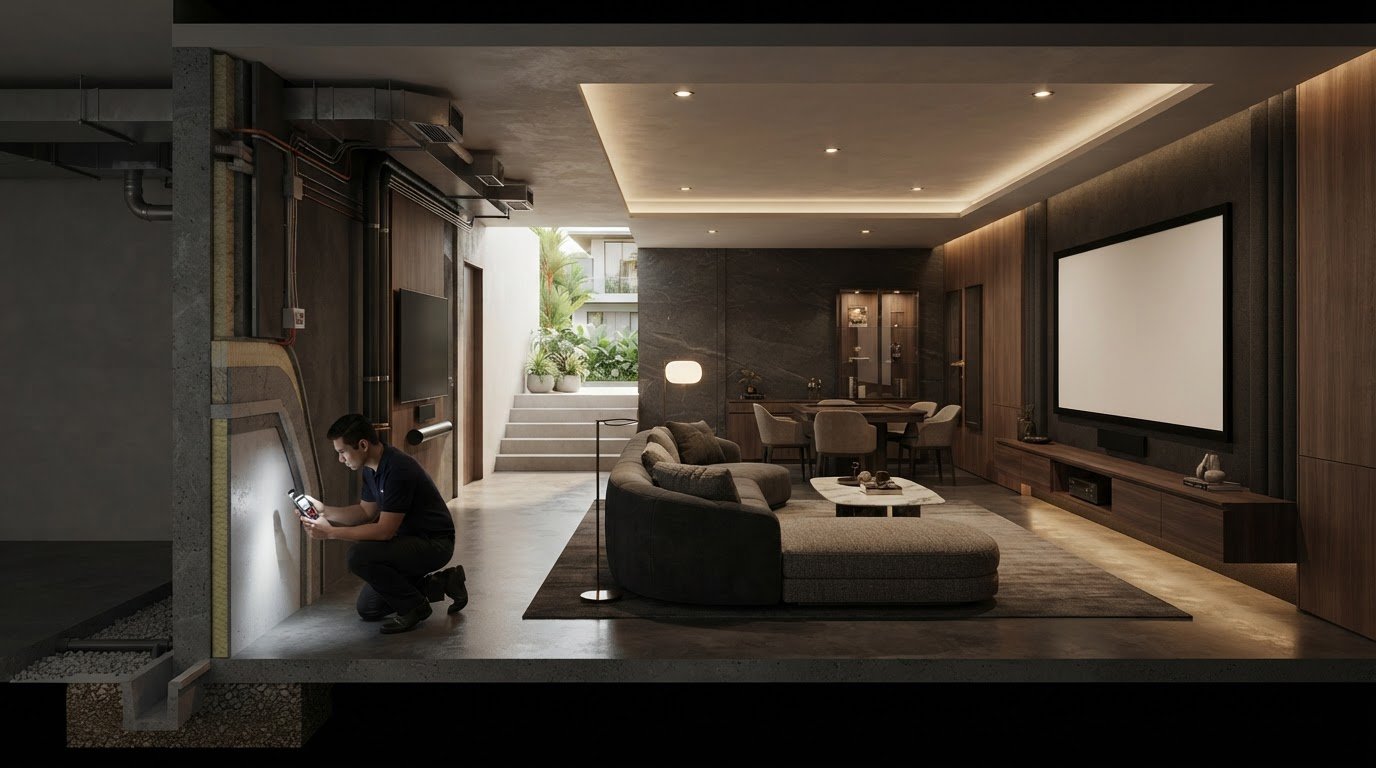
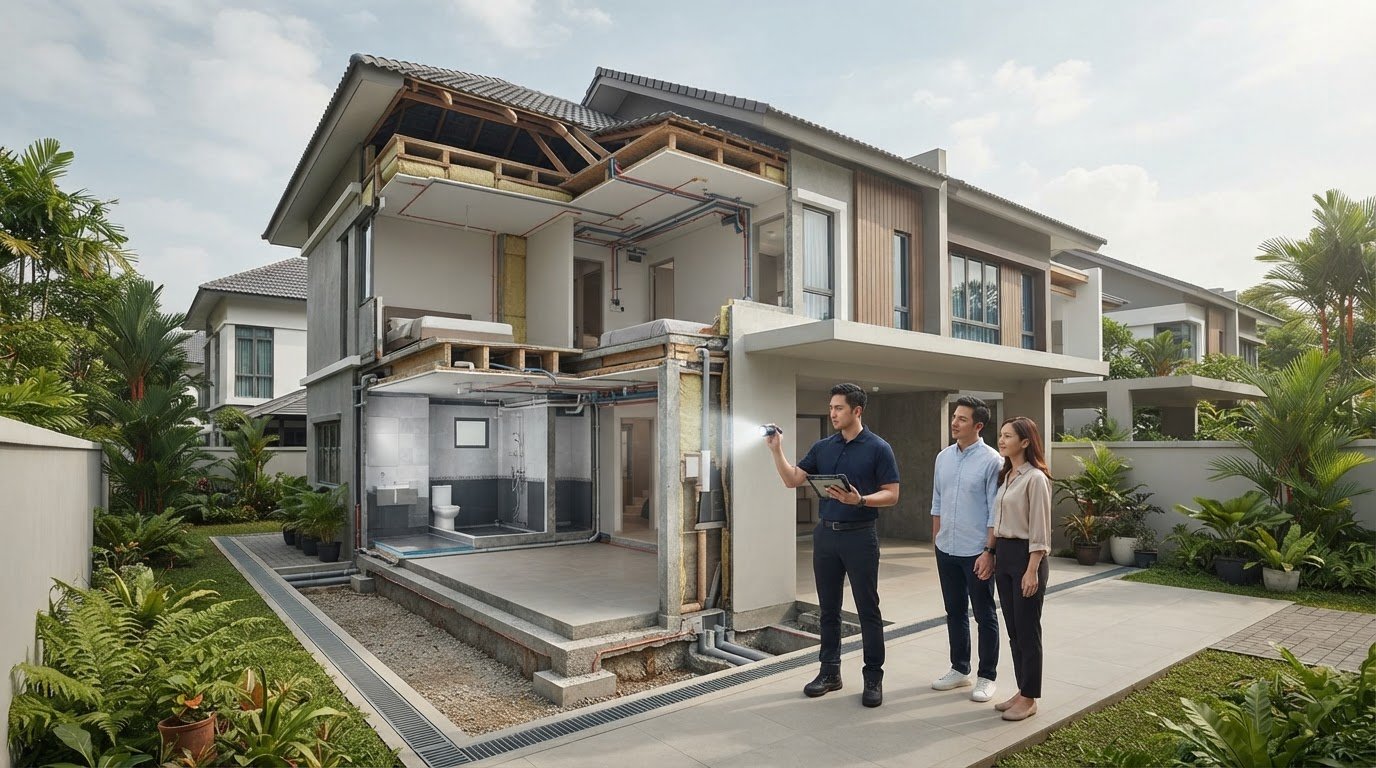
In the multi-million dollar segment of the Singapore property market, a generalist agent is often a liability rather than an asset. Acquiring a detached house for sale Singapore requires a level of technical due diligence that goes far beyond aesthetic appreciation. A seasoned strategist investigates the “invisible” factors that can significantly impact land value, such as drainage reserves, sewer lines, and potential road line markings. These technical encumbrances can restrict your building envelope or complicate future redevelopment plans. By identifying these issues before the Option to Purchase is signed, you protect your capital from unforeseen limitations and ensure your investment remains a resilient pillar of wealth.
The most coveted properties in the landed segment often never reach public portals. Accessing this “silent” market requires a network built over decades. With over 20 years of experience in the GCB and luxury landed sector, Vincent Lim (OrangeTee & Tie) provides clients with access to off-market listings that are shielded from public speculation. This elite network allows you to evaluate a detached house for sale Singapore with total discretion, ensuring you aren’t competing in a crowded bidding war. This strategic advantage is essential for high-net-worth individuals who value privacy and seek to acquire assets with true capital preservation potential.
A Legacy-First Approach to Brokerage
Operating as an Executive Associate Director at OrangeTee & Tie since 2004, Vincent Lim has mastered the nuances of high-stakes legacy transactions. His “white-glove” service model extends beyond the transaction itself. He coordinates a bespoke team of architects, specialized lawyers, and private bankers to ensure every facet of your acquisition is handled with calculated competence. This holistic approach alleviates the stress of complex financing and regulatory navigation, providing you with the peace of mind that your family’s future home is secured by a veteran professional who values integrity and transparency above all else.
Your Next Steps: A Private Consultation
Preparing your portfolio for a landed property upgrade requires a long-term perspective. A strategic session helps you align your immediate lifestyle needs with your 30-year wealth goals, ensuring that your next move is a calculated step toward permanent legacy. Whether you are transitioning from a luxury condominium or looking to divest a current asset to upgrade, professional guidance is the key to maximizing your ROI. For those looking to exit the market strategically, you can explore our Sell My Landed Property Singapore resource to understand how we position elite assets for maximum value. To begin your journey toward securing a premier detached home, contact us for a private consultation today.
Securing Your Architectural Legacy in Singapore
Acquiring a detached house for sale Singapore isn’t merely a residential transaction; it’s a multi-generational commitment that demands strategic foresight. Success in this elite asset class requires a disciplined focus on land value and a precise understanding of the 2026 regulatory environment. By prioritizing plot geometry, North-South orientation, and redevelopment potential over temporary building aesthetics, you secure an asset that remains resilient against inflation and market shifts.
Navigating this opaque landscape is best achieved with a partner who understands the intricacies of high-stakes transactions. Vincent Lim brings over 20 years of expertise in the luxury landed market, specializing in Good Class Bungalow (GCB) acquisitions and complex asset progression. As an Executive Associate Director at OrangeTee & Tie, he provides the white-glove service and off-market access necessary to protect your family’s capital and ensure a seamless acquisition process.
Book your strategic landed property consultation with Vincent Lim today. Taking a calculated approach now ensures your portfolio is positioned for long-term excellence and peace of mind.
Frequently Asked Questions
Can a Singapore Permanent Resident (PR) buy a detached house for sale?
Singapore Permanent Residents must obtain prior approval from the Landed Housing Adjudication Unit (LDAU) before they can legally purchase a detached home. This approval is granted on a case-by-case basis; the authorities typically evaluate the applicant’s economic contribution and their commitment to Singapore. While mainland landed properties are restricted, PRs can generally purchase a detached house in Sentosa Cove without the same LDAU requirements.
What is the minimum land size for a detached house (bungalow) in Singapore?
The Urban Redevelopment Authority (URA) stipulates that a detached house must have a minimum plot size of 400 square meters. Additionally, the plot must maintain a minimum frontage of 10 meters to qualify for this classification. When you are searching for a detached house for sale Singapore, it’s vital to verify these dimensions to ensure the property meets the legal definition of a bungalow and allows for standalone redevelopment.
What is the difference between a standard detached house and a Good Class Bungalow (GCB)?
The primary distinctions lie in the land size and the specific geographical location. A standard detached house requires a minimum of 400 square meters of land and can be located in various landed housing estates across the island. In contrast, a Good Class Bungalow must have a minimum land area of 1,400 square meters and be situated within one of the 39 designated GCB areas protected by the URA.
How much is the Additional Buyer’s Stamp Duty (ABSD) for landed property in 2026?
As of 2026, Singapore Citizens pay 0% ABSD on their first residential property, 20% on their second, and 30% on their third or subsequent purchases. Permanent Residents face an ABSD rate of 5% for their first property, 30% for the second, and 35% for any subsequent acquisitions. These rates apply to the higher of the purchase price or the market valuation and must be paid in cash within 14 days of signing the Option to Purchase.
Is it better to buy an ‘original condition’ detached house or a brand-new one?
Strategic buyers often prefer “original condition” properties because they offer a higher return on investment. You aren’t paying for the previous owner’s renovation premiums or design choices that may not align with your needs. Buying an older detached house for sale Singapore allows you to acquire the land at a more competitive rate, providing the financial headroom to build a bespoke home that maximizes the allowable building envelope.
What are the typical maintenance costs for a standalone landed property?
Standalone owners should budget approximately 1% to 2% of the property’s value annually for maintenance and upkeep. Since there is no management corporation, you’re responsible for all costs related to pest control, garden landscaping, roof inspections, and pool maintenance. Regular preventative maintenance is essential to preserve the structural integrity of the asset and ensure it remains a resilient pillar of your family’s wealth.
Can I redevelop a detached house into two semi-detached houses?
Redevelopment into two semi-detached houses is possible only if the land meets the minimum size and frontage requirements for two separate plots. Each semi-detached plot must have at least 200 square meters of land and a minimum frontage of 8 meters. Furthermore, the property must be located in an area where the URA Master Plan allows for semi-detached housing, as some zones are strictly reserved for bungalows only.
How long does the transaction process take for a landed property in Singapore?
The entire transaction process typically spans 12 to 16 weeks from the time the Option to Purchase (OTP) is granted. Buyers generally have a two-week period to exercise the OTP, followed by a completion period of 10 to 14 weeks. This timeframe allows for necessary legal due diligence, title searches, and the processing of bank financing. It’s a methodical process that ensures all technical encumbrances are cleared before the final transfer of ownership.