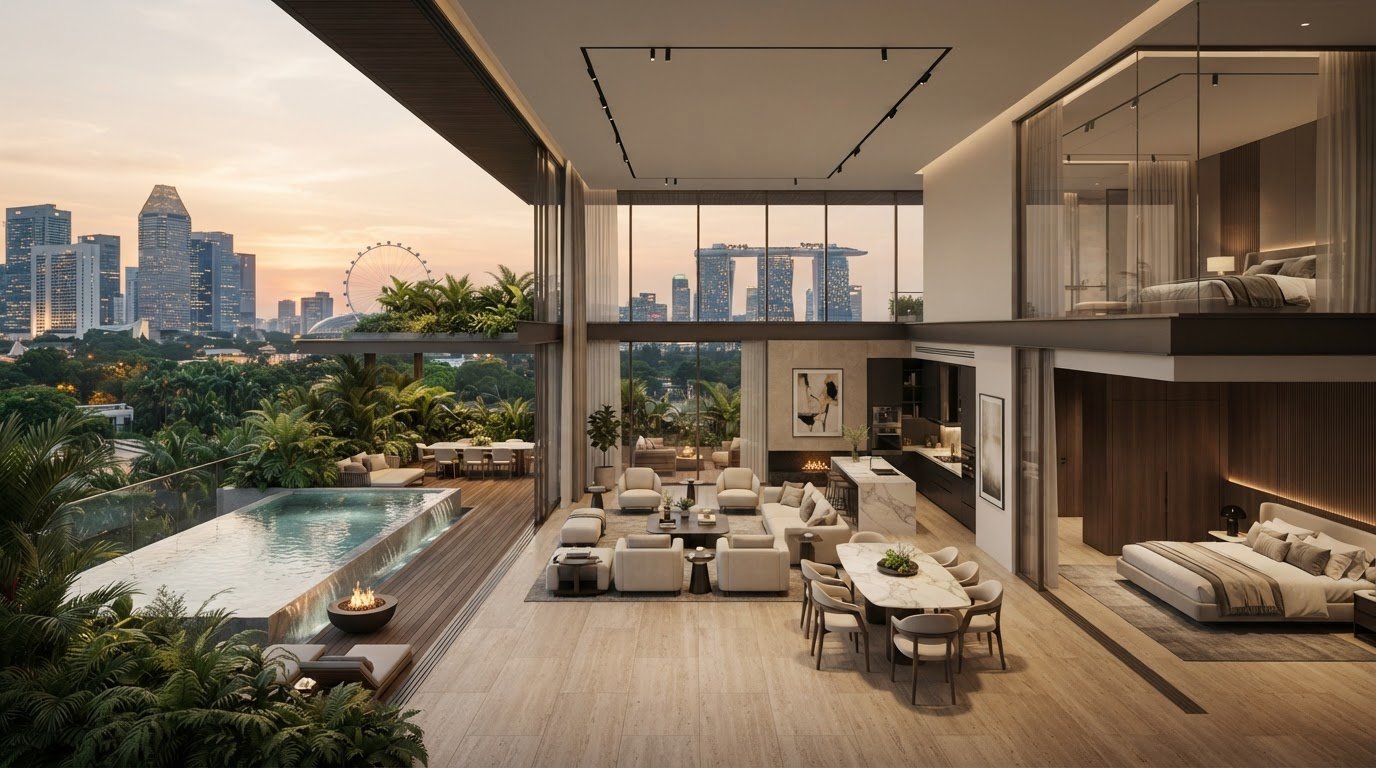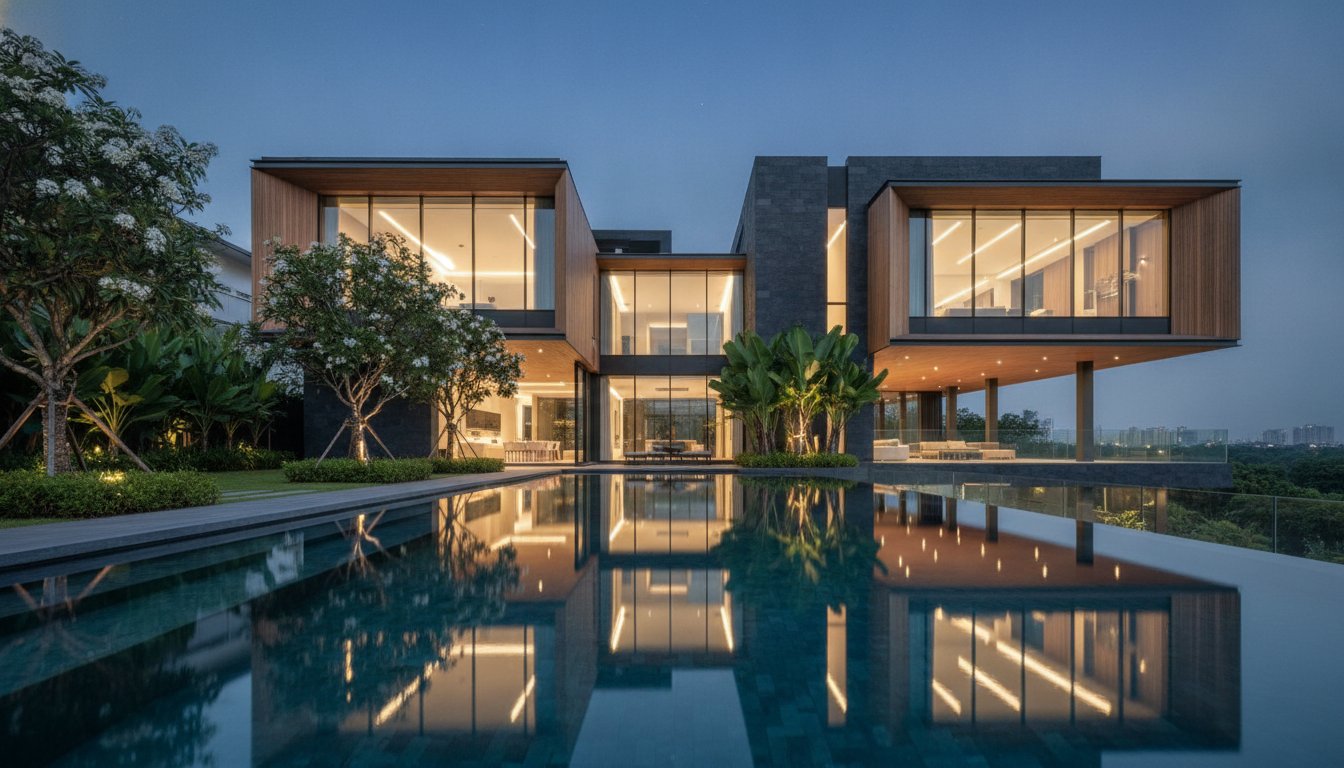
In a land-constrained nation like Singapore, a freehold detached house is the ultimate expression of permanent wealth and sovereign control. You likely recognize that while luxury condominiums offer convenience, they cannot match the absolute autonomy and privacy of a standalone estate. Many owners currently considering selling a detached house in Singapore understand that these assets are becoming increasingly rare as urban planning evolves. You’ve probably felt the growing concern over leasehold depreciation and the restrictive nature of shared walls in semi-detached homes.
This guide will show you how to strategically acquire a freehold detached property to secure a multi-generational legacy and maximize your private land-bank value. We will examine the 2026 market landscape, URA rebuilding guidelines, and the financial frameworks required to maintain complete control over your property’s future. You’ll gain a clear roadmap to navigating the complexities of the landed market with the confidence of a seasoned strategist, ensuring your next move is both a lifestyle upgrade and a calculated investment for your family’s future.
Key Takeaways
- Identify the essential URA criteria, including the 400sqm minimum land requirement, that distinguish a detached bungalow from other landed property classes.
- Understand why freehold tenure serves as a permanent land-bank asset, providing a resilient hedge against lease decay for multi-generational wealth preservation.
- Gain strategic insights into the market conditions for selling a detached house in singapore to maximize the value of your existing landed portfolio.
- Evaluate the impact of URA setback and plot ratio regulations to determine the true redevelopment potential and architectural autonomy of a standalone plot.
- Recognize the value of a white-glove brokerage approach in navigating the complexities and privacy requirements of high-stakes luxury property transactions.
Defining the Freehold Detached House in Singapore
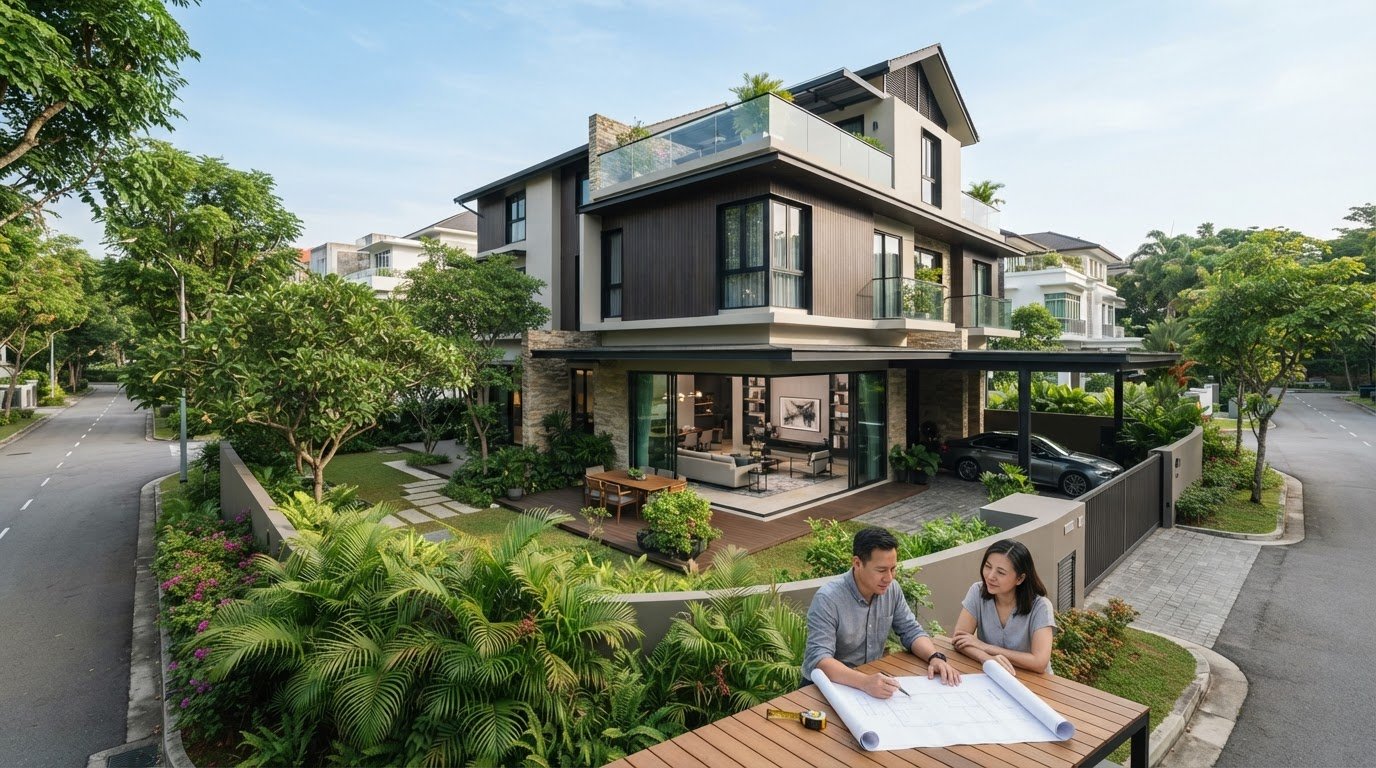
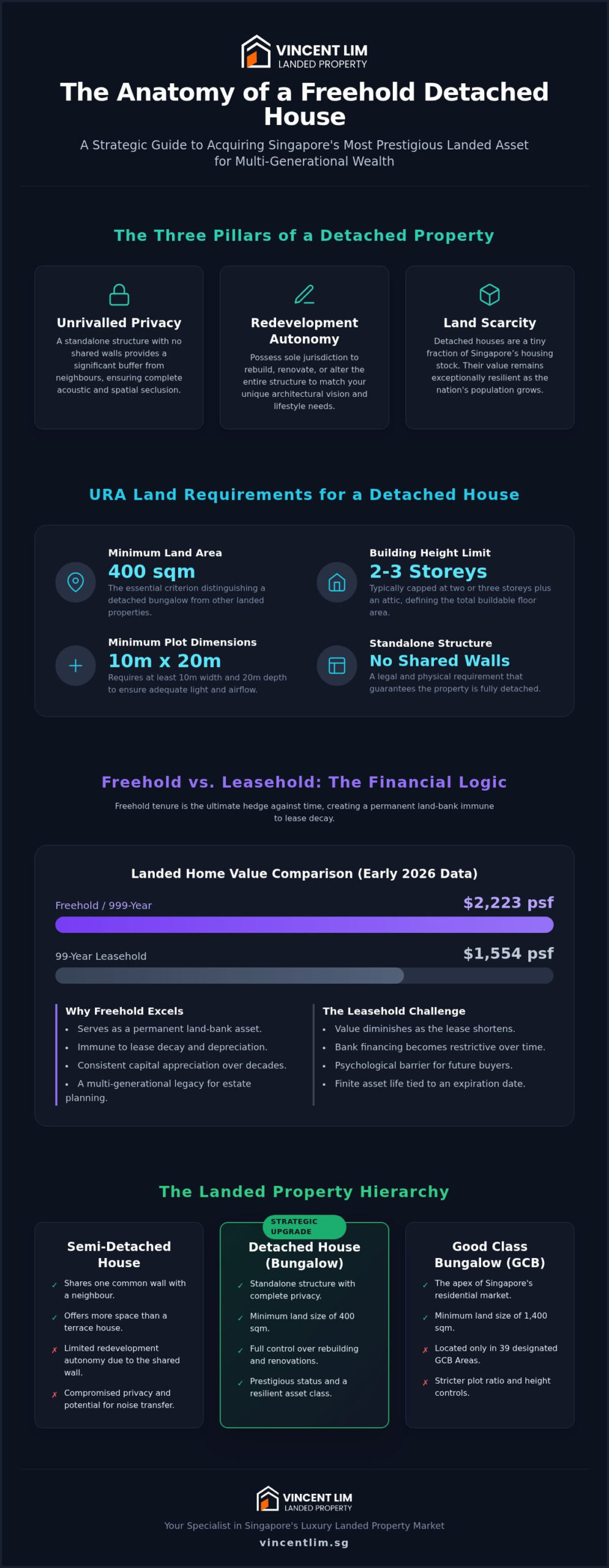
A detached house, commonly known as a bungalow in the local context, represents the pinnacle of residential Landed property ownership. Unlike semi-detached or terrace houses, a detached unit is a standalone structure with no shared walls. This physical separation is a legal requirement under Urban Redevelopment Authority (URA) regulations, which stipulate a minimum land area of 400 square metres for a property to qualify as a detached house. Owners often find that selling a detached house in singapore requires a nuanced understanding of these specific land classifications to attract the right tier of high-net-worth buyers.
While all Good Class Bungalows (GCBs) are detached houses, not all detached houses are GCBs. A GCB requires a minimum land size of 1,400 square metres and is subject to much stricter plot ratio and height controls. Standard detached houses offer a balance of prestige and flexibility, allowing for more intensive land usage while maintaining the elite status of a standalone estate. In a land-scarce city-state, freehold status remains the gold standard. It functions as a permanent land-bank that shields your wealth from the inevitable depreciation of leasehold assets. It’s the only way to ensure your legacy isn’t tied to a 99-year expiration date.
The Three Pillars of a Detached Property
- Unrivalled Privacy: You gain a significant buffer zone from neighbours, eliminating acoustic disturbances and the constraints of shared party walls.
- Redevelopment Autonomy: You possess the sole jurisdiction to rebuild or renovate the entire structure to match your specific architectural vision and lifestyle needs.
- Land Scarcity: Detached houses represent a tiny fraction of Singapore’s total housing stock. As the population grows, the value of a private, standalone land plot remains exceptionally resilient.
Understanding URA Planning Parameters
URA guidelines are designed to preserve the character and density of landed estates. They mandate minimum plot widths of 10 metres and depths of 20 metres for detached houses to ensure sufficient airflow and sunlight. These parameters are vital when you’re selling a detached house in singapore, as they define the “buildable” envelope of the land. Understanding building height limits, which usually cap structures at two or three storeys plus an attic, helps you visualize the total floor area possible. Consulting the URA Master Plan is a non-negotiable step in this process; it reveals future zoning changes that could either protect your privacy or enhance your land’s long-term valuation.
The Financial Logic of Freehold Tenure for Landed Assets
Freehold tenure represents more than just a title; it’s the ultimate hedge against time. In a city where most residential land is held on 99-year leases, owning a freehold plot ensures your asset remains immune to the lease decay that inevitably devalues aging properties. When you’re considering selling a detached house in singapore, the freehold status often becomes your strongest leverage point. It provides a permanent interest in the land, allowing for consistent capital appreciation that typically outpaces leasehold alternatives over a 20-year horizon. This permanence transforms a home into a multi-generational land-bank.
Leasehold vs. Freehold: The Long-Term Performance
The 99-year lease clock creates a psychological and financial barrier for future buyers. As a leasehold property ages, bank financing becomes increasingly restrictive, often requiring higher cash downpayments as the remaining lease drops below 60 years. In contrast, freehold detached houses maintained their value remarkably well in early 2026, with freehold and 999-year landed homes averaging $2,223 psf, significantly higher than the $1,554 psf average for 99-year leasehold properties. Upgrading to a freehold asset ensures your capital is anchored in a non-depreciating land-bank that facilitates seamless asset progression for your portfolio.
Wealth Preservation and Estate Planning
For family offices and high-net-worth individuals, a freehold detached house serves as a critical pillar in a diversified estate plan. It acts as a robust shield against inflation and currency fluctuations, providing a tangible asset that can be passed down through generations without the threat of lease expiry or the need for costly lease extensions. Developers and savvy investors prioritize these plots because they offer maximum redevelopment potential under URA’s development guidelines. This level of autonomy allows you to rebuild or refine the estate to meet the changing needs of your family over decades.
If you’re looking to optimize your property’s value before a transition, consulting a luxury landed specialist can provide the strategic clarity needed to navigate these high-stakes decisions. Ultimately, the logic is simple: while buildings age and styles change, the value of the land itself is eternal. When selling a detached house in singapore, emphasizing this permanent legacy is what distinguishes a routine transaction from a strategic wealth transfer.
Detached vs. Semi-Detached: Why Upgrading is a Strategic Move
Upgrading from a semi-detached home to a detached house is a calculated move toward absolute residential sovereignty. While both property types represent the upper echelon of Singapore’s housing market, the presence of a shared party wall in semi-detached homes introduces variables that are often beyond an owner’s control. When you’re selling a detached house in singapore, the primary value proposition is the absence of this shared boundary. It represents a transition from a shared structure to a truly standalone estate, offering a level of exclusivity that semi-detached units simply cannot replicate.
The “Detached” label serves as a powerful catalyst for resale demand. This prestige premium isn’t just about social standing; it’s a reflection of the asset’s scarcity. High-net-worth buyers often view detached houses as a distinct asset class, separate from the broader landed market. This psychological and financial gap ensures that detached houses often command a higher “per square foot” value on the secondary market, as the pool of buyers for these homes remains remarkably resilient even during broader economic shifts.
Comparing Privacy and Autonomy
The lack of a party wall eliminates the most common friction points in landed living, such as noise transmission and coordinated maintenance for shared roofing or drainage systems. Detached houses benefit from 360-degree ventilation and natural light, which drastically improves the interior living environment. This physical independence extends to the grounds of the property. You possess the total freedom to position a swimming pool, install extensive landscaping, or design a unique architectural facade without the need to mirror a neighboring twin unit or compromise a neighbor’s privacy.
Investment Potential and Resale Velocity
Investors and legacy planners prioritize detached plots because they offer the highest degree of redevelopment flexibility. Because the buyer pool for these assets is less sensitive to interest rate fluctuations than the mass-market segment, transaction prices tend to hold firm during volatility. If you’re currently in the process of selling a detached house in singapore, highlighting this jump in property tier is essential to capturing the interest of elite buyers. For those looking to enter this segment, finding a suitable detached house for sale singapore requires a specialist’s eye to identify plots with the best efficiency and long-term appreciation potential.
Key Considerations Before Acquiring a Freehold Detached House
Acquiring a freehold detached house requires a level of due diligence that far exceeds a standard residential purchase. You aren’t just buying a home; you’re acquiring a specific plot of land with unique regulatory constraints. Before committing, you must evaluate the URA Master Plan’s “Landed Housing Area” designation. This ensures the estate’s character remains protected from high-rise encroachment, securing your long-term privacy and asset value. Understanding what you can actually build is the first step in any elite acquisition strategy.
Setback requirements are another critical factor. URA mandates specific distances from the property boundary to the building wall, which can significantly reduce your effective buildable area on smaller or irregularly shaped plots. Additionally, topography and soil conditions play a major role in your final investment. Building on elevated or sloped land often incurs hidden costs for retaining walls and specialized piling, which can quickly inflate a construction budget. If you’re currently selling a detached house in singapore, these technical details are exactly what savvy buyers will scrutinize during their evaluation.
Technical Due Diligence for High-Value Plots
Identifying potential encumbrances like drainage reserves or road line plans is essential. These URA-mandated reserves can restrict where you can build, effectively “cutting” into your usable land. You should also consider the impact of neighboring developments. A large, unbuilt plot next door could eventually house a structure that compromises your views or privacy. Finally, evaluate the existing structure. Does it require a total rebuild, or can you achieve your goals through Additions and Alterations (A&A)? This decision hinges on the current building’s integrity and how well it aligns with modern luxury standards.
Financing and Tax Implications
The financial framework for a multi-million dollar detached house is complex. You must navigate the Total Debt Servicing Ratio (TDSR) to ensure your income supports the significant loan amounts required. As of August 2026, Singapore Citizens pay 0% Additional Buyer’s Stamp Duty (ABSD) on their first residential property, while the rate for a second property is 20%. Permanent Residents face 5% ABSD on their first purchase. These figures are vital when calculating your total entry cost. Foreigners face a much higher entry bar with a 60% ABSD rate and require SLA approval for landed purchases.
Strategic planning at this level often involves looking at asset progression to landed property singapore to optimize your capital. Whether you’re entering the market or selling a detached house in singapore to pivot into a Good Class Bungalow, professional guidance is indispensable. For a bespoke analysis of your property’s potential and a white-glove approach to your next transaction, consult with Vincent Lim to secure your legacy.
Partnering with a Landed Property Specialist for Your Acquisition
High-value transactions in the detached house segment demand a level of discretion and strategic foresight that goes beyond standard brokerage. When you’re selling a detached house in singapore, or looking to acquire one, you’re dealing with a finite asset class where market intelligence is often shielded from public view. A white-glove approach ensures your privacy is maintained while providing access to off-market opportunities that never reach public property portals. This exclusivity is vital for high-net-worth individuals who value both efficiency and confidentiality in their real estate dealings.
Navigating the luxury landed market isn’t just about matching a buyer to a seller. It’s about understanding the underlying land value and the long-term potential of the plot. A veteran strategist brings a depth of knowledge that covers the specific nuances of both the standard detached market and the elite Good Class Bungalow (GCB) segment. This specialized expertise is what allows for the identification of undervalued assets and the mitigation of risks that are unique to landed estates.
The Elite Strategist’s Advantage
Navigating negotiations with other high-net-worth sellers or institutional developers requires seasoned authority and a disciplined approach. Vincent Lim brings over 20 years of industry experience, having specialized in the luxury landed and Good Class Bungalow segments since 2004. This veteran perspective allows him to identify nuances in a deal that others might overlook, from subtle URA planning shifts to the psychological drivers of a counterparty. By acting as an elite strategist, he provides a tailored roadmap that aligns your property acquisition with long-term wealth preservation and legacy goals.
Securing Your Multi-Generational Asset
The acquisition of a multi-generational home involves more than just a title transfer. It requires the seamless coordination of a professional ecosystem, including architects for redevelopment feasibility, lawyers for complex conveyancing, and bankers for bespoke financing structures. Vincent Lim’s methodology is rooted in meticulous planning and a commitment to maintaining a gold standard in luxury real estate service. He ensures every phase of the transaction is handled with integrity and transparency, alleviating the stress typically associated with high-stakes property movements.
Whether you’re currently selling a detached house in singapore to refine your portfolio or seeking to secure a permanent family seat, the right partnership makes the difference between a simple purchase and a strategic investment. Accessing the right intelligence at the right time is the hallmark of a successful legacy plan. Consult with Vincent Lim today for a bespoke detached house acquisition strategy that prioritizes your family’s future and secures your position in Singapore’s most resilient asset class.
Securing Your Permanent Legacy in Singapore’s Landed Market
Owning a freehold detached house in Singapore is more than a lifestyle choice; it’s a strategic commitment to long-term wealth preservation. By understanding the URA technical parameters and the inherent value of freehold tenure, you position your family to benefit from an asset class that remains remarkably resilient. We’ve explored how the absolute autonomy of a standalone plot outmatches the constraints of semi-detached living and why rigorous due diligence is non-negotiable for high-stakes acquisitions.
Whether you’re currently selling a detached house in singapore to refine your property portfolio or seeking to secure a new multi-generational estate, success depends on the caliber of your strategy. Partnering with a specialist who understands the subtle nuances of the GCB and luxury landed segments ensures every move is calculated and every off-market opportunity is captured.
As an Executive Associate Director at OrangeTee & Tie, Vincent Lim brings over 20 years of industry experience since 2004 to every transaction. He is a dedicated specialist in Good Class Bungalows and detached houses, offering the white-glove service and elite strategic guidance your legacy deserves. Secure Your Legacy: Consult Singapore’s Landed Property Specialist Vincent Lim today to navigate the market with absolute confidence. Your permanent land-bank asset is within reach.
Frequently Asked Questions
Can a foreigner buy a freehold detached house in Singapore?
Foreigners are generally restricted from purchasing landed property under the Residential Property Act. They must seek individual approval from the Land Dealings Approval Unit (LDAU) of the Singapore Land Authority. Approval is typically reserved for those who make a significant economic contribution to the nation. Additionally, as of August 2026, foreigners face a 60% Additional Buyer’s Stamp Duty (ABSD), making this a high-barrier acquisition primarily for committed long-term residents.
What is the minimum land size required for a detached house?
The Urban Redevelopment Authority (URA) stipulates a minimum plot size of 400 square metres for a property to be classified as a detached house or bungalow. This ensures sufficient space for mandated setbacks and adequate ventilation between neighbouring estates. When selling a detached house in singapore, verifying the exact land area is crucial. If the plot size is below this 400sqm threshold, the property might be reclassified as a semi-detached or terrace house.
Is it better to buy an old detached house to rebuild or a brand new one?
Buying an older detached house provides the opportunity for complete architectural customization through a total rebuild, which often maximizes the land’s long-term value. This path is ideal for legacy planning. Conversely, a brand-new house offers the convenience of immediate occupancy and modern building warranties. Your choice should depend on your personal timeline and whether you prefer the autonomy of a bespoke design or the efficiency of a turn-key luxury residence.
How does a detached house differ from a Good Class Bungalow (GCB)?
A standard detached house requires a minimum land area of 400 square metres, while a Good Class Bungalow (GCB) must occupy at least 1,400 square metres. GCBs are also restricted to 39 specific gazetted areas and must adhere to more stringent building height and site coverage limits. While both offer standalone privacy, GCBs represent a much rarer and more exclusive tier of the Singapore property market due to their massive land requirements.
What are the main costs involved in maintaining a detached property?
Maintenance costs include progressive property tax rates, which for owner-occupied properties can reach up to 32% for those with high Annual Values. Owners must also account for private landscaping, swimming pool filtration, and general structural upkeep. Unlike condominiums with fixed monthly maintenance fees, detached house owners have full control over their service providers but carry the sole responsibility for all utility and repair expenses associated with their standalone estate.
How can I check the redevelopment potential of a freehold detached house?
You can evaluate redevelopment potential by reviewing the URA Master Plan to confirm zoning and permissible building heights. It’s essential to check for road line plans or drainage reserves that could restrict your buildable area. Professional guidance is often necessary to interpret how mandated setbacks and plot ratios affect the final floor area. Experts who specialize in selling a detached house in singapore can provide a technical analysis of these regulatory constraints.
Why are freehold detached houses considered a safer investment than condos?
Freehold detached houses represent a finite supply of land in a market with high sustained demand. Unlike condominiums, which eventually face lease decay or collective sale pressures, freehold land acts as a permanent asset that preserves wealth across generations. Landed property prices increased by 2.5% in the second quarter of 2026, showing resilience against market volatility. This scarcity ensures that your capital is anchored in a tangible, high-value asset that historically outperforms leasehold counterparts.
What should I look for in a landed property agent when buying a detached home?
Prioritise an agent with a proven track record in the luxury landed segment and a deep understanding of URA redevelopment guidelines. A qualified specialist should act as a strategic advisor rather than a mere facilitator, providing access to off-market inventory that isn’t publicly listed. Ensure they possess the “white-glove” professionalism required for high-stakes transactions and can coordinate a network of architects, bankers, and legal experts to streamline your acquisition process.