In Singapore’s hyper-competitive real estate hierarchy, a detached house represents significant success, yet a Good Class Bungalow (GCB) represents something entirely different: absolute sovereignty over land that can never be replicated. You likely understand that while both assets sit at the top of the market, the distinction between a standard detached house vs gcb singapore isn’t merely a matter of scale. It’s a complex interplay of Urban Redevelopment Authority (URA) gazetted zones, rigid conservation rules, and a scarcity value that has pushed average land rates to S$2,341 per square foot in 2026.
We recognize the confusion that often arises when navigating the 39 designated GCB areas and the anxiety regarding strict site coverage limits. This analysis serves as your strategic roadmap to mastering the technical, regulatory, and investment nuances of these elite assets. You’ll gain a clear understanding of the 1,400 square meter plot size requirement, the 40% site coverage cap, and how to quantify the prestige premium of GCB status. We’ll provide the clarity needed to execute a legacy-defining acquisition with the precision of a seasoned strategist, ensuring your capital is anchored in Singapore’s most resilient asset class.
Key Takeaways
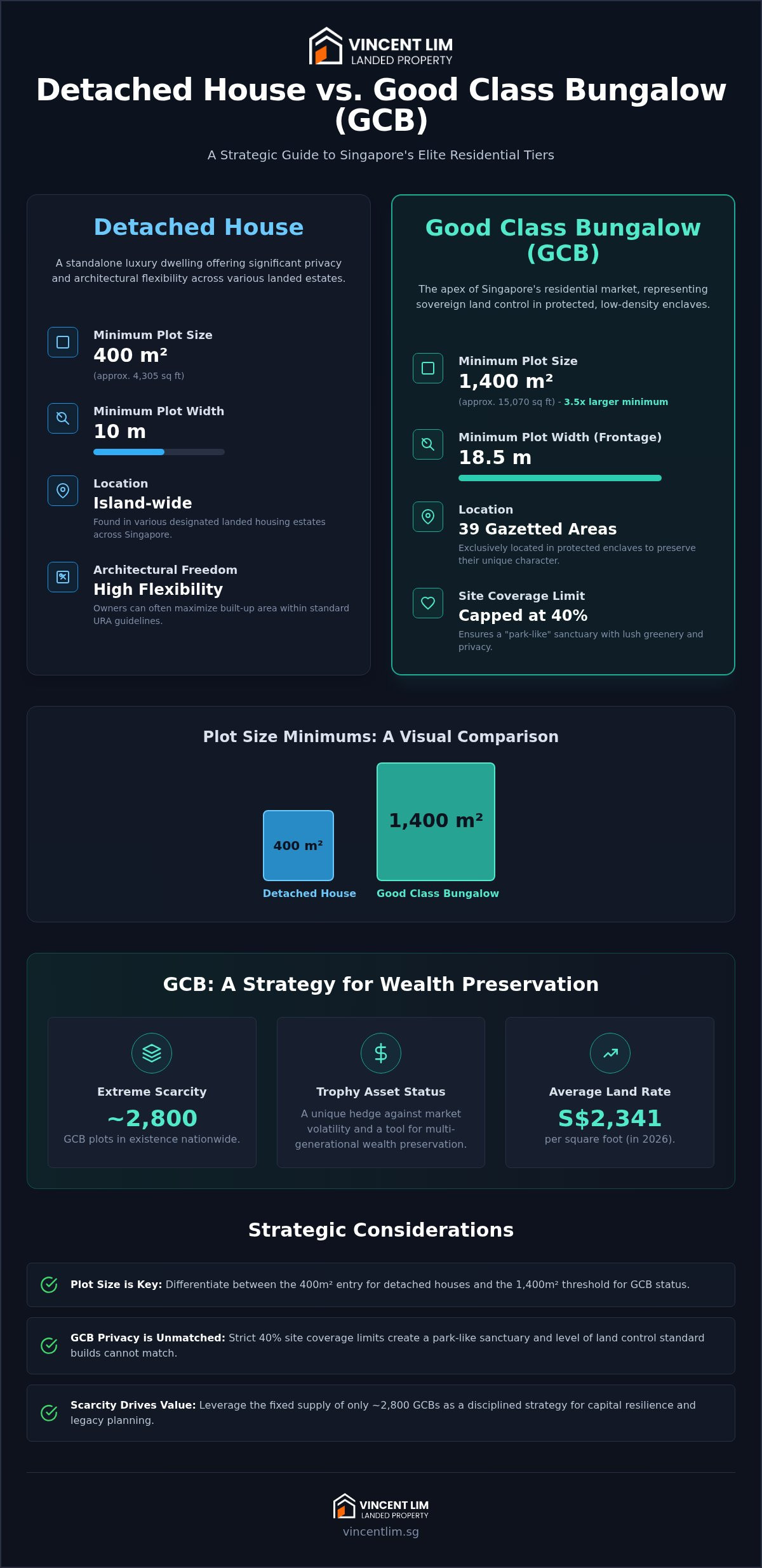
- Distinguish between the 400sqm entry point for detached houses and the 1,400sqm threshold required for prestigious Good Class Bungalow status.
- Analyze the investment potential of a detached house vs gcb singapore by examining the plot widths and URA setback regulations that dictate your architectural freedom.
- GCB site coverage limits create a park-like sanctuary, providing a level of privacy and land control that standard builds simply cannot match.
- Leverage the scarcity of only 2,800 GCB plots nationwide as a disciplined strategy for multi-generational wealth preservation and capital resilience.
- Master the due diligence process for high-stakes landed transactions, from interpreting Road Line Drawings to accessing exclusive off-market opportunities.
Defining the Tiers of Standalone Luxury: Detached vs GCB
In Singapore’s land-scarce environment, standalone property represents the pinnacle of residential ownership. The distinction in a detached house vs gcb singapore comparison isn’t merely about land size; it’s a matter of regulatory classification and zoning exclusivity. These tiers are strictly governed by the Urban Redevelopment Authority (URA) to maintain the low-density character of Singapore’s most coveted residential enclaves. Understanding these classifications is essential for any high-net-worth individual considering an asset progression to landed property singapore. This strategic move requires a deep dive into how these property classes function as both a home and a wealth preservation tool.
The Standard Detached House (Bungalow)
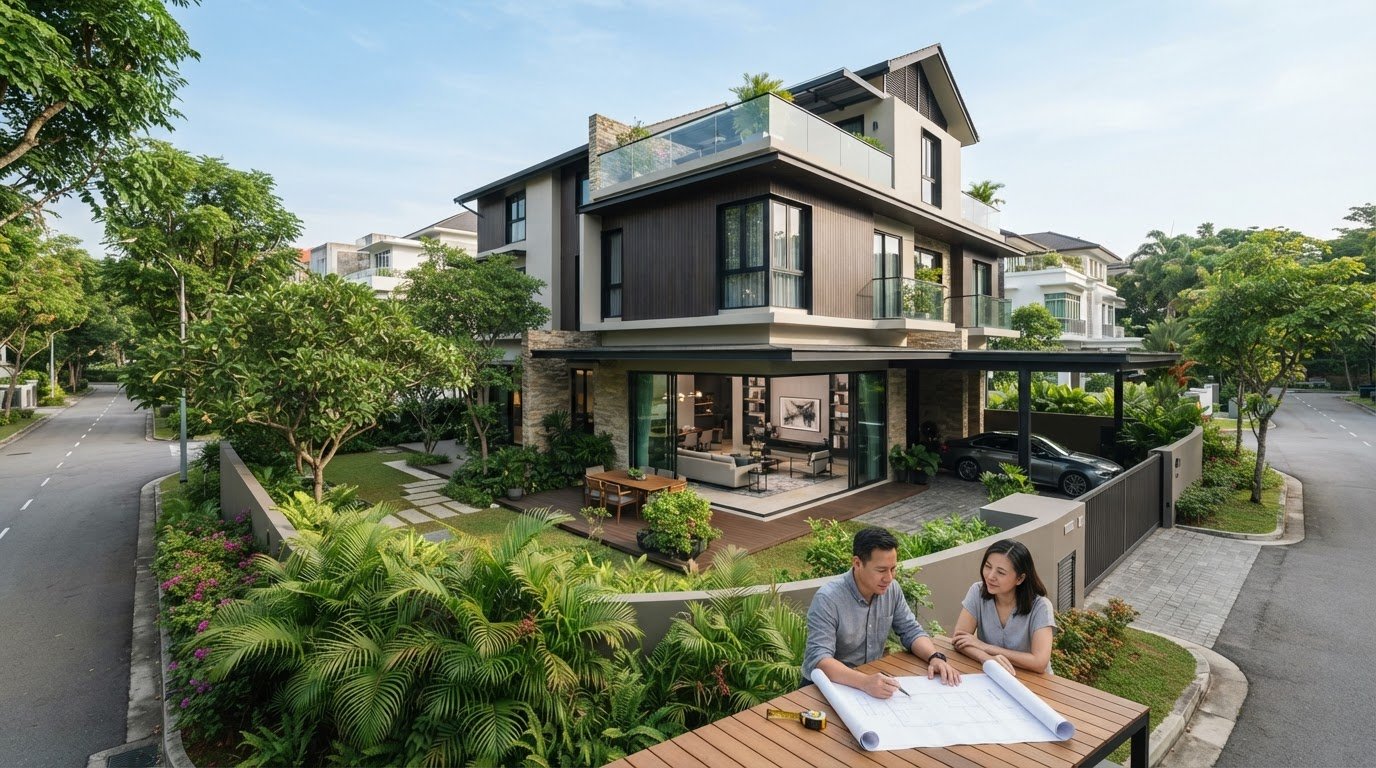
A standard detached house, or bungalow, is defined as a standalone dwelling that shares no common walls with neighboring properties. To qualify for this status, the land must meet a minimum area of 400 square meters. This independence allows for windows and ventilation on all four sides of the structure. It provides a level of privacy that semi-detached or terrace houses can’t match. These homes are located throughout various landed estates across the island, from established suburban areas to prime districts. They offer owners significant architectural flexibility. Because they aren’t bound by GCB-specific conservation rules, owners can often maximize the built-up area within URA guidelines to suit modern lifestyle needs.
The GCB: Singapore’s Most Exclusive Asset Class
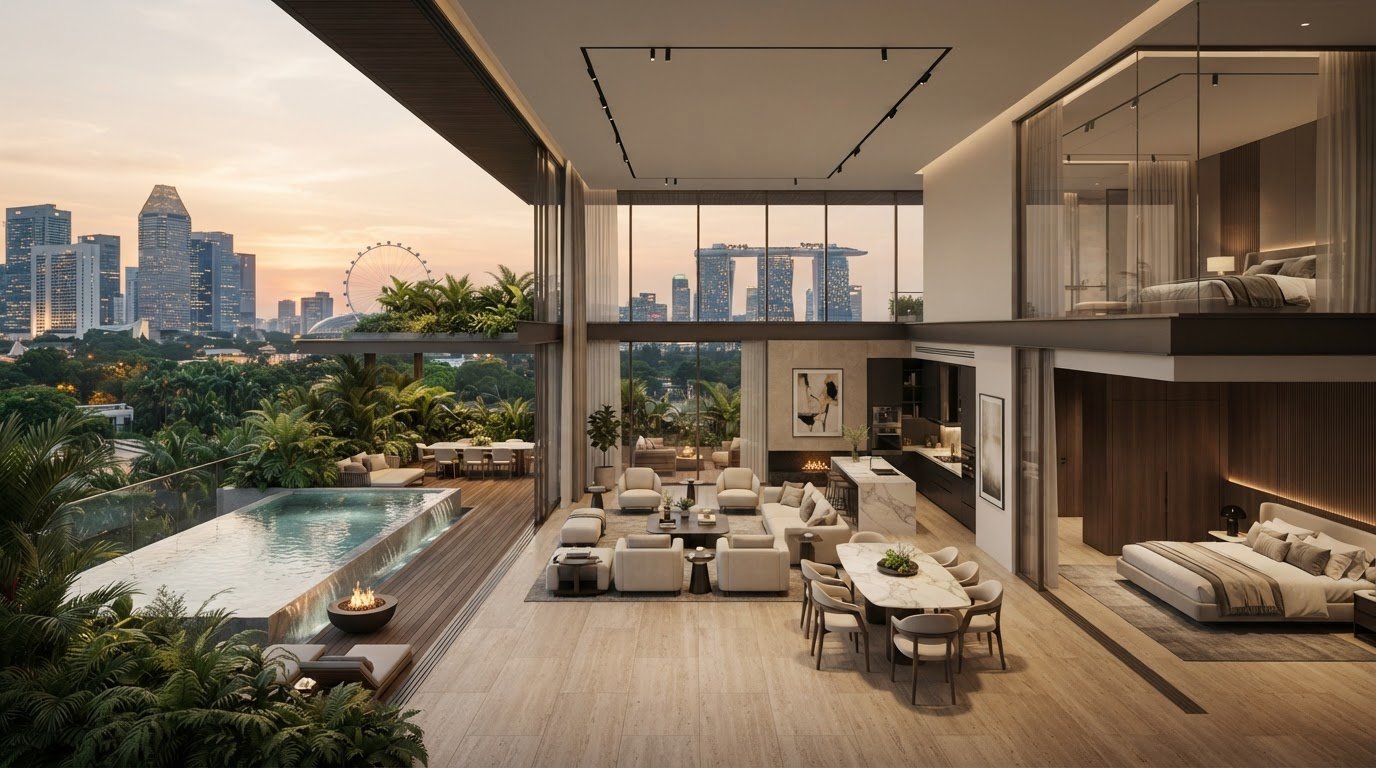
The Good Class Bungalow (GCB) is the most prestigious residential tier in the country. To carry the GCB designation, a property must have a minimum land area of 1,400 square meters and be situated within one of the URA’s 39 gazetted areas. These enclaves are protected to preserve the architectural heritage of Singapore’s landed properties. Owners face strict site coverage limits, often capped at 40%. This ensures that the built structure remains secondary to the lush greenery of the site. It creates a “forest-like” environment that is unique to these specific zones.
With only approximately 2,800 GCB plots in existence, these are true trophy assets. Demand consistently outstrips supply, especially as the number of Singaporean ultra-high-net-worth individuals grows. While a standard detached house is a luxury, a GCB is a statement of sovereign land control. When evaluating the investment potential of a detached house vs gcb singapore, the fixed supply of GCBs provides a unique hedge against market volatility. These properties are rarely traded, often staying within families for generations as part of a sophisticated legacy planning strategy.
Technical Specifications: Plot Sizes and URA Setback Regulations
The technical distinctions in a detached house vs gcb singapore comparison are governed by strict URA mandates. These aren’t just arbitrary numbers; they define the property’s architectural potential and long-term valuation. A standard detached house requires a minimum land area of 400 square meters. In contrast, a GCB must sit on at least 1,400 square meters of land. This 3.5-fold increase in minimum plot size is a significant barrier to entry. The property must also be located within one of the 39 designated GCB areas to carry the title, ensuring that the “Good Class” status remains a protected and finite asset class.
Plot Dimensions and Frontage
Minimum plot width is a critical metric for discerning buyers. A standard detached house needs a width of at least 10 meters. A GCB requires a minimum frontage of 18.5 meters. This extra width is what enables the “grandeur” associated with elite estates. It allows for a majestic entrance and a car porch that can often accommodate 10 or more vehicles. In comparison, a standard bungalow might be limited to two or four cars. Wider frontage also offers greater flexibility for architectural statements and long, private driveways that enhance the sense of arrival and seclusion from the street.
Setbacks and Site Coverage Limits
URA setback regulations dictate how far a building must be from its boundary walls. While detached houses have standard setbacks that allow for perimeter gardens, GCBs are subject to much deeper requirements. These buffers create a “forest-like” environment that shields the home from neighbors. Most crucially, GCBs are limited to a maximum site coverage of 40%. This means 60% of the land must remain unbuilt, dedicated to landscaping, swimming pools, or open space. Standard detached houses are typically allowed up to 50% site coverage. The GCB rule ensures that the house remains a centerpiece within a private park, rather than a structure that dominates the plot.
Navigating these technicalities requires a disciplined approach to site selection. If you’re looking to identify a plot with optimal redevelopment potential, consulting with a specialist in high-value landed transactions can provide the clarity needed to secure a superior asset. Understanding these constraints early in the search process helps you avoid properties with restrictive easements or drainage reserves that could hamper your architectural vision.
Lifestyle and Architectural Freedom: The Practical Reality
Choosing between a detached house vs gcb singapore involves more than just calculating square footage; it’s about the daily experience of space and sound. Standard detached homes are often designed for maximum efficiency. While they offer standalone status, they can occasionally feel “boxed in” if neighboring properties are built to their maximum envelopes. In contrast, a GCB functions as a 360-degree sanctuary. The building is positioned as the centerpiece of a private park, allowing for a lifestyle that prioritizes horizontal sprawl and the seamless integration of nature with the structure.
Privacy and Acoustic Buffering
The psychological impact of the “GCB Buffer” is profound. In these enclaves, the primary acoustic backdrop consists of birds and rustling leaves rather than the sounds of neighboring households. This level of seclusion is a direct result of the deep setbacks and lower site coverage required by law. Owners of standard detached houses often employ clever vertical landscaping and strategic window placement to mimic this privacy. However, the sheer distance provided by a GCB plot creates a natural acoustic barrier that architectural tricks cannot fully replicate. For those seeking standalone luxury with high efficiency, exploring a detached house for sale singapore remains a highly strategic move for urban connectivity.
Design Flexibility and Building Height
A key architectural distinction lies in verticality. GCBs are generally capped at two storeys to preserve the low-rise, lush character of their 39 designated areas. This restriction forces architects to focus on horizontal flow and the creative use of courtyards. Conversely, standard detached houses frequently go up to three storeys plus an attic. This allows owners to maximize Gross Floor Area (GFA) on plots that are smaller than the GCB threshold. The trade-off is clear: GCBs prioritize “sprawl” and a deep connection to the ground level, while detached houses offer vertical density. This verticality is often ideal for multi-generational families who require more rooms within a 400sqm to 800sqm footprint.
Ultimately, the decision rests on your preference for sovereign land control versus functional built-up space. While a GCB offers an unmatched “trophy” lifestyle, the modern detached house provides a disciplined approach to luxury living in Singapore’s prime districts. Both assets serve as excellent vehicles for wealth preservation, provided the acquisition is handled with a clear understanding of URA’s long-term zoning intentions.
Financial Performance and Scarcity as a Wealth Strategy
In the context of a detached house vs gcb singapore investment, scarcity is the primary driver of long-term value. While standard detached houses offer higher resale liquidity due to a more accessible price point and a larger buyer pool, GCBs function as a “wealth bunker.” With approximately 2,800 plots nationwide, the supply is effectively finite. This absolute scarcity ensures that GCBs remain resilient even during broader economic volatility. Understanding the precise what is a good class bungalow definition is essential for accurate valuation, as the designation alone carries a significant prestige premium that transcends simple land size.
The liquidity profile of these two assets is a study in contrasts. A standard detached house, typically priced between S$10 million and S$25 million, attracts a broader segment of affluent buyers. This leads to more frequent transactions and a clearer exit strategy for many investors. GCBs, however, are often held for decades. Their value is protected by an exclusive entry barrier that limits ownership to a very small percentage of the population. In 2026, this scarcity has made GCBs a preferred hedge against global inflation, as they operate in a market segment largely insulated from standard interest rate cycles.
Capital Appreciation Trends
Historical data consistently shows GCBs outperforming the broader landed market in terms of capital preservation. In the second quarter of 2026, average land rates for GCBs rose to S$2,341 per square foot, a significant increase from the S$1,803 psf recorded in the first quarter. Total GCB transactions in the first half of 2026 reached S$304 million across 10 caveated deals. These figures demonstrate that for ultra-high-net-worth individuals, the price is often secondary to the asset’s rarity. Standard detached houses also showed remarkable resilience in 2026, though their price growth tends to follow broader residential market trends more closely than the elite GCB tier.
Legacy Planning and Intergenerational Wealth
Most GCBs and prime detached houses feature freehold tenure, making them the ultimate vehicle for intergenerational wealth. These aren’t just residences; they’re “forever homes” that anchor a family’s legacy for generations. The redevelopment potential is a critical component of this wealth strategy. An older GCB on a large plot can be transformed into a modern architectural marvel, significantly increasing its capital value for the next generation. This ability to refresh the asset while retaining sovereign land control is why elite investors view these properties as non-negotiable components of a sophisticated estate plan.
Securing an asset of this caliber requires more than just capital; it requires a disciplined strategy to identify off-market opportunities before they reach the public eye. To begin your search for an elite residence, you can consult with a specialist in high-value landed transactions to ensure your acquisition aligns with your long-term legacy goals.
Navigating the Acquisition: The Strategic Advantage of Expert Guidance
Acquiring an elite residence is a multi-layered process that extends far beyond the initial viewing. In the nuanced detached house vs gcb singapore market, the most significant risks often lie beneath the surface or within complex legal documents. A disciplined strategist doesn’t just look at the facade; they analyze the property’s technical DNA to ensure it aligns with a long-term wealth preservation goal. Expert representation is non-negotiable for navigating the off-market world of GCBs, where many of the most prestigious transactions occur privately to maintain absolute discretion for both parties.
Technical Due Diligence in High-Quantum Deals
Meticulous planning begins with a thorough examination of Road Line Drawings (RLD) and drainage reserves. These government easements can significantly reduce the buildable footprint of a 400sqm detached plot or even a 1,400sqm GCB site. When evaluating a detached house vs gcb singapore for redevelopment, we verify unbuildable areas caused by specific soil conditions or subterranean infrastructure. Assessing the true potential requires an intimate understanding of the 2026 URA envelope control guidelines. These regulations dictate the three-dimensional space your future home can occupy. Misinterpreting them leads to costly delays or forced design compromises.
The Vincent Lim Bespoke Service
With over two decades of experience since 2004, I provide a white-glove approach to transaction management that prioritizes your peace of mind. My role as an Executive Associate Director at OrangeTee & Tie is to act as your Trusted Guide, identifying hidden gem properties that never reach public listings. This bespoke service coordinates every aspect of the acquisition, from coordinating with legal experts to refining the search based on your specific lifestyle requirements. We maintain a gold standard of transparency. You’ll have a clear, calculated view of every property’s strengths and limitations before capital is committed.
Whether you’re securing a legacy home or planning to sell my landed property singapore, having an elite strategist by your side ensures your portfolio remains resilient. We don’t just facilitate sales. We coordinate complex transitions that protect your capital and enhance your standing in Singapore’s most exclusive real estate tier. Success in this segment is the result of methodical planning and unwavering attention to detail.
Securing Your Legacy in Singapore’s Premier Landed Tier
The choice between a detached house vs gcb singapore is a defining moment for any sophisticated portfolio. You’ve seen that while a standard detached house offers superior liquidity and vertical flexibility, the Good Class Bungalow remains the ultimate wealth bunker due to its absolute scarcity. Success in this elite segment requires more than just capital; it demands a meticulous understanding of URA setbacks and a disciplined approach to technical due diligence.
Navigating these high-quantum transactions is a complex journey where off-market access and regulatory foresight are your greatest assets. As an Executive Associate Director at OrangeTee & Tie with over two decades of experience since 2004, I specialize in identifying these rare opportunities and coordinating seamless acquisitions. My white-glove approach ensures your interests are protected at every stage of the process.
Consult with Vincent Lim for a bespoke luxury landed property strategy to secure your legacy in Singapore’s most exclusive residential tier. Your path to sovereign land control begins with a single, calculated step.
Frequently Asked Questions
What is the main difference between a detached house and a GCB?
The primary distinction isn’t just land size but regulatory classification. A detached house requires a minimum of 400sqm and can be located in various landed estates. A GCB must occupy at least 1,400sqm and sit within one of the 39 gazetted GCB areas. This specific zoning ensures that GCBs remain the most exclusive tier of residential property in Singapore, offering a level of prestige that a standard bungalow cannot match.
Can any large bungalow be classified as a Good Class Bungalow?
A large land size alone does not grant a property GCB status. To be classified as a Good Class Bungalow, the plot must meet the 1,400sqm minimum and be located within one of the 39 gazetted areas. For example, a 5,000sqm bungalow located outside these protected zones is technically just a detached house. This geographical restriction is what creates the enclave effect and preserves the long-term value of the GCB asset class.
Why are GCBs only found in specific designated areas?
The URA designated 39 specific areas to preserve the unique low-rise, high-greenery character of Singapore’s historical residential enclaves. These zones act as the city’s green lungs, protected from the density of high-rise developments. By limiting GCBs to these areas, the government maintains a specific architectural heritage. It ensures that the most prestigious landed homes remain in environments that prioritize privacy, tranquility, and significant landscape integration that standard landed estates can’t replicate.
What is the minimum land size required for a GCB in 2026?
In 2026, the minimum land size for a GCB remains 1,400 square meters, which is approximately 15,070 square feet. This threshold is a non-negotiable requirement set by the URA. When comparing a detached house vs gcb singapore, this significant land requirement creates a high barrier to entry. It ensures that every GCB plot provides ample space for the deep setbacks and lush greenery that define these elite enclaves.
Can a foreigner buy a detached house or GCB in Singapore?
GCB ownership is reserved exclusively for Singapore Citizens. Foreigners and Permanent Residents don’t usually qualify to purchase these trophy assets, with rare exceptions requiring Land Dealings Approval Unit (LDAU) consent. For standard detached houses outside GCB zones, foreigners may apply for LDAU approval, though they face a 60% Additional Buyer’s Stamp Duty (ABSD) in 2026. This residency restriction contributes to the market’s resilience by ensuring the asset class is driven by local wealth.
Are GCBs limited in building height?
Yes, GCBs are generally restricted to a maximum of two storeys. This height limit is a critical component of URA’s strategy to maintain the low-density and low-rise profile of gazetted enclaves. Standard detached houses often have more vertical flexibility, with many reaching three storeys plus an attic. While this allows for more built-up rooms on smaller plots, the GCB restriction ensures that the estate maintains a sense of horizontal sprawl and openness.
How does site coverage affect the design of a GCB?
Site coverage for GCBs is strictly capped at 40%, meaning 60% of the land must remain unbuilt open space. This regulation forces a design philosophy that integrates the house with its natural surroundings. It prevents the massive footprint look common in standard detached houses, which can have up to 50% coverage. This rule ensures that every GCB maintains the lush atmosphere that justifies its prestige premium and protects the enclave’s unique low-density character.
What is the resale liquidity of a GCB compared to a standard detached house?
Standard detached houses offer higher resale liquidity due to a larger pool of affluent buyers, often transacting between S$10 million and S$25 million. GCBs have a much narrower buyer base because of their high entry price and citizenship restrictions. When comparing a detached house vs gcb singapore, the bungalow is a more liquid asset. However, the GCB’s extreme scarcity makes it a more resilient store of value during market downturns.