With the average land rate for Good Class Bungalows surging to approximately S$2,341 per square foot in the second quarter of 2026, the stakes for divestment have reached an unprecedented level. For a GCB owner, mastering how to sell a gcb in singapore is no longer just about listing a property; it’s about navigating a volatile market where a handful of transactions can reset the price floor for an entire asset class. You likely understand that your home is a rare, gazetted trophy that requires a level of precision and discretion that standard residential marketing cannot provide.
It’s natural to feel concerned about maintaining total privacy while trying to identify the exclusive pool of qualified Singaporean citizens capable of such an acquisition. This article provides a comprehensive, strategic framework designed to help you manage the complexities of URA planning constraints and high-stakes negotiations with absolute confidence. We will examine the technical nuances of the 40% site coverage limit, the impact of the four-year Seller’s Stamp Duty period, and the exact methodology required to secure a maximized valuation while minimizing market noise.
Key Takeaways
- Understand why the extreme scarcity of approximately 2,800 plots ensures your GCB remains a resilient store of value and a significant legacy asset in 2026.
- Learn how technical factors, such as land frontage and URA site coverage limits, are strategically leveraged to establish an accurate and competitive valuation.
- Discover the specific methodologies of how to sell a gcb in singapore through a “Quiet Sale” to protect your privacy while engaging only pre-qualified, high-net-worth buyers.
- Navigate the complexities of the transaction process, from vetting mandatory Singapore Citizen eligibility to managing the legal nuances of the Option to Purchase.
- Align your divestment strategy with long-term wealth preservation goals by partnering with a specialist who brings over two decades of seasoned authority in the luxury landed market.
Understanding the GCB Asset Class: Scarcity and Value in 2026
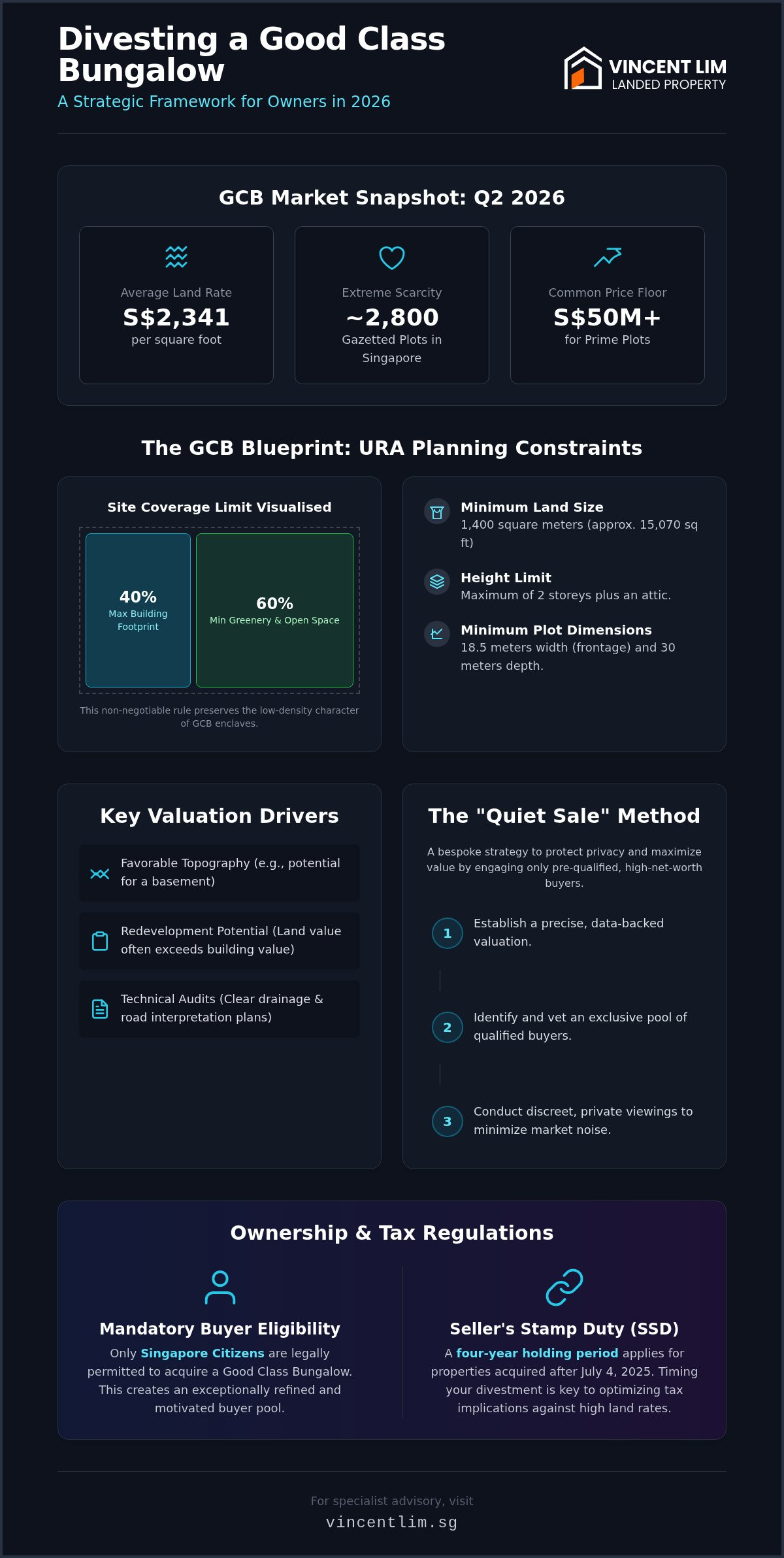
Good Class Bungalows represent the absolute pinnacle of Singapore’s residential hierarchy. These aren’t merely large homes; they’re gazetted assets protected by stringent land-use policies that ensure their enduring prestige. With only approximately 2,800 GCB plots spread across 39 designated areas, the scarcity is absolute. As of the second quarter of 2026, the market has seen a significant reset, with average land rates climbing to S$2,341 per square foot. This valuation reflects a sharp rebound from the start of the year, signaling that the S$50 million threshold is now a common price floor for prime plots. For owners, understanding Good Class Bungalows and their unique regulatory environment is the first step in a successful divestment strategy.
The 2026 market sentiment remains resilient despite low transaction volumes. Strategic owners often ask how to sell a gcb in singapore while preserving the asset’s inherent premium. The answer lies in recognizing that you aren’t just selling a building; you’re selling a finite piece of Singapore’s history. Because only Singapore Citizens are eligible to acquire these properties, the buyer pool is exceptionally refined and motivated by wealth preservation rather than speculative gains.
URA Planning Constraints and Their Impact on Value
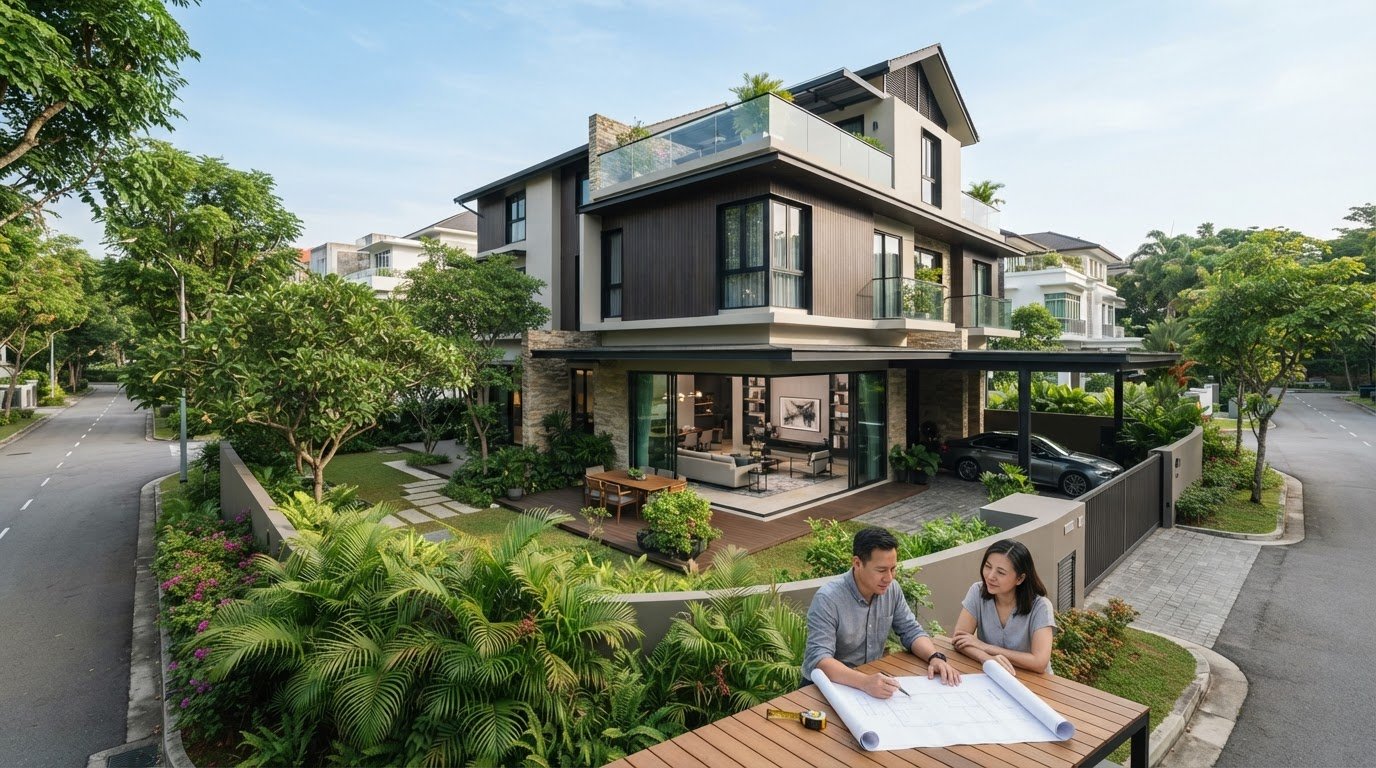
Exclusivity in the GCB market is maintained through non-negotiable planning parameters set by the Urban Redevelopment Authority (URA). The most significant constraint is the 40% site coverage limit. This rule ensures that at least 60% of the land remains dedicated to greenery and open space, preserving the low-density character of these elite enclaves. Additionally, GCBs must adhere to a height limit of two storeys plus an attic. Precision in valuation often hinges on whether a plot meets the minimum width of 18.5 meters and a depth of 30 meters. Plots that exceed these benchmarks often command a higher premium because they allow for more flexible architectural designs within the 1,400 square meter minimum land requirement.
The Legacy Perspective: Why Sell Now?
Many ultra-high-net-worth families are currently reevaluating their portfolios to favor liquidity and legacy planning. In the 2026 economic climate, transitioning from a large physical asset to a more liquid capital structure can provide greater agility for multi-generational wealth distribution. Timing is also influenced by the Seller’s Stamp Duty (SSD) regulations; for properties acquired after July 4, 2025, a four-year holding period applies. Identifying the optimal market window involves balancing these tax implications against the current high land rates. When you decide how to sell a gcb in singapore, you’re making a calculated move to secure a high-value exit that serves your family’s long-term financial objectives.
Preparing the Asset: Valuation and Technical Compliance
When determining how to sell a gcb in singapore, the valuation process must go beyond simple land-rate comparisons. An accurate appraisal requires a fusion of machine learning data and seasoned human expertise to account for the unique characteristics of your plot. Factors such as land dimension and frontage play a pivotal role in price discovery. A wide frontage exceeding the 18.5-meter benchmark often commands a premium because it allows for a more commanding architectural presence. You must also consider legal requisitions early; ensuring that drainage and road interpretation plans are transparent prevents unforeseen delays during the due diligence phase of the transaction.
Identifying the redevelopment potential is often where the most significant value is captured. In many cases, a GCB’s land is worth more than the structure sitting upon it. By assessing whether the property serves best as a “move-in” luxury residence or a prime redevelopment plot, you can tailor your asking price to the specific motivations of UHNW buyers. This strategic positioning ensures you don’t undersell a rare asset that holds significant potential for a complete architectural reset.
Maximising Land Value through Technical Audits
A technical audit identifies if your plot has “hidden” value, such as a favorable topography that allows for a basement or an elevated foundation without exceeding the 40% site coverage limit. Understanding these nuances is essential for a property valuation for landed house that reflects the true potential of the site. I recommend conducting a thorough check on the building footprint to ensure all existing structures comply with URA parameters. This proactive approach provides prospective buyers with the confidence they need to move forward with a high-stakes offer.
The Condition of the Property: To Renovate or Not?
Deciding whether to renovate depends largely on the current market appetite. While recent GCB market activity suggests that some buyers prefer the “trophy” status of a brand-new build, others value the architectural pedigree of a well-maintained legacy home. If the house has a celebrated designer’s touch, it may command a resale premium that outweighs the value of the land alone. For properties that aren’t quite “move-in ready,” strategic minor repairs to the facade or landscaping can yield a significant return on investment. If you’re unsure about the best path forward, a consultation with Vincent Lim can help determine which preparation strategy will maximize your final sale price.
Strategic Marketing: Discretion and Targeted Outreach
Selling an asset of this magnitude requires a departure from standard real estate tactics. Mass-market portals are often unsuitable for owners who value privacy and wish to avoid unnecessary market noise. When deciding how to sell a gcb in singapore, the first strategic choice is between an open market listing and a “Quiet Sale.” A quiet sale allows for total discretion, ensuring that only a curated list of qualified Singapore Citizen buyers gains access to the property details. This approach maintains the property’s aura of exclusivity and protects the seller from the scrutiny often associated with high-profile divestments.
Even in a private sale, the presentation must be flawless. High-production digital assets, such as 3D virtual tours and cinematic films, allow prospects to appreciate the estate’s scale before a physical viewing. These films don’t just show the rooms; they capture the atmosphere of the estate at different times of day, highlighting the interplay of light and greenery. Because GCBs are often purchased as legacy homes, luxury home staging services are non-negotiable. Staging transforms a vast, empty space into a tangible vision of elite living, helping buyers visualize how multi-generational suites or private art galleries will function within the home’s layout.
The Power of Off-Market Networks
Finding the right buyer often happens behind closed doors. Leveraging elite agent circles is essential to identifying “silent” buyers who aren’t actively browsing public listings but are ready to move for the right plot. Every prospect must be rigorously vetted to ensure they meet the strict criteria of being a Singapore Citizen, as mandated by Urban Redevelopment Authority (URA) guidelines. The role of a landed property specialist is to act as a strategic gatekeeper. This includes managing NDA-protected viewings and ensuring that only genuinely qualified individuals enter your private sanctuary, thereby maintaining the highest standards of security and confidentiality.
Bespoke Positioning for UHNW Buyers
Marketing a GCB isn’t just about land size; it’s about the narrative of prestige. We position the property by highlighting bespoke features that appeal specifically to UHNW lifestyles, such as temperature-controlled wine cellars, grand entertaining pavilions, or extensive basement parking for private collections. Proximity to national landmarks or prestigious schools adds an additional layer of desirability that transcends mere square footage. By crafting a story of historical significance and architectural excellence, we elevate the property from a mere transaction to a once-in-a-generation opportunity for wealth preservation and family legacy. This targeted storytelling ensures that the property resonates with buyers who view the acquisition as a cornerstone of their financial and social standing.
Navigating the GCB Transaction Process
Once a qualified buyer is identified, the focus shifts from marketing to meticulous legal execution. Understanding how to sell a gcb in singapore requires a firm grasp of the regulatory timeline, which is more complex than standard residential deals. The process begins with the issuance of the Option to Purchase (OTP). During this stage, vetting buyer eligibility is paramount. Since Good Class Bungalows are strictly reserved for Singapore Citizens, you must ensure the purchaser meets all criteria before committing to the deal. Any oversight here can lead to significant delays or a collapsed transaction during the SLA Land Dealings Approval Unit (LDAU) vetting stage.
Managing the deposit structure is a critical component of risk mitigation. While a 1% option fee is standard for the OTP, the subsequent exercise fee typically brings the total deposit to 5% or 10%. These funds must be managed through appropriate conveyancing accounts to ensure security for both parties. Additionally, you’ll need to prepare a comprehensive inventory list and coordinate the vacant possession handover. This includes ensuring all legacy documents, such as previous planning permits and structural warranties, are organized for a seamless transition to the new owner.
Legal and Regulatory Milestones
The journey from the initial offer to legal completion involves several non-negotiable milestones. Following the landed property transaction process ensures that every regulatory hurdle is cleared with precision. You’ll need to coordinate closely with conveyancing lawyers who specialize in luxury real estate to manage the discharge of existing mortgages and the preparation of the transfer instrument. Given the high values involved, the timeline often spans 12 to 16 weeks, allowing sufficient time for the buyer’s side to secure necessary approvals and for your legal team to clear all property tax and title requisitions.
Addressing Potential Transaction Friction
High-stakes divestments often encounter friction during the due diligence phase. Buyers at this level frequently request structural inspection reports and may seek rectifications for minor defects. Managing these requests requires a balanced approach; you must protect your valuation while providing enough transparency to keep the deal moving. Escape clauses and condition-precedent negotiations are common, particularly if the buyer is awaiting specific approvals or finalizing complex financing. By anticipating these hurdles and preparing a thorough suite of planning permits and technical documents in advance, you minimize the risk of a price renegotiation. For professional guidance through every stage of this complex journey, you can consult with a GCB specialist today.
Partnering with a Specialist: The Vincent Lim Advantage
Vincent Lim has been an active force in Singapore’s luxury real estate market since 2004. As an Executive Associate Director at OrangeTee & Tie, he brings over two decades of seasoned authority to every transaction. While many agents understand the basics of property sales, a specialist focus on GCBs and high-end detached houses requires a more sophisticated approach. When you are evaluating how to sell a gcb in singapore, you need a partner who understands the technical URA constraints discussed earlier and possesses the discretion to manage a “Quiet Sale.” This seasoned expertise ensures that your asset is positioned correctly from day one.
The OrangeTee & Tie network provides a significant advantage by combining a vast national reach with global exposure. This scale allows for the identification of qualified Singapore Citizen buyers who might not be actively searching but are ready to act on a rare opportunity. Vincent’s “White-Glove” service model is built on a foundation of transparency and results. He has a proven track record not only in the GCB segment but also in detached house for sale singapore, ensuring that every landed asset under his care receives a bespoke marketing strategy.
The Elite Strategist Approach
Vincent operates as an Elite Strategist, translating complex market data into actionable selling plans. He doesn’t just present statistics; he interprets how the current S$2,341 per square foot average land rate impacts your specific plot’s valuation. This commitment to personal accountability means you have a dedicated advocate managing the entire lifecycle of the sale. Beyond the transaction, Vincent provides bespoke advice on wealth planning and asset progression. This ensures that your divestment serves as a springboard for your family’s future financial goals rather than just a one-off trade.
Next Steps for GCB Owners
The first step in a successful divestment is a confidential asset valuation. This analysis goes beyond surface-level numbers to include a technical audit of your property’s redevelopment potential and URA compliance. Following this, we develop a customized marketing plan that balances the need for maximum exposure with the requirement for total discretion. This methodical approach is why owners trust Vincent to handle their most valuable assets. To begin your journey, Consult with Vincent Lim for a strategic GCB divestment plan and secure the gold-standard representation your property deserves.
Securing Your Legacy Through Strategic Divestment
Divesting a Good Class Bungalow in 2026 requires more than a standard transaction; it demands a fusion of technical precision and absolute discretion. Success hinges on mastering the nuances of URA site coverage limits and understanding the current rebound in land rates. By prioritizing a “Quiet Sale” and vetting only qualified Singapore Citizen buyers, you protect your privacy while ensuring your asset commands its true market premium. This methodical approach transforms a complex process into a calculated strategic move.
Navigating the complexities of how to sell a gcb in singapore is a journey best undertaken with a partner who understands the high stakes of luxury real estate. Vincent Lim brings over 20 years of seasoned authority and a deep understanding of high-net-worth asset progression to every deal. As an Executive Associate Director at OrangeTee & Tie, he provides the white-glove service necessary to manage the entire lifecycle of your sale with calculated competence and transparency.
When you’re ready to transition your physical legacy into liquid wealth, expert guidance makes the difference between a simple sale and a maximized exit. Partner with Vincent Lim for a Strategic GCB Sale and take the first step toward a seamless, high-value transaction. Your property deserves the gold standard of representation.
Frequently Asked Questions
Can foreigners buy a GCB if they are the sellers?
Foreigners cannot buy GCBs under current regulations, which restrict ownership strictly to Singapore Citizens. However, foreigners or Permanent Residents who already own a GCB through historical approvals are fully permitted to sell their property. When considering how to sell a gcb in singapore as a foreign owner, the primary challenge is navigating the refined pool of eligible citizen buyers while ensuring all historical approval conditions are met during the divestment.
How long does it typically take to sell a GCB in Singapore?
The timeline for a GCB sale typically ranges from six to twelve months. This duration accounts for a methodical marketing phase to identify a qualified buyer and a standard legal completion period of twelve to sixteen weeks. Because these assets are highly illiquid and the buyer pool is exclusive, a patient, strategic approach is essential to secure a valuation that reflects the property’s true scarcity and prestige.
What are the main factors that determine GCB land value?
Land value is primarily determined by plot dimensions, topography, and the 40% site coverage limit. A wide frontage of at least 18.5 meters and a regular plot shape significantly enhance redevelopment potential and command higher land rates. Other critical factors include the property’s orientation, its proximity to national landmarks, and the specific prestige associated with the designated enclave within the 39 gazetted GCB areas.
Is it better to sell my GCB as a redevelopment plot or a renovated home?
This decision depends on the current state of the structure and prevailing market demand. If the building is dated, positioning it as a redevelopment plot often attracts buyers eager to build a bespoke legacy home. Conversely, a property in move-in condition can command a premium from those wishing to bypass the multi-year construction cycle. A specialist can help you decide how to sell a gcb in singapore by analyzing which angle maximizes your ROI.
What is the role of the SLA Land Dealings Approval Unit in a GCB sale?
The Land Dealings Approval Unit (LDAU) acts as the regulatory gatekeeper for restricted residential properties. They are responsible for vetting the purchaser’s eligibility to ensure they meet the mandatory Singapore Citizenship requirements. For a seller, the transaction remains conditional upon the buyer receiving this formal approval. This process ensures that the exclusivity of the GCB asset class is maintained through strict government oversight and adherence to land-use policies.
Are there specific taxes or duties I need to pay when selling my GCB?
Sellers are primarily responsible for the Seller’s Stamp Duty (SSD) if the property is sold within the four-year holding period. For assets acquired after July 4, 2025, SSD rates can reach up to 16% depending on the duration of ownership. Additionally, you’ll need to settle pro-rated property taxes and any outstanding legal fees associated with the discharge of existing mortgages during the final completion of the sale.
Can a company sell or buy a GCB in Singapore?
Companies are generally prohibited from purchasing GCBs under current land-use policies. Ownership is strictly reserved for Singapore Citizens in their individual capacity to preserve the character of these elite enclaves. While a company that holds a legacy GCB may sell the asset, the purchaser must be a citizen. This regulation ensures that these trophy assets remain within the domestic wealth ecosystem rather than being held in corporate portfolios.
How do I maintain privacy during the GCB selling process?
Privacy is secured through a bespoke “Quiet Sale” strategy that avoids public listings and mass-market exposure. We utilize an off-market network to identify pre-qualified buyers, ensuring that only individuals with verified citizenship and financial standing receive sensitive information. By requiring non-disclosure agreements and conducting private, invitation-only viewings, we protect your identity and maintain the highest level of discretion throughout the entire divestment process.