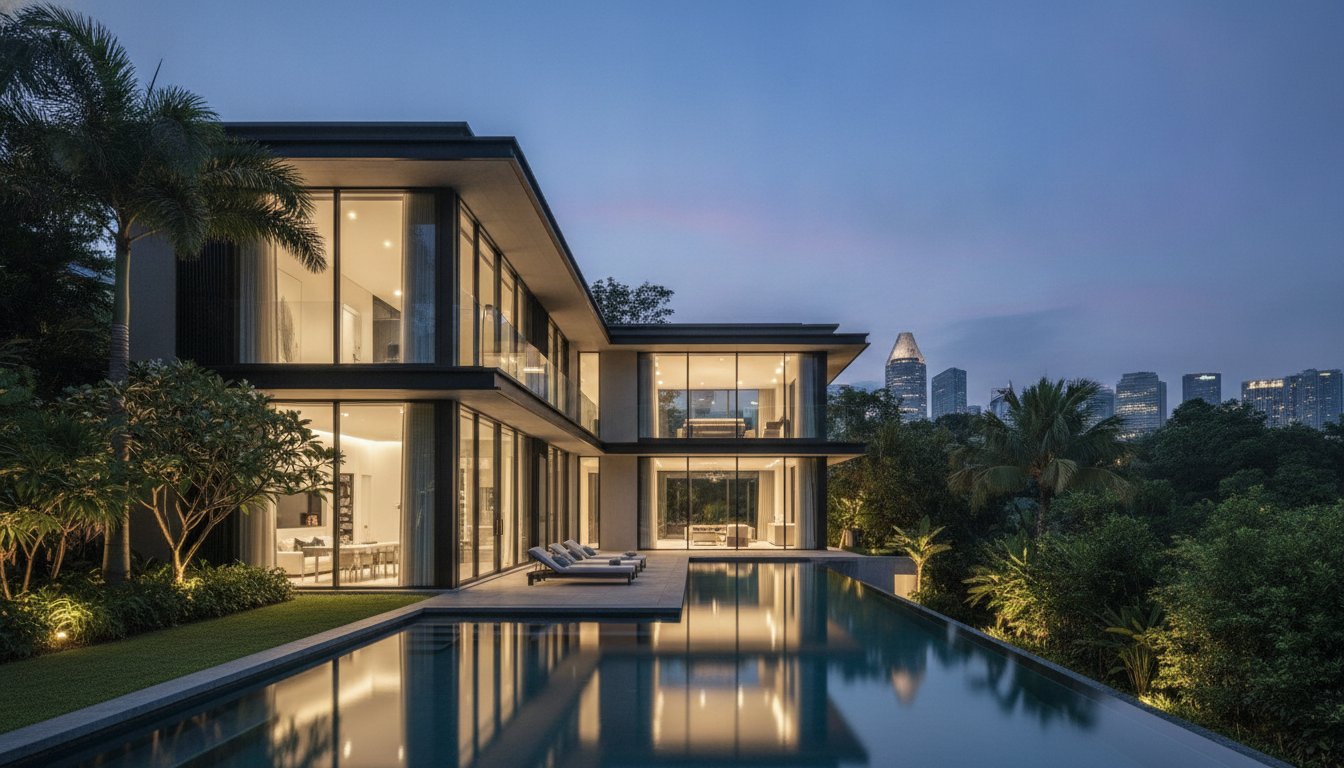
A private swimming pool is often viewed as the crown jewel of a luxury residence, yet without a rigorous acquisition strategy, this lifestyle asset can quickly transform into a complex regulatory and financial burden. You likely view a detached house with pool singapore as the ultimate sanctuary for your family and a definitive statement of your success. It’s a sentiment shared by many high-net-worth individuals who seek the privacy and prestige that only a standalone landed property can provide.
However, securing a property that balances aesthetic appeal with structural integrity requires more than just an appreciation for design. This guide provides the seasoned expertise you need to master the intricacies of the 2026 luxury market, from navigating strict URA setback requirements to evaluating long-term maintenance liabilities. We’ll examine how to identify homes where the pool adds genuine capital appreciation rather than compromising functional garden space. By the end of this analysis, you’ll possess the strategic foresight to acquire a prestigious family home that remains fully compliant with building codes and positioned for sustainable value growth.
Key Takeaways
- Understand the critical URA setback regulations and BCA structural requirements that safeguard your property’s legality and future resale potential.
- Evaluate the “Pool Premium” to determine how a detached house with pool singapore translates into tangible capital appreciation within the 2026 luxury market.
- Implement a professional due diligence checklist to uncover hidden maintenance liabilities and verify the orientation for maximum privacy and sunlight.
- Refine your acquisition strategy by learning how elite specialists identify off-market assets and negotiate value based on technical property assessments.
Defining the Pinnacle of Singapore Luxury: The Detached House with Private Pool
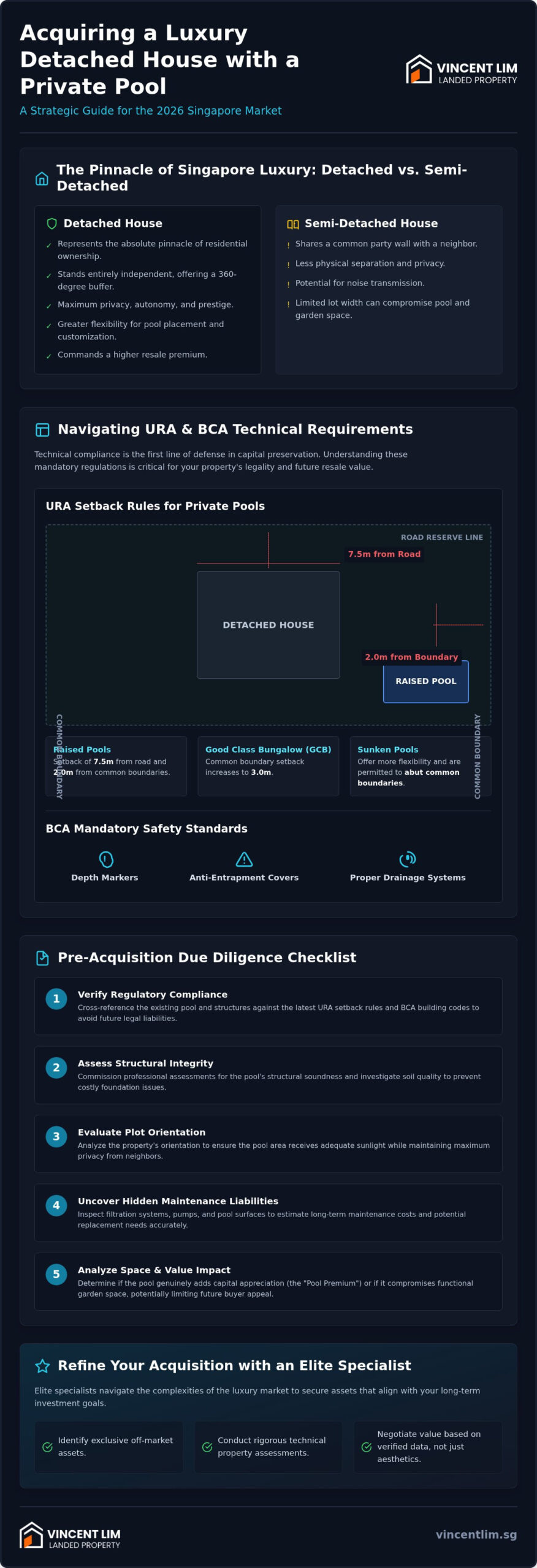
In Singapore’s land-scarce environment, the detached house represents the absolute pinnacle of residential ownership. Unlike terrace or semi-detached units, a detached property stands entirely independent of its neighbours, offering a level of autonomy and privacy that’s increasingly rare. This property class is often referred to as a bungalow, a term rooted in historical architectural styles. For a deeper understanding of how this classification differs from global standards, Defining the Bungalow provides essential context on its evolution. While Good Class Bungalows (GCBs) occupy the highest echelon of this category with land sizes exceeding 1,400 square metres, a standard detached house with pool singapore remains the primary target for astute high-net-worth individuals who value both exclusivity and strategic land use.
In a tropical climate where humidity and heat are constant, a private pool isn’t just a leisure feature; it’s a functional necessity for environmental cooling and personal wellness. For the modern buyer, this aquatic space serves as a psychological retreat from a high-pressure professional life. It transforms a residence into a resort-style sanctuary, providing a visual and physical cooling effect that enhances the home’s overall atmosphere.
The Detached House vs. Semi-Detached with Pool
Choosing between these two classes often comes down to the degree of physical separation. While semi-detached properties share a common party wall, a detached asset provides a 360-degree buffer from adjacent lots. This structural independence is critical when installing a private pool, as it allows for greater flexibility in placement and significantly reduces noise transmission. Many investors weigh the semi-detached vs detached house debate based on the potential for customisation. Detached lots typically offer the necessary width to accommodate a family-sized pool without sacrificing significant garden space, ensuring the asset commands a higher premium upon resale.
The Role of a Pool in Legacy Home Planning
A pool often acts as the architectural anchor for a legacy home, facilitating multi-generational gatherings and providing a central hub for family interaction. From a design perspective, the choice between a sleek lap pool for fitness or a dramatic infinity edge for visual impact defines the property’s character. In the elite tiers of the Singapore market, a detached house with pool singapore is more than a recreational tool. It’s a visible marker of status that signals a commitment to a refined lifestyle and meticulous estate planning, ensuring the home remains attractive to future generations of buyers.
Navigating URA Guidelines and Technical Requirements for Private Pools
Acquiring a detached house with pool singapore requires more than an eye for aesthetics. It demands a rigorous understanding of the Urban Redevelopment Authority (URA) and Building and Construction Authority (BCA) frameworks. These regulations ensure that luxury additions don’t compromise the structural integrity or the privacy of the surrounding neighbourhood. For the strategic buyer, technical compliance is the first line of defence in capital preservation.
For raised swimming pools, URA mandates a setback of 7.5m from the road reserve line and 2.0m from common boundaries. In Good Class Bungalow Areas, this common boundary setback increases to 3.0m. Sunken pools offer more flexibility, as they’re permitted to abut common property boundaries. Beyond setbacks, mandatory safety features like depth markers, anti-entrapment covers, and proper drainage systems must meet BCA standards. Neglecting these details can lead to enforcement actions that diminish the asset’s prestige.
URA Setback Rules for Detached Houses
The building line acts as a definitive boundary for any permanent structure. A pool must sit within these designated zones to maintain the property’s mandatory greenery requirements. These greenery quotas are essential for environmental sustainability and aesthetic consistency in high-end estates. Ensuring these technicalities are met preserves the Long-Term Investment Value of the asset. It protects your capital from regulatory devaluation during future resale transactions.
Structural Integrity and Soil Testing
Soil quality varies significantly across Singapore, from the hard ground of the central regions to the marine clay found in coastal areas. This variance directly impacts pool stability. A Professional Engineer (PE) must certify that the pool’s structural and drainage plans are sound, especially if the house is older. Before acquisition, it’s vital to check for underground utility lines. Water mains or electrical cables can severely restrict future renovations or pool expansions. If you’re evaluating a potential residence, consulting an experienced strategist can help you uncover these technical nuances before you commit to a high-stakes purchase.
Strategic buyers also look for signs of existing structural distress. Cracks in the pool tiling or damp patches in the surrounding basement walls often signal expensive repair bills. Verifying the legality of the pool with URA and BCA records is a non-negotiable step in your due diligence process. This ensures the detached house with pool singapore you acquire is a legitimate, high-value asset rather than a liability in waiting.
Assessing the Long-Term Investment Value: Maintenance vs. Resale Premium
For the strategic investor, a detached house with pool singapore is more than a lifestyle choice; it’s a calculated component of a high-value real estate portfolio. While some view a pool as a depreciating asset due to upkeep, the 2026 luxury market suggests otherwise. In the detached segment, a private pool is often an expected amenity. Properties that lack one frequently face reduced liquidity or require price concessions that far exceed the actual cost of pool construction. By acquiring a home with a functional, well-integrated pool, you effectively bypass the rising construction costs and regulatory hurdles associated with new installations.
The “Pool Premium” manifests primarily through market speed and buyer preference. In a landscape of price moderation, turn-key residences command the highest attention. Buyers in this bracket value their time and generally avoid the year-long headache of structural approvals and construction dust. Consequently, a pristine aquatic space serves as a powerful differentiator that preserves the asset’s competitive edge during exit negotiations.
Maintenance Realities for Detached Homeowners
Professional management of a luxury pool is essential to prevent it from becoming a liability. In 2026, monthly maintenance costs for a standard family pool typically range between $200 and $500. This investment covers chemical balancing, vacuuming, and equipment checks. Many modern owners are shifting toward salt-water chlorination systems, which offer a more pleasant swimming experience and lower long-term chemical costs compared to traditional chlorine methods.
You should also account for the ten-year life cycle of pool components. While weekly cleaning is routine, larger capital expenditures periodically arise. These include:
- Pump and filtration system replacements every 7 to 10 years.
- Structural retiling and waterproofing refreshes to prevent subsurface leaks.
- Upgrading to energy-efficient LED lighting and variable-speed pumps to manage electricity consumption.
Resale Value and Market Demand Trends
Current demand trends indicate that high-net-worth individuals prioritise homes that facilitate “Legacy Planning.” A pool acts as a multi-generational focal point, making the property more attractive to families who intend to hold the asset for decades. Understanding these nuances is a critical part of asset progression to landed property singapore. When a pool is designed with both aesthetics and functionality in mind, it ceases to be a mere expense and becomes a strategic anchor for long-term capital appreciation.
Due Diligence Checklist: Evaluating the Pool and Plot Before Acquisition
Acquiring a detached house with pool singapore requires a level of scrutiny that goes beyond a standard home inspection. High-stakes transactions in the 2026 market demand that you uncover potential liabilities before they become your financial burden. Due diligence isn’t merely a formality; it’s a strategic shield for your capital. You must approach the plot and the aquatic structure with a methodical checklist to ensure the asset aligns with your long-term goals.
Your first priority is verifying the legality of the structure. Cross-referencing the physical pool with URA and BCA approved plans is essential. Any deviation from these records can complicate future renovations or even lead to mandatory demolition orders during a resale. Beyond paperwork, you should conduct a thorough inspection of the pump room and filtration systems. Look for signs of salt-water corrosion on metal fittings or leaks in the sand filter housing. A neglected filtration system often hints at deeper, more expensive structural issues within the pool shell itself.
You also need to evaluate the spatial ratio of the pool to the remaining outdoor land. While a large lap pool is impressive, it shouldn’t come at the expense of usable garden space. Strategic buyers look for a balance that allows for both a functional swimming area and a versatile lawn for family activities. If you require a professional audit of a potential property, contact an elite strategist to conduct a comprehensive technical evaluation before you commit.
Pool Orientation and Sunlight Exposure
In Singapore, the orientation of your pool significantly impacts your daily experience and maintenance costs. A North-South orientation is the gold standard for a detached house with pool singapore. This positioning keeps the water at a refreshing temperature and minimises direct exposure to the harsh afternoon sun. Conversely, a pool facing the West sun often suffers from rapid water evaporation and accelerated chemical depletion. You should also assess the natural shade provided by the main building or existing foliage. While natural shade is desirable, overhanging trees can lead to excessive organic debris, increasing the frequency of professional cleaning.
Safety and Privacy Considerations
Privacy is a hallmark of detached living, yet many buyers overlook the “line of sight” from neighbouring properties. You must stand at various points around the pool deck to ensure you aren’t overlooked by higher-floor windows next door. If privacy is compromised, consider the feasibility of adding perimeter screening that complies with URA height regulations. For families with young children or elderly residents, safety features like non-slip tiling and perimeter barriers are non-negotiable. Pool safety compliance in 2026 requires effective physical barriers and BCA-approved drainage covers to mitigate drowning risks and structural accidents. Reviewing the maintenance history with the current owner provides the final piece of the puzzle, revealing the consistency of care the asset has received over its lifespan.
Strategic Acquisition: How an Elite Specialist Secures the Right Detached Asset
Identifying the ideal detached house with pool singapore requires a level of market access that extends far beyond public listings. In a landscape where the most prestigious assets are often held within private networks, your choice of representation determines the quality of your opportunities. Vincent Lim operates as a high-level partner, leveraging over 20 years of expertise since 2004 to navigate the complexities of luxury landed property. This veteran experience is critical when you’re looking to secure an asset that balances immediate lifestyle needs with long-term wealth preservation.
The acquisition process involves more than just a successful bid. It requires active management of technical and legal hurdles. Vincent coordinates directly with Professional Engineers (PEs) and specialised contractors to assess the redevelopment potential of a plot before you commit. If the due diligence reveals structural concerns or URA compliance issues, these findings are used as strategic leverage during price negotiations. This methodical approach ensures that you don’t overpay for a property with hidden liabilities.
Securing a seamless transition is the final pillar of a successful purchase. By overseeing every detail of the landed property transaction process, Vincent provides the peace of mind that comes from knowing your interests are protected at every stage. This white-glove service is designed to alleviate the stress of high-stakes transactions, allowing you to focus on the long-term vision for your family’s estate.
The White-Glove Approach to Luxury Real Estate
Bespoke property matching is at the heart of Vincent’s strategy. He doesn’t just find houses; he identifies assets that align with your specific wealth objectives and lifestyle requirements. Whether you’re seeking a modern lap pool for fitness or a resort-style infinity edge for entertaining, the search is refined based on your unique criteria. Having a veteran professional manage these complex negotiations ensures that your legacy is built on a foundation of integrity and transparency. It’s about finding the right fit for your family’s future while maintaining a disciplined investment perspective.
Securing Your Legacy Home in 2026
The 2026 market outlook for detached houses remains resilient, driven by the enduring scarcity of landed plots in Singapore. While price moderation has introduced a layer of buyer caution, it has also created opportunities for those with the right strategic guidance. Now is the time to refine your portfolio and secure a residence that will serve as a sanctuary for generations to come. To begin your journey toward owning a premier detached house with pool singapore, consult with Vincent Lim for your next detached house acquisition today.
Securing Your Multi-Generational Legacy
Acquiring a detached house with pool singapore requires a disciplined approach that balances lifestyle aspirations with rigorous technical compliance. You’ve learned that investment success in the 2026 luxury market depends on more than just aesthetic appeal. It rests on a firm understanding of URA setback regulations and the foresight to evaluate long-term maintenance liabilities before committing capital. By prioritising structural integrity and legal due diligence, you transform a residential asset into a secure legacy for your family.
Navigating these high-stakes transactions demands the guidance of a veteran professional who operates with precision and transparency. With over 20 years of luxury real estate experience, Vincent Lim provides the white-glove service necessary to identify off-market opportunities and manage complex BCA compliance requirements. His expertise as a specialist in the Good Class Bungalow and detached house segments ensures your interests are protected at every stage of the journey. Partner with Vincent Lim to acquire your ideal detached house with a pool and move forward with the confidence that your acquisition is strategically sound. Your vision for a prestigious family sanctuary is within reach when backed by elite industry insight.
Frequently Asked Questions
Do detached houses with pools have higher resale value in Singapore?
Yes, a detached house with pool singapore typically commands a higher resale premium compared to those without. Luxury buyers in 2026 prioritise turn-key properties to avoid the year-long headache of structural approvals and construction dust. While the pool itself is a lifestyle asset, its presence acts as a critical differentiator that preserves market liquidity and ensures the property remains attractive to the elite tier of high-net-worth investors who value immediate move-in readiness.
What are the URA setback requirements for a private swimming pool?
Regulatory compliance is essential for any raised swimming pool. URA mandates a setback of 7.5m from the road reserve line and 2.0m from common boundaries. For properties within Good Class Bungalow Areas, the common boundary setback increases to 3.0m. Sunken swimming pools offer more flexibility as they are permitted to abut common property boundaries. Adhering to these technical requirements prevents legal complications during future property valuations or resale transactions.
Is it better to buy a detached house with an existing pool or build one?
Buying a property with an existing pool is generally more efficient in the current market. Construction costs for a new family pool in 2026 range from S$60,000 to over S$200,000 for bespoke lap designs. When you factor in the time required for BCA structural approvals and URA planning permission, acquiring a move-in-ready asset allows you to bypass significant operational friction while securing immediate lifestyle benefits for your family.
How much does it cost to maintain a pool in a Singapore landed house monthly?
Ongoing monthly maintenance for a private pool in Singapore is estimated to be between S$200 and S$500. This expenditure covers professional cleaning services, chemical balancing, and the electricity required for filtration pumps. While salt-water systems may have higher initial equipment costs, they often reduce long-term chemical outlays. Consistent maintenance is a strategic investment that prevents expensive structural repairs and ensures the pool remains a high-value asset for the property.
Can foreigners buy a detached house with a pool in Singapore?
Foreigners are generally restricted from purchasing landed property in Singapore, including detached houses. Special approval from the Singapore Land Authority (LDAU) is required and is typically granted only to those who have made significant economic contributions. Additionally, foreigners face a 60% Additional Buyer’s Stamp Duty (ABSD) as of 2026. Most detached house transactions are conducted by Singapore Citizens, who pay 0% ABSD on their first residential property purchase.
What is the minimum land size required for a detached house with a pool?
A detached house in Singapore requires a minimum land area of 400 square metres. However, to accommodate a detached house with pool singapore effectively, larger plots are often necessary to meet URA setback requirements without compromising usable garden space. Strategic buyers often look for plots exceeding 500 square metres to ensure the pool placement allows for optimal sunlight exposure and maintains the mandatory greenery quotas. This spatial balance is essential for preserving the asset’s long-term capital appreciation.
How do I check if a pool in a resale detached house is legal?
You must verify the legality of a pool by cross-referencing the property’s physical features with approved URA and BCA architectural plans. Ensure that a Professional Engineer (PE) has certified the structural and drainage systems. Any unapproved additions can lead to enforcement actions or complicate the conveyancing process. Working with an elite strategist ensures these technical records are thoroughly audited before you commit to a high-stakes luxury transaction.
What are the most popular pool designs for GCBs in 2026?
In 2026, the Good Class Bungalow (GCB) market favours infinity edges and sleek lap pools that serve as architectural focal points. There is a growing trend toward “natural” aesthetics that blend the aquatic space with the surrounding landscape. High-net-worth individuals also prioritise sustainable features, such as energy-efficient variable-speed pumps and advanced UV filtration systems. These designs emphasise both visual prestige and long-term operational efficiency within the elite residential tier.