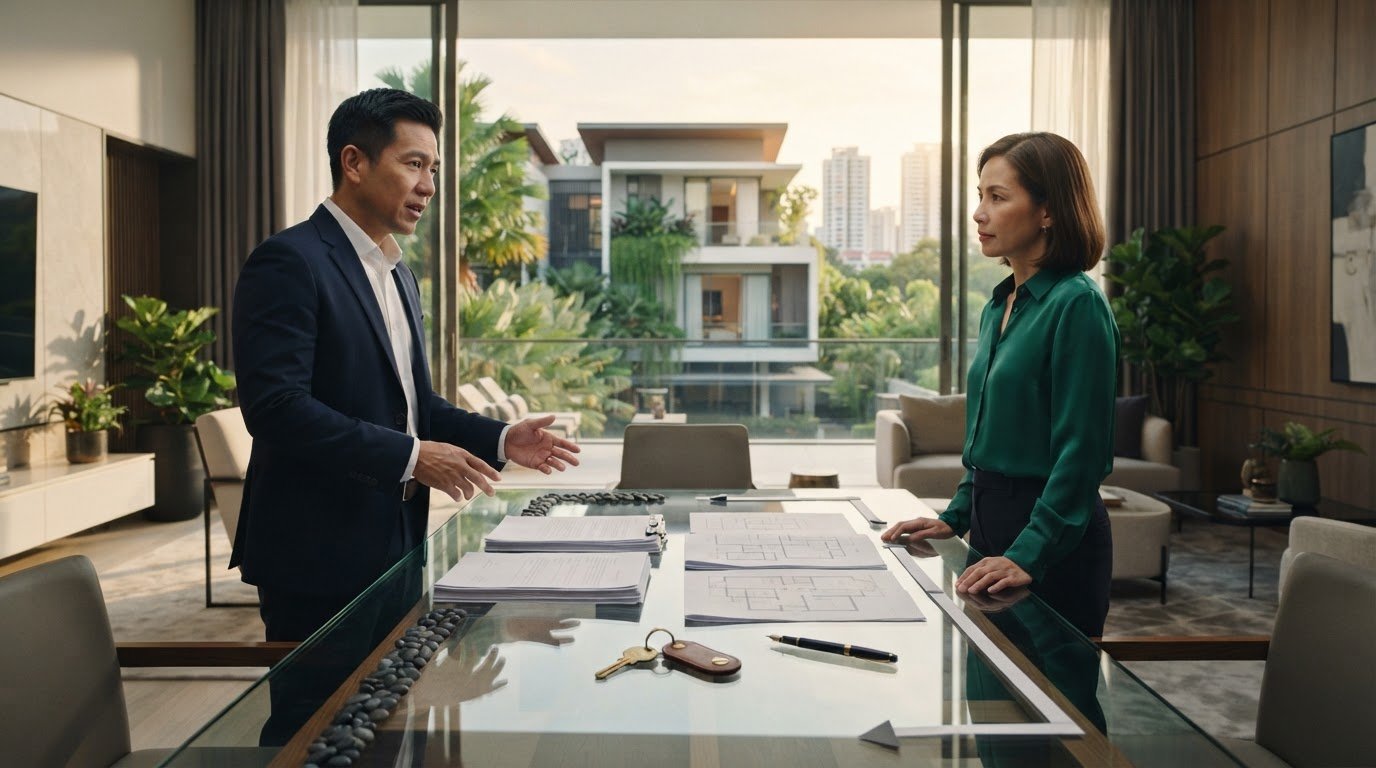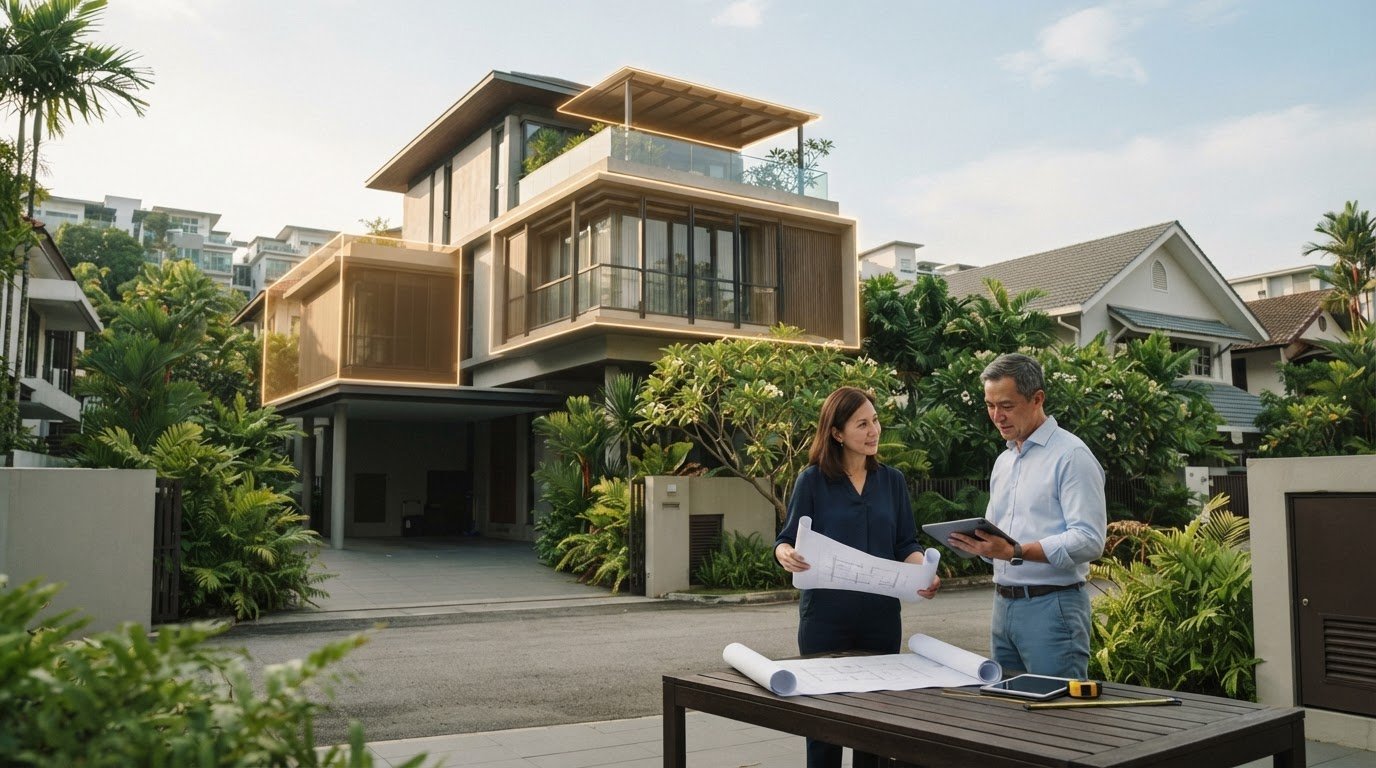
What if the extra room, enclosed balcony or roof cover you notice during a viewing doesn’t appear on the available plans? Learning how to spot illegal structures in a house starts with treating these differences as clues, not proof. An alteration may need further checks, but appearance alone can’t establish whether it was authorised.
It’s understandable to feel uneasy when an owner or agent can’t readily provide approval records. For a Singapore landed property, focus on what work was done and whether the relevant approvals apply. Don’t rely on a visual impression or an incomplete set of plans.
This guide covers physical signs that merit closer attention, documents to request and ways to direct questions to the appropriate authority or a Qualified Person, such as a registered architect or professional engineer. It also explains what to check before buying or selling, so you can assess potential issues carefully without treating suspicion as a legal finding.
Key Takeaways
- Learn how to spot illegal structures in a house by treating visible changes as clues that need checking, not as proof of a breach.
- Use planning and building-control records to help clarify alterations, while recognising that no single document may settle every question.
- Document differences, request relevant records and seek qualified verification before committing to a purchase.
- Distinguish missing documents from a confirmed compliance issue, and arrange further assessment if you have a possible safety concern.
- A property specialist can help coordinate transaction questions, while technical and legal determinations remain with qualified professionals.
How to Spot Potentially Illegal Structures in a House: Start with the Signs
A potentially unauthorised structure is an addition or alteration that may not have the approvals required for that property and type of work. The word “potentially” matters: a viewing can reveal a difference, but it can’t establish whether a rule was breached. For wider building-safety context, consult the Building and Construction Authority (BCA). An overview of the authority is not a property-specific approval check.
When learning how to spot illegal structures in a house, look for visible changes to the building’s footprint, height, enclosure or apparent use. Examples worth asking about include:
- An open terrace or balcony enclosed with walls, windows or a roof.
- An added room or extension that appears to project beyond the original house.
- A roof cover or upper-level addition that changes the building’s outline.
- Openings, walls or partitions that appear to have been altered, particularly where they affect the layout.
Which house alterations deserve a closer look?
Compare what you see with any plans available to you. A changed roofline, an enclosed outdoor area or a room absent from a plan is a reason to ask when the work was done and what records support it. Older work and later renovations may have different supporting documents, so missing paperwork at a viewing does not, by itself, prove that an alteration lacks approval.
Keep observations factual. Photograph visible differences where permitted, note their location and write down the questions they raise. Don’t enter areas without permission, trespass onto neighbouring property or remove finishes to investigate.
Why a visual clue is not proof
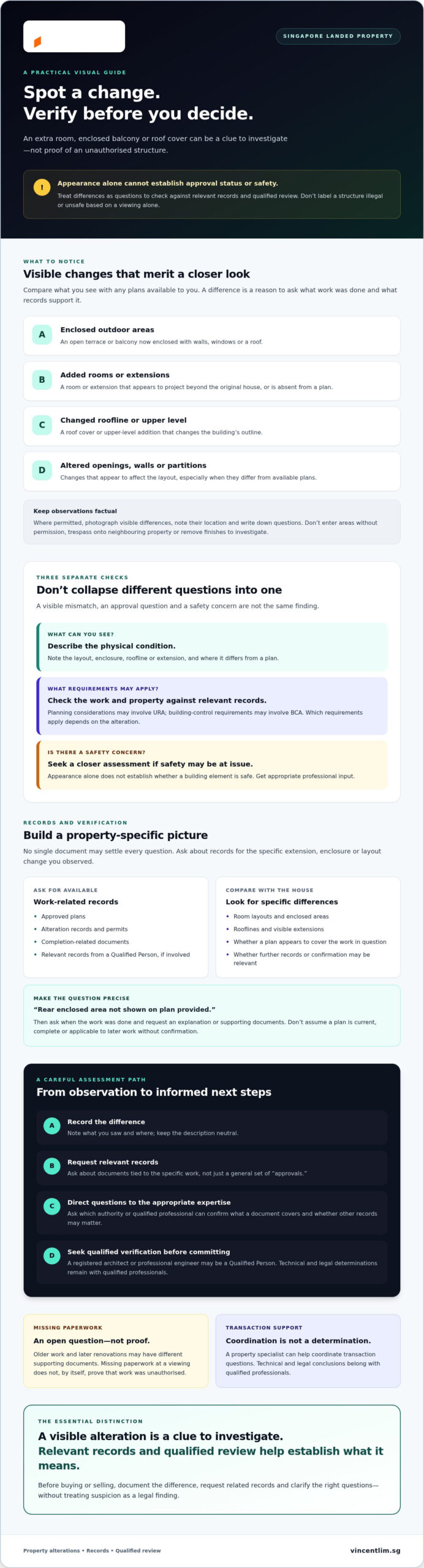
Unusual finishes, uneven workmanship or a mismatch with available plans can help identify what needs clarification. They don’t confirm approval status or establish whether a building element is safe. An alteration may have been approved, may not require the approval you assume, or may need a closer check against the work and property.
Keep three questions separate: what condition can you see, what planning or building-control requirements may apply, and whether there is a building-safety concern. Each may call for different records or professional input. Don’t label a structure illegal or unsafe based on appearance alone.
A visible alteration is a clue to investigate. Relevant records and qualified review are needed to establish whether it presents an approval issue. This distinction helps you ask precise questions and decide what to verify next.
What Singapore Approval Records Can Confirm About House Alterations
A mismatch between a property and a plan gives you a question to investigate, but it doesn’t reveal which requirements applied when the work was carried out. Depending on the alteration, planning considerations may involve the Urban Redevelopment Authority (URA), while building-control requirements may involve the Building and Construction Authority (BCA). The Building Control Act is a legislative reference for building control, but a statute or single record cannot establish the status of a particular house on its own.
If you’re researching how to spot illegal structures in a house, assemble records that relate to the specific work, then check whether they are relevant and complete. Ask the owner for available approved plans, alteration records, permits and completion-related documents. If a qualified professional was involved, request any relevant records they can provide as well.
Which documents should a buyer or owner request?
Make your request specific. Ask for records relating to the extension, enclosure or layout change you observed rather than simply asking for “the approvals.” Then ask which authority or qualified professional can confirm what each document covers and whether other records may be relevant. If documents aren’t available, record that as an open question. Their absence alone doesn’t prove that the work was unauthorised.
How to compare records with the house
Compare the plans with the property as it stands. Check room layouts, enclosed areas, rooflines and visible extensions, and note where a drawing differs. Describe the discrepancy plainly, for example, “rear enclosed area not shown on plan provided,” then request an explanation or supporting documents. Don’t assume a plan is current, complete or applicable to later work without confirmation.
Keep the three parts of the check distinct: whether the physical layout matches a document, whether planning requirements applied, and whether building-control requirements applied. A document may address one aspect without answering the others. Ask a suitably qualified professional or the relevant authority to clarify the records and requirements for the specific work. Technical or legal conclusions should come from the appropriate source.
Approval status is assessed through relevant records and qualified verification, not appearance alone. Clear questions help keep a purchase or sale discussion measured while you establish what remains to be checked. For transaction planning around a Singapore landed property, you can discuss the property transaction with Vincent Lim, while directing approval and technical questions to the appropriate professionals or authorities.
How to Assess a Suspected Illegal Structure Before You Commit
A disciplined check turns a concern into a clear set of questions. If you’re researching how to spot illegal structures in a house, follow a sequence that separates what you observed from what records and qualified reviewers can establish.
A practical verification sequence for buyers
- Observe. During a permitted viewing, identify the feature that differs from the layout or plans available. Note its location, such as an enclosed side area or an extension at the rear.
- Document. Make factual notes and take photographs where permitted. Avoid describing the work as illegal or unsafe. A clear record helps the seller or their representative understand your question.
- Request records. Ask the seller or their appointed representative for plans and approval or renovation records relevant to the feature. Focus the request on the work you observed.
- Compare. Match the documents to the current layout and note any differences. If an extension appears to be absent from the plan provided, record that as a discrepancy, not a conclusion.
- Seek qualified verification. If the records and property still don’t align, ask an appropriately qualified professional or relevant authority to clarify which requirements and records apply to the work.
Keep questions neutral and precise. For example: “Could you share the plans or records relating to this enclosed area?” or “Can you clarify whether the documents provided cover this extension?” If the answer is uncertain, ask what further information can be checked and who can check it. This encourages a useful response without making an unsupported accusation.
For broader landed-property due diligence, see this strategic guide to buying a terrace house. It can help place a specific alteration question within the wider purchase review.
What sellers should prepare before a transaction
Sellers can make discussions more orderly by gathering available plans, approval correspondence, renovation records and completion-related documents before marketing or negotiations. Organise them by alteration where possible, and note which work each record appears to relate to. This makes it easier to respond to specific questions and identify gaps early.
If you know of a discrepancy, describe it accurately. Don’t present work as approved unless supporting records establish that point. If documentation is incomplete or a record’s relevance is unclear, state what is known and seek appropriate professional guidance on technical or regulatory questions before agreeing on a resolution. Early clarification helps both parties understand what remains to be verified without predicting the outcome.
What to Do If House Plans and Structures Do Not Match
A difference between a house and the plans you’ve seen is a reason to pause and clarify, not a verdict on compliance. A paperwork gap means relevant documents are missing or incomplete. A confirmed compliance issue requires an appropriate review of the work and applicable requirements. A possible safety concern is separate and calls for assessment by a qualified building professional.
As you consider how to spot illegal structures in a house, keep these issues distinct. A missing plan doesn’t prove unauthorised work, and a document mismatch doesn’t predict enforcement, required rectification or a particular transaction outcome. Establish what is known, what remains uncertain and who is qualified to answer each question.
When to pause and seek specialist advice
Seek an independent professional assessment if the discrepancy involves a substantial extension, an apparent change to structural elements or another concern about the building’s condition. A qualified building professional can assess technical questions, while the relevant Singapore authority can clarify applicable requirements. For contractual, disclosure or other legal implications, consult a lawyer. An agent can help coordinate transaction discussions, but shouldn’t be relied on for legal advice or technical certification.
Before anyone proposes remedial work, verify current requirements directly with the relevant authority and obtain appropriate professional advice. Don’t treat informal assurances as confirmation that a structure is approved or safe.
Questions to resolve before proceeding
Ask focused questions and keep a written record of the responses. Clarify:
- What work was completed, and when?
- What plans, correspondence, permits or completion records relate to it?
- Who will obtain missing documents or arrange further assessment, and by what date?
- Which professional or authority will confirm the matter that remains unresolved?
Record agreed actions in writing and seek professional advice before relying on verbal assurances. This gives you a clearer basis for deciding how to proceed without assuming either that a breach exists or that the concern has been resolved.
If you’re buying or selling a Singapore landed property, Vincent Lim can help you discuss how a documented property concern fits into transaction planning. For technical or legal conclusions, consult the appropriately qualified professional or relevant authority. Discuss your property transaction planning.
How a Property Specialist Can Help You Navigate the Transaction
A property specialist can help keep a transaction organised when questions about an alteration remain unresolved. The role is to support property discussions, share relevant transaction information and coordinate communication between parties. It doesn’t include certifying structures, confirming approvals or making legal determinations.
How transaction support differs from technical or legal verification
Documented questions help buyers and sellers focus on what needs a response: which feature is in question, what records are available and what further assessment may be appropriate. A property professional can help communicate those questions and keep agreed transaction steps clear. Inspection, engineering, planning and legal matters should go to appropriately qualified professionals or the relevant authority.
No one should promise that a concern will be cleared, remedied or have no effect on a transaction before it has been properly assessed. Instead, establish who is responsible for each follow-up, what information is needed and when the parties will review it. That clarity supports informed decisions without treating an unresolved concern as a confirmed breach.
Prepare for a property discussion
To make a discussion more productive, prepare the property address, available plans, relevant photographs and a concise list of unanswered questions. Explain whether you’re considering a purchase, preparing a sale or reviewing a property you own. Keep observations factual, such as noting that a visible addition doesn’t appear on a plan you received.
For sellers, a broader preparation framework is available in this strategic guide to selling landed property. It can help you consider transaction preparation alongside the specific records or professional checks that may still be needed.
Understanding how to spot illegal structures in a house can help you raise better questions, but determining approval or safety requires the right records and qualified review. Vincent Lim, an OrangeTee & Tie real estate professional handling landed-property sales in Singapore, can discuss how a property concern fits into transaction planning. For technical or legal verification, consult the relevant professional or authority. Contact Vincent Lim to discuss your landed-property transaction.
Make Your Next Property Decision With Clarity
Knowing how to spot illegal structures in a house means recognising that a visible alteration is a prompt to investigate, not proof of a breach. Compare the property with relevant records, document differences and seek qualified technical or legal verification where questions remain. A missing document, a compliance concern and a possible safety issue are distinct matters, and each calls for an appropriate next step.
For buyers and sellers, early clarification can make transaction discussions more informed. Vincent Lim supports Singapore landed-property transactions through OrangeTee & Tie, with sales experience across terrace, semi-detached and detached homes. His role is to help coordinate property conversations, while approval, engineering and legal questions should be directed to the relevant authorities and qualified professionals.
If you’re planning a landed-property purchase or sale and want to discuss how an unresolved property question fits into the transaction, discuss your landed-property transaction with Vincent Lim. With clear questions and the right professional input, you can move forward with greater confidence.
Frequently Asked Questions
How can I tell if a house extension is illegal in Singapore?
You can’t determine that from appearance alone. Compare the extension with available plans, then ask the owner for records relating to the specific work, such as approval correspondence or permits. Check when the work was completed and whether the records apply to it. If questions remain, seek clarification from the relevant Singapore authority or a suitably qualified professional. The phrase “how to spot illegal structures in a house” describes a checking process, not a visual judgment.
Can a structure look unauthorised even if it has approval?
Yes. A structure may look different from an older plan because the plan doesn’t show later approved work, or because the document available to you is incomplete or relates to an earlier stage. Conversely, a plausible-looking addition doesn’t confirm that approvals were obtained. Request records tied to the specific alteration and check their scope and relevance with an appropriate professional or authority before drawing a conclusion.
Which Singapore authority should I check about house alterations?
It depends on the nature of the work. Planning questions may involve the Urban Redevelopment Authority (URA), while building-control questions may involve the Building and Construction Authority (BCA). One authority’s records may not answer every question about an alteration. Describe the specific work and ask which requirements and records are relevant. For technical or legal questions, consult an appropriately qualified professional rather than relying on an assumption based on the authority’s name alone.
What documents should I ask for when buying a house with an extension?
Ask the seller or their representative for available approved plans, permits, alteration records, approval correspondence and completion-related documents that relate to the extension. If possible, clarify when the work was done and who handled it. Check that each record identifies or clearly applies to the specific work and property. Missing paperwork is an unresolved question, not conclusive proof of unauthorised work, so seek qualified verification if the documents don’t settle your concern.
What happens if a house’s approved plans do not match its current layout?
A mismatch doesn’t establish by itself that the work breached a requirement or determine what will happen next. The plans may be outdated, incomplete or unrelated to later alterations, or the difference may need further review. Ask the owner for an explanation and supporting records. If uncertainty remains, consult a suitably qualified professional or the relevant authority. Keep any possible safety concern separate and have it assessed by an appropriate building professional.
Can I buy a house if some renovation approvals are missing?
Whether to proceed depends on the property, the work, available evidence and the terms of the proposed transaction. Don’t treat missing records as proof of a breach, but don’t rely on verbal assurances alone. Ask for relevant documents, identify what remains unverified and seek advice from a lawyer about contractual and transaction implications. A qualified professional or relevant authority can help clarify technical or approval questions before you decide how to proceed.
Should I hire a building professional to inspect a suspected unauthorised structure?
Consider an independent assessment if you have concerns about structural changes, workmanship or building safety. Choose an appropriately qualified professional for the technical question you need answered. An inspection can help assess physical condition, but it may not determine whether planning or building approvals were required or obtained. For those questions, check with the relevant authority; consult a lawyer for legal or contractual advice. Keep the roles distinct so each concern receives the right review.