Asset progression to landed property in Singapore means using equity and financial capacity built through one home to move towards another, potentially from an HDB flat to private property and then a landed home. A common HDB route is to meet the applicable Minimum Occupation Period, generally five years, sell the flat and plan the next purchase. The order matters: buying before selling may bring Additional Buyer’s Stamp Duty into the picture.
A landed home may be the long-term goal, but reaching it takes more than rising property values. The affordability of each move, outstanding loans, available cash and CPF savings, and the timing of a sale all affect whether the next step is sustainable.
This article explains what asset progression involves, how homeowners may move from an HDB flat through private property towards landed housing, and how investment and ABSD considerations affect the decision. It also explains why progression is a financial strategy, not a guaranteed path to profit, so you can weigh the trade-offs more clearly.
Key Takeaways
- Asset progression uses the equity and financial capacity built in one home to support a future purchase; map affordability before deciding on the next property.
- For an HDB-to-private move, the timing of the flat sale and next purchase can affect both available funds and ABSD exposure.
- Assess an investment by its financing demands, potential rental role and future appeal, rather than assuming property values will rise.
- When a landed home becomes a realistic next step, compare property types and sale considerations carefully to align the move with your financial plan.
Additional Buyer’s Stamp Duty considerations
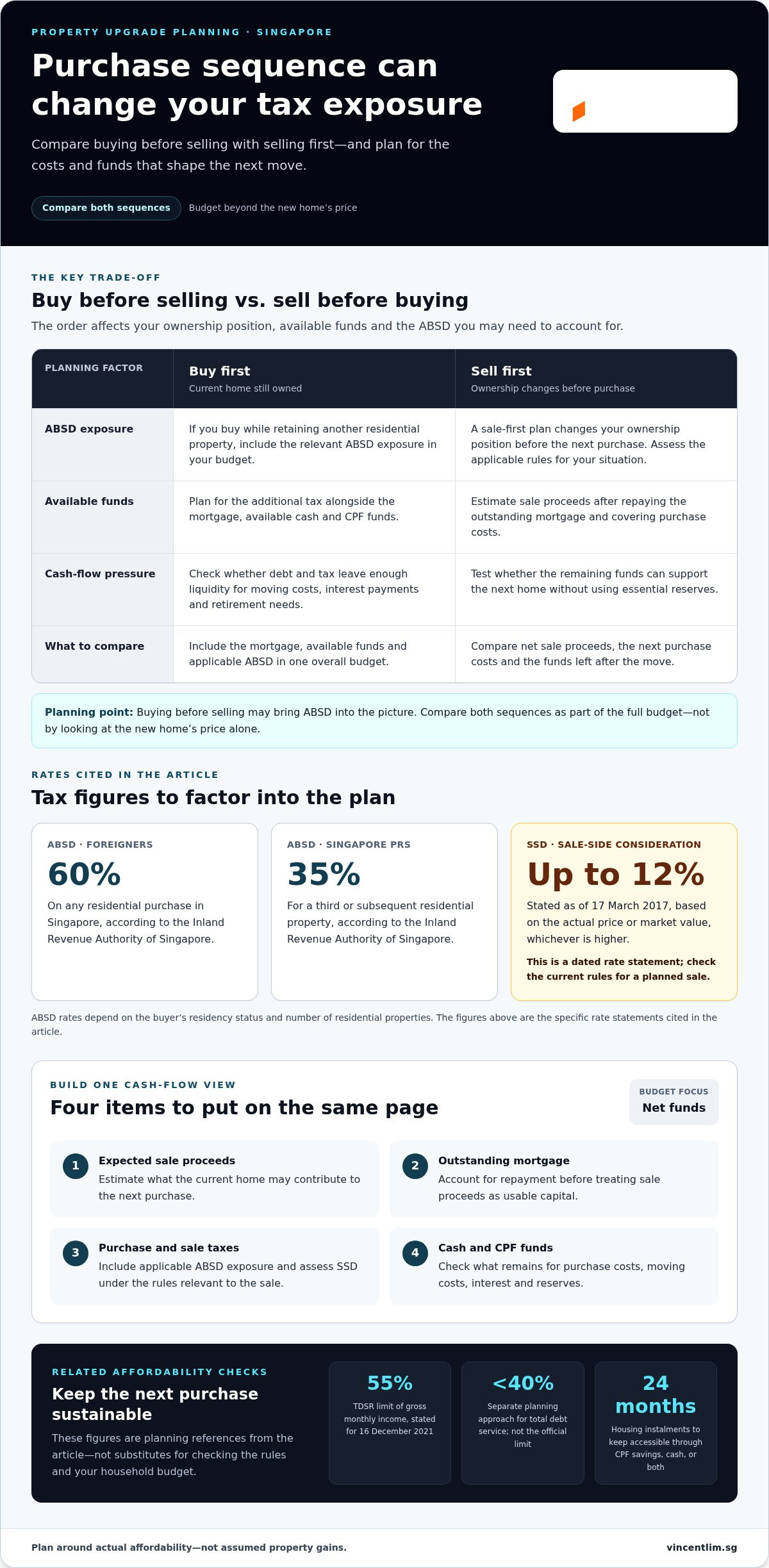
Additional Buyer’s Stamp Duty (ABSD) adds a tax consideration to a residential purchase in Singapore. The buyer’s residency status and number of residential properties affect the applicable rate. According to the Inland Revenue Authority of Singapore, foreigners face a 60% ABSD rate on any residential purchase in Singapore. Singapore permanent residents buying a third or subsequent residential property face a 35% ABSD rate, according to the Inland Revenue Authority of Singapore.
These figures show why purchase sequence matters during an upgrade. If you plan to buy before selling your current home, include the additional tax in your budget alongside the mortgage, available cash and CPF funds. A sale-first plan changes your ownership position before the next purchase. Compare both sequences as part of the overall budget, rather than looking at the new home’s price alone.
For example, if you are considering a private property while retaining another residential property, include the relevant ABSD exposure in your budget. This can affect how much debt your household can manage and how much liquidity remains for moving costs, interest payments and retirement needs. ABSD is a planning constraint, not just a closing expense.
Seller’s Stamp Duty (SSD) is a separate consideration on the sale side. As of 17 March 2017, SSD was stated at up to 12% of the actual price or market value, whichever is higher. Treat this as a dated rate statement, not a substitute for assessing the current rules applicable to a planned sale. Include SSD in the disposal analysis before relying on sale proceeds to fund an upgrade.
A useful comparison puts expected sale proceeds, the outstanding mortgage, ABSD exposure and SSD considerations into one cash-flow plan. Then check whether the remaining funds can support the next home without using essential reserves. This matters when a lifestyle change prompts a move to a larger property but you still need flexibility for interest costs and retirement savings. Understand the trade-offs before committing to either transaction sequence.
What Is Asset Progression?
Asset progression is a plan to use housing equity and financial capacity to move between properties over time. In Singapore, asset progression to landed property can involve building equity in an HDB flat, then putting sale proceeds and savings towards private housing. Appreciation may strengthen wealth, but it is not assured. Property markets can move in either direction, so each purchase should be affordable without relying on projected gains.
Start by assessing monthly commitments. Singapore’s Total Debt Servicing Ratio limit is 55% of gross monthly income, as stated for 16 December 2021. A separate planning approach suggests keeping total debt service below 40%. Treat that lower figure as a budgeting guide, not the official limit. Include the mortgage, other debts and household expenses before setting a purchase budget.
CPF Ordinary Account planning affects future options. Avoid using the entire OA balance for the first home if that leaves too little for later housing payments. Compare the funds needed for the current property with savings you want available for a subsequent purchase. Keep at least 24 months of housing instalments accessible through CPF savings, cash reserves, or both.
Retirement planning requires a longer view. Property can build equity, but its value is not immediately available for daily expenses. Consider whether eventual sale proceeds, rental income or a move to a smaller home could support retirement needs. The holding period, remaining mortgage and market demand will all shape those options.
Before upgrading, estimate funds remaining after repaying the current mortgage and covering purchase costs. Then test the new home’s instalments against income, savings and retirement contributions. A plan for asset progression to landed property in Singapore should turn each move into an affordable decision, not a bet on appreciation. If a landed home is your goal, landed-home options in Singapore can help frame the target within your plan.
Property asset progression from HDB flats to private property
For an HDB owner, a common progression is to meet the applicable Minimum Occupation Period, sell the flat and put available equity towards private property. The general MOP is five years, though some flat categories have a longer period. Sale proceeds are not the same as usable capital: first account for the outstanding mortgage and funds needed for the next purchase. This helps you set a realistic budget before committing.
A couple might consider selling their HDB flat and buying two private properties instead of purchasing one home together. This can diversify how household capital is held, but also creates separate financing commitments and ownership decisions. Assess each purchase against income, debts, cash reserves and any rental assumptions. If one property is intended for rent, account for expected costs and vacancy risk, not just potential income.
For example, a couple comparing one shared private condo with two separate purchases should test both plans against the same household budget. Include deposits, mortgage instalments, purchase taxes, maintenance and the possibility of changing rental income. A second property increases exposure to the residential market, so do not treat projected appreciation as guaranteed funding for future payments.
Decoupling describes restructuring co-ownership so one person retains a property while the other may pursue a separate purchase. It is more than a paperwork adjustment. The couple needs to assess the ownership transfer, financing arrangements, tax consequences and each person’s ability to manage obligations independently. Weigh any capital released or borrowing capacity gained against transaction costs and the household’s combined risk.
Before choosing a route, compare selling and upgrading with keeping the existing home. A retained flat may support rental income where permitted, while selling can release capital for a private property. The right choice depends on your household cash flow, objectives and willingness to manage more than one residential asset.
Property investment and asset progression in Singapore
Property can support asset progression through equity growth, rental income or a future sale, but these outcomes depend on market conditions. Singapore’s property price index rose from 40.9 in 1990 to over 152 in early 2020. That long-term movement provides context, not a forecast for a specific HDB flat or private home. A purchase should still make sense if appreciation is slower than expected.
Assess the investment across a realistic holding period. A 5-15 year horizon gives time to build equity, while the property’s suitability for future buyers or tenants affects its exit prospects. Consider location, layout, upkeep and demand when deciding whether the home can remain attractive 5 to 10 years later. Household changes matter too: children, work needs and retirement plans may alter the value of space or location.
Rental income can help meet housing costs, but compare it with the full cost of ownership. Net rental yields for Singapore condos are often 2-3% or less. Mortgage payments, maintenance, taxes and periods without tenants all affect the amount available to support the next purchase. A retained HDB flat may produce income, while selling it may release capital. Compare these choices against your household income and long-term needs.
Leverage can amplify gains as well as losses. An illustrative example of borrowing up to 80% of a purchase price shows how a buyer controls an asset with borrowed funds, while remaining responsible for the debt and interest. If values soften or income changes, instalments remain due. Avoid making the next move dependent on a particular resale value or rental level.
The practical takeaway is to judge each home as both housing and an investment. Test whether the mortgage remains manageable without rental income, then consider how a sale could fund the next stage. For a landed-home move, review your landed-property progression options alongside the household’s wider financial plan.
Vincent Lim (OrangeTee & Tie): Terrace House Sales
Vincent Lim (OrangeTee & Tie) helps homeowners assess a move into a terrace house as part of their property progression. His Terrace House Sales service is relevant when weighing a landed home against available capital, housing needs and longer-term plans. Defining the property you are targeting can help frame the sale and next-purchase decisions.
For buyers considering other landed-home categories, Vincent also handles Semi-Detached House Sales, Detached House Sales and Good Class Bungalow (GCB) Sales. The right option depends on the home you want, your financial plan and priorities for the next stage.
To discuss a landed-property move, contact Vincent Lim (OrangeTee & Tie) or visit vincentlim.sg.
Shape Your Next Move With Intention
Turn a long-term housing ambition into a decision framework: define the home you want, the resources you can commit and the trade-offs you are prepared to accept. This keeps lifestyle choices connected to financial priorities instead of letting a target property dictate the plan. For asset progression to landed property in Singapore, clarity about your intended home and timing can help focus your search and prepare you for a considered sale or purchase.
As your plans take shape, Vincent Lim (OrangeTee & Tie) can assist with landed-property sales, including terrace, semi-detached and detached houses. His services are relevant when you are ready to assess a landed-home move and align your property choice with your wider progression strategy.
For a considered discussion about your next move, contact Vincent Lim (OrangeTee & Tie). A clear plan can make your next decision more deliberate and better aligned with the home you want.
Frequently Asked Questions
How to Multiply Property Portfolio?
Build a property portfolio by making each purchase support the next without relying on assumed price gains. For example, compare selling a home to release equity with retaining it for rental income, then assess whether that income could support another mortgage. Account for taxes, maintenance, vacancies and debt together. A larger portfolio also concentrates more wealth in property, so preserve liquidity for household needs and unexpected costs.
What income, savings and assets are needed to upgrade to a landed home in Singapore?
There is no single income or savings figure that applies to every landed-home purchase. Lenders assess income alongside existing debt and the proposed mortgage. Usable assets include sale proceeds after repaying the current loan, cash and available CPF funds. Keep funds for taxes, moving and ongoing ownership costs separate from the purchase budget. Before choosing a property, compare the resulting monthly commitment with household expenses and retirement priorities.