A swimming pool in a Singapore landed estate is rarely just a lifestyle choice; it’s a calculated capital improvement that can either anchor your property’s prestige or become a liability during resale. Understanding the comprehensive cost to build a pool in a landed property singapore involves far more than just the price of excavation and tiling. You’re likely weighing the desire for a private sanctuary against valid concerns over hidden construction fees and the complexity of URA or PUB approvals. It’s a high-stakes decision where the regulatory requirements often dictate the budget as much as the design itself.
This 2026 strategic guide removes that uncertainty by providing a precise breakdown of construction capital and the essential regulatory roadmap required for compliance. I’ll help you navigate the nuances of BCA plan submission fees and the latest URA setback regulations that define modern luxury developments. We’ll explore how to calibrate your investment against your specific property class, ensuring your pool serves as a strategic asset for future wealth progression rather than a drain on your equity.
Key Takeaways
- Establish a realistic budget by distinguishing between the capital requirements for bespoke concrete structures and modern fiberglass alternatives.
- Identify how site-specific variables, such as terrain complexity and mechanical plant room placement, influence the total cost to build a pool in a landed property singapore.
- Navigate the 2026 regulatory landscape with a clear understanding of URA setback requirements and PUB drainage standards to ensure structural compliance.
- Project the long-term financial commitment by quantifying monthly professional maintenance fees and the anticipated impact on utility consumption.
- Calibrate your pool’s design to maximize asset progression, ensuring the installation serves as a strategic lifestyle premium rather than an over-improvement.
Estimating Construction Capital for Singapore Landed Pools
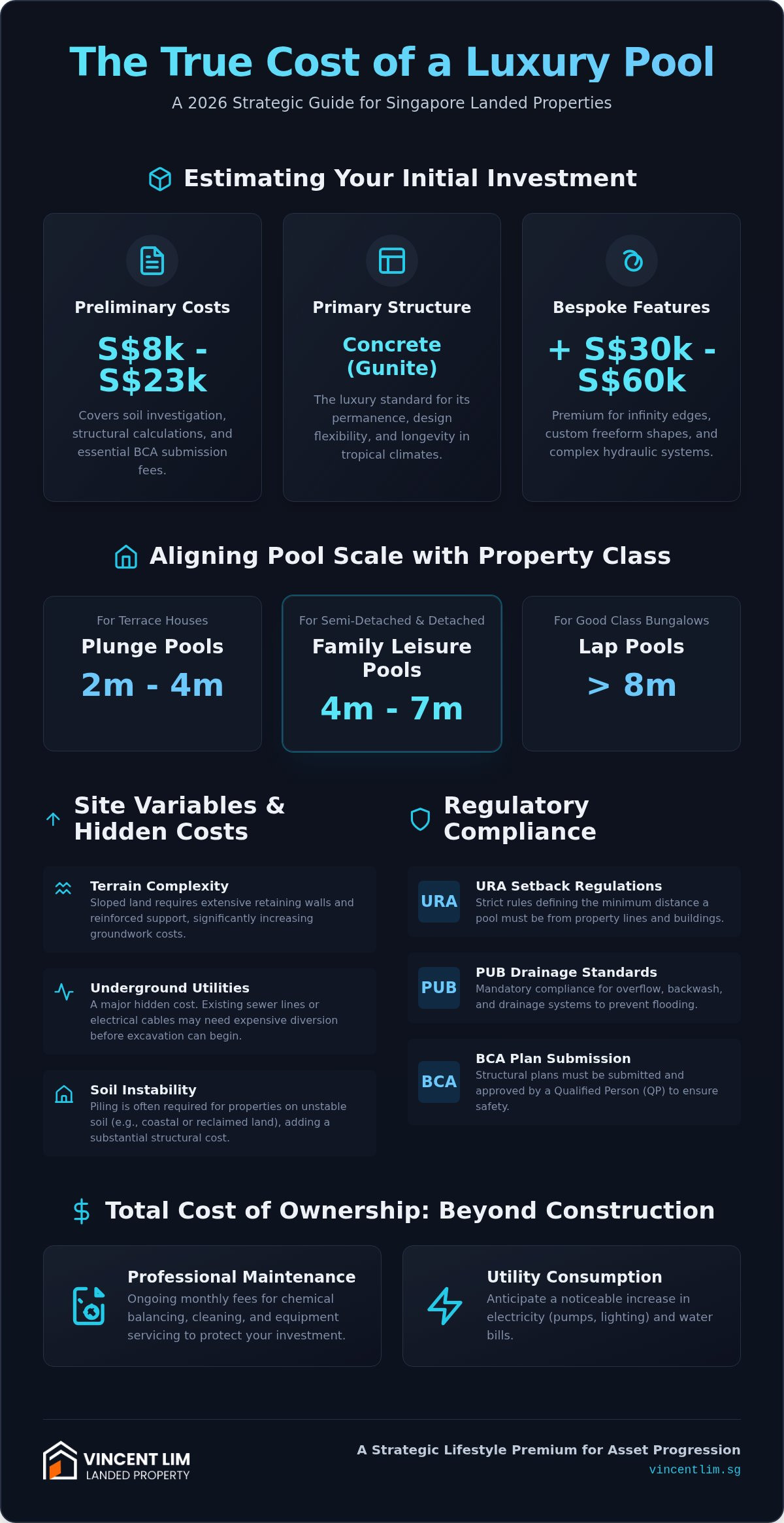
Entering the 2026 market, the initial capital required for a private aquatic installation reflects the broader inflation in construction labor and specialized materials. When you evaluate the cost to build a pool in a landed property singapore, you aren’t just paying for a hole in the ground; you’re investing in a complex engineering project that must withstand Singapore’s tropical humidity and soil conditions. Most homeowners in the luxury segment prioritize concrete (gunite) structures for their permanence and design flexibility. While fiberglass and vinyl options exist, they often fail to meet the aesthetic or longevity standards expected in high-value asset classes like Good Class Bungalows (GCBs) or detached houses. Selecting the right swimming pool construction methods is the first step in ensuring your investment yields a positive return during future property progression.
A significant budget shift occurs when moving from standard rectangular designs to bespoke architectural statements. Infinity edges, which require secondary surge tanks and complex hydraulic systems, typically add a premium of S$30,000 to S$60,000 to the base construction. These features, along with custom freeform shapes, demand higher precision during the excavation and structural phases. Before any tiles are laid, you must account for preliminary site costs. Soil investigation, structural calculations, and BCA submission fees often range between S$8,000 and S$23,000 combined, depending on the complexity of the terrain and the requirements of the engaged Qualified Person (QP).
Cost Categorization by Pool Scale
The scale of your pool should align with your property type to avoid over-capitalization. Plunge pools, typically measuring 2m to 4m, provide an excellent solution for terrace houses where garden space is at a premium. For semi-detached and smaller detached homes, family leisure pools (4m to 7m) represent the industry standard. At the top tier, lap pools exceeding 8m in length are essential features for GCBs, where the pool serves as a central architectural focal point and a mandatory requirement for many high-net-worth buyers.
Material and Finish Selection
Your choice of finishes determines both the visual impact and the long-term maintenance burden. Traditional mosaic tiles offer a classic look but require meticulous grouting work. Natural stone or advanced quartz and pebble finishes provide a more seamless, durable alternative that resists chemical wear. Don’t overlook the cost of coping and decking materials; using premium timber or non-slip granite creates a cohesive transition between the water and the residence, reinforcing the “white-glove” feel of the entire property. These selections should be made with a long-term view toward legacy planning and future resale appeal.
Primary Variables Influencing Your Initial Investment
While the baseline construction capital provides a foundation, the final cost to build a pool in a landed property singapore is heavily influenced by site-specific complexities. Terrain plays a decisive role in the initial budget. Flat plots allow for straightforward excavation, but sloped land often requires extensive retaining walls and reinforced structural support. If your property is situated on an incline, the engineering demands can significantly increase the groundwork budget. These challenges are particularly prevalent in prime districts where older bungalows are being redeveloped into modern luxury residences. Professional oversight is non-negotiable; every technical decision must align with Singapore’s Regulatory Framework to ensure the installation is both safe and legally compliant.
Mechanical and Electrical (M&E) complexity shouldn’t be underestimated. The location and sizing of the plant room are critical. A poorly placed filtration system leads to noise disturbances or accessibility issues during servicing. Additionally, existing underground utilities, such as sewer lines or electrical cables, may require diversion before excavation begins. These diversions are often the most overlooked hidden expenses in a project. Coordinating these technical requirements requires a disciplined approach to project management to avoid costly delays or structural revisions later in the process.
Structural and Engineering Factors
Piling is often necessary if the soil is unstable. This is a common requirement for properties near coastal areas or reclaimed land. For those considering a rooftop pool, the costs shift toward weight-bearing reinforcements and advanced waterproofing membranes. These technical layers prevent long-term structural fatigue and moisture ingress into the living spaces below. Each layer of engineering adds to the total cost to build a pool in a landed property singapore, but these investments are essential for maintaining the structural integrity of your asset.
Aesthetic and Functional Enhancements
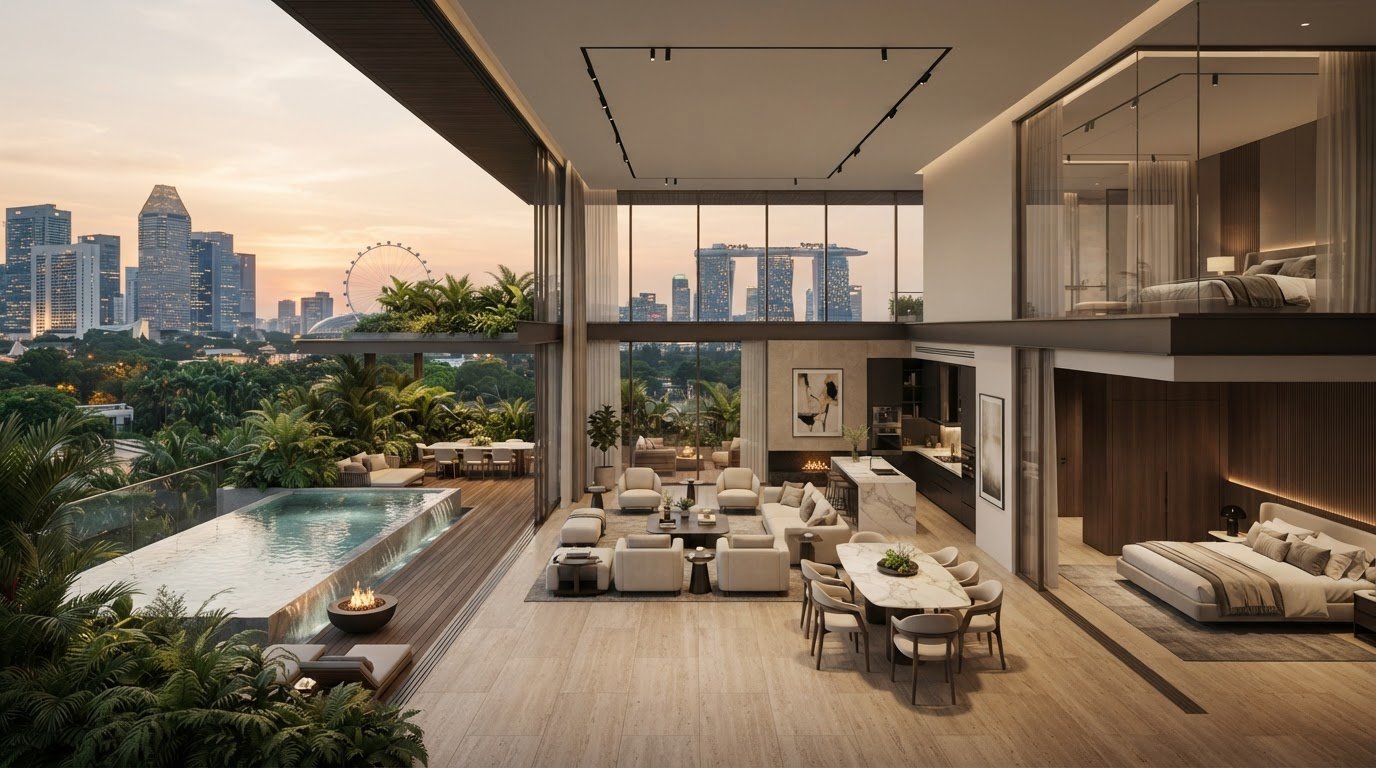
Modern luxury buyers increasingly demand a sophisticated visual experience. Engineering glass walls or infinity edges requires high-specification acrylic panels and surge tank systems. Beyond aesthetics, smart pool technology has become a standard requirement for elite homeowners. Automating filtration and pH balancing ensures peak performance with minimal manual intervention. If you’re planning a long-term hold for a detached house, these high-tech additions can significantly bolster the property’s market appeal. Integrating energy-efficient heat pumps also allows for year-round temperature control, adding a layer of bespoke comfort that resonates with high-net-worth tenants and future buyers alike.
Navigating Singapore’s Regulatory Framework and Engineering Standards
Successful asset management requires more than just aesthetic vision; it demands a disciplined adherence to Singapore’s rigorous building codes. When determining the cost to build a pool in a landed property singapore, you must account for the professional fees associated with Qualified Persons (QP). These experts, typically registered architects or structural engineers, manage the mandatory submissions to the Building and Construction Authority (BCA). As of April 2026, the BCA has streamlined its fee structure, charging S$200 per affected storey for pool additions that abut a general building. This administrative efficiency is offset by the necessity of hiring a Professional Engineer (PE) and a Registered Inspector (RI), whose combined certification fees typically range from S$5,000 to S$15,000 depending on project complexity.
Beyond structural safety, the Urban Redevelopment Authority (URA) dictates exactly where your water feature can sit. Sunken pools offer more flexibility, as they can often be built up to the common property boundaries. However, raised pools are subject to stricter setback requirements: 7.5m from the road reserve line and 2.0m from common boundaries. If your property is located within a Good Class Bungalow Area (GCBA), the common boundary setback increases to 3.0m. These rules are designed to maintain the privacy and spatial character of Singapore’s elite residential enclaves. Ignoring these setbacks during the planning phase can lead to costly enforcement actions or the forced removal of the structure.
Environmental compliance is managed by the Public Utilities Board (PUB). You must ensure your drainage system prevents accidental discharge into the public sewerage system. This involves sophisticated plumbing layouts that meet current Maintenance and Operational Expenses standards for water quality and discharge safety. Additionally, the Singapore Civil Defence Force (SCDF) may require specific fire safety access paths, particularly if your pool or its plant room is located near the property’s primary structure. These technical requirements ensure your home remains a safe, compliant sanctuary.
Setbacks and Site Coverage Rules
The 2-meter setback rule is a fundamental constraint for most semi-detached and detached houses. While the pool itself might not contribute to your Gross Floor Area (GFA), any covered decks or pavilions certainly do. In GCB conservation areas, these rules are even more stringent, requiring a sensitive balance between modern luxury and heritage preservation. A seasoned strategist will always optimize the pool’s footprint to preserve as much functional garden space as possible, maintaining the property’s long-term resale appeal.
The Approval and Submission Roadmap
The journey begins with engaging a QP to conduct soil investigations and prepare structural drawings. This stage is critical for identifying potential underground utility diversions that could inflate your budget. Once the BCA and URA approve these plans, construction can commence under the supervision of a PE. The final milestone is obtaining the Temporary Occupation Permit (TOP) for the pool, which confirms that all safety standards, including the mandatory 1.2m high safety fencing with self-closing gates, have been met.
Total Cost of Ownership: Maintenance and Operational Expenses
While the initial cost to build a pool in a landed property singapore represents the primary capital outlay, the ongoing operational expenses define the asset’s long-term viability. A meticulously maintained pool preserves your home’s premium status, whereas neglect leads to structural deterioration and diminished resale value. In Singapore’s tropical climate, professional maintenance is not merely a luxury; it’s a fundamental requirement for protecting your investment. You should view these monthly and annual costs as essential preservation fees for your property’s equity.
Monthly service fees for professional cleaning and chemical balancing typically range from S$500 to S$1,500. This variance depends on the pool’s surface area and the complexity of its mechanical systems. Beyond labor, utility consumption is a significant factor. While modern variable-speed pumps and LED lighting are designed for efficiency, water evaporation and periodic backwashing will inevitably impact your monthly Public Utilities Board (PUB) charges. Strategic homeowners often invest in high-efficiency equipment early on to mitigate these recurring operational burdens.
Routine Operational Costs
Chemical management is the cornerstone of pool health. Chlorine systems remain common, but many elite homeowners prefer salt-water chlorination for a superior swimming experience. Although salt systems require a higher upfront investment, they offer a more automated approach to water chemistry. Regardless of the system, professional cleaning should occur at least once a week. This frequency ensures that filtration systems aren’t overwhelmed by tropical debris, which can lead to premature pump failure if left unmanaged.
The 10-Year Capital Expenditure Plan
Wealth preservation requires a decade-long view of your property’s infrastructure. High-end mechanical components, such as pumps, filters, and chlorinators, generally have an operational lifespan of 8 to 12 years. Replacing these units requires technical precision to ensure they integrate seamlessly with your existing plumbing and smart automation systems. Around the 15-year mark, most luxury pools require resurfacing or retiling to maintain their aesthetic excellence. These refurbishments are strategic; they refresh the property’s appeal and prevent minor leaks from evolving into major structural issues. If you’re managing a high-value asset like a Semi-Detached House, keeping a detailed log of these upgrades is vital for justifying a premium price during future negotiations.
Don’t overlook the insurance and security aspects of your installation. Adding a significant water feature may require an adjustment to your home insurance policy to cover structural damage or liability. Additionally, maintaining the mandatory 1.2m safety fencing is a legal requirement that must be checked periodically for integrity. Ensuring these safety and financial safeguards are in place provides the peace of mind that defines elite property ownership.
Strategic Valuation: How Pools Impact Resale Value and Asset Progression
A swimming pool is a defining feature of luxury living, yet its contribution to your property’s valuation depends on how well it’s calibrated to the specific property class. When analyzing the total cost to build a pool in a landed property singapore, you must view the expenditure through the lens of capital preservation and future marketability. For the elite buyer, a pool represents a “Lifestyle Premium” that often serves as a non-negotiable requirement during their search. However, a strategic error many homeowners make is “over-improvement.” If a pool consumes too much functional garden space, it can actually detract from the property’s appeal to families who prioritize outdoor play areas or sophisticated landscaping. A balanced approach ensures the water feature complements the residence rather than overwhelming it.
Maintaining a gold standard in your pool’s design and upkeep directly supports your journey of asset progression to landed property Singapore. When the time comes for selling your landed property in Singapore, a well-documented maintenance history and a modern, energy-efficient filtration system provide the transparency buyers need to commit to a premium price. You aren’t just selling a home; you’re selling a turnkey lifestyle where the technical complexities have already been expertly managed.
The ROI of a Pool in GCBs vs. Terrace Houses
In the Good Class Bungalow (GCB) segment, a lap pool isn’t just an amenity; it’s an essential component of the architectural legacy. High-net-worth individuals expect these features to reflect the home’s prestige and scale. Conversely, for terrace houses, the strategy shifts toward space optimization. A well-placed plunge pool that leaves room for a functional patio is far more valuable than a larger pool that leaves the garden feeling cramped. Semi-detached homes occupy the middle ground, where the pool should be positioned to create a stunning visual impact during viewings, immediately signaling the property’s “white-glove” status to potential suitors.
Strategic Positioning for Future Resale
Design choices should always lean toward timeless elegance rather than fleeting trends. Neutral tiling, natural stone coping, and integrated smart technology appeal to the widest pool of sophisticated buyers. These elements ensure the pool remains a modern asset for years to come. Before you commit to the substantial cost to build a pool in a landed property singapore, it’s prudent to consult a landed property specialist. This ensures your project aligns with current market demands and enhances your home’s position within the competitive Singapore real estate landscape, turning a lifestyle choice into a robust financial strategy.
Securing Your Property’s Future Value
Building a pool is a significant undertaking that requires a balance of engineering precision and market foresight. You’ve seen that the cost to build a pool in a landed property singapore is influenced by everything from URA setback mandates to long-term mechanical maintenance cycles. By aligning your design with your specific property class, you transform a lifestyle amenity into a strategic asset that enhances your home’s resale potential and supports a disciplined approach to asset progression.
Navigating these high-stakes decisions is simpler with an expert partner who understands the nuances of the luxury market. As an Executive Associate Director at OrangeTee & Tie, I specialize in Good Class Bungalows and detached houses. I’m dedicated to helping you maximize asset value through meticulous property wealth planning and strategic asset progression. Consult Vincent Lim for a strategic valuation of your landed property investment to ensure your next capital improvement aligns with your long-term legacy. Your home is your greatest asset; let’s ensure every addition serves your wealth progression goals.
Frequently Asked Questions
How much does a basic plunge pool cost for a terrace house in 2026?
A standard plunge pool measuring approximately 3m x 2.5m typically costs between S$80,000 and S$130,000 in 2026. This baseline includes the primary excavation, structural concrete work, and standard mosaic finishes. Final pricing depends on site accessibility and the specific soil conditions of your terrace house plot, which can influence the complexity of the groundwork.
Do I need URA approval to build a swimming pool in my backyard?
You must obtain URA approval for any swimming pool construction as it involves specific land use and boundary setbacks. Sunken pools can often be built up to the property boundary, but raised pools require a 7.5m setback from the road reserve and 2.0m from common boundaries. These regulations ensure that your development aligns with Singapore’s urban planning and privacy standards.
Is a salt-water pool more expensive to build than a chlorine pool?
Salt-water pools require a higher initial investment due to the specialized salt-cell chlorinator and generator equipment needed during the installation. While the initial cost to build a pool in a landed property singapore increases with these systems, many luxury homeowners prefer them for their superior water quality. Long-term chemical expenses are often lower compared to traditional chlorine-dosing systems.
How long does the typical pool construction process take in Singapore?
The typical timeline for pool construction in Singapore ranges from three to six months from the design phase to completion. This duration includes the mandatory period for BCA and URA plan submissions, structural engineering certifications, and the physical excavation and tiling phases. Complex designs with infinity edges or integrated spas may extend this timeline due to additional hydraulic testing.
Does a swimming pool always increase the resale value of a landed property?
A swimming pool doesn’t automatically increase resale value; its impact depends on whether it’s viewed as a strategic asset for the specific property class. In a Good Class Bungalow, a lap pool is often an essential requirement for marketability. In a smaller terrace house, however, a pool that consumes the entire garden might detract from the home’s appeal to families seeking functional green space.
What are the hidden costs of building a rooftop pool in a detached house?
Building a rooftop pool involves significant hidden costs related to structural slab reinforcement and high-specification waterproofing membranes. You must also account for specialized hoisting equipment to transport materials and the pool shell to the roof level. These technical requirements ensure the structure can safely support the immense weight of the water without compromising the integrity of the living spaces below.
Can a foreigner build a pool in their landed property if they have LDAU approval?
Foreigners who have secured Land Dealings Approval Unit (LDAU) permission to own landed property are fully entitled to build a swimming pool. The construction must still adhere to all standard BCA and URA regulations applicable to the specific property type. This addition is often a strategic move to enhance the property’s long-term rental yield or eventual resale value within the elite residential segment.
How much should I budget for monthly pool maintenance in Singapore?
You should budget between S$500 and S$1,500 for monthly pool maintenance in Singapore to ensure peak performance. This professional service covers twice-weekly cleaning, chemical balancing, and periodic filter inspections. Investing in a consistent maintenance schedule is the most effective way to manage the total cost to build a pool in a landed property singapore by preventing expensive structural or mechanical repairs over time.