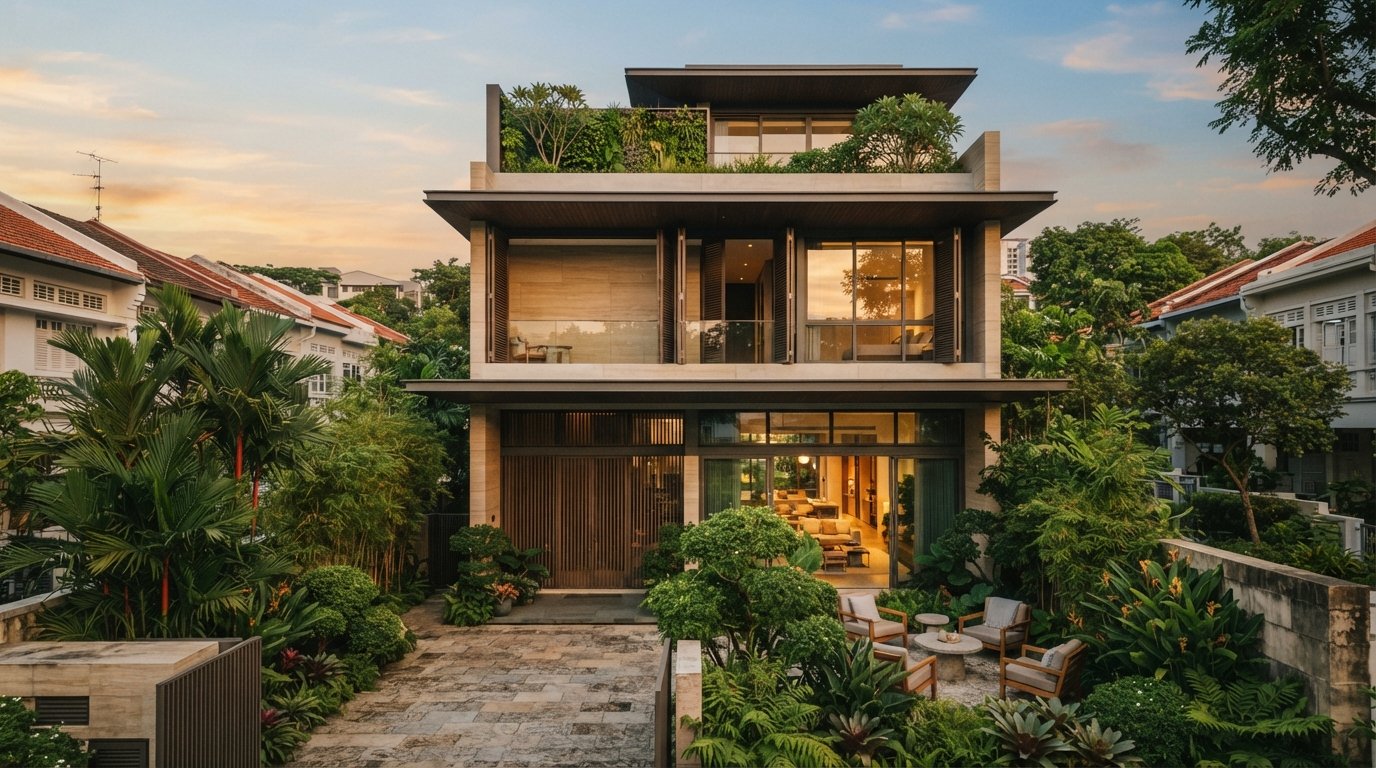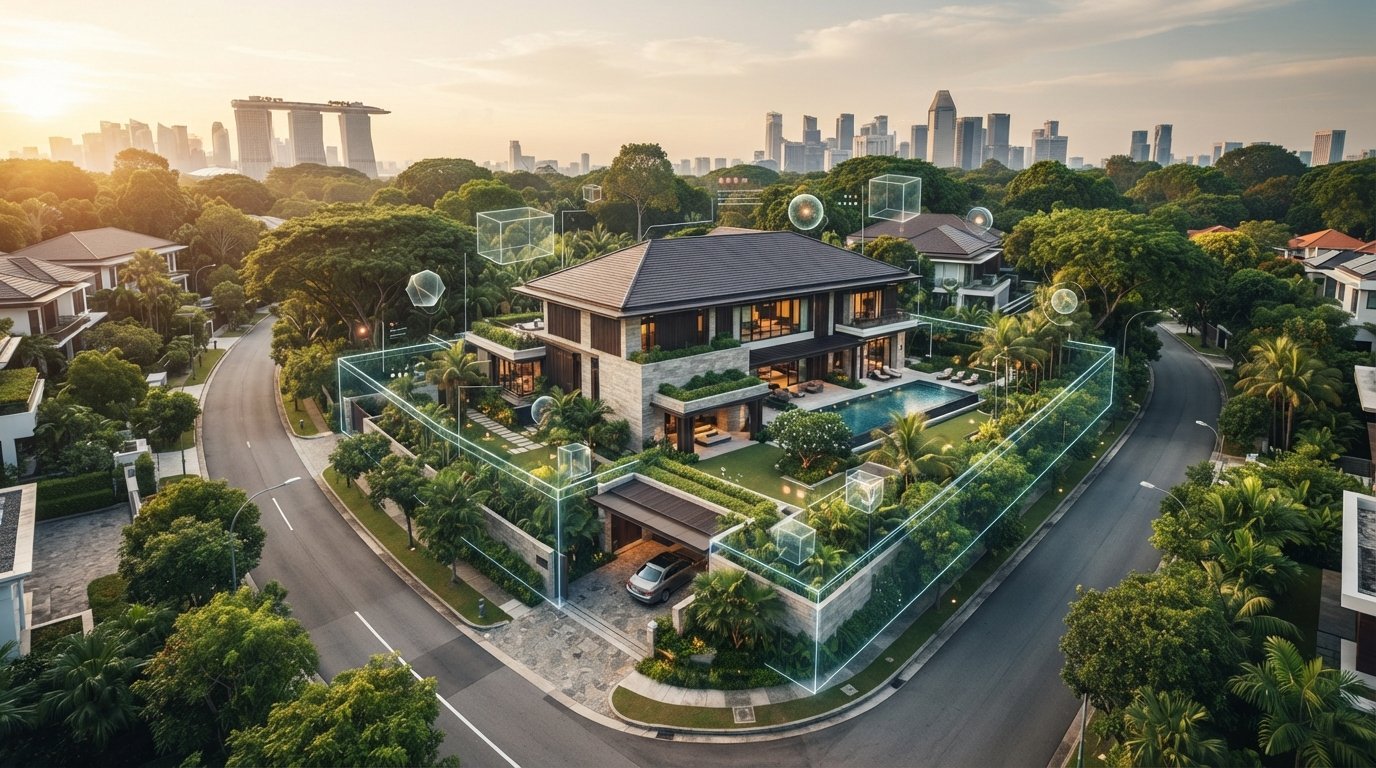
The sale of a Good Class Bungalow is not a standard real estate transaction; it’s the strategic divestment of a rare national legacy. With only about 2,800 gazetted properties in existence, your home belongs to an elite tier where traditional marketing often does more harm than good. This guide to selling a GCB in Singapore outlines a sophisticated framework for 2026 that prioritizes absolute discretion over public exposure. You’ve likely felt the frustration of dealing with unqualified “window shoppers” or the anxiety of navigating strict Residential Property Act restrictions. We understand that your priority is a seamless exit that preserves the property’s prestige.
We’ll show you how to move beyond the noise to find high-net-worth Singapore Citizens through a refined matchmaking process. This article promises to equip you with a calculated roadmap for maximizing value while protecting your private assets from the public eye. We’ll examine the nuances of strategic valuation, the impact of current 60% ABSD rates on the buyer pool, and the precise steps required to secure a record-breaking, vetted transaction.
Key Takeaways
- Understand the 2026 market dynamics where the scarcity of Singapore’s 2,800 gazetted units continues to drive premium value for legacy assets.
- Learn how to quantify a “prestige premium” by factoring in topography, plot shape, and the unique architectural heritage of your property.
- Discover why a “silent listing” strategy is the most effective guide to selling a GCB in Singapore while maintaining absolute privacy.
- Master the rigorous vetting protocols needed to filter for eligible Singapore Citizens and eliminate unqualified window shoppers.
- Gain insights into establishing precise Option to Purchase terms that protect your interests during complex, high-stakes transactions.
The GCB Market Landscape in 2026: A Seller’s Perspective
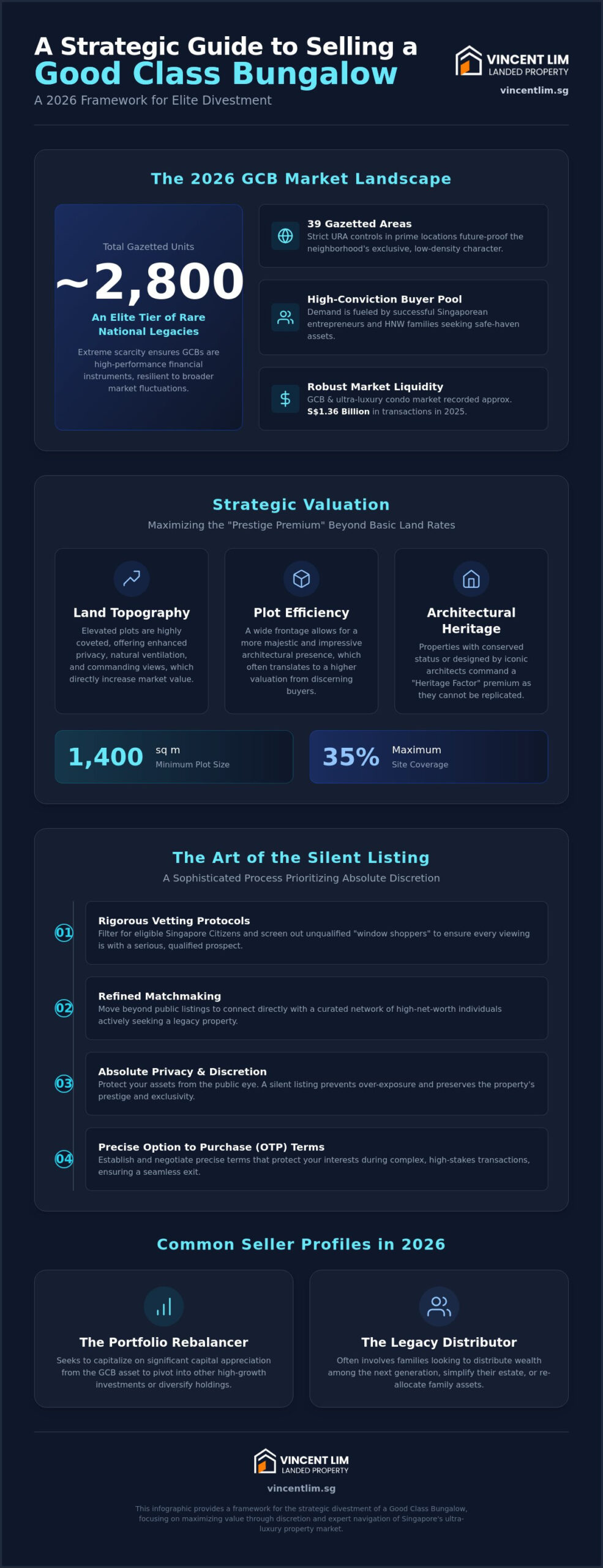
The Good Class Bungalow (GCB) remains the absolute pinnacle of the Singapore residential hierarchy. As we move through 2026, the fundamental appeal of this asset class is rooted in its extreme scarcity. Only about 2,800 gazetted GCB units exist across the island. This finite supply ensures that these properties aren’t just homes; they’re high-performance financial instruments. This guide to selling a GCB in Singapore acknowledges that while the broader market might experience cooling measures, the GCB segment operates on its own unique trajectory. It’s a market defined by limited supply and high-conviction buyers.
Current demand drivers are fueled by significant local wealth creation and a clear flight to safe-haven assets. We’re seeing a steady influx of successful Singaporean entrepreneurs and high-net-worth families looking for tangible ways to preserve capital. These buyers prioritize the prestige of land ownership and the long-term security that Singapore’s political and economic stability provides. The GCB asset class remains remarkably resilient against broader market fluctuations because it’s detached from the volatility of mass-market housing. While interest rate shifts might impact smaller residential segments, GCB buyers typically operate with high liquidity and multi-generational horizons.
Most sellers in 2026 are approaching the market from a position of strategic strength. We see two primary profiles: the portfolio rebalancer and the legacy distributor. The former seeks to capitalize on significant capital appreciation to pivot into other high-growth investments. The latter often involves families looking to distribute wealth among the next generation or simplify their holdings. Regardless of the motivation, the goal remains the same: executing a transaction that reflects the true value of a rare national asset.
The 39 Gazetted GCB Areas
Location remains the primary arbiter of value. The 39 gazetted areas, ranging from the ultra-prime Nassim and Cluny clusters to the tranquil enclaves of Binjai Park or Chestnut Drive, offer distinct buyer profiles. URA development controls are strict; to maintain the GCB status, sites must meet a minimum plot size of 1,400 square meters and a maximum site coverage of 35%. These regulations future-proof your sale by ensuring the neighborhood’s low-density character remains untouched. This regulatory protection is exactly what sophisticated buyers are willing to pay a premium for in an increasingly crowded city.
Market Sentiment and Liquidity for High-Value Assets
Liquidity in the ultra-luxury segment remains robust despite higher entry barriers. In 2025, the GCB and ultra-luxury condo market recorded transactions totaling approximately S$1.36 billion. This momentum has carried into 2026, driven by a new generation of Singaporean entrepreneurs seeking “trophy homes” that reflect their professional success and personal values. The GCB asset class in 2026 is defined by a permanent supply-demand imbalance that favors the patient, strategic seller who understands the value of their unique land holding.
Strategic Valuation: Maximizing the “Prestige Premium”
Setting the right price for a Good Class Bungalow requires looking far beyond basic land rates. A comprehensive guide to selling a GCB in Singapore must emphasize that no two plots are identical. While neighboring transactions provide a baseline, they don’t account for the “prestige premium” inherent in superior land characteristics or architectural pedigree. Professional valuation serves as a critical anchor in this process, balancing historical market data with the unique, intangible assets of your property to ensure an asking price that is both ambitious and defensible.
We often see sellers focus solely on the price per square foot of recent sales, but this ignores the “Heritage Factor.” Properties with conserved status or those designed by iconic architects often command a significant premium because they cannot be replicated. Assessing whether your property holds more value as a redevelopment site or as a “move-in” luxury residence is a pivotal strategic decision. A meticulously maintained home with modern amenities may attract a different, more immediate buyer pool than a plot valued primarily for its rebuilding potential.
Land Topography and Plot Efficiency
The physical profile of your land significantly dictates its market value. Elevated plots are highly coveted for their natural ventilation, enhanced privacy, and command over the surrounding landscape. Similarly, a wide frontage allows for a more majestic architectural presence, which often translates to a higher valuation. It’s essential to consult URA’s official GCB guidelines to understand how setback requirements and site coverage limits affect your plot’s usable area. In some cases, exceptionally large plots hold hidden value through subdivision potential, provided they meet the minimum 1,400 square meter threshold for each resulting title.
Quantifying Architectural and Lifestyle Value
Buyers in 2026 are increasingly discerning, placing higher premiums on bespoke interiors and high-end materials. We’re also seeing a rise in valuation for sustainable “green” features, such as advanced climate control systems and solar integration, which appeal to the modern, eco-conscious elite. Presenting these features requires a different approach than standard residential staging. It involves curated storytelling that highlights the lifestyle benefits of the home’s unique layout and design. To accurately assess how these factors influence your market position, you may wish to consult with a specialist in elite divestment who understands the nuances of the prestige premium.
Discreet Marketing: The Art of the “Silent Listing”
Traditional real estate marketing relies on maximum exposure, but the divestment of a Good Class Bungalow demands the exact opposite approach. Listing a multi-million dollar legacy asset on public portals often invites unqualified curiosity and can lead to price erosion through overexposure. This guide to selling a GCB in Singapore advocates for the “Silent Listing” strategy. This method prioritizes targeted matchmaking over broad-spectrum advertising, ensuring that your property remains an exclusive opportunity reserved for the most serious buyers.
A silent listing maintains competitive tension by creating a sense of scarcity and privilege among potential acquirers. Instead of a public bidding war, we orchestrate private negotiations with individuals who have already demonstrated the financial capacity and intent to acquire such a rare asset. This strategy protects your privacy and prevents the exposure of your private living spaces to the general public. While some reports on the GCB Market Landscape in 2026 indicate shifts in transaction volumes, the demand for truly unique, off-market properties remains consistently high among the ultra-wealthy.
The Role of the Elite Strategist
In a discreet sale, your agent functions as a high-level gatekeeper. The vetting process is rigorous; we verify buyer eligibility and proof of funds long before a physical viewing is even discussed. This eliminates “window shoppers” and ensures that every visitor is a qualified Singapore Citizen capable of completing the transaction. We craft a bespoke narrative that moves beyond simple specifications to highlight the property’s historical significance and architectural merit. This resonates deeply with Ultra-High-Net-Worth Individuals who view land as a multi-generational legacy rather than just a residence.
Targeted Outreach and Global-Local Synergy
The effectiveness of a silent listing depends on the strength of the agent’s professional network. By leveraging the extensive OrangeTee & Tie network, we identify potential buyers through internal databases and private wealth circles. This outreach is supported by high-quality digital collateral, such as private walk-through videos and professional lookbooks, shared only with vetted leads. Every viewing is managed with the precision of a private gallery tour. We control the environment, the timing, and the information flow to ensure that the property’s value is reinforced at every touchpoint.
Navigating the Transaction Process and Eligibility Hurdles
Executing a successful exit from a Good Class Bungalow requires a meticulous approach to the regulatory and financial framework governing these elite assets. Unlike standard residential sales, the GCB transaction is defined by rigorous eligibility checks and specialized legal requirements. This guide to selling a GCB in Singapore emphasizes that the seller’s responsibility begins long before the signing of the contract. It involves proactive vetting to ensure that the transaction proceeds without the risk of regulatory rejection or financial complications.
The timeline for a GCB sale is often more extended than that of a typical condominium or terrace house. While a standard completion might take 10 to 12 weeks, luxury transactions frequently require 12 to 16 weeks to accommodate complex financing arrangements and thorough legal due diligence. Coordinating with specialized legal counsel who understands GCB conveyancing is essential. These professionals ensure that the Option to Purchase (OTP) includes specific clauses that protect your interests, particularly regarding the buyer’s eligibility and the handling of substantial earnest money deposits.
The GCB transaction process typically follows this 4-step sequence:
- Step 1: Granting a customized Option to Purchase (OTP) with terms specific to the GCB’s unique characteristics.
- Step 2: Rigorous verification of the buyer’s Singapore Citizenship and financial standing.
- Step 3: The buyer exercises the Option, followed by the payment of the balance deposit, usually 5% or 10% of the purchase price.
- Step 4: Legal completion and formal handover, managed by specialized conveyancing lawyers.
The Residential Property Act and Buyer Restrictions
The most significant hurdle in any GCB sale is the Residential Property Act. Ownership is strictly restricted to Singapore Citizens. While Permanent Residents can technically apply for approval from the Land Dealings Approval Unit (LDAU), such exceptions are rare and typically require proof of “exceptional economic contribution” to Singapore. As a seller, it’s vital to confirm that your buyer has the necessary approvals or the correct citizenship status before granting an OTP. This prevents the property from being tied up in a transaction that the authorities will ultimately not permit.
Financial Milestones and Tax Obligations
Sellers must also remain mindful of their own tax obligations, specifically the Seller’s Stamp Duty (SSD). If you are selling your GCB within the first three years of acquisition, you’ll be liable for SSD at rates of 12% for the first year, 8% for the second, and 4% for the third. There is no SSD liability after a three-year holding period. Managing the logistics of large earnest money deposits also requires precision; these funds are typically held in escrow by the buyer’s solicitor or the Singapore Academy of Law. To ensure every regulatory detail is managed with absolute precision, you should secure a consultation with a GCB specialist who can guide you through these complexities.
The Vincent Lim Advantage: Expertise in Elite Divestment
Vincent Lim brings over two decades of specialized experience to the luxury landed market. Since 2004, he’s operated as an Executive Associate Director at OrangeTee & Tie, refining a method that prioritizes the seller’s long-term interests over quick transactions. This guide to selling a GCB in Singapore has highlighted the complexities of valuation and discretion; Vincent’s role is to manage these variables with calculated precision. He treats every Good Class Bungalow as a unique masterpiece, recognizing that the home’s value lies as much in its heritage and topography as its land size.
Access to a refined network is the cornerstone of any high-stakes divestment. Vincent maintains direct relationships with high-net-worth investors and legacy families who are actively seeking to expand their residential portfolios. This internal database, supported by the robust OrangeTee & Tie network, allows for a matchmaking process that remains entirely off-market. Vincent’s advantage is built on four core pillars:
- Seasoned Market Authority: Active in the GCB segment since 2004 with deep industry knowledge.
- Elite Matchmaking: Direct access to vetted Singapore Citizens and institutional family offices.
- Strategic Valuation: Mastery in quantifying the “prestige premium” of unique architectural plots.
- Absolute Discretion: Proven success with “silent listings” that protect the owner’s privacy.
A Legacy of Successful Transactions
Vincent’s strategic guidance extends beyond a single sale. He helps owners navigate the broader context of their wealth, utilizing the asset progression to landed property singapore framework to ensure each move strengthens a family’s financial legacy. Whether you’re divesting a heritage GCB or looking for a detached house for sale singapore, professional representation is critical. It provides the necessary buffer to filter out unqualified leads and allows you to negotiate from a position of absolute authority and calm competence.
Your Partner in GCB Success
Every property requires a customized marketing plan that respects its unique architectural narrative and historical significance. Vincent coordinates the entire divestment process, from the initial strategic valuation to the final legal handover, with a focus on seamless execution and meticulous attention to detail. This disciplined approach has consistently delivered record-breaking results for clients who demand a gold standard of service. This comprehensive guide to selling a GCB in Singapore serves as your foundation, but the actual execution requires a specialist’s touch to maximize the prestige premium. If you’re ready to explore a discreet exit and protect your property’s legacy, Consult with Vincent Lim for a bespoke GCB divestment strategy.
Secure Your Legacy with Strategic Divestment
Success in the GCB market depends on more than just a willing buyer; it requires a calculated approach to scarcity and prestige. We’ve explored how the limited supply of 2,800 gazetted units and the nuances of the “prestige premium” dictate value in 2026. By prioritizing discreet matchmaking over public exposure, you protect both your privacy and the property’s long-term standing. This guide to selling a GCB in Singapore provides the framework, but the execution relies on a partner who understands the weight of a legacy asset.
Vincent Lim, an Executive Associate Director at OrangeTee & Tie, has specialized in GCB and luxury landed properties since 2004. His expertise in high-value asset progression ensures that your divestment is handled with the precision of an elite strategist. Navigating these complexities alone can be overwhelming; however, with professional guidance, you’ll achieve a seamless, record-breaking result. Take the first step toward a successful transaction today. Contact Vincent Lim for a confidential GCB valuation and marketing consultation to ensure your property receives the bespoke representation it deserves.
Frequently Asked Questions
Can I sell my GCB to a foreigner or a PR in 2026?
No, ownership of Good Class Bungalows is strictly limited to Singapore Citizens under the Residential Property Act. While Permanent Residents can technically apply for approval from the Land Dealings Approval Unit (LDAU), such grants are exceptionally rare and reserved for those with significant economic contributions. Foreigners remain completely ineligible to purchase these properties, ensuring the asset class remains a protected national legacy.
How long does it typically take to sell a Good Class Bungalow?
A GCB transaction generally requires a longer timeline than standard residential sales, often taking between 12 to 16 weeks for legal completion. The marketing phase can vary significantly depending on whether you choose a discreet “silent listing” or a more traditional approach. Given the high stakes, the vetting process for buyers is more rigorous, which naturally extends the duration of the transaction.
What is the most effective way to value a GCB with an older building?
The most effective valuation for an older property focuses on the land’s redevelopment potential and its unique physical attributes. This guide to selling a GCB in Singapore emphasizes that plot shape, wide frontage, and topography are the primary value drivers. Buyers in this segment often prioritize the ability to rebuild a bespoke residence that maximizes the 35% site coverage allowed by URA guidelines.
Should I renovate my GCB before putting it on the market?
You shouldn’t undertake major renovations because most ultra-high-net-worth buyers prefer to customize or entirely rebuild the property to their own specifications. It’s more strategic to focus on essential maintenance and professional staging that highlights the land’s scale and prestige. Overcapitalizing on aesthetic renovations can be counterproductive if the buyer intends to pursue a full reconstruction after the purchase.
How do I ensure my sale remains private and off the public portals?
You can maintain absolute privacy by engaging an elite strategist who specializes in off-market “silent listings.” This approach bypasses public real estate portals entirely, relying instead on a refined network of vetted, high-net-worth Singapore Citizens. By controlling the flow of information and managing private viewings, you protect your asset’s exclusivity and prevent your private living spaces from being exposed to the general public.
What are the main differences between selling a standard bungalow and a GCB?
The primary differences involve plot size, location, and buyer eligibility. A GCB must have a minimum land area of 1,400 square meters and must be situated within one of the 39 gazetted areas defined by the URA. Standard bungalows don’t have these strict size requirements and aren’t subject to the same level of citizenship restrictions, making the GCB a far more exclusive and regulated asset class.
What are the legal fees involved in a GCB transaction?
Legal fees for GCB transactions are typically higher than standard residential properties because the conveyancing process is significantly more complex. You’ll need specialized legal counsel to draft bespoke Option to Purchase terms and manage the rigorous due diligence required for high-value legacy assets. These costs reflect the high level of professional accountability and precision needed to ensure a seamless transfer of ownership.
How does the current ABSD environment affect GCB sellers?
The current ABSD environment moderates the buyer pool by increasing the acquisition cost for Singapore Citizens purchasing their second or third residential properties. While the 60% ABSD rate for foreigners doesn’t directly impact GCB buyers, the 20% to 30% rates for citizens can influence the timing of a purchase. Sellers must be aware that these tax obligations can lead buyers to be more calculated in their negotiations.