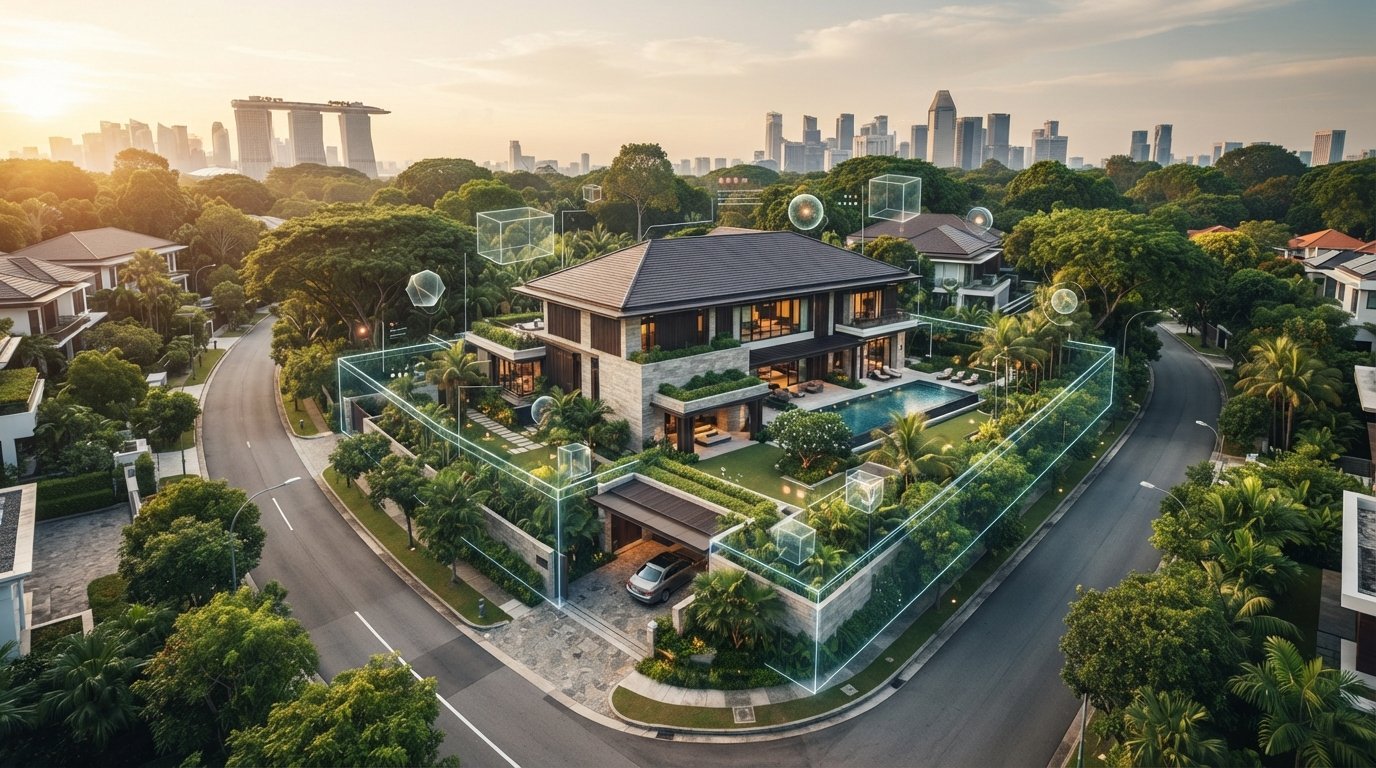
A bank valuation is often the floor, not the ceiling, of your property’s true worth in a market defined by absolute scarcity. When you’re holding a rare asset like a Good Class Bungalow or a prime semi-detached home, relying on standard algorithms can leave millions on the table. You likely recognize that your land’s specific dimensions, frontage, and redevelopment potential carry a value that automated reports simply can’t capture. Mastering how to price landed property for sale in Singapore requires a shift from basic comparison to strategic valuation, ensuring you don’t underprice a legacy asset.
This 2026 guide provides the data-backed methodologies needed to accurately value your home while accounting for the latest URA land transaction trends. You’ll gain the confidence to defend a premium asking price to even the most seasoned buyers and savvy investors. We’ll explore how to balance land scarcity against built-up conditions and position your asset for a maximum return through a meticulous, elite strategist’s approach that prioritizes your success.
Key Takeaways
- Distinguish between land value and built-up quality to ensure your property’s price reflects the inherent scarcity of the plot.
- Master the strategic process of how to price landed property for sale singapore by identifying accurate comparables and adjusting for land size nuances.
- Bridge the gap between conservative bank valuations and actual market demand using data-backed evidence to defend your asking price.
- Account for the prestige premium of Good Class Bungalows and analyze redevelopment potential to attract high-value investors.
- Utilize sophisticated anchor pricing techniques to position your asset strategically, facilitating a smooth negotiation process for a premium result.
Understanding the Fundamental Pillars of Landed Property Valuation
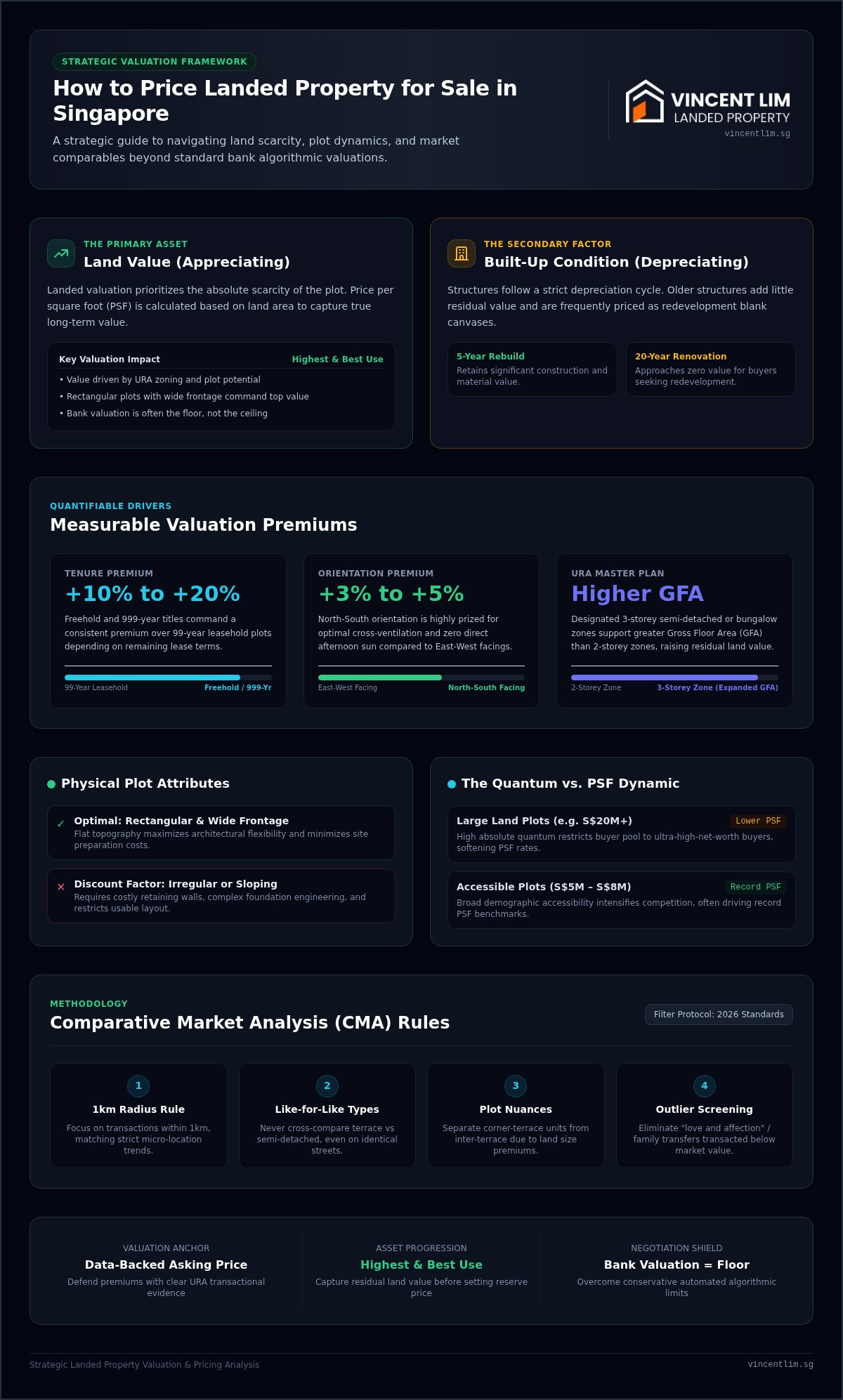
Landed property valuation is a complex discipline that prioritizes the scarcity of the plot over the temporary nature of the structure. While condominium owners focus on built-up floor area, landed owners must look at the land itself. Understanding how to price landed property for sale singapore starts with recognizing that the land is the appreciating asset, while the building is a depreciating one. Experts utilize various real estate appraisal methodologies to determine this balance, often placing higher weight on the potential of the site rather than its current state.
Tenure remains a primary driver of value. Freehold and 999-year titles typically command a 10% to 20% premium over 99-year leasehold properties, depending on the remaining lease and market conditions. In the landed market, the industry standard is to calculate price per square foot (PSF) based on land area. This metric allows for a direct comparison of land scarcity, though it must be adjusted for physical attributes. When determining how to price landed property for sale singapore, you must weigh factors like land shape and frontage. A rectangular plot with a wide frontage and flat topography is significantly more valuable than an irregular or sloping plot that requires expensive retaining walls.
Land Value vs. Built-up Condition
Pricing a property in “original condition” often means valuing it as a redevelopment site. In these cases, the existing structure adds little to no value; the buyer is essentially purchasing a blank canvas. Modern renovations do command a premium, but they follow a strict depreciation cycle. A house rebuilt five years ago may retain a significant portion of its construction value, whereas a 20-year-old renovation might be valued at zero by a discerning buyer. Residual land value is the price a developer would pay based on the end-product’s potential.
The Role of Plot Ratio and URA Master Plan
The URA Master Plan dictates the future utility of your land. Properties located in designated 3-storey semi-detached or bungalow zones are worth more than those in 2-storey zones because they allow for greater Gross Floor Area (GFA). This potential for expansion is a core component of asset progression to landed property singapore. Savvy sellers understand that their asking price must account for the “highest and best use” of the land, ensuring they don’t leave money on the table when selling to developers or high-net-worth individuals looking to build a legacy home.
Step-by-Step CMA Guide for Landed Homes
A Comparative Market Analysis (CMA) is the cornerstone of any sophisticated pricing strategy. To understand how to price landed property for sale singapore, you must look beyond raw numbers and high-level averages. Start by identifying ‘true’ comparables within a 1km radius of your property. In the 2026 market, proximity remains a dominant factor, but you must ensure you’re comparing like-for-like. A terrace house shouldn’t be priced against a semi-detached home, even if they share the same street. Precision is the key to accuracy.
Adjusting for land size is where many sellers falter. Larger plots often command a lower price per square foot (PSF) but result in a much higher absolute quantum. This happens because the pool of buyers who can afford a S$20 million entry point is smaller than those looking at the S$5 million to S$8 million range. Conversely, smaller plots often achieve record-breaking PSF because the total price remains accessible to a wider demographic. Data alone isn’t enough. You must interpret the numbers through the lens of buyer psychology and financial capability.
Time and orientation are the final critical variables in your primary calculation. In 2026, market cycles move rapidly; a transaction from six months ago might already be outdated. Additionally, a North-South orientation is highly prized in Singapore for its cross-ventilation and lack of direct afternoon sun. This attribute alone can justify a 3% to 5% premium over properties with an East-West facing. These nuances separate a standard listing from a premium sale.
Identifying Relevant Transactional Data
Precision is vital when filtering URA caveats. You must distinguish between inter-terrace and corner-terrace units; the latter typically enjoys more land and natural light, commanding a significant premium. It’s also essential to screen for ‘family transfers’ or ‘love and affection’ sales. These transactions often occur below market value and can skew your data if not identified as outliers. Consulting URA guidelines on buying residential property in Singapore ensures you’re interpreting zoning and transaction data with the necessary regulatory context.
Adjusting for Qualitative Attributes
Quantitative data provides the skeleton, but qualitative attributes provide the soul of the price. For detached houses, a ‘privacy premium’ is often applied if the plot isn’t overlooked by neighbors. Proximity to transport hubs is another delicate balance. While being near an MRT station adds value, being too close can result in a ‘noise discount’ that affects the final valuation. For a deeper look at these nuances, refer to our strategic guide to selling your landed property in Singapore. If you require a bespoke valuation that accounts for these variables, you may wish to connect with a specialist who understands the 2026 landscape.
Resolving Property Valuation Disputes and Bridging the Price Gap
Mastering how to price landed property for sale singapore involves more than just looking at the highest historical transaction. In the 2026 market, a recurring challenge for sellers is the “valuation gap” where bank appraisals fail to keep pace with rapid price appreciation. Banks are inherently conservative; they rely on historical data and rigid risk models. As a seller of a rare asset, you’re pricing based on future scarcity and redevelopment potential. This disconnect often leads to disputes during the mortgage application process, potentially stalling a premium sale if not managed with professional foresight.
To bridge this gap, you must move beyond a “Desktop Valuation,” which is a preliminary estimate based on automated algorithms. Instead, insist on a “Full Valuation” report where an appraiser physically inspects the property. This allows for the inclusion of premium finishes, structural enhancements, and site-specific advantages that a computer cannot see. When you’re finalizing how to price landed property for sale singapore, you must decide whether to wait for the bank to catch up or to target buyers who prioritize asset rarity over immediate loan leverage.
Navigating the ‘Valuation Gap’
When a bank valuation comes in lower than your asking price, the buyer’s loan amount is capped, forcing them to cover the difference in cash. Cash Over Valuation (COV) dynamics apply to rare landed assets because their intrinsic value often exceeds the rigid risk-assessment models of commercial banks. To justify this premium, provide evidence of recent “un-caveated” sales. These are transactions that have been signed but not yet reflected in the official Urban Redevelopment Authority guidelines on buying residential property in Singapore databases. Presenting this real-time data can often persuade an appraiser to revise their figures upward.
Expert Representation in Price Negotiations
Managing the appraiser’s perspective requires a strategic touch. An elite strategist doesn’t just open the door for the valuer; they present a “valuation kit” that highlights intangible assets. This includes architectural awards, unique heritage status, or specific plot advantages like a wider-than-average frontage. These details provide the justification the appraiser needs to move toward the higher end of their valuation range. Consulting a landed property specialist provides the necessary mediation to align these divergent perspectives, ensuring your price is supported by both data and expert narrative.
Factoring in Scarcity: GCB Prestige and Redevelopment Potential
Good Class Bungalows (GCBs) occupy the pinnacle of the residential hierarchy. Unlike standard detached homes, GCBs are protected by strict planning constraints, including a minimum land size of 1,400 sqm. This creates an absolute supply cap that insulates the segment from broader market volatility. When analyzing how to price landed property for sale singapore, you must recognize that GCBs operate on a scarcity-driven economy where trophy prices often transcend traditional PSF comparisons. These are legacy assets, frequently held across generations to preserve multi-generational wealth.
Pricing these assets requires a sophisticated understanding of land utility. A plot’s value isn’t just a reflection of its current square footage; it’s a calculation of its future potential. Whether you’re dealing with a sprawling estate or a more compact detached home, the “highest and best use” principle must guide your asking price. Understanding how to price landed property for sale singapore involves identifying whether the land can be optimized through redevelopment or if its current architectural state already commands a premium.
The Good Class Bungalow (GCB) Pricing Framework
Establishing an accurate value requires a deep dive into the definition of a Good Class Bungalow. Factors like conservation status can impact price significantly. While a conserved facade adds historical prestige, it also limits redevelopment flexibility, which may deter some developers while attracting heritage collectors. You must distinguish between an entry-level GCB and a trophy acquisition. A trophy property often features a perfectly rectangular plot, elevated topography, and a prestigious address, justifying a massive premium over more utilitarian plots within the same designated area.
Redevelopment Potential as a Value Multiplier
For many investors, the value lies in what the land can become. Pricing a detached house for sale in Singapore requires a developer’s mindset. If a large detached plot meets the minimum frontage and depth requirements for subdivision, it can often be converted into two semi-detached units. This potential for profit within a single title creates a significant value multiplier. Wide frontage is the most sought-after physical trait here. It allows for grand architectural expressions and ensures that both future units maintain significant curb appeal and internal natural light.
Identifying these hidden opportunities is essential for maximizing your return. You shouldn’t price based on the current building if the land’s true value lies in its potential for a modern masterpiece or a dual-unit development. Strategic positioning ensures you attract the right profile of high-net-worth buyers or boutique developers. If you’re ready to unlock the full potential of your land, reach out for a bespoke strategic consultation to ensure your asset is positioned for a record sale.
Executing a Premium Pricing Strategy for Maximum Returns
Strategic execution is the final step in realizing the value identified through previous valuation pillars. When determining how to price landed property for sale singapore, you must employ anchor pricing. This technique involves setting a strategic ceiling that provides a buffer for negotiation without devaluing the asset. A common mistake is pricing too low to attract volume. In the luxury segment, an underpriced home often triggers red flag suspicions regarding structural integrity or land issues. Savvy buyers expect a price that reflects the asset’s prestige; anything less can stall a transaction before it begins.
Visual storytelling is essential for justifying a premium. Professional staging and high-end cinematography aren’t just marketing tools; they’re structural components of your pricing strategy. They transform a physical building into a lifestyle narrative that resonates with a buyer’s aspirations. While market timing in 2026 remains influenced by broader economic shifts, the inherent scarcity of landed homes means that a well-positioned property can command top dollar regardless of the season. The goal is to create a sense of urgency through quality, not just availability.
The White-Glove Marketing Approach
High-end properties require a bespoke outreach strategy that transcends standard property portals. For Good Class Bungalows and elite detached homes, leveraging off-market networks is often the most effective way to secure a record price. This approach maintains privacy while creating a narrative of scarcity and legacy. Whether you’re selling a sprawling estate or a terrace house for sale in Singapore, the asset must be presented as a premier opportunity. We focus on the unique history and future potential of the plot to ensure buyers see the long-term value beyond the current PSF.
Partnering with an Elite Strategist
Success in the 2026 landed market requires a partner who operates with the precision of a strategist. Vincent Lim utilizes over 20 years of industry experience to refine asking prices based on real-time transaction data and URA trends. For privacy-conscious sellers, having a single point of contact ensures that the sale remains discreet while reaching the right high-net-worth circles. This disciplined approach eliminates the stress of high-stakes negotiations and replaces it with a calculated path to a premium result. Secure a strategic valuation with Vincent Lim today to begin your journey toward a maximum return.
Maximizing Your Asset Value in a Scarcity-Driven Market
Pricing a landed home in 2026 requires more than a cursory glance at recent transactions. You’ve learned that true value lies in the intersection of land scarcity, redevelopment potential, and the strategic bridging of the bank valuation gap. Mastering how to price landed property for sale singapore ensures that your asking price reflects the unique physical attributes and legacy prestige of your plot, moving beyond standard algorithms to capture true market worth.
When managing high-quantum assets like Good Class Bungalows or prime semi-detached homes, precision is your most valuable currency. Vincent Lim (OrangeTee & Tie) brings over 20 years of Singapore real estate experience and a specialized focus on the GCB and luxury landed segments to every transaction. His proven track record in high-quantum asset divestment provides the peace of mind you need when navigating complex negotiations. Book a Strategic Landed Property Valuation with Vincent Lim (OrangeTee & Tie) to ensure your home is positioned for a record-breaking result. Your legacy deserves an elite strategist’s touch.
Frequently Asked Questions
How do I know if my landed property has redevelopment potential?
Redevelopment potential is determined by the URA Master Plan zoning and the physical dimensions of your plot. You must check if your land allows for a higher number of storeys or if the frontage meets the minimum requirements for subdivision. This technical assessment is a core part of how to price landed property for sale singapore, as developers prioritize land that offers the highest possible built-up area for future projects.
Why is the bank valuation for my house lower than my neighbor’s recent sale?
Bank valuations often reflect historical data, while recent sales in your area may represent current market sentiment. If your neighbor’s sale was a record high, banks might not have updated their benchmarks yet. Your neighbor’s property might also have superior site attributes, such as a wider frontage or better topography. It’s essential to analyze specific caveats to identify if that sale was a genuine market transaction or an outlier.
Does the condition of my house interior matter when pricing a freehold plot?
While the land is the primary appreciating asset for freehold plots, the interior condition still influences the buyer profile. A house in original condition is priced based on residual land value for redevelopment. Conversely, a modern, well-maintained interior appeals to families looking for immediate occupation. When considering how to price landed property for sale singapore, you must decide if you’re targeting developers or end-users, as their valuation metrics differ significantly.
What is the ‘Prestige Premium’ for a Good Class Bungalow (GCB)?
The ‘Prestige Premium’ for a Good Class Bungalow (GCB) stems from its absolute scarcity and the strict 1,400 sqm minimum land size requirement. GCBs are located within designated exclusive zones, making them the most coveted residential asset class in the country. This premium isn’t just about size; it reflects the status and legacy value of owning a property that is protected from high-density redevelopment, ensuring long-term wealth preservation.
Can I price my property higher if it has a wide frontage?
Yes, a wide frontage significantly increases the value of your property by offering greater architectural flexibility and potential for subdivision. Plots with a frontage of 10 meters or more are highly prized because they allow for a grander entrance and better natural light. If your land is large enough to be split into two semi-detached units, the frontage becomes a critical multiplier that justifies a higher asking price than narrower, deeper plots.
How often should I revise my asking price in a fluctuating 2026 market?
In the fluctuating 2026 market, you should review your asking price every three to six months based on the latest URA transaction data. Real estate cycles move quickly, and holding a static price for too long can result in a stale listing. An elite strategist monitors monthly caveats to ensure your property remains competitively positioned. This proactive approach allows you to adjust your strategy before market sentiment shifts, protecting your final sale price.
What documents do I need to provide for an accurate landed property valuation?
To secure an accurate valuation, you should provide the latest title deed, certified floor plans, and a copy of the property tax bill. If you’ve recently conducted structural upgrades or have a professional land survey, these documents are vital for the appraiser. Providing a comprehensive valuation kit helps justify a higher price by highlighting the tangible improvements and specific land advantages that automated desktop reports often overlook during a preliminary assessment.
Is a corner terrace always worth more than an inter-terrace?
A corner terrace is typically worth more than an inter-terrace because it offers a larger land area, better ventilation, and more natural light. These units often feature a side garden, providing a sense of space similar to a semi-detached home. However, the higher land area results in a larger absolute quantum. While the price per square foot might be comparable, the total price is usually higher, reflecting the unit’s superior privacy and utility.