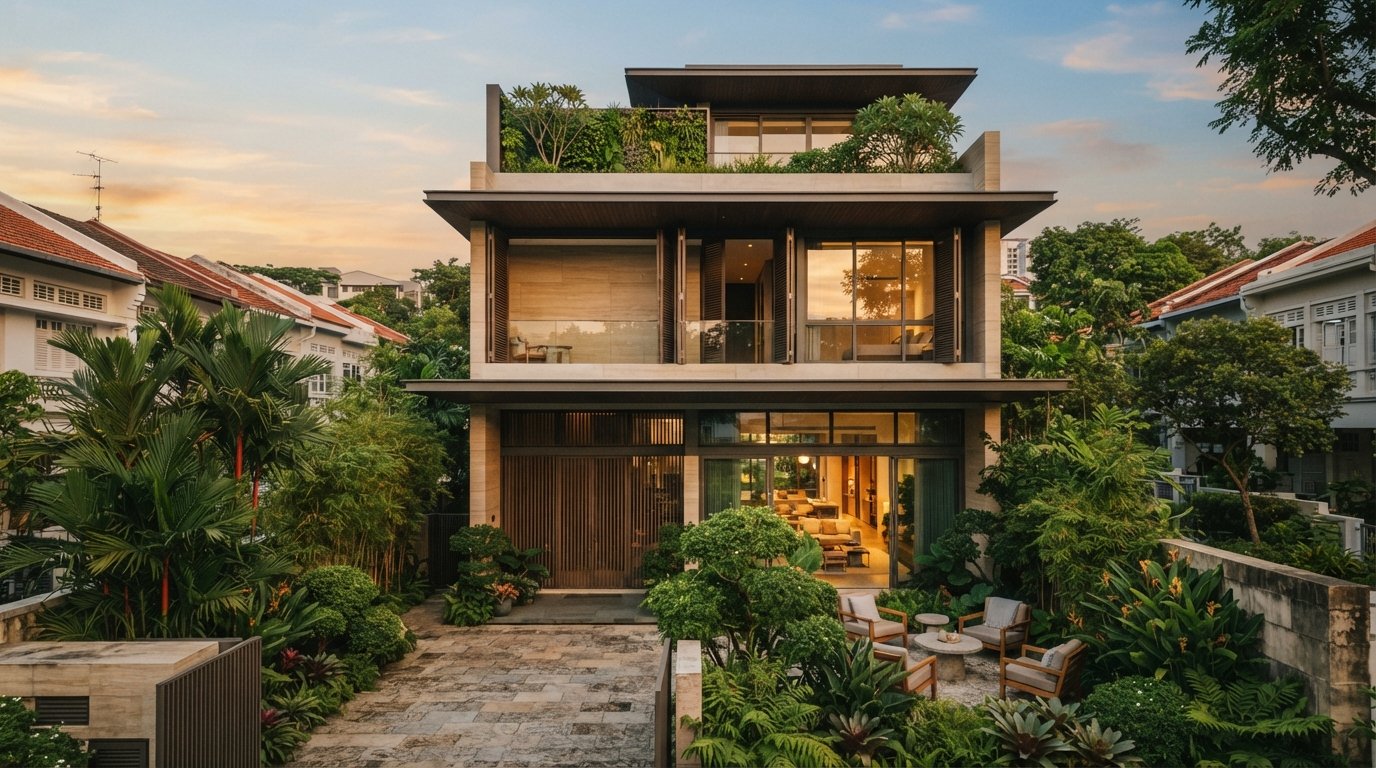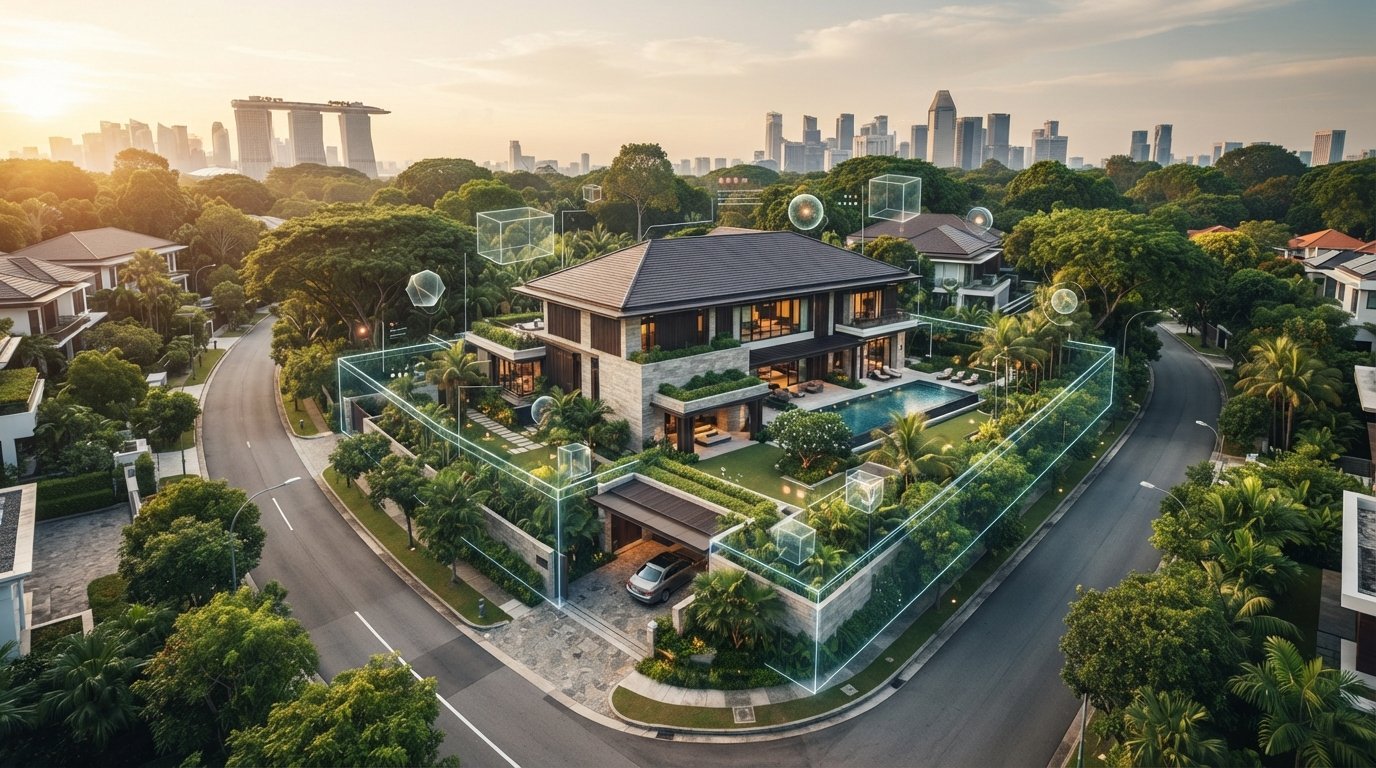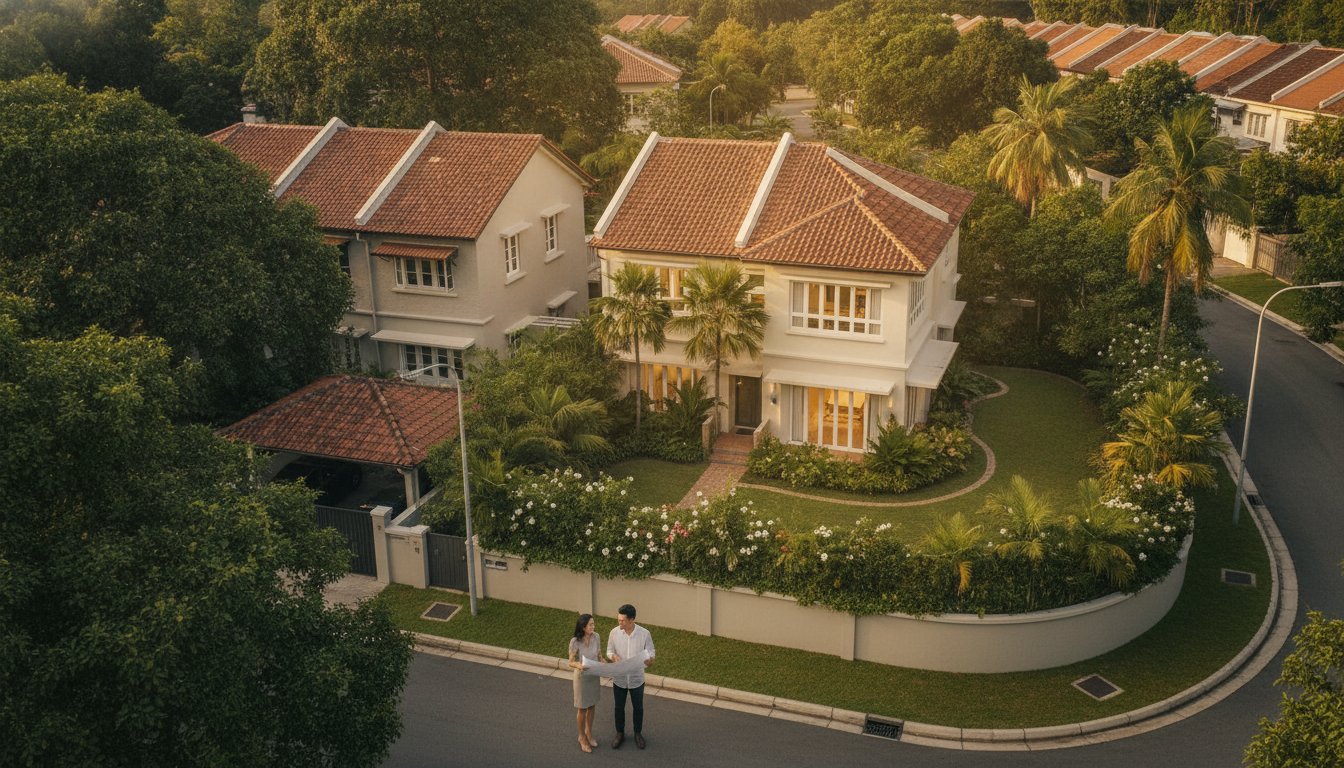
What if the true value of your landed investment isn’t found in the structure itself, but in the specific land-to-building ratio that most buyers overlook? With landed property prices increasing by 2.6% in the second quarter of 2026, the barrier to entry has reached a significant threshold. Achieving consistent capital appreciation landed property singapore now requires moving beyond simple market sentiment toward a technical analysis of land scarcity and redevelopment potential.
It’s natural to feel concerned about overpaying at a four-year market high or to feel confused by the current decoupling of leasehold and freehold pricing. We recognize that securing a 20 year wealth preservation plan demands a disciplined, data-driven approach rather than guesswork. This guide provides the precise economic drivers and selection criteria you need to identify undervalued assets in Singapore’s most exclusive housing segment. We’ll outline a clear framework for evaluating long-term ROI and help you understand how to manage redevelopment costs with absolute confidence.
Key Takeaways
- Understand how a fixed land supply creates a defensive “hard floor” for prices, ensuring your investment maintains resilience against broader market shifts.
- Learn to navigate the 2026 decoupling effect between freehold and leasehold assets to maximize the capital appreciation landed property singapore provides.
- Identify “under-built” plots where the existing structure is below allowable limits, enabling you to unlock significant value through strategic redevelopment.
- Master the balance between holding costs and long-term gains to ensure your wealth preservation plan remains robust over a multi-decade horizon.
- Discover why the most strategic landed acquisitions often occur off-market and how meticulous due diligence prevents costly technical oversights.
The Scarcity Premium: Why Landed Property Leads Capital Appreciation in Singapore
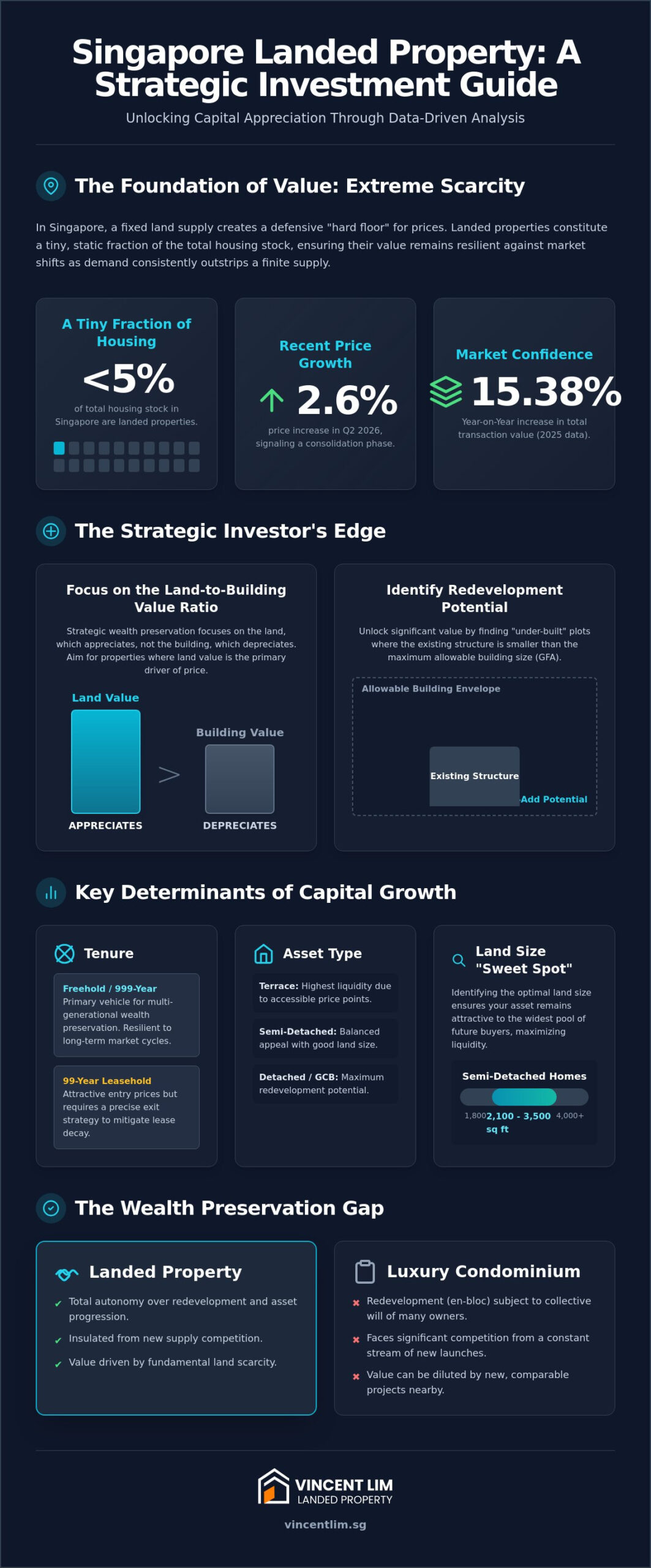
The concept of a “hard floor” in real estate refers to a price level supported by fundamental scarcity. In Singapore, this floor is reinforced by the government’s strict land use policies. Landed properties constitute less than 5% of the total housing stock, a figure that remains virtually static while the affluent population grows. This structural imbalance is the primary engine behind capital appreciation landed property singapore, as demand consistently outstrips a finite supply. It’s not just about owning a home; it’s about holding a piece of an island where the “pure landed” inventory is effectively capped.
The 2025 transaction data highlights this resilience, showing a 15.38% year-on-year increase in total transaction value. While some investors feared a peak, the 2.6% price increase in Q2 2026 suggests that the market has moved into a consolidation phase rather than a decline. For the strategic investor, these entry points represent a move into assets that remain insulated from the volatility often seen in the mass-market condominium segment. Ownership of land is the ultimate “end-game” on the Singapore property ladder, and the psychological prestige of this asset class ensures a permanent pool of buyers.
Understanding the Land-to-Building Value Ratio
A common error among novice buyers is overvaluing the physical structure. Buildings are depreciating assets; they require maintenance and eventually succumb to obsolescence. Strategic wealth preservation focuses on the land beneath the home. When the land-to-building value ratio is high, the investment is better protected. You should aim to identify properties where the structure doesn’t artificially inflate the price, allowing the land’s intrinsic value to drive your ROI. This prevents the “depreciating building” trap, where you pay a premium for renovations that may not hold their value in a decade.
Landed vs. Luxury Condominiums: The Wealth Preservation Gap
Luxury condominiums in Districts 9 and 10 often command high premiums, but they face significant competition from a constant stream of new launches. In contrast, a Good Class Bungalow or even a well-located terrace house offers a level of exclusivity that a high-rise cannot replicate. The en-bloc potential of a condominium is subject to the collective will of hundreds of owners; however, a landed homeowner retains total autonomy over redevelopment. This predictability is a cornerstone of the luxury condo vs landed: the wealth perspective. By owning the land, you control the timeline and the execution of the asset’s progression, ensuring that capital appreciation landed property singapore remains a calculated outcome rather than a market gamble.
Key Determinants of Capital Growth: Tenure, Land Size, and Asset Type
Successful investment in the landed segment requires moving beyond the “landed is scarce” generalization. To maximize capital appreciation landed property singapore, you must understand how specific asset characteristics influence price ceilings and liquidity. In 2026, we are observing a distinct decoupling effect between tenures. While 99-year leasehold landed properties can offer attractive entry prices and high rental yields, they require a precise exit strategy to avoid the effects of lease decay. Conversely, perpetual assets like freehold and 999-year titles continue to serve as the primary vehicles for multi-generational wealth preservation.
The performance of these assets is backed by hard data. According to the Official URA Landed Property Price Data, landed property prices saw a 2.6% increase in the second quarter of 2026 alone. This growth isn’t uniform across all types. Terrace houses often provide the highest liquidity due to their accessible price points, while detached houses and semi-detached homes benefit from larger land footprints that appeal to high-net-worth individuals looking for redevelopment potential. Identifying the “sweet spot” in land size, typically between 2,100 and 3,500 square feet for semi-detached homes, ensures your asset remains attractive to the widest pool of future buyers.
The Resilience of Freehold and 999-Year Assets
Freehold assets typically command a 15% to 20% premium over their leasehold counterparts. This gap often widens during market downturns as capital flights toward safety. These properties are often held for decades, creating a “Legacy Factor” that severely restricts secondary market supply. If you are evaluating a long-term position, reviewing the historical performance of freehold terrace houses can provide a clear roadmap of how these assets outpace inflation. If you need assistance identifying specific freehold opportunities that match your portfolio goals, feel free to reach out for a private consultation.
Good Class Bungalows (GCB): The Pinnacle of Capital Appreciation
At the apex of the market, Good Class Bungalows operate on an entirely different economic plane. With a minimum plot size of 1,400 square meters and strict eligibility criteria reserved for Singapore citizens, GCBs exhibit extreme price inelasticity. Their value is driven less by mortgage rates and more by the global movement of ultra-high-net-worth capital. For a comprehensive breakdown of the regulations governing these elite homes, you may refer to our guide on what is a good class bungalow. Understanding the nuances of these asset types is the first step in moving from a passive buyer to a strategic investor.
Strategic Selection: Identifying Redevelopment and Plot Ratio Triggers
The most sophisticated investors don’t view a landed home as a finished product; they see it as a land bank with untapped potential. Identifying properties that are “under-built” is a primary catalyst for capital appreciation landed property singapore. This “Old House Strategy” involves acquiring properties where the current Gross Floor Area (GFA) is significantly below the maximum allowable limit set by the Urban Redevelopment Authority (URA). By purchasing a legacy asset at a price primarily reflecting its land value, you position yourself to capture the value gap created through modern reconstruction.
The URA Master Plan acts as your strategic roadmap in this process. Zoning changes or adjustments to allowable building heights can transform a modest plot into a high-value development site overnight. For example, corner terraces and plots with wider frontages consistently command higher premiums because they offer greater architectural flexibility and better natural light. These physical attributes aren’t just aesthetic choices; they are functional triggers that ensure your asset remains highly sought after by future owner-occupiers who value space and design autonomy.
Analyzing Plot Ratio and Envelope Control
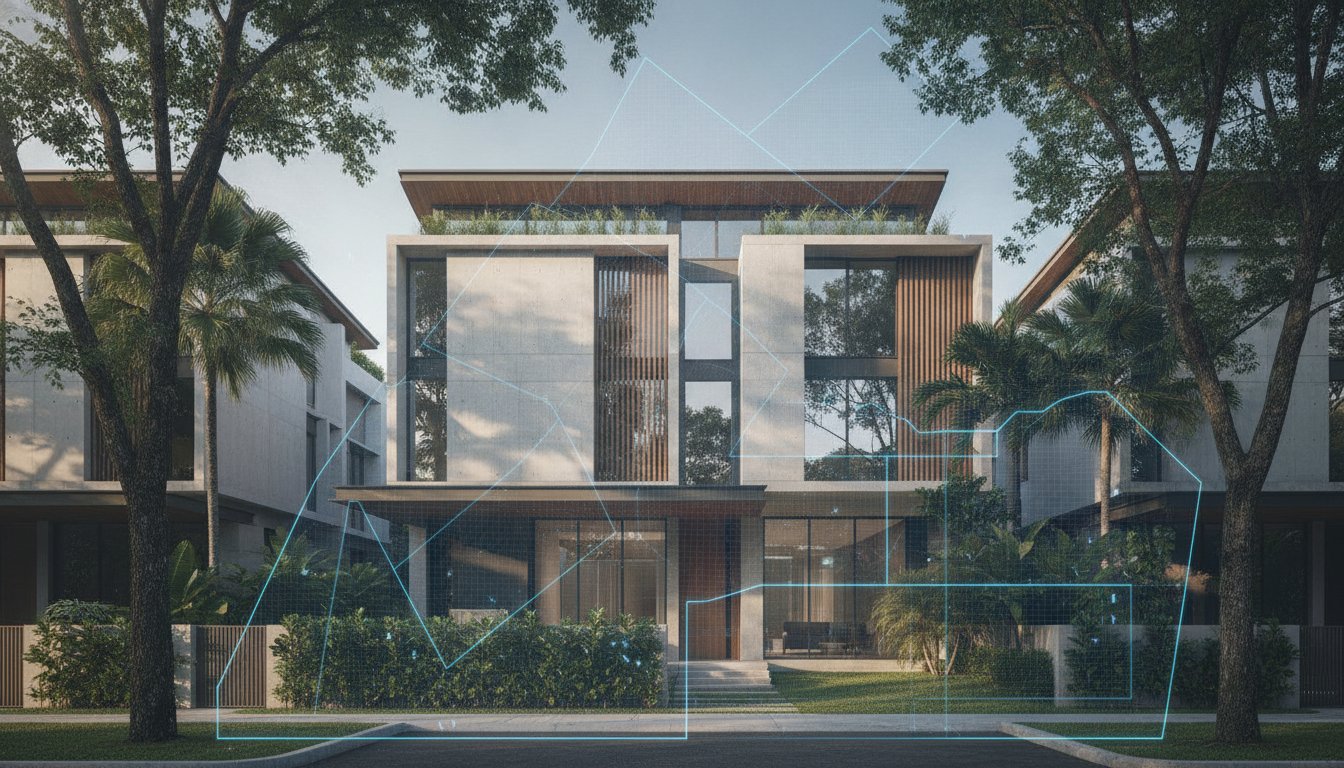
Modern redevelopment in Singapore is governed by Envelope Control guidelines, which focus on the overall building volume rather than rigid floor-to-floor heights. This allows for more creative use of space, including mezzanine levels and high-ceiling voids that increase the perceived and actual square footage. When evaluating a site, you must also consider the topography. While “high ground” plots offer prestige and better views, “level land” often results in more predictable construction costs and simplified drainage requirements. A property situated within a 3-storey allowable zone can effectively double the internal GFA of a legacy single-storey home through vertical expansion.
Frontage and Depth: The Hidden Value Metrics
Frontage is perhaps the most critical metric for long-term liquidity. A 7-meter frontage is often considered the gold standard for terrace houses, as it comfortably accommodates two cars and allows for a more grand entrance. If you’re looking at larger plots, the “sub-divisible jackpot” is the ultimate goal. This involves identifying a detached house on a large plot that meets the minimum width and depth requirements to be legally split into two semi-detached units. For a technical breakdown of how these factors influence your portfolio, explore our guide on landed property redevelopment potential. Understanding these technical triggers allows you to move beyond market speculation and focus on assets with built-in growth potential.
Financial Essentials: Balancing ROI with Asset Progression
The resilience of the landed market is largely sustained by the “Permanent Demand” theory. This concept posits that a consistent flow of affluent condominium upgraders creates a structural support for prices, even when broader market conditions fluctuate. As luxury condo owners reach their peak earning years, they naturally seek the autonomy and prestige of land ownership. This constant upward pressure ensures that capital appreciation landed property singapore remains a reliable outcome for those who enter the market with a long-term perspective. It’s not just a home purchase; it’s a strategic move into a segment where demand is historically decoupled from mass-market trends.
A realistic assessment of ROI must account for both holding costs and leverage. While landed property expenses, such as maintenance and property taxes, are higher than those for apartments, they are often offset by superior capital gains. For instance, non-owner-occupied landed properties face progressive tax rates from 12% to 36% in 2026. However, with mortgage rates remaining attractive, such as 2-year fixed rates starting from 1.40% as of June 2026, the cost of borrowing remains manageable for disciplined investors. Utilizing a 75% Loan-to-Value (LTV) ratio allows you to maximize your capital efficiency while staying within the 55% Total Debt Servicing Ratio (TDSR) framework.
The Condo-to-Landed Upgrading Path
Timing your exit from a non-landed asset is critical to maximizing your entry into the landed segment. You must carefully navigate the Seller’s Stamp Duty (SSD) timelines, which now involve a 4-year holding period for properties purchased on or after July 4, 2025. Managing these transitions effectively prevents capital from being eroded by unnecessary tax liabilities or missed market windows. For a structured roadmap on navigating these financial mechanics, refer to our asset progression to landed property singapore guide. If you are ready to evaluate your current portfolio for an upgrade, book a strategic asset review here.
Legacy Planning and Wealth Transfer
Landed property serves as a cornerstone for multi-generational wealth transfer in Singapore. Many elite investors utilize trust structures to hold these assets, ensuring that the property remains within the family while managing potential tax implications for future generations. It’s essential to understand that while Buyer’s Stamp Duty (BSD) reaches a top marginal rate of 6% for properties exceeding $3 million, the long-term appreciation of the land typically far exceeds these initial acquisition costs. Property Wealth Planning is a strategic hedge against inflation that aligns your real estate acquisitions with multi-generational financial goals.
Executing the Acquisition: Why a Specialist Strategy is Essential
The most lucrative opportunities in the landed segment rarely appear on public listing portals. For high-net-worth individuals, privacy is a non-negotiable requirement; this creates an “off-market” reality where the most prestigious assets are traded within exclusive professional circles. Relying solely on digital searches often results in viewing properties that have already been passed over by seasoned investors. To secure true capital appreciation landed property singapore, you must gain access to these private listings through a network built on decades of trust and professional integrity.
A specialist strategist does more than just find a house; they identify motivated sellers in the GCB and luxury segments who prefer discreet transactions. These sellers often prioritize the certainty of the closing process and the specific profile of the buyer over public bidding wars. Navigating these nuances requires a partner who understands the psychology of the elite market and can facilitate a seamless match between asset and investor. This access ensures you’re not just buying what is available, but what is strategically optimal for your portfolio.
Technical Due Diligence in Landed Sales
Technical oversights are the silent killers of property value. Before committing to a purchase, it’s vital to conduct a rigorous review of the Road Line Plan and the Sewerage Interpretation Plan. These documents reveal potential drainage reserves or road widening setbacks that could significantly reduce your buildable area. If a future road buffer encroaches on your land, it directly limits your Gross Floor Area and diminishes your long-term ROI. Understanding these encumbrances on land titles is vital to protecting your capital. For a detailed look at these requirements, you can review the step-by-step landed transaction process. Meticulous due diligence ensures that the land you buy today can support the grand vision you have for tomorrow.
Partnering with an Elite Strategist
Success in Singapore’s exclusive landed market is a result of data-driven analysis and elite market access. My approach combines over 20 years of experience within the OrangeTee & Tie network with a disciplined commitment to client success. We don’t just facilitate sales; we coordinate complex acquisitions that align with your broader wealth preservation goals. This “white-glove” service level ensures that every detail, from technical setbacks to off-market negotiations, is managed with calculated competence. If you are ready to secure your position in this finite asset class, I invite you to consult with Vincent Lim for your landed property acquisition. Let’s refine your strategy and identify the asset that will anchor your portfolio for the next generation.
Securing Your Position in Singapore’s Limited Landed Market
Navigating the complexities of the 2026 real estate landscape requires a transition from passive observation to strategic action. The long-term capital appreciation landed property singapore offers is not merely a product of market timing; it’s the result of identifying under-built plots and understanding the technical nuances of the URA Master Plan. By focusing on land-to-building ratios and redevelopment potential, you ensure that your portfolio remains resilient against broader economic shifts.
Success in this exclusive segment depends on elite market access and meticulous due diligence. As an Executive Associate Director at OrangeTee & Tie with a specialization in GCB and luxury landed sales since 2004, I provide the data-driven analysis necessary to uncover off-market opportunities. My expertise in redevelopment analysis allows us to refine your selection process and identify assets with the highest growth potential. Secure your legacy with a strategic landed property acquisition; Consult Vincent Lim today. Your journey toward multi-generational wealth preservation begins with a single, calculated step.
Frequently Asked Questions
Does a terrace house appreciate as fast as a detached house in Singapore?
Terrace houses frequently appreciate at a faster percentage rate than detached houses because their lower entry price attracts a broader pool of upgraders. While detached houses offer higher absolute quantum gains, terrace houses benefit from superior liquidity in the resale market. This high demand from the mass-affluent segment often translates to more consistent capital appreciation landed property singapore for terrace owners over a standard ten-year holding period.
Is freehold landed property always a better investment than 99-year leasehold?
Freehold property isn’t always the superior choice if your primary goal is high rental yield or immediate cash flow. However, for wealth preservation, freehold assets are significantly more resilient as they don’t suffer from the lease decay that affects 99-year properties after the 40-year mark. Strategic investors often favor freehold titles to avoid the financing restrictions that banks impose on older leasehold properties as the remaining tenure diminishes.
How does the URA Master Plan impact the capital appreciation of landed homes?
The URA Master Plan dictates the future potential of your land by defining allowable building heights and zoning categories. A strategic shift from a two-storey to a three-storey allowable zone can effectively double your internal square footage, creating an immediate uplift in land value. Monitoring these regulatory updates allows you to identify plots that are poised for value extraction through future redevelopment or subdivision opportunities.
What is the minimum land size required for a property to be classified as a GCB?
A property must have a minimum plot size of 1,400 square meters to be classified as a Good Class Bungalow (GCB). These elite assets are restricted to specific designated areas and are exclusively reserved for Singapore Citizens. This extreme scarcity and high entry barrier ensure that GCBs remain the most price-inelastic segment of the market, offering unparalleled security for ultra-high-net-worth capital and legacy planning.
Can foreigners buy landed property in Singapore to enjoy capital appreciation?
Foreigners are generally restricted from purchasing landed property on the Singapore mainland under the Residential Property Act. The primary exception is Sentosa Cove, where foreigners may apply for approval from the Singapore Land Authority to acquire landed homes. While mainland ownership is largely reserved for citizens, those who qualify for Sentosa Cove property can still participate in the long-term capital appreciation landed property singapore provides.
What are the typical renovation costs for an old landed property in 2026?
Renovation costs for old landed properties in 2026 are influenced by rising material costs and specialized labor requirements. While specific costs vary based on the extent of structural work, many owners report that a full reconstruction requires a significant financial commitment. It’s advisable to engage a professional consultant to conduct a feasibility study, ensuring that your redevelopment budget aligns with the projected exit value of the modernized asset.
How do interest rate fluctuations affect the landed property market in Singapore?
Interest rates play a secondary role in the landed segment compared to the mass market, as buyers often have stronger capital positions. As of June 2026, floating mortgage rates starting from 1.27% p.a. continue to support healthy transaction volumes. While rate hikes can influence sentiment, the fundamental scarcity of land usually outweighs temporary fluctuations in borrowing costs for serious long-term investors seeking wealth preservation.
What is the ‘Envelope Control’ guideline and how does it add value to a property?
The Envelope Control guideline focuses on the overall volumetric limits of a building rather than rigid floor-to-floor heights. This flexibility allows architects to incorporate mezzanine levels and high-volume ceilings without exceeding the allowable building envelope. By maximizing the usable internal volume within the same footprint, this guideline adds substantial functional value and aesthetic appeal to modern redevelopments, directly impacting resale premiums in the secondary market.