In Singapore’s land-scarce environment, owning a landed property is the most definitive way to preserve and grow generational wealth. Transitioning from a luxury condominium into a terrace or detached house requires more than just capital; it demands a meticulously planned selling condo to buy landed property timeline. You likely recognize that while your condo has served you well, the scarcity and prestige of a landed home offer a level of autonomy that is increasingly rare in our city-state.
It’s understandable to feel a sense of hesitation regarding high Additional Buyer’s Stamp Duty (ABSD) costs or the complexities of managing a high-stakes move without needing to rent in between. This guide will provide you with a sophisticated financial roadmap to navigate these challenges with seasoned authority. We’ll examine how to synchronize your completion dates, manage the four-year Seller’s Stamp Duty window, and ensure your transition into the landed market is both seamless and strategically sound.
Key Takeaways
- Understand the “Scarcity Premium” of Singapore’s landed market and why transitioning from a condominium is a vital milestone in long-term wealth preservation.
- Navigate the 2026 financial framework for TDSR and LTV limits to ensure your asset progression remains sustainable in a high-interest environment.
- Master a structured selling condo to buy landed property timeline that synchronizes your completion dates to avoid the high costs and inconvenience of interim renting.
- Identify the critical differences between terrace, semi-detached, and detached houses to select an asset that aligns with both your lifestyle and investment goals.
- Learn why professional due diligence regarding drainage reserves, road line plans, and structural integrity is non-negotiable when acquiring landed property.
The Strategic Shift: Why Upgrading from Condo to Landed is a Wealth Milestone
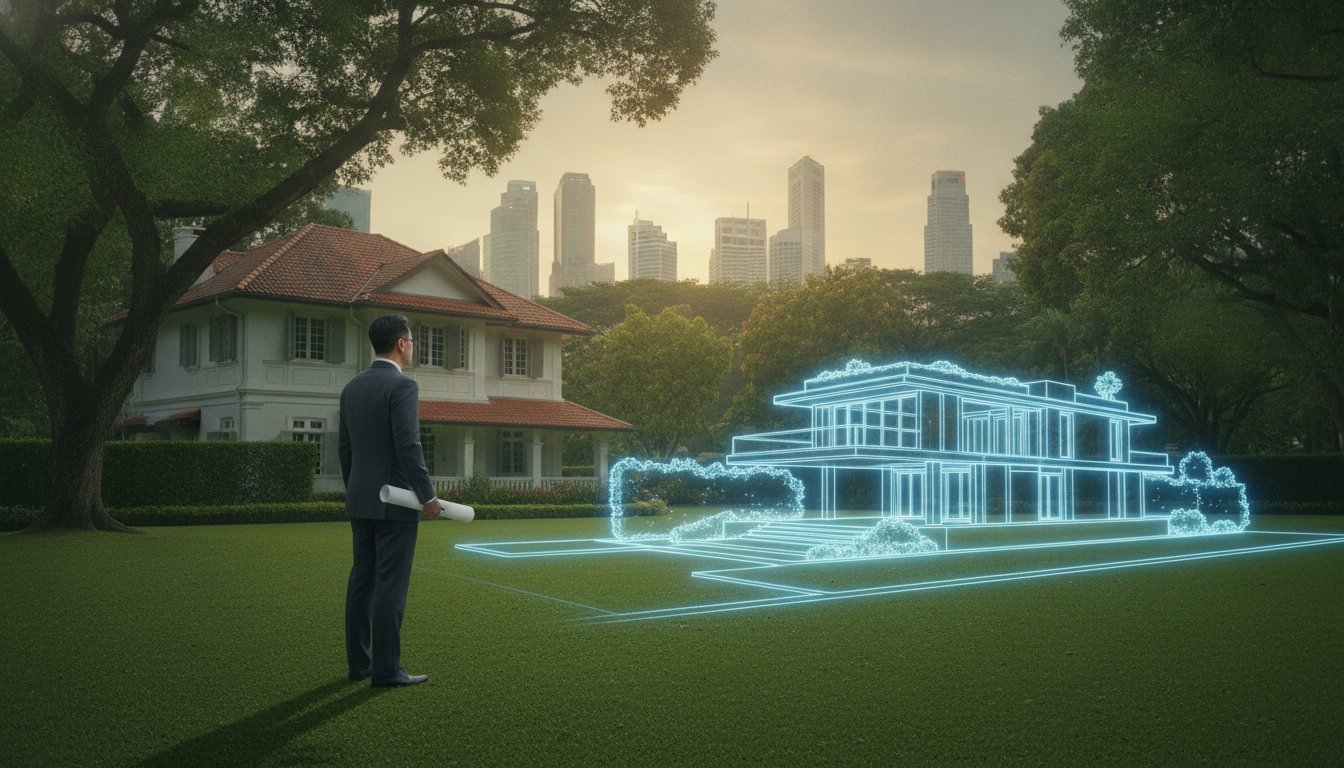
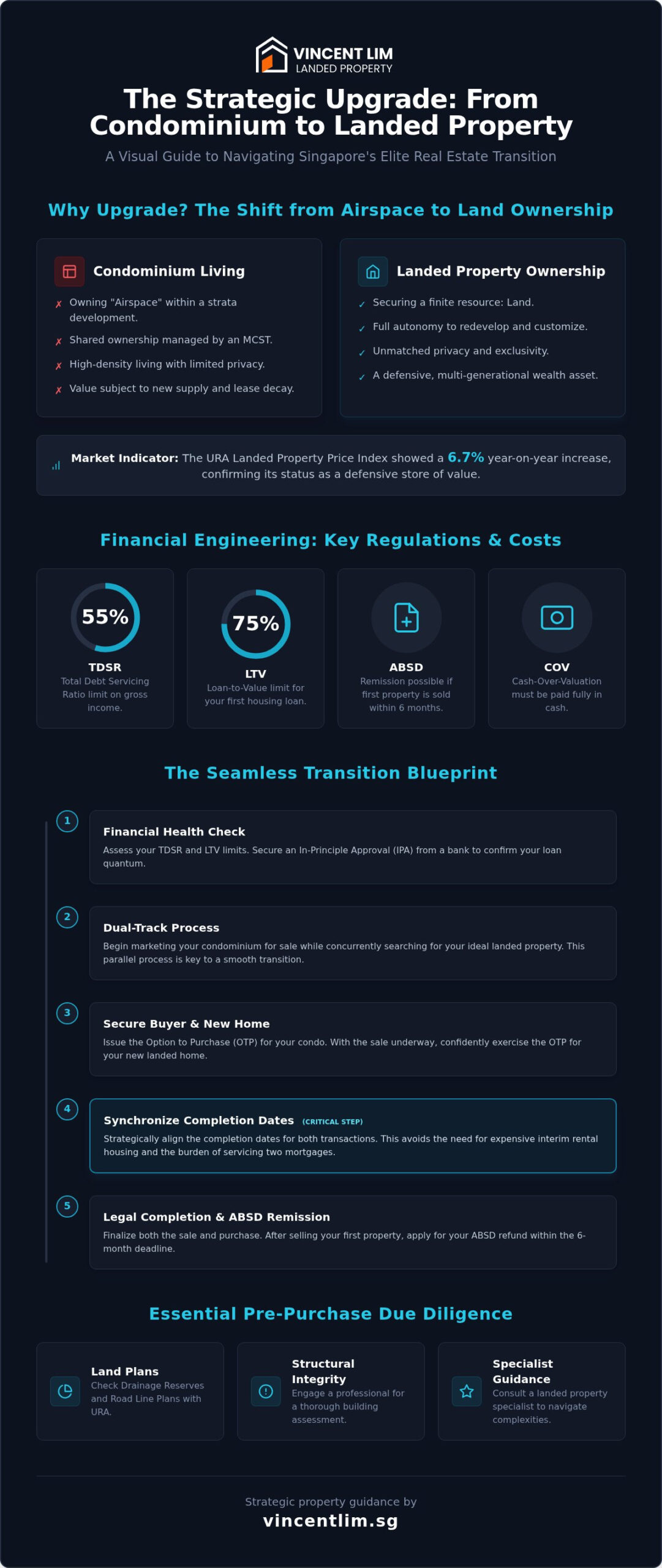
In the context of Singapore’s property market, upgrading to a landed home represents the pinnacle of a successful wealth milestone. While a luxury condominium provides lifestyle amenities, it remains a share in a high-density strata development. True asset progression involves shifting from owning “airspace” to securing a piece of the nation’s most finite resource: land. This transition is a strategic migration into an asset class defined by its “Scarcity Premium.” With the URA Landed Property Price Index showing a 6.7% year-on-year increase in early 2026, the data confirms that landed homes remain the most defensive store of value.
High-density condo projects often face the pressures of supply and aging leaseholds. In contrast, the intrinsic value of landed property lies in the ground itself. This makes the selling condo to buy landed property timeline a critical window for owners to lock in gains from their current residence and pivot toward a legacy asset. Landed property isn’t just a home; it’s a multi-generational wealth preservation tool that offers a level of privacy and exclusivity unmatched by even the most prestigious penthouses.
From Airspace to Land Ownership
When you own a condominium, you own a share of the common property managed by an MCST. Transitioning to a terrace, semi-detached, or detached house shifts that paradigm entirely. You gain the autonomy to redevelop, renovate, or redesign your facade without seeking approval from a management committee. This freedom to customize is the ultimate luxury marker. In 2026, where privacy is increasingly scarce, owning the ground beneath your feet provides a sanctuary that strata living simply cannot replicate.
The Defensive Nature of Landed Assets
Landed homes have historically demonstrated remarkable price resilience during periods of market volatility. They are widely regarded as the “Gold Standard” of Singapore real estate because their supply is strictly capped by the government. Unlike the condo market, which sees regular injections of new supply through Government Land Sales (GLS), the landed inventory remains largely static. This supply-demand imbalance ensures that your asset progression to landed property singapore is built on a foundation of scarcity. Managing your selling condo to buy landed property timeline with precision allows you to capture this defensive growth while securing a permanent stake in Singapore’s limited geography.
Financial Engineering: Calculating the Real Cost of Your Landed Ambition
Precision in financial planning distinguishes a successful upgrader from an over-leveraged one. The 2026 framework for the Total Debt Servicing Ratio (TDSR) remains a primary gatekeeper; it ensures that your total monthly debt obligations don’t exceed 55% of your gross income. Coupled with a Loan-to-Value (LTV) limit of 75% for your first property loan, these regulations require significant liquidity. When planning your selling condo to buy landed property timeline, you must account for the Additional Buyer’s Stamp Duty (ABSD). While married Singaporean couples can apply for a remission if they sell their first property within six months of the purchasing the new one, the upfront cash outlay remains a substantial hurdle that requires careful cash flow management.
Cash-Over-Valuation (COV) in landed transactions refers to the premium paid by the buyer above the bank’s official valuation, which must be settled entirely in cash.
Advanced Decoupling and Trust Strategies
Sophisticated investors often utilize “Property Wealth Planning” to structure their acquisitions efficiently. Decoupling, where one spouse transfers their share of the current condo to the other, can free up a “name” to purchase the landed home as a first property. This legally avoids the higher ABSD tiers associated with second or third properties. Managing the Sell-Buy Timeline requires this level of structural foresight to ensure capital is deployed at the right moment. For complex family portfolios, consulting a landed property specialist is vital for creating a financial model that accounts for legal fees and stamp duty nuances. If you’re looking to optimize your current holdings, scheduling a portfolio review can provide the clarity needed for your next move.
The True Cost of Maintenance and Upkeep
A common concern for condo owners is the perceived high cost of maintaining a terrace or detached house. You should budget for recurring expenses such as professional pest control, gardening, and external facade cleaning. While these are individual responsibilities, they’re often offset by the absence of high monthly MCST management fees found in luxury condominiums. A prudent strategist also maintains a safety buffer for long-term structural maintenance. Roofing repairs and external painting, typically required every seven to ten years, should be factored into your selling condo to buy landed property timeline to ensure your legacy asset retains its prestige and market value.
Selecting Your Asset: Terrace, Semi-Detached, or Detached?
Selecting the right asset class is a pivotal decision in your selling condo to buy landed property timeline. Each category offers distinct advantages in terms of land size, privacy, and capital appreciation potential. Before beginning your search, you must ensure compliance with Singapore’s Residential Property Act rules. These regulations restrict landed property ownership primarily to Singapore citizens, though certain exceptions exist for permanent residents who have made exceptional economic contributions. Understanding these legal boundaries early ensures your transition remains secure and professionally managed from the outset.
Terrace Houses: The Entry to Landed Living
Owners of high-end condominiums often find that a terrace house for sale singapore represents the most logical first step into the landed market. While inter-terrace units are the most accessible, corner terraces command a premium due to their larger land area and superior natural light. You’ll likely find that the internal floor area of a terrace house significantly exceeds that of a strata-titled penthouse, offering better value per square foot. These assets also provide excellent opportunities for Additions & Alterations (A&A). This allows you to increase the property’s value by expanding the built-up area as your family grows, providing a flexible path for future wealth expansion.
Semi-Detached and Detached: The Wealth Expansion
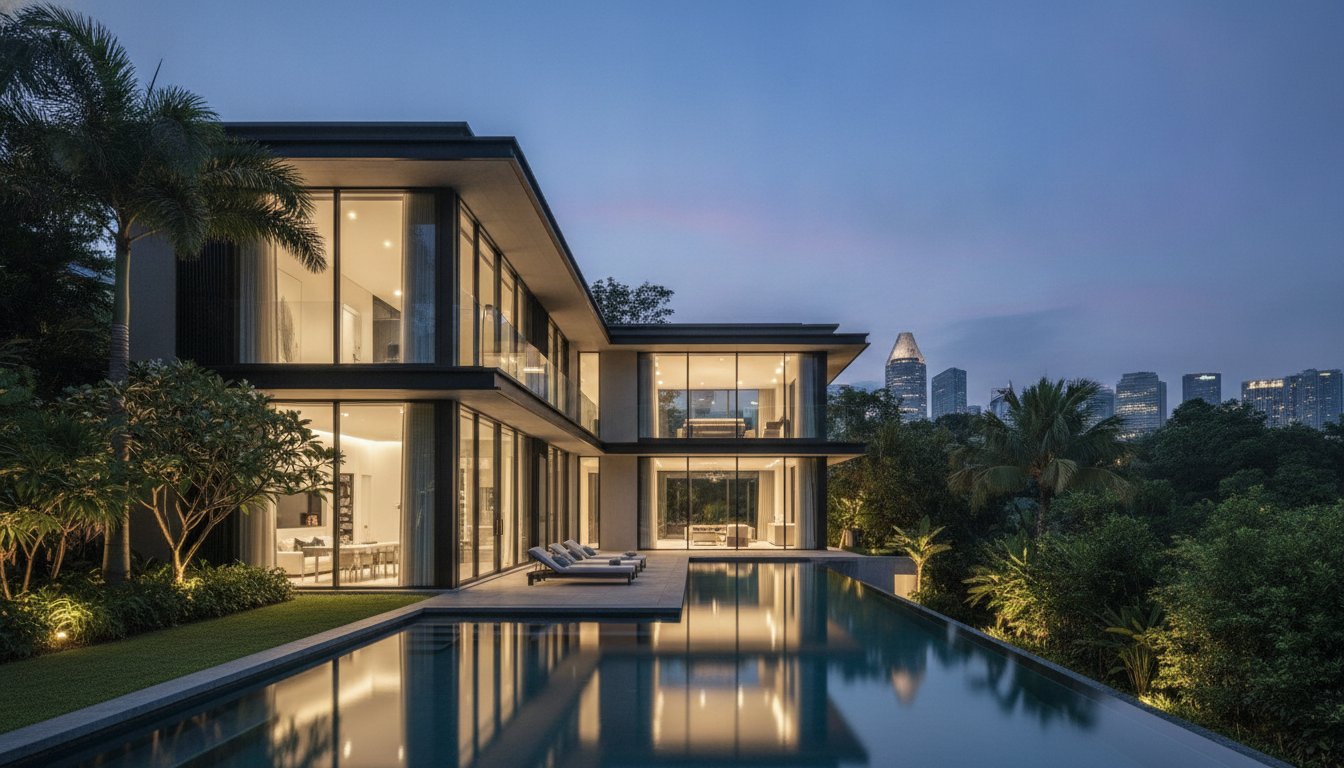
As you move up the residential hierarchy, semi-detached and detached houses offer greater prestige and enhanced resale liquidity. A semi-detached house balances a larger land plot with a more accessible price point than a fully detached home. However, for those seeking the pinnacle of the market, a detached house for sale singapore or a Good Class Bungalow (GCB) remains the gold standard. These properties must adhere to specific land-to-built-up ratio requirements, ensuring they remain exclusive and spacious. In 2026, larger plots are increasingly viewed as defensive assets that hedge against inflation and market volatility.
Evaluating redevelopment potential is essential for long-term wealth. You should investigate plot ratios and building height restrictions, as these dictate how much you can rebuild on the site. A specialist can help you identify properties with under-utilized land, which often provides a significant safety margin for future appreciation. Integrating these technical evaluations into your selling condo to buy landed property timeline ensures that your purchase is not just a home; it’s a robust investment for your family’s legacy.
The Transition Blueprint: Managing the Sell-Buy Timeline Seamlessly
A strategic exit from your current asset is just as vital as the acquisition itself. To master your selling condo to buy landed property timeline, you must start with a precise valuation of your condominium. This isn’t just about market averages; it’s about understanding the specific liquidity of your unit in the current 2026 climate. Simultaneously, securing an In-Principle Approval (IPA) for your landed mortgage is non-negotiable. It establishes your actual “firepower” and prevents the heartbreak of a failed Option to Purchase (OTP) due to funding gaps.
Most upgraders face the “Sell-First vs. Buy-First” dilemma. Selling first provides financial certainty and eliminates the need for a bridging loan, but it often necessitates a temporary move. To mitigate this, we often negotiate an “Extension of Stay” for up to three months. This allows you to remain in your condo after completion while your new landed home undergoes essential renovations or A&A works. This tactical bridge ensures you don’t have to move your family twice in a short period.
Avoiding the ABSD Trap
For married couples with at least one Singaporean spouse, the 6-month ABSD remission window is a high-stakes countdown. You must sell your first property within six months of the purchase date of the landed home to qualify for a refund of the Additional Buyer’s Stamp Duty. Failing to meet this deadline means forfeiting a significant sum, which can jeopardize your renovation budget or retirement reserves. Precision in your selling condo to buy landed property timeline is the only way to safeguard these funds. It requires a proactive marketing strategy for your condo that begins well before you sign the OTP for your new home.
The Logistics of a Landed Move
Coordinating completion dates requires a level of controlled momentum that only comes with experience. Landed properties typically take four to eight months from listing to completion, which is significantly longer than the average condo sale. You must synchronize the standard 10-12 week completion period of your condo sale with the purchase of your new home. A veteran property agent singapore is critical here to manage these moving parts and avoid the logistical nightmare of interim housing. If you need a tailored roadmap for your specific transition, consulting an expert strategist can provide the peace of mind you need to proceed with confidence.
Securing Your Legacy with a Landed Property Specialist
Landed transactions demand a much deeper level of due diligence than high-rise condominium sales. When you buy a condo, you’re primarily concerned with the unit’s condition and the development’s facilities. However, acquiring land involves scrutinizing road line plans, drainage reserves, and potential encumbrances that could restrict your future redevelopment plans. Identifying these hidden issues early is essential to protecting your capital. Executing a successful selling condo to buy landed property timeline requires more than just financial readiness; it requires technical foresight.
The Vincent Lim approach combines over 20 years of industry experience with a data-driven strategy to ensure every acquisition is sound. By leveraging the extensive OrangeTee & Tie network, I provide clients with access to off-market luxury listings and exclusive opportunities that aren’t available on public portals. This white-glove service ensures your transition is handled with the precision and confidentiality that high-stakes assets deserve. We don’t just find a house; we secure a defensive asset that fits into your broader financial portfolio.
The Value of a Veteran Perspective
Navigating the upper echelons of the market requires the guidance of a GCB specialist who understands the nuances of Singapore’s most prestigious asset class. Since 2004, I’ve overseen numerous successful transitions where condo owners have progressed into terrace, semi-detached, and detached homes. These case studies highlight the importance of coordinating completion dates and managing liquidity to avoid the common pitfalls of asset progression. Our partnership focuses on long-term wealth planning to ensure your property remains a robust legacy for your family.
Final Steps to Your Landed Home
Before you sign the Option to Purchase (OTP), it’s vital to run through a final checklist to confirm your readiness. You must ensure your bank valuation aligns with the purchase price, your In-Principle Approval is current, and your selling condo to buy landed property timeline strictly accounts for the 6-month ABSD remission window. Precision at this stage prevents costly errors and ensures a seamless handover of your new home.
I invite you to initiate a personalized portfolio review to assess your current holdings and identify the most strategic path forward. Whether you’re looking for an entry-level terrace house or a sprawling detached home, a private consultation will provide a bespoke roadmap for your asset progression. Let’s secure your legacy with the discipline and expertise your success demands.
Your Strategic Path to Landed Excellence
Upgrading to a landed home is a definitive milestone that transforms your real estate portfolio into a legacy of generational wealth. Success in this transition depends on a deep understanding of Singapore’s scarcity premium and the technical due diligence required to identify high-potential assets. By mastering the selling condo to buy landed property timeline, you ensure that every financial and legal move is executed with precision, protecting your capital from unnecessary ABSD costs or logistical gaps.
You don’t have to navigate these high-stakes complexities alone. As an Executive Associate Director at OrangeTee & Tie with over 20 years of real estate expertise, I specialize in Good Class Bungalows and luxury landed sales. I provide the white-glove service and data-driven strategy needed to manage your move with controlled momentum. Secure your landed property future with a strategic consultation from Vincent Lim today. Your journey toward the autonomy and prestige of landed living starts with a single, well-planned step.
Frequently Asked Questions
Can I buy a landed property before selling my condo without paying ABSD upfront?
You generally cannot avoid paying Additional Buyer’s Stamp Duty (ABSD) upfront if you purchase your landed home before selling your current condominium. For married couples with at least one Singaporean spouse, you can apply for a remission of the ABSD if you dispose of your first property within six months of the purchase date. This requires significant cash flow to bridge the period between payment and refund. It’s a high-stakes financial maneuver that demands precise timing.
Is it better to buy a brand-new landed home or an older one for redevelopment?
Choosing between a brand-new home and a redevelopment project depends on your timeline and investment objectives. Older properties often offer lower price-per-square-foot entries and the opportunity to add value through Additions & Alterations (A&A) or a complete rebuild. Brand-new homes provide immediate luxury and modern fittings but command a premium. If your selling condo to buy landed property timeline allows for an 18 to 24-month construction period, redevelopment often yields superior long-term capital gains.
What is the minimum land size required for a semi-detached house in Singapore?
According to URA guidelines, the minimum land plot size for a semi-detached house is 200 square meters. This requirement ensures that landed estates maintain a specific density and aesthetic character. For comparison, an inter-terrace house requires a minimum of 150 square meters. Understanding these technical parameters is vital when evaluating a property’s potential for future redevelopment or expansion. Land size directly influences your asset’s long-term liquidity and resale value in the prestige market.
How much should I budget for the renovation of a terrace house in 2026?
Budgeting for a terrace house renovation in 2026 requires a tiered approach based on the scope of work. A cosmetic refreshment typically starts from S$150,000; however, extensive A&A works involving structural changes or floor extensions can easily exceed S$500,000. It’s prudent to maintain a 15% contingency buffer for unforeseen structural issues. These costs should be integrated into your initial financial modeling to ensure your asset progression remains sustainable and doesn’t compromise your family’s cash reserves.
Are foreigners or PRs eligible to buy landed property in Singapore?
Foreigners and Permanent Residents are generally restricted from purchasing landed property under the Residential Property Act. You must obtain approval from the Land Dealings Approval Unit (LDAU) of the Singapore Land Authority. Approval is typically granted to those who have made significant economic contributions to Singapore and intend to use the property as their primary residence. A specific designated area offers the only opportunity for foreigners to purchase landed homes with a simplified approval process, though leasehold tenures apply.
What happens if I cannot sell my condo within 6 months of buying a landed home?
If you fail to sell your condominium within the six-month window, you’ll lose your eligibility for the ABSD remission. This means the Additional Buyer’s Stamp Duty paid at the time of your landed purchase becomes a permanent cost rather than a refundable deposit. To avoid this financial setback, it’s critical to align your marketing efforts with a realistic selling condo to buy landed property timeline. Pricing your current asset accurately from the start ensures a timely exit and protects your capital.
How do landed property prices compare to luxury condominiums in the same district?
Landed properties often command a higher total quantum than luxury condominiums due to the inclusion of land ownership. While high-end penthouses can sometimes reach higher price-per-square-foot levels, landed homes offer better long-term value preservation because of their extreme scarcity. In many districts, the gap between a four-bedroom luxury condo and an inter-terrace house has narrowed. This makes the move to a landed asset a strategic play for those seeking more space and greater autonomy.
Why is a freehold landed property considered a better investment than a 99-year leasehold?
Freehold landed property is generally considered a superior investment because it doesn’t suffer from lease decay. As a 99-year leasehold property ages, its value typically plateaus or declines as the remaining tenure shortens, making financing more difficult for future buyers. Freehold status provides peace of mind for multi-generational wealth planning and ensures your asset remains highly liquid. This permanence is why freehold land is often referred to as the “Gold Standard” of the Singapore residential market.