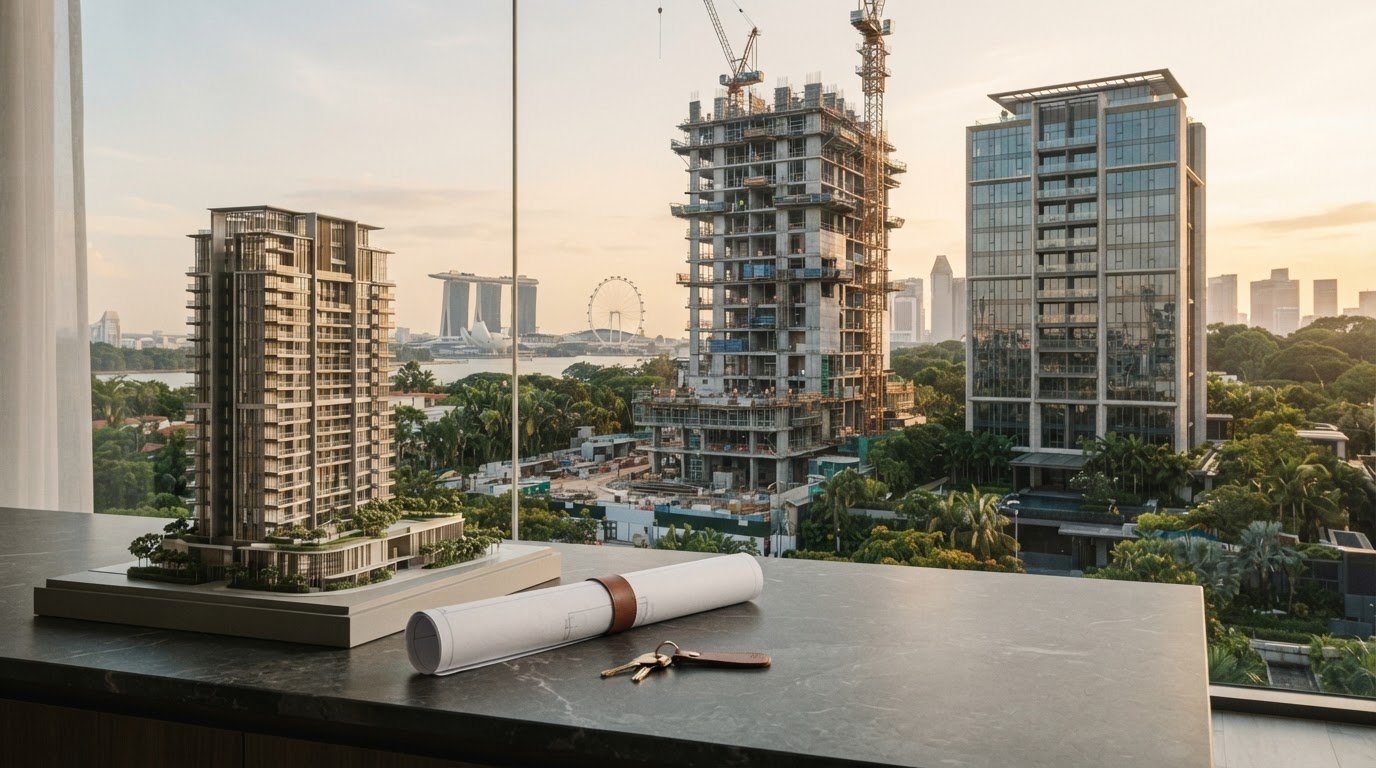
The defining feature of buying off-plan luxury developments is timing: you commit to a property before construction is complete. In Singapore, these properties are commonly called new launches. Because handover may be some time away, the contract, payment terms and provisions for defects are central to your decision.
It’s understandable to weigh the appeal of a new luxury home against the uncertainty of buying before you can see the finished property. The asking price is only one part of the picture; the construction schedule, defect protections and any rental-return guarantee also shape the investment.
This guide explains what off-plan property means in the Singapore market, how construction warranties and rental-return guarantees work, and what to consider when assessing potential returns. It also examines featured luxury developments and their asking prices, so you can compare the terms and costs with a clearer view of the commitments involved.
Key Takeaways
- Compare an off-plan purchase with a ready property by weighing the construction wait and payment milestones against the benefit of buying a newly built home.
- Read warranty and rental-return guarantee terms closely, including what they cover, how long they apply and what conditions may affect them.
- Assess potential appreciation against location prospects, construction timing and market changes rather than treating projected gains as assured.
- Use the featured developments’ asking prices as a starting point for comparison, then consider how each property’s terms and investment profile fit your plans.
What is Off Plan Property?
In Singapore, properties bought before completion are commonly called new launches. For buyers, the key distinction is whether the home can be assessed in its finished condition.
Off-Plan and Ready Property
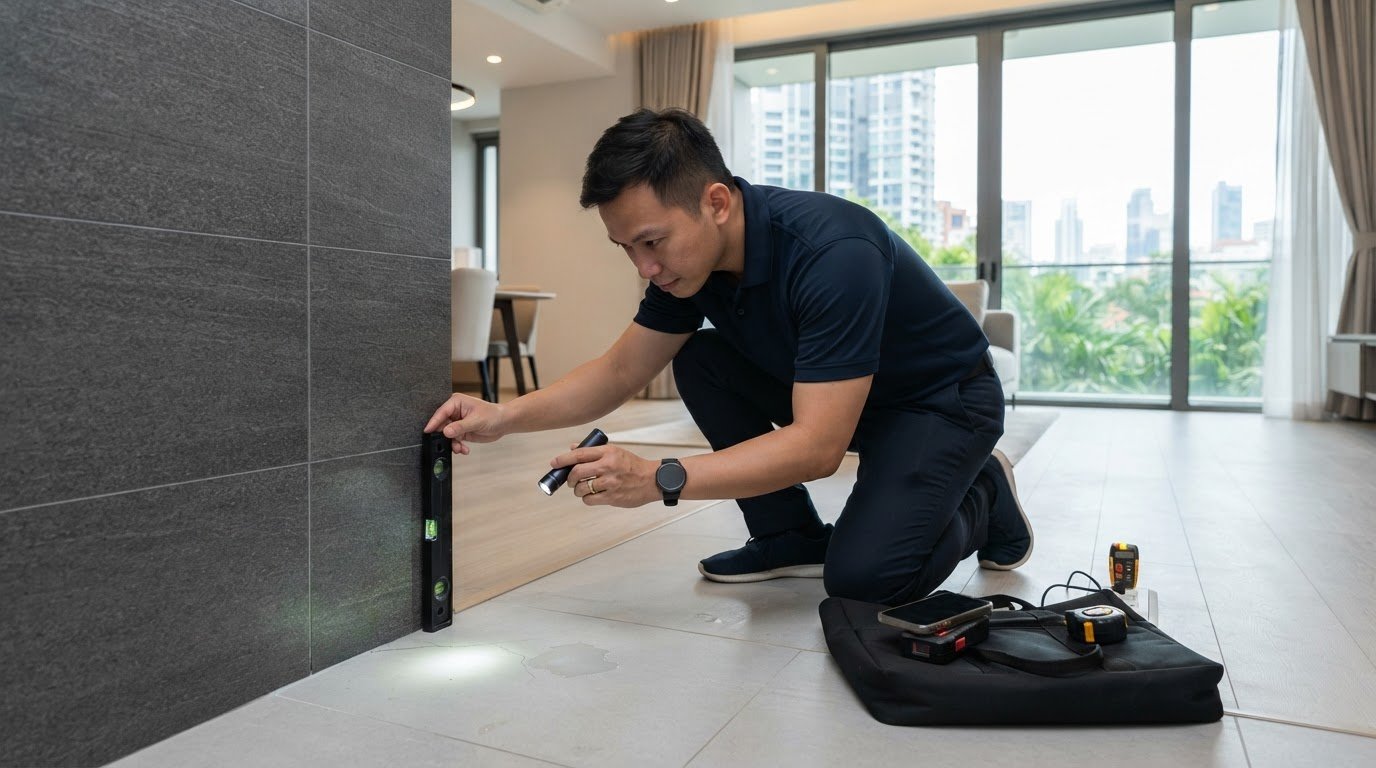
An off-plan property is purchased before construction is complete, while a ready property is already built and available to view. That difference affects what you can assess: ready-property buyers can inspect the actual rooms, finishes and fittings, while off-plan buyers rely on plans and specifications. For example, a showroom apartment may illustrate a proposed finish, but it isn’t the completed home. New builds may need fewer renovations, yet finished defects or differences from expectations can still matter.
Meaning and Purchase Process
Foreign buyers can generally purchase private apartments in Singapore without prior approval, while buying landed residential property requires approval under the Residential Property Act. Buyer’s Stamp Duty applies to property purchases, and Additional Buyer’s Stamp Duty may also apply depending on the buyer’s residency and ownership profile. Both affect the total acquisition cost. An off-plan purchase typically involves reviewing the plans, sale contract, developer’s track record and payment schedule before committing, then paying according to contractual milestones as construction progresses. These terms shape your obligations before the apartment is ready.
Customization and Modern Features
Customization means choosing from the finishes or options a development offers before construction is complete. The timing matters: a choice may be easier to incorporate before work reaches a certain stage than after. For example, buyers may be able to select from specified flooring or cabinetry finishes, depending on the project’s design and construction stage. New apartments may feature contemporary layouts and fittings, but plans and show units depict proposed specifications, not the completed property.
Benefits and Drawbacks
Buying off-plan luxury developments can offer a newly built home and potential appreciation, but it also requires accepting a wait and relying on plans. The advantage is the opportunity to secure a property before completion, with modern features and possible finish selections. The trade-off is that construction delays can affect move-in or rental plans, while the final result may differ from a showroom example. Compare the contract, timeline, payment obligations and developer track record; a ready property offers a direct view of its condition before purchase.
Construction warranties and rental-return guarantees
For an off-plan purchase, the contract connects payments, construction progress and handover obligations. Review these terms together to understand when funds are due and what recourse applies if delivery or finishes fall short of the agreement.
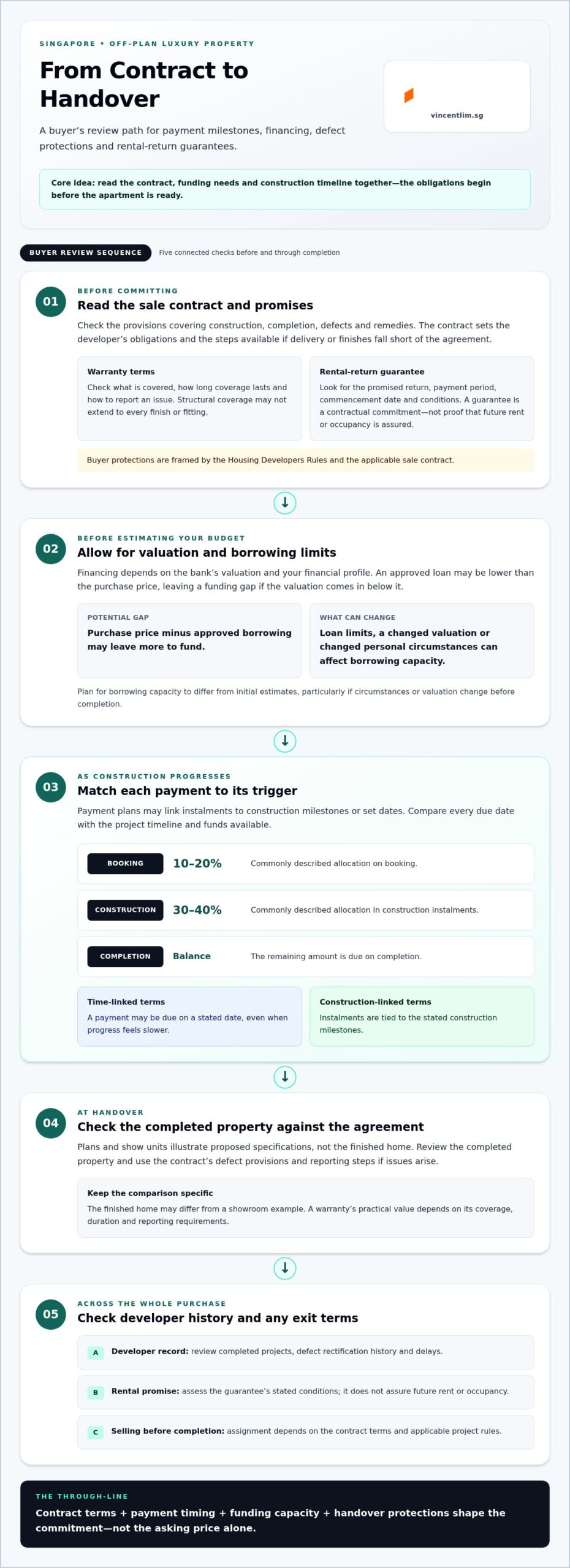
In Singapore, buyer protections are framed by the Housing Developers Rules and the applicable sale contract. Review the contract provisions on construction, completion, defects and remedies to understand the developer’s obligations and the steps available if the completed property has defects. A warranty’s value depends on what it covers, how long it lasts and how to report an issue. For example, structural coverage may not extend to every finish or fitting.
Financing depends on the bank’s valuation and your financial profile. An approved loan may be lower than the purchase price, leaving a funding gap if the valuation comes in below it. Applicable loan limits also constrain borrowing. Plan for the possibility that your borrowing capacity may differ from initial estimates, particularly if your circumstances or the valuation change before completion.
Payment plans may link instalments to construction milestones or set dates. A commonly described structure allocates 10-20% on booking, 30-40% in construction instalments, and the balance on completion. Compare each due date with the project timeline and your available funds. A time-linked schedule can require payment even when progress feels slower, while construction-linked terms tie instalments to stated milestones.
Rental-return guarantees should specify the promised return, payment period, commencement date and conditions. Treat the guarantee as a contractual commitment, not evidence that future rent or occupancy is assured. Before buying, examine the developer’s completed projects, record of rectifying defects, and history of delays. Selling the purchase contract before construction finishes depends on assignment terms and applicable project rules. For broader Singapore luxury property decisions, compare the contract’s obligations with your intended holding period.
Potential capital appreciation
Capital appreciation is the increase in a property’s value between purchase and resale. For a Singapore buyer, the central question is whether the eventual completed home will be worth more than the full cost of acquiring and holding it. A broad off-plan market benchmark cites prices 20-30% below market value, but that is not a Singapore-specific valuation. Treat it as context, not a forecast for a local development.
Compare the contract price with completed properties that match the development in location, size and tenure. Then account for differences in views, floor level, layout and finishes. For example, a premium apartment facing a major road may attract less resale interest than a comparable unit with a quieter outlook. Compare the launch price with relevant completed homes and assess the specific unit’s attributes, rather than relying on an advertised future value.
Appreciation depends on demand at completion, competing supply, project quality and changes in the surrounding area. A development near planned transport or commercial infrastructure may appeal to buyers seeking convenience, while delays can shift the expected timing of a sale or rental. Assess the developer’s completed projects and the area’s established amenities alongside proposed improvements. Paying a deposit commits you to a purchase under contract; it does not establish the home’s eventual resale value.
Customization can help you choose finishes that suit your preferences, but its investment value depends on buyer demand. Bespoke choices may work well for you without necessarily increasing resale appeal. Keep the contract, included specifications and agreed selections together when comparing the apartment with competing properties. If you plan to rent it out, consider income alongside recurring costs and expected vacancy periods: gross rent alone does not show the return on your investment.
Assess buying off-plan luxury developments through possible scenarios: holding the property, renting it or selling after completion. Compare each outcome with the purchase price, payment timing, holding costs and likely buyer pool. A price increase on paper is not the same as a realised gain. This comparison helps distinguish potential capital growth from returns that depend on rental performance or a later resale.
Featured luxury developments and asking prices
In Singapore, compare luxury developments unit by unit, not by project-wide headline figures. Location, views and surroundings all shape a home’s appeal. Assess asking prices by unit type, floor, outlook, tenure and included finishes. A “from” price indicates an entry point, not necessarily the price of a comparable home in the same development.
Review each launch’s asking price alongside its payment plan and expected completion period. A lower entry price may reflect a smaller unit, a different floor or a less preferred aspect. Compare like with like by matching bedroom count, internal area, tenure and position. Also account for acquisition costs and payment timing: the headline price alone does not show the full cash commitment.
Off-plan properties are sometimes described as priced 20% or more below market value, but that broad figure is not a Singapore pricing rule. Local value depends on comparable completed homes, location, unit attributes and demand when the property is ready. Test any appreciation case against resale evidence for similar homes. For rental prospects, compare achievable rent with recurring costs and the period before handover, rather than relying on projected gross returns.
Record each development’s asking price, comparable unit, payment milestones, completion timing and key contract terms. This makes Singapore property-market opportunities easier to compare without treating a launch discount as guaranteed capital growth. For a considered comparison of Singapore luxury condominiums, assess how each home’s location and specifications fit your purchase objectives. Compare equivalent units and total commitments, not headline prices alone.
Vincent Lim (OrangeTee & Tie): Terrace House Sales
Vincent Lim (OrangeTee & Tie) provides sales representation for terrace houses alongside his focus on Singapore’s landed homes. If your search has broadened beyond off-plan condominiums, comparing property types can help clarify which purchase best fits your intended use and investment horizon.
Vincent’s sales services also cover semi-detached houses and detached houses. These are distinct from condominium developments, with different property characteristics and purchase considerations. A focused discussion of your requirements can help you decide which type of home belongs on your shortlist, whether you are weighing a terrace house or considering another landed property format.
For a conversation about landed-property options, contact Vincent Lim (OrangeTee & Tie) or visit his website.
Choose a Property Path That Fits Your Plans
Start by defining what you want the property to do for you. Consider how long you intend to hold it, whether you plan to live in it or rent it, and how much uncertainty you are prepared to accept before handover. These priorities can help you decide whether buying off-plan luxury developments suits your plans or whether a completed home merits closer consideration.
For buyers also weighing landed property, Vincent Lim (OrangeTee & Tie) offers Terrace House Sales, Semi-Detached House Sales and Detached House Sales. These options provide a distinct alternative to a luxury condominium when your priorities point toward a landed home. A clear brief on location, property type and intended use gives your next discussion a practical starting point.
Contact Vincent Lim (OrangeTee & Tie) to discuss your property plans and take the next step with clarity.
Frequently Asked Questions
What Does “Buying Off-Plan” Mean?
Buying off-plan means committing to a home before construction is complete. In Singapore, these purchases are commonly described as new launches. For example, a buyer may choose an apartment from plans and project specifications rather than inspect a finished unit. This matters when assessing the layout, views and finishes: you can experience the completed property only after construction and handover.
What Are The Essential Factors to Consider When Investing?
Assess whether the property suits your intended use, holding period and available funds. Compare the contract price with completed homes of similar size and tenure in a comparable location. Then review the developer’s completed projects, the contract’s handover and defect provisions, and the resale or rental demand for that type of home. If you are relying on rental income, consider likely tenant demand, not just the apartment’s presentation.
Why do property investors choose to buy homes that are not yet finished?
Investors may choose an unfinished home to secure a unit in a new development before completion and align the purchase with a longer-term plan. A buyer intending to move in after handover may value a newly built home, while an investor may focus on future resale or rental demand. The decision depends on how well the property fits your objectives, not simply on the appeal of a launch presentation.
What is the average price per square foot for new luxury condominiums in Singapore?
There is no single useful price-per-square-foot figure for every new luxury condominium in Singapore. Comparisons vary with project location, tenure, unit size, floor level, view and launch timing. For a practical benchmark, compare units with similar characteristics in the same development, then review comparable completed homes nearby. A project-wide average can hide substantial differences between a smaller unit and a larger residence.
How do off-plan luxury property prices compare with completed properties in Singapore?
Off-plan prices in Singapore do not follow a single discount rule compared with completed homes. Compare the purchase price with nearby completed units of similar size, tenure, floor position and outlook, then account for differences in condition and included finishes. A newly launched unit and a resale apartment, for example, may have different layouts or renovation needs, so headline prices alone cannot show which offers stronger value.
What is the payment schedule for a Singapore off-plan property purchase?
The purchase contract sets the payment schedule for an off-plan home in Singapore. It specifies the initial payment, instalments tied to construction milestones and the amount due at completion. Before signing, map each due date against your cash reserves and expected financing. A milestone payment that falls before your planned loan drawdown, for example, may affect your available funds. The contract schedule determines when payments are owed.