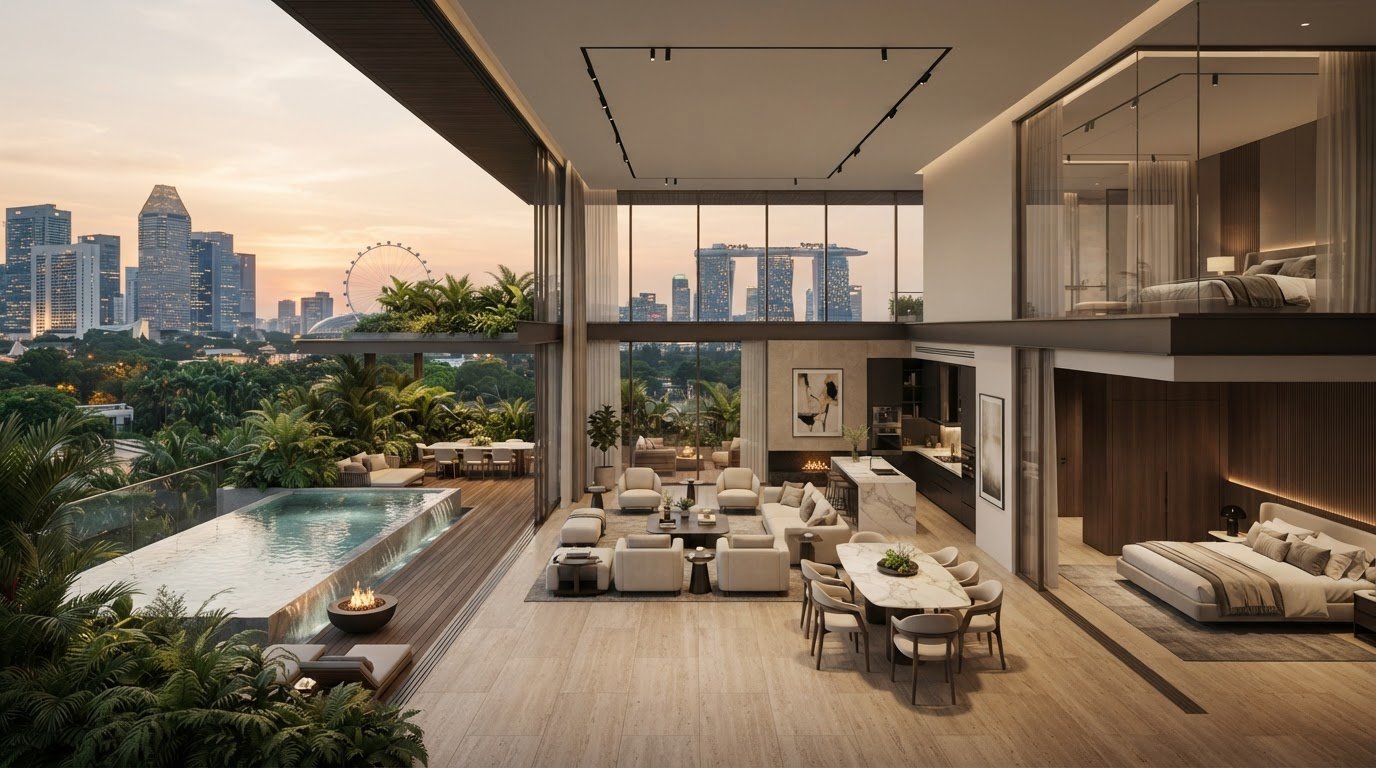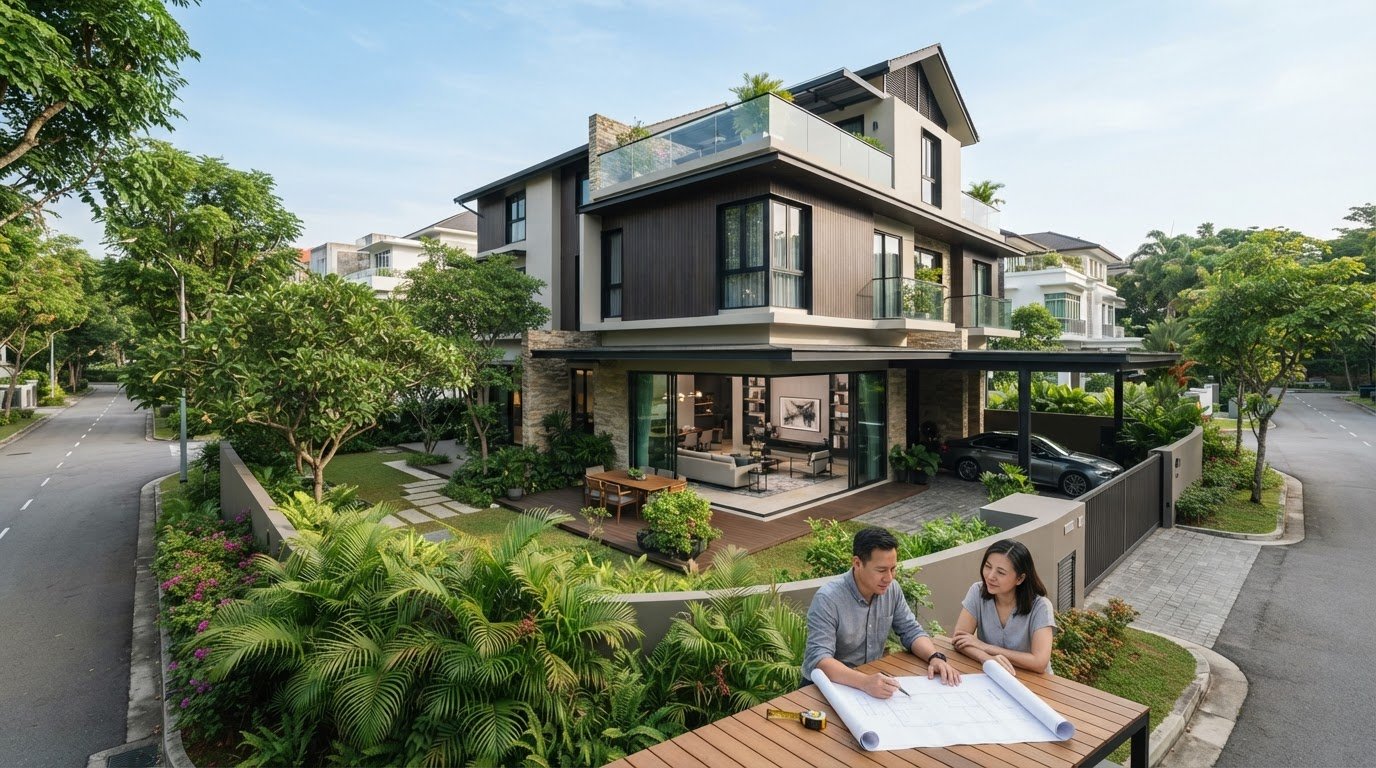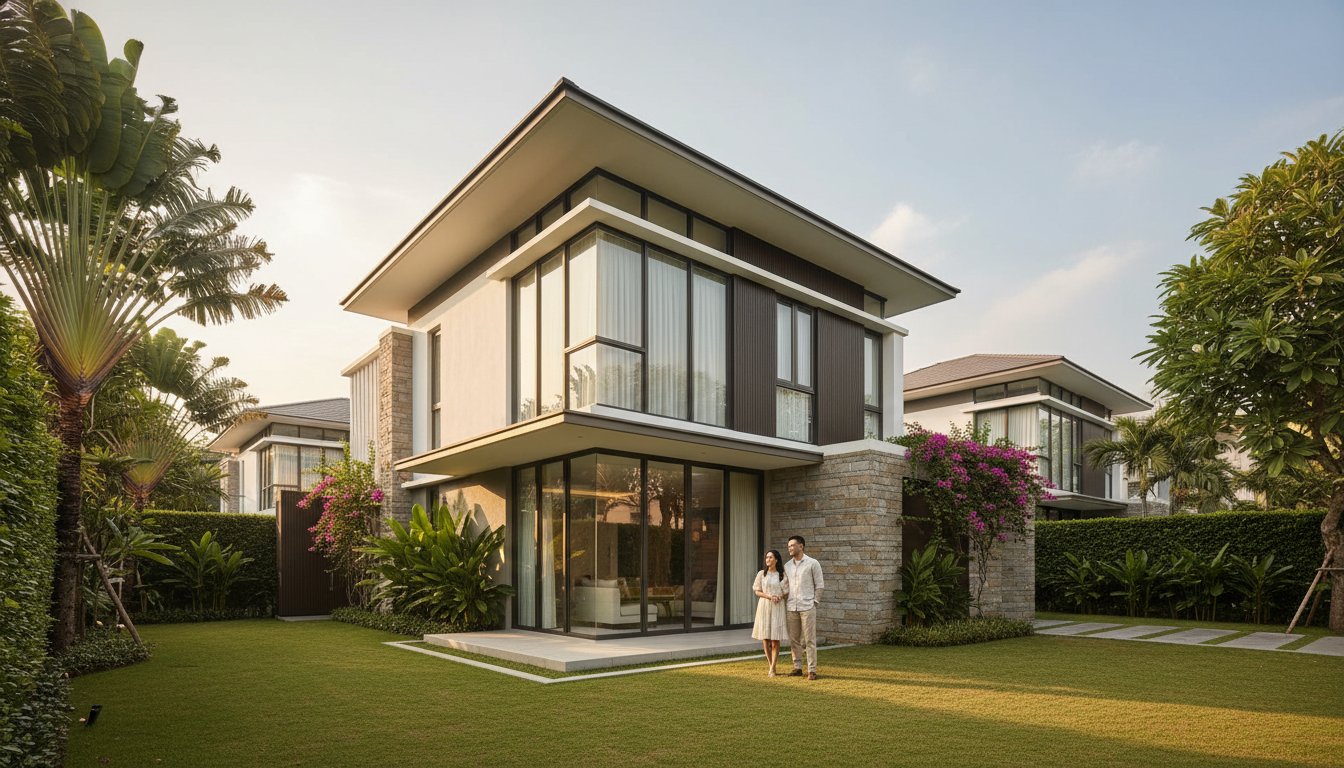
The most strategic acquisition in the 2026 landed market isn’t necessarily a massive bungalow. It’s often the specific corner unit that functions as a semi-detached in disguise. Many buyers searching for a corner terrace for sale singapore expect a bit of extra garden, but the true value lies in the unique privacy and structural potential these plots offer. You likely recognize that these units command a 10% to 20% premium over intermediate neighbors, yet the fear of overpaying for land with limited utility often leads to unnecessary hesitation.
It’s understandable to feel uncertain about whether a larger plot justifies a higher price point, especially when navigating complex URA setback requirements. This guide provides a clear framework to evaluate the corner terrace premium with the precision of an elite strategist. We’ll examine how to identify high-potential units that offer genuine privacy and long-term capital appreciation. By the end of this analysis, you’ll have the confidence to secure an asset that balances the prestige of a semi-detached house with the entry-level accessibility of a terrace house.
Key Takeaways
- Understand why the end-cap position makes a corner terrace a scarce asset that provides the privacy of a semi-detached house at a more accessible price point.
- Learn a precise framework to justify the 10% to 20% premium for a corner terrace for sale singapore by analyzing land shape and actual building potential.
- Decipher complex URA setback requirements to distinguish between high-utility land and decorative plots that offer limited long-term value.
- Identify high-potential units by prioritizing wide frontage and favorable orientations that avoid the heat of the afternoon west sun.
- Discover a strategic methodology for asset progression that leverages the unique resale demand for corner units to secure long-term capital appreciation.
What Defines a Corner Terrace for Sale in Singapore?
A corner terrace for sale singapore represents a unique segment of the landed market that appeals to buyers seeking a balance between value and exclusivity. By formal definition, a corner terrace is a residential unit situated at the terminal end of a row of terraced houses. Unlike intermediate units, it shares only one party wall with a neighbor. This terminal position allows for a side setback, which creates a lateral land space that is absent in mid-row properties. The Terraced house definition traditionally refers to a sequence of uniform dwellings; however, in the Singaporean context, the corner unit is the outlier that breaks this uniformity to offer enhanced privacy and ventilation.
The psychological appeal of these units is significant. Many buyers perceive a corner terrace as a “semi-detached in disguise” because it provides a similar living experience without the higher price tag associated with semi-detached titles. This perception of prestige, combined with the scarcity of such plots, ensures that corner units remain highly resilient against market fluctuations.
The Three Categories of Terrace Houses
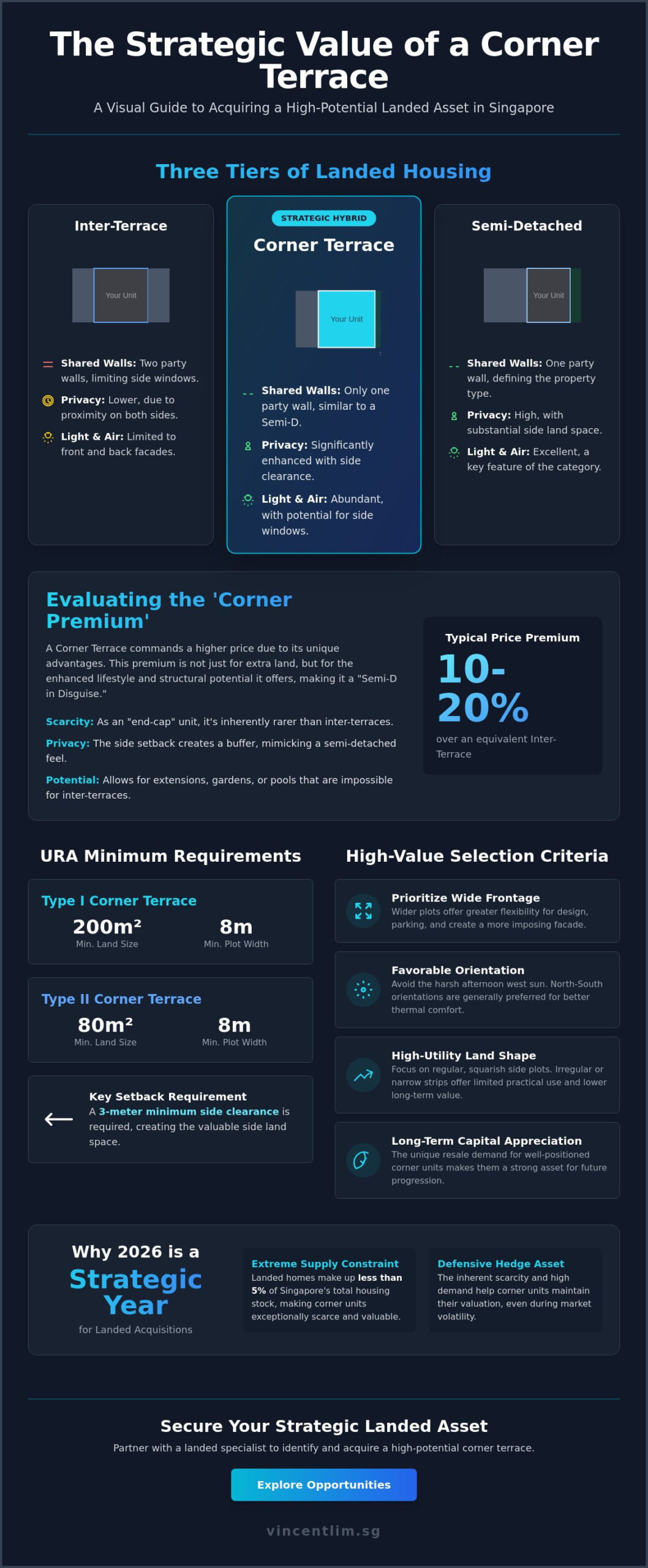
To navigate the landed market with precision, you must understand the structural distinctions defined by the Urban Redevelopment Authority (URA). Inter-terraces are mid-row units with shared walls on both sides, often feeling more enclosed. In contrast, corner terraces offer a three-meter side clearance that allows for additional windows and natural light. URA further classifies these into Type I and Type II categories based on land area. A Type I corner terrace requires a minimum land size of 200 square meters, while a Type II unit requires at least 80 square meters. Both types must maintain a minimum plot width of 8 meters to meet regulatory standards. These technical requirements directly influence the “corner premium” you pay during acquisition.
Why 2026 is a Strategic Year for Landed Acquisitions
In 2026, the landed property market continues to be defined by extreme supply constraints. With landed homes making up less than 5% of Singapore’s total housing stock, the “end-cap” advantage of a corner unit is more valuable than ever. Current trends show that buyers are increasingly prioritizing “active” land space—areas where they can actually build or garden—rather than just large, irregular plots with limited utility. A corner terrace serves as a strategic hybrid asset class that bridges the gap between the entry-level affordability of inter-terraces and the elite prestige of semi-detached homes. As land supply remains fixed, these units act as a defensive hedge, maintaining their valuation even when the broader market experiences volatility.
Strategic Comparison: Corner Terrace vs. Inter-Terrace vs. Semi-Detached
Selecting a landed property involves more than just evaluating square footage; it requires a nuanced understanding of how land utility translates into lifestyle and asset value. When browsing a corner terrace for sale singapore, you aren’t simply buying a larger house. You’re acquiring a specific structural advantage. While inter-terraces offer a compact, efficient footprint, they lack the lateral breathing room that defines higher-tier landed living. A corner terrace occupies the terminal position, providing a three-meter side setback that mimics the spatial dynamics of a semi-detached house. This additional land doesn’t just increase the plot size; it fundamentally changes the building’s profile by allowing for side windows and a more significant garden presence.
The “Semi-D in Disguise” theory holds weight when you examine the shared wall dynamics. A semi-detached house is one of a pair, sharing a single party wall. A corner terrace also shares only one party wall with its neighbor. In many estates, the physical distance between a corner terrace and the next row of houses is identical to the gap between two semi-detached pairs. This means you often enjoy the same level of privacy and exclusivity as a semi-detached owner but at a terrace-level price point. Data from Singapore Property Market Analysis indicates that while landed properties maintain a lower average PSF than luxury condominiums, the scarcity of corner plots allows them to retain value more effectively than their mid-row counterparts.
Privacy and Ventilation: The Hidden Lifestyle Premium
The most immediate benefit of a corner unit is the surge in natural light and cross-ventilation. Inter-terraces often struggle with dark central zones, but the side garden of a corner unit allows for additional apertures that brighten the entire home. This creates a sense of volume and openness that makes the property feel significantly larger than an inter-terrace with an identical built-up area. For a broader perspective on how these units fit into the wider market, you can explore our comprehensive guide on terrace house for sale singapore acquisitions. The lateral space also provides a buffer from street noise and neighboring activity, enhancing the overall tranquility of the residence.
Investment Potential and Capital Appreciation
From an asset progression standpoint, corner terraces serve as a critical gateway to the semi-detached and detached markets. There are significantly fewer corner units in any given landed estate, typically only two for every six to ten intermediate units. This inherent scarcity drives resale demand. Historical performance shows that corner units often experience faster capital appreciation because they appeal to a wider pool of buyers, including those downsizing from bungalows who still desire a garden. If you’re looking to refine your portfolio, consulting with a landed specialist can help you identify units where the land-to-built ratio is optimized for future growth.
Evaluating the ‘Corner Premium’: Is the Price Justified?
Quantifying the fair market value of a corner terrace for sale singapore requires a shift from viewing land as a simple commodity to analyzing it as a functional asset. While the standard market premium for these units typically ranges from 10% to 20% above intermediate neighbors, a discerning buyer shouldn’t accept these figures at face value. A truly “fair” premium is determined by the ratio of usable land to the total plot size. If a plot offers significant lateral space that accommodates a private driveway or a lap pool, the premium is easily justified. Conversely, if the extra land is largely consumed by steep slopes or restrictive setbacks, the value proposition weakens. We must also account for the increased cost of maintaining a larger garden and a more expansive exterior facade, which requires periodic repainting and upkeep to preserve the home’s curb appeal.
Interior design possibilities represent another major factor in justifying the price. The presence of side-facing windows allows for unconventional floor plans that intermediate units simply cannot support. You can position dining areas or home offices along the lateral wall to benefit from panoramic views and natural light. This architectural freedom transforms the living experience from a linear, tunnel-like feel into a voluminous, open-concept sanctuary. It’s this specific lifestyle enhancement that often drives high resale demand when you eventually decide to exit the investment.
Renovation and Redevelopment Potential
The long-term value of a corner plot is often found in its redevelopment flexibility. Because you only share one party wall, you have greater freedom to explore vertical extensions or a complete rebuild without the logistical constraints of being sandwiched between two neighbors. Side-setbacks allow for sophisticated architectural features such as wraparound balconies or external staircases that maximize the “semi-detached” aesthetic. When planning these improvements, it’s vital to consult a terrace house renovation budget to ensure your capital expenditure aligns with the projected valuation of the finished product. Strategic upgrades can significantly amplify the corner premium during the next market cycle.
The ‘Dead Land’ Trap: What to Avoid
Seasoned investors know that land size is often a vanity metric. You must be wary of the “dead land” trap, where a property appears to have a massive plot on paper, but the actual utility is compromised. Triangular or highly irregular plots often result in awkward corners that are impossible to build on or even landscape effectively. A smaller, regular rectangular plot of 2,200 square feet is frequently more valuable than a 2,800 square foot triangular lot because every inch of the former can be utilized for the building footprint or functional outdoor space. Buyers should always verify the land survey map and check for drainage reserves or major utility easements before committing to a high premium. It’s the usable square footage, not the total land area, that dictates your eventual return on investment.
Selection Criteria for a High-Value Corner Terrace
Selecting a high-value corner terrace for sale singapore involves a rigorous assessment of both physical and regulatory attributes. The primary metric for many veteran investors is frontage width. A wide frontage, often exceeding the minimum 8-meter requirement, provides the necessary canvas for an expansive car porch and a grander entrance. It also allows for a more efficient internal layout that avoids long, dark corridors. Properties with narrow frontages, regardless of their total land size, often struggle to achieve the same level of architectural prestige or resale demand.
Orientation remains a non-negotiable factor. In our tropical environment, a North-South orientation is the gold standard for minimizing the harsh afternoon sun while capturing prevailing breezes. A corner unit with a long side-wall facing West can become a heat trap, leading to higher utility bills and less comfortable living spaces. Additionally, tenure remains a central pillar of valuation in 2026. While leasehold options exist, freehold titles continue to command a premium due to their perpetual nature and better resistance to financing restrictions as the building ages.
URA Master Plan and Zoning
Before committing to a purchase, you must consult the URA Master Plan to understand the specific zoning of the estate. Zoning determines whether a plot is designated for 2-storey or 3-storey landed housing. A 3-storey zone offers significantly more potential for built-up area, which is vital for multi-generational living or future resale value. You should also check for upcoming developments in the immediate vicinity that could obstruct your views or compromise your privacy. Utilizing innovative terrace house layout ideas can help you maximize the unique footprint of a corner unit within these regulatory bounds.
The Importance of Side-Gate Access
A secondary access point via a side-gate is a small detail that provides massive utility. It allows guests, service staff, or gardening contractors to enter the side garden without passing through the main living area. This is particularly useful if you intend to use the lateral land for hosting outdoor events or as a private sanctuary. Integrating this access into a modern security and smart-home setup adds a layer of convenience and safety that buyers in the luxury segment expect. If you require a detailed analysis of a specific plot’s potential, schedule a strategic portfolio review to ensure your next acquisition aligns with your long-term wealth preservation goals.
Partnering with a Landed Specialist for Your Acquisition
Acquiring a corner terrace for sale singapore involves a level of due diligence that far exceeds a standard condominium purchase. You aren’t just buying a residential unit; you’re acquiring a complex piece of land with specific easements, setback regulations, and potential structural encumbrances. A seasoned landed specialist acts as your elite strategist, ensuring every technical detail is scrutinized before you commit. This professional oversight is essential to avoid overpaying for land that lacks actual utility or carries hidden development restrictions.
Vincent Lim’s methodology moves beyond simple matchmaking between buyers and listings. It centers on strategic asset planning. By leveraging a deep network built over two decades, he provides access to “off-market” corner terrace opportunities that never reach public portals. This insider access is crucial in a market where the best plots are often traded quietly among private circles. Negotiation in this segment is an art form; your specialist’s role is to justify the “corner premium” through hard data and land utility analysis, ensuring you secure the property at a fair market rate rather than an emotional markup.
Bespoke Brokerage for the High-End Market
With over 20 years of experience in Singapore’s luxury landed segment, Vincent Lim offers a white-glove service that manages every facet of the transaction. This includes precise valuation, rigorous legal coordination, and a tailored approach to viewings that respects your time and privacy. For buyers who prioritize efficiency, understanding the benefits of buying a renovated terrace house can be the key to securing an immediate move-in. This bespoke approach ensures that you aren’t just buying a house, but making a calculated addition to your investment portfolio.
Securing Your Legacy in 2026
In the 2026 landscape, a corner terrace represents more than just a home; it’s a cornerstone of a multi-generational wealth preservation strategy. These assets hold their value through market cycles, providing a stable foundation for your family’s future. To explore the current 2026 inventory and identify units with the highest appreciation potential, arranging a private consultation is the logical next step. You can connect with Vincent Lim for a curated list of corner terraces for sale and begin your journey toward a sophisticated landed acquisition with the confidence that only veteran expertise can provide.
Securing Your Position in the 2026 Landed Market
A corner terrace represents a rare opportunity to secure the privacy and structural advantages of a semi-detached home at a terrace level entry point. By prioritizing wide frontage and verifying usable land utility, you ensure your capital is placed in an asset capable of resilient growth. Strategic acquisitions in this segment require a deep understanding of URA zoning and a keen eye for off-market gems that offer long-term capital appreciation. Navigating these technical complexities alone often leads to missed opportunities or overvaluation errors.
Vincent Lim, Executive Associate Director at OrangeTee & Tie, has specialized in GCB and luxury landed properties since 2004. His proven track record in asset progression planning ensures that your search for a corner terrace for sale singapore is backed by seasoned authority and meticulous data. Whether you’re looking for a move-in ready home or a redevelopment plot, having a trusted guide is the key to a seamless transaction. Your journey toward a prestigious landed legacy starts with a single, calculated step; let’s refine your portfolio for the years ahead.
View Exclusive Corner Terrace Listings with Vincent Lim
Frequently Asked Questions
What is the typical price difference between an inter-terrace and a corner terrace in Singapore?
A corner terrace typically commands a premium of 10% to 20% over a standard inter-terrace in the same estate. This valuation gap stems from the larger land size and the privacy afforded by having only one shared wall. In the 2026 market, buyers prioritize these units for their superior natural light and ventilation, making the higher price point a strategic choice for long-term capital preservation.
Can a foreigner buy a corner terrace house in Singapore?
Foreigners are generally restricted from purchasing a corner terrace for sale singapore under the Residential Property Act. Only Singapore Citizens have the automatic right to acquire landed property. Permanent Residents may apply for approval from the Singapore Land Authority, though this is granted on a case-by-case basis. Foreigners interested in landed living are typically limited to properties in Sentosa Cove, where different eligibility rules apply.
What are the URA setback requirements for a corner terrace?
URA regulations require a minimum side setback of 3 meters for corner terrace units. This lateral clearance distinguishes them from intermediate units and ensures a buffer from neighboring plots. Frontage setbacks are typically 7.5 meters from the road buffer, while rear setbacks usually require 2 meters. These requirements are essential to verify during due diligence as they dictate the actual buildable area of the property.
Is a corner terrace considered a semi-detached house if the land is large enough?
A corner terrace remains classified as a terrace house regardless of land size, provided it is part of a row of at least three units. While a corner unit with over 200 square meters of land may feel like a semi-detached house, its legal title and zoning remain distinct. Semi-detached houses are specifically defined as one of a pair sharing a single party wall, whereas a corner terrace is the terminal unit of a longer sequence.
Are corner terraces harder to maintain than inter-terraces?
Corner terraces do require more maintenance than inter-terraces due to the additional garden space and the exposed exterior facade. You’ll need to account for periodic painting of the side wall and more frequent landscaping for the lateral land. However, many owners find this a fair trade-off for the increased privacy and improved air circulation that intermediate units lack. Meticulous upkeep is necessary to preserve the property’s premium resale value.
How do I check the redevelopment potential of a corner terrace for sale?
You can check redevelopment potential by reviewing the URA Master Plan to confirm if the plot is zoned for 2-storey or 3-storey landed housing. It’s also vital to examine the land survey map for drainage reserves or utility easements that might restrict the building footprint. Engaging a landed specialist helps you interpret these technical documents to determine if a total rebuild or vertical extension is feasible under current guidelines.
Why do corner terraces often have better resale value?
Better resale value is driven by the inherent scarcity of corner units within any given landed estate. There are far fewer end-cap units than mid-row properties, creating a supply-demand imbalance that favors sellers. The living experience of a corner terrace for sale singapore appeals to a wide demographic, including young families and downsizers, ensuring these properties remain highly liquid even during market cooling periods.
What should I look for in a corner terrace floor plan?
Look for floor plans that maximize the side-facing wall with large windows or sliding doors to enhance natural illumination. A high-value layout should avoid long, dark corridors and instead use the lateral space for open-concept dining or living areas. Ensure the car porch is wide enough to accommodate at least two vehicles, as this is a key requirement for most buyers in the luxury landed segment.