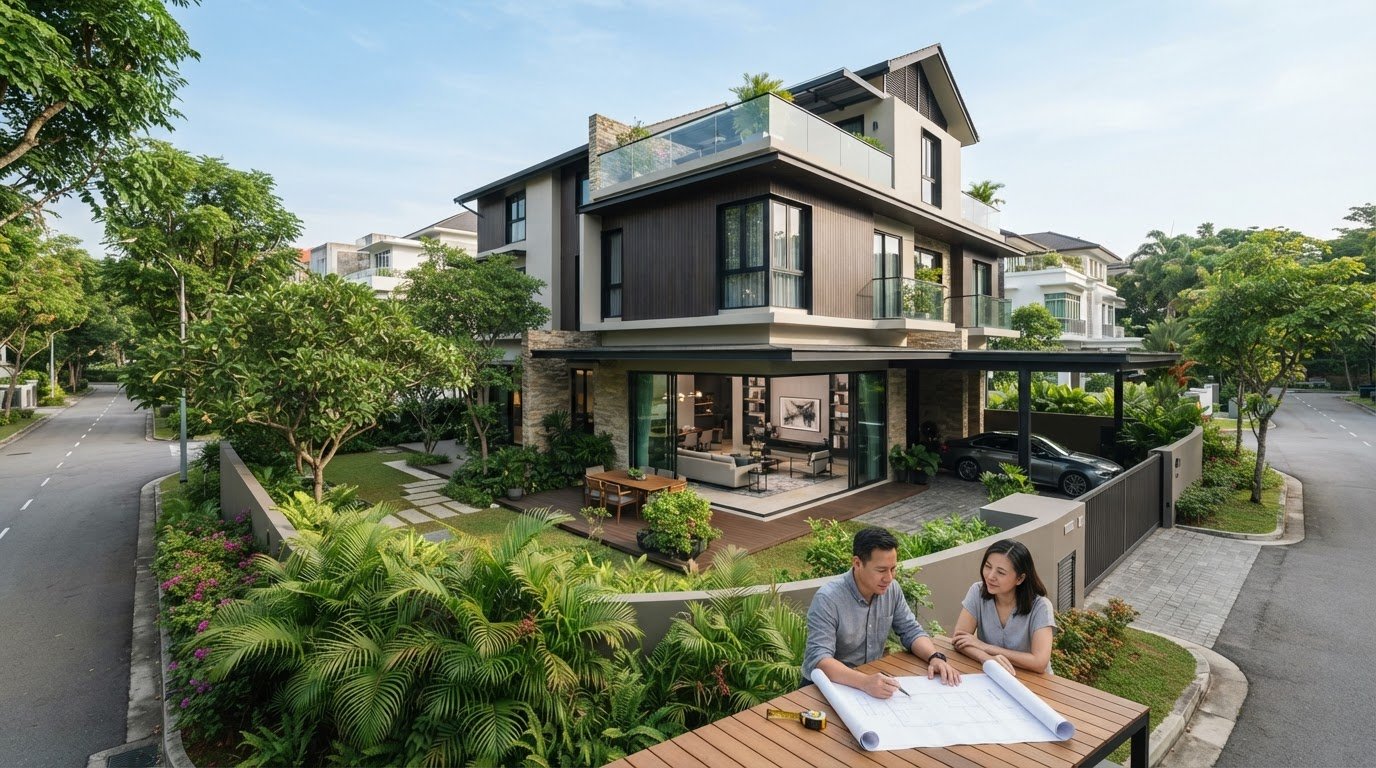
The traditional urge to maximize room count in a narrow plot often results in a home that feels cramped and depreciates in the eyes of discerning buyers. You’ve likely felt the frustration of a dark, corridor-like interior that struggles to breathe in Singapore’s tropical climate. It’s a common anxiety for owners who want to implement modern terrace house layout ideas but fear over-renovating into a niche that loses money upon resale. We believe that a well-executed layout is a strategic investment in asset progression, not just an aesthetic expense.
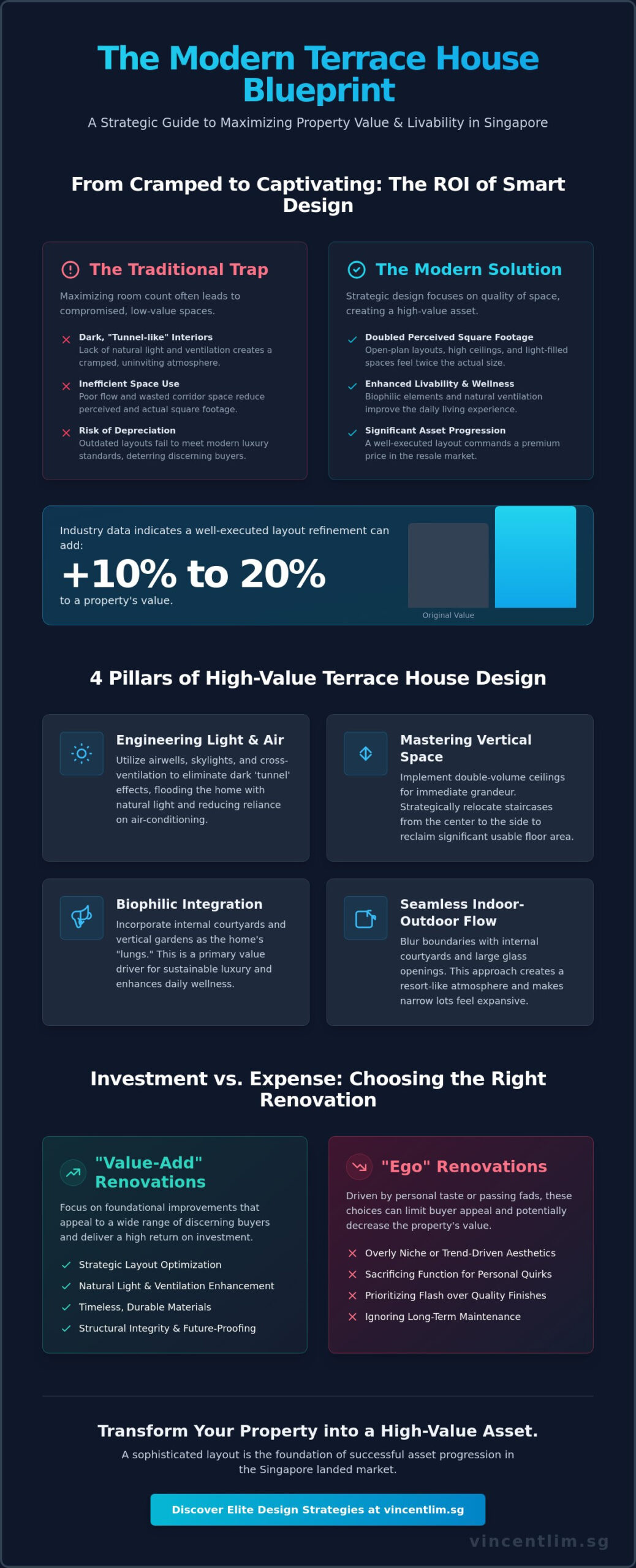
In this guide, you’ll discover how elite design can effectively double your perceived square footage while securing a significant premium in the resale market. Industry data indicates that a well-executed extension or layout refinement can add between 10% and 20% to a property’s value. We’ll explore how to integrate biophilic design and seamless indoor-outdoor continuity to create a home that feels twice its actual size. This article provides a structured look at the 2026 trends that balance sustainable features with the high-stakes demands of the luxury real estate market.
Key Takeaways
- Master the architectural nuances of intermediate and corner units to effectively maximize your property’s inherent potential.
- Discover strategic terrace house layout ideas that utilize airwells and skylights to eliminate dark interiors and optimize natural ventilation.
- Identify the critical differences between high-yield “Value-Add” renovations and “Ego” renovations to secure a premium resale price.
- Understand how a sophisticated layout design serves as a foundational element for successful asset progression in the Singapore landed market.
The Strategic Framework of Terrace House Layout Design
Strategic layout design begins with a clear understanding of the physical boundaries. Unlike detached homes, a terraced house is defined by its shared walls, which dictate how light and air move through the space. Intermediate units require a meticulous approach to prevent a “tunnel” effect, while corner terraces allow for lateral openings that mimic a semi-detached feel. When evaluating a terrace house for sale singapore, experienced investors look past the current partitions. They see the underlying structural potential. We prioritize long-term durability over passing aesthetic fads because a home’s value is anchored in its structural integrity. A layout that works today must also work a decade from now to protect your capital.
In 2026, the market demands more than just square footage. Effective terrace house layout ideas now integrate biophilic elements as a foundational requirement. This involves creating internal courtyards or vertical gardens that serve as the home’s “lungs.” Sustainable luxury is no longer a niche preference; it’s a primary value driver. By utilizing cross-ventilation and thermal massing, we reduce reliance on air conditioning while enhancing the daily living experience. This approach ensures the property remains attractive to future buyers who prioritize wellness and environmental responsibility.
Understanding the Vertical Living Concept
Success in terrace design is often found in the vertical plane. We use double-volume ceilings to break the narrow perception of the lot, creating an immediate sense of grandeur upon entry. The strategic placement of staircases is equally vital. By relocating a central staircase to the side or integrating it with an airwell, we reclaim significant usable floor area. This transition between floors should feel like a cohesive narrative rather than a series of disconnected boxes. It’s about creating a flow that feels intuitive and spacious, ensuring every level serves a distinct purpose without feeling isolated.
The White-Glove Approach to Material Selection
A sophisticated layout requires a matching material palette. We advocate for a “white-glove” selection process, where every surface is chosen for its ability to age gracefully. High-end joinery and bespoke cabinetry don’t just provide storage; they define the home’s architectural lines and perceived quality. Balancing imported luxury finishes with maintenance-friendly local alternatives is a hallmark of a savvy renovation. This ensures the home looks pristine without requiring excessive upkeep.
- Natural stone and engineered timber offer timeless appeal and durability.
- High-performance glazing is essential to mitigate Singapore’s intense tropical heat.
- Bespoke millwork allows for the seamless integration of smart home features.
Modern Layout Examples: Tailoring Your Landed Home for Lifestyle and Luxury
Tailoring a property to a specific lifestyle archetype is the most effective way to command a premium in the Singapore market. We move beyond basic aesthetics to focus on how a space functions for its inhabitants. Whether you’re an urban professional seeking a retreat or a head of a multi-generational household, your floor plan must reflect your daily rituals. Effective terrace house layout ideas prioritize this alignment between architecture and lifestyle, ensuring the home remains a high-value asset. By categorizing designs into strategic themes, we help owners identify the most profitable path for their specific plot.
The Industrial Loft aesthetic, for instance, utilizes exposed structural elements to create a contemporary urban feel that resonates with younger, high-net-worth buyers. Conversely, multi-generational layouts focus on designing for privacy and communal harmony. This involves creating distinct “suites” with private baths while maintaining a grand, shared living area. If you’re currently exploring the market for a new residence, reviewing our curated listings for terrace house sales can provide immediate clarity on which layouts are currently commanding the highest demand.
The Modern Tropical Masterpiece
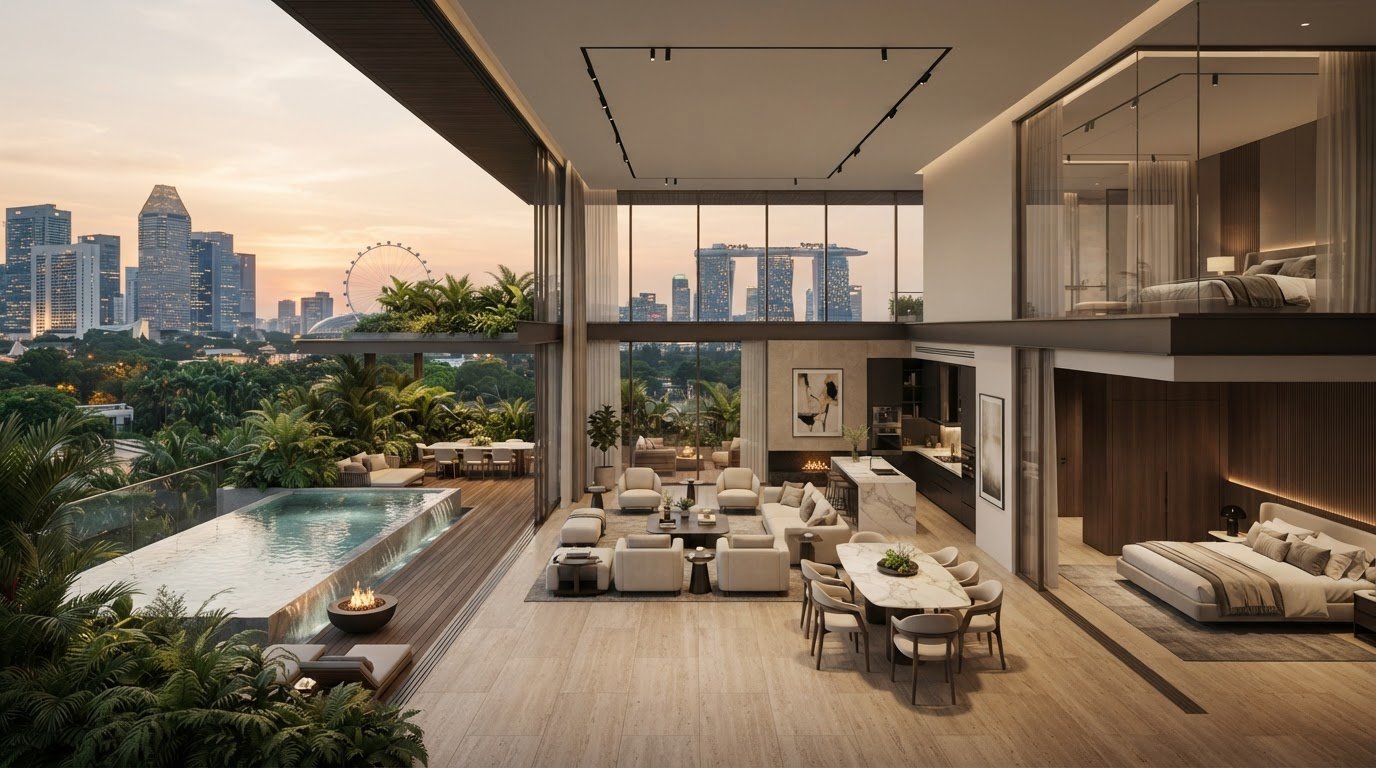
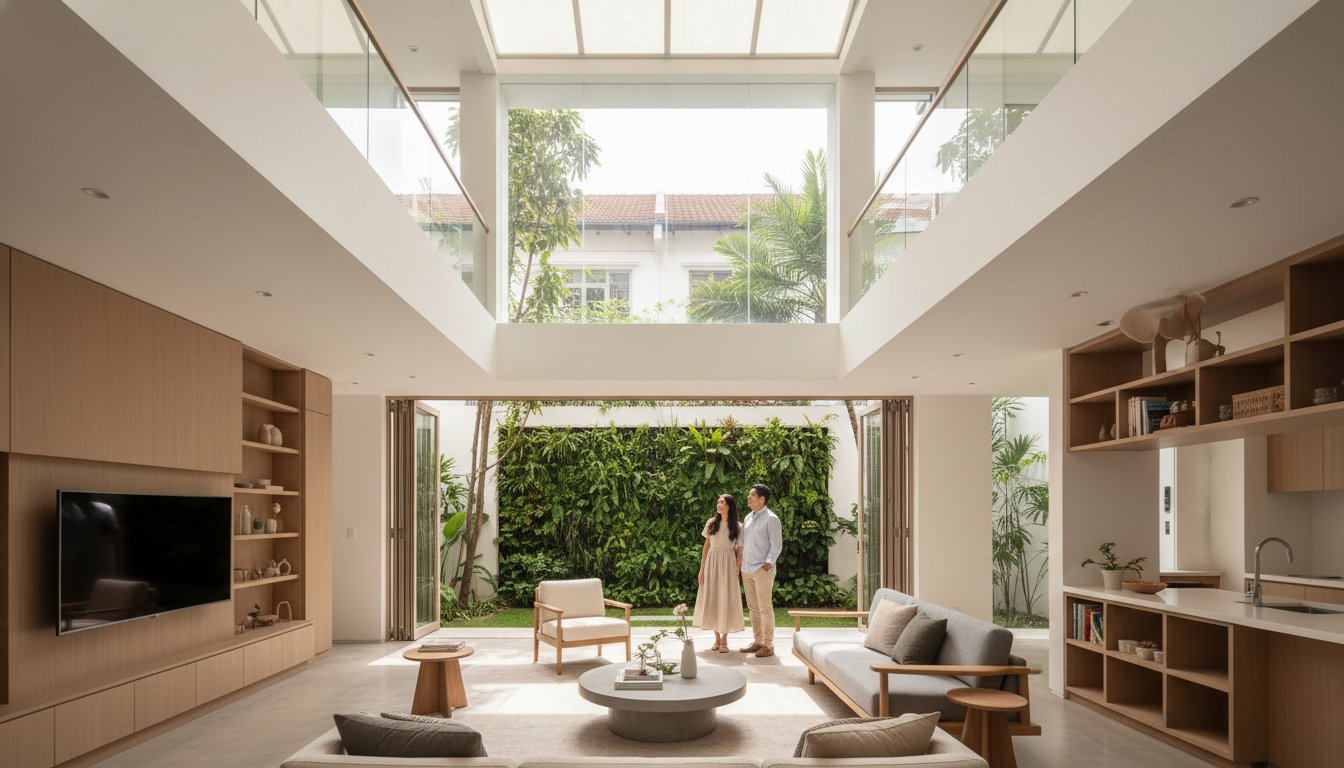
A modern tropical sanctuary focuses on blending indoor and outdoor boundaries to mitigate the constraints of narrow lots. We incorporate internal courtyards that bring nature deep into the floor plan, acting as a visual anchor for the entire home. Using timber accents and stone textures evokes a resort-like atmosphere that is highly sought after in Singapore’s climate. Integrating large, high-performance glass panels allows for uninterrupted views of perimeter greenery, making the interior feel significantly more expansive than its physical footprint suggests.
Sophisticated Minimalism for Urban Professionals
For the busy professional, we deploy minimalist luxury to create a sense of vastness through the strategic use of negative space. This approach relies on hidden storage solutions that maintain a clutter-free environment at all times. We favor monochromatic palettes paired with high-contrast textures, such as matte black fixtures against honed marble, to provide visual depth. Smart home integration is handled with precision; it remains invisible to the naked eye but manages everything from lighting scenes to climate control with a single touch.
Adaptive Layouts for Growing Families
Families require layouts that evolve with their life cycle. We design flexible room configurations that can transition from a nursery to a private study or a hobby room as needs change. Creating dedicated zones for work-from-home ensures productivity without sacrificing family time. We believe the dining area is the heart of family legacy building. We prioritize a grand, open-plan dining space that can comfortably host large gatherings, reinforcing the home’s role as a multi-generational anchor.
- Dedicated study pods offer quiet environments for remote work or academic focus.
- Dual-key concepts within a single terrace can provide independent living for adult children or elderly parents.
- Roof terraces are transformed into lifestyle hubs for evening entertainment and relaxation.
Engineering Space and Natural Light in Narrow Intermediate Layouts
Solving the dark core problem is the primary technical challenge for intermediate units. Because these properties are flanked by neighbors, the center of the home often suffers from a lack of natural illumination and stagnant air. We approach this not through superficial fixes, but through fundamental engineering. Innovative terrace house layout ideas must prioritize the introduction of light into the center of the building footprint. This is achieved by carving out space from the floor plan to create vertical conduits for light and air, transforming a once-gloomy corridor into a vibrant architectural feature.
Open-plan living isn’t simply about removing walls; it’s about the strategic extension of sightlines. By removing visual barriers between the kitchen, dining, and living areas, we allow the eye to travel the full length of the property. This creates an immediate sense of vastness. We often pair this with reflective surfaces and sophisticated lighting layers. Using cove lighting and recessed spots allows for a customizable atmosphere that can make a narrow room feel significantly wider. The goal is to create a home that feels twice its actual size through calculated design choices.
Architectural Voids and Internal Light Wells
Architectural voids are the most effective way to facilitate natural cross-ventilation, which is essential for comfort in Singapore’s humidity. We design central airwells that act as a thermal chimney, drawing hot air up and out of the house. To maximize light penetration without sacrificing floor area, we often utilize glass-floored walkways on upper levels. This allows sunlight from the roof to reach the ground floor kitchen or dining area. The psychological benefits of daylight are profound; it reduces stress and enhances the well-being of the residents in high-density landed environments.
Seamless Indoor-Outdoor Flow
Extending the living room into the car porch or a backyard terrace effectively blurs the boundary of the home. We use consistent flooring materials, such as large-format porcelain tiles or natural stone, to create a visual continuum between the interior and exterior. This trick of the eye makes the living space appear to end only at the property boundary rather than the glass doors. Vertical gardens serve as a critical tool in this setup. They provide a lush, green backdrop that ensures privacy from neighbors while offering a natural form of aesthetic cooling for the building envelope.
- Skylights with heat-reflective coatings provide brightness without increasing internal temperatures.
- Slim-profile sliding doors offer maximum glass area and minimal visual obstruction.
- Light-colored palettes with high-contrast accents help bounce light into deeper corners.
The Strategic ROI: How Layout Decisions Impact Your Property Valuation
Strategic layout design is the bridge between a personal dwelling and a high-yield asset. We often see owners confuse personal preference with market value. A “Value-Add” renovation focuses on features that universal buyers desire, such as increased natural light or additional bedrooms. Conversely, “Ego” renovations involve highly specific customizations that may actually shrink the pool of potential buyers. When you implement terrace house layout ideas, you must evaluate every structural change through the lens of a future valuation report. Professional design doesn’t just improve lifestyle; it significantly reduces time-on-market by presenting a cohesive, move-in-ready product.
Success in this arena requires a disciplined approach to financial planning. A well-planned terrace house renovation budget is essential for ensuring that your expenditure doesn’t exceed the eventual capital appreciation. Buyers in the luxury landed segment are often willing to pay a premium for properties that eliminate the stress of a two-year construction period. By delivering a home that is functionally superior and aesthetically timeless, you position your property at the top of the search results when it’s time to divest.
High-ROI Design Elements
Certain layout features are now considered non-negotiable for modern luxury buyers in Singapore. The dry and wet kitchen split is a prime example. It allows for heavy cooking while maintaining a pristine social space for entertaining guests. We also prioritize en-suite bathroom upgrades. Turning every bedroom into a private suite instantly elevates the property’s status. Additionally, maximizing the Gross Floor Area (GFA) through attic conversions or rooftop terraces provides tangible value that appraisers can quantify in dollar terms.
Avoiding the Pitfalls of Over-Personalisation
Maintaining a neutral but sophisticated base is the key to broad market appeal. While it’s tempting to use bold, trendy colors, a timeless palette of warm neutrals and natural textures ensures the home ages gracefully. From a seller’s perspective, understanding the benefits of buying a renovated terrace house helps you market the property as a turnkey solution. Structural improvements, such as upgraded plumbing or optimized floor plates, always outlast cosmetic trends in valuation reports. If you are preparing to list your property and want to ensure your layout commands the highest possible price, contact us for a professional terrace house sales consultation.
- Maximize GFA to increase the official square footage used in bank valuations.
- Focus on “invisible” value like solar readiness and smart home infrastructure.
- Ensure the master suite offers a “sanctuary” feel with walk-in wardrobes and premium fixtures.
Executing Your Vision: From Layout Planning to Strategic Asset Progression
The transition from conceptual terrace house layout ideas to a physical masterpiece requires a partner who understands the intersection of architecture and market timing. We recognize that the most successful asset progression strategies begin long before the first brick is laid. It starts with the selection of the right property. A layout’s effectiveness is often limited by the site’s orientation, frontage width, and structural condition. Our role is to bridge the gap between elite real estate brokerage and strategic design, ensuring your acquisition serves as a robust foundation for future capital gains.
A sophisticated design is only as good as the plot it sits on. We don’t just facilitate transactions; we coordinate a strategic entry into the landed market. By identifying properties with the right “bones,” we empower you to implement the space-maximizing features discussed earlier, such as internal light wells and seamless indoor-outdoor flows. This foresight prevents the common pitfall of buying a property that cannot legally or structurally support your vision.
Identifying Diamonds in the Rough
Finding a property with high renovation potential involves more than a surface-level inspection. We evaluate older terrace houses for their redevelopment potential by analyzing URA envelope control guidelines and plot ratios. This technical oversight allows us to determine if a property can accommodate the double-volume ceilings or attic conversions that drive premium valuations. For buyers considering end-of-row units, our detailed analysis of a corner terrace for sale singapore reveals how these plots offer unique structural advantages and privacy that intermediate units simply cannot replicate. We provide strategic advice on whether a project warrants a simple Addition & Alteration (A&A) or a full rebuild to maximize the build-up area. This decision is critical; it dictates your total investment and the eventual ceiling of your property’s valuation.
The Vincent Lim (OrangeTee & Tie) Advantage
Our clients benefit from a methodical approach to property wealth planning. We provide access to off-market landed opportunities that possess unique design potential, often before they reach the public eye. This white-glove service extends to curating a network of top-tier architects and designers who specialize in the Singapore landed typology. We don’t just sell a house; we coordinate the entire vision of your legacy home. By aligning your renovation goals with a clear exit strategy, we ensure your home remains a liquid and high-value asset in the competitive Singapore market.
Taking the next step from inspiration to strategic acquisition requires discipline and expert guidance. Whether you’re looking for Terrace House Sales or exploring the wider landed market, professional representation ensures your interests are protected at every turn. We value transparency and results, providing the calculated competence needed to navigate high-stakes transactions with peace of mind. Your journey toward a high-value terrace home begins with a single, well-informed decision.
- Access exclusive listings with high redevelopment potential.
- Leverage URA guideline expertise to maximize your property’s Gross Floor Area.
- Connect with a vetted network of architects specializing in luxury landed homes.
Securing Your Legacy Through Strategic Design
Transforming a landed property into a high-value asset requires a disciplined blend of architectural foresight and market intelligence. You’ve seen that the most effective terrace house layout ideas are those that prioritize structural durability and the engineering of natural light over fleeting aesthetic trends. By focusing on value-add features like GFA maximization and the dry/wet kitchen split, you ensure your home remains a liquid asset in Singapore’s competitive real estate landscape. It’s about making choices today that protect your capital for decades to come.
Navigating these high-stakes decisions is simpler with the right advocate. Vincent Lim, Executive Associate Director at OrangeTee & Tie, brings over 20 years of Singapore real estate experience to your side. As a specialist in GCB and luxury landed sales, he offers the calculated competence required to identify properties with peak redevelopment potential. Consult with Vincent Lim for Strategic Landed Property Advice and begin your journey toward a home that defines excellence. Your vision for a refined lifestyle is within reach when backed by a master strategist.
Frequently Asked Questions
How much does a typical terrace house interior design project cost in 2026?
Interior design costs for terrace houses in Singapore vary significantly based on the level of structural intervention and the selection of premium materials. Owners typically find that high-end projects involving structural alterations require a substantial investment that reflects the property’s landed status. It’s advisable to consult with a qualified quantity surveyor or interior architect to establish a precise budget tailored to your specific plot and lifestyle requirements.
Does an open-concept layout really increase the resale value of a terrace house?
Yes, an open-concept layout significantly enhances resale value by improving the perceived square footage and the natural flow of the home. Discerning buyers in the Singapore market prioritize residences that feel expansive and allow for versatile social interactions. By removing unnecessary partitions, you create a seamless transition between living zones that appeals to a broader demographic of modern families and high-net-worth individuals.
What are the most popular interior design styles for Singapore terrace houses today?
Current trends for 2026 favor the Modern Tropical Sanctuary and Sophisticated Minimalism. These styles are particularly effective in the local context because they address the need for biophilic connection and clutter-free living in a humid climate. Many owners are also adopting the Industrial Loft aesthetic, which utilizes exposed structural elements to create a unique, urban character that stands out in the competitive resale market.
How can I make my intermediate terrace house feel less narrow?
You can mitigate the narrow feel of an intermediate unit by implementing terrace house layout ideas that focus on vertical volume and uninterrupted sightlines. Strategies such as installing double-volume ceilings or side-loading staircases reclaim valuable floor area and draw the eye upward. These design choices break the “tunnel” effect common in traditional layouts, making the interior feel significantly more breathable and luxurious.
Is it better to buy a renovated terrace house or a fixer-upper?
The choice depends on your investment horizon and appetite for construction management. A renovated property offers immediate occupation and eliminates the risks of cost overruns, while a fixer-upper allows for bespoke customization and potential capital gains through strategic redevelopment. We often guide clients to evaluate the structural integrity of a property before deciding which path best supports their long-term asset progression goals.
What architectural permissions are needed for major interior reconfigurations?
Major reconfigurations typically require approval from the Urban Redevelopment Authority (URA) and the Building and Construction Authority (BCA). If your plans involve structural changes, Addition & Alteration (A&A) works, or increasing the Gross Floor Area, you must engage a Qualified Person, such as a registered architect, to submit formal plans. Ensuring full regulatory compliance is essential to avoid complications during a future property valuation or sale.
How long does a full terrace house renovation typically take?
A comprehensive renovation of a terrace house in Singapore generally takes between six to twelve months, depending on the complexity of the works. This timeline accounts for the initial design phase, regulatory submissions, and the actual construction period. Projects involving structural changes or extensions typically sit at the longer end of this spectrum. It’s important to build in a buffer for unforeseen site conditions to maintain peace of mind throughout the process.