Why do the most seasoned investors in Singapore’s landed market often overlook detached bungalows in favor of the semi-detached segment? While a standalone home offers undeniable prestige, a semi-detached house represents a strategic “hybrid” asset that balances exclusive living with superior market liquidity. You likely understand that searching for a semi detached house for sale singapore involves more than just selecting a floor plan; it’s a high-stakes decision where technical nuances like URA setback requirements and plot size can determine millions in future value.
It’s natural to feel a sense of caution when navigating these complex legal boundaries and substantial financial commitments. This guide will provide the clarity you need by mastering the technical selection criteria and market trends essential for securing a high-value legacy asset. We’ll explore the strategic selection process, decode the latest 2026 property tax implications, and reveal how to identify properties with the highest redevelopment potential to ensure your family home doubles as a significant wealth generator over the next decade.
Key Takeaways
- Grasp the legal and technical distinctions that position semi-detached houses as a resilient “middle ground” for long-term wealth preservation in 2026.
- Decode URA envelope control and setback requirements to accurately assess the buildable area and future expansion possibilities of a specific plot.
- Use strategic selection criteria, such as plot regularity and frontage width, to filter through any semi detached house for sale singapore for true investment value.
- Factor in environmental elements like North-South orientation to enhance both daily living comfort and the eventual resale premium of your legacy asset.
- Leverage the expertise of a seasoned landed property specialist to navigate complex legal boundaries and secure a prestigious family home with confidence.
Table of Contents
- Defining the Semi-Detached House in Singapore’s 2026 Landscape
- Navigating URA Guidelines and Technical Specifications
- Strategic Comparison: Semi-Detached vs. Terrace and Detached Houses
- Key Considerations for Acquiring a Semi-Detached Property
- Partnering with an Elite Strategist for Your Landed Acquisition
Defining the Semi-Detached House in Singapore’s 2026 Landscape
A Semi-detached house in the Singapore context is a dwelling that shares a common partition wall with a single neighbor. This structural arrangement provides a distinctive balance, offering the prestige of a standalone property with the structural efficiency of shared infrastructure. For those evaluating a semi detached house for sale singapore, this asset class represents the strategic “sweet spot” in the landed hierarchy. It sits comfortably between the terrace house, which is constrained by shared walls on both sides, and the detached bungalow, which requires significantly higher capital outlays.
2026 is proving to be a defining year for this segment. Market data from Q2 2026 shows that landed property prices rose by 2.5% quarter-on-quarter, reversing a slight dip from the start of the year. This resilience is anchored by a fundamental truth: landed homes are a finite resource. With only about 4.7% of the population living in these homes, the scarcity ensures that well-located semi-detached properties remain a primary choice for wealth preservation. They offer a level of exclusivity that is increasingly difficult to find in a land-constrained city-state.
The Anatomy of a Semi-Detached Property
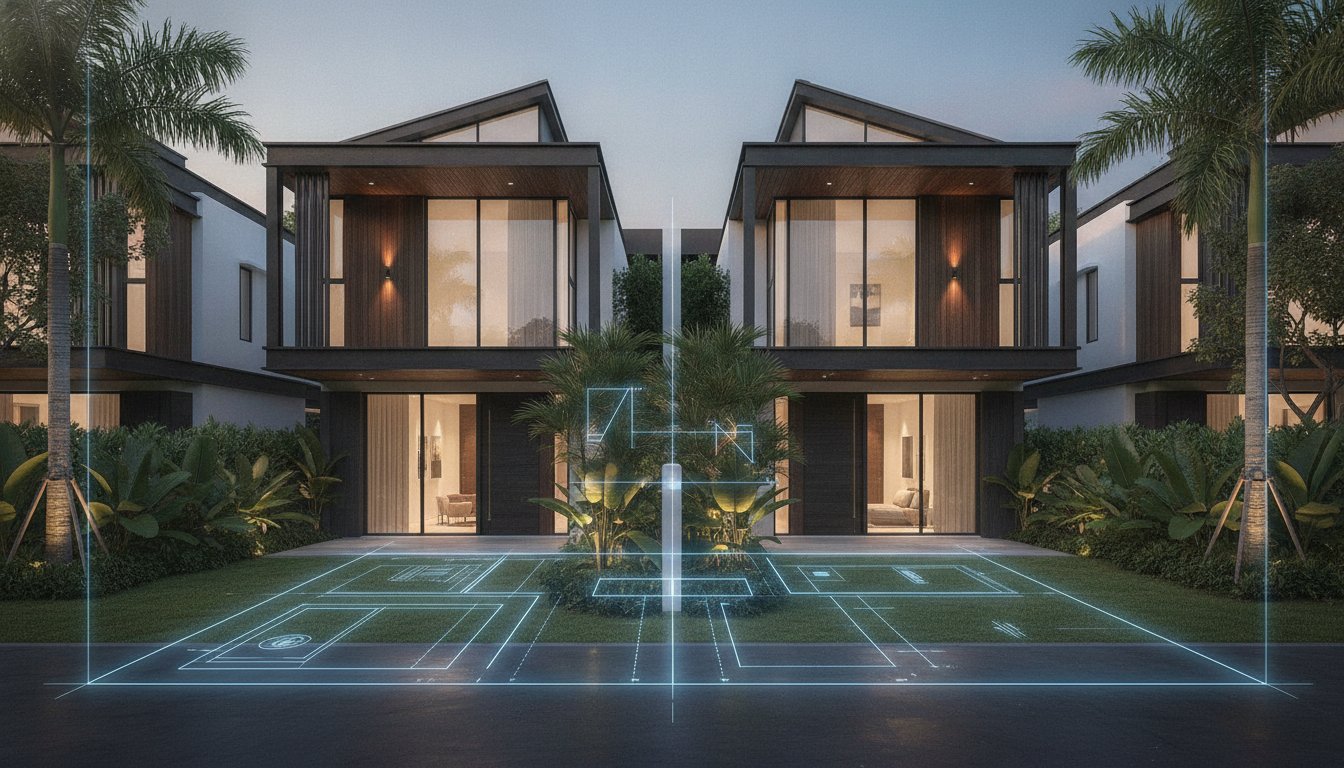
Understanding the technical boundaries is vital for any prospective owner. The Urban Redevelopment Authority (URA) requires a minimum plot size of 200 square metres (approximately 2,153 square feet) for a semi-detached house. While the shared party wall is the most visible feature, the independent side setback is the most valuable. This 2-metre gap from the property boundary provides the ventilation and garden space that terrace houses lack. Most pairings are side-by-side, but you’ll occasionally encounter back-to-back configurations in certain mature estates.
Market Drivers for Semi-Detached Homes
The current demand is driven by a pronounced shift toward multi-generational living. Semi-detached plots provide the necessary footprint to build upwards and outwards, accommodating grandparents, parents, and children under one roof. These homes also function as a sophisticated hedge against market volatility. In the first half of 2026, 1,043 landed homes were transacted, and semi-detached units made up 30.1% of those sales. This transaction volume highlights the segment’s liquidity. Investors view these properties as “safe haven” assets that offer both immediate lifestyle benefits and a clear path toward long-term capital gains.
Navigating URA Guidelines and Technical Specifications
The true value of any semi detached house for sale singapore is defined by the Urban Redevelopment Authority (URA) regulations that govern its plot. Since the implementation of Envelope Control guidelines, which were further refined as of June 15, 2026, the focus has shifted from rigid storey-height rules to a volumetric approach. This allows owners to maximize internal floor area within a defined three-dimensional “envelope.” A critical technicality is the 2-metre side setback. This mandatory gap ensures ventilation and fire safety, but for the discerning owner, it represents the primary canvas for landscaping and outdoor integration that separates this asset class from standard terrace housing.
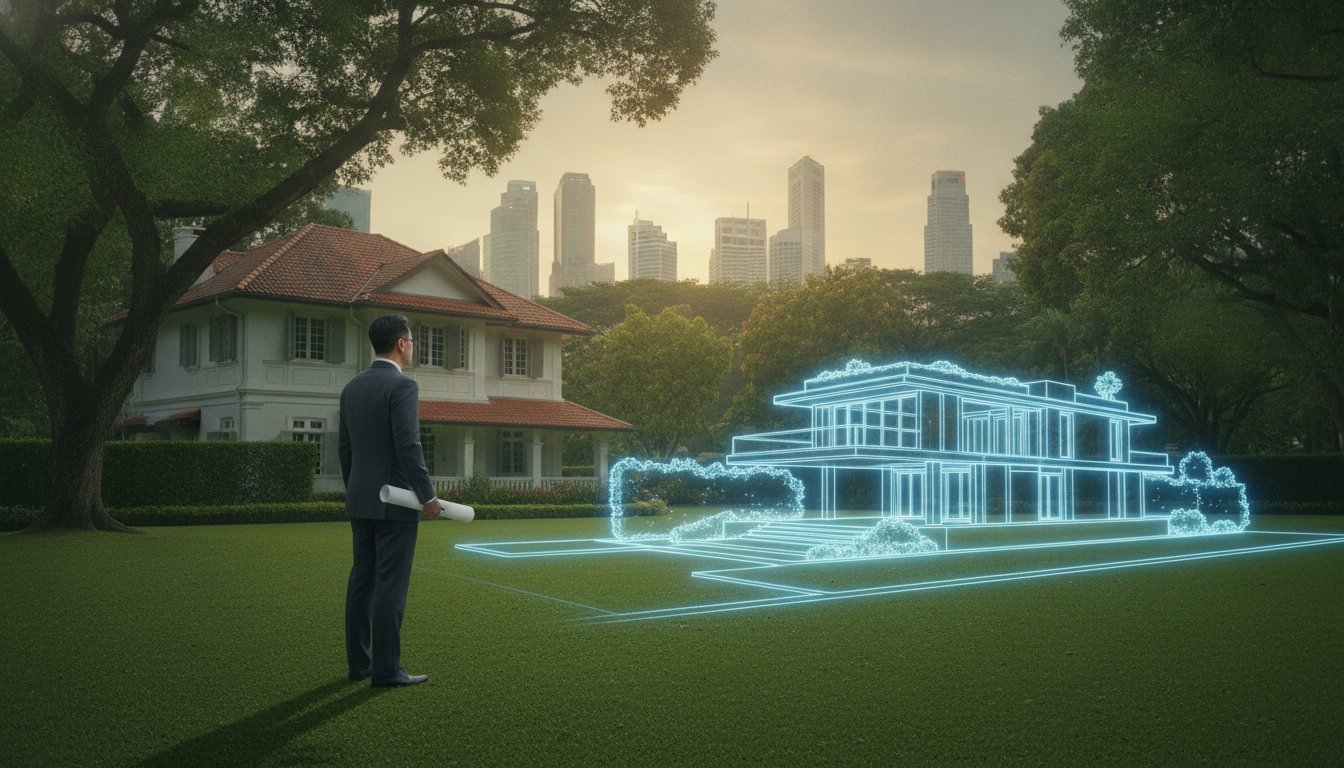
Buyers frequently confuse a “Corner Terrace” with a “Semi-Detached” house. While they may share similar physical traits, their legal definitions are distinct. A semi-detached house is specifically one of a pair sharing a common party wall. A corner terrace is the terminal unit of a row of three or more houses. This distinction is vital because it affects redevelopment potential; a corner terrace plot must meet specific size and frontage requirements to be reclassified or rebuilt as a semi-detached property. Knowing the exact zoning of your plot, whether it sits in a 2-storey or 3-storey landed housing zone, is the first step in calculating its ultimate redevelopment ceiling.
Redevelopment and A&A Potential
An Elite Strategist identifies value by analyzing the gap between the existing built-up area and the maximum permissible Gross Floor Area (GFA). When evaluating a semi detached house for sale singapore, look for “underbuilt” properties where the current structure doesn’t fully utilize the height limits of its zone. Achieving significant capital gains often involves identifying these assets before they are modernized. Renovating or rebuilding a shared partition wall requires meticulous legal coordination with the adjoining neighbor, making professional guidance indispensable to ensure a smooth transition from acquisition to construction.
Land Title and Tenure Nuances
Tenure remains a primary pillar of legacy planning in Singapore. Freehold and 999-year leasehold titles are the gold standard, offering perpetual ownership that resists the effects of lease decay. Conversely, 99-year leasehold properties can offer attractive entry points and higher rental yields for investors focused on a shorter 15 to 20 year horizon. You can explore the strategic differences in my guide on Freehold vs Leasehold Landed Property. Selecting the right tenure depends entirely on whether your priority is immediate cash flow or multi-generational wealth preservation.
For a personalized analysis of a specific plot’s technical potential, you may wish to consult a landed property specialist who understands these complex URA nuances.
Strategic Comparison: Semi-Detached vs. Terrace and Detached Houses
The semi-detached house occupies a unique strategic position in Singapore’s landed property hierarchy. It represents a “middle ground” for families who require more space and privacy than a standard terrace house but aren’t ready for the capital commitment of a full bungalow. When searching for a semi detached house for sale singapore, savvy buyers recognize that they’re acquiring a versatile asset. With a median price in the OCR of approximately S$5.75 million as of Q1 2026, this entry point is significantly more accessible than the detached market, where 57.9% of transactions now exceed the S$5 million mark, often reaching much higher for prime locations.
Privacy metrics are the primary differentiator in this comparison. While a terrace house shares walls on both sides, the semi-detached property offers a mandatory 2-metre side setback. This doesn’t just provide a garden; it fundamentally alters the internal atmosphere by allowing natural light to penetrate from three sides. Understanding the average price of a semi-detached house in Singapore is essential for benchmarking your acquisition against broader market performance. This is particularly relevant as landed property prices rose by 2.5% in Q2 2026, signaling a resilient market for those seeking long-term stability.
Semi-Detached vs. Detached Houses
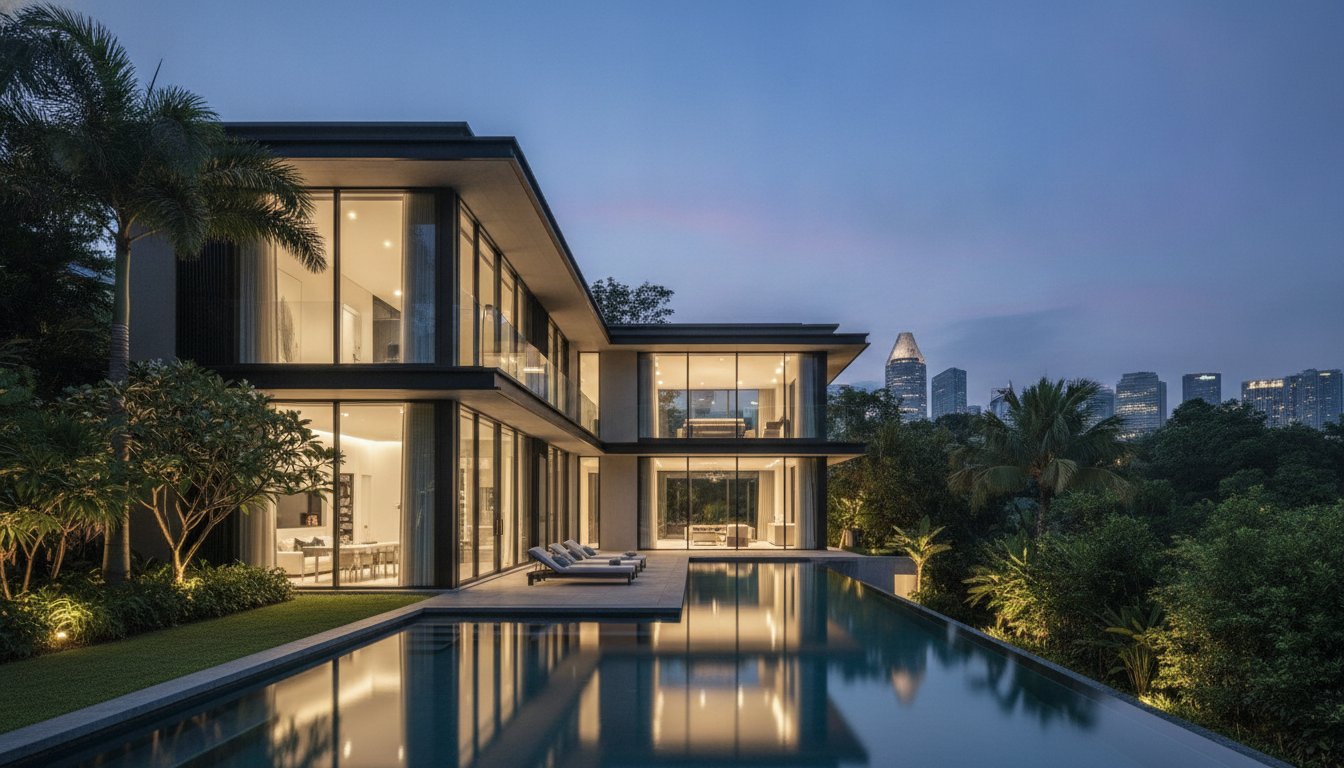
Transitioning to a detached house for sale Singapore is a move typically driven by legacy planning and the desire for absolute privacy. However, the maintenance costs for a detached property, which often features larger gardens and private pools, are substantially higher. A semi-detached house offers a more manageable operational profile while still retaining the “landed prestige” that commands high resale value. The psychological gap between a semi-detached and a detached home is narrowing as modern architectural designs for “Semi-Ds” increasingly mimic the grandeur of bungalows.
Semi-Detached vs. Terrace Houses
For many, the journey into landed ownership begins by upgrading from a terrace house for sale Singapore. The shift provides a tangible improvement in lifestyle, primarily through the “extra” side garden. This space isn’t just for aesthetics; it acts as a thermal buffer and a private sanctuary for the family. While a corner terrace is often viewed as a “Semi-D lite,” it lacks the specific legal status and often the plot width of a true semi-detached unit. For a discerning investor, the true semi-detached title carries a higher premium and superior long-term capital appreciation potential due to its stricter URA classification.
Key Considerations for Acquiring a Semi-Detached Property
Selecting a semi detached house for sale singapore requires a disciplined evaluation of land geometry. Regular, rectangular plots command a significant premium because they allow for efficient structural layouts without wasted corners or awkward architectural compromises. In contrast, tapered or “pie-shaped” plots often complicate the building process and can reduce the usable frontage. Frontage width is equally vital; a wider presence on the street doesn’t just enhance curb appeal, it facilitates multiple car parking spaces and grander entrance designs that appeal to future buyers.
Environmental factors like North-South orientation are essential for long-term thermal comfort. This specific facing minimizes direct afternoon sun, reducing reliance on air conditioning and lowering utility costs. Beyond the plot itself, you must scrutinize the surrounding Master Plan. Identifying zones where neighboring low-rise developments could potentially be redeveloped into high-rise condominiums is a critical step in future-proofing your privacy. An elite strategist looks beyond the current view to ensure that a prestigious family home remains secluded for decades to come.
Financial Planning for Landed Assets
Navigating the financial landscape of a landed acquisition requires a precise calculation of the Additional Buyer’s Stamp Duty (ABSD). As of July 2026, a Singapore Citizen purchasing their second residential property faces a 20% ABSD, while Permanent Residents pay 5% on their first property. These high-stakes commitments necessitate a robust financing strategy that accounts for both the land value and potential construction costs. This level of meticulous planning is a cornerstone of successful asset progression to landed property, ensuring your capital is deployed with maximum efficiency.
Legacy Planning and Wealth Preservation
Semi-detached houses serve as an exceptional vehicle for intergenerational wealth transfer. Their scarcity, with landed homes comprising only about 4.7% of Singapore’s total housing stock, creates a natural pricing floor that resists market volatility. A well-executed 20-year exit strategy involves maintaining the property’s “redevelopment-ready” status. This allows the next generation to either enjoy the existing home or unlock significant capital gains by selling the land to a developer or a new family looking to build their own custom residence.
To refine your acquisition strategy and identify off-market opportunities, you can engage my white-glove brokerage services for a private consultation.
Partnering with an Elite Strategist for Your Landed Acquisition
Securing a prestigious family home requires more than just browsing public listings. It demands a partnership with a professional who possesses the technical depth and market intuition to identify true value. Vincent Lim has been a cornerstone of the Singapore luxury real estate market since 2004. As an Executive Associate Director at OrangeTee & Tie, he provides a white-glove service specifically tailored for high-net-worth individuals evaluating a semi detached house for sale singapore. This bespoke approach ensures that every transaction is handled with the precision and confidentiality it deserves. He isn’t just an agent; he’s a dedicated advocate for your long-term wealth.
Accessing the right opportunities often means looking beyond what is publicly available. Vincent’s extensive network provides his clients with exclusive access to off-market semi-detached properties and even the most coveted Good Class Bungalow listings. This methodical, intentional approach eliminates the noise of the mass market. It allows you to focus your attention only on assets that meet your specific legacy and investment criteria, saving you the most valuable resource of all: time.
Strategic Valuation and Negotiation
Vincent utilizes data-driven insights to ensure his clients never overpay in a competitive landscape. The art of the landed deal involves much more than price matching. It requires navigating complex seller motivations and understanding the technical redevelopment potential of a plot. By analyzing historical price gaps and future zoning changes, Vincent protects your capital from the outset. If you’re also looking to divest an existing asset to facilitate your upgrade, his Strategic Guide to Selling Your Landed Property offers a blueprint for maximizing value in the 2026 market.
Your Journey to Landed Excellence
The transition into a new landed home should be a seamless, stress-free experience. From the initial strategic consultation to the final key handover, Vincent provides a structured roadmap that addresses legal boundaries, financial planning, and technical due diligence. His commitment doesn’t end at the transaction. He offers ongoing advisory services to help you manage and refine your luxury property portfolio over the long term. This ensures your real estate holdings continue to serve your family’s needs for generations. To begin your journey with a trusted partner who values integrity and excellence, schedule a private consultation with Vincent Lim today.
Securing Your Multigenerational Legacy in the Landed Market
Navigating the acquisition of a semi-detached property requires a blend of technical mastery and strategic foresight. These homes offer a unique “hybrid” advantage, providing the prestige of a standalone residence with the market liquidity essential for long-term wealth preservation. By prioritizing URA-compliant plots with regular shapes and favorable North-South orientations, you ensure your family home remains a high-value asset in Singapore’s resilient 2026 landed market.
Identifying a premier semi detached house for sale singapore often requires looking beyond public listings to access exclusive off-market opportunities. Vincent Lim, an Executive Associate Director at OrangeTee & Tie and a specialist in GCB and luxury landed sales, has provided elite-level guidance to discerning families since 2004. His white-glove approach ensures that every nuance of your transaction is managed with calculated competence and transparency.
Secure your landed legacy with a private consultation with Vincent Lim. With a seasoned strategist by your side, you can move forward with the confidence that your investment is both a sanctuary for your family and a pillar of your financial future.
Frequently Asked Questions
What is the minimum land size for a semi-detached house in Singapore?
The minimum land area for a semi-detached house is 200 square metres, which is approximately 2,153 square feet. This URA requirement ensures that each plot can accommodate the necessary structural setbacks while maintaining a functional living space. Owners looking to redevelop must verify that their plot meets this threshold before proceeding with any major reconstruction plans or substantial additions and alterations.
Can a foreigner buy a semi-detached house in Singapore?
Foreigners and Permanent Residents are restricted from purchasing landed property unless they obtain approval from the Land Dealings Approval Unit (LDAU). This special permission is typically reserved for individuals who have made significant economic contributions to the country. Every application is assessed on its individual merits, and the process is rigorous to ensure that Singapore’s limited landed housing remains primarily for its citizens.
Is a semi-detached house considered a bungalow?
No, a semi-detached house is not a bungalow. In Singapore, a bungalow is a detached house that stands alone on a plot of at least 400 square metres. A semi-detached house is defined as one of a pair of dwellings separated by a common partition wall. While both offer the prestige of landed living, bungalows represent a higher tier of exclusivity and land ownership.
How much does a semi-detached house cost in Singapore in 2026?
The typical price range for a semi detached house for sale singapore in 2026 falls between S$3 million and S$15 million. Location, plot size, and tenure are the primary drivers of these values. For instance, the median price for a semi-detached home in the Outside Central Region was S$5.75 million in the first quarter of 2026, reflecting the segment’s strong demand and resilient market position.
What is the difference between a corner terrace and a semi-detached house?
The distinction is primarily a legal one based on the property’s position and title. A semi-detached house is part of a pair, while a corner terrace is the end unit of a row of at least three houses. Although they may share similar physical characteristics, such as an extra side garden, their URA zoning and redevelopment potential differ, often affecting the long-term capital appreciation of the asset.
Do semi-detached houses have better resale value than condos?
Semi-detached houses generally offer superior long-term capital gains compared to condominiums because of the extreme scarcity of land in Singapore. With only 4.7% of the population residing in landed homes, these assets act as a robust store of value. Data from Q2 2026 shows that landed property prices rose by 2.5%, highlighting their resilience even when other segments of the residential market face stagnation.
What are the URA setback requirements for semi-detached houses?
URA guidelines require a mandatory 2-metre side setback for all semi-detached houses to ensure fire safety and adequate ventilation. Frontage setbacks are typically 7.5 metres for properties facing Category 3 roads, though this can vary based on specific road classifications. These technical specifications are now managed under the Envelope Control framework, which allows for more creative architectural designs while maintaining a disciplined volumetric limit for the neighborhood.
Is it worth buying a 99-year leasehold semi-detached house?
Buying a 99-year leasehold semi detached house for sale singapore is often a strategic decision for yield-driven investors rather than legacy seekers. These properties typically offer a more accessible entry price and can generate higher rental returns over a 15 to 20 year horizon. However, for those prioritizing intergenerational wealth transfer, freehold or 999-year leasehold titles are the preferred standard to avoid the inevitable impact of lease decay on value.