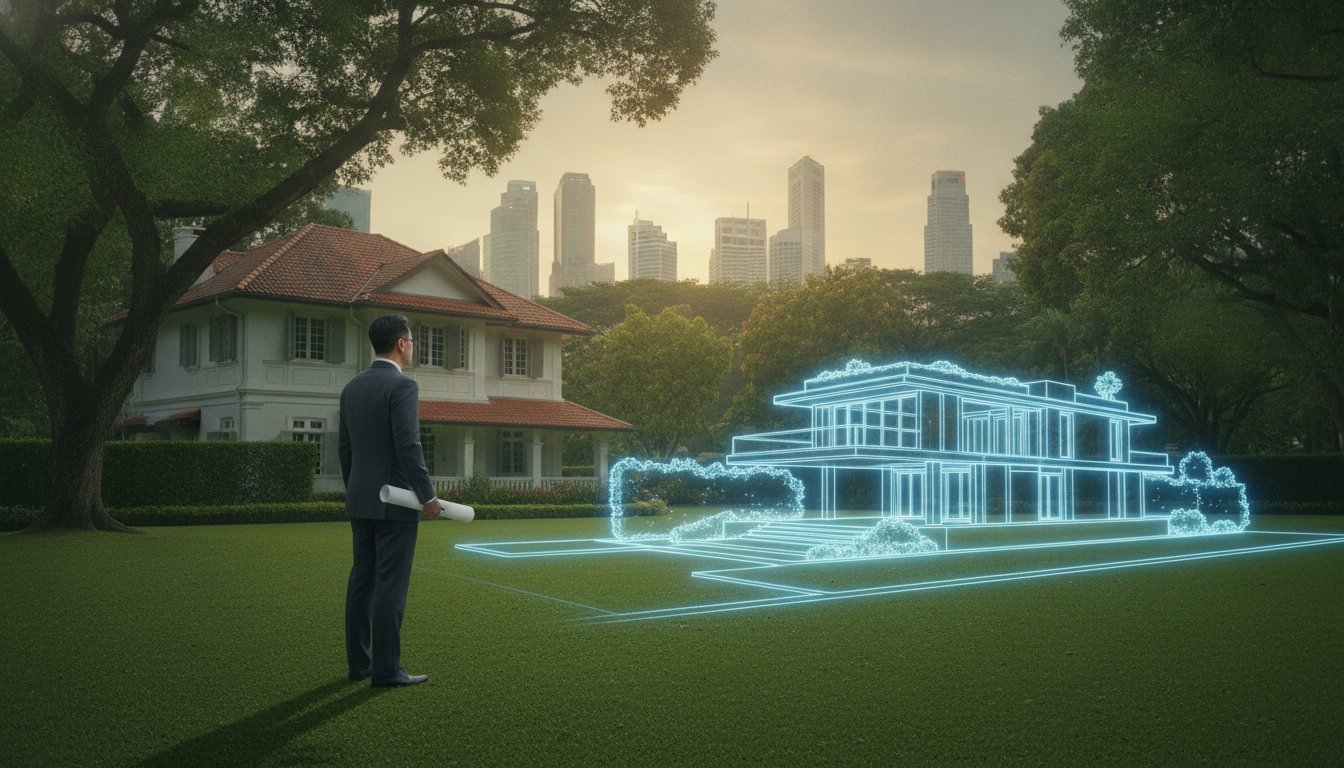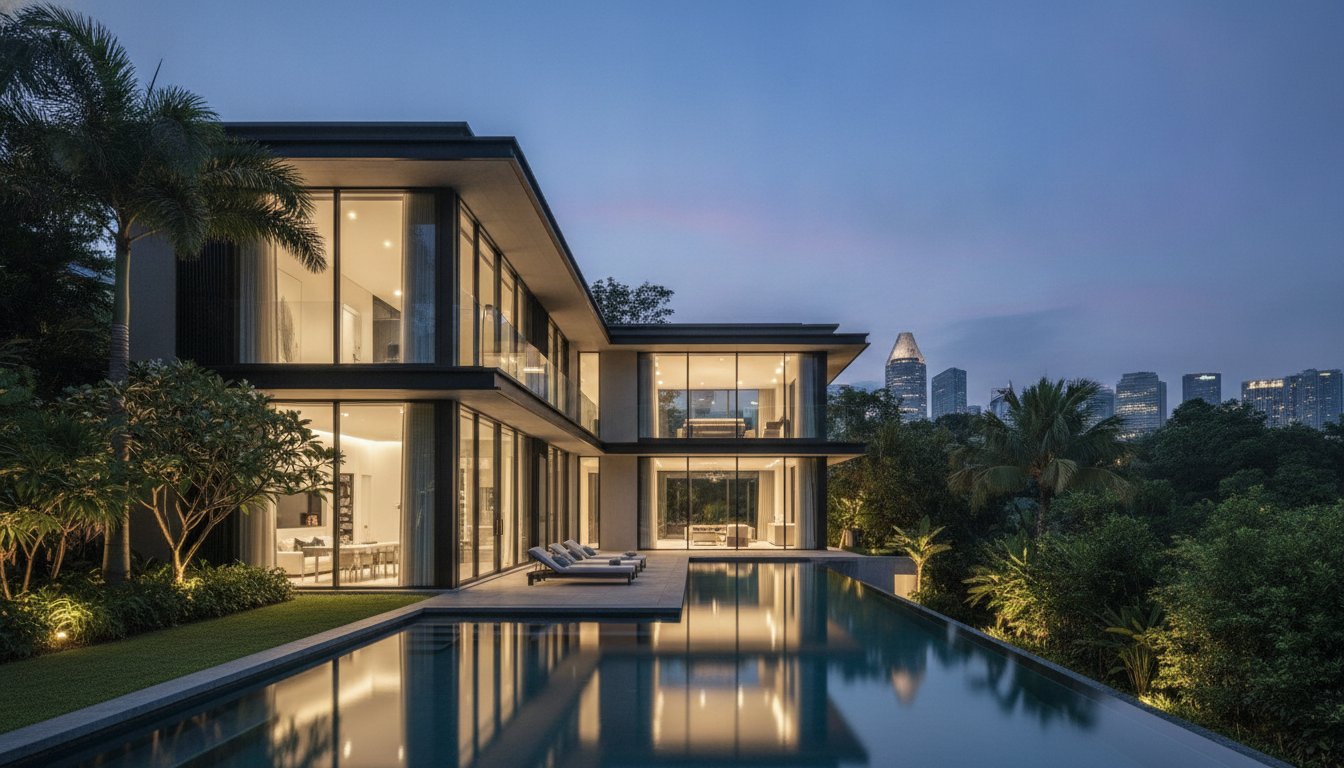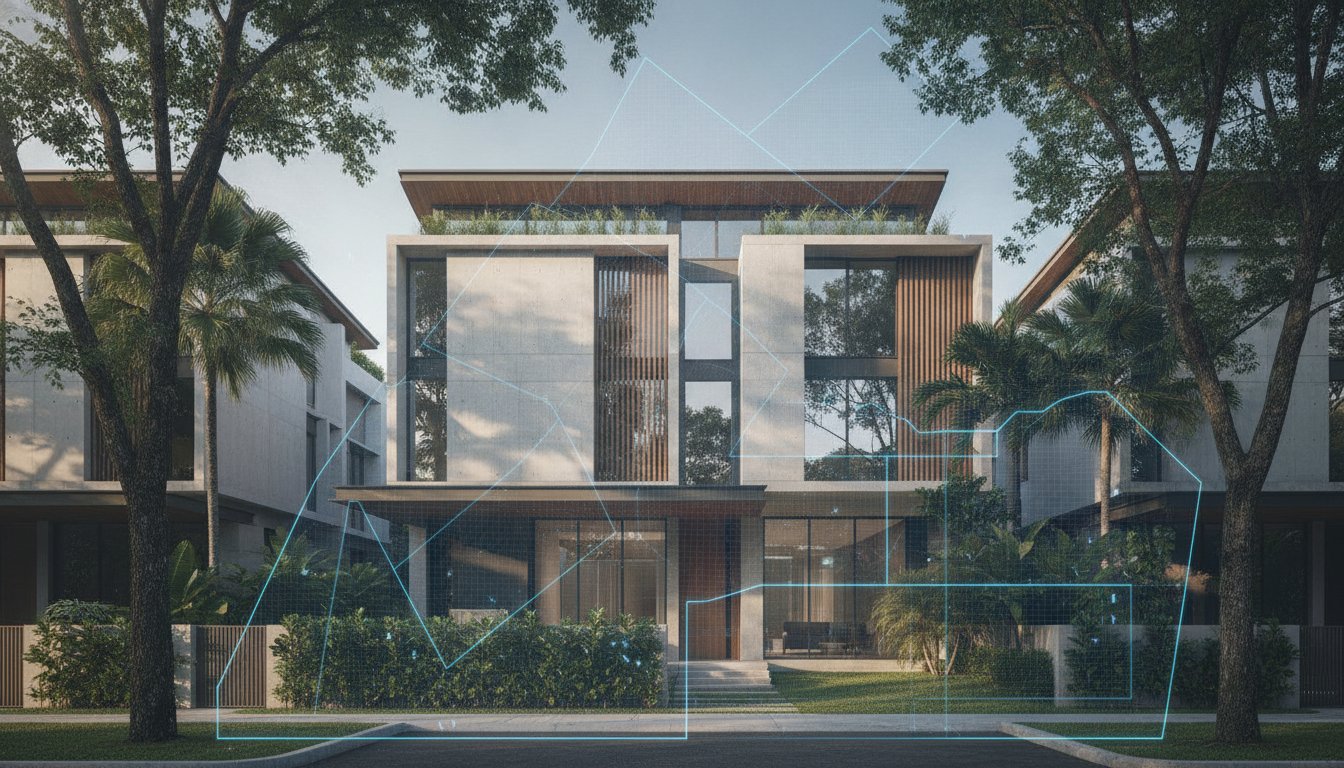
In Singapore’s land-scarce market, a terrace house is often viewed as a lifestyle upgrade, but the most successful buyers treat it as a strategic land play where structural adaptability determines future valuation. Understanding what to look for when buying a terrace house in Singapore requires moving beyond aesthetic appeal to analyze the technical constraints that govern long-term growth. You likely recognize that a multi-million dollar landed acquisition is the pinnacle of local real estate, yet the fear of restrictive URA setback rules or unforeseen Addition & Alteration costs can turn a dream home into a financial burden.
This guide provides the seasoned clarity you need to master the technical, financial, and structural nuances of acquiring a terrace house, ensuring your investment aligns with both your lifestyle and capital appreciation goals. We’ll examine the essential physical inspection checklist, the reality of leasehold price decay in 2026, and how to identify land plots with the highest redevelopment potential. By the end of this analysis, you’ll possess the calculated competence required to secure a legacy property with absolute peace of mind.
Key Takeaways
- Navigate the 2026 capital appreciation curves for freehold and leasehold tenures to ensure long-term wealth preservation and strategic asset growth.
- Identify exactly what to look for when buying a terrace house in singapore by mastering URA Envelope Control guidelines and mandatory road buffer setbacks.
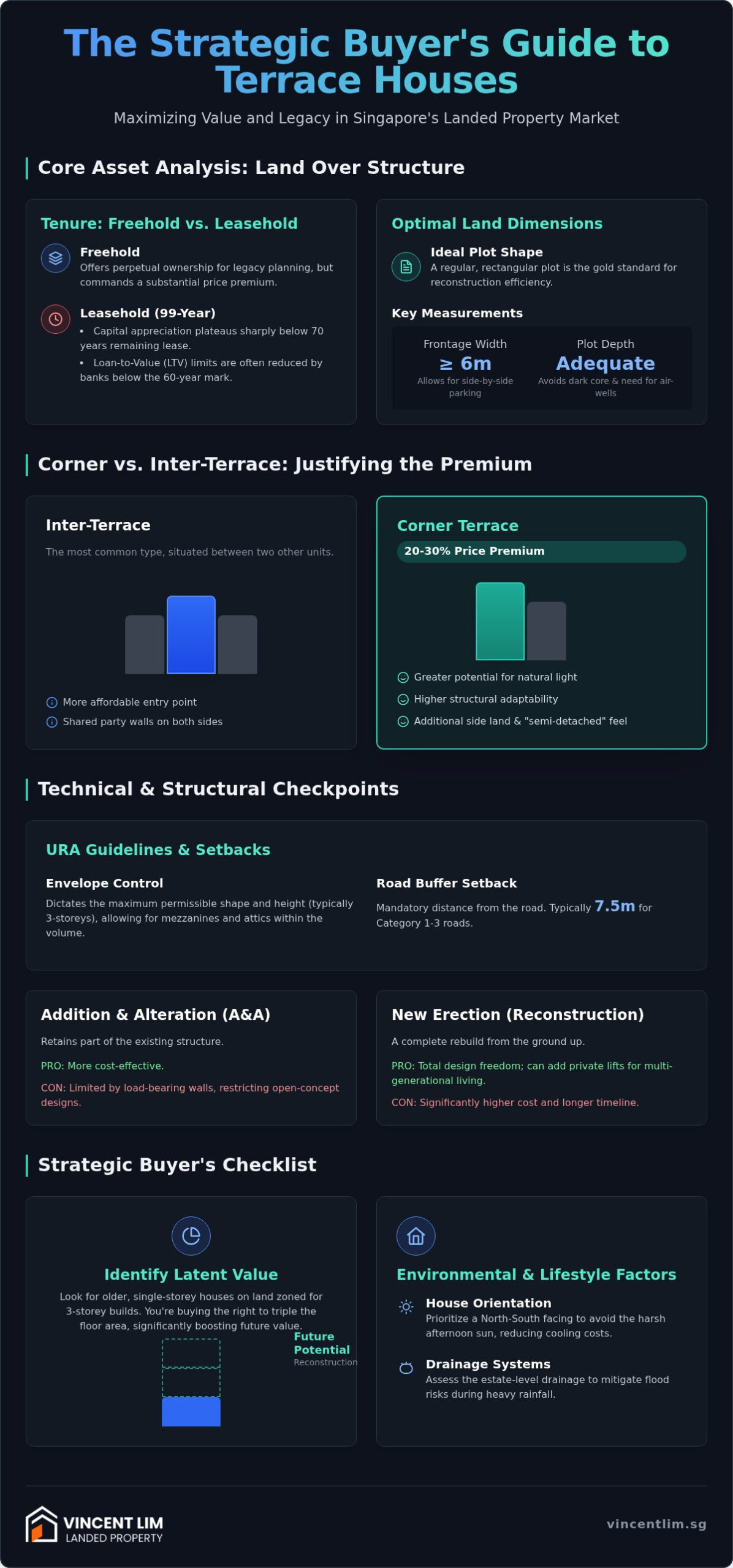
- Determine if the 20-30% price premium for corner terrace units is justified by analyzing their potential for natural light and structural adaptability.
- Mitigate environmental risks by assessing estate-level drainage systems and prioritizing a North-South orientation to avoid the afternoon sun.
- Secure off-market opportunities through a disciplined acquisition framework that emphasizes rigorous due diligence and strategic legacy planning.
Understanding the Terrace House Asset Class: Tenure and Land Value
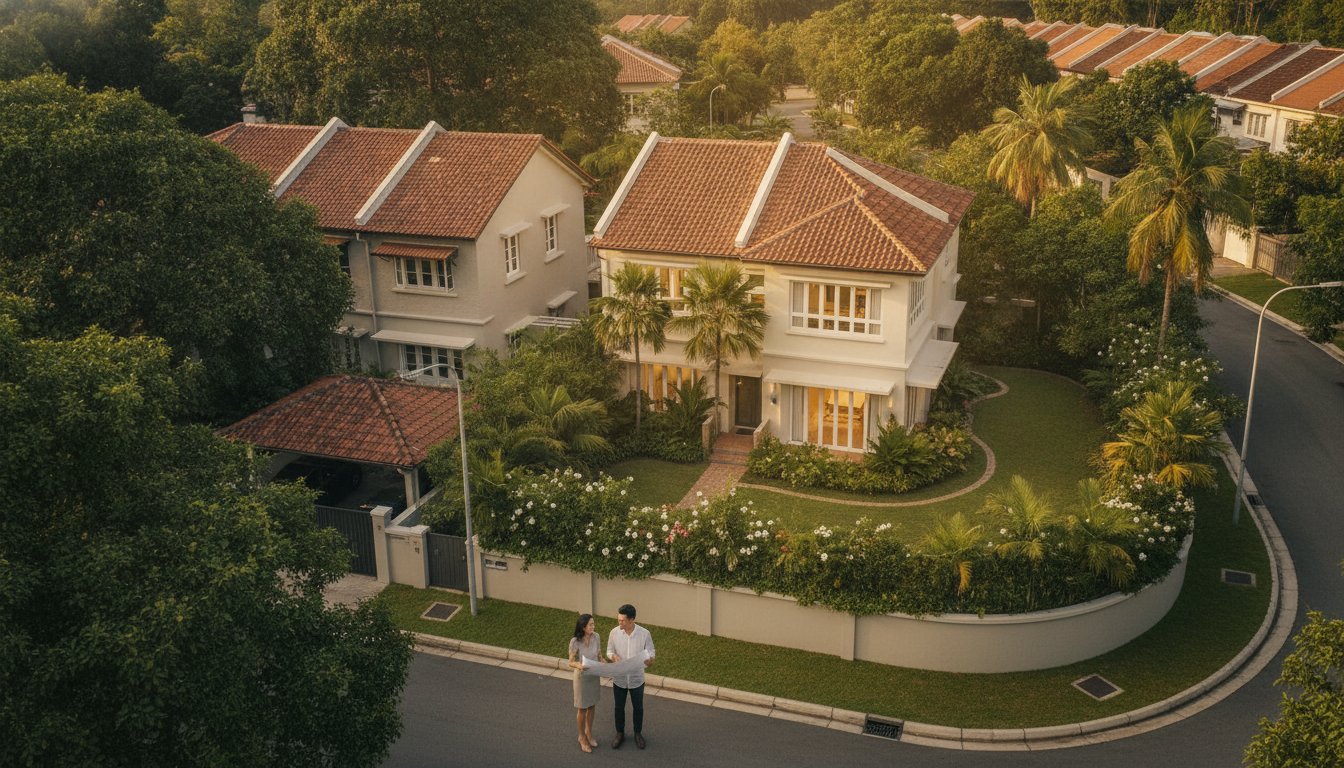
Terraced housing has evolved significantly from its historical origins. Citing the History of Terraced Houses provides context on how these rows of dwellings became a staple of urban planning, eventually adapting to Singapore’s unique land-use constraints. In the local market, we categorize these assets into three distinct forms. Inter-terrace units are the most common, while corner terraces command a premium for their additional land and “semi-detached” feel. The “end-terrace” is a rarer designation, referring to units at the terminus of a row that may not always possess the expansive side gardens of a true corner unit.
When determining what to look for when buying a terrace house in Singapore, seasoned investors prioritize land value over built-up area. A house is a depreciating asset, but the land beneath it is where wealth is preserved. This leads to the concept of “latent value.” You’ll often find older, single-storey terrace houses sitting on plots zoned for three-storey envelope control heights. These properties represent a strategic opportunity; you’re essentially buying the right to triple the floor area in a future reconstruction, which significantly boosts the property’s eventual resale floor.
Freehold vs Leasehold: A 2026 Perspective
The debate between freehold and 99-year leasehold has shifted in 2026. While freehold properties offer perpetual legacy planning, the premium can be substantial in a high-interest environment. However, leasehold terrace houses face a sharper capital appreciation plateau as the remaining lease dips below 70 years. Financing becomes a hurdle; many banks reduce the Loan-to-Value (LTV) limit once the lease reaches the 60-year mark. Strategic buyers look for “sweet spot” leaseholds where the land value is low enough to justify the entry price, or where en-bloc potential remains high due to aging infrastructure and underutilized plot ratios.
Land Width and Plot Depth
Physical dimensions dictate both lifestyle and future resale value. A wide frontage, ideally at least 6 meters, is essential for parking two vehicles side-by-side. Narrower plots often force tandem parking, which is a significant deterrent for modern families. Plot depth is equally critical. A deep, narrow plot often suffers from a dark core, necessitating the construction of expensive internal air-wells to bring in natural light. A regular-shaped, rectangular plot is the gold standard for reconstruction, as it allows for maximum efficiency under URA setback rules without the wasted space of odd-angled corners.
Technical and Structural Checkpoints: URA Guidelines and Setbacks
Acquiring a landed asset requires a shift from aesthetic appreciation to technical scrutiny. Envelope Control is the primary regulator of landed volume, dictating the permissible height and shape of the structure. In 2026, these guidelines allow for greater flexibility within a three-storey height limit, often permitting mezzanine levels that significantly increase the usable floor area without violating the defined volumetric envelope. When considering what to look for when buying a terrace house in Singapore, understanding the road buffer is paramount. For Category 1 to 3 roads, the front setback is typically 7.5 meters from the road reserve line. For lower-category roads, this distance may be reduced; however, ignoring these constraints can lead to costly design errors during a future rebuild.
Choosing between an Addition & Alteration (A&A) and a New Erection is a fundamental strategic decision. An A&A is generally more cost-effective as it retains a portion of the existing structure, but it may limit your ability to remove load-bearing walls. These structural pillars often restrict open-concept designs and can be expensive to bypass. Conversely, a New Erection allows for a total reimagining of the plot, including the installation of a private lift, which is increasingly essential for multi-generational living and future-proofing the property’s value. For those seeking a deeper analysis of specific land plots, consulting a strategic property advisor can provide the technical foresight needed to avoid high-risk acquisitions.
The Impact of Envelope Control
The 2026 height restrictions are designed to harmonize the skyline while allowing owners to maximize their internal square footage. By utilizing the volumetric envelope effectively, you can incorporate an attic level that feels like a full floor, provided it stays within the 45-degree sloping line from the setbacks. This strategy is particularly useful for inter-terrace units where natural light is limited to the front and rear. Maximizing the attic space while staying within legal limits ensures you capture the full “latent value” discussed previously.
Assessing Structural Integrity
Older terrace houses often present hidden structural challenges. Spalling concrete in the car porch and roof seepage are common red flags that suggest deferred maintenance or structural aging. In an inter-terrace setting, the shared party wall is a critical consideration; any work done to your unit must ensure the structural stability of your neighbor’s home. Evaluating the feasibility of installing a private lift in a three-storey terrace is also a priority for modern buyers. If the existing foundation cannot support the additional load, the cost of retrofitting can escalate quickly, turning a perceived bargain into a financial burden.
Corner Terrace vs. Inter-Terrace: Justifying the Premium
The decision between a corner terrace and an inter-terrace is a fundamental strategic choice that dictates both your daily comfort and your eventual exit price. A corner unit typically commands a price premium of 20% to 30%, a figure that reflects its functional superiority and its status as a form of “entry-level luxury.” This premium is justified by the “semi-detached feel” that comes from having only one party wall. This structural independence significantly reduces the noise transfer and privacy concerns common in row housing. When you’re determining what to look for when buying a terrace house in Singapore, the landscaping potential of a corner plot is a major draw. While the side garden offers an elite aesthetic and space for outdoor hosting, it also introduces maintenance obligations that don’t exist for inter-terrace owners.
Inter-terrace units, while more affordable, require a different design approach to achieve a similar level of livability. They are often perceived as being in a “fishbowl” if the front and rear are heavily glazed without proper screening. However, for a disciplined buyer, an inter-terrace on a regular plot can offer exceptional value, especially if the internal layout is optimized to overcome the lack of side windows. The key is to look past the current aesthetic and evaluate the land’s latent potential for a modern, open-concept rebuild.
Ventilation and Natural Light
Architecturally, corner units are vastly superior in terms of climate control. The side openings allow for consistent cross-ventilation, which naturally cools the home and reduces reliance on expensive air conditioning. Inter-terrace units, conversely, often suffer from a dark, stagnant core unless they utilize a well-designed air-well. Modernizing these internal voids with retractable glass roofs or lush vertical greenery can breathe life into an older structure. If you’re considering a purchase with an eye toward renovation, reviewing Modern Terrace House Interior Design Ideas will provide the inspiration needed to turn these structural constraints into design highlights.
The Investment Multiplier
From a wealth preservation perspective, corner terraces offer higher resale liquidity. They represent a desirable step up for HDB upgraders or condominium owners who want landed status without the price tag of a detached bungalow. For a strategic middle-ground play, the “End-terrace” is an excellent option; it provides the one-neighbor benefit without the full cost of a massive side garden. In the 2026 market, these units remain resilient because they cater to a wide demographic of owner-occupiers. If the land size is substantial, there’s also the rare but lucrative potential for future sub-division. This requires the plot to meet URA’s minimum width and area requirements, but when it’s possible, it significantly enhances the land’s underlying value.
The Strategic Buyer’s Checklist: Lifestyle and Environment
A terrace house exists as a micro-ecosystem where external variables dictate your daily quality of life. Identifying what to look for when buying a terrace house in Singapore extends into the nuances of estate harmony and environmental resilience. Unlike detached homes, terrace houses share party walls, meaning the “neighbor factor” is a critical valuation metric. I advise clients to observe the street during evening hours to assess parking etiquette; a row of houses with cars spilling onto narrow roads suggests potential friction and limited guest accessibility. Landed estates lack the management committees found in condominiums, so maintaining positive relations over shared boundaries is essential for peace of mind.
Parking capacity remains a non-negotiable for the modern buyer. A plot that comfortably accommodates two cars within the gate is significantly more liquid than one that forces street parking. Beyond the gate, assess the estate’s elevation. Low-lying estates are prone to ponding during intense tropical downpours. You should verify the height of the first-storey floor trap relative to the road level to mitigate long-term flood risks. A house built on higher ground not only offers better drainage but also provides a psychological sense of security that buyers prioritize during resale.
Orientation and Thermal Comfort
The North-South axis is the gold standard for Singaporean landed properties. West-facing units suffer from intense afternoon solar gain, which penetrates deep into the living spaces and increases the thermal load on the structure. This orientation directly impacts the long-term utility bill of a three-storey home by demanding constant climate control. To mitigate this, strategic owners often install architectural fins or perforated screens. While these additions provide relief, they also represent an additional capital expenditure that should be factored into your initial offer. A naturally cool home is a more sustainable asset that appeals to the growing demographic of environmentally conscious buyers.
Estate Dynamics and Infrastructure
The surrounding infrastructure can quietly erode or enhance a property’s value. Proximity to electrical sub-stations or bin centers often results in a valuation discount, even if the house itself is in pristine condition. Conversely, a wide road reserve provides a sense of space and easier maneuverability for larger vehicles. Understanding these dynamics is part of a successful Asset Progression to Landed Property. If you require a detailed site analysis of a potential acquisition, you can book a strategic consultation to ensure your next move is backed by data and experience.
Navigating the Acquisition: Why an Elite Strategist is Essential
Mastering the technicalities of what to look for when buying a terrace house in Singapore is a prerequisite, but the actual acquisition requires a different set of disciplines. In a market where terrace houses accounted for 58.2% of all landed transactions in the first half of 2026, competition for high-quality plots remains intense. An elite strategist does more than facilitate a viewing; they provide access to off-market opportunities that never reach public portals. These “quiet” listings often involve sellers who prioritize discretion and a smooth transaction over a public bidding war, allowing savvy buyers to secure prime land without the typical market friction.
Rigorous due diligence is the cornerstone of a secure transaction. This involves more than a simple title search; it requires a deep dive into the property’s encumbrances, potential easements, and specific URA zoning restrictions that could hinder future redevelopment. While earlier sections focused on physical setbacks, the legal verification of these boundaries is what ensures your multi-million dollar investment is protected. Negotiation in the landed segment also moves beyond the blunt instrument of “price per square foot.” A seasoned advisor analyzes the land’s latent value and the seller’s motivation to structure a deal that reflects the property’s true potential for capital appreciation.
The White-Glove Advisory Process
With over 20 years of industry experience, Vincent Lim operates as a high-level partner who coordinates the complex moving parts of a landed acquisition. This white-glove service involves managing the communication between specialized conveyancing lawyers, architects for feasibility studies, and private bankers for customized financial modeling. Given that mortgage interest rates in 2026 have remained competitive, with 2-year fixed rates around 1.40% p.a., precise financial planning is essential to optimize your leverage. We focus on reducing the stress of high-stakes transactions by providing a clear, logical progression from initial interest to final legacy planning.
Your Next Steps in the Landed Market
Success in the 2026 landed market requires a blend of speed and meticulousness. A physical site walk-through with a trained eye can reveal subtle issues, such as the condition of shared party walls or estate-level drainage risks, that aren’t apparent in a brochure. When you’re ready to move forward, we help you structure an offer that stands out. This might include tailored timelines or specific conditions that appeal to the seller’s needs while protecting your interests. To begin your journey with a bespoke acquisition framework, you should Consult with Vincent Lim to ensure your next investment is a calculated step toward long-term wealth.
Securing Your Legacy in the 2026 Landed Market
Acquiring a terrace house in Singapore’s competitive landscape requires a transition from emotional preference to strategic calculation. You now understand that the land’s latent value, governed by URA envelope control and specific setback requirements, determines the property’s long-term appreciation potential. Whether you prioritize a corner terrace for its superior ventilation or an inter-terrace for its entry-level accessibility, the focus must remain on technical due diligence and estate-level dynamics. Knowing exactly what to look for when buying a terrace house in Singapore ensures you avoid the pitfalls of restrictive zoning or high-cost structural repairs.
As an Executive Associate Director at OrangeTee & Tie with over 20 years of industry experience, I specialize in navigating the nuances of high-value terrace and Good Class Bungalow acquisitions. My approach provides the white-glove service and strategic foresight necessary for successful wealth planning through real estate. Partner with Vincent Lim for your Landed Property Search to ensure your next transaction is executed with precision and peace of mind. Your journey toward landed ownership is a significant milestone; it’s time to secure an asset that serves your family for generations.
Frequently Asked Questions
Can a Singapore Permanent Resident (PR) buy a terrace house?
Singapore Permanent Residents are eligible to purchase a terrace house, but they must obtain prior approval from the Land Dealings Approval Unit (LDAU) of the Singapore Land Authority. This process evaluates the applicant’s economic contribution to Singapore. Approval is typically granted for a single landed property intended for owner-occupation. It’s essential to secure this approval before signing the Option to Purchase to avoid legal complications and the potential forfeiture of fees.
What is the difference between Addition & Alteration (A&A) and Reconstruction?
The distinction lies in the scale of the works relative to the existing structure. An Addition & Alteration (A&A) involves changes where the gross floor area or external walls increase by less than 50%. If the proposed works exceed this threshold, or if there’s a change in the number of storeys, the project is classified as a Reconstruction. This classification significantly affects the submission requirements to the Building and Construction Authority and overall project timelines.
How much is the typical downpayment for a terrace house in Singapore?
For your first housing loan, the typical downpayment is 25% of the property value. This comprises a 5% mandatory cash component and a 20% component that you can settle using cash or your CPF Ordinary Account savings. If you have existing housing loans, the Loan-to-Value (LTV) limit drops significantly; for a second loan, it’s 45%, requiring a 55% downpayment. This financial structuring is a vital part of what to look for when buying a terrace house in Singapore.
Is a freehold terrace house always a better investment than a leasehold one?
Freehold properties are generally superior for long-term legacy planning and capital preservation. However, leasehold terrace houses can offer strategic entry points for buyers seeking higher rental yields or lower initial capital outlays. In 2026, the leasehold market remains resilient for plots with over 70 years remaining. The choice depends on your investment horizon; leasehold assets require a more disciplined exit strategy to avoid the steepening curve of lease decay as the property ages.
What are the URA setback requirements for an inter-terrace house?
URA setback requirements for inter-terrace houses focus on the front and rear boundaries. The front setback, or road buffer, is typically 7.5 meters for Category 1 to 3 roads, though this can be reduced for minor estate roads. The rear setback is generally fixed at 2.0 meters. These mandatory buffers ensure adequate ventilation and fire safety for the entire row. Understanding these technical constraints is essential when evaluating the actual buildable area of an older terrace plot.
How do I check if a terrace house has redevelopment potential?
You should verify the URA Master Plan zoning and the allowable envelope control height for the specific plot. If the current house is a single-storey structure in a zone designated for three-storey landed housing, it possesses significant latent value. You’ll also need to assess the land’s width and depth against minimum subdivision requirements if you intend to split the plot. A trained eye can quickly identify these under-built opportunities that offer the highest redevelopment potential.
Does a corner terrace house require more maintenance than an inter-terrace?
A corner terrace house inevitably demands a higher maintenance budget than an inter-terrace unit. You’re responsible for a longer perimeter fence, a larger external facade, and the upkeep of the side garden. While these features provide elite privacy and natural light, they also require regular pest control and landscaping services. Buyers should weigh these recurring costs against the lifestyle benefits and the 20-30% price premium these units typically command in the resale market.
What should I look for in a landed property agent?
You should prioritize an agent with a proven track record in the landed segment and a deep understanding of technical regulations. An elite strategist like Vincent Lim, with over 20 years of experience, provides more than just listing access; he offers insights into URA guidelines and off-market opportunities. Look for a professional who understands what to look for when buying a terrace house in Singapore and acts as a dedicated advocate throughout the complex acquisition process.