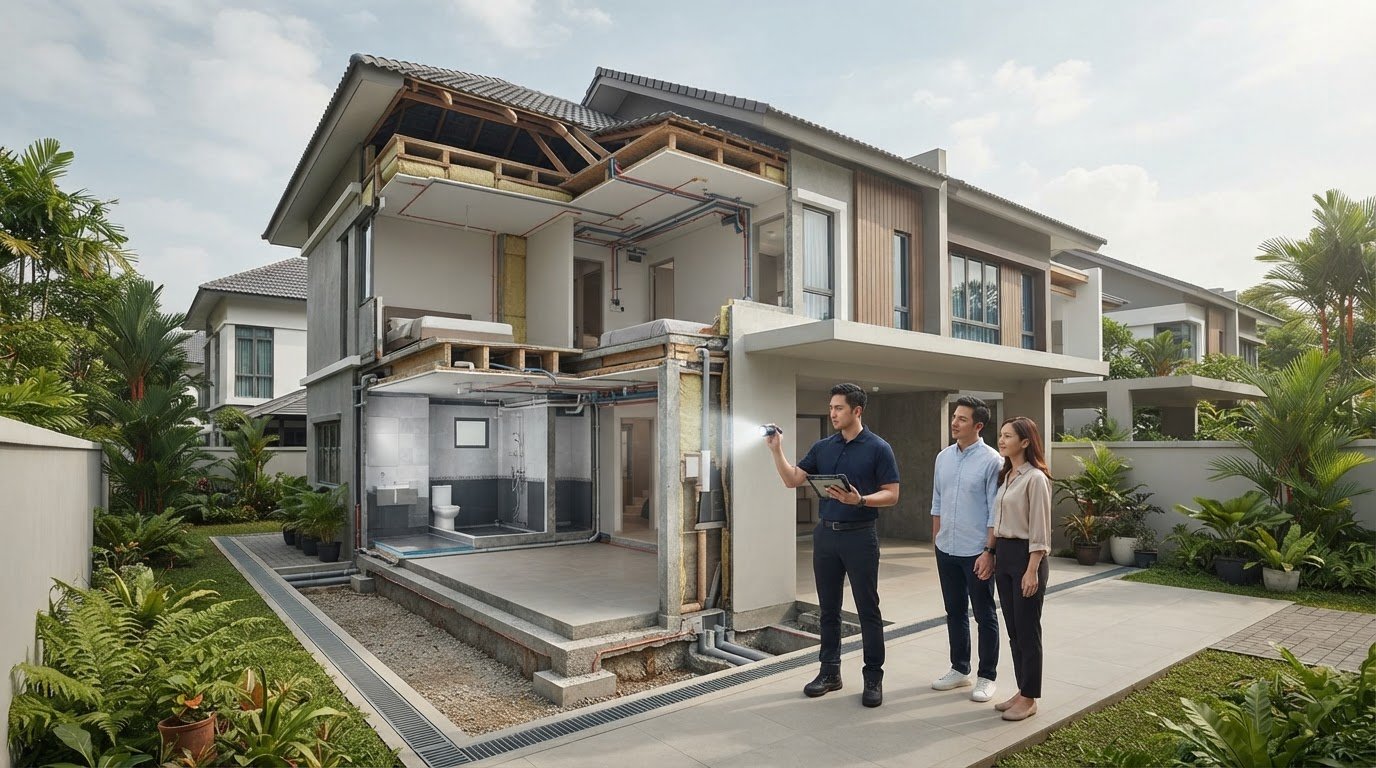
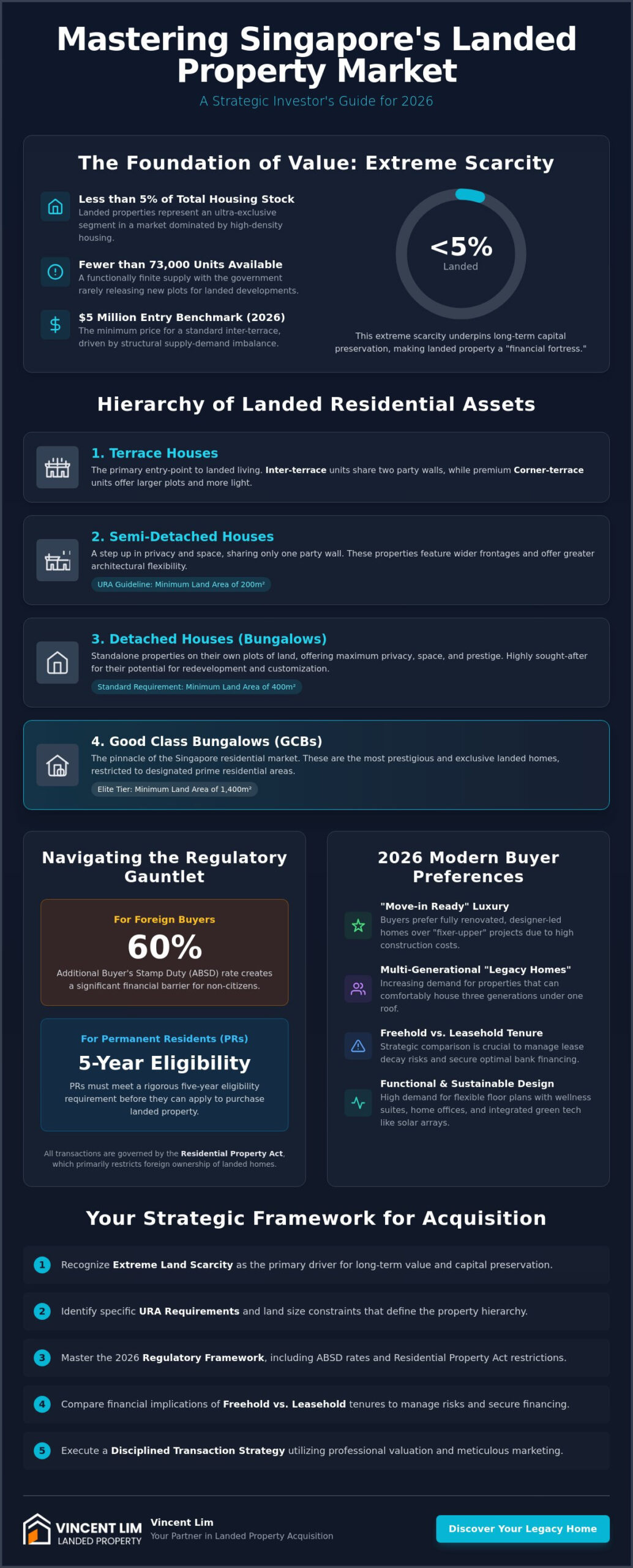
With fewer than 73,000 units available, landed property in Singapore represents less than 5% of the total housing stock. By 2026, the entry-level benchmark for a standard inter-terrace has climbed to $5 million, signaling a market driven by structural scarcity rather than mere sentiment. You likely recognize that securing such an asset requires more than just capital; it demands a precise understanding of a shifting regulatory landscape. Between the 60% ABSD for foreign buyers and the rigorous five-year PR eligibility requirements, the path to ownership often feels like a gauntlet of legal and financial hurdles.
We understand that identifying true value in a market this competitive requires a disciplined, multi-generational perspective. This guide provides the strategic framework you need to master these complexities through expert insights on asset classes and financial structures. We’ll examine the specific criteria for Good Class Bungalows, analyze current price indices, and outline a refined approach to acquisition that ensures your family’s legacy remains secure and your capital continues to appreciate.
Key Takeaways
- Recognize how extreme land scarcity serves as the primary driver for long-term value and capital preservation within the local market.
- Identify the specific URA requirements and land size constraints that define the hierarchy between Terrace, Semi-Detached, and Detached homes.
- Master the 2026 regulatory framework, including updated ABSD rates and Residential Property Act restrictions, to ensure a seamless acquisition of landed property singapore.
- Compare the financial implications of freehold versus leasehold tenures to effectively manage lease decay risks and secure optimal bank financing.
- Execute a disciplined transaction strategy that utilizes professional valuation and meticulous marketing to maximize your investment’s potential.
The Landscape of Landed Property in Singapore (2026 Edition)
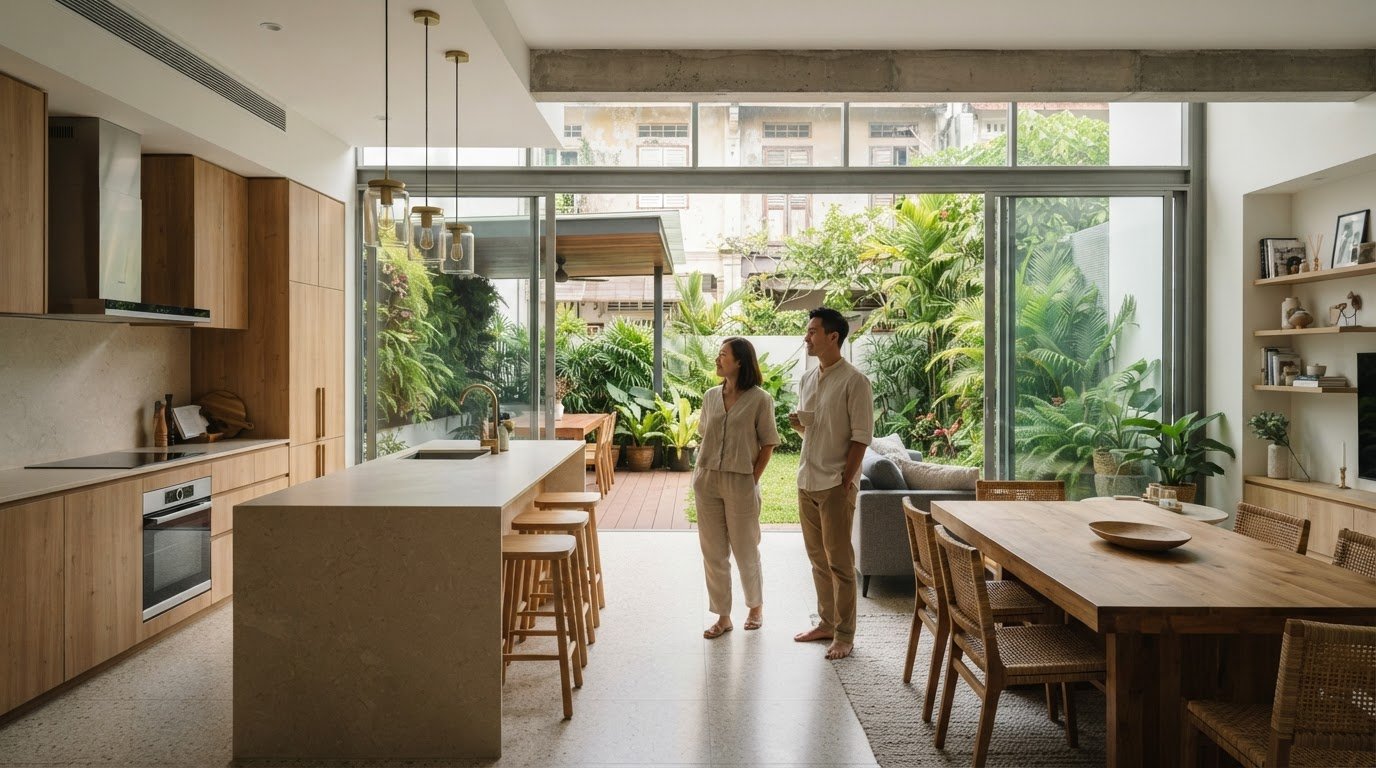
Landed property in Singapore represents more than just a residence; it’s a strategic asset class defined by its rarity and land-title ownership. In an island nation with a land area of roughly 735 square kilometers, the government prioritizes high-density urban planning to maximize space. While Public housing in Singapore provides high-quality living for over 80% of the population, the landed segment remains an exclusive tier reserved for a small fraction of residents. By 2026, this asset class has solidified its reputation as the “gold standard” of local real estate. Investors and families alike prioritize these properties for their capital preservation qualities and their ability to facilitate multi-generational living under one roof.
Wealthy families are increasingly consolidating their wealth into “legacy homes” that can house three generations comfortably. This shift is driven by a desire for privacy and the practical need for larger floor areas that high-rise units often lack. The market now views these homes as financial fortresses. They offer a level of stability that volatile equity markets often struggle to match. Because land cannot be manufactured, the long-term value of these assets is underpinned by fundamental scarcity rather than temporary market sentiment.
The Scarcity Factor: Why Landed Homes are a Finite Asset
The supply of landed housing is functionally finite. Unlike the condominium market, where new supply is regularly introduced through Government Land Sales (GLS) programs, the government rarely releases new plots for landed developments. This policy creates a structural supply-demand imbalance. When you acquire landed property singapore, you’re buying into a shrinking percentage of the total housing stock. The “Landed Premium” is the specific price gap between luxury condominiums and terrace houses, which continues to expand as land becomes more precious.
Modern Trends in Landed Living for 2026
Modern buyers in 2026 have shifted their preferences toward functional luxury and sustainability. High-specification “green” homes featuring integrated solar arrays and smart-grid management are now standard requirements for the elite. There’s also a significant demand for flexible floor plans that include dedicated wellness suites—drawing inspiration from world-class facilities like Organic Skin & Body Med Spa—and sound-insulated home offices. The market currently values “move-in ready” luxury over major “fixer-upper” projects. Rising construction costs and the desire for immediate lifestyle upgrades have made fully renovated, designer-led homes the most sought-after assets in the current landscape.
Navigating the Four Tiers of Landed Residential Assets
The hierarchy of residential assets in Singapore is defined by strict regulatory standards that govern land use and building density. For the discerning investor, understanding these types of landed property is the first step toward a successful acquisition. This tiered system forms the backbone of a strategic asset progression to landed property singapore. Each category offers a distinct lifestyle and financial profile, ranging from the efficient use of space in terrace homes to the sprawling estates of Good Class Bungalows. Choosing the right tier involves balancing your immediate lifestyle needs with the long-term appreciation potential of the specific land plot.
Terrace and Semi-Detached Houses: The Entry to Landed Luxury
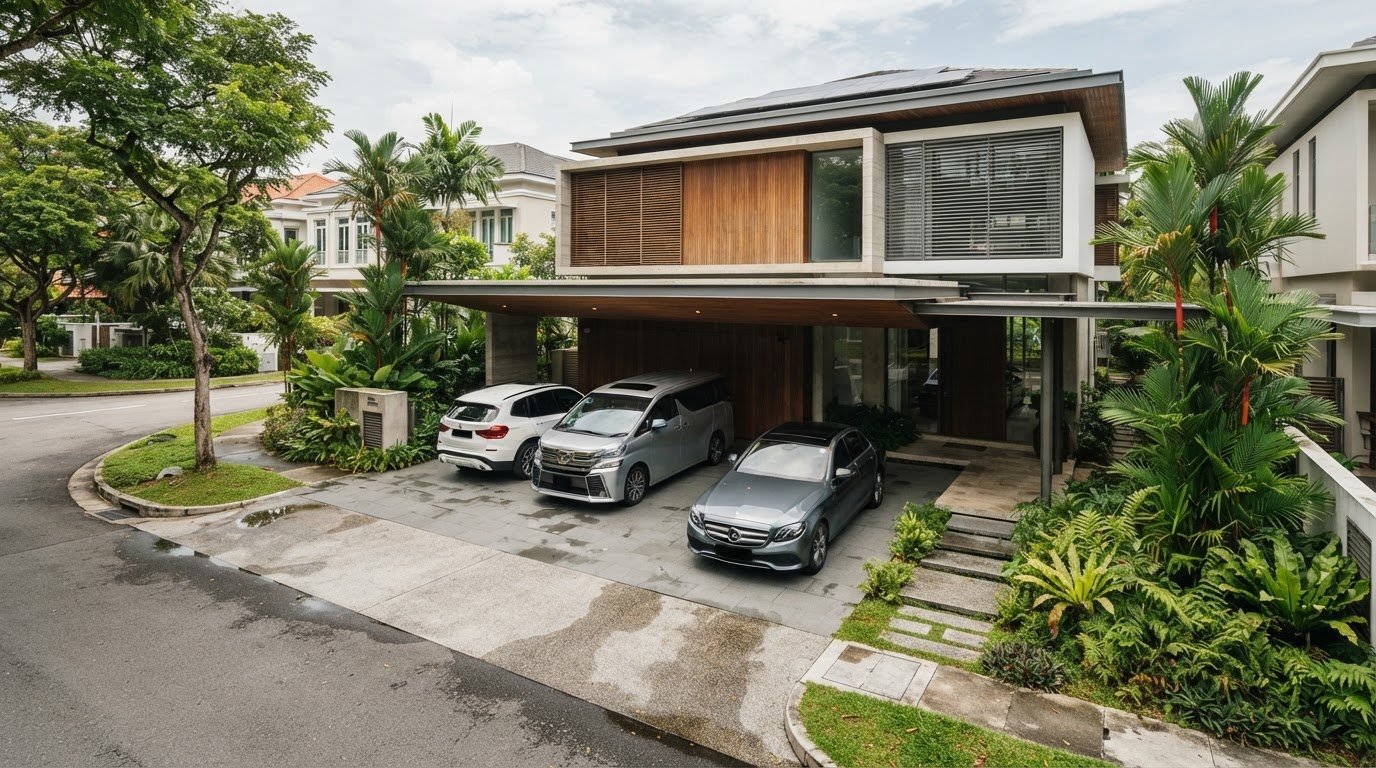
Terrace houses serve as the traditional entry point for families seeking more autonomy than a high-rise allows. An inter-terrace is flanked by neighbors on both sides, while a corner terrace occupies the end of a row. Corner units are highly prized because they typically offer larger land plots, better natural ventilation, and additional garden space. Semi-detached houses take this a step further by sharing only one party wall. According to URA guidelines, a semi-detached house must have a minimum land area of 200 square meters. Many professionals find these assets ideal when upgrading from a luxury condo, as they provide the desired privacy without the maintenance intensity of a fully detached residence. These properties often feature wider frontages, allowing for easier vehicle access and more impressive architectural facades.
Detached Houses and the Good Class Bungalow (GCB) Pinnacle
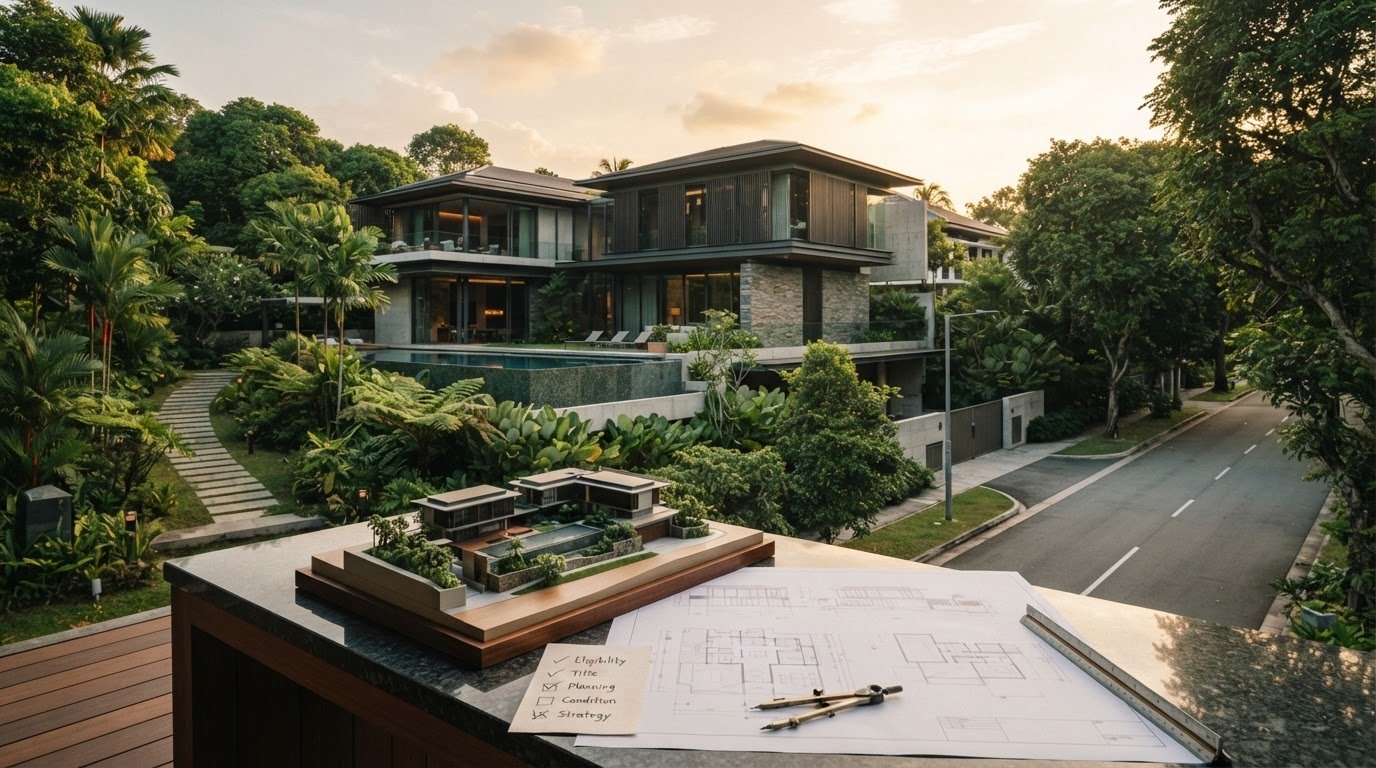
Detached houses, often referred to as bungalows, stand entirely independent with no shared walls. Acquiring a detached house for sale singapore represents a significant leap in both prestige and personal space. These homes require a minimum land size of 400 square meters and offer the ultimate in domestic seclusion. At the absolute summit of the market lies the Good Class Bungalow. To understand what is a good class bungalow, one must look at the strict criteria: a minimum land size of 1,400 square meters located within one of the 39 gazetted areas. These estates are the crown jewels of the city, offering unparalleled privacy and historical significance. They are reserved for the most elite portfolios and are subject to stringent conservation and planning rules. If you’re ready to explore these elite tiers, consulting with a specialist in luxury landed assets can help you identify the right entry point for your legacy planning.
Financial Frameworks and Eligibility Constraints for 2026
The regulatory environment for landed property singapore is designed to prioritize domestic homeownership, creating a sophisticated landscape for high-net-worth investors. Navigating this framework requires more than just capital; it demands a comprehensive understanding of the Residential Property Act and the specific tax implications of 2026. Because these assets are considered restricted, the government maintains tight control over who can acquire them and under what conditions. A meticulous financial audit is the first step for any serious buyer, ensuring that every legal and fiscal hurdle is accounted for before an offer is placed.
Strategic legacy planning often involves the use of trust structures to facilitate the seamless transfer of wealth to the next generation. While trusts offer privacy and control, they come with specific ABSD requirements that must be managed with precision. In the current market, elite strategists don’t just look at the purchase price. They evaluate the entire acquisition cost, including stamp duties and the long-term impact of holding structures on their overall portfolio liquidity.
ABSD and Financing Strategies for Landed Acquisitions
Additional Buyer’s Stamp Duty (ABSD) remains a primary consideration for portfolio expansion. In 2026, Singapore Citizens pay 0% ABSD on their first property, but this rises to 20% for the second and 30% for any subsequent purchases. Permanent Residents face a 5% rate on their first home. For foreigners, the rate stands at 60% for any residential acquisition. Financing these high-value assets also requires a disciplined approach to leverage. While the standard Loan-to-Value (LTV) limit is 75% for a first property loan, banks often apply more conservative valuations to landed plots with high land-to-building ratios. The Total Debt Servicing Ratio (TDSR) serves as a critical financial ceiling, capping your total monthly debt obligations at 55% of your gross monthly income to ensure long-term fiscal stability.
Eligibility for Permanent Residents and Foreigners
Non-citizens face a rigorous approval process managed by the Land Dealings Approval Unit (LDAU). Permanent Residents must demonstrate an exceptional economic contribution to Singapore and typically need to have held their PR status for at least five years before applying. Even with approval, PRs are generally restricted to a land area not exceeding 15,000 square feet and cannot purchase within gazetted Good Class Bungalow areas. Foreigners are largely excluded from the mainland landed market, with the notable exception of Sentosa Cove. In this enclave, non-citizens can apply to the Singapore Land Authority (SLA) for permission to own a landed home, making it the primary gateway for international buyers seeking a landed lifestyle in the city-state.
Identifying Long-Term Value: Freehold vs. Leasehold Dynamics
Choosing between freehold and leasehold tenure is a fundamental decision that dictates the long-term trajectory of your real estate portfolio. While leasehold properties often offer attractive entry prices, freehold landed property singapore is widely regarded as the ultimate generational asset. Your choice should align with your specific time horizon. A 20 year plan might prioritize immediate lifestyle and rental yields, while a 50 year legacy plan almost always necessitates the permanence of freehold land. This distinction is critical because it affects everything from bank financing to the eventual resale value as the lease matures.
Redevelopment potential is another key factor in identifying value. Older landed plots often sit on significant land area that isn’t fully utilized by the existing structure. Individual rebuilds offer a level of control and customization that is impossible in the high-rise market. While en-bloc sales in the landed segment are rare, the ability to rebuild a bespoke residence ensures your home remains modern and functional. This flexibility allows you to adapt the property to changing family needs while the underlying land value provides a stable foundation for your wealth.
The Premium of Permanence: Why Freehold Wins
Freehold land acts as a “generational vault” because it bypasses the inevitable depreciation associated with lease decay. Banks typically grant full financing for freehold assets regardless of the building’s physical age, provided the land value remains robust. This makes them significantly easier to exit or refinance in the future. To find true value, look for “undervalued” plots where the land to built ratio is high. These properties offer the greatest redevelopment potential. You can rebuild a custom residence that reflects modern luxury standards while the underlying land continues to appreciate over decades without the pressure of a ticking clock.
Leasehold Opportunities: Strategic Entry Points
Leasehold estates shouldn’t be dismissed if your objectives are centered on cash flow or prime location accessibility at a lower capital outlay. These properties frequently sit in mature estates with established amenities, often commanding higher gross rental yields compared to their freehold counterparts. It’s a strategic move for those prioritizing lifestyle over a multi-generational legacy. When analyzing the average price of semi-detached house in singapore, you’ll notice that leasehold units can trade at a significant discount. This entry point allows you to enjoy the prestige of landed living while deploying remaining capital into other high yield investments. If you’re looking to secure a property that fits your specific wealth plan, contact a senior strategist to review current market opportunities and secure your future.
Executing a Meticulous Landed Property Transaction
Transitioning from strategic analysis to physical acquisition requires a disciplined operational framework. The process of acquiring landed property singapore involves a complex interplay between financial institutions, legal counsel, and technical surveyors. A standard transaction typically spans 10 to 12 weeks from the granting of the Option to Purchase (OTP) to legal completion. During this window, your strategist coordinates valuation reports to secure optimal bank financing and ensures the title search is clear of any restrictive encumbrances. High-stakes real estate demands a “white-glove” approach where every detail, from the initial offer to the final deed, is managed with calculated competence; for those who value this level of precision in their business communications, check out Micro Printing for custom packaging and direct mail services.
The execution phase is equally critical for those looking to sell my landed property singapore. Maximizing value in the 2026 market necessitates professional home staging and sophisticated digital marketing to differentiate your asset. Elite buyers expect a seamless experience, and a well-prepared property often commands a premium that far exceeds the cost of staging. Whether buying or selling, the goal remains the same: a transparent, efficient transaction that protects your capital and aligns with your long-term wealth objectives.
The Role of an Elite Real Estate Strategist
An elite strategist provides value far beyond mere property tours. Vincent Lim operates as the “Elite Strategist” who coordinates your entire acquisition ecosystem, acting as the single point of contact for lawyers, bankers, and surveyors. This centralized management style mitigates risks during the due diligence phase, such as identifying unauthorized structural alterations or hidden drainage reserves. Seasoned professionals utilize data-backed negotiation techniques to ensure you don’t overpay in a competitive market. They also provide exclusive access to off-market listings, allowing you to view prestigious homes before they ever reach public portals.
From Selection to Successful Handover
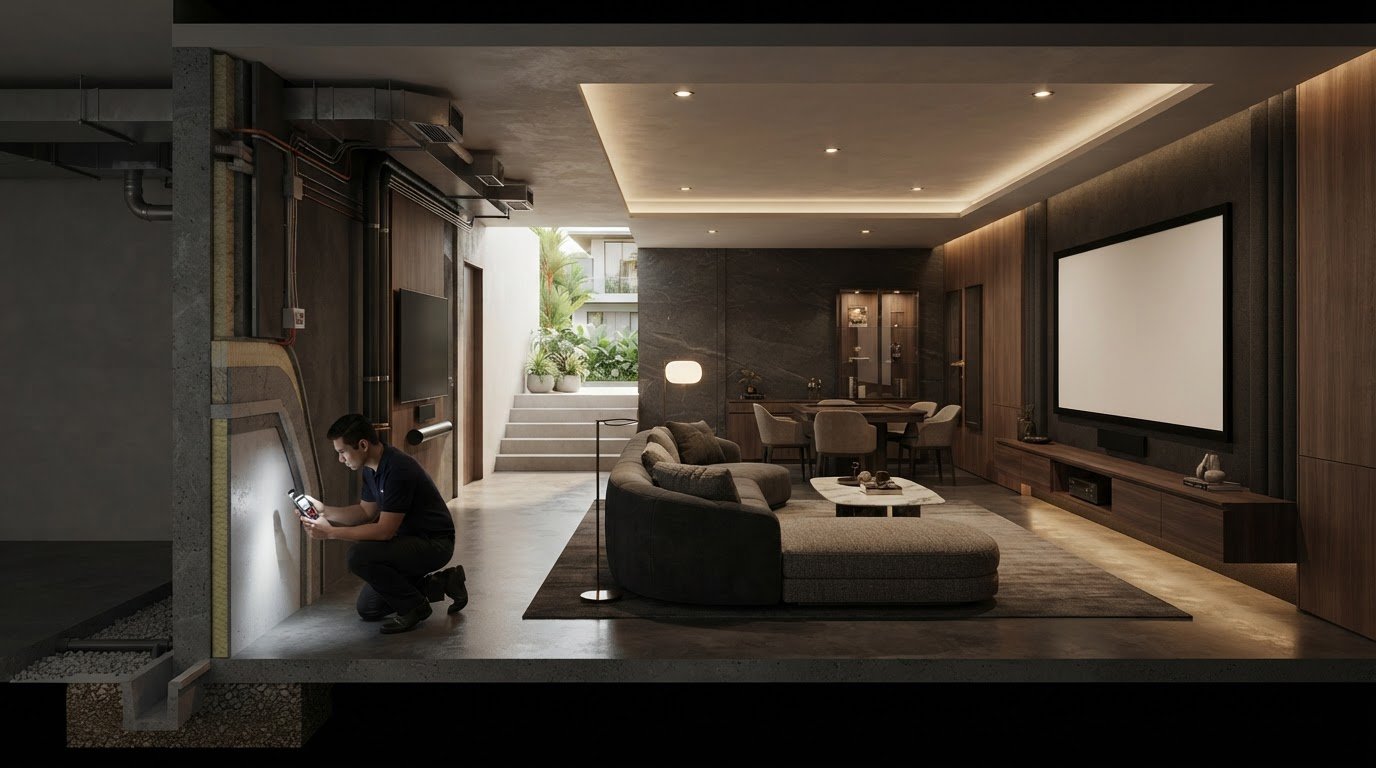
The journey from selecting a plot to the final handover requires meticulous planning. Once the price is finalized through rigorous analysis, the legal process begins with the exercise of the OTP and the payment of the relevant stamp duties. Final inspections are conducted shortly before completion to verify that the property’s condition matches the agreed-upon terms. This methodical progression ensures that the transition to your new family home or investment asset is handled without administrative friction. To secure a bespoke acquisition plan that reflects your unique financial profile, consult with Vincent Lim for a strategy designed for the 2026 landscape.
Securing Your Generational Legacy in the 2026 Market
Identifying a premier residence in a land-scarce environment requires more than just capital; it demands a disciplined strategy that accounts for shifting regulatory hurdles and tenure dynamics. Success in this elite market hinges on mastering the financial frameworks and eligibility rules that govern the city’s most prestigious districts. The structural scarcity of landed property singapore ensures its status as a premier asset class for long-term capital preservation and multi-generational stability.
Managing these high-stakes transactions requires a partner who operates with the precision of an elite strategist. With over 20 years of Singapore real estate expertise, Vincent Lim specializes in Good Class Bungalows and high-value luxury assets. As an Executive Associate Director at OrangeTee & Tie, he provides the white-glove advisory needed to coordinate your entire acquisition ecosystem seamlessly. Partner with Vincent Lim for your next landed property acquisition to ensure your investment is managed with calculated competence and seasoned authority. Your journey toward a prestigious family home begins with a single, strategic conversation.
Frequently Asked Questions
Can a Singapore PR buy a landed property in Singapore?
Yes, Permanent Residents can purchase landed property, but they must first obtain approval from the Land Dealings Approval Unit (LDAU). The criteria are rigorous; you typically need to have been a PR for at least five years and demonstrate a significant economic contribution to the nation. Approval is usually granted for a single landed home for owner-occupation, provided the land area doesn’t exceed 15,000 square feet and isn’t located within a Good Class Bungalow area.
How much downpayment is required for a $5 million landed property?
For a $5 million landed property, the minimum downpayment is $1.25 million, assuming it’s your first residential property loan. Under current Monetary Authority of Singapore (MAS) rules, the Loan-to-Value (LTV) limit is 75%. You must pay 5% of the purchase price ($250,000) in cash, while the remaining 20% ($1 million) can be settled using a combination of cash or your CPF Ordinary Account savings.
What is the difference between a detached house and a bungalow?
In Singapore’s urban planning context, a detached house and a bungalow are essentially the same asset class. The Urban Redevelopment Authority (URA) uses the term “bungalow” to describe a standalone dwelling that shares no party walls with another property. To be classified as such, the plot must have a minimum land area of 400 square meters and a minimum width of 10 meters for the building site.
Is it better to buy a brand new landed home or a resale unit for redevelopment?
The choice depends on whether you value immediate lifestyle or long-term customization. Brand new homes are ideal for those who want a “move-in ready” luxury experience with modern warranties. Conversely, buying an older resale unit for redevelopment allows you to maximize the plot’s potential by building a bespoke residence. This path often yields higher capital appreciation but requires navigating construction timelines and rising material costs.
How does the Residential Property Act affect landed property ownership?
The Residential Property Act serves as the primary legal barrier that restricts the ownership of landed property singapore to citizens. It ensures that land, being a finite resource, remains primarily in the hands of the local population. PRs and foreigners are legally classified as “foreign persons” under the Act and must apply for a specific grant of approval from the Minister for Law before they can legally own a landed title.
What are the best districts for landed property investment in 2026?
Districts 10, 11, and 15 continue to be the most resilient areas for landed investment. District 15, in particular, has seen a 22% growth over the last three years, driven by its unique coastal lifestyle and proximity to top schools. For foreigners, District 4 (Sentosa Cove) remains the premier choice, as it’s the only area where non-citizens can acquire a landed home without the standard mainland restrictions.
Why do Good Class Bungalows have such strict URA requirements?
Strict URA requirements for Good Class Bungalows (GCBs) are designed to preserve the heritage and low-density environment of Singapore’s 39 gazetted areas. By mandating a minimum plot size of 1,400 square meters and a maximum site coverage of 40%, the government ensures these estates maintain their lush greenery and architectural exclusivity. These regulations prevent over-development and solidify the GCB as the ultimate landed property singapore asset.
How long does the LDAU approval process take for PRs?
The LDAU approval process typically takes between one to three months to reach a decision. Each application is reviewed individually based on the applicant’s professional credentials and contributions to the nation. It’s a critical step in the acquisition journey; you should ideally secure this approval before signing an Option to Purchase to protect your deposit and ensure the transaction proceeds without legal complications.