In the refined circles of Singapore’s real estate, the choice between the soil beneath your feet and the sky above is no longer just about lifestyle; it’s a calculated move in a high-stakes chess game of wealth preservation. You’ve likely found yourself weighing the merits of landed property vs luxury penthouse singapore while considering the next addition to your portfolio. It’s a complex decision where the allure of a Good Class Bungalow’s permanence meets the curated, high-altitude prestige of a trophy penthouse. We understand that at this level of investment, the friction of high maintenance costs or the nuances of the 60% foreigner ABSD can cloud even the most seasoned perspective.
This guide provides the strategic clarity you require to distinguish between these two elite asset classes in the 2026 market. You’ll discover a precise financial framework that compares land scarcity against vertical exclusivity, ensuring your choice aligns with your long-term legacy goals. We’ll examine current price appreciation trends, which are currently projected at a moderate 2% to 4%, and provide professional guidance on managing the latest regulatory shifts to secure your financial future.
Key Takeaways
- Compare the financial resilience of freehold land against the high-yield potential of vertical assets to resolve the landed property vs luxury penthouse singapore debate for your portfolio.
- Evaluate the trade-off between the hands-on operational requirements of a private estate and the seamless, managed efficiency of the MCST framework in a luxury development.
- Identify the specific privacy benchmarks that distinguish perimeter-secured landed homes from the high-altitude isolation found in Singapore’s most exclusive super penthouses.
- Analyze 2026 pricing trends to understand why penthouses often command a per-square-foot premium and how this affects your long-term capital appreciation strategy.
- Utilize a strategic decision-making framework to align your next property acquisition with both your current lifestyle needs and future legacy preservation goals.
The HNW Dilemma: Landed Property vs Luxury Penthouse (2026)
In the high-net-worth sphere, the debate over landed property vs luxury penthouse singapore has reached a sophisticated peak in 2026. Modern investors aren’t just buying square footage. They’re securing sovereignty. We’ve observed a distinct psychological shift where privacy and security have become the primary currencies of the elite. On one hand, the absolute permanence of land offers a sense of historical continuity. On the other, the curated convenience of a trophy residence in the clouds provides a lifestyle of effortless prestige. In the current economic climate, both assets serve as a vital hedge against inflation, underpinned by the extreme scarcity of freehold titles within the Core Central Region.
The Landed Tier: From Terrace Houses to GCBs
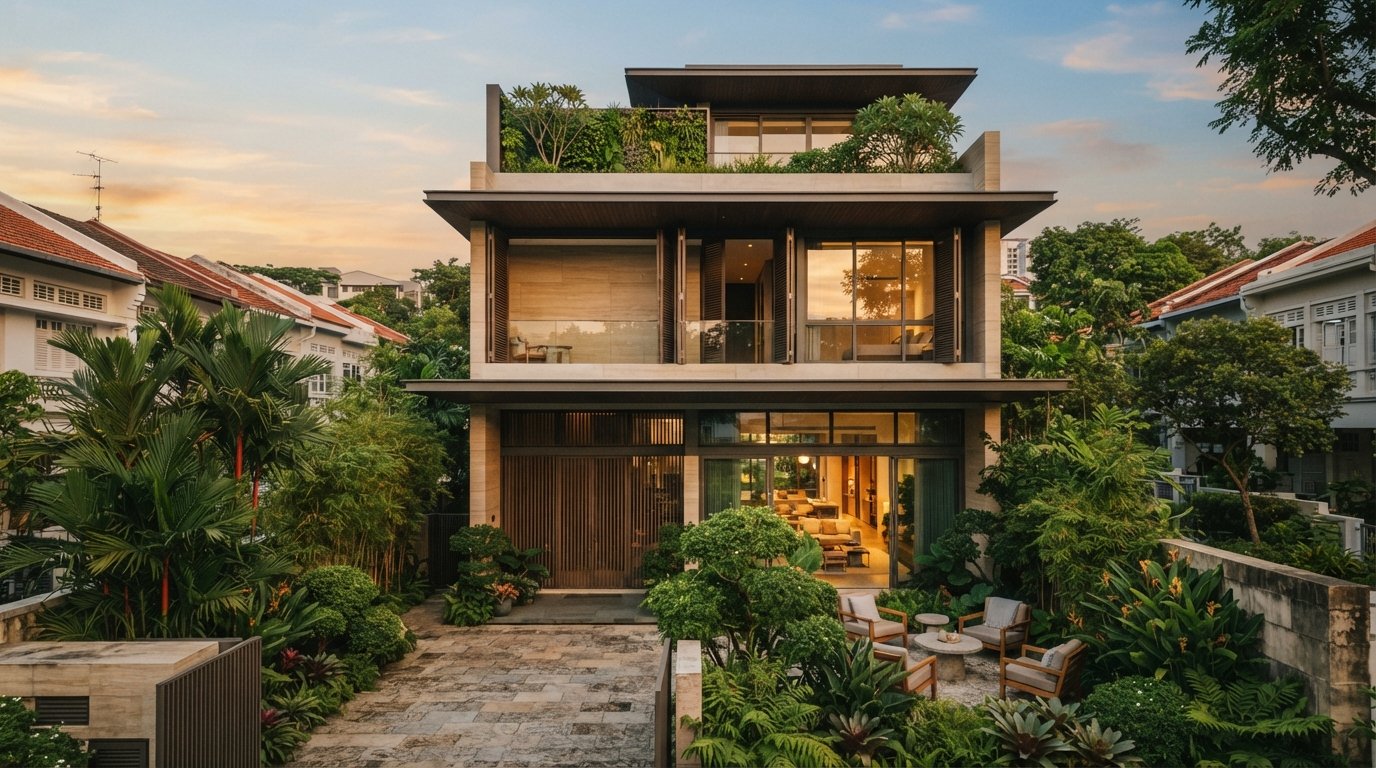
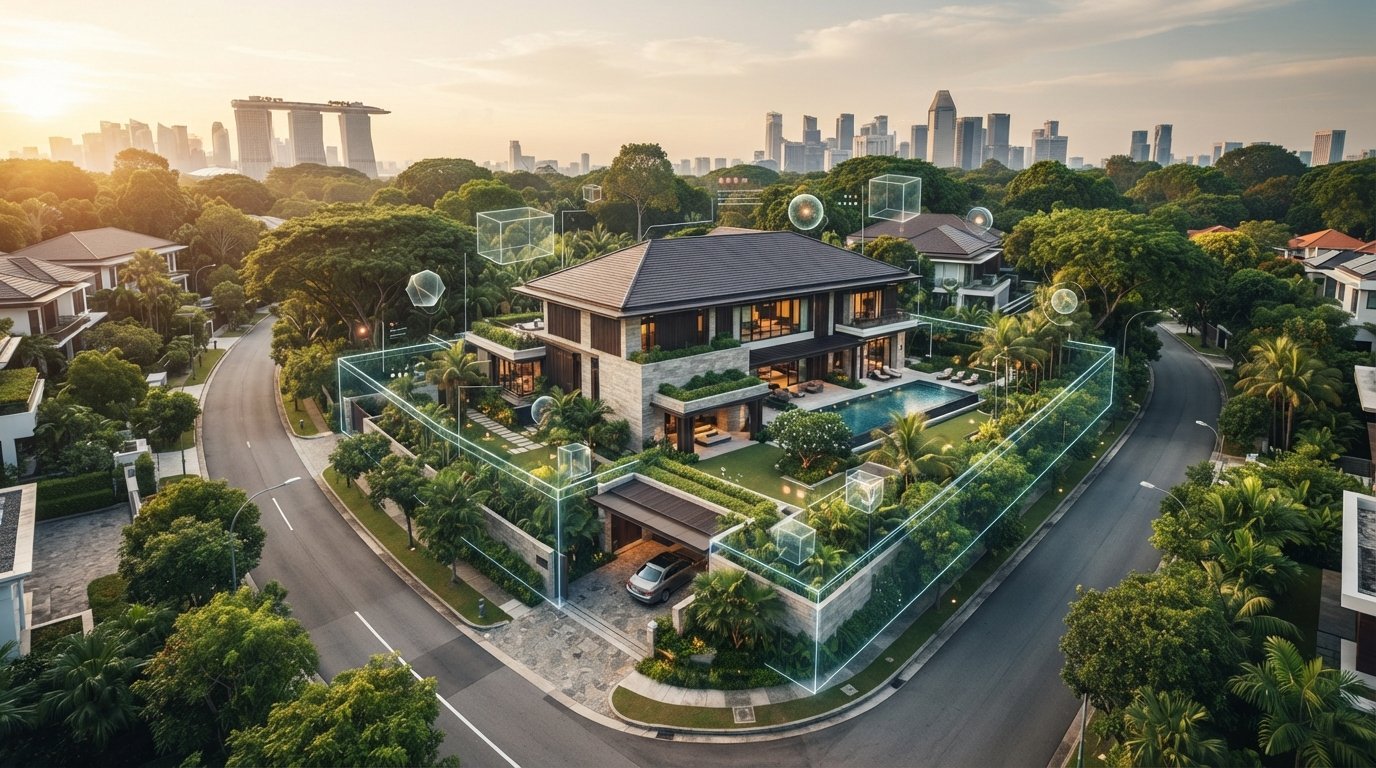
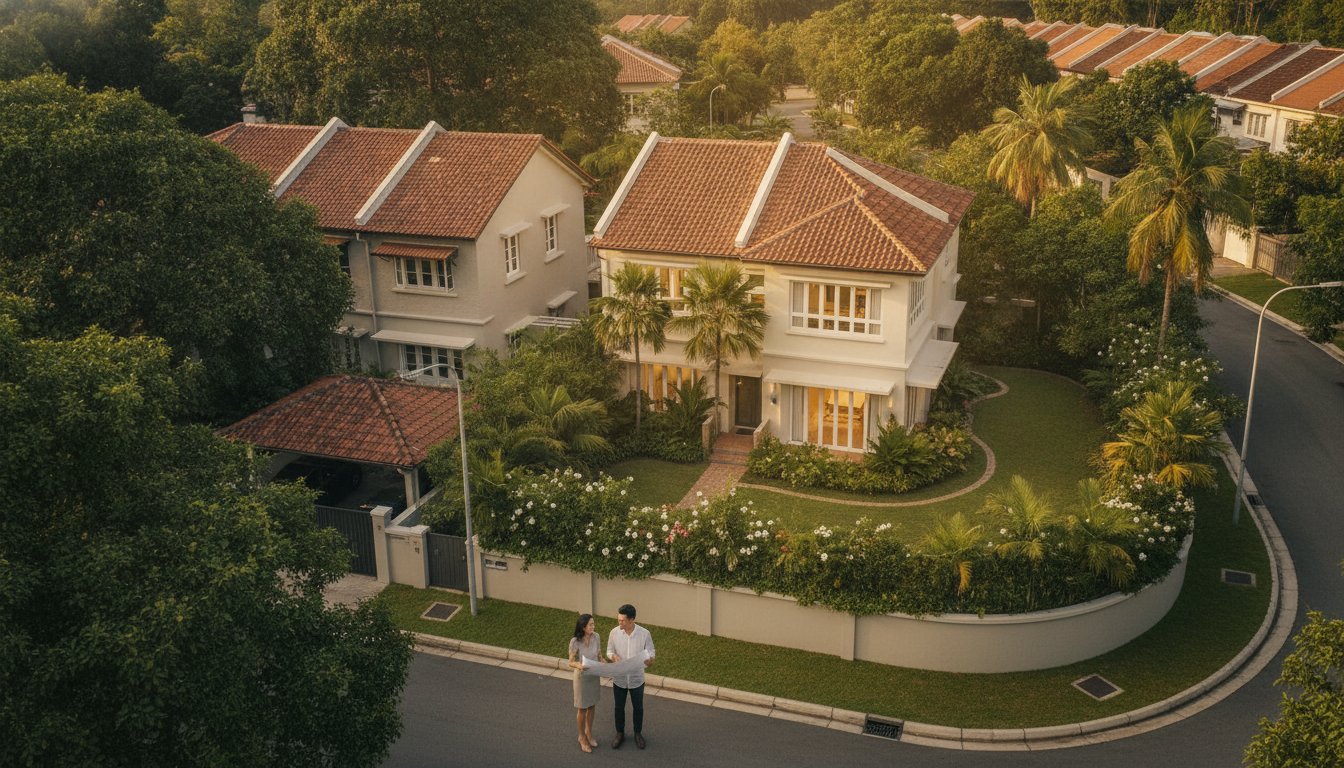
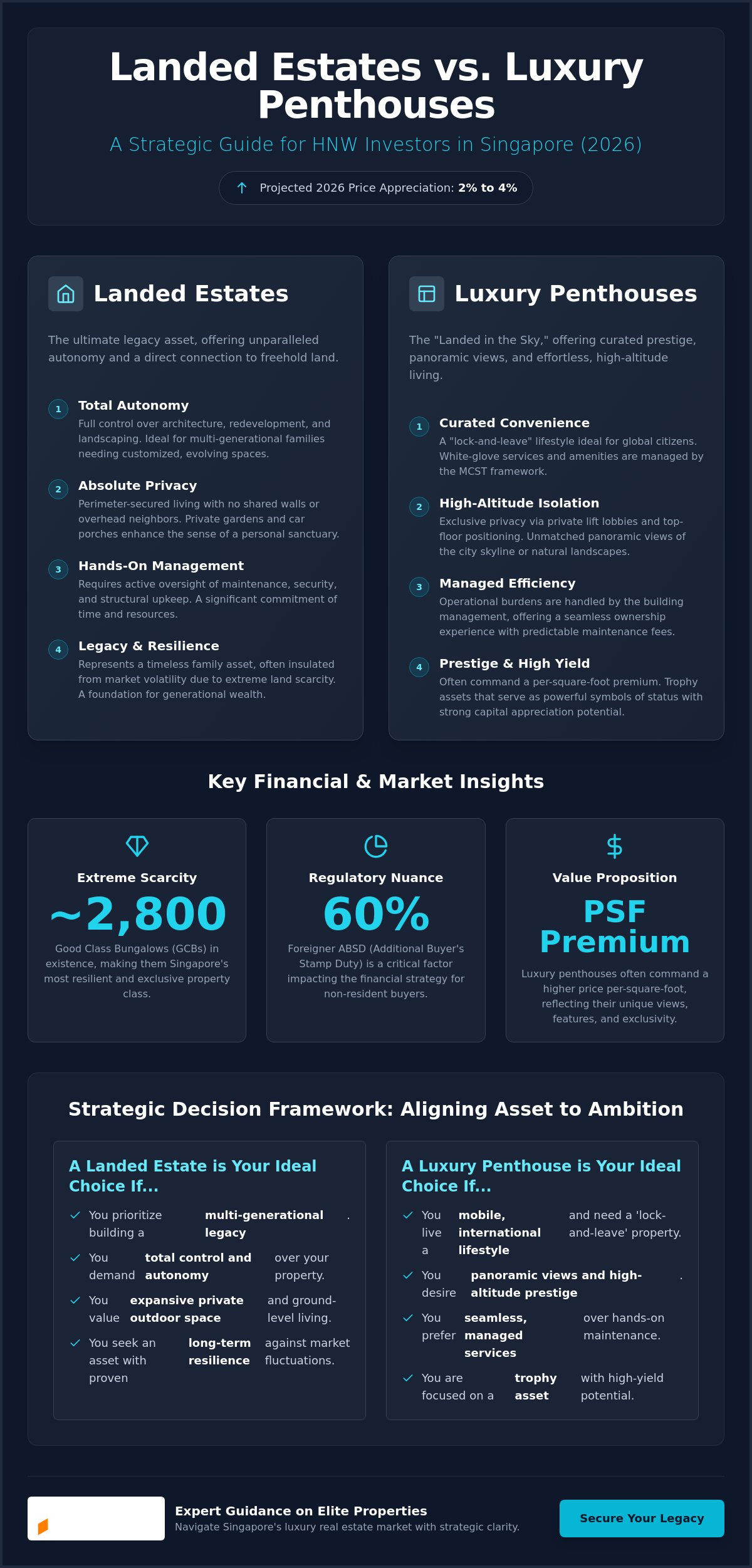
Landed assets in Singapore follow a strict, disciplined hierarchy of prestige. This classification begins with terrace houses and semi-detached homes, progressing to detached houses and the undisputed pinnacle of the market: Good Class Bungalows (GCBs). For many Singaporean families, land ownership represents the ultimate legacy asset. It offers a level of autonomy that vertical developments simply cannot match. You maintain total control over the architecture, the gardens, and the perimeter security. This scarcity is a powerful value driver. With only approximately 2,800 GCBs in existence, these properties remain the most resilient assets in the city-state, frequently insulated from broader market volatility.
The Sky Tier: Defining the Luxury Penthouse
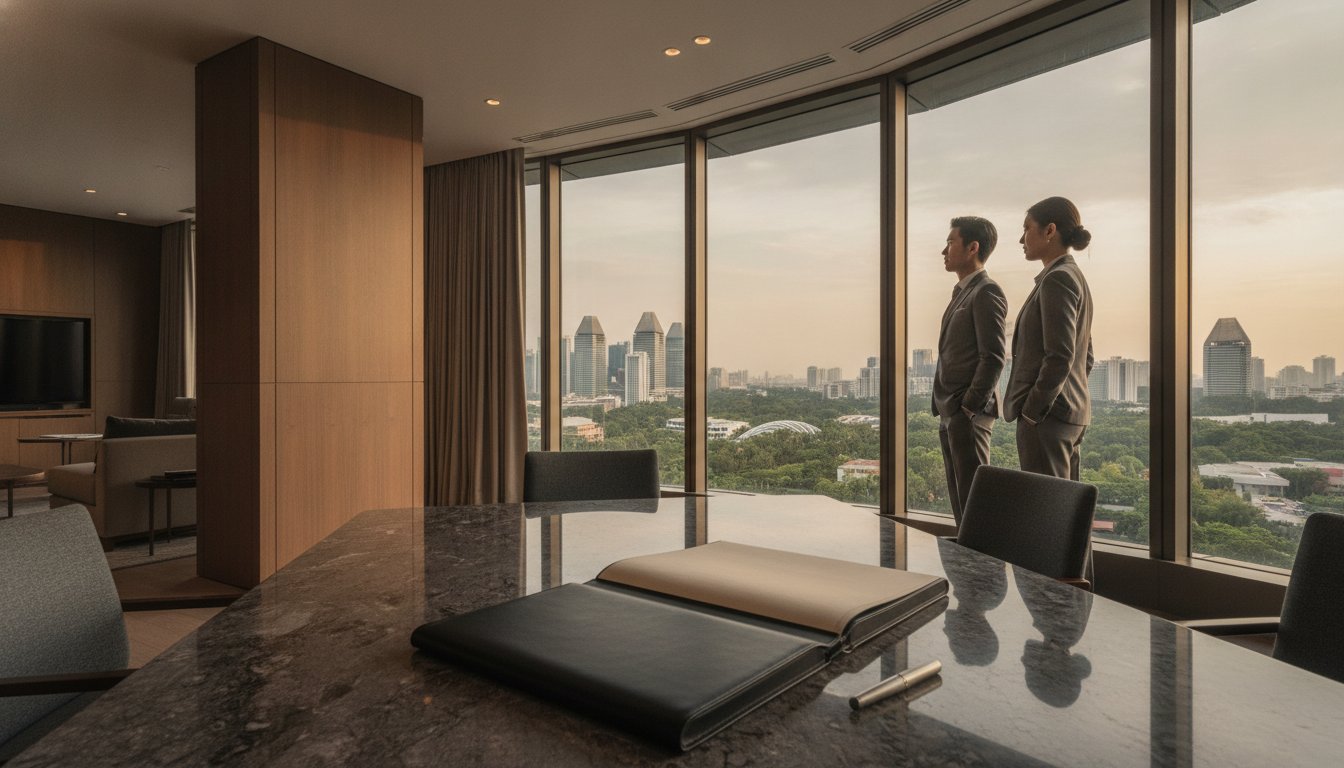
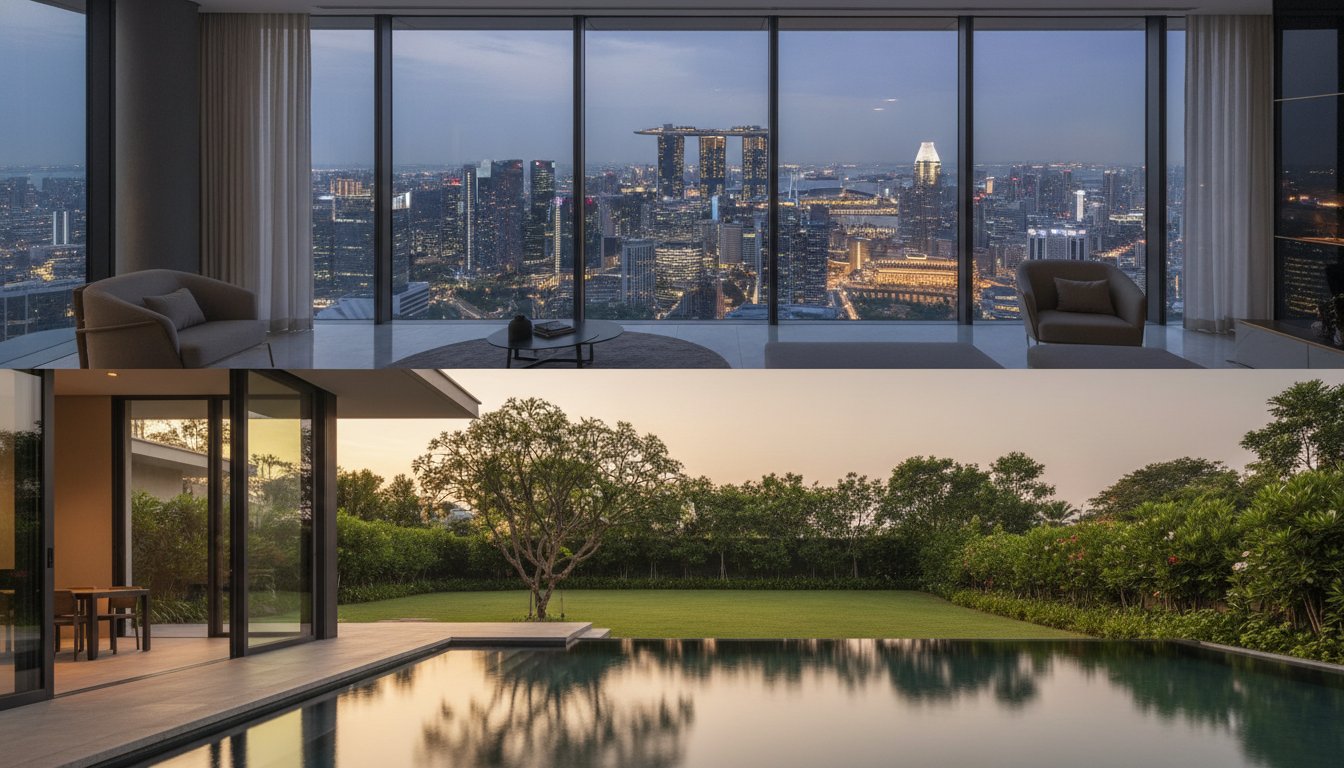
A true luxury penthouse is far more than a top-floor unit. In 2026, the market defines these residences as “landed in the sky.” These units often feature expansive duplex or triplex layouts, incorporating private rooftop pools and outdoor sanctuaries that rival traditional gardens. The exclusivity is reinforced by private lift lobbies, ensuring your transition from the city to your sanctuary is entirely seamless. For the global elite, the 360-degree panoramic views of the Marina Bay skyline or the lush greenery of the Botanic Gardens offer a visual prestige that ground-level homes cannot replicate. When evaluating landed property vs luxury penthouse singapore, the penthouse appeals to those who prioritize high-altitude isolation paired with the white-glove services of a premium development.
The choice between these two formats often comes down to how you wish to manage your time and your legacy. While land offers an enduring foundation, it requires active management and structural oversight. Conversely, the luxury penthouse provides a “lock-and-leave” efficiency that suits a mobile, international lifestyle. Both paths lead to significant wealth preservation, but they require different strategic mindsets to execute effectively in the 2026 landscape.
Comparative Analysis: Lifestyle, Space, and Privacy
The decision between landed property vs luxury penthouse singapore often hinges on the fundamental tension between total autonomy and curated convenience. While both assets occupy the peak of the market, they serve vastly different lifestyle philosophies. Recent private housing market analysis indicates that buyer preferences are becoming increasingly specific as local demand for high-quality private residences remains robust despite global economic shifts. Investors are now looking beyond simple square footage to the functional utility of their space.
The Autonomy of Landed Ownership
Landed living provides a level of control that is unattainable in even the most exclusive high-rise developments. You possess the right to redevelop your property to precise architectural specifications, whether that involves adding a basement entertainment suite or expanding the floor plate to accommodate multi-generational living. This flexibility is essential for large families who require efficient, customized space that evolves with their needs. Beyond the structure, the luxury of a private car porch and a pet-friendly garden offers a grounded sense of home. The most significant advantage of a detached house or semi-detached property is the total absence of upstairs neighbors, ensuring your privacy is absolute within your perimeter.
The Curated Ease of Penthouse Living
In contrast, the luxury penthouse offers a lifestyle defined by effortless efficiency. These units are designed for global citizens who value a “lock-up-and-go” capability. You benefit from 24-hour concierge services, advanced security protocols, and immediate access to world-class amenities like infinity pools and professional-grade gymnasiums. While a landed home requires you to manage your own perimeter security, a penthouse resides within a gated, professionally managed ecosystem. The privacy here is achieved through high-altitude isolation rather than physical walls. For those who travel frequently, the peace of mind provided by a managed development is often more valuable than the control of a private estate.
If you’re evaluating which lifestyle better suits your 2026 investment strategy, exploring bespoke property portfolios can help clarify your objectives. Choosing between a sprawling garden and a panoramic sky terrace involves assessing your daily rhythm. While landed homes offer expansive outdoor space for hosting, penthouses provide curated communal facilities that require zero personal maintenance. The right choice aligns your spatial requirements with your tolerance for operational management and your long-term vision for family life.
The Managerial Burden: Maintenance and Operational Costs
While aesthetic and spatial considerations often dominate the initial conversation, the long-term viability of a legacy asset depends on its operational efficiency. Choosing between landed property vs luxury penthouse singapore requires a clear understanding of the managerial responsibilities inherent to each asset class. High-net-worth individuals often find that the operational overhead can significantly influence the asset’s net performance over a decade. According to Singapore’s official private property price index, both segments show resilience, yet their cost structures diverge sharply in terms of both predictability and personal involvement.
Predictable Costs in Luxury Condos
The primary advantage of a luxury penthouse is the Management Corporation Strata Title (MCST) framework. Your maintenance fees are calculated based on the share value of your unit, providing a transparent and predictable monthly expenditure. This system pools resources from all residents to fund the “heavy lifting” of property care, including 24-hour security, gymnasium upkeep, and the maintenance of complex infinity pools. By delegating these tasks to professional property managers, you ensure that the high-end facilities remain in peak condition without requiring your direct supervision. This managed approach is particularly beneficial for preserving the value of the “Sky Tier” where communal aesthetics directly impact individual unit premiums.
The Hands-On Nature of Landed Upkeep
Landed ownership is a literal commitment to the soil. Unlike a penthouse, where the MCST manages the building’s exterior, a landed owner has direct responsibility for the entire structure. This responsibility extends beyond the visible garden to the structural integrity of the roof and the subterranean health of the plumbing systems. Proactive maintenance is not merely a chore; it’s a strategic move to protect your land value. We recommend that owners of detached houses and GCBs maintain a trusted network of contractors to manage several critical areas:
- Structural Integrity: Regular inspections of the roofing and external facade to prevent tropical weathering.
- Landscaping and Pest Control: Managing private gardens requires consistent professional attention to maintain privacy and prevent infestations.
- Security Systems: Standalone homes require bespoke perimeter security, including CCTV and motion sensors, which must be privately managed and updated.
- Capital Expenditure: Unlike condos with sinking funds, landed owners must personally plan for long-term rejuvenation projects to keep the property modern and marketable.
Refining a bespoke home involves coordinating these moving parts with precision. While the costs of maintaining a landed property can be more volatile than the fixed fees of a penthouse, the investment often pays dividends in the form of total architectural control. In 2026, as property tax rates for non-owner-occupied investments remain at 12% to 36%, understanding these operational outlays is essential for calculating your true return on investment. Ultimately, the choice between landed property vs luxury penthouse singapore often rests on whether you prefer the “lock-and-leave” convenience of a managed development or the rewarding, hands-on management of a private estate.
Wealth Preservation and Financial Strategy
The financial mechanics of the landed property vs luxury penthouse singapore debate require a clinical analysis of entry barriers and long-term exit paths. While penthouses often command a higher price-per-square-foot (PSF) due to their rarity and vertical engineering, freehold landed property remains the gold standard for capital preservation. The intrinsic value of the land provides a reliable buffer against market cycles. This resilience was evident as the private residential price index grew by 0.9% in Q1 2026, marking the sixth consecutive quarter of appreciation. For the investor, the choice is between the high-velocity appreciation of a trophy sky-unit and the multi-generational stability of a land title.
Eligibility and Regulatory Framework
Under the Residential Property Act, foreigners face significant legal hurdles when attempting to acquire landed property. LDAU approval is mandatory and rarely granted for anything outside Sentosa Cove. This regulatory friction makes luxury condominiums a far more streamlined acquisition for international capital, even with the 60% ABSD rate currently in effect. For Singapore Citizens, the path is more flexible. Many local investors utilize a strategic asset progression to landed property singapore to transition from high-yield vertical assets into the permanence of a GCB or detached house. This progression allows owners to bypass the lease decay that eventually affects even the most prestigious 99-year leasehold developments.
Investment Performance and Exit Strategies
Exit strategies and liquidity profiles differ sharply between these two asset classes. Penthouses typically offer better liquidity because they appeal to a global audience of international investors and family offices. Conversely, the market for Good Class Bungalows is niche and highly exclusive. While rental yields for luxury condominiums are currently stabilizing between 3.0% and 4.5%, landed property owners generally prioritize long-term growth over immediate cash flow. The strategic advantages of each include:
- Liquidity: Penthouses benefit from a broader, more international pool of potential buyers.
- Yield: Managed luxury units often provide more consistent rental returns for investors not seeking owner-occupation.
- Legacy: Freehold landed property avoids the “leasehold clock,” ensuring the asset’s value remains intact for future generations.
- Redevelopment: Older landed estates possess significant “en-bloc” or subdivision potential that high-rise units cannot replicate.
Asset preservation is about more than just current market value; it’s about the ease of transition and the tax implications of your next move. With property tax rates for non-owner-occupied investments ranging from 12% to 36% in 2026, every decision must be part of a broader fiscal plan. If you’re ready to refine your real estate portfolio, you can consult with a luxury asset specialist to determine which asset class best serves your 2026 financial objectives.
Strategic Decision-Making: Navigating the 2026 Market
Deciding between landed property vs luxury penthouse singapore requires a shift from emotional preference to strategic lifecycle planning. As we move through 2026, the market is characterized by a moderate appreciation forecast of 2% to 4%, supported by a stabilizing interest rate environment where the 3-month compounded SORA hovers near 1.0%. This creates a window of opportunity for calculated acquisitions. You must determine if your next move is a lifestyle play for current ease or a legacy play designed to anchor your family’s wealth for decades to come. While the private market continues its upward trajectory, the high-stakes nature of these transactions means that a generic approach is no longer sufficient.
Portfolio diversification often involves balancing the historical resilience of landed assets with the high-yield potential of luxury condominiums. In a landscape where the TDSR remains at 55%, your ability to leverage must be balanced against your long-term liquidity needs. The most successful investors in 2026 are those who view their property not just as a residence, but as a sophisticated component of their broader financial ecosystem. This requires a bespoke strategy that accounts for both the 60% ABSD for international capital and the structural floor provided by the growing number of family offices in the region.
The Elite Strategist’s Checklist
Success in this tier of real estate isn’t accidental. It’s the result of disciplined evaluation. When you’re ready to move beyond the surface-level comparisons, use this framework to refine your choice:
- Maintenance vs. Convenience: Are you prepared for the active structural oversight of a private estate, or do you require the curated, “lock-and-leave” efficiency of a managed development?
- Legacy Objectives: Does your wealth preservation strategy require the permanence of freehold land to bypass lease decay?
- Risk Appetite: How do current cooling measures and the 75% LTV limit influence your acquisition timing?
- Expert Insight: Have you consulted a landed property specialist to identify undervalued gems and off-market opportunities?
Partnering with Vincent Lim
Coordinating a transaction of this magnitude demands a partner who operates with seasoned authority and surgical precision. Whether you are seeking a detached house for sale singapore or a trophy penthouse in the Core Central Region, Vincent Lim provides a white-glove service that transcends traditional brokerage. We understand that your time is your most valuable asset. Our approach integrates rigorous site selection with meticulous financial planning, ensuring that every acquisition is a calculated step toward your broader investment goals. In a market where privacy and precision are paramount, we act as your trusted guide, ensuring that your transition into a legacy asset is as seamless as it is rewarding. Secure your future by partnering with a strategist who values integrity and excellence above all else.
Securing Your Real Estate Legacy in 2026
The choice between a private estate and a sky-high sanctuary defines your family’s financial future. While landed property provides the permanence of land ownership, luxury penthouses offer a seamless efficiency that suits a globalized portfolio. Navigating the nuances of landed property vs luxury penthouse singapore requires more than just a surface-level comparison. It demands a deep understanding of tax structures, maintenance frameworks, and long-term capital preservation.
As the Executive Associate Director at OrangeTee & Tie with over 20 years of real estate expertise, I specialize in the acquisition of Good Class Bungalows and ultra-luxury residences. My role is to provide the strategic clarity you need to refine your portfolio with precision. You don’t have to manage these high-stakes transactions alone.
Consult with Vincent Lim for a bespoke luxury property strategy
Your next legacy asset is a significant milestone. Having a veteran strategist by your side ensures every detail is executed to a gold standard.
Frequently Asked Questions
Can a Singapore PR buy a landed property or a luxury penthouse?
Permanent Residents can purchase luxury penthouses without prior government approval; however, acquiring landed property requires a successful application to the Land Dealings Approval Unit (LDAU). Approval is typically reserved for those who have made significant economic contributions to Singapore. For most PRs, Sentosa Cove remains the only area where landed homes can be purchased with greater ease under current regulations.
Which has better resale value: a freehold landed house or a luxury penthouse?
Freehold landed houses historically demonstrate more resilient resale value due to the extreme scarcity of land in Singapore. While the debate of landed property vs luxury penthouse singapore often highlights the high PSF of sky-units, the land title of a detached house acts as a hedge against lease decay. This is why private residential prices grew for six consecutive quarters leading into Q1 2026.
What are the typical maintenance fees for a luxury penthouse in Singapore?
Maintenance fees for luxury penthouses are calculated based on the unit’s share value and cover the total operational costs of the development. These monthly expenditures fund 24-hour security, concierge services, and the upkeep of premium amenities like infinity pools and gymnasiums. While these costs are predictable under the MCST framework, they reflect the white-glove service level expected in trophy developments.
Is a Good Class Bungalow (GCB) always a better investment than a penthouse?
A GCB is the pinnacle of capital appreciation, but a penthouse may be a better investment for those seeking liquidity or immediate rental income. In 2026, rental yields for condominiums are stabilizing between 3.0% and 4.5%. When comparing landed property vs luxury penthouse singapore, the best investment depends on whether you prioritize long-term legacy or a managed, high-yield vertical asset.
What is the “Residential Property Act” and how does it affect my purchase?
The Residential Property Act is a legislative framework that restricts the ownership of landed land to Singapore Citizens. It ensures that residential land remains primarily in the hands of locals, requiring foreigners and PRs to seek LDAU approval for restricted properties. This act is the primary reason why international capital is heavily concentrated in the luxury condominium and penthouse market.
Why do some wealthy Singaporeans prefer penthouses over GCBs?
Many wealthy individuals choose penthouses to avoid the significant managerial burden of maintaining a sprawling private estate. The lock-and-leave lifestyle, panoramic city views, and integrated security systems provide a level of convenience that a standalone house cannot match. For global citizens who travel frequently, the managed efficiency of a luxury development is often more attractive than the autonomy of a GCB.
How does the 2026 ABSD rate affect luxury property acquisitions?
The 2026 ABSD rates, including the 60% tax for foreigners and 30% for PRs on their second property, serve as a significant barrier to speculative entry. These rates encourage a disciplined, long-term approach to acquisition. High-net-worth investors now focus more on asset quality and wealth preservation rather than short-term gains, given the substantial upfront tax commitment required for any residential purchase.
What should I look for when viewing a Good Class Bungalow for the first time?
When evaluating what is a good class bungalow, you must prioritize land topography, plot shape, and frontage width. A prime GCB must occupy at least 1,400 square meters of land and comply with strict URA guidelines regarding site coverage and height. Assessing the redevelopment potential of the site is essential for ensuring the asset’s future marketability and legacy value.