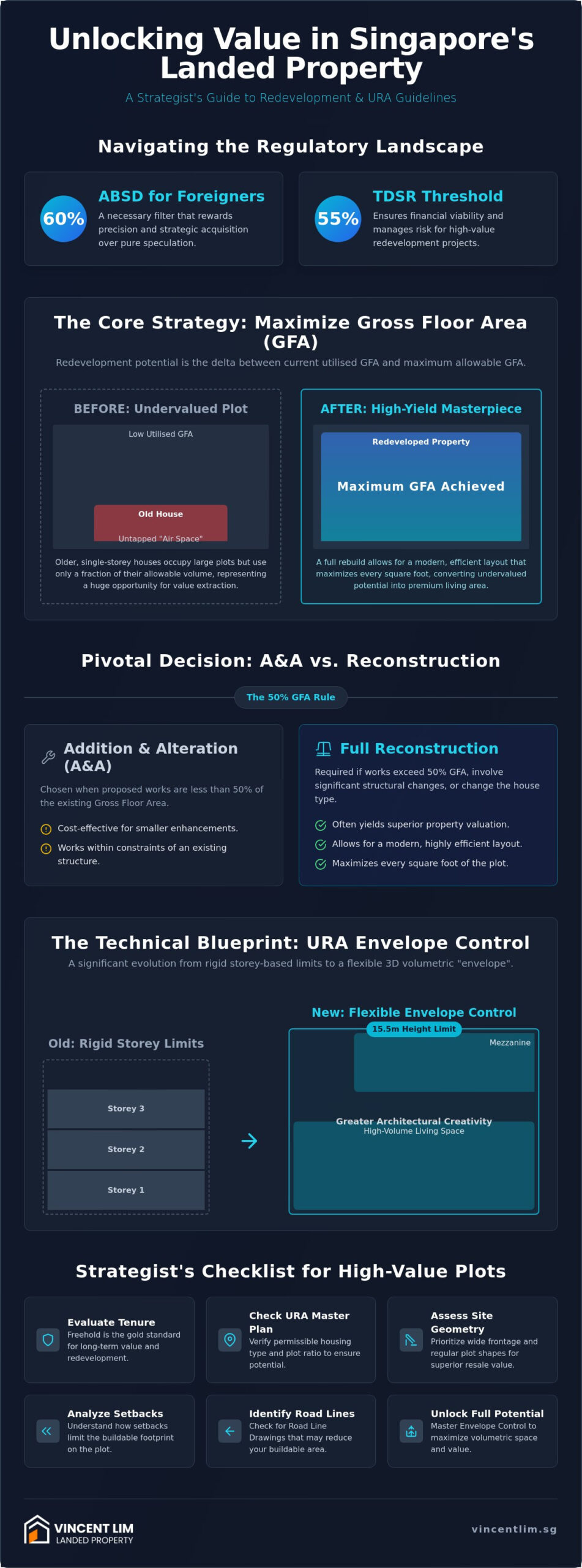
While most investors view property cooling measures in Singapore’s landed property market as a deterrent, the elite strategist recognizes them as a necessary filter that rewards precision over speculation. It’s understandable to feel cautious when navigating a landscape defined by 60% ABSD for foreigners and a 55% TDSR threshold, especially when the fear of overpaying for a restrictive plot is very real. You don’t have to let regulatory complexity stall your portfolio growth.
By learning to identify hidden redevelopment potential that others miss, you can turn technical URA constraints into a roadmap for maximizing your asset’s value and Gross Floor Area. This guide provides a methodical breakdown of how to evaluate site geometry, navigate current cooling measures for optimal ROI, and secure a legacy property that commands a premium in any market cycle. We will examine the specific technicalities of envelope control guidelines and the strategic math required to transform an undervalued plot into a high-yield masterpiece.
Key Takeaways
- Distinguish between Addition & Alteration (A&A) and full reconstruction to strategically enhance your property’s built-up area and long-term capital growth.
- Master the URA Envelope Control framework to transition beyond traditional storey limits and unlock the full volumetric potential of your landed plot.
- Evaluate critical site attributes, such as frontage width and plot regularity, to identify high-value opportunities with superior resale potential.
- Navigate property cooling measures singapore landed property requirements, including ABSD and TDSR, to ensure your redevelopment project remains financially viable and high-yielding.
- Partner with Vincent Lim (OrangeTee & Tie) to apply an asset progression framework that secures a high-value landed legacy while managing complex regulatory risks.
Defining Landed Property Redevelopment Potential
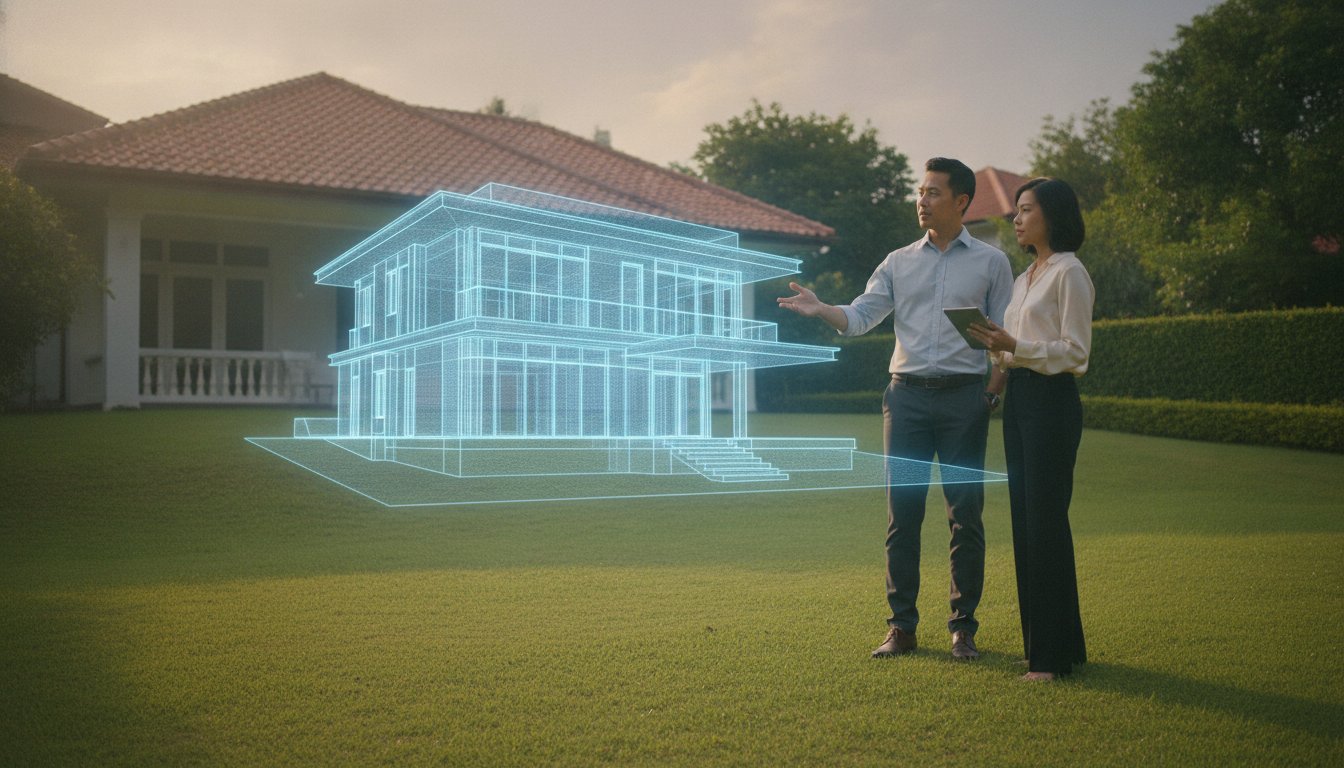
Redevelopment potential isn’t merely a buzzword; it’s a measurable financial metric. It represents a land plot’s capacity to support a significantly larger built-up area under current zoning regulations. In a market shaped by property cooling measures singapore landed property investors must navigate, identifying this potential is the difference between a stagnant asset and a high-yield legacy. For many, the highest untapped capital value lies in older, single-storey houses. These properties often occupy large plots but utilize only a fraction of the allowable volume, presenting a massive opportunity for value extraction. When you acquire a plot with significant “delta,” you’re essentially buying undervalued air space that can be converted into premium living area.
Tenure plays a decisive role in this strategic equation. While leasehold landed properties can offer attractive entry points, freehold assets remain the gold standard for redevelopment. They allow for perpetual cycles of renewal, ensuring the land remains a productive financial engine across generations. This permanence is why freehold estates often command a significant premium, as they aren’t subject to the inevitable value decay associated with a depleting lease.
Reconstruction vs. A&A: Choosing Your Path
The choice between Addition & Alteration (A&A) and full reconstruction is a pivotal decision that impacts both your timeline and your bottom line. The 50% rule serves as the primary technical threshold. If your proposed works exceed 50% of the existing gross floor area, involve significant structural changes, or include a change in the house type, the authorities classify it as a reconstruction. While A&A may seem cost-effective on the surface, a full rebuild often yields a superior property valuation for landed house assets. A total reconstruction allows for a modern, efficient layout that maximizes every square foot, which is difficult to achieve when working within the constraints of an existing structure.
The Wealth Perspective: Land as a Finite Resource
Land is the ultimate finite resource in Singapore. Unlike the high-density nature of public housing in Singapore, private landed property offers a unique “land bank” strategy. Redevelopment acts as a powerful hedge against inflation, ensuring that the asset’s value grows alongside the scarcity of land. Strategically navigating property cooling measures singapore landed property regulations allows owners to time their redevelopment for maximum ROI, turning a simple residence into a sophisticated financial instrument. Ultimately, redevelopment potential is the delta between current utilised GFA and maximum allowable GFA.
The Technical Blueprint: URA Guidelines and Envelope Control
The URA Master Plan isn’t merely a map; it’s the statutory framework that dictates the future value of your investment. For any elite strategist, understanding these zoning technicalities is as critical as evaluating the property cooling measures singapore landed property market currently faces. The Master Plan specifies the permissible housing type and height for every plot, ensuring that landed estates maintain their character and density. However, the true value-add lies in interpreting how these regulations interact with your specific site geometry. Misreading a zoning boundary can lead to a restrictive build, while a precise interpretation can unlock thousands of square feet in untapped potential.
In 2015, the Urban Redevelopment Authority shifted from a rigid, storey-based limit to the more flexible Envelope Control framework. This was a significant evolution for the luxury market. Instead of being confined by a fixed number of floors, owners are now governed by a three-dimensional volumetric “envelope.” This change allows for greater architectural creativity and more efficient use of vertical space. It’s no longer just about building a “three-storey house”; it’s about how you optimize the 15.5-metre height limit to include mezzanines and high-volume ceilings that define modern luxury.
Technical constraints like setbacks and Road Line Drawings (RLD) often represent the biggest hurdles for the uninitiated. An RLD indicates land that the government may eventually reclaim for road widening, which effectively reduces your buildable footprint. Ignoring these lines during the acquisition phase can lead to significant disappointment when your architect reveals the actual buildable area is 20% smaller than the land title suggests. For those looking to maximize their plot ratio in the Detached or Good Class Bungalow (GCB) segments, these technical nuances are the primary drivers of ROI. Consulting a landed property specialist who can interpret these complex planning maps is essential for identifying a true diamond in the rough.
Mastering Envelope Control
The current 12-metre or 15.5-metre height limits are designed to accommodate two-storey and three-storey houses, respectively. By utilizing the envelope control approach, you can incorporate mezzanine levels that don’t count towards the official storey height, provided they fit within the defined volume. This strategy is particularly effective for maximizing attic space. Under the latest guidelines, attics can be designed with more generous proportions, turning what was once a cramped storage area into a grand master suite or a sophisticated home office.
Zoning and Safeguarded Landed Estates
Zoning dictates the long-term liquidity of your asset. A plot in a two-storey semi-detached zone offers exclusivity, but a plot in a three-storey mixed landed zone provides more flexibility for future redevelopment. These distinctions are vital when considering the impact of property cooling measures on resale demand. Buyers in the luxury segment prioritize estates that are “safeguarded,” meaning the URA has designated them to remain landed housing. This protection prevents the encroachment of high-rise developments, preserving the privacy and prestige that define the landed experience.
Analyzing Site Attributes for Maximum Rebuild Value
Identifying a “diamond in the rough” requires looking beyond the price per square foot. In the context of property cooling measures singapore landed property owners face, the physical attributes of a site dictate the ultimate ceiling of your redevelopment ROI. Frontage width is perhaps the most critical variable. A 7.5-metre width is the mandatory minimum for a semi-detached dwelling, but reaching the 10-metre threshold for detached houses unlocks a different tier of luxury. A 10-metre frontage can increase redevelopment premium by up to 15% by allowing for triple-car porches and a more imposing street presence.
Plot geometry creates what we call the “rectangular value gap.” While an irregular, fan-shaped plot might appear larger on a plan, the actual buildable footprint is often hampered by URA setback requirements. Rectangular plots allow for maximum efficiency in floor plan layout, ensuring that every dollar spent on construction translates into usable, high-value Gross Floor Area (GFA). Conversely, “dead corners” in irregular plots often become underutilized garden space that adds little to the eventual resale price, despite the higher maintenance costs they incur.
Topography and hidden infrastructure can either facilitate or frustrate your vision. Elevated plots on high ground are highly coveted, not just for the views and natural ventilation they provide, but for their technical advantages. These sites often permit the construction of a “walk-out” basement, adding significant square footage without infringing on the height limits defined by Envelope Control. However, you must be vigilant regarding hidden easements. Identifying a sewer line or drainage reserve early is vital, as these gazetted paths can restrict your building footprint and complicate foundation works, regardless of the land’s surface beauty.
The Importance of Frontage and Depth
Understanding minimum plot sizes is essential when browsing a terrace house for sale singapore list. An intermediate terrace requires a minimum of 150sqm, while a corner terrace needs 200sqm. Strategically, an oversized corner terrace plot may hold semi-detached potential if its frontage exceeds 8 metres and its total area meets the 200sqm requirement, offering a clear path to asset progression and a higher resale premium.
Physical Constraints and Infrastructure
Before committing to a high-stakes acquisition, a thorough investigation of utility reserves is non-negotiable. While official government cooling measures manage market heat, physical constraints manage your buildable reality. Soil testing is equally important; heavy three-storey builds require stable ground to avoid exorbitant piling costs that can erode your redevelopment margins. It’s these granular details that separate a successful legacy build from a costly oversight.
Financial Feasibility: Property Cooling Measures Singapore Landed Property
Achieving superior capital growth in the landed segment requires a shift from emotional buying to clinical financial modeling. Navigating the property cooling measures singapore landed property investors face today demands a comprehensive understanding of the total investment outlay. This calculation must include the acquisition price, construction costs, professional fees, and financing interests. By self-redeveloping an older plot, you effectively bypass the 15% to 25% profit margin developers typically bake into the price of brand-new homes. This “developer margin bypass” provides a significant safety buffer and immediate equity upon completion.
Strategic timing is essential when managing the Additional Buyer’s Stamp Duty (ABSD). For Singapore Citizens acquiring a second residential property, the 20% ABSD rate represents a substantial upfront cost that must be factored into the project’s feasibility. Similarly, the Seller’s Stamp Duty (SSD) dictates your exit timeline. With SSD rates at 12% for sales within the first year and 8% in the second, most redevelopment projects are structured as three-year plays to ensure the exit occurs when the duty drops to 0%. This alignment of construction schedules with regulatory timelines is a hallmark of the elite strategist.
Managing ABSD and Financing for Reconstruction
Financing a redevelopment project requires a dual-track approach. You must secure a land loan for the initial acquisition and a separate construction loan to fund the build. Under current MAS guidelines, the Total Debt Servicing Ratio (TDSR) remains capped at 55%, meaning your global debt obligations must be meticulously managed. Identifying off-market opportunities often reveals motivated sellers who are sensitive to the current cooling measures, allowing you to negotiate entry prices that offset the ABSD burden and preserve your project’s internal rate of return.
Estimating Construction Costs and Resale ROI
For high-end builds, construction costs in 2026 typically range from S$500 to S$800 per square foot of Gross Floor Area, depending on the complexity of the design and the quality of finishes. When evaluating a detached house for sale singapore investors often prioritize timeless materials that justify a premium resale price. A full rebuild allows you to implement modern smart-home infrastructure and sustainable energy solutions that older properties lack. This technological edge, combined with a maximized GFA, ensures your asset stands out in the secondary market. If you are ready to evaluate the financial viability of a specific plot, consult with a specialist to run a detailed feasibility study.
Navigating the Acquisition with an Elite Strategist
The transition from understanding URA technicalities to executing a high-stakes acquisition requires more than just market awareness; it demands a partnership with a veteran specialist. While the math behind property cooling measures singapore landed property buyers face is objective, the ability to identify a plot with superior redevelopment potential is an art refined over decades. An elite strategist doesn’t just show you houses. They provide a comprehensive analysis of how specific site geometry, zoning restrictions, and current regulatory frameworks will impact your long-term capital growth. This level of precision is essential for ensuring that your acquisition isn’t just a residence, but a high-performing financial asset.
Vincent Lim (OrangeTee & Tie) utilizes a sophisticated asset progression to landed property singapore strategy to help clients move from standard ownership to landed property mastery. This methodology involves identifying “hidden gems” that the broader market often overlooks due to aesthetic shortcomings or perceived technical hurdles. By coordinating a professional ecosystem of architects, valuers, and legal counsel, he ensures that every facet of the due diligence process is handled with meticulous care. This collaborative approach mitigates the risk of unforeseen easements or structural constraints, allowing you to focus on the vision of your future legacy.
Bespoke Brokerage for the Discerning Investor
High-stakes transactions in the landed segment require a white-glove service level that prioritizes integrity and transparency. Meticulous site analysis is particularly vital when exploring what is a good class bungalow (GCB) acquisition, where the financial stakes and regulatory scrutiny are at their peak. For these prestigious assets, even a minor miscalculation in setbacks or buildable volume can result in a multi-million dollar discrepancy in value. Professional representation ensures that your interests are protected through every stage of the negotiation and acquisition process.
Securing Your Future Asset
Success in the 2026 market depends on your ability to act on exclusive data and technical insights before they become common knowledge. Navigating the property cooling measures singapore landed property environment requires a proactive stance, where you leverage current price trends and zoning shifts to your advantage. Whether you’re looking to acquire your first terrace house or a sprawling detached estate, the right guidance transforms complex regulations into a clear roadmap for wealth preservation. The next step in your journey is a strategic consultation to evaluate your current portfolio and identify the most lucrative path forward. Partner with Vincent Lim (OrangeTee & Tie) for your next strategic landed acquisition and secure a legacy asset with superior resale value.
Securing Your High-Value Landed Legacy
Maximizing a landed asset’s value requires a blend of technical mastery and financial foresight. Identifying the delta between current utilized GFA and the maximum allowable volume under URA envelope control is the first step toward significant capital growth. These technical insights, paired with a disciplined approach to the property cooling measures singapore landed property market currently faces, allow you to secure a legacy that thrives regardless of economic shifts. Precision in site analysis and regulatory navigation ensures your investment remains a high-performing financial engine for generations.
Vincent Lim (OrangeTee & Tie), Executive Associate Director, has specialized in GCB and luxury landed sales since 2004. His proven track record in high-value asset progression and legacy planning ensures your portfolio is managed with elite precision and seasoned authority. Consult Vincent Lim (OrangeTee & Tie) for a Strategic Analysis of Your Property’s Redevelopment Potential and take the first step toward securing your future asset. You have the tools to turn technical constraints into a roadmap for enduring wealth and peace of mind.
Frequently Asked Questions
How do I check the redevelopment potential of a specific landed house?
You can check a property’s potential by reviewing the URA Master Plan to determine its zoning and allowable storey height. It’s essential to measure the plot’s frontage and depth against statutory minimums for its house type. You should also consult a specialist to interpret Road Line Drawings and utility easements, as these hidden constraints often dictate the actual buildable footprint regardless of the land’s surface area.
What is the difference between A&A and reconstruction in 2026?
The primary difference lies in the 50% threshold for Gross Floor Area (GFA) and structural changes. Addition & Alteration (A&A) involves minor works that don’t exceed half of the existing GFA or significantly alter the building’s structure. Reconstruction is triggered when you exceed this limit, replace the entire roof, or increase the number of storeys. This distinction is vital because reconstruction requires compliance with the latest URA envelope control guidelines.
Can any terrace house be redeveloped into a semi-detached house?
No, only specific corner terrace plots can be converted into semi-detached dwellings. The plot must meet a minimum land area of 200sqm and maintain a frontage width of at least 8 metres. You must also verify that the property isn’t located within a safeguarded estate that restricts such conversions. Successful conversion significantly increases the asset’s resale value by moving it into a more prestigious housing category.
How much does it cost to rebuild a landed property in Singapore today?
Construction costs for luxury landed rebuilds in 2026 typically range between S$500 and S$800 per square foot of Gross Floor Area. This range covers standard construction and high-quality finishes but excludes professional fees, authority submission costs, and bespoke interior furnishing. Site-specific challenges, such as poor soil stability or the inclusion of a walk-out basement, can push the final expenditure toward the higher end of this spectrum.
Does a freehold tenure affect the redevelopment potential of a property?
Freehold tenure doesn’t alter URA’s technical building limits, but it fundamentally strengthens the financial logic of redevelopment. Perpetual land ownership allows you to capture long-term capital appreciation across multiple renewal cycles without the concern of lease decay. This permanence is a critical factor when navigating the property cooling measures singapore landed property investors encounter, as it provides a more stable and resilient hedge against inflation over generations.
What are the URA setback requirements for a detached house?
Standard setbacks for detached houses generally require a 2-metre buffer from both the side and rear boundaries. The front setback is more variable and depends on the category of the road the property faces, typically ranging from 7.5 metres to 15 metres. These requirements ensure adequate fire safety, ventilation, and privacy between neighbors. Precision in calculating these setbacks is necessary to determine the maximum possible footprint of your new home.
How long does the entire redevelopment process typically take?
A full redevelopment project usually requires a timeline of 24 to 36 months from initial design to moving in. The first 6 to 9 months are dedicated to architectural planning and securing mandatory URA and BCA approvals. The actual construction phase typically spans 18 to 24 months. Factors like complex foundation works, weather conditions, and the procurement of specialized luxury materials can influence the speed of the build.
Is it better to buy a brand-new landed home or rebuild an old one?
Rebuilding an old property often yields higher ROI by allowing you to bypass the 15% to 25% profit margin typical of developer-built homes. This path also provides complete control over the architectural layout and finish quality. However, buying a brand-new home is more convenient if you prefer to avoid the complexities of a two-year construction project and the intricate property cooling measures singapore landed property regulations associated with managing a self-build.