Spending S$200,000 on a terrace house renovation could actually decrease your net profit if the upgrades don’t align with current market appraisal standards. It’s a common anxiety for owners of older landed homes who worry that hidden structural issues or complex URA regulatory hurdles might derail their financial goals. You likely understand that a home is more than just a residence; it’s a significant pillar of your long-term wealth.
When calculating the total cost to sell landed property singapore, many owners overlook how strategic capital expenditure today dictates your final exit price. This guide ensures you master your renovation budget by detailing 2026 market rates, URA envelope control height limits, and the specific upgrades that drive the highest property valuation. We’ll examine the critical differences between Additions and Alterations (A&A) and full reconstruction to provide a clear roadmap for a stress-free approval process. You’ll gain the clarity needed to coordinate a sophisticated renovation that safeguards your capital and ensures your asset progression remains on a steady, professional, and highly profitable trajectory.
Key Takeaways
- Learn how to distinguish between a strategic interior refresh and a full Addition & Alteration (A&A) to align your renovation with 2026 market expectations.
- Discover the non-negotiable infrastructure costs, from waterproofing to rewiring, that protect your home’s structural integrity and future resale potential.
- Master the 2026 URA Envelope Control height limits and BCA regulatory hurdles to ensure a seamless approval process with the authorities.
- Optimize the cost to sell landed property singapore by identifying high-ROI upgrades that enhance valuation without over-capitalizing beyond your district’s price ceiling.
- Understand how to leverage expert asset progression strategies to transform your terrace house renovation into a calculated financial milestone.
Defining Your Renovation Scope: Interior Refresh vs. A&A
Deciding between a cosmetic facelift and a structural overhaul is the most critical financial fork you’ll face. When evaluating the cost to sell landed property singapore, your choice determines whether you’re merely maintaining value or actively engineering a higher exit price. Unlike the standardized nature of public housing in Singapore, terrace houses offer a unique canvas where structural volume directly impacts appraisal. A well-planned scope ensures you don’t over-capitalize on aesthetics while neglecting the functional square footage that buyers prioritize.
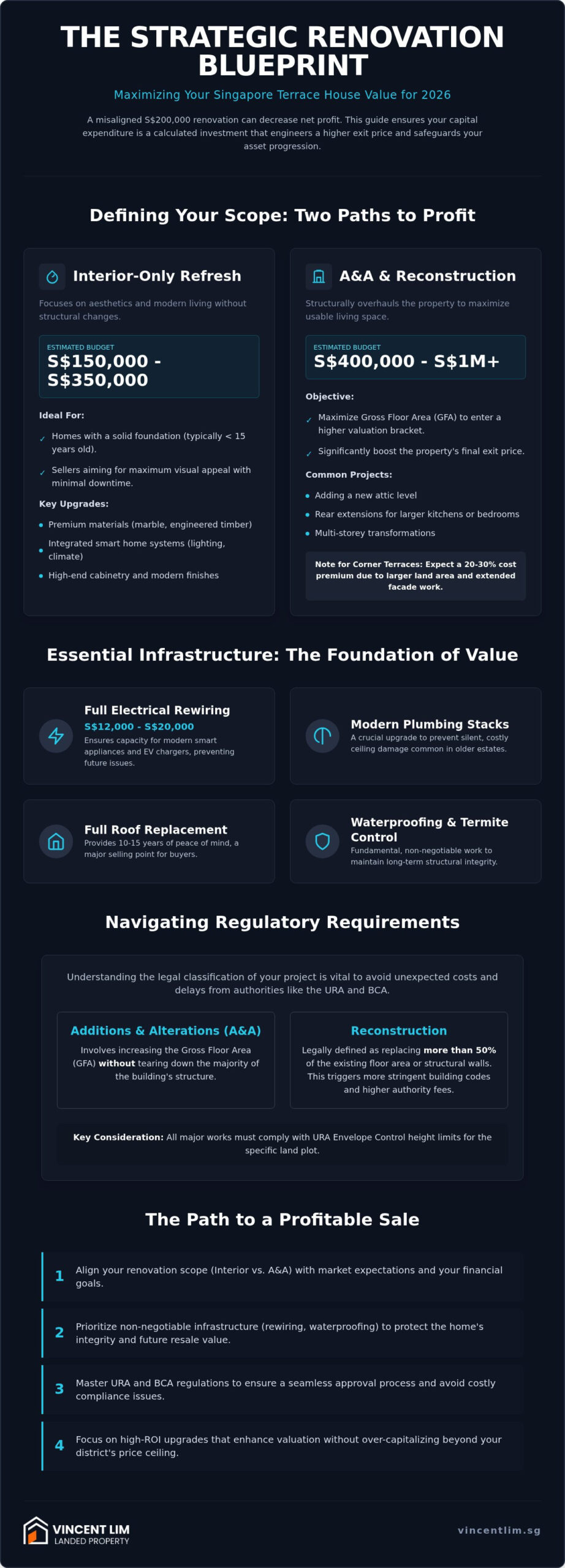
A cosmetic refresh focuses on the aesthetic “skin” of the home. This includes high-end cabinetry, lighting, and floor finishes. Additions and Alterations (A&A) involve increasing the Gross Floor Area (GFA) without tearing the entire building down. If your plans involve replacing more than 50% of the existing floor area or structural walls, the project is legally classified as Reconstruction. This distinction is vital. Reconstruction triggers more stringent building codes and higher authority fees that must be factored into your initial projections to avoid budget overruns.
The Interior-Only Budget Tier (S$150,000 to S$350,000)
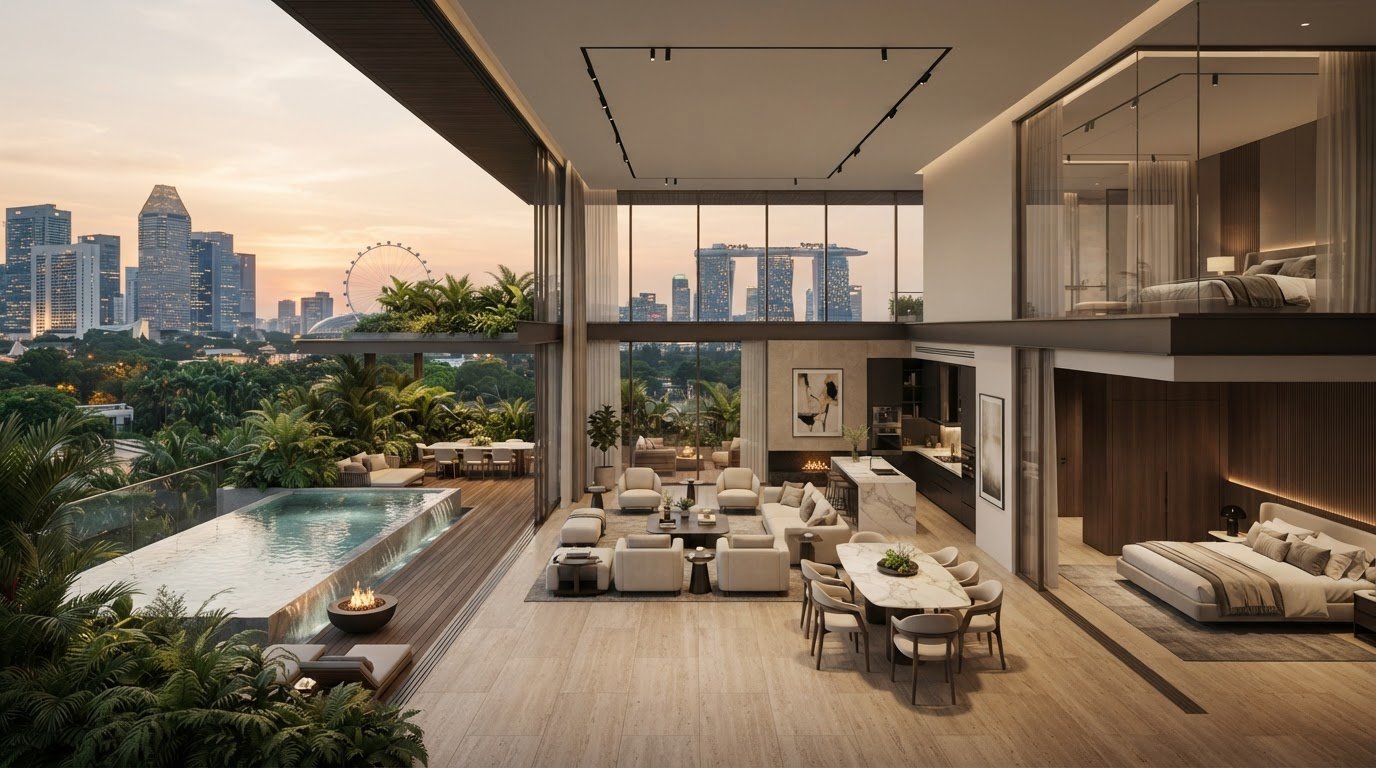
This tier is ideal for homes with a solid structural foundation, typically those built within the last 15 years. We focus on refining the living experience through premium materials like Italian marble or wide-plank engineered timber that provide a tactile sense of luxury. Smart home integration has become a baseline expectation for luxury buyers in 2026. Investing in integrated lighting control and climate management systems provides a modern edge that resonates during private viewings. This scope minimizes regulatory delays while maximizing visual appeal. It’s a calculated move for sellers who want to refresh the property without the downtime of a major construction site.
The A&A and Reconstruction Tier (S$400,000 to S$1M+)
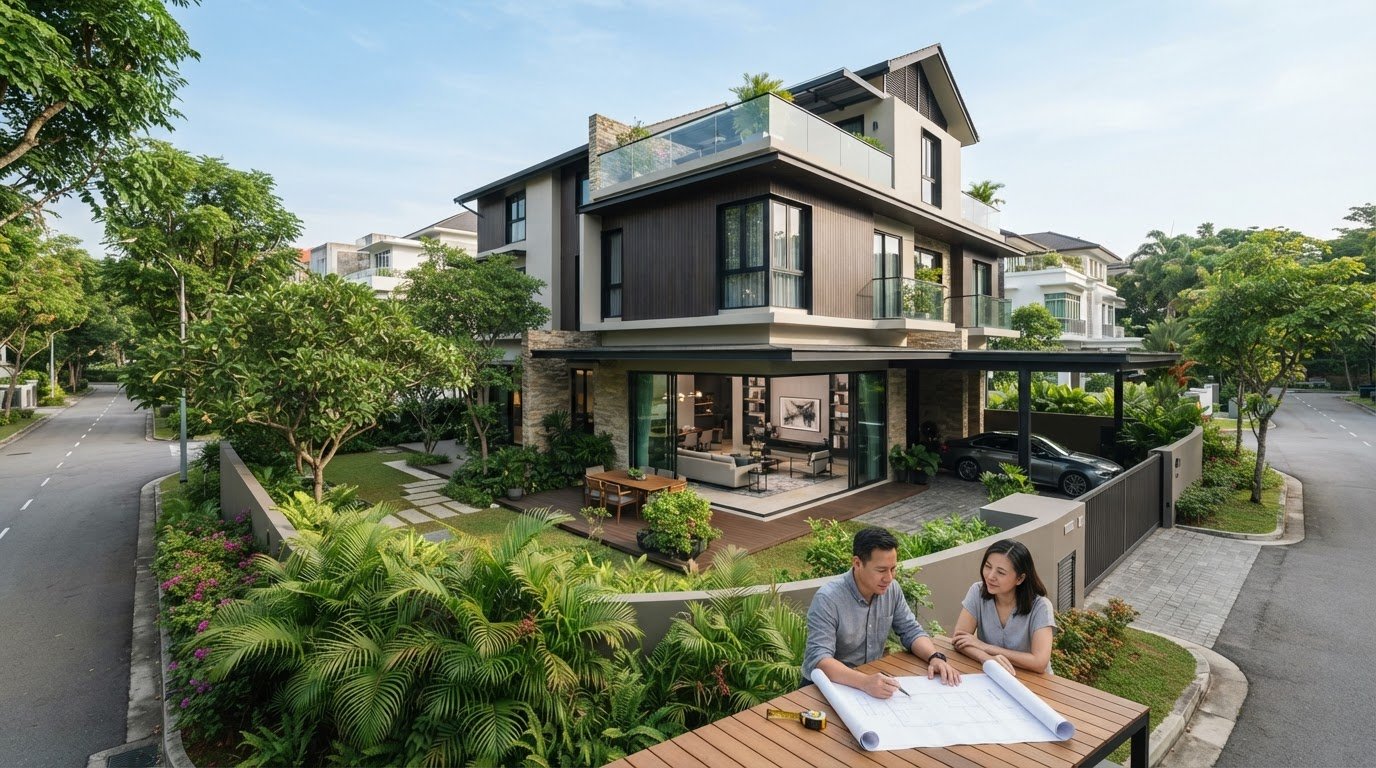
When the objective is to maximize the property’s potential, we look toward expanding the “envelope.” This often involves adding an attic level or extending the rear of the house to create a larger kitchen or additional ensuite bedrooms. These multi-storey transformations require significant structural reinforcement and a Qualified Person (QP) to manage complex BCA submissions. Corner terraces often face a 20-30% premium in renovation costs. This stems from their larger land area, extended boundary walls, and the additional facade work required to maintain curb appeal from multiple angles. While the investment is substantial, the increase in square footage often provides the most significant boost to the total cost to sell landed property singapore. By shifting the home into a higher valuation bracket based on usable area, you ensure the renovation serves as a vehicle for asset progression.
A Detailed Breakdown of Terrace House Renovation Costs in 2026
A successful renovation begins with the elements that remain hidden behind the walls. For owners of older terrace houses, prioritizing infrastructure isn’t just about safety; it’s a strategic move to lower the eventual cost to sell landed property singapore by eliminating red flags during a buyer’s technical inspection. In the current 2026 market, sophisticated buyers are increasingly wary of “lipstick-on-a-pig” renovations where high-end finishes mask aging systems.
Essential Systems and Structural Integrity
Full electrical rewiring for a standard inter-terrace typically ranges from S$12,000 to S$20,000. This investment ensures the home can handle modern power loads from smart appliances and electric vehicle chargers. Similarly, modernizing plumbing stacks is essential to prevent the silent ceiling damage that often plagues older landed estates. When it comes to the roof, a simple patch job may cost less today, but a full replacement provides a 10 to 15-year peace of mind that justifies a higher asking price. If you’re unsure which structural upgrades will yield the best return, consulting a landed property specialist can help you prioritize your capital allocation effectively.
Invisible work also includes comprehensive waterproofing and termite treatment. These are fundamental to maintaining structural integrity. In 2024, the Consumers Association of Singapore (CASE) recorded 962 complaints related to renovations, many of which stemmed from poor workmanship in these critical areas. Ensuring these are handled by CaseTrust-accredited firms protects your investment and provides documented proof of quality for future prospects.
High-Impact Aesthetic Finishes
Once the foundation is secure, the focus shifts to the variables that define the interior budget. Carpentry and custom joinery represent the largest cost fluctuation. While off-the-shelf solutions are cheaper, bespoke kitchen systems and integrated wardrobes create the “luxury feel” that differentiates a property in a competitive market. For flooring, marble remains the gold standard for ground floors, while engineered timber is preferred for bedrooms due to its warmth and durability. High-end vinyl can be a cost-effective alternative for utility areas, but it rarely adds the same valuation weight as natural stone.
First impressions begin at the gate. Facade modernization, including professional external painting and contemporary gate designs, significantly impacts curb appeal. These external works often cost less than a full kitchen overhaul but can be the deciding factor in whether a buyer chooses to step inside. By balancing these visible upgrades with robust infrastructure, you refine the property into a high-value asset that justifies a premium cost to sell landed property singapore.
Navigating Regulatory Requirements and Hidden Financial Risks
Strategic planning requires more than just an eye for design; it demands a rigorous understanding of the statutory framework governing landed property. Compliance is mandatory. While cosmetic upgrades might attract initial interest, any deviation from URA height limits or BCA safety standards will inevitably complicate the cost to sell landed property singapore during the legal due diligence phase. Precision at the planning stage prevents the costly delays and rectifications that often erode a seller’s profit margin.
The 2026 URA Envelope Control guidelines are particularly influential. These regulations dictate the maximum allowable volume and height of your building, ensuring that your terrace house respects the character of the neighborhood. Understanding these setbacks and height limits is essential before finalizing any architectural plans, as they directly impact the usable square footage you can eventually market to buyers.
Professional Fees and Permit Costs
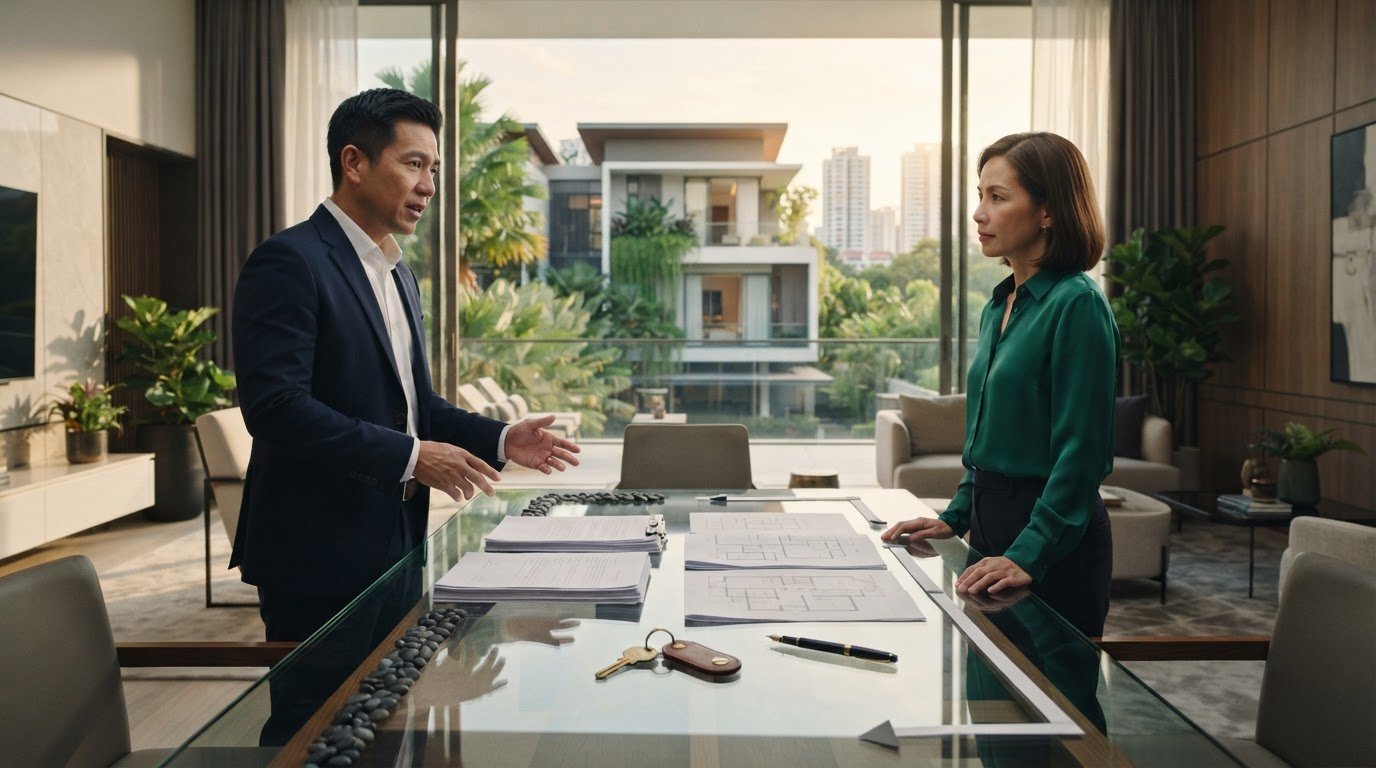
Engaging a Qualified Person (QP), such as a registered architect or Professional Engineer, is a non-negotiable expense for structural renovations. You should budget between 8% and 15% of your total construction costs for professional fees. This investment covers URA planning permission, BCA building plan approvals, and the mandatory site supervision required by law. Beyond these permits, you must account for neighborhood protection costs. This involves noise mitigation, dust screening, and temporary protection for adjacent properties, which are essential for maintaining community relations and avoiding work-stop orders.
The Hidden Costs of Older Terrace Houses
Older terrace houses often hide structural vulnerabilities that only surface once demolition begins. Soil stability is a common concern in specific Singaporean districts; foundation reinforcement or additional piling can quickly inflate a budget. Legacy waterproofing failures in inter-terrace units are equally problematic, as leaks often originate from shared boundaries. In a terrace house, the Party Wall is a shared structural element; any work affecting it requires a pre-construction survey and potentially a legal agreement to indemnify neighbours against damage.
Given these uncertainties, the traditional 10% contingency is no longer sufficient. A 15% to 20% contingency is the new standard for landed renovations in 2026. This buffer protects your capital against unforeseen structural requirements while ensuring the project reaches completion without compromising on quality. Maintaining this financial discipline is what separates a successful asset progression from a stressful liability, ultimately protecting your final cost to sell landed property singapore.
Strategic Budgeting: Managing the Cost to Sell Landed Property for Maximum ROI
Successful budgeting is less about the total amount spent and more about the precision of your capital allocation. While interior designers focus on aesthetic trends, a strategic approach prioritizes the eventual cost to sell landed property singapore by targeting high-impact zones that drive valuation. Every dollar must be weighed against its potential to increase the property’s market ceiling. If your renovation budget doesn’t translate into a higher appraisal, you aren’t investing; you’re over-spending.
We must also distinguish between Gross Floor Area (GFA) and usable space. While increasing GFA through A&A adds technical value, maximizing the “feel” of usable space often provides a better return. This involves removing unnecessary partitions to improve natural light and cross-ventilation. A timeless, neutral palette remains essential for future marketability. Bold, highly personalized designs often alienate a segment of buyers, whereas a sophisticated, understated finish allows prospects to envision their own lives within the home.
High-ROI Zones: Kitchens, Master Suites, and Facades
The master bedroom has evolved into a private sanctuary for the modern Singaporean homeowner. Investing in a spa-like ensuite and a well-organized walk-in wardrobe significantly boosts the property’s emotional appeal. Similarly, open-concept kitchens that flow into the dining area are the heart of contemporary terrace house value. These spaces are no longer just utility zones; they’re social hubs that define the home’s lifestyle. Finally, don’t underestimate the facade. A modern, clean exterior ensures your property stands out in a crowded resale market, often being the primary factor that justifies a premium asking price.
The Concept of Overcapitalisation
The greatest risk in landed property renovation is overcapitalisation. This occurs when your total investment exceeds what the local market is willing to pay for a property in that specific district. Before committing to major works, it’s vital to research the average price of semi-detached house in Singapore to understand the price ceilings in adjacent segments. You must balance bespoke luxury with mass-market appeal to ensure your exit strategy remains viable.
Consulting a landed property specialist before finalizing high-cost structural changes is a prudent step. An expert perspective helps you identify which upgrades are essential for valuation and which are merely “nice-to-haves” that won’t be recovered at sale. To ensure your renovation plan aligns with your long-term wealth goals, you should request a strategic property valuation assessment before the first hammer swings.
The Vincent Lim Advantage: Aligning Renovation with Asset Progression
A renovation project shouldn’t be viewed in isolation; it’s a pivotal chapter in your broader financial narrative. While an interior designer focuses on the immediate aesthetic experience, a real estate strategist evaluates a renovation plan through the lens of capital appreciation and liquidity. At Vincent Lim (OrangeTee & Tie), my objective is to bridge the gap between architectural vision and market reality. By refining your scope today, we ensure the cost to sell landed property singapore remains optimized for a high-yield exit tomorrow.
Expert representation is vital during both the acquisition and renovation phases. Having navigated the luxury market for over 20 years, the team at Vincent Lim (OrangeTee & Tie) has seen how poorly executed or overly personalized renovations can hinder a sale. I provide a white-glove advisory service that coordinates your vision with the practical requirements of the 2026 market. This disciplined approach transforms a standard terrace house into a high-performance asset ready for its next transition.
Valuation-Driven Design Decisions
In the 2026 market, the relationship between land value and built-up value is increasingly nuanced. A professional property valuation for landed house serves as your financial compass, guiding every dollar of your renovation budget. Vincent Lim (OrangeTee & Tie) leverages a trusted network of architects and builders to ensure your upgrades meet the gold standard of quality without exceeding the district’s price ceiling. This ensures your investment is calculated, precise, and fully recoverable. We focus on design decisions that appeal to the elite buyer segment, ensuring your property doesn’t just meet market standards but sets them.
Your Next Step in Asset Progression
Your renovated terrace house is more than a home; it’s a strategic stepping stone for asset progression to landed property Singapore. Whether your ultimate goal is a semi-detached home or a Good Class Bungalow (GCB), the timing of your exit is critical. Strategic exit planning involves monitoring market cycles to identify the optimal window to sell after your renovation is complete. This foresight allows you to capture the maximum valuation boost from your upgrades while minimizing the cost to sell landed property singapore.
Don’t leave your asset progression to chance. I invite you to book a bespoke consultation with Vincent Lim (OrangeTee & Tie) to review your terrace house investment strategy. Together, we’ll ensure your property remains a powerful engine for long-term wealth, moving you steadily toward your next milestone in Singapore’s exclusive landed market.
Mastering Your Asset Progression Strategy
Navigating the complexities of a terrace house renovation in 2026 requires a disciplined blend of architectural vision and financial foresight. You’ve learned that distinguishing between a cosmetic refresh and a structural A&A is the first step toward capital preservation. By prioritizing high-ROI zones like master suites and ensuring strict compliance with URA envelope control, you transform your home into a high-performance asset. This strategic alignment is the most effective way to optimize the total cost to sell landed property singapore when you eventually transition to your next milestone.
With over 20 years of expertise and more than S$1 Billion in landed property transactions facilitated, I provide the seasoned authority needed to guide your asset progression. My specialized knowledge in URA regulations and luxury market trends ensures your renovation budget serves your long-term wealth goals. Take the next step toward a stress-free, high-value exit by booking a bespoke consultation today. Maximize your terrace house ROI with a strategic consultation from Vincent Lim and move forward with the peace of mind that only elite professional guidance can provide.
Frequently Asked Questions
What is the average cost per square foot for a terrace house renovation in Singapore?
Average costs are estimated between S$300 and S$700 per square foot in 2026. This range accounts for standard structural work up to premium luxury finishes. Factors like site accessibility and material selection will ultimately dictate where your project sits on this spectrum.
Do I need URA approval for an interior-only renovation of my terrace house?
You typically don’t require URA approval for renovations that are purely internal and non-structural. However, if your plans involve changing the building’s facade, increasing the floor area, or altering structural walls, you must engage a Qualified Person to manage the necessary submissions. It’s always prudent to verify your specific scope with a professional before commencing work.
What is the difference between A&A and reconstruction in terms of budget?
Additions and Alterations (A&A) involve structural changes that don’t exceed 50% of the existing building’s floor area or structural walls. Typical A&A costs range from S$120,000 to S$200,000. Reconstruction is required when you exceed this 50% threshold; this essentially treats the project as a new build with a significantly higher budget and more stringent building codes.
How long does a full terrace house renovation typically take in 2026?
A comprehensive terrace house renovation typically takes between six and twelve months to complete. Simple interior refreshes may finish in three to four months, while complex reconstructions can extend beyond eighteen months. These timelines must account for both the physical construction and the mandatory approval periods from BCA and URA.
Can I stay in my terrace house during a major structural renovation?
Staying in the house is generally not feasible during major structural renovations due to safety risks and utility disruptions. For minor interior refreshes, it’s technically possible but highly stressful. Most owners find that temporary relocation ensures a smoother project flow and protects their peace of mind during the construction phase.
How much should I set aside for professional fees like architects and engineers?
You should allocate approximately 8% to 15% of your total construction cost for professional fees. This budget covers the services of your architect and Professional Engineer, who are responsible for ensuring your project meets all regulatory standards. These fees are a vital component in calculating the total cost to sell landed property singapore.
Will a high-end renovation always increase the resale value of my property?
High-end renovations don’t always guarantee a dollar-for-dollar increase in resale value. Over-renovating beyond your district’s price ceiling can lead to diminishing returns. A strategic renovation focuses on high-ROI zones and essential infrastructure, ensuring you don’t inflate the cost to sell landed property singapore without a corresponding boost in appraisal.
What are the specific rules for renovating a corner terrace vs. an inter-terrace?
Corner terraces often face 20% to 30% higher renovation costs compared to inter-terrace units. This is due to their longer boundary walls and the additional facade work required for curb appeal. They also have unique setback requirements under URA guidelines that can influence the complexity of your structural plans and the total volume of your building envelope.