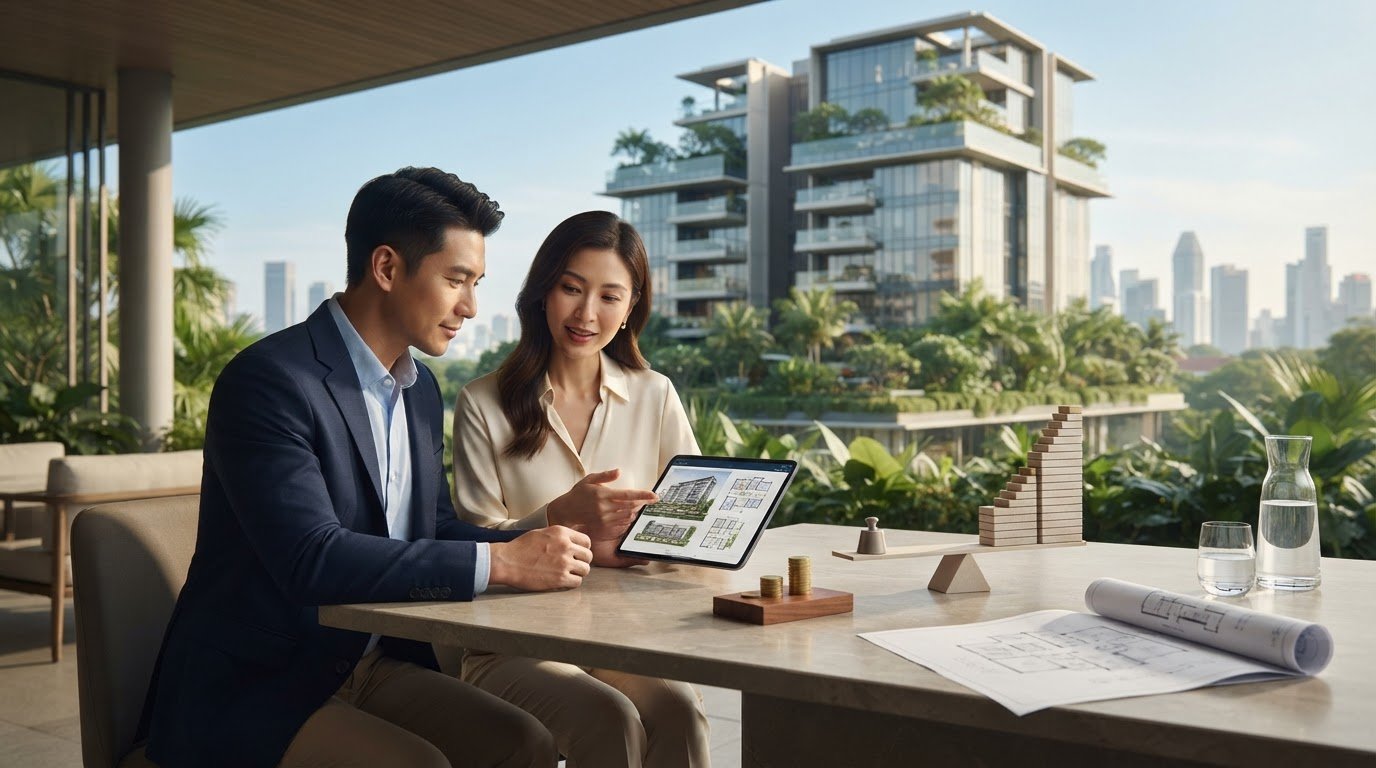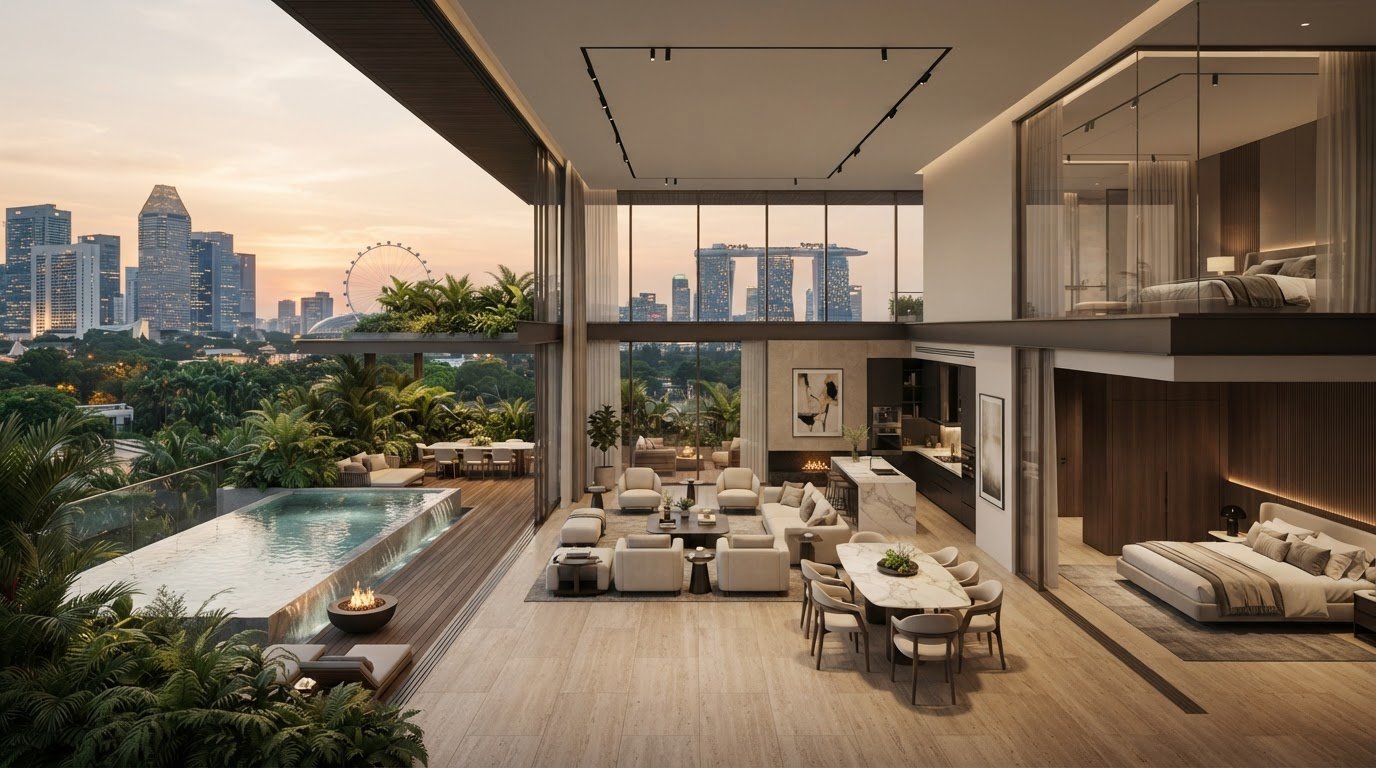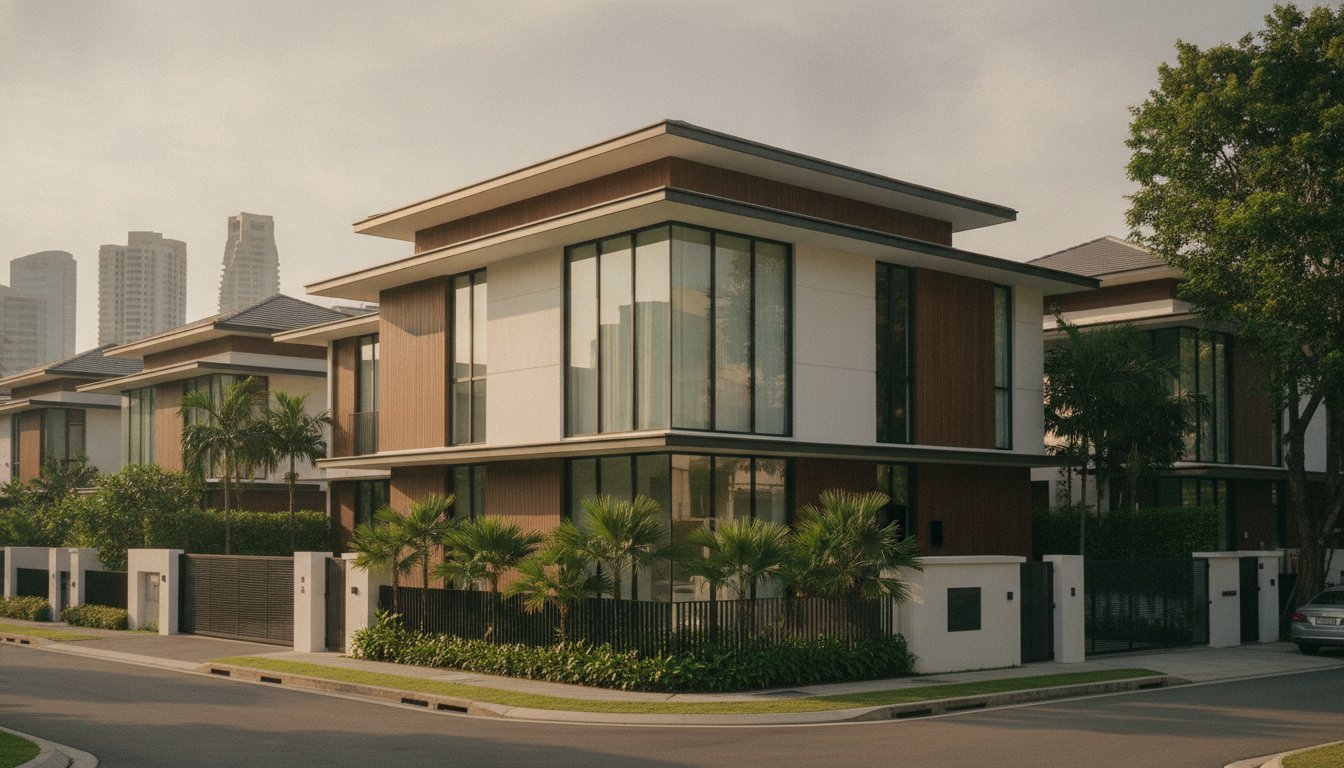
The landed property price index rebounded by 2.6% in the second quarter of 2026, showcasing a resilience that continues to attract high-net-worth individuals. This trend confirms that identifying a prime terrace house for sale singapore is no longer just about finding a home, but about securing a strategic land-bank asset. You likely understand that the complexity of Singapore’s property regulations can make these transactions feel daunting. The fear of overpaying for leasehold assets or overlooking critical redevelopment potential is a significant hurdle for even the most seasoned investors.
This guide offers the professional clarity needed to navigate these high-stakes decisions with peace of mind. We will examine the technical differences between terrace types, evaluate the impact of the 55% TDSR on your acquisition strategy, and clarify the implications of the four-year SSD holding period. By establishing a foundation of data-driven insights, we ensure you are prepared to achieve long-term capital appreciation and secure a prestigious family residence. Our objective is to transform market complexity into a structured journey toward a successful acquisition.
Key Takeaways
- Identify the specific land-use efficiencies that allow corner terraces to command a premium over standard inter-terrace units.
- Evaluate the strategic trade-offs between freehold and leasehold tenures to align your purchase with decades of wealth planning.
- Streamline your acquisition of a terrace house for sale singapore by mastering the 2026 ABSD requirements and financing protocols.
- Decode the Singapore Land Authority framework to recognize properties with the highest potential for future redevelopment and expansion.
- Gain a competitive advantage through bespoke, professional representation that prioritizes discretion and meticulous transaction management.
The Landscape of Terrace Houses in Singapore
Within the Singapore Land Authority (SLA) framework, a terrace house is defined as one of a row of at least three units joined side-by-side. While these properties share common boundary walls, they represent a fundamental shift in ownership structure compared to strata-titled condominiums. When you evaluate a terrace house for sale singapore, you aren’t merely purchasing a residence; you’re acquiring a specific plot of land. This distinction is vital for investors who prioritize absolute autonomy and tangible asset control over their living environment.
These properties function as the primary entry point into the prestigious landed market. They offer the lifestyle benefits of land ownership at a more accessible valuation than semi-detached or detached houses. The History of Terraced Houses illustrates their evolution from functional urban dwellings to highly coveted assets in land-scarce cities. In Singapore, they provide a unique balance of privacy and community, serving as a resilient pillar in any sophisticated real estate portfolio.
Understanding Landed Scarcity and Value
Singapore’s finite land supply is the most significant driver of long-term property resilience. Landed homes constitute only a small fraction of the total private housing stock. Because the Urban Redevelopment Authority (URA) strictly governs landed housing zones, the supply remains effectively capped while demand from growing families remains constant. Transitioning from a high-rise apartment to a landed home is both a financial and psychological milestone. It marks the move from owning “air space” to owning the ground itself. This transition provides unparalleled freedom for multi-generational living and bespoke architectural modifications.
Terrace Houses as a Legacy Asset
Strategic investors focus heavily on the land-to-built ratio. In a terrace house, a substantial portion of the property’s valuation is anchored in the land rather than the depreciating building structure. This characteristic makes it a superior vehicle for family wealth preservation. Unlike condominiums that may eventually face lease decay or the complexities of collective sales, a freehold terrace house represents a permanent stake in the nation’s limited land resources.
Achieving a successful asset progression to landed property singapore requires a methodical understanding of these technical dynamics. Selecting the right terrace house for sale singapore involves analyzing redevelopment potential and ensuring the asset aligns with your long-term legacy goals. It’s a disciplined approach to wealth creation that prioritizes stability and capital preservation.
Classifying Terrace Properties: Inter-Terrace vs. Corner Terrace
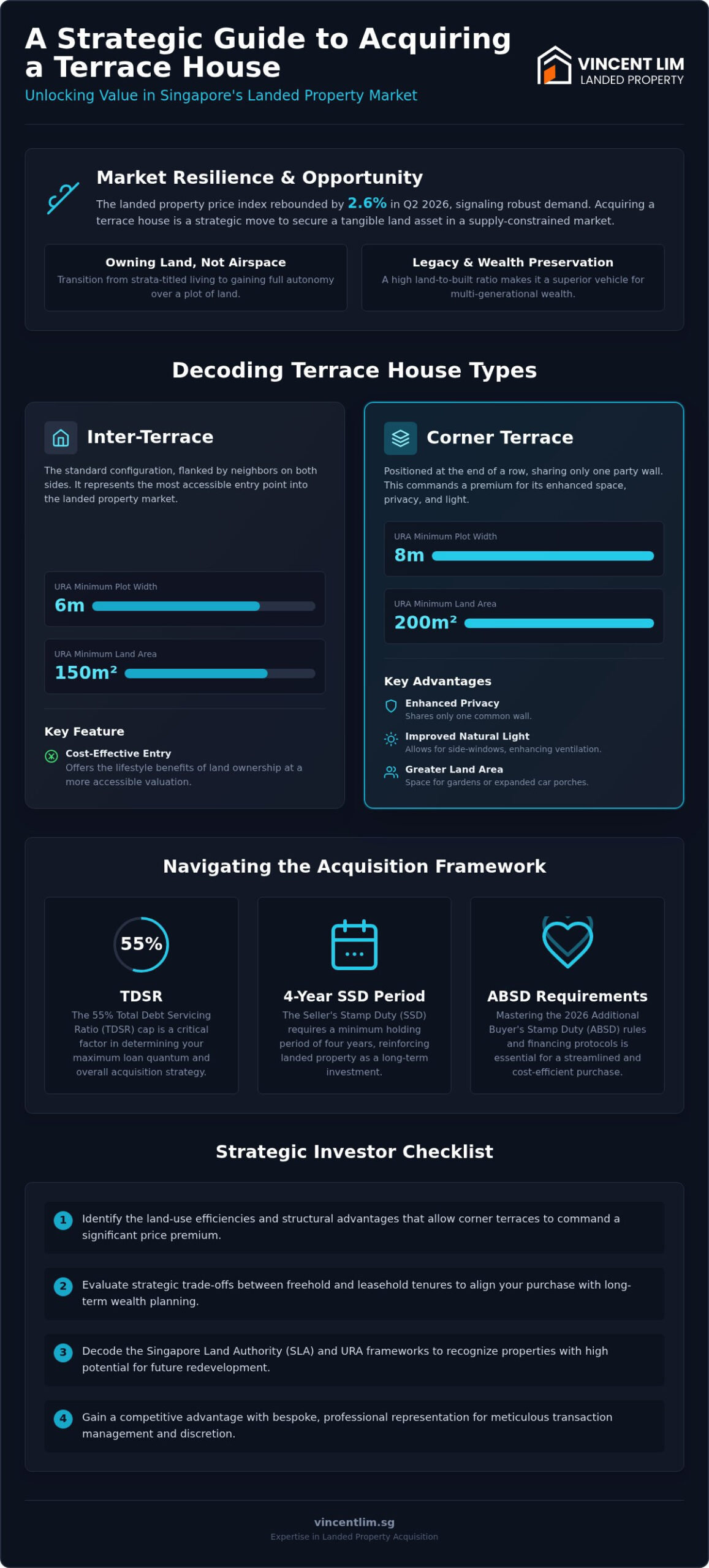
Understanding the technical classification of a terrace house for sale singapore is essential for calculating its true investment value. Inter-terrace units are the standard configuration, flanked by neighbors on both sides. These homes offer high land efficiency and are often the most cost-effective entry point for those transitioning from strata-titled properties. In contrast, corner terrace houses sit at the end of a row, sharing only one party wall. This positioning significantly changes both the living experience and the asset’s financial trajectory.
The URA has established strict technical requirements that dictate the land size and plot width for these property types. Adherence to these standards ensures that the neighborhood maintains a consistent density and aesthetic. The primary requirements include:
- Inter-Terrace: A minimum plot width of 6 meters and a minimum land area of 150 square meters.
- Corner Terrace: A minimum plot width of 8 meters and a minimum land area of 200 square meters.
The Corner Terrace Advantage
Corner units command a substantial price premium because of their increased land area and enhanced privacy. They allow for side-window configurations that inter-terrace units lack, which dramatically improves natural lighting and cross-ventilation throughout the home. According to recent Singapore Property Market Analysis, these structural advantages translate into a wider resale value gap over time. The additional land often provides space for private gardens or expanded car porches, which are high-value features in the landed segment.
Identifying Redevelopment Potential
Savvy investors look beyond the current facade to identify “under-built” properties. These are houses where the existing floor area is significantly lower than what current regulations allow. Choosing between Additions & Alterations (A&A) and a total rebuild depends on the structural integrity of the house and your long-term legacy goals. URA envelope control guidelines define the maximum building volume based on setbacks and height limits, allowing for more creative architectural expressions than previous rigid storey-based rules. If you’re uncertain about a specific property’s technical capacity, consulting a specialist in landed assets can prevent costly miscalculations during the acquisition phase.
When evaluating a terrace house for sale singapore, you must weigh the efficiency of an inter-terrace against the expansion potential of a corner unit. While the initial capital outlay for a corner terrace is higher, the ability to rebuild a larger, more ventilated home often yields superior capital appreciation in the long run. This technical evaluation is a hallmark of an elite investment strategy.
Investment Metrics: Value Appreciation and Tenure Analysis
The landed property market’s 2.6% price index rebound in the second quarter of 2026 underscores its status as a premier defensive asset. When you evaluate a terrace house for sale singapore, you’re looking at more than a residence; you’re analyzing a safe-haven investment that has historically shown resilience during economic shifts. This stability is largely due to the absolute scarcity of land in the country. Analysts forecast a price growth of 5% to 7% for the full year of 2026, reinforcing the segment’s reputation for steady capital appreciation.
Tenure significantly influences both the acquisition strategy and the long-term exit plan. Historical data from the last decade reveals that while the broader residential market may fluctuate, landed assets tend to maintain their value due to limited supply. Financing a terrace house for sale singapore requires a disciplined approach to tenure. Banks typically offer a 75% Loan-to-Value (LTV) limit for a first home loan, but they may restrict the loan tenure or amount if a leasehold property has less than 60 years remaining. This technical detail makes the choice between freehold and leasehold a pivotal financial decision.
The Freehold Premium vs. Leasehold Yield
Freehold properties command a higher price point because they offer permanent ownership and are the gold standard for multi-generational wealth preservation. There’s a clear strategic value found in freehold terrace house acquisitions, particularly for those focused on legacy planning. Leasehold units can offer higher rental yields and a more accessible entry price, but they require a precise calculation of the “breakeven” point. You must weigh the lower initial capital outlay against the eventual lease decay that can affect future resale liquidity.
Factors Driving Price Appreciation
Several catalysts drive the appreciation of landed assets beyond simple market demand. Infrastructure developments and changes in land zoning by the URA can cause significant spikes in land value for specific areas. With 9,320 private residential units slated for launch through the Government Land Sales program in 2026, the scarcity of new landed homes compared to high-rise condominiums remains stark. This supply-demand imbalance ensures that land-bank assets remain highly coveted. Savvy investors use a professional property valuation for landed house to identify properties priced below their intrinsic land value, securing assets with the highest potential for future growth.
Navigating the Acquisition: Financing and Legal Frameworks
Securing a terrace house for sale singapore requires a meticulous approach to both financing and legal compliance. Unlike the relatively straightforward process of purchasing a condominium, landed transactions involve specific regulatory layers that demand professional oversight. You must first account for the current Additional Buyer’s Stamp Duty (ABSD) rates. As of August 2026, Singapore Citizens purchasing their second residential property face a 20% ABSD, while foreigners are subject to a 60% rate. These figures represent a significant capital commitment that must be factored into your initial liquidity planning.
Financing strategies for landed assets are governed by the Total Debt Servicing Ratio (TDSR), which remains at 55% of your gross monthly income. For your first home loan, the Loan-to-Value (LTV) limit is capped at 75%. It’s essential to coordinate with lenders who understand the nuances of landed valuations to ensure your loan quantum aligns with the property’s intrinsic land value. If you require expert guidance on structuring your portfolio for such an acquisition, contact a specialist in luxury landed brokerage for a bespoke consultation.
The 3-Stage Transaction Process
The journey from identification to ownership follows a structured three-stage progression. It begins with the Option to Purchase (OTP), where you typically pay a 1% option fee in exchange for a specified period to exercise the option. During this window, conducting a professional structural survey and land boundary check is non-negotiable. These steps ensure that the physical asset matches the legal titles and that no unauthorized alterations exist. Once you exercise the option by paying the remaining 4% to 9% of the deposit, your specialized conveyancing lawyer begins the legal completion process, which usually takes 10 to 12 weeks.
Eligibility and Restrictions
Eligibility is a primary consideration in the landed market. While Singapore Citizens have unrestricted access to landed residential properties, Permanent Residents (PRs) must seek approval from the Land Dealings Approval Unit (LDAU). The LDAU evaluates applicants based on their economic contribution and ties to Singapore; a process that requires precision and patience. For those who successfully navigate this entry point and look toward the pinnacle of the market, understanding what is a good class bungalow provides a useful benchmark for the ultimate luxury landed asset. Every step of this acquisition must be managed with a white-glove level of care to protect your capital and ensure a seamless transition to your new family home.
Strategic Representation for Landed Property Success
Acquiring a terrace house for sale singapore is a high-stakes endeavor that requires more than a simple transactional broker. It demands a high-level partner who understands that landed property is a strategic land-bank asset. Vincent Lim provides a white-glove service level characterized by seasoned authority and a grounded, client-focused perspective. With over 20 years of experience, having been active in the industry since 2004, he operates with a high degree of discipline and personal accountability. This long-term industry experience allows him to alleviate the stress of complex transactions through calm, calculated competence.
Many of the most lucrative opportunities in the landed segment never reach public portals. Discrete representation is vital for high-value landed transactions where privacy is a priority for both buyers and sellers. Accessing exclusive, off-market opportunities requires a deep network within the luxury brokerage community. By engaging a specialist who manages these elite relationships, you gain access to a refined selection of properties that align with your specific requirements for land size, frontage, and redevelopment potential.
The Elite Strategist Advantage
Vincent’s methodology moves beyond the immediate sale to focus on long-term wealth planning and asset progression. He identifies properties with high redevelopment potential by refining technical data and coordinating with a network of industry professionals. This ensures that every acquisition aligns with the gold standard of legacy preservation. His commitment to transparency and integrity means you receive an honest evaluation of an asset’s future resale liquidity and structural viability. It’s a bespoke approach to service that prioritizes your success over a simple closing.
Your Journey to Landed Ownership
Your search begins with a professional portfolio review to align your acquisition with your broader financial goals. Whether you’re securing your first terrace or exploring a detached house for sale singapore, working with a specialist who understands the pinnacle of the market is a distinct advantage. This expertise ensures that your transition into the landed segment is handled with meticulous planning and transparency. For a private consultation to discuss your strategic acquisition of a terrace house for sale singapore, reach out to refine your property journey today. You deserve a partner who is deeply invested in your long-term success.
Securing Your Legacy in Singapore’s Landed Market
Successfully navigating the acquisition of a terrace house for sale singapore requires a disciplined evaluation of land value, tenure, and redevelopment potential. You’ve seen how the scarcity of landed assets drives long-term capital appreciation. Technical classifications like corner versus inter-terrace units dictate future resale liquidity and expansion capacity. In a market governed by stringent ABSD rates and TDSR limits, precision in your financial and legal strategy is the only way to ensure peace of mind.
As an Executive Associate Director at OrangeTee & Tie with over 20 years of luxury real estate experience, Vincent Lim specializes in the strategic brokerage of high-end landed assets. Since 2004, he’s acted as a trusted guide for individuals seeking to refine their property portfolios with transparency and integrity. Secure your strategic landed consultation with Vincent Lim to gain access to bespoke insights and exclusive opportunities. Your journey toward a prestigious family home deserves a partner committed to the gold standard of professional excellence. It’s time to transform your property goals into a lasting legacy.
Frequently Asked Questions
Can a Singapore Permanent Resident (PR) buy a terrace house?
Singapore Permanent Residents are eligible to purchase a terrace house, but they must first obtain approval from the Land Dealings Approval Unit (LDAU). The government grants this on a case-by-case basis, primarily evaluating the applicant’s economic contributions and their commitment to the nation. It’s a structured process that requires patience. If you’re a PR looking for a terrace house for sale singapore, you should ensure your application is meticulously prepared to reflect your long-term ties to the country.
What is the minimum land size for an inter-terrace house in Singapore?
For an inter-terrace house, the Urban Redevelopment Authority (URA) mandates a minimum land area of 150 square meters. Additionally, the plot must have a minimum width of 6 meters. These technical standards ensure that landed developments maintain a specific density and aesthetic harmony. Understanding these dimensions is vital when you’re evaluating a property’s redevelopment potential or planning for future structural expansions within the existing land footprint.
Is a corner terrace house worth the 10-20% price premium?
A corner terrace house often justifies its premium because it offers a minimum land area of 200 square meters and superior ventilation. Unlike inter-terrace units, corner properties feature side windows that significantly enhance natural light. This configuration doesn’t just improve the living experience; it also increases the asset’s resale liquidity. The additional land provides more flexibility for architectural rebuilding, making it a sound choice for investors prioritizing long-term capital growth.
How does the URA Master Plan affect terrace house prices?
The URA Master Plan is a statutory land use plan that guides Singapore’s development over the next 10 to 15 years. It directly impacts prices by detailing future infrastructure, such as new MRT lines or commercial hubs, near your property. When a plan reveals upcoming amenities, land values in that precinct typically appreciate. Strategic buyers analyze these blueprints to identify undervalued areas where a terrace house for sale singapore might see significant growth.
What are the main differences between a terrace and a semi-detached house?
The primary difference lies in the shared boundary walls and minimum land requirements. A terrace house is part of a row of at least three units, while a semi-detached house is one of a pair joined by a single party wall. Technically, a semi-detached house requires a minimum land area of 200 square meters and a plot width of 8 meters. These differences affect the degree of privacy and the total building volume you can achieve.
How much downpayment is required for a S$5 million terrace house?
For a S$5 million property, the standard downpayment is 25% of the valuation, assuming it’s your first housing loan with a 75% LTV limit. This equates to S$1.25 million. Under current regulations, at least 5% (S$250,000) must be paid in cash, while the remaining 20% (S$1 million) can be funded through your CPF Ordinary Account or cash. You’ll also need to account for Buyer’s Stamp Duty and any applicable ABSD.
Should I choose a freehold or a 99-year leasehold terrace house?
Freehold properties are the gold standard for wealth preservation and legacy planning because they don’t suffer from lease decay. They typically command higher prices and offer better long-term value retention. Conversely, 99-year leasehold terrace houses often provide a more accessible entry point and potentially higher rental yields. Your choice should align with your investment horizon; legacy-focused buyers almost always prioritize freehold assets to avoid the financing restrictions that come with aging leases.
What is the “envelope control” guideline for landed property redevelopment?
Envelope control is a URA guideline that defines the allowable building volume for landed houses based on setbacks and height limits. Instead of following rigid storey-based rules, this framework allows for more creative architectural designs within a three-dimensional “envelope.” It provides owners with greater flexibility to optimize floor area and ceiling heights. This technical shift has made rebuilding more attractive, as it allows for modern, spacious interiors that maximize the property’s land potential.