Is the S$500,000 premium for a corner unit a strategic asset play, or are you simply overpaying for a side garden you’ll rarely use? For many buyers, the choice between an inter-terrace vs corner terrace singapore involves a complex calculation of privacy, prestige, and potential for capital appreciation. You likely feel that while an inter-terrace represents the most efficient entry point into landed living, the allure of an end-lot’s “bungalow-lite” lifestyle is hard to ignore. The tension arises when trying to justify the price gap without a clear understanding of how technical setbacks and building envelope rules impact your future rebuilding costs.
This article provides a professional framework to evaluate these property types through the lens of technical requirements and investment liquidity. You’ll discover how to calculate a fair premium for corner units and why certain inter-terrace layouts might actually offer superior ROI in specific market cycles. We’ll examine the lifestyle benefits and technical constraints of both types, giving you the confidence to select a property that aligns with your wealth progression goals in 2026. By moving beyond surface-level aesthetics, you’ll be able to identify which terrace type serves as the most effective vehicle for your family’s legacy.
Key Takeaways
- Quantify the lifestyle advantages of corner units, specifically how three-sided light entry and enhanced cross-ventilation optimize tropical living in Singapore’s climate.
- Learn why corner terraces often feature a lower PSF despite their higher absolute price and how to navigate the typical 20% to 35% market premium.
- Gain clarity on essential URA guidelines, such as the 2-meter side setback requirement that dictates the success of your 2026 rebuilding or A&A projects.
- Evaluate the inter-terrace vs corner terrace singapore debate through a strategic investment lens to ensure your choice doesn’t compromise your wealth progression goals.
- Discover why seasoned investors view corner units as “bungalow-lite” assets that offer superior long-term liquidity and multi-generational legacy value.
Defining the Terrace House Categories in Singapore
In Singapore’s land-scarce residential market, landed properties represent the pinnacle of asset ownership. The Urban Redevelopment Authority (URA) defines a terrace house as a residential unit that forms part of a row of at least three joined properties. Understanding the fundamental distinctions between an inter-terrace vs corner terrace singapore is the first step in crafting a robust asset progression strategy. These categories aren’t merely descriptive; they define the technical boundaries and investment ceiling of your home.
The Anatomy of an Inter-Terrace House
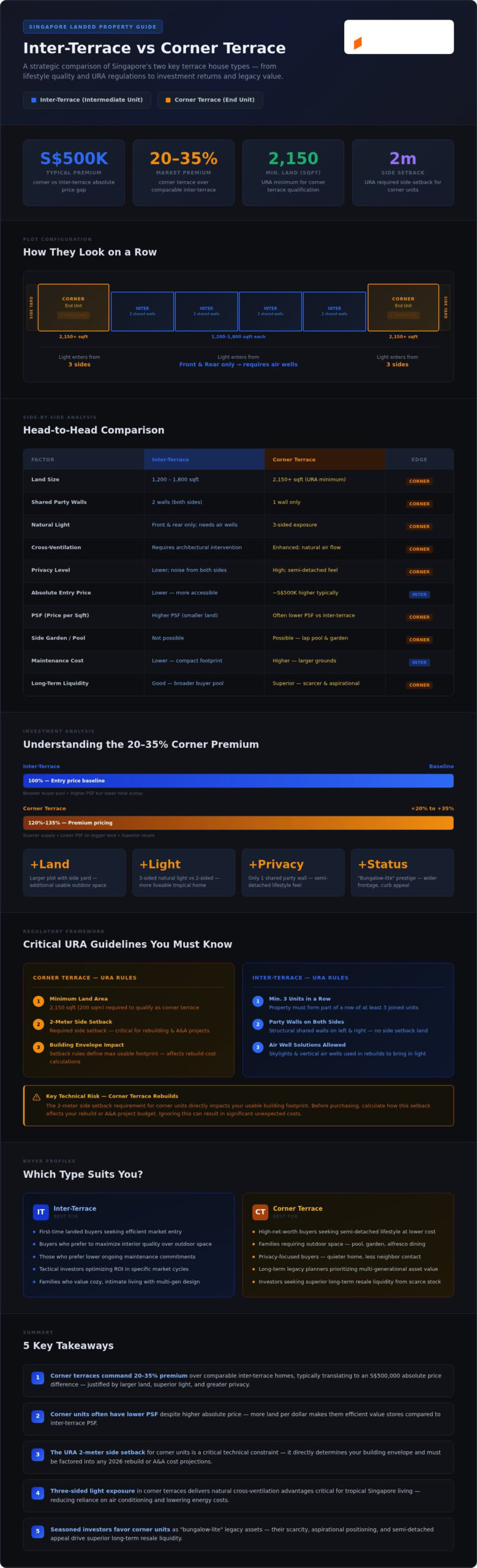
Intermediate units, or inter-terraces, are flanked by neighbors on both sides. These homes typically sit on land sizes ranging from 1,200 to 1,800 square feet. Because the property shares two party walls, the floor plan often results in a “long and narrow” configuration. To address the lack of lateral light, modern 2026 architectural designs frequently incorporate internal air wells or courtyards. These solutions ensure that even the deepest parts of the home receive natural illumination and ventilation, mitigating the traditional limitations of a middle-unit position. It’s a choice that prioritizes efficiency and entry-level accessibility into the landed market.
The Prestige of the Corner Terrace
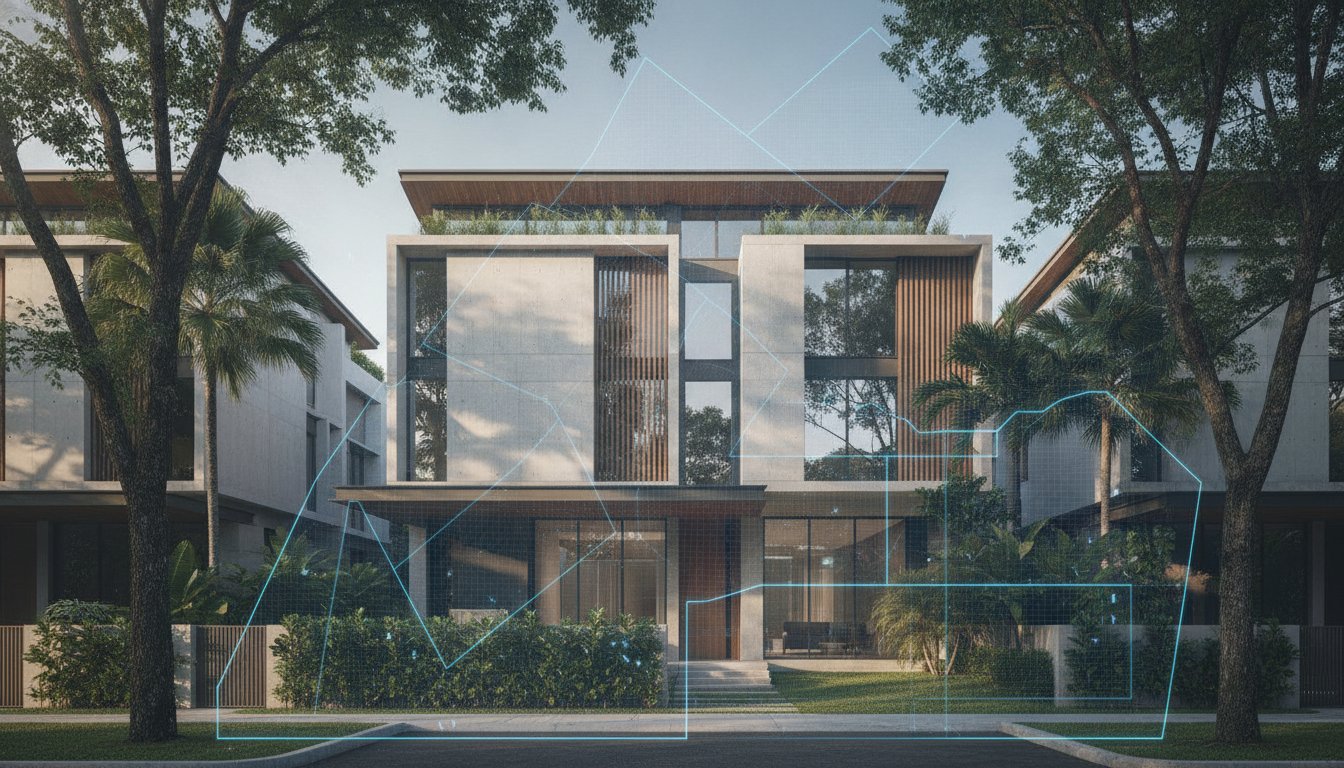
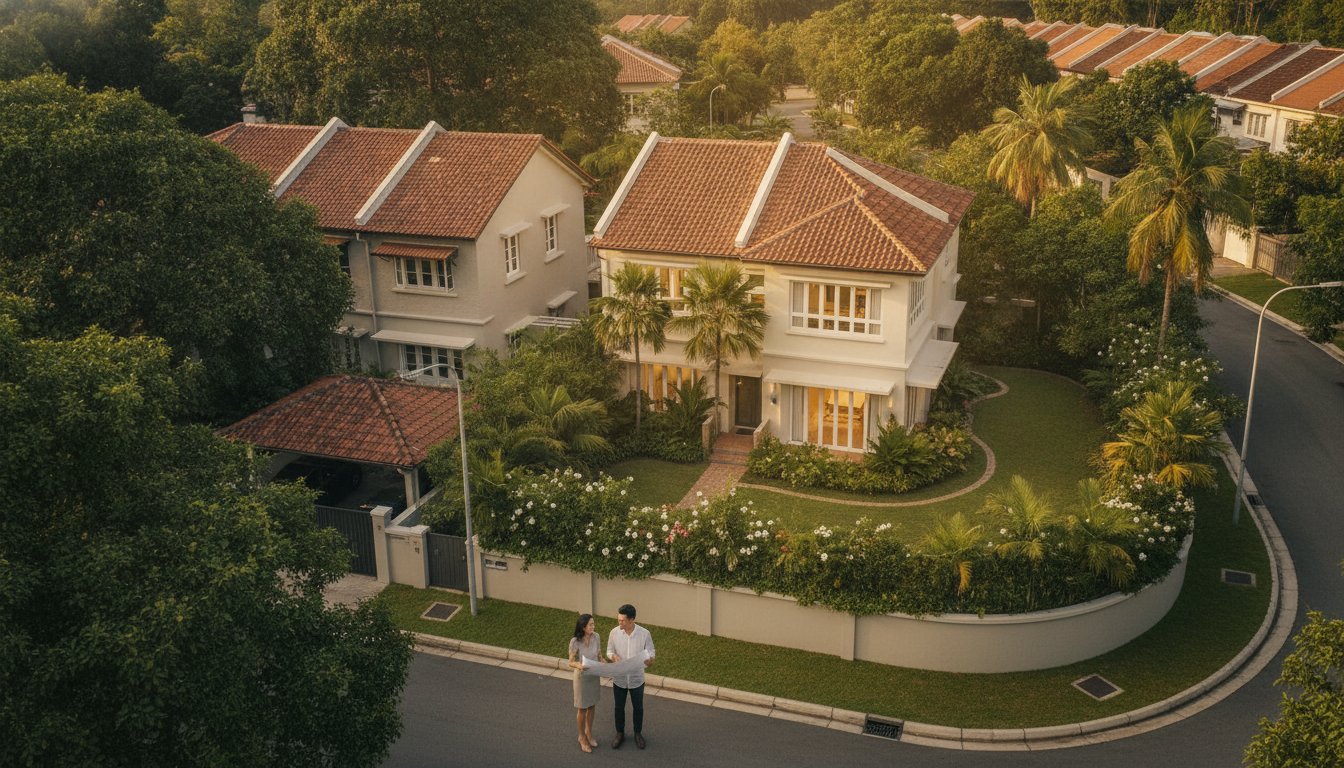
A corner terrace is the definitive end-unit of a row. Unlike its intermediate counterparts, it only shares one party wall, which fundamentally changes the living experience. To qualify as a corner unit under URA guidelines, the property must meet a minimum land size requirement, usually 2,150 square feet (200 square meters). This extra land manifests as a side garden, providing a sense of space and privacy that mirrors a semi-detached house. For many high-net-worth individuals, the end-lot position is a social and psychological marker of prestige. It offers a “bungalow-lite” feel without the absolute price tag of a fully detached home, making it a highly sought-after asset for legacy planning.
These categories dictate your rebuilding potential and future resale liquidity. When you evaluate an inter-terrace vs corner terrace singapore, you’re choosing between tactical efficiency and long-term capital preservation. The choice you make today will influence your property’s value retention and its appeal to the next generation of buyers who value the unique setbacks and frontage that only specific terrace types can provide.
Lifestyle Comparison: Privacy, Light, and Ventilation
Choosing between an inter-terrace vs corner terrace singapore fundamentally dictates your home’s environmental quality. In our tropical climate, the ability to harvest natural light and facilitate cross-ventilation isn’t just about aesthetics. It directly impacts daily comfort and energy efficiency. While corner units benefit from three-sided exposure, intermediate units require more deliberate architectural intervention to achieve similar levels of brightness and air flow.
Privacy remains a critical differentiator for discerning buyers. Sharing only one party wall in a corner unit significantly reduces neighbor friction, such as the transmission of footsteps or household noise. For those who value a quiet sanctuary, this reduction in shared boundaries provides a level of seclusion that closely mirrors semi-detached living. It’s a strategic choice for families who prioritize a sense of detachment within a landed enclave.
Living in an Inter-Terrace: Optimizing Internal Space
Intermediate homes often possess a cozy, intimate character that many families find appealing. Modern 2026 designs utilize high-performance skylights and vertical air wells to pull light into the core of the floor plan. These creative solutions allow for multi-generational living without the home feeling dark or claustrophobic. Because these units are more compact, they often require lower long-term maintenance for landscaping and exterior upkeep. It’s an efficient choice for those who prefer focusing their investment on high-quality internal finishes rather than expansive grounds.
The ‘Bungalow-Lite’ Experience of Corner Units
The defining feature of a corner terrace is the expansive side yard. This additional space allows for private gardens, lap pools, or dedicated alfresco dining areas that are impossible in an intermediate lot. The wider frontage provides superior curb appeal, making the property feel more substantial. From a social perspective, the end-lot position often carries a higher perceived status, suggesting a level of success that resonates with legacy-minded buyers. The side opening also facilitates superior cross-ventilation, allowing the prevailing breeze to cool the house naturally throughout the day.
Understanding how these layouts translate into actual market value requires a specialist’s eye. You might find it helpful to review a detailed market analysis of landed layouts to see how these lifestyle factors influence resale prices across different estates.
Analyzing the Price Premium and Investment Potential
Financial precision is vital when evaluating an inter-terrace vs corner terrace singapore. In the 2026 market, the “Corner Premium” typically ranges between 20% and 35% above the price of an equivalent intermediate unit. This gap reflects the additional land and the enhanced privacy that end-lots provide. However, a strategic buyer looks beyond the absolute price tag to the price-per-square-foot (PSF) metrics. Corner units often command a lower PSF because the larger land area dilutes the cost of the built-up structure. This creates a psychological advantage during resale, as the property appears more attractive on a unit basis despite its higher total quantum.
Investment ROI: Inter-Terrace vs Corner Terrace
Investors must weigh immediate rental yields against long-term capital preservation. Inter-terraces generally offer slightly higher rental yields because their lower entry price makes the monthly rent a larger percentage of the total investment. For those just beginning their journey, an intermediate unit serves as a robust vehicle for asset progression to landed property singapore. When comparing the investment trajectory of an inter-terrace vs corner terrace singapore, the intermediate unit offers a more accessible entry point, while the corner unit provides a higher ceiling for capital gains. Corner units thrive on scarcity; during market upswings, the limited supply of end-lots often leads to sharper price spikes as affluent buyers compete for the prestige of the position.
Resale Market Dynamics
The buyer profile for each type differs significantly. Inter-terraces attract young families and first-time landed buyers who prioritize utility and budget. Corner terraces appeal to seasoned upgraders and legacy buyers who plan to hold the asset for decades. In prime residential zones, corner units often sell faster because they’re perceived as a rare commodity. Tenure also plays a pivotal role. A freehold corner terrace is one of the most resilient assets in a portfolio, often maintaining its premium even during economic cooling periods. Leasehold units, while offering lower entry points, may see their corner premiums compress as the remaining lease shortens. This makes timing a critical factor in your exit strategy.
Critical URA Guidelines and Technical Considerations
A sophisticated understanding of Urban Redevelopment Authority (URA) regulations is essential when comparing an inter-terrace vs corner terrace singapore. The most significant technical differentiator is the 2 meter side setback requirement mandatory for corner units. While intermediate units are bound by party walls on both sides, the corner lot’s side clearance provides a buffer that influences both the aesthetic and the structural volume of the property. This setback isn’t just empty space; it’s a regulatory constraint that determines your actual buildable footprint.
Envelope control guidelines, refined for the 2026 landscape, focus on the overall volume rather than just rigid floor heights. For homeowners looking to maximize Gross Floor Area (GFA), corner units often provide a more versatile canvas. However, this flexibility comes with increased maintenance responsibilities. A corner terrace has a significantly larger external facade exposed to the elements, which means higher costs for repainting and waterproofing. Pest control also requires a more comprehensive approach, as the additional garden space and side boundaries create more entry points for termites or garden pests compared to the enclosed nature of an inter-terrace.
Rebuilding and Extension Potential
Corner terraces offer superior architectural flexibility for those planning a complete redevelopment. Because you aren’t sandwiched between neighbors, you can incorporate larger windows or even a side entrance to create a more grand sense of arrival. When analyzing a terrace house for sale singapore, it’s vital to calculate the land-to-GFA efficiency. While inter-terraces are more restrictive, they often allow for a very efficient use of every square inch of land, provided you use creative internal light solutions. Corner units, conversely, may lose some buildable area to the side setback but gain in total volume and prestige.
Infrastructure and Access
Practical daily living involves managing infrastructure that often goes overlooked during a viewing. Corner lots frequently enjoy the possibility of a wider car porch, potentially accommodating two vehicles side-by-side, whereas inter-terraces are typically limited to a single or tandem parking arrangement. You should also consider the placement of the bin center and electrical substations, which are often positioned near corner lots in landed estates. While the end-lot offers privacy from neighbors, it may be subject to more pedestrian traffic if it sits adjacent to a public walkway or a side road. Balancing these factors is key to ensuring long-term satisfaction with your acquisition.
Navigating these technical nuances requires a specialist who understands the intersection of policy and property value. If you’re ready to explore high-potential options, you can view my current luxury terrace listings for a curated selection of premier assets.
The Strategic Verdict: Which Should You Acquire?
The final decision between an inter-terrace vs corner terrace singapore rests on the precise alignment of your current capital liquidity with your long-term family objectives. While the financial metrics provide a logical foundation, the strategic choice often hinges on whether you view the property as a high-velocity stepping stone or a multi-generational anchor. Corner units are frequently held for decades, serving as legacy assets that offer a degree of permanence and prestige that intermediate units, despite their efficiency, rarely match. Assessing your financial readiness involves looking beyond the purchase price to the total cost of ownership, including the 2026 maintenance and facade upkeep requirements unique to each type.
For the Lifestyle-First Buyer
If your priority is family wellness and a sense of space, the premium for a corner terrace becomes a justifiable investment in “breathability.” These end-lots provide a psychological buffer from the high-density urban environment, offering a lifestyle that closely mirrors semi-detached house ownership at a more competitive entry point. For buyers who host frequently or have young children requiring outdoor play areas, the functional utility of the side garden is often considered non-negotiable. It’s a choice that prioritizes the quality of the daily living experience and long-term comfort over pure PSF efficiency.
For the Savvy Asset Strategist
The savvy investor often views the inter-terrace as a tactical vehicle for wealth planning. Identifying undervalued intermediate units with significant redevelopment potential can lead to substantial capital gains upon exit. These properties serve as the most effective entry point into the landed market, allowing owners to build equity before upgrading to larger asset classes. To navigate this competitive landscape, many elite buyers engage a landed property specialist to identify off-market opportunities where the land-to-build ratio is particularly favorable. This approach focuses on finding “hidden gems” that offer the best ROI through modern architectural transformation.
Ultimately, navigating the nuances of an inter-terrace vs corner terrace singapore requires more than just browsing listings. It demands a sophisticated analysis of URA envelope controls, market liquidity, and future estate rejuvenation plans. With over 20 years of experience in the luxury segment, Vincent Lim provides the white-glove guidance necessary to ensure your acquisition isn’t just a home, but a calculated step in your wealth progression journey. Your choice today defines the legacy you build for tomorrow.
Navigating Your Path to Landed Excellence
Deciding on an inter-terrace vs corner terrace singapore is a pivotal moment in your wealth progression journey. You now understand that while a corner unit offers the “bungalow-lite” prestige of three-sided light and essential setbacks, the inter-terrace remains a highly efficient entry point for strategic asset growth. The right choice depends on balancing your immediate lifestyle needs with long-term capital preservation goals. Success in the 2026 market requires navigating URA technicalities and identifying layouts that offer the best buildable volume for your family’s future.
As an Executive Associate Director at OrangeTee & Tie with over 20 years of Singapore landed property expertise, I provide the seasoned authority needed to manage these high-stakes transitions. My proven track record in GCB and luxury residential sales ensures that you receive a white-glove service rooted in transparency and meticulous market analysis. I’m here to help you move beyond the surface-level metrics to find a property that truly aligns with your vision.
Secure your legacy with a bespoke landed property strategy from Vincent Lim and gain the confidence to make your next move with absolute precision. Your ideal landed home is within reach.
Frequently Asked Questions
What is the typical price difference between an inter-terrace and a corner terrace in Singapore?
Financial precision is key when analyzing the inter-terrace vs corner terrace singapore price gap. The market premium for a corner unit generally ranges from 20% to 35% over an equivalent intermediate unit. This absolute price difference reflects the increased land size and the enhanced privacy of having only one neighbor. While the total quantum is higher, the price-per-square-foot (PSF) is often lower due to the larger land area diluting the structural cost.
Can a foreigner buy a terrace house in Singapore?
Foreigners are generally restricted from purchasing landed properties in Singapore under the Residential Property Act. This restriction includes terrace houses, semi-detached homes, and bungalows. A foreigner must obtain prior approval from the Land Dealings Approval Unit (LDAU) of the Singapore Land Authority. Such approval is granted on a case-by-case basis. It’s typically reserved for Permanent Residents who’ve made a significant economic contribution to the country over several years.
Is a corner terrace considered a semi-detached house?
A corner terrace isn’t technically a semi-detached house, although it shares the characteristic of having only one neighbor. In the inter-terrace vs corner terrace singapore classification, a corner unit is the end-lot of a row containing at least three joined houses. A semi-detached house is specifically one of a pair of joined units. This distinction is vital for URA zoning and determines the specific setback rules and minimum land size requirements.
What are the URA setback requirements for a corner terrace?
URA guidelines require a minimum 2-meter side setback for corner terraces. This clearance must be maintained from the side boundary to the external wall of the building. In addition to this side clearance, standard front and rear setbacks apply based on the road category and the specific plot depth. These technical requirements ensure adequate fire safety and ventilation for the estate. They directly influence the maximum buildable floor area of your home.
Which terrace type has better resale value in the long term?
Corner terraces typically command better long-term resale value due to their inherent scarcity and “bungalow-lite” appeal. While inter-terraces are excellent entry-level assets, corner units often attract a wider pool of affluent buyers during market upswings. The extra land and privacy provide a higher price ceiling for capital appreciation. However, an inter-terrace in a prime location with a superior internal layout can also maintain strong value retention for families prioritizing utility.
Does a corner terrace require more maintenance than an inter-terrace?
Owning a corner terrace involves higher maintenance costs compared to an intermediate unit. The property has a larger external facade exposed to the elements, which increases the frequency and cost of repainting and waterproofing. Additionally, the side garden requires consistent landscaping and more intensive pest control management. Inter-terraces benefit from shared party walls that naturally protect a significant portion of the structure. This results in lower long-term upkeep expenses for the homeowner.
Can I rebuild an inter-terrace house into a 3-storey home?
Most inter-terrace houses in Singapore can be rebuilt into a 3-storey structure if the plot sits within a designated 3-storey residential zone. URA’s envelope control guidelines manage the total height and volume rather than just the number of floors. You can often incorporate an attic and a basement to maximize your living space. It’s essential to engage a qualified architect to verify the specific height limits and floor-to-ceiling requirements for your particular plot.
What should I look for during a site visit for a corner terrace?
During a site visit, pay close attention to the side road traffic and pedestrian accessibility near the boundary. Check for the proximity of public infrastructure like bin centers or electrical substations, which are often placed near end-lots. Evaluate the width of the frontage to see if you can park two cars side-by-side. Finally, observe the neighboring properties to assess if their existing structures or windows compromise the privacy of your side garden or internal rooms.