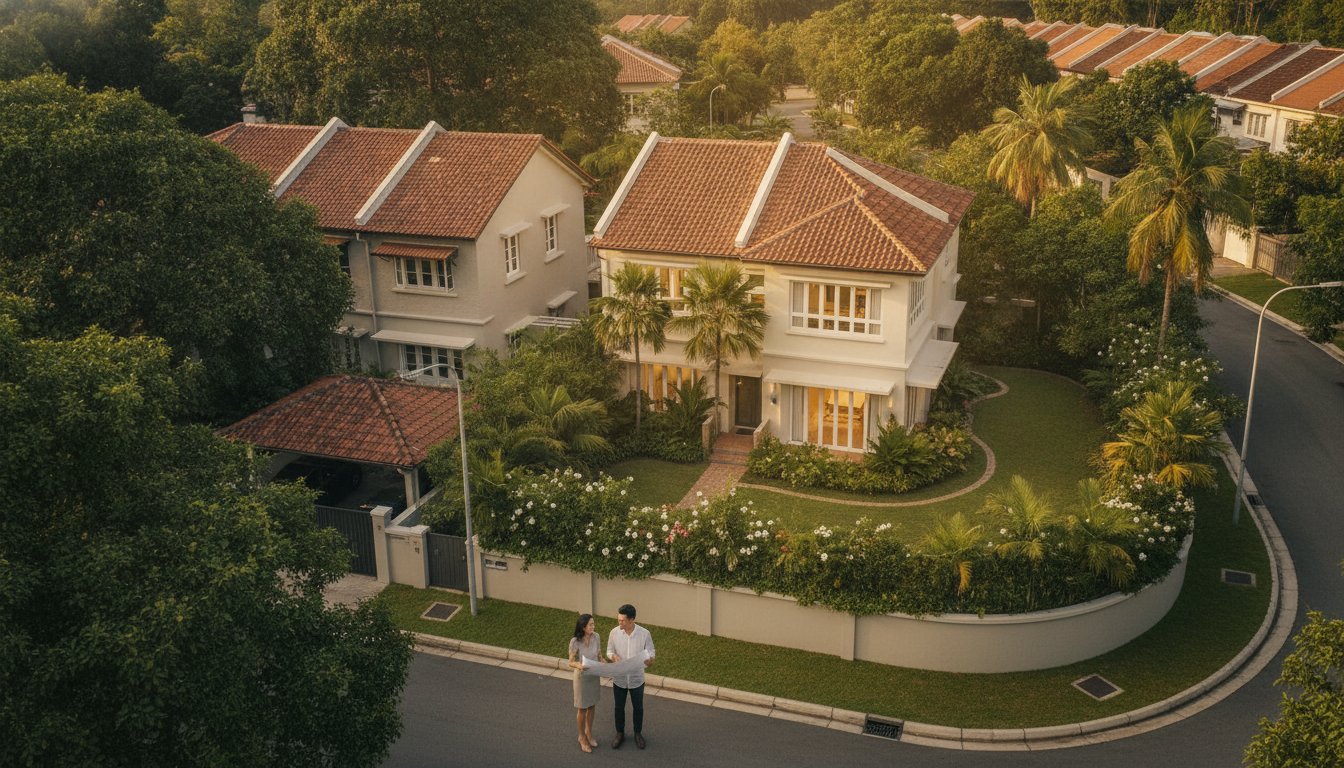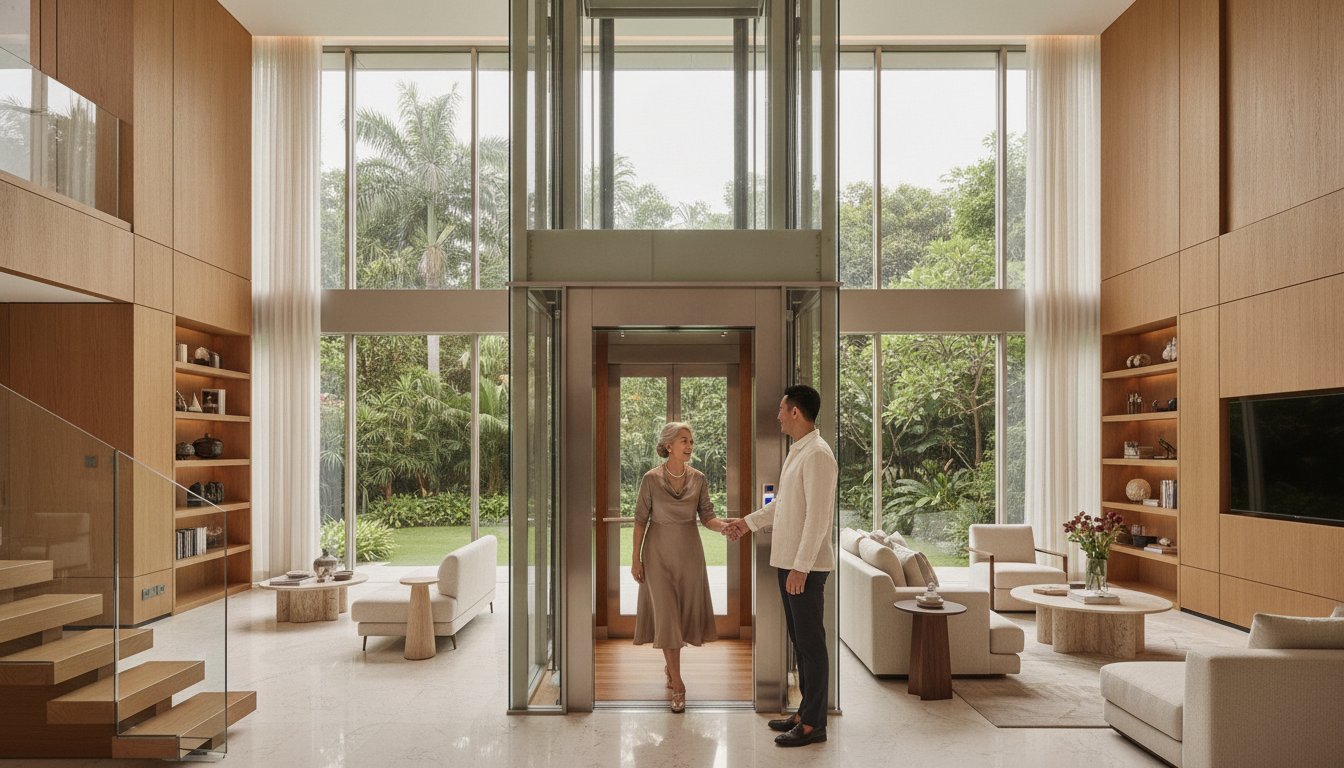
A private lift in a landed home is no longer a luxury elective; it’s a critical piece of infrastructure that determines your property’s liquidity in an aging high-end market. With landed properties making up less than 5% of Singapore’s housing stock, the competition for well-appointed homes remains intense. You likely recognize that true luxury requires a seamless integration of accessibility and long-term asset protection. It’s natural to feel concerned about the technical complexities of BCA compliance, maintenance costs, or the potential loss of floor area. We understand that your priority is a home that offers both prestige and multi-generational comfort without the stress of unforeseen technical hurdles.
This guide provides a strategic roadmap to help you identify and acquire the right landed property with private lift for sale in 2026. You’ll learn how to evaluate lift configurations for maximum efficiency and understand the latest regulatory landscape to ensure your investment remains secure. We will also explore the nuances of the luxury market, from quiet luxury design trends to the advantages of securing off-market listings that meet your family’s specific needs.
Key Takeaways
- Recognize how shifting demographics have transformed the private lift into a non-negotiable asset for future-proofing your property’s value.
- Evaluate the specific advantages of MRL (Machine Room-Less) technology to maximize your home’s usable floor area without compromising on performance.
- Assess the financial impact of premium accessibility when browsing for a landed property with private lift for sale to ensure a superior return on investment.
- Master the essential BCA compliance protocols and maintenance schedules required to uphold the safety standards of high-end residential lifts.
- Learn how a strategic partnership provides exclusive access to off-market luxury homes that feature sophisticated, pre-installed lift configurations.
The Rising Demand for Landed Property with Private Lift for Sale in 2026
The definition of luxury in Singapore’s residential market has undergone a significant transformation. A decade ago, a private lift was considered a symbol of opulence. Today, it’s a foundational element of a home’s infrastructure. When you evaluate a landed property with private lift for sale, you’re looking at more than just a convenience feature. You’re investing in a property’s long-term liquidity. As we approach the demographic shifts of 2026, the demand for vertical accessibility has surged. This isn’t merely about comfort; it’s about ensuring a home remains viable for owners as they age and attractive to future buyers who prioritize inclusivity.
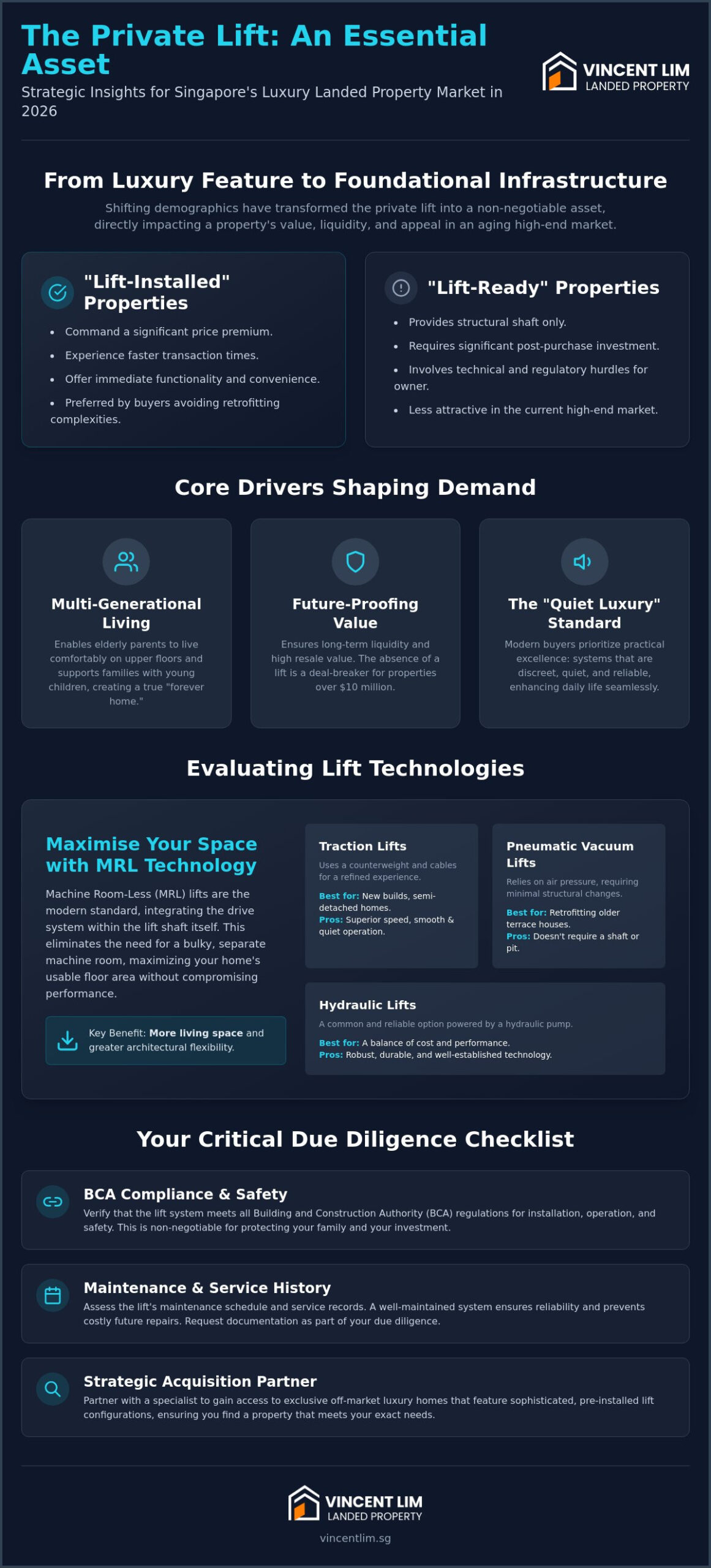
A notable distinction has emerged between “lift-ready” and “lift-installed” properties. While a “lift-ready” home provides the necessary structural shaft, “lift-installed” homes command a significant premium and faster transaction times. Buyers in the current market often lack the appetite for the technical and regulatory complexities of retrofitting. They seek immediate functionality. High-net-worth individuals now view these systems as essential as high-speed connectivity or climate control. In a market where landed housing stock is finite, these internal transport systems have become a key differentiator in property valuation.
The Multi-Generational Living Factor
Singaporean families are increasingly opting for multi-generational living arrangements to foster closer bonds and share caregiving responsibilities. A private lift is the catalyst that makes this lifestyle possible in a multi-storey detached house for sale Singapore. It allows elderly parents to occupy upper-floor suites without the physical toll of navigating stairs. This accessibility extends to families with infants, where moving strollers between levels becomes effortless. By integrating sophisticated Home Lift Systems, homeowners ensure their property remains a “forever home” that supports every stage of life and preserves the dignity of all residents.
Market Trends and Luxury Expectations
Recent market observations show that in the premium segment, particularly for properties valued above $10 million, the absence of a lift is often a deal-breaker. Developers have recognized this shift; almost all new-build terrace and semi-detached houses now include lifts as a standard specification. The move toward “quiet luxury” emphasizes practical excellence over showy aesthetics. Buyers want systems that are discreet, quiet, and reliable. This trend reflects a broader desire for homes that offer total autonomy and ease, a preference that has only intensified since the global pandemic reshaped our relationship with domestic space. In 2026, a landed property with private lift for sale represents the gold standard of modern residential planning.
Technical Foundations: Evaluating Lift Systems and Space Efficiency
Selecting a landed property with private lift for sale requires a deep understanding of the engineering that powers your home’s vertical movement. In 2026, the market has moved beyond basic functionality toward specialized systems that balance performance with architectural integrity. You must weigh the merits of different lift technologies to ensure your choice aligns with both your lifestyle and the property’s structural constraints. A well-chosen system doesn’t just provide accessibility; it enhances the daily rhythm of the household while preserving the home’s aesthetic value.
Choosing the Right Lift Technology
The technology behind your home lift dictates everything from ride quality to long-term maintenance costs. Traction lifts are frequently the preferred choice for a semi detached house due to their superior speed and smooth operation. These systems use a counterweight and cable mechanism, providing a refined experience typical of high-end commercial buildings. For older terrace houses where structural modifications are difficult, pneumatic vacuum lifts offer a compelling alternative. These units rely on air pressure and often don’t require a traditional shaft or pit. Hydraulic systems remain a common option for their durability, though they generally require more space for a pump room and carry a higher environmental footprint due to the fluids involved.
Floor Plan Integration and GFA Considerations
Strategic placement is vital to maintaining the functional flow of your home. A poorly positioned lift core can block natural light or create awkward transitions between living spaces. You should look for designs that utilize MRL (Machine Room-Less) technology. By housing the motor within the shaft itself, MRL lifts preserve valuable square footage that would otherwise be lost to a dedicated utility room. It’s a sophisticated way to keep the floor plan open and airy.
Understanding the impact on Gross Floor Area (GFA) is equally critical. In Singapore, lift shafts are often excluded from GFA calculations, but you should verify specific BCA Compliance for Lifts to ensure your layout maximizes usable space. Pit-less designs have also gained popularity in 2026, especially for properties with foundation restrictions. These systems allow for installation on existing floors without the need for deep excavation. Energy-efficient models featuring standby modes and regenerative drives are now standard for any premium landed property with private lift for sale. Whether you prefer a glass shaft that serves as a central design feature or a concealed core that blends into the masonry, the technical execution must be flawless. If you’re uncertain about which configuration suits your needs, consulting with a seasoned strategist can clarify the best path forward for your specific property type.
The Financial Logic: Valuation Impact and ROI of Private Lifts
Investing in a landed property with private lift for sale isn’t just about personal comfort; it’s a calculated move to capture a higher resale premium. In a market where 32.9% of landed homes sold for more than $15 million in the first half of 2026, buyers are increasingly discerning. The presence of a lift often shifts the property from “discretionary luxury” to “essential infrastructure.” This shift is reflected in the price per square foot, particularly for multi-storey residences where vertical mobility is a functional necessity rather than a stylistic choice. You’re not just buying a machine; you’re buying a broader audience of future buyers.
Quantifying the Luxury Premium
For properties spanning 3.5 to 4 storeys, the lift acts as a force multiplier for value. Without it, the upper floors often become underutilized, effectively reducing the functional living area in the eyes of a potential buyer. When evaluating what is a good class bungalow, the prestige factor is inextricably linked to such amenities. While a GCB buyer expects a lift as a baseline, the absence of one in a premium terrace or semi-detached home can lead to significant price chipping during negotiations. Purchasing a pre-installed unit is generally more cost-effective than retrofitting. You avoid the structural disruption, structural engineer fees, and the regulatory hurdles associated with adding a shaft to an existing foundation.
Liquidity and Marketability in 2026
The demographic landscape in 2026 is one of the strongest drivers for this trend. An aging buyer pool means that “stairs-only” homes are seeing a narrowing of their potential audience. By securing a landed property with private lift for sale, you widen your net to include multi-generational families and retirees who would otherwise dismiss a multi-level home. This increased demand directly translates to higher liquidity and shorter time-on-market. A home that accommodates everyone sells faster.
Consider the resale performance of a terrace house for sale singapore. A unit with a modern, well-maintained lift attracts a broader spectrum of high-net-worth buyers compared to a walk-up equivalent. For those looking to sell my landed property singapore, having this infrastructure already in place mitigates the risk of your property becoming an “obsolete” asset. It ensures your home remains a competitive and highly sought-after commodity in a market that prioritizes long-term accessibility and ease of use.
Critical Due Diligence: BCA Compliance and Maintenance Checklists
Acquiring a landed property with private lift for sale involves more than just architectural appreciation; it requires a rigorous audit of the property’s technical and legal standing. In Singapore, home lifts are strictly regulated under the Building Control Act. This means your ownership comes with specific statutory obligations that cannot be overlooked. You aren’t just buying a convenience; you’re assuming responsibility for a piece of heavy machinery that must meet stringent safety benchmarks. Neglecting these details during the acquisition phase can lead to significant unforeseen expenses or legal liabilities later on.
BCA Regulations and Legal Responsibility
The Building and Construction Authority (BCA) has refined its oversight as of March 19, 2026, introducing a new Code of Practice to address safety hazards in vertical platform lifts. Every home lift must possess a valid Permit to Operate (PTO), which is renewed only after a mandatory annual safety inspection by a BCA-registered lift contractor. It’s vital to verify that the current owner has maintained these certifications without lapse. You should also ensure that the structural plans, mechanical specifications, and fire safety assessments were properly submitted by a Professional Engineer (PE) during the initial installation. Failure to maintain these records doesn’t just impact safety; it can lead to removal orders from authorities during future renovations.
The Maintenance Audit Before You Buy
Before you finalize a purchase, you must request the lift’s “Log Book.” This document serves as the definitive record of the system’s health and service history. You should look for consistency in monthly or quarterly servicing and check for any recurring issues with components like the drive motor or door sensors. During your viewing, pay close attention to the ride quality. Unusual vibrations, grinding noises, or a failure to level accurately with the floor are red flags. These symptoms often indicate neglected maintenance or aging parts that are nearing the end of their functional lifecycle.
You should also factor in the long-term operational costs, which typically range between $2,400 and $4,800 annually for standard maintenance contracts. It’s essential to verify that safety features like emergency battery lowering systems, sensors, and functioning intercoms are fully operational. These systems are non-negotiable for ensuring passenger safety during a power outage. If you want to ensure the property you’re eyeing is technically sound and legally compliant, engaging a veteran real estate strategist is the most effective way to protect your interests and ensure a seamless transition of ownership.
Strategic Acquisition: Why Partner with Vincent Lim for Landed Property
Navigating the acquisition of a landed property with private lift for sale requires more than a standard real estate agent. It demands a strategist who understands the intersection of engineering, regulation, and high-end market dynamics. Vincent Lim brings over two decades of refined expertise to this specialized sector. He doesn’t just show properties; he evaluates them as long-term assets. When you’re dealing with high-stakes transactions, having a partner who operates with calculated competence provides the peace of mind necessary to make informed decisions. This white-glove service ensures that every technical and legal detail is scrutinized before you commit your capital.
Bespoke Sourcing and Off-Market Access
Accessing the right detached or semi-detached configuration often means looking beyond public portals. Many of the most desirable properties with sophisticated lift cores never reach the open market. Through a deep-seated network within OrangeTee & Tie, Vincent identifies these “pocket listings” for his clients. This gives you a distinct advantage in the competitive GCB and luxury segments, where privacy and timing are paramount. Whether you’re looking for a specific floor plan to accommodate a growing family or a residence that supports aging-in-place, his bespoke sourcing process is designed to find the perfect fit for your profile.
The White-Glove Transaction Experience
The transaction process is handled with meticulous care and a focus on long-term value. Vincent’s approach to asset progression to landed property singapore ensures that your purchase aligns with your broader financial goals. He coordinates the complex due diligence process, working alongside structural engineers and lift specialists to verify every technical detail. This thoroughness prevents you from overpaying for superficial “luxury fluff” and focuses on securing core structural value. Vincent Lim remains steadfastly committed to maintaining the highest standards of integrity and transparency in every high-stakes transaction he facilitates.
Securing a landed property with private lift for sale in 2026 is a move toward future-proofing your lifestyle and your legacy. It’s about more than just vertical mobility; it’s about ensuring your home remains a functional, prestigious, and liquid asset for decades to come. With a veteran professional at your side, you can navigate the complexities of the Singapore landed market with total confidence. Your journey toward a sophisticated, accessible home begins with a strategy rooted in excellence and a commitment to your long-term success.
Securing Your Multi-Generational Legacy in the Landed Market
Acquiring a home in Singapore’s elite residential sector requires more than just an eye for design; it demands a rigorous, data-driven strategy. We’ve explored how a private lift has transitioned from a high-end elective to a critical component of property liquidity and multi-generational functionality. By prioritizing technical compliance and space efficiency, you ensure your investment remains a resilient asset in an evolving market. Identifying the right landed property with private lift for sale is only the first step. The real value lies in the meticulous due diligence and off-market access that a seasoned professional provides.
Vincent Lim offers a refined approach to high-stakes acquisitions. As an Executive Associate Director at OrangeTee & Tie, he’s specialized in GCB and high-end landed sales since 2004. His proven track record in complex asset progression strategies ensures your interests are protected at every stage. Don’t leave your legacy to chance when you can partner with an elite strategist who values integrity and transparency above all else.
Secure your future-proof luxury home with Vincent Lim today and take the definitive step toward a residence that offers both prestige and enduring peace of mind.
Frequently Asked Questions
Is it possible to install a private lift in an existing older terrace house?
Yes, retrofitting an older terrace house with a private lift is entirely feasible provided there is sufficient structural integrity and BCA approval. Homeowners often opt for pneumatic vacuum lifts or pit-less designs to minimize the need for deep excavation or extensive foundation work. A Professional Engineer must certify the plans to ensure the new installation doesn’t compromise the existing structure’s safety or stability.
How much does the annual maintenance of a home lift typically cost in Singapore?
Standard maintenance contracts for residential lifts in Singapore typically cost between S$2,400 and S$4,800 per year. This investment covers the routine servicing and safety calibrations required to keep the system running efficiently. Regular maintenance isn’t just a safety requirement; it’s a strategic move to preserve the long-term resale value and operational reliability of the asset.
Does a private lift count towards the Gross Floor Area (GFA) of my landed property?
In most cases, the area occupied by a lift shaft is excluded from the Gross Floor Area calculations for landed homes in Singapore. This regulatory allowance encourages homeowners to prioritize accessibility without worrying about consuming their building’s permissible floor area. It’s one reason why a landed property with private lift for sale remains a popular choice for those looking to maximize their home’s functional footprint.
What are the main differences between a hydraulic lift and a traction lift for home use?
Traction lifts offer a smoother, faster ride and are typically more energy-efficient than hydraulic systems. They use a counterweight and cable system, often housed in a Machine Room-Less configuration to save space. Hydraulic lifts, while durable and often quieter during descent, require a dedicated pump room and utilize pressurized fluid, which may necessitate more intensive environmental and leak-prevention maintenance over time.
How often does a home lift need to be inspected by the BCA?
The Building and Construction Authority requires all home lifts in Singapore to undergo a professional safety inspection every 12 months. This annual audit must be conducted by a BCA-registered lift contractor to ensure the system complies with current safety codes. Once the inspection is successfully completed, a new Permit to Operate is issued, which must be clearly displayed within the lift cabin.
Can a foreigner buy a landed property with a private lift in Singapore?
Foreign nationals are generally ineligible to purchase landed property on the Singapore mainland unless they are Permanent Residents who have received approval from the Land Dealings Approval Unit. The only exception where foreigners can freely purchase landed homes, including those with private lifts, is Sentosa Cove. For mainland properties, the residency status of the buyer is the primary legal hurdle, regardless of the home’s amenities.
What happens if the power fails while someone is inside the lift?
If a power failure occurs, modern home lifts are designed to automatically activate an emergency battery lowering system. This system safely moves the lift car to the nearest floor and releases the doors to allow passengers to exit. This fail-safe mechanism is a mandatory requirement for any landed property with private lift for sale, ensuring that vertical mobility remains safe even during unexpected utility disruptions.
Does adding a lift to a house significantly increase the property tax?
Adding a lift can lead to an increase in your property’s Annual Value, which may result in a higher property tax bill. Since property tax in Singapore is calculated based on the Annual Value at progressive rates, any improvement that enhances the home’s market rental value will likely be reflected in the tax assessment. However, the one-off property tax rebates available in 2026 can help offset some of these costs for owner-occupiers.